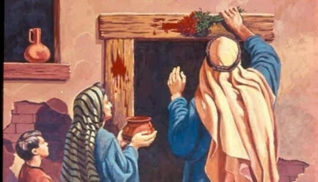
Exodus 12:28 So the people of Israel did just as the Lord had commanded through Moses and Aaron. 29 And that night at midnight, the Lord struck down all the firstborn sons in the land of Egypt, from the firstborn son of Pharaoh, who sat on his throne, to the firstborn son of the prisoner in the dungeon. Even the firstborn of their livestock were killed. 30 Pharaoh and all his officials and all the people of Egypt woke up during the night, and loud wailing was heard throughout the land of Egypt. There was not a single house where someone had not died.
Moses had warned the Israelites, and they had applied the blood of their sacrifices to their doorposts, protecting themselves in the process. But throughout Egypt, first-born people and animals died. Nobody was spared, including the son Pharaoh thought would succeed him. God did just what He had promised.
Israel’s Exodus from Egypt
31 Pharaoh sent for Moses and Aaron during the night. “Get out!” he ordered. “Leave my people—and take the rest of the Israelites with you! Go and worship the Lord as you have requested. 32 Take your flocks and herds, as you said, and be gone. Go, but bless me as you leave.” 33 All the Egyptians urged the people of Israel to get out of the land as quickly as possible, for they thought, “We will all die!”
34 The Israelites took their bread dough before yeast was added. They wrapped their kneading boards in their cloaks and carried them on their shoulders. 35 And the people of Israel did as Moses had instructed; they asked the Egyptians for clothing and articles of silver and gold. 36 The Lord caused the Egyptians to look favorably on the Israelites, and they gave the Israelites whatever they asked for. So they stripped the Egyptians of their wealth!
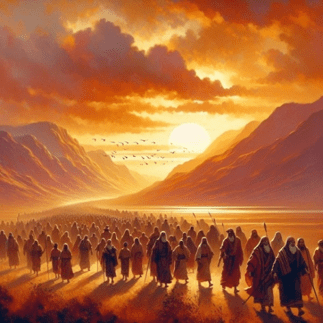
37 That night the people of Israel left Rameses and started for Succoth. There were about 600,000 men, plus all the women and children. 38 A rabble of non-Israelites went with them, along with great flocks and herds of livestock. 39 For bread they baked flat cakes from the dough without yeast they had brought from Egypt. It was made without yeast because the people were driven out of Egypt in such a hurry that they had no time to prepare the bread or other food.
40 The people of Israel had lived in Egypt for 430 years. 41 In fact, it was on the last day of the 430th year that all the Lord’s forces left the land. 42 On this night the Lord kept his promise to bring his people out of the land of Egypt. So this night belongs to him, and it must be commemorated every year by all the Israelites, from generation to generation.
God sovereignly moved, and nobody could stop Him. Even Pharaoh demanded that the Israelites leave with all their possessions and animals. Egyptians who feared the God of the Israelites also accompanied them, along with the flocks and herds. One minute nothing was happening and the next, everybody was moving. Egyptians loaded their Israelite neighbors with riches, in hopes that they would leave even more swiftly.
Instructions for the Passover
43 Then the Lord said to Moses and Aaron, “These are the instructions for the festival of Passover. No outsiders are allowed to eat the Passover meal. 44 But any slave who has been purchased may eat it if he has been circumcised. 45 Temporary residents and hired servants may not eat it. 46 Each Passover lamb must be eaten in one house. Do not carry any of its meat outside, and do not break any of its bones. 47 The whole community of Israel must celebrate this Passover festival.
48 “If there are foreigners living among you who want to celebrate the Lord’s Passover, let all their males be circumcised. Only then may they celebrate the Passover with you like any native-born Israelite. But no uncircumcised male may ever eat the Passover meal. 49 This instruction applies to everyone, whether a native-born Israelite or a foreigner living among you.”
50 So all the people of Israel followed all the Lord’s commands to Moses and Aaron. 51 On that very day the Lord brought the people of Israel out of the land of Egypt like an army.
If Moses truly led 600,000 men out of Egypt, the total number of people fleeing might have been as many as two million. Remember that the Hebrews were multiplying so rapidly that the Egyptians were afraid of them; that’s part of the reason the Egyptians enslaved them. Attempts to determine the precise number fail, but the main thing is simple: God delivered a mass of people from slavery in an instant, and God commanded that the Israelites should celebrate this deliverance forever. Now these people would face new challenges, but they were freed from slavery.
Many times, we feel that peace is a passive thing; we RECEIVE peace but we don’t have to do anything in return. But if someone gives you a precious gift, aren’t you obligated to thank them for it? And what can possibly be more precious than peace of mind and heart? It is precisely that celebration that God indicated when He was giving the commands regarding the celebration of Passover.
During a traditional Passover celebration, four questions are asked and then answered. The questions are:
What makes this night different from all other nights? Answer: We were slaves to Pharaoh in Egypt, and the L-rd, our G‑d, took us out from there with a strong hand and with an outstretched arm….
1) On all nights we need not dip even once, on this night we do so twice? Slavery: The salt water into which we dip the karpas (potato, onion, or other vegetable) represents the tears we cried while in Egypt. Similarly, the charoset (fruit-nut paste) into which the bitter herbs are dipped reminds us of the cement we used to create the bricks in Egypt.
Freedom: Dipping food is considered a luxury; a sign of freedom — as opposed to the poor (and enslaved) who eat “dry” and un-dipped foods.
2) On all nights we eat chametz or matzah, and on this night only matzah? Slavery: Matzah was the bread of slaves and poor, it was cheap to produce and easy to make.
Freedom: Matzah also commemorates the fact that the bread did not have enough time to rise when the Jews hastily left Egypt.
3) On all nights we eat any kind of vegetables, and on this night maror? Slavery: The maror (bitter herbs) reminds us of the bitterness of slavery in Egypt.
4) On all nights we eat sitting upright or reclining, and on this night we all recline? Freedom: We commemorate our freedom by reclining on cushions like royalty.
What is the significance of the Seder plate items?
The Seder plate is central to the Passover Seder, featuring symbolic foods that represent key themes of the Jewish experience. Each item on the plate carries deep historical and cultural significance, reflecting themes of freedom, suffering, and redemption.- Key Items on the Seder Plate:
- Maror (Bitter Herb): Typically, horseradish, it symbolizes the bitterness of slavery endured by the Israelites in Egypt.
- Charoset (Fruit Paste): A mixture of fruits, nuts, and wine, it represents the mortar used by the Israelite slaves to build structures for Pharaoh.
- Karpas (Vegetable): Usually parsley, it signifies the initial flourishing of the Israelites in Egypt before their enslavement.
- Z’roa (Shank Bone): A roasted lamb bone, symbolizing the Passover sacrifice made before the Exodus.
- Beitzah (Egg): Represents the festival sacrifice and the cycle of life.
- Chazeret (Second Bitter Herb): Often romaine lettuce, it serves as a reminder of the bitterness of slavery and is sometimes omitted.
The practices surrounding the Seder meal were intended to remind the Jews of God’s deliverance from slavery and of the freedom they enjoyed. God commanded the Jews to celebrate Passover annually so that succeeding generations would continue to remember God’s mighty acts and thank Him for His provision.
Even as the Jews were rushing out of Egypt, they had peace that God was working in their lives. In the midst of chaos, these people could celebrate peace.
Today you might be facing struggles and trials; yet, God has moved magnificently in your life. As you continue to praise God, His peace will fill your heart.
PRAYER: Father God, thank You for loving us and caring for us. Lord, help us to be grateful for Your provision even in the midst of chaos. For when we praise You, we will have peace. In the mighty and precious Name of King Jesus. Amen.


Leave a Reply