Exodus 20 The Ten Commandments
1 And God spoke all these words:
2 “I am the Lord your God, who brought you out of Egypt, out of the land of slavery.
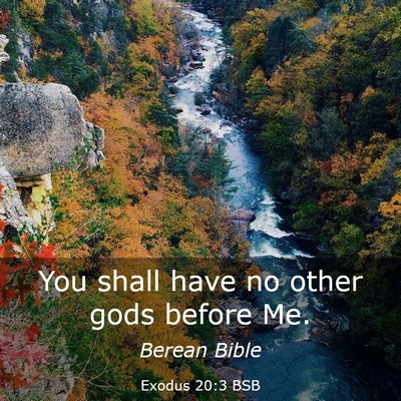
3 “You shall have no other gods before me.
Remember that God is speaking to people who have left the land of Egypt but who are still committed to Egyptian deities and Egyptian customs. God knows that these people have a long way to go before they are going to actually obey Him. The first thing God must do is to lay out the foundations for a belief system anchored on Him rather than a variety of deities representing the sun, animals, reptiles, insects, and birds. When God says “You shall have no other gods before me,” He means for the Israelites to discard every deity they have been worshiping in any form. The Israelites must rid themselves of amulets, charms, jewelry depicting Egyptian gods and goddesses, as well as all the routine practices of the Egyptians.
What kind of a belief system are the Israelites practicing as they leave Egypt? An internet search reveals the following: Ancient Egyptians practiced specific habits to avoid offending their deities. These habits were deeply rooted in their religious beliefs and moral principles, particularly the Laws of Maat, which emphasized truth, balance, and order.
Key Practices:
- Negative Confessions: Individuals recited a list of sins they had not committed, demonstrating their innocence and purity before the gods and judges of the underworld.
- Ritual Purity: Maintaining cleanliness through regular bathing and wearing clean clothes was essential, as physical purity was believed to reflect spiritual purity.
- Offerings and Prayers: Regular offerings of food, drink, and incense were made to deities to gain favor and avoid their wrath.
- Adherence to Maat: Living in accordance with the principles of Maat, which included honesty, justice, and respect for others, was crucial for maintaining harmony with the divine.
These practices were integral to daily life and were believed to ensure a favorable afterlife and protection from divine retribution.
The ancient Egyptians believed in an afterlife and that their actions in this life would determine their fate in the next. Sins were understood as thoughts and actions contrary to the value of ‘ma’at’ or harmony. The worst of these sins was covetousness, as it expressed ingratitude for the gifts one had been given and illicit desire for the gifts of another. Two other major sins were the worship of false gods and sexual immorality.
| Characteristics | Values |
| Sins against gods | Blasphemy, stealing god’s offerings, adding to the weight of the balance |
| Sins against society | Robbery with violence, stealing, purloining offerings, adultery, covetousness, lying, deceit, eavesdropping, slandering, anger without just cause, debauchery, causing pain, causing tears |
| Sins against self | Polluting oneself |
Let’s explore each of the 42 Laws of Maat, which offer a profound insight into the ethical consciousness of the ancient Egyptians: 1. I have not committed sin – A general statement affirming one’s adherence to ethical principles and avoidance of harmful behaviors. 2. I have not committed robbery with violence – Condemns both theft and the use of force, emphasizing peaceful coexistence and respect for others. 3. I have not stolen – This law speaks to the respect for others’ property, a crucial element of social trust. 4. I have not slain men or women – Killing, as a violation of the sanctity of life, was strictly against the principle of Maat. 5. I have not stolen food – Taking food, a basic necessity, was considered an affront to community well-being. 6. I have not swindled offerings – Religious offerings were sacred, and cheating in religious duties was seen as a grave violation of order. 7. I have not stolen from God/Goddess – Taking what was meant for the gods disturbed the sacred balance and was viewed as a serious offense. 8. I have not told lies – Truthfulness was paramount in maintaining social and cosmic harmony. 9. I have not carried away food – This law emphasizes fairness and the importance of not depriving others of their sustenance. 10. I have not cursed – Avoiding foul or harmful language helped to preserve peaceful and respectful interactions. 11. I have not closed my ears to truth – Ignoring or denying the truth disrupts personal integrity and the balance of society. 12. I have not committed adultery – Faithfulness in marriage was valued, as it preserved family stability and social trust. 13. I have not made anyone cry – Causing unnecessary emotional distress to others was seen as a violation of compassion and kindness. 14. I have not felt sorrow without reason – Emotional self-regulation was considered a virtue, with unnecessary sorrow indicating a lack of balance.
15. I have not assaulted anyone – Physical violence was discouraged, as it disrupted social peace and order. 16. I am not deceitful – Deception undermined trust and disrupted the truth, essential elements of Maat. 17. I have not stolen anyone’s land – Land was sacred and essential for survival, so taking it unlawfully was a serious offense. 18. I have not been an eavesdropper – Respecting privacy helped to maintain trust and order in relationships. 19. I have not falsely accused anyone – Truth in justice was crucial to maintaining social harmony, and false accusations were damaging. 20. I have not been angry without reason – Anger, when unjustified, disrupts emotional and social balance. 21. I have not seduced anyone’s wife – This law emphasized the importance of respecting marital bonds and not disrupting familial harmony. 22. I have not polluted myself – Personal purity, both physically and spiritually, was considered necessary for living according to Maat. 23. I have not terrorized anyone – Instilling fear in others was a violation of the principles of peace and security. 24. I have not disobeyed the law – Respect for legal and moral order was essential for a society guided by Maat. 25. I have not been exclusively angry – Holding onto anger, especially without justification, was seen as harmful to oneself and others. 26. I have not cursed God/Goddess – Reverence for the divine was essential, and disrespecting the gods was considered a serious moral violation. 27. I have not behaved with violence – Avoiding violence was key to maintaining peace and respect within the community. 28. I have not caused disruption of peace – Peace and order were central to Maat, and disturbing them was considered a breach of social responsibility.
29. I have not acted hastily or without thought – This law promotes careful consideration and thoughtful actions, preventing impulsive decisions that could cause harm. 30. I have not overstepped my boundaries of concern – Respecting others’ space and roles was important for maintaining balance and harmony. 31. I have not exaggerated my words when speaking – Speaking truthfully and accurately was necessary for maintaining trust. 32. I have not worked evil – Committing harmful actions was a violation of Maat and disrupted personal and societal harmony. 33. I have not used evil thoughts, words, or deeds – Purity in thought and action was essential for a life guided by Maat. 34. I have not polluted the water – Water was a sacred resource, and polluting it would harm both the environment and the community. 35. I have not spoken angrily or arrogantly – Humility and controlled speech were valued, as arrogance and anger could lead to conflict. 36. I have not cursed anyone in thought, word, or deeds – Ill will in any form was discouraged, as it created disharmony. 37. I have not placed myself on a pedestal – Humility was a virtue, and putting oneself above others was discouraged. 38. I have not stolen that which belongs to God/Goddess – Respecting what was sacred to the divine was crucial in maintaining cosmic balance. 39. I have not taken food from a child – Taking from those who are vulnerable, such as children, was a serious violation of ethics. 40. I have not acted with insolence – Insolence or disrespect, especially toward authority or elders, was seen as disruptive to social harmony. 41. I have not destroyed property belonging to God/Goddess – Destroying sacred or divine property was considered a direct attack on cosmic order. 42. I have not offended the gods – Respect for the gods and living in accordance with their will was central to achieving personal and societal harmony.
Maat, Goddess of Truth, Justice, and Cosmic Order
Maat, the embodiment of truth, justice, balance, and cosmic order in ancient Egyptian mythology, played an essential role in maintaining the harmony of the universe. She was not associated with or “belonged” to any one specific god in a possessive sense. Rather, Maat’s principles were upheld and supported by many prominent gods of the Egyptian pantheon. Her presence was a unifying force that connected multiple deities, ensuring that the laws of truth and justice permeated both the divine and human realms.
(For more information, see https://philarchive.org/archive/AYOTLD)
Reading the 42 Confessions of Maat, you might wonder what’s wrong with the Egyptian system? Many of the qualities embodied in these Confessions will be reflected in the Ten Commandments and the other laws that God will later give the Israelites through Moses. In fact, there are many of these qualities that appear excellent and worthy of emulation. But notice the repeated references to gods and goddesses and the lack of recognition of sin or guilt. These confessions are a perfect example of something that looks good but that misses the mark, for worship of the One True Living God is more important than anything else.
Who are these gods and goddesses? When Satan fell from heaven, one third of the angels fell with him. Those angels became demons, and scattered throughout the earth, becoming local deities. God knows who and what and where each of these demons work; that’s why He insists the Israelites have no other gods apart from Him.
Which God are you worshiping? Are you worshiping the One True Living God, or something less? For many people, their favorite singer or athlete or movie actor or actress has become their god, and they will go to great lengths to worship. Years ago, during Elvis Week, one man brought a stained-glass window of Elvis he had created. Not only did this window contain brilliantly colored glass, but it also incorporated precious stones into the design. This man worshiped Elvis Presley, a dead singer, and he spent everything he had to create this monument to him.
God is worthy of all praise and all worship. The Egyptian religion was one of works; follow the Confessions of Maat and you should have no problems in the afterlife. But God has a different view of humans, and He knows that none of us is perfect and that each of us is sinful. Want true peace? Worship the One True Living God!
PRAYER: Father God, thank You for loving us and caring for us. Lord, help us to leave all our idols behind and to worship You alone. In the mighty and precious Name of King Jesus. Amen.


Leave a Reply