Matthew 5: Teaching about Vows
33 “You have also heard that our ancestors were told, ‘You must not break your vows; you must carry out the vows you make to the Lord.’34 But I say, do not make any vows! Do not say, ‘By heaven!’ because heaven is God’s throne. 35 And do not say, ‘By the earth!’ because the earth is his footstool. And do not say, ‘By Jerusalem!’ for Jerusalem is the city of the great King. 36 Do not even say, ‘By my head!’ for you can’t turn one hair white or black. 37 Just say a simple, ‘Yes, I will,’ or ‘No, I won’t.’ Anything beyond this is from the evil one.
“I swear to God!” “God being my judge!” Every language has its own set of vows that have grown up through the years. And there are times when vows are necessary-testifying in court or before a legislative body, for example. But the vast majority of our vows are inconsequential, unnecessary, and dishonoring to God.
Although Moses gave the commandment “You shall not take the Name of the Lord your God in vain,” the Pharisees twisted that statement so that people could swear false oaths by any other name. Here Jesus points out that everything and anything people might refer to in an oath is part of God’s creation; therefore, ultimately these people are swearing by God whether or not they realize it. Yet another problem is that frequently, colorful oaths are used to mask deceptive statements in an attempt to convince the hearers of an untruth. Think of the rhetoric of unscrupulous used car salesmen or those involved in shady land deals.
Are there times when oaths are allowed? Certainly. David Guzik tells us:
i. Some have taken this word of Jesus as more than an emphasis on truth-telling and honesty as an absolute prohibition of all oaths. This is misguided, because oaths are permitted under certain circumstances, as long as they are not abused and used as a cover for deception.
· God Himself swears oaths: Hebrews 6:13 and Luke 1:73.
· Jesus spoke under oath in a court: Matthew 26:63-64.
· Paul made oaths: Romans 1:9, 2 Corinthians 1:23, Galatians 1:20, 1 Thessalonians 2:5.
ii. “The truly good man will never need to take an oath; the truth of his sayings and the reality of his promises need no such guarantee. But the fact that oaths are still sometimes necessary is the proof that men are not good men and that this is not a good world.” (Barclay) (https://enduringword.com/bible-commentary/matthew-5/)
At the end of the day, it is far better to follow Jesus’ advice to “Just say a simple, ‘Yes, I will,’ or ‘No, I won’t.’ Anything beyond this is from the evil one.”
We read that last statement and think that Jesus is simply using a figure of speech. No! There are all kinds of ways in which we can open ourselves to satanic attack, and Jesus never says anything without a purpose. Here Jesus warns us that careless vows can open us to evil. WHY?
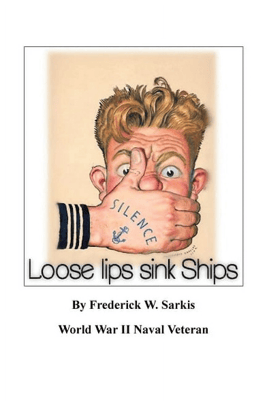
During World War II, there was a saying that “Loose lips sink ships!” This motto was used to warn citizens that gossiping about sensitive topics related to the war effort might inadvertently inform foreign spies who would then use that information to plan attacks. In the same way, when we insist on employing unnecessary oaths in an effort to sway someone’s opinion or to gain an advantage over them, we are exposing our souls to evil. Sometimes we can become so focused on convincing someone that we begin exaggerating benefits while swearing every more fervent oaths. In such circumstances, we can find ourselves promising things we cannot possibly deliver and find ourselves in deep trouble.
So, follow Jesus’ advice and say a simple “Yes, I will” or “No, I won’t.” Don’t allow your loose lips to lead you into trouble!
PRAYER: Father God, thank You for loving us and caring for us. Lord, help us to remember You are watching everything we say. Help us to speak only those things that honor You. In the mighty and precious Name of King Jesus. Amen.


Leave a Reply