Ever feel as if God is calling you to do something for which you are not prepared? You feel totally lacking and really wish God would call someone else, but there’s nobody else showing up. Welcome to the company of inadequates! You see, if you study the Bible, you’ll realize that God consistently calls people who feel inadequate and then equips them and uses them for His work. Actually, if you feel suited for God’s call, you might need to pray harder because your self-confidence might be the greatest hindrance to God being able to use you effectively. (I’m writing this as I am about to take over as the only doctor while my colleague who is 40 years younger prepares to go on a well-deserved leave. “Inadequate” doesn’t even begin to sum up how I feel.)
Today we are about to embark on a study of the two letters Paul wrote to Timothy as Timothy was pastoring the church at Ephesus. If ever there was a man who might doubt his own fitness for ministry, Timothy would qualify.
We first meet Timothy in Acts 16:1-3 “Paul came to Derbe and then to Lystra, where he found a disciple named Timothy, the son of a believing Jewish woman and a Greek father. The brothers in Lystra and Iconium spoke well of him. Paul wanted Timothy to accompany him, so he took him and circumcised him on account of the Jews in that area, for they all knew that his father was a Greek.”
How old was Timothy when he joined Paul? A computer search reveals the following: Timothy was likely between 16 and 22 years old (about 20 years old on average) when he joined the Apostle Paul on his second missionary journey in Lystra around 49–50 AD.
Key Details from Biblical Chronology
• The Meeting: Paul recruited Timothy in Lystra (Acts 16:1–3).
• The “Youth” Context: When Paul later wrote 1 Timothy (around 63–65 AD), he told Timothy to “let no man despise thy youth” (1 Timothy 4:12).
• Ancient Cultural Standards: In the ancient Greco-Roman and Jewish worlds, the Greek term neotēs (youth) could apply to men up to age 30, 35, or even 40.
• Estimated Timeline: Because 1 Timothy was written roughly 13 to 15 years after they first met, Timothy being in his late teens to early twenties (roughly 16 to 21) when they joined forces places him in his early-to-mid thirties when leading the church in Ephesus.
Even though Timothy accompanied Paul and was mentored by him, pastoring the church at Ephesus was no easy task. When Timothy was left in Ephesus by the Apostle Paul (around AD 63), the city was a bustling, wealthy, and culturally diverse metropolis—often described as the New York City or the “Light of Asia” (lumen Asiae) of the ancient Roman world.
Key Characteristics of Ephesus in Timothy’s Time
• Size and Importance: It was the fourth-largest city in the Roman Empire, serving as the capital of the Roman province of Asia with an estimated population of around 250,000 people. Only Rome, Alexandria, and Antioch of Syria ranked higher in importance.
• Trade and Port Hub: Ephesus was a major commercial center situated at the intersection of three primary trade routes, featuring one of the largest and busiest ancient ports in the Mediterranean basin.
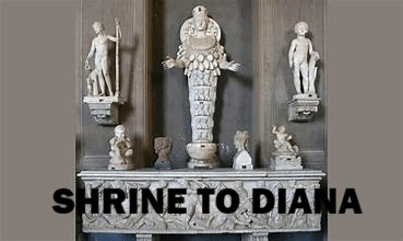
• The Cult of Artemis: The massive Temple of Artemis (Diana)—one of the Seven Wonders of the Ancient World—loomed large over the city’s identity, economy, and social life. Artemis worship and the local silver-and-souvenir trade tied directly into pagan rituals and influenced local culture. Remember that it was Ephesian businessmen who sparked a riot, inciting their fellow citizens to fill the local ampitheater while chanting “Great is Diana, goddess of the Ephesians!” until city officials had to calm the situation by reminding them that they needed to cease or face punishment by the Romans.
• Architecture and Wealth: The affluent city featured grand civic structures, including a massive 50,000-seat outdoor amphitheater, paved streets, and wealthy homes equipped with heated mosaic floors, wall frescoes, and private running water.
• The Early Church and Challenges: Timothy was sent there by Paul (1 Timothy 1:3) to pastor the local Christian community, organize church leadership, and combat rising internal pressures, local myths, genealogies, and false teachings.
Okay, so you are Timothy, a young man who has been mentored by one of the greatest theologians and teachers of all time. Your mother is a Jewish believer, and your late father an unbelieving Greek. To avoid controversy from Jewish believers, Paul has circumcised you. Now Paul is assigning you to the church in Ephesus. What obstacles are you about to face?’
1 Timothy 1:3-4 As I urged you on my departure to Macedonia, you should stay on at Ephesus to instruct certain men not to teach false doctrines or devote themselves to myths and endless genealogies, which promote speculation rather than the stewardship of God’s work, which is by faith (rather than the stewardship of God in faith)
Despite Paul’s best efforts, no sooner does he leave Ephesus than false teachers pop up, more interested in the control they can exhibit over innocent new believers than whether or not they are teaching accurately. Somehow, Timothy must combat these false teachings diplomatically but forcefully so that the fledgling church does not degenerate into simply one more cult.
We know that Timothy eventually succeeds and that the Ephesian church becomes solidly established. Later, in Revelation 2:2-3 God says this to the church at Ephesus: I know your deeds, your labor, and your perseverance. I know that you cannot tolerate those who are evil, and you have tested and exposed as liars those who falsely claim to be apostles. Without growing weary, you have persevered and endured many things for the sake of My name.
As we study Timothy, remember that God is the One who must always work through us. Our job is to remain in close contact with Him and to allow Him to work, not focusing on our shortcomings but trusting that God will do far more than we can possibly imagine if we only let Him.
PRAYER: Father God, thank You for loving us and caring for us. Lord, help us to remember that You are the One who must work. Help us to make ourselves available and to trust in Your mercy, Your grace, and Your power rather than in ourselves. In the mighty and precious Name of King Jesus. Amen.


Leave a Reply