Archive for the ‘Uncategorized’ Category

JULY 8, 2021 MERCY 130: WHAT’S THE BIG DEAL ABOUT LEAVEN???

July 8, 2021

Exodus 34:25 “Do not offer the blood of a sacrifice to Me along with anything leavened, and do not let any of the sacrifice from the Passover Feast remain until morning.”

Reading Exodus for the first time, you might wonder, “What’s the big problem with leaven? Why is God so obsessed with leaven and why does He keep making such a point about avoiding it?” Leaven is also known as yeast, and yeast is used in fermentation, a process invented by the Egyptians. The Israelites left Canaan and moved to Egypt to escape a terrible famine. Joseph was able to secure some of the best land for his family, so the Israelites remained in Egypt for 400 years. But the Israelites had no strong worship practices and only a vague memory of the God of Abraham, Isaac, and Jacob. 400 years is plenty long enough for the Israelites to adapt all kinds of religious practices, many of them horrible.

The Egyptians had a culture that was obsessed with death and the after life. Those who died were mummified in an involved process, and the higher the social status of the deceased, the more involved the process was. God repeatedly uses leaven as a symbol of the Egyptian culture to encourage the Israelites to completely repudiate those religious practices that they have learned in Egypt. God demands purity without compromise.

God has instituted the blood sacrifices made at Passover and at other times. But the Egyptian religions have strongly emphasized making sacrifices of food to gods and even placing food in tombs so that the dead would be nourished in the afterlife. Knowing how strongly the Israelites have been influenced by the culture they have just left, God wants there to be no mingling of religious rituals.

Why blood offerings? Blood is necessary to make atonement for sin. The Egyptians had no such concept. The Egyptians had a strong sense of right and wrong; however, they seemed to feel that if they could convince the gods of their innocence, everything would be fine. Siegfried H. Horn, Ph.D., is dean and professor of archeology and history of antiquity, emeritus, Andrews University Theological Seminary, Berrien Springs, Michigan. According to Dr. Horn, “the Egyptians were so sure that they could convince the gods of their innocence that they had a whole list of statements written in the ancient Egyptian Book of the Dead, a document that describes the experiences that the deceased would have upon reaching the underworld. It also contains the formulas to use in facing one’s judges upon entering the underworld. The following are examples:

“I have not blasphemed a god.

“I have not done violence to a poor man.

“I have not done that which the gods abominate.

“I have not killed.

“I have neither increased nor diminished the grain-measure.

“I have not added to the weight of the balance.

“I have not committed evil.

“I have not stolen.

“I have not been covetous.

“I have not told lies.

“I have not committed adultery.” (Dr. Siegfried H. Horn, “Sin and Judgement among the ancient Babylonians and Egyptians, Ministry Magazine)

Notice that the Egyptians evidently felt that the gods could be fooled as long as the deceased could tell a convincing enough story! But there was a problem with the Egyptian belief system: sin. The Egyptians were depending on their own efforts to be good enough to cancel their own sin, a total impossibility!

APPLICATION: In the Old West there was a saying that a self – made man had “pulled himself up by his own bootstraps;” in other words, that he had succeeded without any outside assistance. But when it comes to our dealing with our own sin, we are all in trouble! Nothing any of us can do is good enough to make up for even one tiny sin such as telling a white lie, let alone all the other wrong things we do throughout our lives.

The reason God instituted regular blood sacrifices was to emphasize that only the shedding of blood can bring forgiveness for sin. But how can the blood of a lesser creature such as a lamb or a bull pay for the sins of even one human? Only the blood of a perfect sinless man who willingly gives up his life will pay the price for human sin. And that is what Jesus Christ, the Son of God, did when he died for the sins of all of us on the cross at Calvary. 1 John 1:8 – 9 tells us, “If we say we have no sin, we deceive ourselves and the truth is not in us. If we confess our sins, He (God) is faithful and just to forgive us our sins and to cleanse us from all unrighteousness.”

The One True Living God is all – knowing and all – seeing. You can’t fool God; He knows you better than you know yourself. Why not let God be the Ruler and Guide for your life? What do you have to lose?

PRAYER: Father God, help everyone who reads this devotional to seriously consider Your claims on their lives. Help them to realize how much You love them and how much You care about them. And help them to realize how much better their lives are when they follow You, their Creator. In the matchless Name of King Jesus. Amen.

JULY 7, 2021 MERCY 129: GOD’S GOT YOUR BACK!

July 7, 2021

JULY 7, 2021 MERCY 129: GOD’S GOT YOUR BACK!

Exodus 34: 22 – 24 “And you are to celebrate the Feast of Weeks with the firstfruits of the wheat harvest, and the Feast of Ingathering at the turn of the year. Three times a year all your males are to appear before the Lord GOD, the God of Israel. For I will drive out the nations before you and enlarge your borders, and no one will covet your land when you go up three times a year to appear before the LORD your God.”

There are NO flat places in Israel. Visit Israel, and you rapidly see why the Bible speaks of Jesus going “up to Nazareth” or “down” to Bethsaida. The elevation of Nazareth is 349.05 meters or 1145.18 feet and the elevation of Bethlehem of Galilee is 171.93 meters or 564.08 feet, which is a difference of 177.12 meters or 581.1 feet.

At 695.8 feet below sea level, the Sea of Galilee is in that valley that actually extends all the way down and into Africa as the Rift Valley. The difference between Nazareth and the Sea of Galilee is 1841 feet! Now imagine that you are living somewhere in rural Israel and that you are an observant male Jew who must visit Jerusalem three times a year for the major feasts. True, you are going to enjoy a wonderful celebration, but getting there is not going to be easy or simple.

God is ordering all Jewish men to appear before the Lord God in Jerusalem for Passover, for the Feast of Weeks, (Pentecost) and for the Feast of Ingathering (Sukkot.) Each of these feasts is actually tied to the agricultural calendar year. Passover takes place in the month of Abib, the month of Spring when lambs are readily available. Pentecost, the Feast of Weeks, marks the wheat harvest. Sukkot takes place in the Fall and is a celebration at the time of the major harvest. Sukkot is also known as the “feast of booths,” a time when Jews are commanded to eat and live in temporary shelters to remind them of the shelters the Israelites lived in during the 40 years in the wilderness. Even today, Jewish congregations will make some effort to erect some kind of a shelter to remind themselves of God’s great working in the lives of the Israelites.

Actually, many families eventually travel to Jerusalem together; in fact, when Jesus is twelve, his family and he go to Jerusalem for Passover. While Mary and Joseph leave for Nazareth, Jesus remains in the Temple, discussing religious questions with the teachers. (Luke 2: 41-50)

But what’s going to happen if all these men leave their families to travel to Jerusalem? That’s when the next set of promises becomes significant. “For I will drive out the nations before you and enlarge your borders, and no one will covet your land when you go up three times a year to appear before the LORD your God.” God Himself promises to watch the homes and the land of the men who travel to keep His feasts. What a guarantee!

APPLICATION: In the early 1960’s nobody in my home area used to lock the doors of their houses for any reason. I don’t even remember having keys to the doors for the old house in which I grew up. In August 1961, my family took their first vacation trip ever out to the West. We were gone two weeks and we visited the Badlands of South Dakota, rancher friends in Montana, and Glacier National Park, as well as a host of other tourist sites in between. We returned home to find a strange family having a picnic on our lawn and using our toilet facilities. Nothing was missing from the house and these people were perfectly nice. Our unexpected visitors were traveling and needed a place to make a pit stop. Our yard with its huge maple trees and flowers looked like a perfect spot, and it was. My parents chatted with the visitors, they finished their meal, and they continued their trip refreshed.

God protected our home all the time we were out on that trip. Sadly, today nobody would dream of leaving their home unlocked as we did. As the years went by, my mom died, my dad remarried and moved to the house that had been my grandparents’ home. In that new location on a major road, Dad and my beloved step mom Mary did lock their home. But even then, God continued to protect my parents and keep them safe.

Let’s face it; there is no amount of insurance that can totally protect you. Security systems are good, and there are apps that allow you to view the hidden cameras from your smart phone. But security systems can be hacked or worked around. Cameras can be disabled or destroyed. Psalm 127:1-2 says, “Unless the LORD builds the house, its builders labor in vain; unless the LORD protects the city, its watchmen stand guard in vain. In vain you rise early and stay up late, toiling for bread to eat— for He gives sleep to His beloved.”

At a point, you have two choices: live in a state of perpetual anxiety or trust God. Certainly, insurance is a good idea as are security lights, security systems, and other measures. But at the end of everything, remember that ultimately, your security must rest in the One who created you and who knows you best.

PRAYER: Father God, we live in a world filled with anxiety! Even when we want to worship you, we fear for our lives, our families, and our possessions. Thank You, that You are faithful, that You are true, and that You care more for us and for our families than we do ourselves. Help us to find our rest in You. In the mighty Name of King Jesus. Amen.
JULY 6, 2021 MERCY 128: THAT SABBATH THING??? GOD REALLY MEANS IT!

July 6, 2021

Exodus 34:21 “Six days you shall labor, but on the seventh day you shall rest; even in the seasons of plowing and harvesting, you must rest.”

When I was growing up on an Illinois farm, there was plenty of work. We milked cows by hand twice a day, seven days a week. We fed feeder cattle, pigs, chickens, and sheep regularly. We had to make sure that all of these animals had the feed they needed, clean water, and a safe place to rest at night. We had to make sure that our fences were “horse high, hog tight, and bull strong.” Even though we didn’t keep a bull, our cows knew PLENTY of ways to test the strength of our fences, as did our pigs. Our days were ordered by the chores that we did twice a day. But our weeks were ordered by the Sabbath. Impatient as Dad might be to get into the field before the weather got bad, Sundays were always a day of worship and a day of rest, even during plowing and harvesting. My dad did not completely retire from farm work until he was in his middle eighties; many of his friends had retired earlier or had even died.

What makes the Sabbath so important? Dennis Prager tells us, “Living according to God’s will generally, and the Ten Commandments specifically, demands making sacrifices. Everything good – every achievement – demands sacrifices. In the case of the Shabbat, that sacrifice is abstaining from work one day each week when doing so may diminish one’s income or even employability.” Before the days of labor laws, some Jews lost jobs when they refused to work on Saturdays.

“However, as those who observe the Sabbath are well aware, the rewards usually far exceed the sacrifices. No practice in the Torah brings as much joy and elevates a life as does observance of the Shabbat. Leaving the world and its material concerns one day every week is literally and figuratively life – saving. Having prolonged meals with family and /or friends every week is uniquely bonding. And the Shabbat creates a communal life. No wonder it is the one ritual commanded in the Ten Commandments.” (Dennis Prager The Rational Bible: Exodus)

APPLICATION: Everybody needs regular periods of rest. Our bodies were not created to run at top speed constantly. Those of us who have been forced to work while sleep – deprived can attest to the fact that exhaustion can cloud our judgment. On a recent episode of “Air Crash Investigation,” one female pilot helped cause a plane to crash and burn when she remained awake for 9 hours of a 14 hour layover, getting only 5 hours or less of sleep before flying again. The cockpit voice recorder faithfully chronicled her complaints of fatigue to her fellow pilot as they began their fatal flight. This woman’s refusal to rest adequately cost her life, the life of her co – worker, and an expensive cargo plane with all of its contents.

WHAT WILL IT TAKE FOR YOU TO REALLY REST? I can tell you what it takes for me; I get sick. I have two choices: either I rest regularly or my body simply goes on a sit down strike and quits. Yes, there have been times in my life when I have worked insane hours and have survived; however, I feel that God probably gave me supernatural strength to endure those times. But God is not going to bless you with supernatural strength if He wants you to be still and to wait on Him. God loves you too much to leave you in the middle of your messes. If you persist in driving yourself, you may find yourself in burn-out, a place where you definitely do NOT want to be. People who burn out in a given situation generally require 5 or more years to return to that situation. Sometimes the burnout is so severe that they can never return but must find some other work instead.

If you want to see the Sabbath truly celebrated, spend a weekend with Orthodox Jewish believers. From the first prayers offered by family members on Friday evening to the last prayers on Sunday evening, you can feel the holiness and the peace. Now ask yourself how much your own peace is worth. Yes, the Sabbath requires sacrifices, but sacrifice brings restoration and peace.

PRAYER: Father God, help us to honor you by observing the Sabbath and by fully resting. Thank you for giving us the opportunity to be restored regularly. In the matchless Name of King Jesus. Amen.

JULY 5, 2021 MERCY 127: WHY CELEBRATE?

July 5, 2021

Exodus 34:18 – 20 “You are to keep the Feast of Unleavened Bread. For seven days at the appointed time in the month of Abib, you are to eat unleavened bread as I commanded you. For in the month of Abib you came out of Egypt. The first offspring of every womb belongs to Me, including all the firstborn males among your livestock, whether cattle or sheep. You must redeem the firstborn of a donkey with a lamb; but if you do not redeem it, break its neck. You must redeem all the firstborn of your sons. No one shall appear before Me empty-handed.”

You are reading this on the Monday of 4th of July weekend 2021, one of the biggest celebrations of the year in America. But did you realize that God is the One who instituted celebrations for the Jews? In this passage, God is laying out for Moses the order of special times of worship marked by feasts and celebrations. The Feast of Unleavened Bread marks the night the Israelites left Egypt in the middle of the night, carrying everything they owned with them while their Egyptian neighbors urged them to move even faster! It was on that night that God killed every first born male animals and humans in Egypt. It was on that night that the Israelites saved their first born sons and male animals by smearing the blood of a sacrificial lamb on the doorposts of their houses. Because of the haste with which the Israelites had to leave, they didn’t have time for the bread to rise. The bread baked that night was probably similar to the pita bread we know today.

God is commanding the Israelites to perpetually remember their flight from Egypt by redeeming every firstborn males, both livestock and human, with a blood sacrifice. But at the same time, this celebration includes seven days of special meals. The seven days is to remind Israel that God created the earth in seven days and that He is the sovereign and only true God. Later in Jewish history, an extra day was added to assist in calculating dates for the festival; unfortunately, this change blunted the importance of the number of seven days with its reminder of creation and the Creator.

What’s the point of rituals and celebrations? Dennis Prager tells us, “These rituals are intended as a way for the Israelites to keep faith in God alive once the land has been conquered and God is no longer intervening with miracles on their behalf. This is one of the major reasons for rituals – to keep faith alive once regular and apparent divine intervention ends.

The following list of ritual commandments comes right after the prohibition against making molten gods. This suggests another important reason for religious rituals. One way people guard against the temptation to create idols and other false gods is by observing regular rituals that keep them focused on the One True God. One of the appeals of idols is they exist physically, whereas God does not. The practice of physical rituals helps keep people attuned to the reality of Gods’ presence, otherwise, God can become too abstract and difficult to connect to. Humans, being physical beings, need some physical connection to God.

Prager continues, “This helps explain why Christianity has many fewer ritual laws than Judaism. For Christians, God has taken on a physical form that provides them with a physical connection to God. But for Jews, since God is always non-physical, the way to have a physical connection to God is through ritual.”

APPLICATION: There is nothing wrong with rituals and special forms of worship, as long as we do not lose sight of the God whom we are supposed to be worshiping and serving. We brush our teeth at least twice a day to preserve them. Those of us who must take medicine for hypertension or diabetes or some other physical disorder do so on a regular basis to remain healthy and to avoid the complications of a stroke, loss of eyesight, etc. We maintain our vehicles on a regular basis so that they will run properly. All of these practices can be considered as rituals with a purpose. Here God is instituting rituals that also will have a purpose. Throughout Jewish history, when revival has come, one of the first acts of the Jews has been to celebrate Passover.

The 6th chapter of Ezra describes the celebration of Passover by the exiles who have returned from Persia at the command of King Cyrus. After great opposition, King Darius of Assyria gets his administrators to check the records and learns of the decree made by Cyrus. Darius orders enough assistance to the Jews in Jerusalem that they are able to rebuild the temple and to dedicate it. In the month of Abib, the “first month,” which is also in Springtime, the Jews in Jerusalem celebrate Passover. Ezra 6:22 tells us, “For seven days they observed the Feast of Unleavened Bread with joy, because the LORD had made them joyful and turned the heart of the king of Assyria toward them to strengthen their hands in the work on the house of the God of Israel.”

This weekend as you celebrate, don’t forget to remember: Remember the God who holds your life in His hands. Remember the God who loves you and who cares more for you than you even care for yourself. And remember to thank and praise God for allowing you to celebrate.

PRAYER: Father God, thank you! Thank you! Thank you! You are worthy to be praised and glorified! We magnify your Name and shout out our praises to you! You have given us life and light and breath. You have brought us to this day and have preserved our families and friends so that we can celebrate with them. Father, help us to be continually grateful for Your mighty works in our lives. We pray this in the precious Name of King Jesus. Amen.

JULY 4, 2021 MERCY 126: AWESOME MIRACLES FROM AN AWESOME GOD!

July 4, 2021

Exodus 34:10 – 17 “And the LORD said, “Behold, I am making a covenant. Before all your people I will perform wonders that have never been done in any nation in all the world. All the people among whom you live will see the LORD’s work, for it is an awesome thing that I am doing with you. Observe what I command you this day. I will drive out before you the Amorites, Canaanites, Hittites, Perizzites, Hivites, and Jebusites. Be careful not to make a treaty with the inhabitants of the land you are entering, lest they become a snare in your midst. Rather, you must tear down their altars, smash their sacred stones, and chop down their Asherah poles. For you must not worship any other god, for the LORD, whose name is Jealous, is a jealous God.

Do not make a covenant with the inhabitants of the land, for when they prostitute themselves to their gods and sacrifice to them, they will invite you, and you will eat their sacrifices; and when you take some of their daughters as brides for your sons, their daughters will prostitute themselves to their gods and cause your sons to do the same. You shall make no molten gods for yourselves.”

Make no mistake! God has NO illusions about the Israelites! True, God has given Moses plans for a portable Tabernacle and for a completely new mode of worship. But God also knows the human heart, and God knows that if the Israelites ever encounter full – bore fertility cults, they will jump into all kinds of perverted practices without a second thought!

In ancient Egypt, it was the goddess Hathor who was identified with the sky, women, fertility, and love. The Greeks considered Hathor to be another form of their goddess of love, Aphrodite. Hathor’s principal animal form was that of a cow and she was strongly associated with motherhood. (Encyclopedia Britannica) It’s possible that many of the Israelite women might have carried small images of Hathor or even necklaces with her image as they left Egypt. And some of the Egyptian women might have given the Israelites such necklaces as they were giving up all their jewelry to get rid of the Israelites. (Possible response of an Israelite lady to a Hathor necklace from her Egyptian neighbor, “Oh great! I’ve always wanted one of those!”)

Now God is sending the Israelites to a land inhabited by many tribes worshiping different fertility gods. God is warning the Israelites to have nothing to do with any of these practices and to destroy every evidence of them. In fact, the Israelites ultimately do not obey God completely; these religions remain a snare for straying Israelites until they are finally carried away by the Babylonians and the Assyrians. It is only after the Israelites are carried off to other countries that they FINALLY reject these idols!

APPLICATION: The word “awesome” gets thrown around so much today that it has lost most of its intrinsic value. Someone finds a great bargain while shopping? “Awesome!” Someone wins a ball game? “Awesome!” But in the beginning, “awesome” meant something totally different. The original connotation of “awesome” indicated an event so enormous, so unusual, so magnificent, and so out of the ordinary that all anyone could do was to remain silent in wonder. In the Book of Job, at the end of God’s answers to Job’s accusations, Job says to God, “You asked, ‘Who is this who conceals My counsel without knowledge?’ Surely I spoke of things I did not understand, things too wonderful for me to know. You said, ‘Listen now, and I will speak. I will question you, and you shall answer.’ My ears had heard of You, but now my eyes have seen You. Therefore I retract my words, and I repent in dust and ashes.”(Job 42:3-6)

 God is promising to do an awesome thing. But the price of deliverance is obedience. Sadly, it’s a price that the Israelites will ultimately be unwilling to pay. The question for us is this: when God shows you something, do you obey or do you argue? Do you find fault or do you worship?

The second thing to note is God’s warnings of what will happen if the Israelites compromise with the fetish worshipers. “Do not make a covenant with the inhabitants of the land, for when they prostitute themselves to their gods and sacrifice to them, they will invite you, and you will eat their sacrifices; and when you take some of their daughters as brides for your sons, their daughters will prostitute themselves to their gods and cause your sons to do the same.” Sex is NOT merely a physical act but also a spiritual one. Demons transfer during sex. There is an old saying, “You lie down with dogs; you get up with flees.” This proverb could be paraphrased to read, “You have sex with demon worshipers; you get up with demons.”

Twenty – six years ago, we knew a young man who was a bright Christian believer and active in his church. But over the years, this fellow became sexually involved with a series of ladies from fetish – worshiping families. Now this man has a vagabond spirit and cannot focus on any task for very long. The talents that might have made him a success have been largely wasted and he does a poor job of supporting his children. Without deliverance, this man is still being influenced by demons.

Truly, God knew what He was doing when He warned the Israelites against all these practices! But what if you find yourself in a situation where you have been sexually indiscriminate? The way out is repentance, repudiating your earlier acts, refusing to repeat this behavior, and confessing your sins to God. Let’s pray!

PRAYER: Father God, we confess that we have NOT kept your word and that we have engaged in sex with people from whom we may have acquired evil spirits. Lord, we confess these acts as sin! We beg you to cleanse us, to help us turn away from sexual sins, and to follow you whole – heartedly all of our lives. In the matchless Name of King Jesus. Amen.

JULY 3, 2021 MERCY 125: WHEN YOU’RE IN THE BOTTOM OF A SPIRITUAL HOLE,STOP DIGGING!

July 3, 2021
Carolyn Mackler Quote: “Remember what to do when you're at the bottom of a  hole?

Exodus 34:8 – 10 “Moses immediately bowed down to the ground and worshiped. “O Lord,” he said, “if I have indeed found favor in Your sight, my Lord, please go with us. Although this is a stiff-necked people, forgive our iniquity and sin, and take us as Your inheritance.” And the LORD said, “Behold, I am making a covenant. Before all your people I will perform wonders that have never been done in any nation in all the world. All the people among whom you live will see the LORD’s work, for it is an awesome thing that I am doing with you.

Poor Moses! While Moses was up on Mount Sinai the first time, the Israelites made an idol and then held an orgy. The Israelites had dug themselves into a nearly bottomless spiritual hole! Carrying the stone tablets that God had fashioned and on which God had written the Ten Commandments, Moses returned to the camp to find the orgy in full swing with demons laughing at him from every tent. In a fit of righteous indignation, Moses threw the tablets to the ground and ordered the ring leaders of the orgy slaughtered as the only means of gaining control of the situation. Bottom line: Moses did nothing wrong. The Israelites had put themselves in danger of hell fire.

Now God has ordered Moses to return to Mount Sinai and is meeting with Moses. God has just informed Moses of His (God’s) true character. At one point, God has even offered to wipe out the Israelites and to use Moses to create a new nation. But Moses is realistic enough and humble enough to realize that his progeny potentially have just as much chance of going astray as have the Israelites. Now it’s damage control time as Moses begs God on behalf of the Israelites.

1. God has already indicated that He will no longer accompany the Israelites. Moses is begging God to go with them, even though they don’t deserve it in the slightest.

2. Moses begs God to forgive the sins of the Israelites and to take them as His inheritance, despite their idolatrous heart attitudes. Moses hopes that God will be tolerant of the hardheartedness of the Israelites, even though He (God) doesn’t agree with it. Moses also hopes that if God walks among the Israelites, they will have a change of heart due to the presence of God.

God’s presence DOES change things! There are stories told of men and women of God who only had to enter someplace where people were gathered for those seated there to come under the convicting power of the Holy Spirit. Why hasn’t the Holy Spirit anointing that is already upon Moses been enough for this conviction to occur? The answer lies in the stubbornness of the Israelites. Any bunch of people who can ignore a pillar of cloud by day and a pillar of fire by night to go off on an orgy certainly qualify as unusually stubborn. And what about all the fire and smoke encircling Mount Sinai while the earth shakes? These people have a really serious problem! Moses is hoping that if God continues to be present with the Israelites, they will not be able to continue to ignore Him.

v. 10 “ And the LORD said, “Behold, I am making a covenant. Before all your people I will perform wonders that have never been done in any nation in all the world. All the people among whom you live will see the LORD’s work, for it is an awesome thing that I am doing with you.

God is amazing! Both God and Moses know the nature of the Israelites and how likely it is that they will stage another orgy, given the opportunity. And yet God is willing to make a covenant with them and to do wonders. Dennis Prager points out here that “the Hebrew word used here, imach (“for you”), is in the singular, which suggests God will perform wonders for Moses’s sake rather than for the sake of the nation. Though still angry at the people, God is willing to establish a covenant with them because of the merit of their leader, who has interceded on their behalf.”

APPLICATION: THE FIRST RULE OF HOLES IS THAT WHEN YOU FIND YOURSELF IN ONE, STOP DIGGING! Moses must have had excellent cardiovascular conditioning because if he hadn’t, he would have just had a heart attack and dropped dead as soon as he saw the evil that the Israelites had done. By the time Moses returned from Mount Sinai the first time, the Israelites were within a hairs’ breadth of being annihilated. Only Moses’s intercessions and quick actions preserved the majority of the Israelites.

Notice what Moses did NOT do:

1. Moses did not make any excuses for the Israelites. Sin is sin.

2. Moses acknowledged the terrible heart attitude of the Israelites.

3. Moses begged God to remain with the Israelites on the basis of God’s character, so that God would not bring dishonor to His own Name. By this point, word had gotten out to all the nations and tribes around Egypt as to what God had done when he delivered the Israelites. This deliverance signaled the first major act of the One True Living God on behalf of an entire people and was a visible demonstration of God’s character.

What did God do? God responded positively to Moses’s intercessions. God promised to do wonders, the likes of which nobody had ever seen before.

Jeremiah 17:9 tells us that “The heart is deceitful above all things and beyond cure—who can understand it?” Really, folks, most of the time we don’t even know the state of our own hearts. We carry around an idealized image of what we are like, but that might bear little resemblance to reality.

Want to hear from God? Get someplace quiet and then ask God to show you the state of your own heart and soul. Be prepared to record the results but also be prepared to be shocked. And if/when you find yourself in the bottom of a spiritual hole, do what Moses did. Refuse to make excuses for yourself. Acknowledge that you have a terrible heart attitude that needs to be changed. Give God permission to change you. And then ask God to remain with you.

PRAYER: Father God, we confess that all of us are sinners and that each one of us has done things that grieve or displease you. Show us our sins so that we will stop repeating them. Help us to change into the people you want us to be. And please, please, please, remain with us and guide us. In the mighty Name of King Jesus. Amen.
JULY 2, 2021 MERCY 124: DOES GOD HOLD GRUDGES?

July 2, 2021

Exodus 34:1 – 9 “Then the LORD said to Moses, “Chisel out two stone tablets like the originals, and I will write on them the words that were on the first tablets, which you broke. Be ready in the morning, and come up on Mount Sinai to present yourself before Me on the mountaintop. No one may go up with you; in fact, no one may be seen anywhere on the mountain—not even the flocks or herds may graze in front of the mountain.”

So Moses chiseled out two stone tablets like the originals. He rose early in the morning, and taking the two stone tablets in his hands, he went up Mount Sinai as the LORD had commanded him.

And the LORD descended in a cloud, stood with him there, and proclaimed His name, the LORD. Then the LORD passed in front of Moses and called out:

“The LORD, the LORD God, is compassionate and gracious, slow to anger, abounding in loving devotion and faithfulness, maintaining loving devotion to a thousand generations, forgiving iniquity, transgression, and sin. Yet He will by no means excuse the guilty; He will visit the iniquity of the fathers on their children and grandchildren to the third and fourth generations.”

How many mothers over the years have told their kids, “You break something, you replace it!” Here God is doing the same thing. God orders Moses to chisel out two stone tablets like the originals “which you broke” and return to Mount Sinai. Is God angry with Moses? Perhaps, but I prefer to think that God was smiling at Moses as He gave these instructions. After all, Moses only threw the original stone tablets on the ground because he was so shocked/angry/disappointed/frustrated with the Israelites. God wants Moses to have to work a little, but He is still inviting Moses to come up onto Mount Sinai where He will show Moses His glory and will re – write His commandments on the stone tablets. This time, Moses is to come alone without even Joshua to accompany him. And God demands that nothing and nobody come anywhere near the mountain! God is taking no chances that some curious shepherd is going to herd his sheep to the foot of the mountain and then swat them on the rumps with his staff to encourage them to climb up the mountain, giving the shepherd the excuse to watch when God shows up.

v. 6 -7 “And the LORD descended in a cloud, stood with him there, and proclaimed His name, the LORD. Then the LORD passed in front of Moses and called out:

“The LORD, the LORD God, is compassionate and gracious, slow to anger, abounding in loving devotion and faithfulness, maintaining loving devotion to a thousand generations, forgiving iniquity, transgression, and sin. Yet He will by no means excuse the guilty; He will visit the iniquity of the fathers on their children and grandchildren to the third and fourth generations.”

APPLICATION:

Here God lists nine distinct characteristics:

1. Compassionate – the word in Hebrew for compassionate comes from the word for “womb,” indicating that God has the feelings of a mother for her children.

2. Gracious

3. Slow to anger – Thank heavens, literally, that God is slow to anger! Otherwise, we would all have been reduced to cinders a long time ago.

4. Abounding in loving devotion and faithfulness – again, the Hebrew indicates a form of extraordinary kindness

5. Abounding in faithfulness – The Hebrew word here literally means “truth.” Prager observes, “God is true to His word, promises, bows, and standards. One of God’s attributes is truth because goodness cannot exist without truth. Indeed, most great evils are based on lies.

6. Maintaining loving devotion to a thousand generations – WOW! God wants His people to understand how much He cares for them and how eternal His loving devotion is.

7. Forgiving iniquity, transgression, and sin

8. Not excusing the guilty – God is still a just God, and there is ultimate justice.

9. He will visit (remember) the iniquity of the fathers on their children and grandchildren to the third and fourth generations. Does God hold grudges? No. Contrast this with God’s assertion that He maintains loving devotion for a thousand generations. God is not keeping score of all the wrongs that people do, but consider how many children follow their parents’ examples, whether good or bad. This verse is not so much a threat as a warning to parents: be careful about the example you leave for your children. You may be blighting your family for several generations.

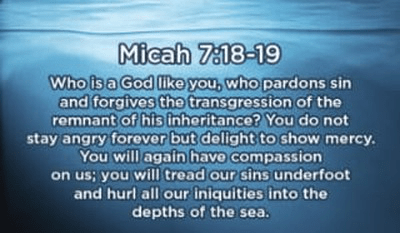
When God actually shows His glory to Moses, God hides Moses in a small cave and then shows Moses as much of His glory as Moses can handle. In the picture at the beginning of this devotional, Moses is looking down, not because he is about to smash the tablets, but because God is inscribing His commands on them again, and Moses is turning his face away because of the incredible glory of God shining around him.

Does God hold grudges? So many times when things don’t go the way we wish they would, we throw around all kinds of accusations. But in fact, God does not hold grudges; instead, God gives us all kinds of new opportunities to do well. We are the ones who mess up our lives, not God. Sometimes people will complain that God should have stopped them from making bad choices; however, this is a foolish statement that ignores the fact that we are created with free will and can choose to do good or bad things.

The next time you are frustrated with God, try looking at God’s description of Himself and then examine your own life. All your life, God has been working, even though you might not have realized it.

PRAYER: Father God, thank you for your wonderful attributes! Help us to trust you and to believe you when you tell us of your love and faithfulness and your grace and forgiveness. In the mighty Name of King Jesus. Amen.

JULY 1, 2021 MERCY 123:WHAT’S THE DIFFERENCE BETWEEN GOODNESS AND LOVE?

July 1, 2021

Exodus 33: 17 – 23 “And the LORD said to Moses, “I will do this very thing you have asked, for you have found favor in My sight, and I know you by name.” Then Moses said, “Please show me Your glory.”

“I will cause all My goodness to pass before you,” the LORD replied, “and I will proclaim My name—the LORD—in your presence. I will have mercy on whom I have mercy, and I will have compassion on whom I have compassion.” And He added, “You cannot see My face, for no one can see Me and live.” The LORD continued, “There is a place near Me where you are to stand upon a rock, and when My glory passes by, I will put you in a cleft of the rock and cover you with My hand until I have passed by. Then I will take My hand away, and you will see My back; but My face must not be seen.”

What’s the difference between goodness and love? When Moses begs God to show him His (God’s) glory, why does God promise to make all of His goodness pass before Moses? Dennis Prager discusses the difference in an essay entitled “Is God Good or Is God Love?” Prager makes the following points:

1. Goodness and love are actually very different from one another. “Many people who have been filled with love – for country, for humanity, for the planet, for their religion, for their god – have not been good people. This is also true regarding love for people. It is possible to feel love for another person and treat him or her badly… Many abusive parents love their children (or at least think they do).”

2. As beautiful as love can be, it is, in fact, amoral. Love is moral depending on what or whom one loves, and how one expresses it.

3. Good people, by definition, do good – whether or not they happen to have loving feelings. (Love) is usually understood to mean a feeling. Goodness, on the other hand, always implies action. And the Torah is first and foremost concerned with how humans act, not how we feel. Whether or not we love others, what matters most is whether we do good for them.” Remember the proverb that says, “The road to hell is paved with good intentions.”

4. ..the belief that God is good is a statement of faith.” Think of all the suffering in the world. Many people look at the evil in the world and refuse to believe that a good God would allow such horrible things to take place.

Prager gives three reasons to believe God is good:

1. The only alternative is to believe God is indifferent to suffering or evil. But the amount of good on earth, the fact humanity only thrives when good thrives, the fact the great majority of people are happiest when they are good, all argue for a good God.

2. The supreme revelation – the Ten Commandments – God introduced to the world in the Torah is very strong evidence God is good. Only a good God would give humanity laws of goodness.

3. Finally, a good God means a judging God, a God who ultimately dispenses justice – meaning reward for the good and punishment for the evil.” (Dennis Prager – The Rational Bible: Exodus)

v. 20 – 23 “And He added, “You cannot see My face, for no one can see Me and live.” The LORD continued, “There is a place near Me where you are to stand upon a rock, and when My glory passes by, I will put you in a cleft of the rock and cover you with My hand until I have passed by. Then I will take My hand away, and you will see My back; but My face must not be seen.” Here God is being incredibly kind to Moses. God is granting Moses to witness as much of God as Moses can handle. Were Moses to see God in all His glory, Moses would probably turn into a cinder or would be vaporized!

APPLICATION: Many of us have had times when we have screamed insults at God or have accused God of not caring or not even being present. Why? We want God to be good, but we want God to fulfill our expectations of goodness. But our knowledge can be extremely limited.

Recently, we got a pre – paid electricity meter for our home in the village where we live and work. The electric service in our house immediately became highly erratic! We had never had such problems before, and we were truly frustrated. As it turns out, the wiring in our home is aging and has a number of faults, some of which might lead to a major electrical fire. Our expectations in this situation have had to undergo a major shift as new information has surfaced. And we have come to realize that God in His goodness has allowed these fluctuations so that a potentially deadly situation would be exposed and dealt with.

Many of us are fond of saying that “God is love;” however, our expectations may be faulty. Our idea of “love” might be for God to grant us all our desires, even the ones that are actually not profitable or healthy for us. God in His goodness refuses to grant those desires because He knows that fulfilling them might lead to disaster. Are you disappointed with God? Check your expectations!

PRAYER: Father God, thank You for Your Goodness and Mercy! You do love us, but in Your goodness you refuse to give us things that would only work for our destruction. Help us to trust you and to seek to know you as Moses did. In the mighty Name of King Jesus. Amen.

JUNE 30, 2021 MERCY 122: CAN YOU CHANGE GOD’S MIND?

June 30, 2021

Exodus 33: 12 – 17 “Moses said to the LORD, “Look, You have been telling me, ‘Lead this people up,’ but You have not let me know whom You will send with me. Yet You have said, ‘I know you by name, and you have found favor in My sight.’ Now if indeed I have found favor in Your sight, please let me know Your ways, that I may know You and find favor in Your sight. Remember that this nation is Your people.”

And the LORD answered, “My Presence will go with you, and I will give you rest.”

“If Your Presence does not go with us,” Moses replied, “do not lead us up from here. For how then can it be known that Your people and I have found favor in Your sight, unless You go with us? How else will we be distinguished from all the other people on the face of the earth?” And the LORD said to Moses, “I will do this very thing you have asked, for you have found favor in My sight, and I know you by name.”

Moses is really worried! God has already informed him that God is going to send an angel to guide Moses and the Israelites but that God Himself is not going to accompany them. This is why Moses is telling God, “You have not let me know whom You will send with me.”

God has threatened to withdraw His Presence and God also has stopped referring to the Israelites as His people and has begun referring to them as Moses’ people instead. But Moses is humble enough and smart enough to realize that he personally cannot handle the situation by himself. Only God can handle the Israelites!

What follows in this dialogue is a fascinating record of the negotiations between God and Moses. Moses reminds God that the Israelites ARE God’s people. Moses begs God to help him to know God’s ways and to find favor with God. God promises to send His Presence with Moses and the Israelites and to give Moses rest.

Moses replies that if God does not go with them and guide them, they cannot move anywhere. While this statement sounds a bit like a threat, it is not; Moses is speaking the literal truth. God has been guiding the Israelites through the wilderness, going before them as a pillar of cloud during the day and a pillar of fire at night. If God doesn’t continue to guide them, Moses has no idea where they are to go.

APPLICATION:For how then can it be known that Your people and I have found favor in Your sight, unless You go with us? How else will we be distinguished from all the other people on the face of the earth?” Dennis Prager makes the point that throughout Jewish history, it is the presence of God that has distinguished the Jews from all other peoples. “When Jews have abandoned God and the Torah, little or nothing has remained distinctive about them, and they simply assimilated into their host societies… Only their religious essence has, as the verse says, “distinguished” Jews and thereby sustained them.” (Dennis Prager The Rational Bible: Exodus)

What distinguishes those who are believers in the One True Living God from those who are not? If there is nothing that distinguishes us, are we really believers or merely camp followers, hanging on to see how many goodies we can get?

This passage raises the question of whether or not a human being can change God’s mind. Again, Prager gives us an excellent answer: “God is indeed infallible. But the human ability to change God’s mind or behavior does not mean God makes mistakes; it means God is affected by human beings. The notion that God is open to human influence is , of course, what animates prayer in all religious that believe in the God of the Torah…He (God) is a “movable mover.” In other words, God takes human beings very seriously.”

Prayer does change things and people and events. During World War II there were several critical moments when the Germans might have overrun England; yet, they did not. At the last instant, German leaders either blundered or changed their minds. It is a matter of record that there were thousands of British prayer warriors interceding for their country at all times. The evacuation of the British troops from Dunkirk is a perfect example. Weather in the English Channel can turn bad without warning; yet, the seas remained calm while hundreds of small boats, including pleasure craft, carried British soldiers safely back to England. The fact that people in London are still speaking English and not German is a tribute to answered prayer!

God continues to speak to us and God also continues to listen to us. Go someplace where you can be quiet and then talk to God, telling Him your problems. Then wait. You are unlikely to hear an audible voice, but God has ways of gently directing you if you will look for them.

PRAYER: Father God, please help those who read this devotional to get quiet before You and to listen for Your still small Voice. Thank You that You are a prayer – answering God and that You can communicate with us in all kinds of ways. In the mighty Name of King Jesus. Amen.

JUNE 29, 2021 MERCY 121: HOW FAR WOULD YOU GO TO MEET WITH GOD?

June 29, 2021

Exodus 33:7 – 11 “Now Moses used to take the tent and pitch it at a distance outside the camp. He called it the Tent of Meeting, and anyone inquiring of the LORD would go to the Tent of Meeting outside the camp. Then, whenever Moses went out to the tent, all the people would stand at the entrances of their tents and watch Moses until he entered the tent. As Moses entered the tent, the pillar of cloud would come down and remain at the entrance, and the LORD would speak with Moses. When all the people saw the pillar of cloud standing at the entrance to the tent, they would stand up and worship, each one at the entrance to his tent. Thus the LORD would speak to Moses face to face, as a man speaks with his friend. Then Moses would return to the camp, but his young assistant Joshua son of Nun would not leave the tent.”

How much noise can two million people and all their livestock make??? Sheep baaing, cows mooing, children shouting as they were playing, and people talking – the noise must have been incredible! And as long as Moses had his tent in the center of camp, people probably began coming to him at dawn. Here in Ghana, if you have an important problem that you hope someone else will solve for you, you generally arrive at their gate or their doorstep first thing in the morning. Sure, Moses had appointed judges for various levels, but there were always people who insisted on having Moses hear their case personally.

Moses really had only one choice: to take his tent and pitch it at a distance outside the camp. (Remember, the Tabernacle does not yet exist.) Moses allowed anyone tho wished to hear from the Lord to come to the Tent of Meeting. Presumably, as long as other men came to the Tent of Meeting, the pillar of cloud remained where it was. But when Moses would enter this tent, the pillar of cloud that accompanied the Israelites would come down and remain at the entrance while God and Moses conversed. While God and Moses were meeting, the Israelites would stop their daily activities and stand up and worship where they were.

Only one man accompanied Moses when he was going to meet with God: Joshua. And even after Moses would leave the Tent of Meeting, Joshua would remain in the presence of the Lord.

APPLICATION; What could possibly move Joshua to remain in the Tent of Meeting after Moses had left? Only one answer seems appropriate: Joshua remained in the Tent of Meeting to soak up more of God’s holiness and peace. Joshua saw something in Moses that he wanted for himself, and he realized that he had to spend time with God if he was to be able to follow in Moses’ footsteps. What events took place in Joshua’s heart while he was in the Tent of Meeting? We may never know. But all the time that Joshua spent waiting on God, God was preparing Joshua so that eventually Joshua could take over from Moses and lead the Israelites into the Promised Land.

In the recent movie “The War Room,” an elderly Christian lady teaches a younger woman whose marriage is in trouble how to pray prayers over her family. This seasoned prayer warrior has a closet she uses as a prayer chamber and posts photos of people for whom she is praying and prayer requests on the wall of the closet. The younger lady eventually develops her own prayer room and prays fervently over her family. By the end of the movie, the younger woman’s marriage is healed and she is now praying for her neighborhood. When the elderly lady goes to sell her home of many years, one of the prospective buyers, a pastor, enters the room she has used as a prayer chamber and immediately senses the holiness in that room.

Some of us do not have the luxury of having enough space to devote one room to a prayer chamber. Some friends who are Catholic nuns have a single corner of their sitting room in which they have placed a small table they use as an altar. This is their worship corner. John Wesley’s mother raised nineteen children in small houses; her means of having private prayers was to sit in a corner with her apron thrown over her head. The children knew not to bother their mother until she uncovered her head and returned to her daily duties.

The “where” of having a place in which to meet the Lord is not as important as the “why.” When we are meeting God in prayer, we are meeting the One who knows us best and who loves us anyway. When we meet with God, we can put forth questions, resting assured that at the right time, God will give us His answers. And we can put forth our problems to God, knowing that He can bring perfect solutions.

“But,” you say, “I’m not even sure that I believe in your God.” No problem. Find a quiet place and pray this prayer: “God, I am not sure You are there. I am not sure if this lady is telling the truth. But if You are really there and if You really want to meet with me, please come and give me Your peace in my heart. Thank you for loving me. I am going to be quiet and hope that You will give me Your thoughts. In the mighty Name of King Jesus. Amen.” God is a good Father. You will find answers.