Archive for the ‘Uncategorized’ Category

OCTOBER 23, 2024 SO YOU WANT TO BE A DISCIPLE? #84 GOOD DISCIPLES STILL HONOR BAD GOVERNMENTS

October 23, 2024

Matthew 22:15-22 The Pharisees: Is It Lawful to Pay Taxes to Caesar?

“Then the Pharisees went and plotted how they might entangle Him in His talk. And they sent to Him their disciples with the Herodians, saying, “Teacher, we know that You are true, and teach the way of God in truth; nor do You care about anyone, for You do not regard the person of men. Tell us, therefore, what do You think? Is it lawful to pay taxes to Caesar, or not?”

But Jesus perceived their wickedness, and said, “Why do you test Me, you hypocrites? Show Me the tax money.”

So they brought Him a denarius.

And He said to them, “Whose image and inscription is this?”

They said to Him, “Caesar’s.”

And He said to them, “Render therefore to Caesar the things that are Caesar’s, and to God the things that are God’s.” When they had heard these words, they marveled, and left Him and went their way.”

By the time Jesus was born, the Romans had controlled Israel for 63 years, installing a puppet government but generally allowing religious freedom. (Encyclopedia Britannica describes these rulers as “local client kings.”) There was an uneasy alliance between the Jewish religious leaders and the rulers appointed by the Romans, for nobody wanted to destabilize what was at best a fragile situation. It was into this situation that Jesus was born. The last thing the canny religious authorities in Jerusalem wanted was some radical preaching any kind of rebellion that would threaten their position. The Romans were noted for taking revenge on anybody foolish enough to challenge them.

On this particular day, the scribes and Pharisees are clustering around Jesus and querying him for several reasons. Does this upstart carpenter from Galilee pose a threat to their carefully forged relationships with local rulers? Is this man fomenting rebellion? Is it possible to embarrass this man, tricking him into a seditious answer that will allow them to report him to the Romans, thereby inciting the Romans into getting rid of him themselves? And can the authorities trap this man into a religiously unacceptable statement?

As the group of scribes and Pharisees push their way through the crowd, Jesus is smiling. Jesus knows precisely why these men have come and their ambitions for his downfall. But this morning, these arrogant individuals are slated for yet another disappointment.

“And they sent to Him their disciples with the Herodians, saying, “Teacher, we know that You are true, and teach the way of God in truth; nor do You care about anyone, for You do not regard the person of men. Tell us, therefore, what do You think? Is it lawful to pay taxes to Caesar, or not?” Notice the big men are standing at the back of the crowd while their disciples are coming in with the Herodians, the supporters of Herod, the current “client king.”

“Surely!” these men think. “Surely, this time we have this man precisely where we want him! Go ahead, Jesus, you fool! Just make one statement out of line, and our disciples will whip up the crowd into a frenzy against you.” But these men are bound for disappointment.

“But Jesus perceived their wickedness, and said, “Why do you test Me, you hypocrites? Show Me the tax money.”

So they brought Him a denarius.

And He said to them, “Whose image and inscription is this?”

They said to Him, “Caesar’s.”

And He said to them, “Render therefore to Caesar the things that are Caesar’s, and to God the things that are God’s.” When they had heard these words, they marveled, and left Him and went their way.”

Not only has Jesus given a perfect answer, but even the Herodians have nothing further to say. Jesus has just encouraged the crowd to be law-abiding citizens and to pay their taxes. Instead of the humiliation these men have plotted, Jesus has said something that even the tax collectors might quote as they sit in their booths. You can practically imagine these frustrated religious authorities slinking off like some old-time villain in a melodrama, muttering, “Curses! Foiled again!”

What’s the lesson for us as modern disciples? We must be careful to know our mission from God. God has not appointed us to encourage a political rebellion but a spiritual one. When the Iron Curtain began to fall in Rumania, it was praying believers who brought that to pass, not gun-toting revolutionaries. As Christianity has spread throughout the world, it has been loving and servanthood that have won the day. Jesus overturned the world order of his day by dying on a cross, the most shameful death possible, not by organizing squadrons of fighters to confront Roman soldiers.

In some respects, fighting is easier than loving. If we are fighting, we can react, rather than acting. But being caught in actions/reactions does not win souls. Insofar as we can, we should support governments but pray for their change and encourage talented faithful believers to take part so that change will come from the inside.

PRAYER: Father God, thank You for loving us and for caring for us. Lord, guide us so that we pray fervently and wisely for the governments You want to see in power. Help us to remain courageous in the face of opposition but to also remain loving as well. In the mighty and precious Name of King Jesus. Amen.

OCTOBER 22, 2024 SO YOU WANT TO BE A DISCIPLE? #83 WHEN CONFRONTING CRITICS, CHECK YOUR OWN HEART!

October 22, 2024

Matthew 22:1-14 The Parable of the Wedding Feast

“And Jesus answered and spoke to them again by parables and said: “The kingdom of heaven is like a certain king who arranged a marriage for his son, and sent out his servants to call those who were invited to the wedding; and they were not willing to come. Again, he sent out other servants, saying, ‘Tell those who are invited, “See, I have prepared my dinner; my oxen and fatted cattle are killed, and all things are ready. Come to the wedding.”’ But they made light of it and went their ways, one to his own farm, another to his business. And the rest seized his servants, treated them spitefully, and killed them. But when the king heard about it, he was furious. And he sent out his armies, destroyed those murderers, and burned up their city. Then he said to his servants, ‘The wedding is ready, but those who were invited were not worthy. Therefore go into the highways, and as many as you find, invite to the wedding.’ So those servants went out into the highways and gathered together all whom they found, both bad and good. And the wedding hall was filled with guests.

“But when the king came in to see the guests, he saw a man there who did not have on a wedding garment. So he said to him, ‘Friend, how did you come in here without a wedding garment?’ And he was speechless. Then the king said to the servants, ‘Bind him hand and foot, take him away, and cast him into outer darkness; there will be weeping and gnashing of teeth.’

“For many are called, but few are chosen.”

Jesus is still telling stories aimed at the religious elite-why? It’s not just that Jesus is vicious and is trying to make these men appear as foolish as possible. Jesus knows his time is short and he is trying by any means possible to wake these men up to spiritual realities. As Messiah, Jesus has a trifold ministry-prophet, priest, and king. Prior to the crucifixion, Jesus functions mainly as a prophet and occasionally as a priest and king while that kingship is unarguably confirmed by his death and resurrection.

As a prophet, Jesus can clearly see the fate looming over Jerusalem and its inhabitants. For example, Jesus prophesies that the gorgeous temple built by Herod will be so thoroughly destroyed that there will not be one stone left standing on another. Jesus wants the religious leaders to change their minds and hearts while they still can, before the Romans level the city.

Every story Jesus tells works at several different levels. Look at the basics of this story. A wealthy ruler is celebrating the marriage of his son, a major social event in any culture. Most people would be thrilled to be invited to such an event, but not the prominent people the ruler invites. Not only do these people find all kinds of ridiculous excuses for refusing to come, but they even go so far as to kill some of the messengers. The murder of these messengers tells the king that these men have no regard for his authority or power, nor do they realize that their lives depend on the answers they give. When the invited guests scorn the invitation and slaughter the messengers, the ruler retaliates by annihilating them and their city.

Now the ruler invites everyone available to the banquet, both bad and good. As these last-minute guests arrive, each one of them is given lovely new wedding garments to wear, covering their old clothes and rendering them acceptable to take part in the banquet. Notice the wedding garments are distributed without any prior requirements. But one fellow evidently is so self-satisfied and certain that his clothing is acceptable that he refuses to don the brand-new garments the host provides. This man’s refusal to fully participate by exchanging his clothing for wedding clothes results in his being cast out into utter darkness and torment.  

Through this story, Jesus is pleading with the religious leaders to humble themselves and join the Kingdom of Heaven. Sadly, most of these people are like the one man who refuses to exchange his old clothes for brand new wedding clothes because he is so certain that his clothing is adequate. While those the religious leaders consider sinners are flocking into the Kingdom of Heaven, they are remaining outside sneering at the rabble who are pressing in, exchanging their robes of sin for robes of righteousness.

As Jesus tells this story, he may be looking at his disciples. After all, the disciples have been with him for three years and by now they might be feeling pretty cocky. Jesus has sent these men out to preach about the Kingdom of Heaven and has empowered them to heal the sick, raise the dead, and to cast out demons. This is very heady stuff for a bunch of fishermen and small businessmen. Not only is Jesus warning the scribes and Pharisees but he is also trying to warn his own followers as well.

Face it, folks, by ourselves, none of us is righteous enough to earn a spot in heaven. Without the cleansing blood of Jesus Christ, we are all like that wedding guest who refused to put on the wedding outfit provided by the host. Romans 3:23 tells us that “all have sinned and have fallen short of the glory of God.” Jesus had to die on that cross at Calvary for all of us, not merely for some of us. And those of us who claim to be disciples but who fail to appreciate our own sinful natures can find ourselves shut out of the Kingdom because we have trusted in our own righteousness rather than in the blood sacrifice of Jesus Christ for our sins.

As we bear witness to the eternal life Jesus has bought for us through his blood sacrifice, let us remember that God loves every one of our critics. Let us remember that none of us is righteous; each one of us needs the wedding garment that only God can provide. And let us check our own hearts, lest we find we have become religious hypocrites, prone to judging rather than to correcting in love.

PRAYER: Father God, thank You for loving us and for caring for us. Lord, help us to speak the truth in love and not in self-righteousness or bitterness. Search our hearts, Lord, and tell us where we are falling short so that we can confess our sins before attempting to guide anyone else. In the mighty and precious Name of King Jesus. Amen.

OCTOBER 21, 2024 SO YOU WANT TO BE A DISCIPLE? #82 SOMETIMES YOU MUST CONFRONT LIES LOVINGLY

October 21, 2024

Matthew 21:28-32 The Parable of the Two Sons

“But what do you think? A man had two sons, and he came to the first and said, ‘Son, go, work today in my vineyard.’ He answered and said, ‘I will not,’ but afterward he regretted it and went. Then he came to the second and said likewise. And he answered and said, ‘I go, sir,’ but he did not go. Which of the two did the will of his father?”

They said to Him, “The first.”

Jesus said to them, “Assuredly, I say to you that tax collectors and harlots enter the kingdom of God before you. For John came to you in the way of righteousness, and you did not believe him; but tax collectors and harlots believed him; and when you saw it, you did not afterward relent and believe him.”

If the Scribes and Pharisees are already angry at Jesus, this story will simply make them even angrier. Obviously, the second son who promises but then reneges on his promise represents the religious authorities while the first son who eventually obeys represents those “sinners” whom the religious authorities have despised for all these years. To make matters even worse, Jesus is telling this story before a crowd of those same sinners, who are obviously chortling over the discomfort of these religious stuffed shirts. And to add insult to injury, Jesus proceeds to tell yet another story at the expense of his accusers.

The Parable of the Wicked Vinedressers

Matthew 21:33 “Hear another parable: There was a certain landowner who planted a vineyard and set a hedge around it, dug a winepress in it and built a tower. And he leased it to vinedressers and went into a far country. Now when vintage-time drew near, he sent his servants to the vinedressers, that they might receive its fruit. And the vinedressers took his servants, beat one, killed one, and stoned another. Again he sent other servants, more than the first, and they did likewise to them. Then last of all he sent his son to them, saying, ‘They will respect my son.’ But when the vinedressers saw the son, they said among themselves, ‘This is the heir. Come, let us kill him and seize his inheritance.’ So they took him and cast him out of the vineyard and killed him.

“Therefore, when the owner of the vineyard comes, what will he do to those vinedressers?”

They said to Him, “He will destroy those wicked men miserably, and lease his vineyard to other vinedressers who will render to him the fruits in their seasons.”

Jesus said to them, “Have you never read in the Scriptures:

‘The stone which the builders rejected
Has become the chief cornerstone.
This was the Lord’s doing,
And it is marvelous in our eyes’?

“Therefore I say to you, the kingdom of God will be taken from you and given to a nation bearing the fruits of it. And whoever falls on this stone will be broken; but on whomever it falls, it will grind him to powder.”

Now when the chief priests and Pharisees heard His parables, they perceived that He was speaking of them. But when they sought to lay hands on Him, they feared the multitudes, because they took Him for a prophet.”

In one well-told story, Jesus has turned the religious pride of centuries on its head! When the Jews wound up captives in Babylon, they could at least pride themselves on the fact that THEY were God’s chosen people. Of course, there was the tiny fact that the Jews had been captured and Jerusalem destroyed because of their disobedience, perversion, and idolatry. While God had chosen Israel, Israel had abandoned God. But once the Jews returned to Israel, they immediately began despising the mongrel people whose ancestors had been imported by the Babylonians so that the land would not lie fallow. Religious leaders whose ancestors had committed apostasy by allowing evil practices and idols in God’s temple were now snubbing those whom they called sinners. Now Jesus is reproaching these men for their self-righteousness and spiritual blindness.

Purporting to be on the lookout for the reincarnation of Elijah who proceeds the advent of the Messiah, the religious authorities have refused to comprehend the divine nature of John the Baptist’s ministry. Malachi 4:5-6 tells us, “Behold, I will send you Elijah the prophet before the coming of the great and dreadful day of the Lord. And he will turn the hearts of the fathers to the children, and the hearts of the children to their fathers, lest I come and strike the earth with a curse.” Jesus tells his followers that John has fulfilled this prophecy. Matthew 11:13-15 For all the prophets and the law prophesied until John. And if you are willing to receive it, he is Elijah who is to come. He who has ears to hear, let him hear!”

Entire books have been written discussing these two stories. For us as disciples, the important point is the fashion in which Jesus confronts the lies held by the religious leaders. These men are absolutely certain that if God sends a prophet, they will recognize that prophet, and yet, John has come and they have refused to acknowledge the validity of his ministry. In addition, these same men who claim to have been longing for the Messiah are anything but pleased when the Messiah appears in a form they don’t expect.

Jesus does not come out and call these men liars or fools for believing their own prejudices. Instead, Jesus employs stories to make his points while thoroughly refuting the lies on the basis of Scripture. What Jesus does not do is to ignore the lies in hopes that they will go away. Jesus is fully aware that the religious leaders will take umbrage at the stories; in fact, that is exactly the point. You see, Jesus has not just come to save those who are obviously sinners like the tax collectors and prostitutes, but Jesus has also come to save these men who are sneering at him. Only direct confrontation may get these men’s attention. Jesus is also employing the time-honored technique of telling stories to make a point, something these religious teachers do daily. Jesus loves these men who are trying to give him a hard time, loves them so much that he is telling stories with barbs in them, hoping that even after he has been crucified and has risen from the dead, these men will abandon their prejudices and come to true faith in God.

If we fail to understand the love of Jesus for these religious leaders, then we are missing a very important point. Jesus is not viewing these confrontations in an “Us versus them” fashion, even though the disciples probably are. Jesus wants these men to enter freely into the Kingdom of God, rather than hovering just outside the door, discouraging others from entering.

As disciples, we must know how to confront lies and therefore what Scripture teaches. We must learn enough about the beliefs of those promoting lies to understand why they believe such things. But we also must never lose sight of the love Jesus has for those who are attacking us, for Jesus has died for those people just as he has died for us. May God guide us as we confront lies lovingly and encourage those assailing us to find true faith in Jesus Christ!

PRAYER: Father God, thank You for loving us and for caring for us. Lord, help us to follow hard after You all the days of our lives and to be able to defend Your Word in a loving fashion, realizing that arguments without love may alienate those who need You. In the mighty and precious Name of King Jesus. Amen.

OCTOBER 20, 2024 SO YOU WANT TO BE A DISCIPLE? #81 DON’T BE A MUGWUMP! KNOW THE AUTHORITY SENDING YOU

October 20, 2024

Matthew 21:23-27 Jesus’ Authority Questioned

“Now when He came into the temple, the chief priests and the elders of the people confronted Him as He was teaching, and said, “By what authority are You doing these things? And who gave You this authority?”

But Jesus answered and said to them, “I also will ask you one thing, which if you tell Me, I likewise will tell you by what authority I do these things: The baptism of John—where was it from? From heaven or from men?”

And they reasoned among themselves, saying, “If we say, ‘From heaven,’ He will say to us, ‘Why then did you not believe him?’ But if we say, ‘From men,’ we fear the multitude, for all count John as a prophet.” So they answered Jesus and said, “We do not know.”

And He said to them, “Neither will I tell you by what authority I do these things.”

The Pharisees, Sadducees, and scribes are furious. Not only has this upstart carpenter from Galilee ridden into Jerusalem to popular adulation, but now he is teaching right on the teaching steps on the east side of the temple. The nerve of this man! Certainly, this despicable Galilean deserves to be publicly humiliated and shut down as quickly as possible. But shutting down Jesus turns to be a much tougher proposition than anticipated. This morning the chief priests and elders are planning a confrontation, but they are about to get a rude surprise.

“Now when He came into the temple, the chief priests and the elders of the people confronted Him as He was teaching, and said, “By what authority are You doing these things? And who gave You this authority?”  There! That ought to take this gadfly down a few notches! Surely this carpenter will be unable to answer and will slink back where he came from. But things seldom work out as anticipated.

“But Jesus answered and said to them, “I also will ask you one thing, which if you tell Me, I likewise will tell you by what authority I do these things: The baptism of John—where was it from? From heaven or from men?”  Now the attackers must defend themselves and they are caught in their own trap. John the Baptist brought hope and restoration to thousands, perhaps even millions, of the common people. Many are still quietly grieving John’s tragic murder by Herod and are absolutely convinced that John was a prophet. Now the authorities go meet in a corner to strategize.

“And they reasoned among themselves, saying, “If we say, ‘From heaven,’ He will say to us, ‘Why then did you not believe him?’ But if we say, ‘From men,’ we fear the multitude, for all count John as a prophet.” So they answered Jesus and said, “We do not know.” By now, the common people are chortling with glee. These haughty religious leaders are forever parading around with their noses in the air, obviously certain that they are much better and much holier than everyone else. But Jesus’ simple question has left them speechless.

“Hmph!” says one man in the crowd as he elbows his neighbor, “Why can’t these guys simply admit that John’s ministry was from God and be done with it? There’s no real shame in realizing you’ve made a major mistake.” “What? These guys? Are you kidding?” sneers the neighbor. “As far as these guys are concerned, they’re never wrong. Admitting a mistake is the very last thing these fellows will do.”

Meanwhile, Jesus is standing there, smiling, and waiting for an answer. All Jesus has done is to ask a basic question, but it’s one these men cannot possibly answer. These men scorned John’s preaching when he was alive; now that he’s dead, they must maintain their position or appear foolish, the very last thing they are willing to do.  

Finally, after giving his questioners plenty of time to change their minds, Jesus responds. “And He said to them, “Neither will I tell you by what authority I do these things.”

While the religious authorities of Jesus’ day might not have wanted to publicly admit his authority, the disciples and the crowds realize that authority must come from God. The disciples particularly are going to need that assurance, for in a few days they will be witnessing Jesus’ death at the hands of these same religious leaders. A few days after that, the disciples will be rejoicing in the resurrection, realizing that Jesus has far more authority than they ever imagined. But what about us?

“But you shall receive power when the Holy Spirit has come upon you; and you shall be witnesses to Me in Jerusalem, and in all Judea and Samaria, and to the end of the earth.” Jesus will promise his disciples power and authority to be his witnesses throughout the world. They will encounter innumerable dangers and many of them will be martyred; yet, the Gospel will continue to go forward.

Today, many believers are tempted to “go along to get along;” however, this attitude leaves one in the unenviable position of being a mugwump. As illustrated, a mugwump is someone trying to compromise by sitting on a fence with his back side on one side while his front is on the other. Mugwumps frequently try to defend themselves by talking about compromise and conciliation; however, disciples must go in the authority of Jesus, and there’s no room for mugwumps in the Kingdom of God.

It’s easy to be a mugwump if you have never had an encounter with the One True Living God, for then you can easily blather on, making fine-sounding but meaningless statements. But when God has touched your lips as He touched Isaiah’s in Isaiah 6, you must speak with God’s authority or remain silent. When God begins moving in your life, He does so with His authority as Creator of the universe, and there’s no room for mugwumpery.

May all of us aspiring to be disciples realize that our authority never comes from men, but from God and it is God to whom we must answer. May we speak truthfully and with fidelity!

PRAYER: Father God, thank You for loving us and for caring for us. Lord, help us to acknowledge Your Authority and to be careful to say and do only what You want us to, nothing more, nothing less, and nothing else. In the mighty and precious Name of King Jesus. Amen.
OCTOBER 19, 2024 SO YOU WANT TO BE A DISCIPLE? #80 HOW MUCH FAITH DO YOU NEED?

October 19, 2024

Matthew 21:20-22 The Lesson of the Withered Fig Tree

And when the disciples saw it, they marveled, saying, “How did the fig tree wither away so soon?”

So Jesus answered and said to them, “Assuredly, I say to you, if you have faith and do not doubt, you will not only do what was done to the fig tree, but also if you say to this mountain, ‘Be removed and be cast into the sea,’ it will be done. And whatever things you ask in prayer, believing, you will receive.”

Jesus has cursed a fig tree for having leaves but no fruit, and the tree has withered on the spot. The disciples can’t believe it. But if that sign is incredible, Jesus’ explanation is even more so. “Assuredly, I say to you, if you have faith and do not doubt, you will not only do what was done to the fig tree, but also if you say to this mountain, ‘Be removed and be cast into the sea,’ it will be done. And whatever things you ask in prayer, believing, you will receive.”

Oh dear! The disciples have become accustomed to Jesus performing miracles; after all, he’s the Son of God, the Messiah. But now Jesus is saying that they, the disciples, are also going to do miracles and that God will answer their prayers for these miracles if they will only believe. Some of the disciples must be in despair at this point. Jesus can’t possibly mean that THEY, a ragtag group of fishermen and small-town businessmen, are going to perform the same kinds of miracles he has been doing. True, when Jesus sent the disciples out to preach earlier, miracles happened, but the disciples assumed those miracles were just for that particular time, not that they would continue. And the disciples were also assuming that it was Jesus’ faith and authority that was accomplishing those miracles.

What the disciples fail to realize is that Jesus is preparing them for the time when he will no longer be with them physically. At that point, if the disciples have not learned to pray and believe, nothing will happen. Jesus knows that at some point, God the Father will send the Holy Spirit to anoint these men, and they will later be accused of turning the world upside down by their faith and witness. Such wonderful events can only happen through believing prayer.

I’ve told the story before, but it’s worth repeating. When I was a third-year surgery resident, I helped care for a poor lady who had ovarian cancer. This patient had had all the chemotherapy, radiation, and every other treatment she could have. Her right leg was swollen three times the size of the left. We had to put a filter in her inferior vena cava to prevent blood clots from reaching her lungs. She even suffered appendicitis and required an appendectomy. No pain medicine was sufficient to relieve her suffering, and when I anointed her with the hospital lotion and prayed for her, all either of us thought I was praying for was for the pain to go away. I prayed very quietly and did not make any wild statements. The lady was discharged, and I forgot about her for two years. Frankly, I assumed she went home to die.

In the spring of my final year of surgery training, I entered the room of a patient scheduled for an incisional hernia repair the following day. The patient looked at me and then said, “You don’t remember me, do you?” This was my patient of two years ago! Her legs were normal, her tumor was gone, and the only reason she was admitted was for an incisional hernia repair. God had healed this woman completely! We had a praise session right in that hospital room!

I love to tell this story because neither of us had huge amounts of faith the day I prayed for this lady, but God healed her anyway. The one thing both of us did do was to trust a loving Heavenly Father to help this lady and to remove the pain. God in His infinite mercy chose to remove the pain by healing the lady, freeing her to testify to God’s grace and power. I also tell this story to encourage all of us to continue to ask, even when we think things are impossible.

There was a member of the Hell’s Angels motorcycle gang in California with a praying and believing mother in South Carolina. Despite all the horrible things this man had done, his mother continued to believe that God could deliver him. Eventually, this man came under conviction, and God did turn his life around. (The man was holed up in a phone booth with Hell’s Angels about to surround it when his mother had him call a local Assemblies of God minister. The minister turned out to be a huge guy who was more than a match for the Hell’s Angels and who delivered him from the gang, taking him home and leading him to the Lord. I heard the man’s testimony from his own lips in a church in Charleston, WV, and his mother told me her side of the story when I attended church with her in Charleston, SC.)

The prophet Jeremiah was very discouraged. God had ordered him to buy a field from one of his relatives, even though Jerusalem was about to be conquered, as a sign that things would eventually return to normal and that land transactions would again take place. God answered by saying, “Behold, I am the Lord, the God of all flesh (heaven and earth.) Is there anything too hard for Me?” (Jeremiah 32:27) Our problem as disciples is that we look at ourselves and the puny amount of power we have. We know we are spiritual weaklings; however, we refuse to realize that when we pray, God weighs in on our side.

Jesus never intended for the disciples to have power in and of themselves but for them to be empowered by the Holy Spirit. When we become Jesus followers, we gain access to that Holy Spirit power, including the power to believe for miracles. But we must ask God for that power and then trust that He will do what is necessary.

PRAYER: Father God, thank You for loving us and for caring for us. Lord, help us to trust You for miracles and to ask for them. Thank You that You are the God of heaven and earth and that nothing is too difficult for You. We praise you in the mighty and precious Name of King Jesus. Amen.

OCTOBER 18, 2024 SO YOU WANT TO BE A DISCIPLE? #69 ARE YOU BEARING LEAVES BUT NO FRUIT?

October 18, 2024

Matthew 21:18-20 The Fig Tree Withered

“Now in the morning, as He returned to the city, He was hungry. And seeing a fig tree by the road, He came to it and found nothing on it but leaves, and said to it, “Let no fruit grow on you ever again.” Immediately the fig tree withered away.”

If we don’t know anything about fig trees, we are likely to criticize Jesus severely for punishing this poor tree. Unlike other trees, fig trees produce leaves and then fruit very soon after the fruit, so leaves and fruit appear nearly simultaneously. If a fig tree is covered with leaves, it should also have fruit. Even though this fig tree had leaves in abundance, there were no figs. The tree LOOKED fruitful, but it wasn’t.

“But,” you might react, “it wasn’t really the season for figs.” Yes, and Mark notes that in his description of this incident in Mark 11:11-12. Obviously, Jesus also knew that it wasn’t the season for figs, so why did he punish the fig tree? Did Jesus hate that tree?

Jesus did not hate the tree; however, he was trying to teach his disciples a very important lesson. Since it was not the season for figs, the tree might not have had leaves at all. But when Jesus saw the leaves, he could reasonably expect that the tree was bearing figs out of season. Unfortunately, the tree looked fruitful, but it wasn’t.

This incident took place just after Jesus had entered Jerusalem, a city that appeared to be spiritually fruitful, but was not. While the common people hailed Jesus as Messiah, the religious leaders were incensed. Within a few days, spiritual leaders claiming to be waiting and longing for the Messiah would crucify the very One for whom they claimed to be waiting. Eventually, the Romans would attack Jerusalem, destroying the temple, leaving only the Western Wall, and slaughtering most of the remaining inhabitants.

Leaves but no fruit! Anyone desiring to be a follower of Jesus must be careful to bear fruit, rather than just leaves. When someone meets you, are they impressed by the love you demonstrate, or do they feel rejected and broken by your critical attitudes? Are you helping people to get free from the sins that have bound them for years, or are you putting more burdens on them?

There’s a story told of a young homeless man who wandered into a church during a Sunday morning service. The man’s hair was long and matted, his feet were bare, and he had obviously dressed himself from cast off clothing. This poor fellow didn’t sit in the back pew, but proceeded down the center aisle, eventually sitting on the floor in front of the pews and immediately below the pulpit where the pastor was preaching.

Seeing this stranger, the elderly head usher began his way to the front of the church. Many members assumed that the head usher would quietly remove this vagabond; after all, the man was disheveled and obviously hadn’t bathed in several days, perhaps even weeks. Imagine the shock of the congregation when the head usher quietly lowered himself to the floor, sitting next to the visitor. Noticing that the visitor’s bare feet were the same size as his, the head usher quietly removed his shoes and socks and helped the man put them on.

When the service was over, the usher hugged the man, inviting him to come home with him for a meal, a bath, and some clean clothes. By the next Sunday, this young man had found work at a local convenience store and appeared in church with clean clothes, his long hair shining. But the shiniest thing about this young man was the glorious smile on his face because now he too had become a Jesus follower. When queried about his actions, the head usher simply smiled and said, “That was me decades ago, and someone helped me. Could I do any less?”

Artists have attempted to paint portraits of Jesus for centuries, portraying him as tall, blond, and muscular with a halo surrounding his head. It’s quite possible that Jesus was actually short, wiry, and swarthy. None of the Gospel writers gives any physical description of Jesus. But no matter Jesus’ physical appearance, one thing is certain: when Jesus looked at people, he saw them with the eyes of love. Once people felt that love, they weren’t concerned about physical appearances, for they knew this man cared about them in a way nobody else ever had cared.

The question for us is simple: are we really bearing fruit, or are we just pretending, making a fine show of leaves without anything substantive? We cannot bear fruit all by ourselves; we must have the Holy Spirit living in us to do so. The good news is that when we choose to follow Jesus, then we also are choosing to follow the other members of the Trinity, the Heavenly Father and the Holy Spirit and they will come and be with us for the rest of our lives.

Is bearing fruit always easy? Far from it! Many times, the last thing we want to do is to be kind or loving. Galatians 5:16-26 tells us “I say then: Walk in the Spirit, and you shall not fulfill the lust of the flesh. For the flesh lusts against the Spirit, and the Spirit against the flesh; and these are contrary to one another, so that you do not do the things that you wish. But if you are led by the Spirit, you are not under the law.

Now the works of the flesh are evident, which are: adultery, fornication, uncleanness, lewdness, idolatry, sorcery, hatred, contentions, jealousies, outbursts of wrath, selfish ambitions, dissensions, heresies, envy, murders, drunkenness, revelries, and the like; of which I tell you beforehand, just as I also told you in time past, that those who practice such things will not inherit the kingdom of God.

But the fruit of the Spirit is love, joy, peace, longsuffering, kindness, goodness, faithfulness, gentleness, self-control. Against such there is no law. And those who are Christ’s have crucified the flesh with its passions and desires. If we live in the Spirit, let us also walk in the Spirit. Let us not become conceited, provoking one another, envying one another.”

Because Jesus has defeated sin and death on the cross at Calvary, we can live victorious lives through the power of the Holy Spirit. Apart from that power, we will fail, just like that fig tree that looked fruitful, but wasn’t. Let’s pray.

PRAYER: Father God, thank You for loving us and for caring for us. Lord, help us to truly follow You so that we will always be fruitful and never disappoint those around us. In the mighty and precious Name of King Jesus. Amen.
OCTOBER 17, 2024 SO YOU WANT TO BE A DISCIPLE? #68 PREPARE TO BE EMBARRASSED!

October 17, 2024

Matthew 21:12-17 Jesus Cleanses the Temple

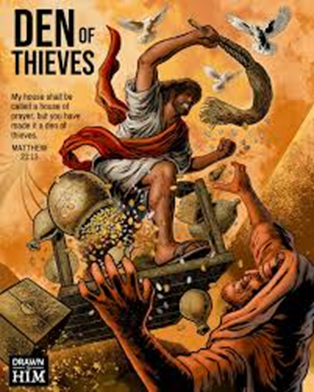
”Then Jesus went into the temple of God and drove out all those who bought and sold in the temple, and overturned the tables of the money changers and the seats of those who sold doves. And He said to them, “It is written, ‘My house shall be called a house of prayer,’ but you have made it a ‘den of thieves.’”

Then the blind and the lame came to Him in the temple, and He healed them. But when the chief priests and scribes saw the wonderful things that He did, and the children crying out in the temple and saying, “Hosanna to the Son of David!” they were indignant and said to Him, “Do You hear what these are saying?”

And Jesus said to them, “Yes. Have you never read,

‘Out of the mouth of babes and nursing infants
You have perfected praise’?”

Then He left them and went out of the city to Bethany, and He lodged there.”

Well! As if the disciples are not already thoroughly embarrassed and wondering what will happen next, Jesus is about to REALLY embarrass them. You see, people can’t just offer any old money in the temple but must offer temple money and perfect animals. Over the years, many men have established businesses right in the temple to “help” the worshipers. Of course, these guys are raking in money by employing crooked exchange rates and selling animals at a high profit. In addition, some of those animals might not even be as perfect as they are represented; nevertheless, the priests have allowed these foul practices to flourish on temple property. The result is that rather than there being a holy hush, the temple sounds like any marketplace with goats and sheep baa-ing, cattle lowing, and doves cooing. But today is the last day this situation will exist, for Jesus the Messiah has come to town.

Before anybody realizes what’s happening, Jesus strides into the temple and begins tossing aside money changing tables and driving out animals. “It is written, ‘My house shall be called a house of prayer,’ but you have made it a ‘den of thieves.’”  Jesus cries. Emboldened by Jesus’ presence, the lame and the blind come to him in the temple, something they are normally not allowed to do, and Jesus heals them. The priests and scribes are scandalized! The nerve of this fellow! How dare he disrupt the normal activities of the temple? How dare he allow these imperfect people to enter, even if he is healing them?

To make matters even worse, children have entered the temple and are crying out, “Hosanna to the Son of David!” CHILDREN? Now the priests are truly offended. What are these wretched kids doing here anyway? Where are their parents and why aren’t those parents controlling them?

Indignantly, the priests confront Jesus. “Do You hear what these are saying?”
Jesus replies, “Yes. Have you never read, ‘Out of the mouth of babes and nursing infants
You have perfected praise’?” The religious authorities are speechless and the disciples are humiliated but also gloating. After years of watching the abuses in the temple, today the disciples suddenly realize what God has intended to happen all along.

Sometimes being a disciple means defending Jesus even when he drags us into embarrassing situations. Face it, nobody likes to appear stupid. In all the years that the disciples have visited the temple in Jerusalem, they have secretly grieved over the mess that has developed; however, never in their wildest dreams have they imagined that Jesus might confront the religious authorities and come out on top. While the disciples are pleased that Jesus has taken such bold steps, they may also fear that they will never be allowed to enter the temple again. Those priests are nothing if not vindictive and they are carefully taking names of everyone present.

Discipleship means abandoning our own reputations to preserve the reputation of Jesus. Some disciples have found themselves in prisons witnessing to the very people who have murdered family members and maintaining active correspondence with those people. One lady doctor who fled Cuba later found herself mailing medicines to the very man who persecuted her family and tried to keep her from leaving for America. That’s the problem with becoming a disciple: we must take orders from Jesus rather than following our desires.

In the 1950’s a small-town preacher from a coal mining town in Pennsylvania found himself in one of the most dangerous parts of New York City witnessing to gang members. The story is told in the book The Cross and the Switchblade. David Wilkerson not only led gang members to Christ, but one of his first converts, Nicky Cruz, became a world-famous evangelist in his own right. Wilkerson also founded Teen Challenge, one of the most effective programs for those seeking to escape drug and alcohol addictions. Wilkerson was well aware of how foolish he appeared when he arrived in New York and how likely it was that he would be slaughtered; yet, he persevered and God worked miracles.

Perhaps today God is calling you to do something embarrassing. God wants you to get out of your comfort zone. Do it! For if you don’t you will never know how many miracles you might miss.

PRAYER: Father God, thank You for loving us and for caring for us. Lord, help us to surrender our comfort zones to You, realizing that You are the One from whom we must take orders. In the mighty and precious Name of King Jesus. Amen.

OCTOBER 16, 2024 SO YOU WANT TO BE A DISCIPLE? #77 YOU MUST OBEY GOD, EVEN WHEN HIS COMMANDS SEEM SILLY

October 16, 2024

Matthew 21:1-11 The Triumphal Entry

“Now when they drew near Jerusalem, and came to Bethphage, at the Mount of Olives, then Jesus sent two disciples, saying to them, “Go into the village opposite you, and immediately you will find a donkey tied, and a colt with her. Loose them and bring them to Me. And if anyone says anything to you, you shall say, ‘The Lord has need of them,’ and immediately he will send them.”

Well, Jesus has had the disciples doing some strange things, but this latest order is unreal. It was crazy enough when Jesus had Peter go fishing to get the money for the temple tax, but now the disciples are supposed to find a donkey with her colt and bring them to Jesus. Moreover, if anybody questions them, the disciples are simply supposed to say “The Lord has need of them,” and the owner will hand over the animals.

Many of us know the story of Jesus entering Jerusalem on Palm Sunday, riding on a donkey. But consider the disciples. Here they are collecting someone’s donkeys and hoping they won’t be accused of theft. When Jesus sits on that donkey colt, the disciples are expecting him to be bucked off immediately, but instead, the colt calmly trots down the road and into Jerusalem.

Writing about the incident afterwards, Matthew, the former Jewish tax collector, quotes the Scripture: “All this was done that it might be fulfilled which was spoken by the prophet, saying: “Tell the daughter of Zion, ‘Behold, your King is coming to you, lowly, and sitting on a donkey, a colt, the foal of a donkey.’” But while this event is happening, the disciples are obeying in fear and trembling. Only when the crowd begins to shout “Hosanna!” do the disciples breathe sighs of relief. Only when Jesus makes it all the way into Jerusalem do the disciples realize that they have had a part in fulfilling one of the important prophecies about the Messiah.

“So the disciples went and did as Jesus commanded them. They brought the donkey and the colt, laid their clothes on them, and set Him on them. And a very great multitude spread their clothes on the road; others cut down branches from the trees and spread them on the road. Then the multitudes who went before and those who followed cried out, saying:

“Hosanna to the Son of David!
‘Blessed is He who comes in the name of the Lord!’
Hosanna in the highest!”

And when He had come into Jerusalem, all the city was moved, saying, “Who is this?”

So the multitudes said, “This is Jesus, the prophet from Nazareth of Galilee.”

It’s a sad mistake to assume that all of God’s commandments are going to make perfect sense, for many times they do not. Years ago, we attended a church in a town that was about to have its first Spring Festival. Two weeks before the event, I was praying one morning when I felt God ordering for my husband and me to dress like clowns and to distribute “Jesus Loves You” balloons to the crowds at the festival. Amazingly enough, other church members were thrilled with the idea. Before we were through, the church sponsored a tent with entertainment, places to sit, and free cold water. Volunteers filled helium balloons and wrote “Jesus loves you” on them; then dressed as clowns, my husband and I went throughout the crowds carrying the balloons. My husband remained silent but pantomimed for people to accept the balloons while I wrote the names of those receiving them on the balloons. By the end of the day, we had distributed nearly 1,000 balloons, spreading the love of Jesus in the process.

When we were returning to Ghana in December 1992, we were unsure of what to do with the vehicle I had been driving. We learned that a fellow church member was in dire need of a vehicle to get to work. God prompted us to give that vehicle to our friend. Once our friend no longer needed the vehicle, he passed it on to someone else. We estimate that at least three different families were blessed by that vehicle. Had we sold the vehicle, we could have raised money to help return to Ghana; however, we trusted God to take care of us, and He did.

Think about the man who lent his donkeys to Jesus. For the rest of that man’s life, he could remember the day his donkey and its colt helped fulfill one of the important prophecies about the Messiah. He could be grateful that he did not hesitate but that he released the donkeys to the Lord.

Perhaps today God is urging you to step out and do something as silly as asking a stranger for the use of his donkeys. You aren’t sure if you are hearing God, and you really don’t want to look ridiculous. But go ahead. Take that step of faith, for when you do, God will bless you in ways you cannot even imagine.

PRAYER: Father God, thank You for loving us and for caring for us. Lord, help us to listen to You and to obey, even when we fear we might look silly. In the mighty and precious Name of King Jesus. Amen.

OCTOBER 15, 2024 SO YOU WANT TO BE A DISCIPLE? #76 WHAT CAN GOD DO WITH TWO MINUTES IF YOU LET HIM?

October 15, 2024

Matthew 20:29-34 Two Blind Men Receive Their Sight

“Now as they went out of Jericho, a great multitude followed Him. And behold, two blind men sitting by the road, when they heard that Jesus was passing by, cried out, saying, “Have mercy on us, O Lord, Son of David!”

Then the multitude warned them that they should be quiet; but they cried out all the more, saying, “Have mercy on us, O Lord, Son of David!”

So Jesus stood still and called them, and said, “What do you want Me to do for you?”

They said to Him, “Lord, that our eyes may be opened.” So Jesus had compassion and touched their eyes. And immediately their eyes received sight, and they followed Him.”

It has been one of those crazy days where the crowds have been more insistent than usual. The disciples are exhausted from having to protect Jesus from being crushed. Now they are leaving Jericho after Jesus has ministered to all kinds of people. Jesus is tired, and the disciples are sweating and longing for rest. Just as the disciples think they are about to get a little break, they hear two men screaming from the roadside. “Have mercy on us, O Lord, Son of David!”

Those in the crowd are trying to hush these men. After all, these guys have been blind all their lives, so haven’t they adjusted by now? The disciples are fretting. Why didn’t these men come to Jericho when Jesus was healing there? Don’t these men realize that the time for Jesus to heal is over and that they are on their way somewhere else with a schedule to keep? But these men are desperate, and they make an appeal that Jesus cannot refuse; they appeal to him as the Son of David, the Messiah. Most of the crowd really has no idea who Jesus is; all they know is that Jesus can heal people and doesn’t turn anybody away. It’s these blind men sitting at the roadside who have actually realized Jesus’ true divinity.

Jesus stops, calls the men, and asks what they want. The men hustle to Jesus as fast as they can, perhaps being assisted by some of the members of the crowd. When the men make their specific request, Jesus grants it and restores their sight. This entire encounter may have only taken two minutes; yet, for these men, it is life-changing. Now these men can see, they can enter the synagogue, they can reunite with their families, and they don’t have to beg anymore.

You must sympathize with the disciples, for they are concerned for Jesus and are trying to protect him. But the disciples are feeling sorry for themselves as well. The incessant demands of the crowds seem overwhelming. Why can’t Jesus minister on some kind of regular schedule? Jesus can hear the disciples grumbling among themselves and he only smiles, for he already knows what they have been thinking. But Jesus is healing by the power of the Holy Spirit and at the direction of the Holy Spirit, and the Holy Spirit works on his own schedule and not on anyone else’s.

Being a disciple is tough and demanding. True discipleship means that you must work on God’s schedule and not on yours. And God is amazingly tolerant of last-minute requests. Just when we are tired, just when we want to go eat, have something to drink, or lie down and rest, God brings one more person and orders us to help them.  

True story from my residency years: I had signed out and was home relaxing when I got a call from a female ward at the hospital across the street from my apartment house. A lady whom we had already discharged was complaining of stomach pain, and the nurses wanted me to do something about it. The last thing I wanted to do was to go back over there. I wanted to dump the problem on whoever was on call; however, the Holy Spirit insisted that I dress up and return to the hospital. My exact words to the Lord were, “OK, I’ll go over there. But if you don’t give me something to say, I’m going to keep my mouth shut.”

Don’t challenge God. When I returned to see this patient, I learned that her underlying problems were spiritual and not physical. Before I could even realize it, I was telling this lady about Jesus and asking if she wanted to become a Jesus follower as well. The lady eagerly prayed with me, and her stomach pain immediately disappeared. We hugged, and I returned home. Five minutes after I left this lady, the people coming to pick her from the hospital arrived. God kept those people from coming sooner so that this lady could hear about Jesus.

Jesus once told a story about two brothers whose father asked them to go work in his vineyard. One brother gruffly refused, but later thought better of it and went and worked. The other brother blithely agreed to work, but skipped out and never entered the vineyard at all. Even if our obedience is grudging to begin with, God still wants our obedience and is pleased when we do obey.

Being a disciple means working according to God’s time table and not our own. While obedience can be frustrating, it can also be incredibly rewarding. Romans 10:14-16 says, “But how can people call for help if they don’t know who to trust? And how can they know who to trust if they haven’t heard of the One who can be trusted? And how can they hear if nobody tells them? And how is anyone going to tell them, unless someone is sent to do it?” ) The Message)

As disciples, we must allow God to send us wherever He wants. Only God knows the hearts prepared to receive His Word and His Salvation. So the next time God asks you to do something when you’d rather not, remember those two blind men on the Jericho Road. Even though Jesus was probably hot and tired, he took time to heal those men, and God has preserved that story for eternity. It probably only took Jesus two minutes to heal those men. Only God knows what He can do if you will give Him two minutes.

PRAYER: Father God, thank You for loving us and for caring for us. Lord, help us to give You everything, including our time. Help us to be obedient, even when it’s costly or inconvenient, realizing that other disciples throughout the world are doing far more than we are. Help us to work for love of You, Jesus. In Your mighty and precious Name, Lord Jesus. Amen.

OCTOBER 14, 2024 SO YOU WANT TO BE A DISCIPLE? #75 WANT TO BE THE G.O.A.T.? THEN SERVE!

October 14, 2024

Matthew 20:20-28 Greatness Is Serving

Then the mother of Zebedee’s sons came to Him with her sons, kneeling down and asking something from Him.

And He said to her, “What do you wish?”

She said to Him, “Grant that these two sons of mine may sit, one on Your right hand and the other on the left, in Your kingdom.”

But Jesus answered and said, “You do not know what you ask. Are you able to drink the cup that I am about to drink, and be baptized with the baptism that I am baptized with?”

They said to Him, “We are able.”

So He said to them, “You will indeed drink My cup, and be baptized with the baptism that I am baptized with; but to sit on My right hand and on My left is not Mine to give, but it is for those for whom it is prepared by My Father.”

And when the ten heard it, they were greatly displeased with the two brothers. But Jesus called them to Himself and said, “You know that the rulers of the Gentiles lord it over them, and those who are great exercise authority over them. Yet it shall not be so among you; but whoever desires to become great among you, let him be your servant. And whoever desires to be first among you, let him be your slave—just as the Son of Man did not come to be served, but to serve, and to give His life a ransom for many.”

It was bound to happen sooner or later. Once the disciples grasped the idea that Jesus was truly the Messiah, the next speculations would involve the power structure of his coming kingdom. Granted that Jesus would be the head, who would be his immediate subordinates? How much authority would each of the disciples wield in this kingdom? While the disciples had undoubtedly been discussing this concept and arguing about it, Zebedee’s wife, the mother of James and John, decided to settle this matter and get her request in first.

Even though this lady came to Jesus and knelt before him, make no mistake; she was anything but humble. Kneeling was only the traditional way one made requests and had nothing to do with one’s ego. Zebedee was a highly successful fisherman and an observant Jew, so his wife was comfortable in her role as a social leader. Why shouldn’t she ask Jesus for special favors for her sons? John had become especially close to Jesus and James was also a good fellow, so their mother felt they were eminently qualified for high position.

Jesus knew this problem would crop up, so he warned James and John, “You do not know what you ask. Are you able to drink the cup that I am about to drink, and be baptized with the baptism that I am baptized with?” They said to Him, “We are able.”

So He said to them, “You will indeed drink My cup, and be baptized with the baptism that I am baptized with; but to sit on My right hand and on My left is not Mine to give, but it is for those for whom it is prepared by My Father.”

James and John had no idea what they were requesting. Later, James would be martyred and John would be exiled for several years on the Island of Patmos before finally dying somewhere in modern Turkey. Meanwhile, the other disciples were beyond furious! What nerve! How could these brothers think they were better than everybody else?

Just as things were about to erupt in fist fights, Jesus calmed the disciples, saying, “You know that the rulers of the Gentiles lord it over them, and those who are great exercise authority over them. Yet it shall not be so among you; but whoever desires to become great among you, let him be your servant. And whoever desires to be first among you, let him be your slave—just as the Son of Man did not come to be served, but to serve, and to give His life a ransom for many.”

Now the disciples were really confused. Here they anticipated that Jesus was going to summon legions of angels and ride into Jerusalem on a white horse brandishing a flashing sword and routing the Romans and all those conspiring with them. Now Jesus was advising that the path to greatness in his kingdom lay through service and humbling oneself. Frankly, this was the very last thing that the disciples wanted to hear. They were really hoping that Jesus was going to announce some kind of hierarchy and then they could fight it out among themselves.

Much of the problem stemmed from the fact that the disciples had been steadfastly refusing to learn from Jesus’ example. Although there were people who traveled along with Jesus and the disciples, never do any of the Gospels even hint that Jesus was taking advantage of this situation. The only times Jesus withdrew from the crowds, he climbed into a boat anchored just off-shore so that people wouldn’t crush him. When Jesus went up into the hills, he frequently took the disciples along so he could teach them without interruption. Jesus responded to all kinds of requests from people of all social classes, from Jewish rulers and Roman centurions to prostitutes and tax collectors. Now Jesus was taking advantage of this uproar to emphasize the concept of servanthood leadership.

There was nothing particularly glamorous about servanthood; in fact, servants and slaves generally got stuck with the nastiest jobs. Low-level servants had to wash the stinky dirty feet of visitors, even when those visitors might have walked through cow dung. Servants always had to care for others before meeting their own needs. Servants were so common that they were part of the scenery, something to be ignored. Particularly astute servants or those working very hard might possibly attract their master’s attention, but generally, servants and slaves got no recognition or thanks of any sort.

If servants and slaves occupied such a low estate, why was Jesus identifying with them? Jesus knew that he had been born to die for the sins of the world. No matter what anyone had done, no matter how lowly they were, Jesus was going to die for those people. Jesus was going to be the ultimate servant making the ultimate sacrifice. The entire theme of the Kingdom of God was to be one of service-service to others and service to God.  Jesus knew that any service rendered with a clean heart was actually a service to God and would glorify God.

Jesus and the disciples were moving closer to Jerusalem and the time of Jesus’ death. Few lessons were more essential than that of servanthood and few were also harder to get across to the disciples. If the disciples failed to learn this lesson, they would simply descend into squabbling and would refuse to teach anybody about the Kingdom of God.

What held true for the disciples still holds true today. Those choosing to become disciples must also choose to become servants as well. There is no room for ego in the Kingdom of God, only actions done to glorify God. When we are serving God, we should not be concerned about being the Greatest of All Time but rather the humblest and the most useful.

PRAYER: Father God, thank You for loving us and for caring for us. Lord, please give us servants’ hearts. Help us to be most concerned with Your perfect will for our lives and to seek to fulfill Your will. In the mighty and precious Name of King Jesus. Amen.