Archive for the ‘Uncategorized’ Category

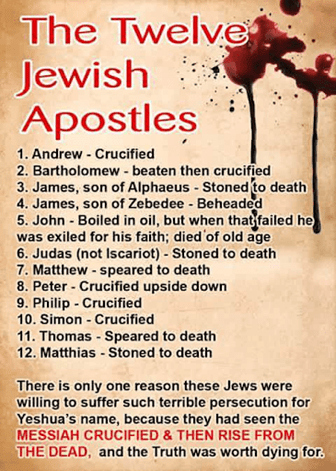
DECEMBER 19, 2025 WHAT’S SO IMPORTANT ABOUT BLOOD? #30 MINISTRY IS NOT A HALLMARK MOVIE! WOULD YOU DIE FOR YOUR FAITH?

December 19, 2025

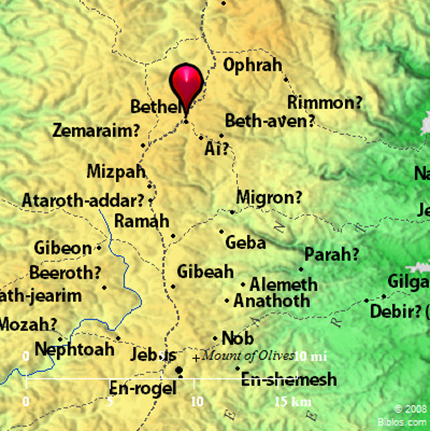
1 Samuel 6:13 Now the people of Beth-shemesh were gathering in their wheat harvest in the valley, and they raised their eyes and saw the ark, and rejoiced at seeing it. 14 And the cart came into the field of Joshua the Beth-shemite and stopped there where there was a large stone; and they split the wood of the cart and offered the cows as a burnt offering to the Lord. 15 And the Levites took down the ark of the Lord and the saddlebag that was with it, in which were the articles of gold, and put them on the large stone; and the men of Beth-shemesh offered burnt offerings and sacrificed sacrifices that day to the Lord. 16 When the five governors of the Philistines saw it, they returned to Ekron that day.

These verses are a conclusion to a much larger story. When the prophet Samuel was a boy, the Israelites fought the Philistines. Thinking that bringing the Ark of the Covenant to the battle would bring victory, the Israelites insisted on removing it from the tabernacle. Thus, treating a holy object as if it were a fetish. The Philistines captured the Ark of the Covenant and defeated the Israelites. But the Philistines rapidly learned that the God of the Israelites was furious, for when the Philistines brought the Ark into the temple of Dagon, the statue of Dagon fell before the Ark, breaking off its head and the palms of its hands. Then bubonic plague broke out wherever the Ark was lodged.

In an attempt to rid themselves of curses from the Israelite God, the Philistines fabricated gold copies of the rats and the buboes from the plague, placing them in a bag, and putting the Ark on a cart along with the gold images. Because the Philistines weren’t completely sure if these problems were from God, they hitched two milk cows to the cart. The cows didn’t want to leave their calves; however, under the urging of God, the cows immediately began pulling the cart back towards the Israelite community of Beth-shemesh. As the cows pulled the cart, they lowed for their calves, but they continued to move toward Beth-shemesh.

When the Israelites saw the Ark approaching, they were thrilled! The Israelites immediately called the Levite priests who removed the Ark from the cart, placing it on a large rock. But what happened next? Did the Israelites make pets of the cows? Did they try to reunite the cows with their calves? No. The Israelites broke up the cart, placing the wood on a large stone, and then slaughtered the cows as a burnt offering to the Lord. The cows had done nothing wrong, but they were sacrificed anyway.

“OUCH!” you might say. “This is Christmastime and you are trying to depress us!” No. I am describing this scene of sacrifice because it’s Christmastime, and in many parts of the world, Christians are dying for their faith or are being thrown into prison and tortured. Persecution of Christians worldwide is increasing. In Africa, particularly northern Nigeria and Mozambique, Christians are being slaughtered in their churches as they worship. Some towns in northern Burkina Faso are turning into ghost towns because of Islamic terrorists.

Worldwide, more than 380 million Christians are facing persecution for their faith. Not only are believers being slaughtered in their churches, but others are being imprisoned and tortured, forced to watch as family members are tortured and killed. This link brings up a video: https://vimeo.com/1047127684?fl=pl&fe=cm

This link brings up the main page for Open Doors: https://www.opendoors.org/en-US/persecution/countries/

Many Americans are familiar with Hallmark Christmas movies. The general plot is that some man/woman with a high-powered job in the city is stranded in a small town over Christmas and winds up finding faith/love/family/true meaning of Christmas. What makes these movies so satisfying is that they have happy endings in which people are joyful and at peace. I know people who will binge-watch Hallmark movies for hours, and I say, “God bless ‘em!” There are also Christian novelists who write whole series of books with similar stories, and I am addicted to those stories. (I’m more a book person than a movie person.) Why do we find these movies and books so fulfilling? Much of the time, our lives do not resemble Hallmark movies. We love these stories because they give us hope, and hope is precious.

We work in a deprived area where many families depend on farming land with decreasing fertility and a worsening rainfall pattern. Children can come in with cerebral malaria and anemia and die as we are trying to treat them. Malnutrition is increasing. So far, things are peaceful in our area. But we are conscious that innocent believers are dying for their faith in neighboring countries.


In an earlier age, Tertullian wrote, “The blood of martyrs is the seed of the church.” “The second-century church father Tertullian lived in Carthage, North Africa, when persecution of Christians was at its apex. In those days, the blood of martyrs soaked the earth as believers were fed to the lions, beaten, whipped, sawed in half, put to death by sword, burned in the fire, and chained in prisons. Tertullian maintained that the more Christians were persecuted and “mown down,” the more they would multiply because “the blood of Christians is seed” (“The Apology,” Latin Christianity: Its Founder, Tertullian, Roberts, A., Donaldson, J., and Coxe, A. C., ed., Thelwall, S., trans., vol. 3, The Ante-Nicene Fathers, Christian Literature Company, 1885, p. 55).” https://www.gotquestions.org/blood-martyrs-seed-church.html

Writing to Timothy, Paul says, “For I am already being poured out like a drink offering, and the time for my departure is near.” (2 Timothy 4:6) Paul knew he was going to die at the hands of the Romans; it was only a question of the means by which he would die.

While there are charitable groups trying to minister to those under persecution, there are many faceless millions with no access to such groups. What can we do? We can PRAY!!! Pray to the God who keeps all His children in His heart! Pray for the safety of other believers! Pray for their health and well-being! Pray for God to keep and protect them! And pray that if martyrdom comes, they will stand firm.

There are all kinds of prayer guides for persecuted Christians available on the internet. Let us pray right now.

PRAYER: Father God, thank You for loving us and caring for us. Lord, we lift up believers throughout the world who are undergoing persecution. Please strengthen them, keep them safe, help them to remain faithful, and give them holy boldness so that they will be able to speak Your Word, even when facing death. Help those of us living in safer areas to pray fervently and faithfully, not fitfully. And guide us so that we will pray the prayers You want us to pray. In the mighty and precious Name of King Jesus. Amen.
DECEMBER 18, 2025 WHAT’S SO IMPORTANT ABOUT BLOOD? #29 PARTIAL OBEDIENCE IS FULL REBELLION AND SUCH SACRIFICES ARE WORTHLESS!  

December 18, 2025

1 Samuel 15:15 1-2 Samuel said to Saul, “God sent me to anoint you king over his people, Israel. Now, listen again to what God says. This is the God-of-the-Angel-Armies speaking:

2-3 “‘I’m about to get even with Amalek for ambushing Israel when Israel came up out of Egypt. Here’s what you are to do: Go to war against Amalek. Put everything connected with Amalek under a holy ban. And no exceptions! This is to be total destruction—men and women, children and infants, cattle and sheep, camels and donkeys—the works.’”

7-9 Then Saul went after Amalek, from the canyon all the way to Shur near the Egyptian border. He captured Agag, king of Amalek, alive. Everyone else was killed under the terms of the holy ban. Saul and the army made an exception for Agag, and for the choice sheep and cattle. They didn’t include them under the terms of the holy ban. But all the rest, which nobody wanted anyway, they destroyed as decreed by the holy ban.

10-11 Then God spoke to Samuel: “I’m sorry I ever made Saul king. He’s turned his back on me. He refuses to do what I tell him.”

11-12 Samuel was angry when he heard this. He prayed his anger and disappointment all through the night. He got up early in the morning to confront Saul but was told, “Saul’s gone. He went to Carmel to set up a victory monument in his own honor, and then was headed for Gilgal.”

By the time Samuel caught up with him, Saul had just finished an act of worship, having used Amalekite plunder for the burnt offerings sacrificed to God.

13 As Samuel came close, Saul called out, “God’s blessings on you! I accomplished God’s plan to the letter!”

14 Samuel said, “So what’s this I’m hearing—this bleating of sheep, this mooing of cattle?”

15 “Only some Amalekite loot,” said Saul. “The soldiers saved back a few of the choice cattle and sheep to offer up in sacrifice to God. But everything else we destroyed under the holy ban.”

16 “Enough!” interrupted Samuel. “Let me tell you what God told me last night.”

Saul said, “Go ahead. Tell me.”

17-19 And Samuel told him. “When you started out in this, you were nothing—and you knew it. Then God put you at the head of Israel—made you king over Israel. Then God sent you off to do a job for him, ordering you, ‘Go and put those sinners, the Amalekites, under a holy ban. Go to war against them until you have totally wiped them out.’ So why did you not obey God? Why did you grab all this loot? Why, with God’s eyes on you all the time, did you brazenly carry out this evil?”

20-21 Saul defended himself. “What are you talking about? I did obey God. I did the job God set for me. I brought in King Agag and destroyed the Amalekites under the terms of the holy ban. So the soldiers saved back a few choice sheep and cattle from the holy ban for sacrifice to God at Gilgal—what’s wrong with that?”

22-23 Then Samuel said, “Do you think all God wants are sacrifices—empty rituals just for show? He wants you to listen to him! Plain listening is the thing, not staging a lavish religious production. Not doing what God tells you is far worse than fooling around in the occult. Getting self-important around God is far worse than making deals with your dead ancestors. Because you said No to God’s command, he says No to your kingship.”

24-25 Saul gave in and confessed, “I’ve sinned. I’ve trampled roughshod over God’s Word and your instructions. I cared more about pleasing the people. I let them tell me what to do. Oh, absolve me of my sin! Take my hand and lead me to the altar so I can worship God!”

26 But Samuel refused: “No, I can’t come alongside you in this. You rejected God’s command. Now God has rejected you as king over Israel.”

27-29 As Samuel turned to leave, Saul grabbed at his priestly robe and a piece tore off. Samuel said, “God has just now torn the kingdom from you, and handed it over to your neighbor, a better man than you are. Israel’s God-of-Glory doesn’t deceive and he doesn’t dither. He says what he means and means what he says.”

30 Saul tried again, “I have sinned. But don’t abandon me! Support me with your presence before the leaders and the people. Come alongside me as I go back to worship God.”

31 Samuel did. He went back with him. And Saul dropped to his knees before God and worshiped.

32 Then Samuel said, “Present King Agag of Amalek to me.” Agag came, dragging his feet, muttering that he’d be better off dead.

33 Samuel said, “Just as your sword made many a woman childless, so your mother will be childless among those women!” And Samuel cut Agag down in the presence of God right there in Gilgal.

34-35 Samuel left immediately for Ramah and Saul went home to Gibeah. Samuel had nothing to do with Saul from then on, though he grieved long and deeply over him. But God was sorry he had ever made Saul king in the first place.

After the disastrous pseudo-sacrifice at Gilgal, God-and Samuel-are giving Saul one last chance to prove himself. Sadly, Saul is blowing it! God through Samuel orders Saul to completely wipe out the Amalekites. This fight is to be a scorched earth destruction with nothing left, no people, no animals, no loot, period. But Saul hasn’t learned anything from his last failure. Saul chooses to save the best animals and King Agag. Saul’s excuse is that he’s saving the best animals for sacrifices to God; surely Samuel can’t argue with that. And as for King Agag, perhaps Agag has confided in Saul that he has treasure hidden somewhere and Saul is hoping for a rich payday. Not only does Saul save some of the animals-and possibly some of the other loot as well-but he sets up a victory monument celebrating himself on Mount Carmel before heading east to Gilgal.

Samuel blasts Saul! 22-23 Then Samuel said, “Do you think all God wants are sacrifices—empty rituals just for show? He wants you to listen to him! Plain listening is the thing, not staging a lavish religious production. Not doing what God tells you is far worse than fooling around in the occult. Getting self-important around God is far worse than making deals with your dead ancestors. Because you said No to God’s command, he says No to your kingship.”

Even now, Saul still believes that if he can just get Samuel to pray over him, the situation will be saved. Saul begs Samuel to absolve him of his sin and lead him to worship God. But Saul isn’t really repenting; he’s simply hoping that Samuel can get him out of this mess. Eventually, Samuel does worship God with Saul, but Samuel is truly worshiping while Saul is simply going through the motions.

At the end of the story, both God and Samuel are grieving for having ever made Saul king. Samuel is grieving because he has obeyed God and has prayed for Saul; yet, Saul has failed miserably. God is grieving because Saul has had many opportunities to obey and has continued to make wrong choices. God might also be grieving because He knows what will happen to Saul’s son Jonathan, who is a better man than his father.  

Saul thinks he’s getting away with partial obedience by saving the choicest animals to sacrifice to the Lord. But those animals may have already been dedicated to the demons the Amalekites worship. Once more, we see that total obedience is the best gift we can give God. Partial obedience is rebellion, and rebellion amounts to witchcraft because when we rebel, we are trying to control things ourselves. Saul wants to believe that if the animals are handsome enough, God will overlook his disobedience. But Saul is trying to play games with the Creator of the universe, the One who has spoken everything into existence. God can create better animals than Saul has rescued from the Amalekites.

This Christmas, rather than staging lavish parties, or giving expensive gifts to people who might not care in the first place, why not do those things we know will please God? Feed the hungry. Clothe the poor. Embrace the outcasts. Care for the sick. Love your enemies.

PRAYER: Father God, thank You for loving us and caring for us. Lord, help us to obey instantly and completely. In the mighty and precious Name of King Jesus. Amen.
DECEMBER 17, 2025 WHAT’S SO IMPORTANT ABOUT BLOOD? #28 NO SACRIFICE COUNTS IF YOUR HEART ISN’T RIGHT

December 17, 2025

1 Samuel 13:13 Saul was a young man when he began as king. He was king over Israel for many years.

2 Saul conscripted enough men for three companies of soldiers. He kept two companies under his command at Micmash and in the Bethel hills. The other company was under Jonathan at Gibeah in Benjamin. He sent the rest of the men home.

3-4 Jonathan attacked and killed the Philistine governor stationed at Geba (Gibeah). When the Philistines heard the news, they raised the alarm: “The Hebrews are in revolt!” Saul ordered the reveille trumpets blown throughout the land. The word went out all over Israel, “Saul has killed the Philistine governor—drawn first blood! The Philistines are stirred up and mad as hornets!” Summoned, the army came to Saul at Gilgal.

5 The Philistines rallied their forces to fight Israel: three companies of chariots, six companies of cavalry, and so many infantry they looked like sand on the seashore. They went up into the hills and set up camp at Micmash, east of Beth Aven.

6-7 When the Israelites saw that they were way outnumbered and in deep trouble, they ran for cover, hiding in caves and pits, ravines and brambles and cisterns—wherever. They retreated across the Jordan River, refugees fleeing to the country of Gad and Gilead. But Saul held his ground in Gilgal, his soldiers still with him but scared to death.

8 He waited seven days, the time set by Samuel. Samuel failed to show up at Gilgal, and the soldiers were slipping away, right and left.

9-10 So Saul took charge: “Bring me the burnt offering and the peace offerings!” He went ahead and sacrificed the burnt offering. No sooner had he done it than Samuel showed up! Saul greeted him.

11-12 Samuel said, “What on earth are you doing?”

Saul answered, “When I saw I was losing my army from under me, and that you hadn’t come when you said you would, and that the Philistines were poised at Micmash, I said, ‘The Philistines are about to come down on me in Gilgal, and I haven’t yet come before God asking for his help.’ So I took things into my own hands, and sacrificed the burnt offering.”

13-14 “That was a fool thing to do,” Samuel said to Saul. “If you had kept the appointment that your God commanded, by now God would have set a firm and lasting foundation under your kingly rule over Israel. As it is, your kingly rule is already falling to pieces. God is out looking for your replacement right now. This time he’ll do the choosing. When he finds him, he’ll appoint him leader of his people. And all because you didn’t keep your appointment with God!”

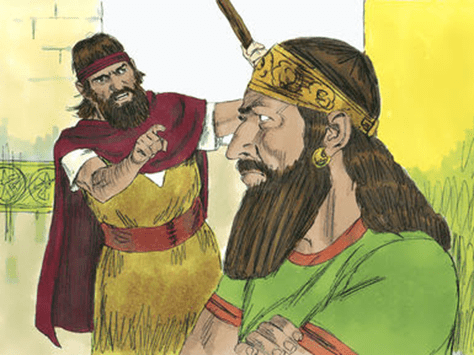
King Saul is in trouble! The prophet Samuel has ordered Saul to wait at Gilgal for seven days so that Samuel will come and they will make sacrifices together. But Samuel is not appearing and Saul’s soldiers are slipping away as they look at the Philistine forces and become intimidated. Saul is frustrated and frightened. Besides, if Saul is king, why can’t he offer a sacrifice by himself? Why wait for Samuel? What makes Samuel so important? Why hasn’t Samuel come as he has promised?

Saul has never been noted for faith, restraint, or self-control, and today is no exception. In a panic, Saul proceeds to make the sacrifices himself. As soon as the last animal has been placed on the altar, Samuel walks up. Eugene Peterson’s Message translation likely describes the scene as it really takes place.

11-12 Samuel said, “What on earth are you doing?”

Saul answered, “When I saw I was losing my army from under me, and that you hadn’t come when you said you would, and that the Philistines were poised at Micmash, I said, ‘The Philistines are about to come down on me in Gilgal, and I haven’t yet come before God asking for his help.’ So I took things into my own hands, and sacrificed the burnt offering.”

13-14 “That was a fool thing to do,” Samuel said to Saul. “If you had kept the appointment that your God commanded, by now God would have set a firm and lasting foundation under your kingly rule over Israel. As it is, your kingly rule is already falling to pieces. God is out looking for your replacement right now. This time he’ll do the choosing. When he finds him, he’ll appoint him leader of his people. And all because you didn’t keep your appointment with God!”

Notice how Saul tries to guilt Samuel. “‘The Philistines are about to come down on me in Gilgal, and I haven’t yet come before God asking for his help.’ So I took things into my own hands, and sacrificed the burnt offering.” The unstated message here is simple: It’s all Samuel’s fault that Saul has had to make these sacrifices. Why hasn’t Samuel sent a messenger to indicate he’s coming?

What Saul fails to realize is that Samuel’s delay has been a test of Saul’s faith, and Saul has failed spectacularly. Had Saul waited until Samuel arrived, he would have proven himself suitable for remaining king, founding a dynasty, and leading the Israelites into a glorious future. But Saul has proven to be faithless and impulsive. Now God is already looking for Saul’s replacement.

Saul’s problem resembles that of Balak and Balaam: he views sacrifices as a form of sorcery, manipulating God to get desired results. Saul neither knows God nor respects Him. Samuel makes sacrifices to worship God because he loves, respects, and fears God. Until now, Samuel has had his doubts about Saul, and now those doubts are confirmed. Samuel must be grieving, for he can already see Saul’s eventual fall.

The tragedy of King Saul is simple: Saul’s heart is wrong, and no sacrifice will make up for that. As we continue through Advent, buying presents and possibly making donations to appeals such as the Salvation Army, we must examine our hearts. Are we doing these things as acts of worship or are we acting out of guilt or the desire to placate our consciences? May God help us so that we will worship Him no matter what we are doing.

PRAYER: Father God, thank You for loving us and caring for us. Lord, as Christmas approaches, let everything we do become an act of worship. In the mighty and precious Name of King Jesus. Amen.
IN PRAISE OF BARN CATS December 15, 2025

December 16, 2025

Recently, on Facebook, someone posted a short video of their father’s barn cat twining itself around his legs in a show of affection. The writer expressed amazement that a barn cat would behave in this fashion, amply demonstrating that a) this person knows next to nothing about barns and b) this person equally knows next to nothing about barn cats.

I was raised on an “Old McDonald” type farm in the 1950’s and 60’s. We had hogs, chickens, beef cattle, sheep, and milk cows. Whenever a farm had milk cows, there would be plenty of cats because they knew they could get a free meal twice a day.

Barn cats are a particular group all on their very own. There are cats who begin as barn cats and then move inside to become house cats, which is fine. Personally, I am an animal lover and as a child, I regularly smuggled kittens into my bed. But there are some cats that are pure barn cats, creatures that enjoy affection and being fed but for whom hunting and prowling are necessary for their well-being. These cats need to walk on the wild side.

The most outstanding of our barn cats was a calico named Mrs. Oliver, after Mrs. Oliver Nelson, the lady from whom we had gotten her as a kitten. Mrs. Oliver was a phenomenal huntress who thought nothing of attacking large rats. Mrs. Oliver had a wonderful disposition, as did many of her children, and we thoroughly enjoyed playing with them and petting them. We fed our cats table scraps and milk straight from the cow.

Once we sold most of our milk cows, we retained Elsie and Whiteface, milking them in a small byre that had an opening in the ceiling leading to the hayloft. When we finished milking a cow, we would always tip the bucket, pouring some milk into a pan sitting by for that purpose. Although the cats might sleep outside in the summer, in the wintertime, you could find them curled up in a bunch close to the opening to the haymow to catch the warm air coming from the cows. Cats have an incredible ability to find the most comfortable spot in which to sleep.

I have written about it somewhere else, but Elsie was the cow that didn’t panic when an orange tomcat attached himself to her left hind leg in an effort to get milk earlier than scheduled. I was milking Elsie by hand at the time, and Elsie looked at me as if to say, “Get that thing off me, why don’t you?” I obliged and the orange tomcat went sailing across the stall.

I loved all the kitties deeply, and I was heart-broken when my parents broke the news of Mrs. Oliver’s death while I was in college. It seemed Mrs. Oliver was up in our corncrib and brought down a rat nearly as big as she was. The rat died; however, Mrs. Oliver also died in the process, demonstrating the fierce spirit of a true barn cat.

The milk cows are gone, and so are the barn cats. But I am certain that wherever there are dairy cows, the cats are still keeping watch over the farm.

So, barn cats represent some of the best of their species-affectionate but also wild, soft and cuddly at times, but ferocious hunters when necessary. In an age when many people are adopting cats as fur babies, dressing them I am particularly drawn to barn cats, who might tolerate domestication but who will revert to the wild and the unpredictable.  

I firmly believe that God will redeem the creation and that we will see our beloved animals in heaven. And I look forward to that day when I hear a plaintive “Meow!” and Mrs. Oliver comes racing to me and I catch her up in my arms.

DECEMBER 16, 2025 WHAT’S SO IMPORTANT ABOUT BLOOD? #27 WHAT ABOUT LIVING SACRIFICES?

December 16, 2025

Numbers 27:Joshua

12-14 God said to Moses, “Climb up into the Abarim Mountains and look over at the land that I am giving to the People of Israel. When you’ve had a good look you’ll be joined to your ancestors in the grave—yes, you also along with Aaron your brother. This goes back to the day when the congregation quarreled in the Wilderness of Zin and you didn’t honor me in holy reverence before them in the matter of the waters, the Waters of Meribah (Quarreling) at Kadesh in the Wilderness of Zin.”

15-17 Moses responded to God: “Let God, the God of the spirits of everyone living, set a man over this community to lead them, to show the way ahead and bring them back home so God’s community will not be like sheep without a shepherd.”

18-21 God said to Moses, “Take Joshua the son of Nun—the Spirit is in him!—and place your hand on him. Stand him before Eleazar the priest in front of the entire congregation and commission him with everyone watching. Pass your magisterial authority over to him so that the whole congregation of the People of Israel will listen obediently to him. He is to consult with Eleazar the priest who, using the oracle-Urim, will prayerfully advise him in the presence of God. He will command the People of Israel, the entire community, in all their comings and goings.”

22-23 Moses followed God’s orders. He took Joshua and stood him before Eleazar the priest in front of the entire community. He laid his hands on him and commissioned him, following the procedures God had given Moses.

For 40 years, Joshua has followed Moses from Egypt, throughout the wilderness, and now to the edge of the Promised Land. Many times, when Moses has spent time with God in the tabernacle, Joshua has remained in the presence of God, even after Moses has returned to the camp. Joshua was one of the spies Moses sent to report on the Promised Land shortly after the Israelites had left Egypt. Moses has known for a long time that Joshua is the one who will lead the Israelites into Canaan.

You might ask why include Joshua in this study of blood sacrifices? After all, no blood is spilled during this ordination, unlike the ordination of priests where sacrificial blood is used to anoint the new priest’s right ear, thumb, and right big toe. But there are all kinds of sacrifices, many of which do not involve slaughtering animals. Here, Joshua is offering himself as a living sacrifice. What does that mean?

Romans 12:1-2 12 So here’s what I want you to do, God helping you: Take your everyday, ordinary life—your sleeping, eating, going-to-work, and walking-around life—and place it before God as an offering. Embracing what God does for you is the best thing you can do for him. Don’t become so well-adjusted to your culture that you fit into it without even thinking. Instead, fix your attention on God. You’ll be changed from the inside out. Readily recognize what he wants from you, and quickly respond to it. Unlike the culture around you, always dragging you down to its level of immaturity, God brings the best out of you, develops well-formed maturity in you.”

Once Moses lays hands on Joshua, Joshua will begin assuming increasing amounts of leadership. Forget family life, friendships, or even free time; Joshua must place God’s Will above everything else in his life. And this commitment will last for the rest of Joshua’s life.

While we generally focus all our attention on Joshua, think about what this commitment means for Joshua’s family. By now, Joshua must be at least 60 years old. It’s likely that Joshua has several children, some of whom might already be married. Joshua’s wife or wives must share him with all the Israelites, especially the leaders. Joshua must respond to crises at any time. Meals, sleep, other family activities-everything can be interrupted at any moment. In such circumstances, it’s easy to become emotionally and physically exhausted.

I have spent at least 15 years as the only doctor at rural mission hospitals in northern Ghana. After years on constant call, I have felt as if I am not really sleeping but that my body is hovering six inches above the bed. The perpetual stress is wearing. After such experiences, I can definitely sympathize with Joshua and Moses!

As we go through this Advent season, many of us may be struggling with financial constraints. There’s a meme that says, “The first Christmas was simple. Yours can be also.” Many families are finding that the most important gifts anyone can give are time and presence. In essence, we should make living sacrifices of ourselves to those around us. Elderly parents, distracted and stressed kids, friends facing holidays after bereavements-all these people need time and presence, and those things are priceless. May God help us to see the needs of those around us, so that we will respond to those needs, blessing them as we do so.

PRAYER: Father God, thank You for loving us and caring for us. Lord, please open our eyes, our minds, and our hearts so we will serve those around us with our time and our presence. In the mighty and precious Name of King Jesus. Amen.
IN PRAISE OF BARN CATS December 15, 2025

December 15, 2025

Recently, on Facebook, someone posted a short video of their father’s barn cat twining itself around his legs in a show of affection. The writer expressed amazement that a barn cat would behave in this fashion, amply demonstrating that a) this person knows next to nothing about barns and b) this person equally knows next to nothing about barn cats.

I was raised on an “Old McDonald” type farm in the 1950’s and 60’s. We had hogs, chickens, beef cattle, sheep, and milk cows. Whenever a farm had milk cows, there would be plenty of cats because they knew they could get a free meal twice a day.

Barn cats are a particular group all on their very own. There are cats who begin as barn cats and then move inside to become house cats, which is fine. Personally, I am an animal lover and as a child, I regularly smuggled kittens into my bed. But there are some cats that are pure barn cats, creatures that enjoy affection and being fed but for whom hunting and prowling are necessary for their well-being. These cats need to walk on the wild side to be happy.

The most outstanding of our barn cats was a calico named Mrs. Oliver, after Mrs. Oliver Nelson, the lady from whom we had gotten her as a kitten. Mrs. Oliver was a phenomenal huntress who thought nothing of attacking large rats. Mrs. Oliver had a wonderful disposition, as did many of her children, and we thoroughly enjoyed playing with them and petting them. We fed our cats table scraps and milk straight from the cow.

Once we sold most of our milk cows, we retained Elsie and Whiteface, milking them in a small byre that had an opening in the ceiling leading to the hayloft. When we finished milking a cow, we would always tip the bucket, pouring some milk into a pan sitting by for that purpose. Although the cats might sleep outside in the summer, in the wintertime, you could find them curled up in a bunch close to the opening to the haymow to catch the warm air coming from the cows. Cats have an incredible ability to find the most comfortable spot in which to sleep.

I have written about it somewhere else, but Elsie was the cow that didn’t panic when an orange tomcat attached himself to her left hind leg in an effort to get milk earlier than scheduled. I was milking Elsie by hand at the time, and Elsie looked at me as if to say, “Get that thing off me, why don’t you?” I obliged and the orange tomcat went sailing across the stall.

I loved all the kitties deeply, and I was heart-broken when my parents broke the news of Mrs. Oliver’s death while I was in college. It seemed Mrs. Oliver was up in our corncrib and brought down a rat nearly as big as she was. The rat died; however, Mrs. Oliver also died in the process, demonstrating the fierce spirit of a true barn cat.

The milk cows are gone, and so are the barn cats. But I am certain that wherever there are dairy cows, the cats are still keeping watch over the farm. I firmly believe that God will redeem the creation and that we will see our beloved animals in heaven. And I look forward to that day when I hear a plaintive “Meow!” and Mrs. Oliver comes racing to me and I catch her up in my arms

PICKING CORN AT CHRISTMAS TIME December 15, 2025

December 15, 2025

When I was growing up on an Illinois farm in the 1950’s and ‘60’s, we had mounted corn pickers without cabs. If a farmer was fortunate, he might have a “heat houser,” a canvas frame with a clear section to see through that would break the wind. But heat housers had no roofs, and if it was raining, sleeting, or snowing, things could be miserable.

I don’t remember what year it was, but I remember that the weather was bad that fall, forcing us to pick corn nearly until Christmas. By early December, the fields were a muddy icy mess and driving became even more of a challenge than usual. It was quite common to break through ice into a mud hole and then struggle to get out to continue picking corn. Those old tractors had “Armstrong” steering-your arms had better be strong because the only power steering available was whatever muscle you had in your arms.

Dressing for such an ordeal was a production. First, the tractor operator might don long underwear and heavy woolen socks, followed by blue jeans and then by coveralls. When insulated coveralls and hooded sweatshirts became available, those of us forced to work in the cold rejoiced. The tractor operator would also wear work boots or the knee-high rubber boots the Brits call Wellingtons. There were no such things as insertable foot warmers. Frost bitten toes were a real possibility. The last piece of clothing would be heavy fuzzy yellow work gloves. These gloves were far thicker than the ones worn in the summer for baling hay or straw. The tractor driver might also have a scarf wrapped around his neck; that scarf could be pulled up to cover one’s mouth when necessary.

How cold could it get? On the Illinois prairie, wind chill is a major force to be reckoned with. With the wind whipping out of the northwest at 40 miles per hour and the temperature dropping well below freezing, those farmers likely suffered the same exposure to cold as Antarctic expeditions.  

When my dad was little, corn was picked by hand, with pickers walking through the field and throwing the ears into narrow wagons that were designed to fit between rows. Those wagons had side boards or “bang boards,” so-called because the ears of corn would strike those boards and then fall into the wagon. Even up through the late 1930’s, one of the local farm boys won a national hand corn picking contest. Some of the great baseball pitchers in the early part of the twentieth century were supposed to have developed strong wrists by the combination of picking corn by hand and milking cows by hand. I can only imagine how truly wretched it would be to be slogging through a muddy icy corn field while picking corn by hand in the middle of a December sleet storm. But somehow, those old-time farmers managed.

I watch videos of entire families sitting comfortably in enclosed cabs with GPS, wireless, and sound systems, and I feel as if I am an alien from another planet. I am happy for those families, that they don’t have to suffer as did their grandparents or great-grandparents. I rejoice that parents are sharing the joy of the land with their children. But it’s not bad to remember that we are able to enjoy the land because someone who came before us was willing to do the tough things, like picking corn at Christmastime.

DECEMBER 15, 2025 ARCHIBALD THE ANKLE UPDATE

December 15, 2025

It’s been a little while since Archibald has weighed in. After 6 weeks post injury and 5 weeks in an ankle brace, Archibald now has an orthopedic walking boot. The X-Ray this week indicates there is some healing; however, when I move wrong, I have mild pain. Is there any motion in the fracture if I accidentally put weight on the foot? That’s tough to say. Hopefully, the walking boot is going to stabilize things further; however, it remains to be seen whether I will be able to return to work before Christmas.

Guaging healing by the lack of pain is quite difficult for two reasons: first, I naturally tolerate a great deal of pain; second, I have suffered with fibromyalgia for more than 22 years, resulting in a baseline of pain before adding any pain from an injury. My natural response to pain is blunted.

As I continue to whirl around the house in a wheelchair or hop around on one leg, grasping the furniture, I also continue to make new observations. It’s shocking how many parts of our household are not handicapped-accessible. I continue to have to move things down to a level where I can grasp them from a wheelchair. I have learned to use the rubber chairs in our dining room to scoot around by resting my left knee on the chair while I propel myself with my good foot. I am also becoming an expert at bathing in one of those chairs with a towel under the chair to catch the rinse water. Having a chair with a back on it is much more stable than the shower chairs sometimes used in America.

When we went into our regional capital of Tamale on Thursday, I quickly learned that most public buildings are not handicapped-accessible. Even places that have wheelchair ramps have short ramps too steep for the average wheelchair operator.

The wheelchair I am using is made of light metal, and I doubt it would stand up to long-term use. I continue to wonder why someone in Ghana does not take up the production of simple sturdy wheelchairs as well as bicycle wheelchairs. I am certain there is a big need for such things, particularly in villages. Yet another item that should be produced locally is elbow crutches with molded fittings, rather than fittings that pivot. Those pivoting fittings can constitute a hazard when trying to take the crutches off or put them on.

For now, Archibald and I are continuing to use the wheelchair with limited use of the crutches. I just wish fractures came with gauges indicating healing-25%, 50 %, 75 %, etc.

Despite remaining in the house, I am still working, still taking calls from Kids Ward and NICU. Bob is still handing out breakfast biscuits to the kids on the ward. And we are still helping settle bills for medicine, hospital stays, and transfusions for indigent patients.

DECEMBER 15, 2025 WHAT’S SO IMPORTANT ABOUT BLOOD? #26 WHAT IF GOD CALLS YOU TO SACRIFICE FAMILY OR FRIENDS?

December 15, 2025

Numbers 25:The Orgy at Shittim

25:1-3 While Israel was camped at Shittim (Acacia Grove), the men began to have sex with the Moabite women. It started when the women invited the men to their sex-and-religion worship. They ate together and then worshiped their gods. Israel ended up joining in the worship of the Baal of Peor. God was furious, his anger blazing out against Israel.

4 God said to Moses, “Take all the leaders of Israel and kill them by hanging, leaving them publicly exposed in order to turn God’s anger away from Israel.”

5 Moses issued orders to the judges of Israel: “Each of you must execute the men under your jurisdiction who joined in the worship of Baal Peor.”

6-9 Just then, while everyone was weeping in penitence at the entrance of the Tent of Meeting, an Israelite man, flaunting his behavior in front of Moses and the whole assembly, paraded a Midianite woman into his family tent. Phinehas son of Eleazar, the son of Aaron the priest, saw what he was doing, grabbed his spear, and followed them into the tent. With one thrust he drove the spear through the two of them, the man of Israel and the woman, right through their midsections. That stopped the plague from continuing among the People of Israel. But 24,000 had already died.

10-13 God spoke to Moses: “Phinehas son of Eleazar, son of Aaron the priest, has stopped my anger against the People of Israel. Because he was as zealous for my honor as I myself am, I didn’t kill all the People of Israel in my zeal. So tell him that I am making a Covenant-of-Peace with him. He and his descendants are joined in a covenant of eternal priesthood, because he was zealous for his God and made atonement for the People of Israel.”

14-15 The name of the man of Israel who was killed with the Midianite woman was Zimri son of Salu, the head of the Simeonite family. And the name of the Midianite woman who was killed was Cozbi daughter of Zur, a tribal chief of a Midianite family.

16-18 God spoke to Moses: “From here on make the Midianites your enemies. Fight them tooth and nail. They turned out to be your enemies when they seduced you in the business of Peor and that woman Cozbi, daughter of a Midianite leader, the woman who was killed at the time of the plague in the matter of Peor.”

It all started because gorgeous Midianite women invited handsome young Israelite men to a feast with plenty of juicy meat. Who can resist a steak? No way were these men about to seek for permission or advice as to whether or not their actions would be acceptable to God. But what these guys failed to realize was that the meat they were enjoying came from pagan sacrifices and that by eating that meat, they were entering into worshiping the demons to whom it had been sacrificed. And of course, once these foolish youths had enjoyed a delicious meal with plenty of wine, the Midianite ladies faced no problems in seducing them. These guys were pushovers!

But these fools had already brought destruction on Israel. “God was furious, his anger blazing out against Israel. 4 God said to Moses, “Take all the leaders of Israel and kill them by hanging, leaving them publicly exposed in order to turn God’s anger away from Israel.”

5 Moses issued orders to the judges of Israel: “Each of you must execute the men under your jurisdiction who joined in the worship of Baal Peor.”  A plague (perhaps cholera?) had already broken out, and 24,000 people were dying, even as these men were still having sex with the Midianite women. God ordered Moses to hang all the leaders who had been involved in the orgy. But then things became worse.

“6-9 Just then, while everyone was weeping in penitence at the entrance of the Tent of Meeting, an Israelite man, flaunting his behavior in front of Moses and the whole assembly, paraded a Midianite woman into his family tent. Phinehas son of Eleazar, the son of Aaron the priest, saw what he was doing, grabbed his spear, and followed them into the tent. With one thrust he drove the spear through the two of them, the man of Israel and the woman, right through their midsections. That stopped the plague from continuing among the People of Israel. But 24,000 had already died.”

While most of the Israelites were weeping and repenting, Zimri, the son of Salu, the head of the Simeonite family, proceeded to saunter into his family’s tent, taking Cozbi, the daughter of a Midianite leader, with him. Cozbi’s arm was around Zimri’s neck and she was virtually plastered on Zimri. Perhaps these two felt entitled, certain they wouldn’t be punished because their fathers were chiefs. Confronted with this outright act of rebellion, Phinehas, Aaaron’s grandson, grabbed a spear, rushed into the tent, and drove the spear through Zimri’s and Cozbi’s bodies as they were having sex.

What we fail to consider when we read this story is this: Phinehas might well have been friends with Zimri. After all, Zimri was from the leading family in the Tribe of Simeon, while Phinehas was Aaron’s grandson. These two men may well have grown up together, played together, hunted together, and perhaps even worshiped together. Phinehas was standing there aghast as he watched his childhood friend blatantly advertising his lust. But when the situation became desperate, Phinehas did not hesitate to kill Zimri and Cozbi. Plague of some kind had already struck the Israelite camp, and Phinehas could hear wailing and screaming from the bereaved families.

Phinehas’ actions stopped the plague; however, now there were 24,000 corpses to be handled, plus the bodies of the leaders who had been hanged at God’s command. Dazed, the rest of the Israelites could only stand in wonder. What would God do next?

God allowed Moses to include this story to demonstrate that outright sin would require stringent measures to address it. God announced, “Phinehas son of Eleazar, son of Aaron the priest, has stopped my anger against the People of Israel. Because he was as zealous for my honor as I myself am, I didn’t kill all the People of Israel in my zeal. So tell him that I am making a Covenant-of-Peace with him. He and his descendants are joined in a covenant of eternal priesthood, because he was zealous for his God and made atonement for the People of Israel.”

Notice God’s assessment of the situation: Phinehas picked up that spear because he was as zealous for God’s honor as God was. Honoring God does not necessarily gain one praise. There was every possibility that the Israelites could have turned on Phinehas, branding him as a murderer. The Israelites might have rioted, slaughtering Phinehas and every member of his family. But God stepped in.

Does this story promote human sacrifice? No. God ordered the hanging of the leaders who had participated in the orgy to eliminate those who might lead others into demon worship. Zimri could have saved himself, had he repented; however, Zimri’s flagrant act of rebellion sealed his fate and that of his sex partner. These deaths were necessary punishments, not human sacrifice. What of the 24,000 people who died from the plague? Presumably, these people had been active participants in the orgy and might also have led others into demon worship had they lived.

This story is not primarily a story about blood sacrifices but rather the story of a courageous young man who was zealous for the Lord’s honor, no matter the cost. Even when Phinehas was forced to kill his childhood friend, he didn’t hesitate. Throughout history, those who have stood for righteousness have frequently suffered themselves. Even in recent times, whistle blowers have been punished, ostracized, or even murdered. But God still keeps the books. Were we able to trace Phinehas’ family to the present, we would see that God’s promises were still being fulfilled.

Consider the words of this old hymn:

1 Once to every man and nation
comes the moment to decide,
in the strife of truth with falsehood,
for the good or evil side;
Some great cause, some great decision,
off’ring each the bloom or blight,
and the choice goes by forever
‘twixt that darkness and that light.

2 Then to side with truth is noble,
when we share her wretched crust,
ere her cause bring frame and profit,
and ’tis prosp’rous to be just;
Then it is the brave man chooses
while the coward stands aside,
till the multitude make virtue
of the faith they had denied.

3 By the light of burning martyrs,
Christ, Thy bleeding feet we track;
toiling up new Calv’ries ever
with the cross that turns not back.
New occasions teach new duties;
ancient values test our youth.
They must upward still and onward,
who would keep abreast of truth.

4 Though the cause of evil prosper,
yet the truth alone is strong;
though her portion be the scaffold,
and upon the throne be wrong;
yet that scaffold sways the future,
and, behind the dim unknown,
standeth God within the shadow
keeping watch above His own.

PRAYER: Father God, thank You for loving us and caring for us. Lord, help us to pursue righteousness, no matter the cost. Help us to follow hard after You all the days of our lives. In the mighty and precious Name of King Jesus. Amen.
DECEMBER 14, 2025 WHAT’S SO IMPORTANT ABOUT BLOOD? #25 EVEN A BLIND PIG FINDS AN ACORN ONCE IN AWHILE

December 14, 2025

Numbers 24:1-3 By now Balaam realized that God wanted to bless Israel. So he didn’t work in any sorcery as he had done earlier. He turned and looked out over the wilderness. As Balaam looked, he saw Israel camped tribe by tribe. The Spirit of God came on him, and he spoke his oracle-message:

3-9 Decree of Balaam son of Beor,
    yes, decree of a man with 20/20 vision;
Decree of a man who hears God speak,
    who sees what The Strong God shows him,
Who falls on his face in worship,
    who sees what’s really going on.

What beautiful tents, Jacob,
    oh, your homes, Israel!
Like valleys stretching out in the distance,
    like gardens planted by rivers,
Like sweet herbs planted by the gardener God,
    like red cedars by pools and springs,
Their buckets will brim with water,
    their seed will spread life everywhere.
Their king will tower over Agag and his ilk,
    their kingdom surpassingly majestic.
God brought them out of Egypt,
    rampaging like a wild ox,
Gulping enemies like morsels of meat,
    crushing their bones, snapping their arrows.
Israel crouches like a lion and naps,
    king-of-the-beasts—who dares disturb him?
Whoever blesses you is blessed,
    whoever curses you is cursed.

10-11 Balak lost his temper with Balaam. He shook his fist. He said to Balaam: “I got you in here to curse my enemies and what have you done? Blessed them! Blessed them three times! Get out of here! Go home! I told you I would pay you well, but you’re getting nothing. You can blame God.”

12-15 Balaam said to Balak, “Didn’t I tell you up front when you sent your emissaries, ‘Even if Balak gave me his palace stuffed with silver and gold, I couldn’t do anything on my own, whether good or bad, that went against God’s command’? I’m leaving for home and my people, but I warn you of what this people will do to your people in the days to come.” Then he spoke his oracle-message:

15-19 Decree of Balaam son of Beor,
    decree of the man with 20/20 vision,
Decree of the man who hears godly speech,
    who knows what’s going on with the High God,
Who sees what The Strong God reveals,
    who bows in worship and sees what’s real.
I see him, but not right now,
    I perceive him, but not right here;
A star rises from Jacob
    a scepter from Israel,
Crushing the heads of Moab,
    the skulls of all the noisy windbags;
I see Edom sold off at auction,
    enemy Seir marked down at the flea market,
    while Israel walks off with the trophies.
A ruler is coming from Jacob
    who’ll destroy what’s left in the city.

* * *

20 Then Balaam spotted Amalek and delivered an oracle-message. He said,

Amalek, you’re in first place among nations right now,
    but you’re going to come in last, ruined.

* * *

21-22 He saw the Kenites and delivered his oracle-message to them:

Your home is in a nice secure place,
    like a nest high on the face of a cliff.
Still, you Kenites will look stupid
    when Asshur takes you prisoner.

* * *

23-24 Balaam spoke his final oracle-message:

Doom! Who stands a chance
    when God starts in?
Sea-Peoples, raiders from across the sea,
    will harass Asshur and Eber,
But they’ll also come to nothing,
    just like all the rest.

25 Balaam got up and went home. Balak also went on his way.

Well! If ever a prophet has failed to earn incredible riches, Balaam is it! All King Balak of Moab wanted was for Balaam to act as a channel of curses from God upon the Israelites. But Balak has misunderstood something: true prophets can only deliver the messages God gives them. And amazingly enough, in this instance, Balaam acts as a true prophet. Notice that previously, Balaam was trying to work sorcery on God-big mistake! Sorcery might work with demons, but sorcery simply offends God.

Balak has slaughtered animals and sacrificed them in hopes of manipulating God. While God has seen the sacrifices, God also knows the evil that lurks in Balak’s heart, and He will not go against His own divine Nature. Even if Balak were to fill all the mountain tops with altars and sacrifices, those sacrifices would be worthless because God sees hearts and not simply outward practices. Blood sacrifices are only effective when one’s heart is right.

But now Balak has gotten far more than he has bargained for, because Balaam is prophesying under the anointing of the Holy Spirit, and nothing can stop him. Look at Balaam’s prophecies.

First, Balaam speaks marvelous things over Israel, concluding with the phrase, “Whoever blesses you is blessed, whoever curses you is cursed.” Sorry, Balak! This is God speaking and there’s nothing anybody can do about it. Balak has an absolute fit, jumping up and down, shaking his fist at Balaam, tearing his royal robes, and ordering Balaam to go home without any reward at all. But Balaam is only getting started.

Next, Balaam begins describing the coming of an almighty ruler: “I see him, but not right now, I perceive him, but not right here; A star rises from Jacob, a scepter from Israel, crushing the heads of Moab…” Amazing! Here in the midst of a prophecy about a group of people who are yet to truly become a nation, God causes this pagan seer to foretell the coming of Jesus Christ. This is one of the earliest prophecies about Jesus in the Bible.

At the same time, Balaam is pronouncing doom over Balak’s kingdom of Moab, as well as neighboring kingdoms of Edom and Seir. Balaam goes on to prophesy over several countries, world powers in Balak’s day, foretelling doom for the Amalekites, the Kenites at Petra, Asshur and Eber. Fed up, Balak leaves, and Balaam supposedly goes on his way; however, that’s not true.

Balaam REALLY wants that reward King Balak has promised, so he tries to find a way around God’s blessings. “…later on Balaam figured out a way to get his reward from Balak. Balaam advised the Moabites on how to entice the people of Israel with prostitutes and idolatry. He could not curse Israel directly, so he came up with a plan for Israel to bring a curse upon themselves. Balak followed Balaam’s advice, and Israel fell into sin, worshiping Baal of Peor and committing fornication with Midianite women. For this God plagued them, and 24,000 men died (Numbers 25:1–9Deuteronomy 23:3–6). https://www.gotquestions.org/Balaam-in-the-Bible.html

Not only does Balaam not go home, but he hangs around and is eventually killed in battle. Numbers 31:8 and Joshua 13:22 both verify Balaam’s death. What a tragic end for a man who has heard the Voice of God!

In the American South, there’s a saying that “Even a blind hog finds an acorn once in awhile.” Balaam is a truly tragic figure. Here is a man who hears from the One True Living God and who prophesies under that anointing. But Balaam is like a blind hog, rooting around under oak trees to see if he can find any acorns that will assist him in fulfilling King Balak’s demands. The only prophecies God allows Balaam to utter all bless Israel and foretell doom for their enemies. And though Balaam has heard from God many times, that experience has failed to change his heart or mind. Even when God is ready to strike him dead, preserving the donkey on which he’s riding, Balaam reacts in a very mealy-mouthed, hand-wringing fashion.

Balaam still fails to realize the incredible blessing that God has given him, the blessing of hearing from God. Given the fact that Balaam begins by attempting to manipulate God using sorcery, it seems that most of Balaam’s curses have involved demons. Both Balak and Balaam appear to be following a formula: build seven altars, sacrifice seven bulls, utter a few words, and presto! the desired results come forth. But God isn’t putting up with these machinations, and the demons can’t do anything because God’s Presence is evident. The demons only get to come into play once Balaam entices the Israelites to worship the Baal of Peor by engaging in fertility rites with Midianite women. (Numbers 25) (The term “Baal” is a general term meaning “Lord,” and likely indicates a territorial spirit.)

Why consider Balak, Balaam, and the blessings on the Israelites? Blood sacrifices-or sacrifices of any kind-are only effective when someone has the proper heart attitude; obviously, Balak and Balaam are sacrificing to manipulate God. Somehow, Moses gains knowledge of this story because he records it in the Torah for all generations to study. As a prophet who hears from God frequently, Moses recognizes the validity of Balaam’s prophecies but deplores his other actions. It’s even possible that Moses grieves over Balaam’s eventual demise, realizing that Balaam has chosen to follow Satan rather than the One True Living God.

As we continue through Advent, consider the marvelous prophecy about the coming of Jesus Christ: “I see him, but not right now, I perceive him, but not right here; A star rises from Jacob, a scepter from Israel…” God who is not limited by time or space has given a pagan magician a vision of His Son. And Moses, who is recording all this, must be looking at God and asking, “Lord, when will all this happen?”

The miracle for us is that God is closer to us than our own heartbeats. We don’t have to slaughter bulls or sheep or goats or birds. All we need to do is to pray.

PRAYER: Father God, thank You for loving us and caring for us. Lord, we give You our hearts as living sacrifices to Your goodness, Your glory, and Your grace. Thank You for delivering us from our sins. Help us to follow hard after You all the days of our lives. In the mighty and precious Name of King Jesus. Amen.