Archive for the ‘Uncategorized’ Category

SEPTEMBER 24, 2026 WHO’S THAT GUY UP THERE ON THE HILLSIDE? WHY SHOULD WE LISTEN? #1 WE ALL NEED GOD’S REASSURANCE!

September 24, 2026

Today, we’re going to begin a new study series based on the things Jesus taught his disciples and the crowds that came to him. First, a little background. Jesus is now 30 years old and has been working as a carpenter/stone mason with his father Joseph for years. But now something new is happening in Judea; Jesus’ cousin John has begun preaching, teaching, and baptizing people, earning the nickname John the Baptist. People are excited, thrilled, and frightened in equal measure. There hasn’t been a prophet in Israel since the prophet Malachi 400 years earlier. And look at the last prophecy Malachi has given: “Look, I am sending you the prophet Elijah before the great and dreadful day of the Lord arrives. His preaching will turn the hearts of fathers to their children, and the hearts of children to their fathers. Otherwise, I will come and strike the land with a curse.” (Malachi 4:5-6)

All Jesus’ life has led up to this point, for Jesus has been aware of his calling as God’s Son since he was born. But God the Father has instructed Jesus to wait until the prophet foretold by Malachi appears. Now word has reached the village of Nazareth that something amazing is happening. We find the story in Matthew 3:1-12.

John the Baptist Prepares the Way

1 In those days John the Baptist came to the Judean wilderness and began preaching. His message was, 2 “Repent of your sins and turn to God, for the Kingdom of Heaven is near.” 3 The prophet Isaiah was speaking about John when he said, “He is a voice shouting in the wilderness, ‘Prepare the way for the Lord’s coming! Clear the road for him!’”

4 John’s clothes were woven from coarse camel hair, and he wore a leather belt around his waist. For food he ate locusts* and wild honey. 5 People from Jerusalem and from all of Judea and all over the Jordan Valley went out to see and hear John. 6 And when they confessed their sins, he baptized them in the Jordan River.

7 But when he saw many Pharisees and Sadducees coming to watch him baptize, he denounced them. “You brood of snakes!” he exclaimed. “Who warned you to flee the coming wrath? 8 Prove by the way you live that you have repented of your sins and turned to God. 9 Don’t just say to each other, ‘We’re safe, for we are descendants of Abraham.’ That means nothing, for I tell you, God can create children of Abraham from these very stones. 10 Even now the ax of God’s judgment is poised, ready to sever the roots of the trees. Yes, every tree that does not produce good fruit will be chopped down and thrown into the fire.

11 “I baptize with water those who repent of their sins and turn to God. But someone is coming soon who is greater than I am—so much greater that I’m not worthy even to be his slave and carry his sandals. He will baptize you with the Holy Spirit and with fire. 12 He is ready to separate the chaff from the wheat with his winnowing fork. Then he will clean up the threshing area, gathering the wheat into his barn but burning the chaff with never-ending fire.”

Word has already reached Jesus that John has been spending lots of time with the Essenes in their desert location. Now John has moved into ministry. John is living on locusts and wild honey. Locusts are considered clean according to Jewish dietary laws, and they are a common food source in the region. Why does the Bible mention John’s diet? This information indicates that John was trying to live as pure a life as possible. For years, people have shrunk back when considering John’s diet; however, these days, many commercially prepared foods contain insect powder. An AI search reveals the following: Many foods currently contain powdered insects, often without consumers realizing it. Insect powders, such as cricket and mealworm powder, are increasingly used in various food products due to their high protein content and sustainability benefits. Such foods include protein bars, chips and crackers, baked goods, and even smoothies and shakes.

Now Jesus has traveled from Nazareth to the Jordan River near Bethany beyond the Jordan. This location is traditionally identified as Al-Maghtas, situated on the eastern bank of the river in modern-day Jordan, across from Jericho.  God is moving Jesus to come to John for baptism as a form of anointing for service.

Matthew 3:13-17 The Baptism of Jesus

13 Then Jesus went from Galilee to the Jordan River to be baptized by John. 14 But John tried to talk him out of it. “I am the one who needs to be baptized by you,” he said, “so why are you coming to me?”

15 But Jesus said, “It should be done, for we must carry out all that God requires.” So John agreed to baptize him.

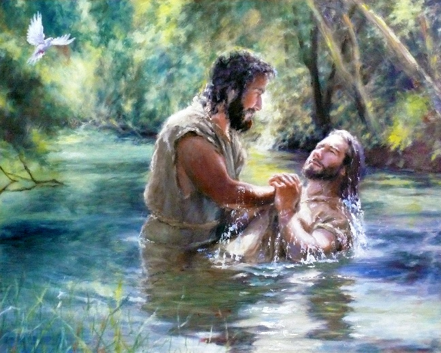
16 After his baptism, as Jesus came up out of the water, the heavens were opened and he saw the Spirit of God descending like a dove and settling on him. 17 And a voice from heaven said, “This is my dearly loved Son, who brings me great joy.”

Notice something. Even though Jesus knows He is the Son of God and that he has been called to preach and teach, he still submits himself to John for baptism. John is horrified, for he first sensed Jesus while both of them were in their mother’s wombs, and he knows Jesus is the Son of God. But God has instructed Jesus to come to John as a form of submission. In a way, being willing to undergo baptism is also a test, for if Jesus refuses to submit himself to John in baptism, any further ministry will be worthless.

So, John and Jesus enter the water, John immerses Jesus, and then God sends the Holy Spirit descending like a dove and resting on Jesus. In addition, God calls from heaven, proclaiming, “This is my dearly loved Son, who brings me great joy.”

Why is God’s approval so necessary? The human side of Jesus needs reassurance that he is doing the right thing, that he has been called and set apart. The divine side of Jesus needs this reassurance because he knows he must undergo severe testing before he will be allowed to enter into ministry.

What a magnificent thing for God to say! “…my dearly loved Son, who brings me great joy.” How many of us have longed for our earthly parents to say something similar, and how few of us have heard them say such things? One of the fundamental messages in the Smalley/Trent book The Blessing is that many of us have never received blessings from our parents because they never received blessings from their parents and therefore have no idea how to give them.

But here’s the most wonderful thing: God wants to say the same thing about each one of us, that each of us is His “loved son/daughter, who brings Him great joy.” Many times, we look at ourselves and doubt whether or not we give joy to anybody. We are acutely conscious of our failings, and we’re honest enough to doubt that God can possibly take joy in us at all. Yet, God tells us in Zephaniah 3:17 “The Lord your God is with you, the Mighty Warrior who saves. He will take great delight in you; in his love he will no longer rebuke you, but will rejoice over you with singing.’”

How can a holy and righteous God possibly rejoice over sinful people, even to the point of singing songs over them? The difference stems from the gap between human love and divine love. Most of our love is conditional: I’ll love you, IF… But God’s love is unconditional; He already knows our failings and yet He loves us anyway. We struggle to believe such a thing is possible because we know we fail routinely. But Jesus has come to free us from our sins, to deliver us from the consequences, and to perfect us into the Image of God, if we will only believe in Him.

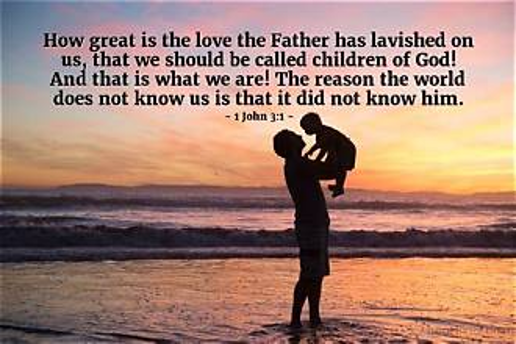
As you look in the mirror today, remember that the person who looks back at you is loved unconditionally, completely, and eternally. 1 John 3:1 tells us, “See how very much our Father loves us, for he calls us his children, and that is what we are! But the people who belong to this world don’t recognize that we are God’s children because they don’t know him.”  Want to know God? Confess that you are a sinner and nothing you can do is good enough for you to earn your way into heaven. Then thank God that through His merciful gift of Jesus Christ, your sins have been forgiven because Jesus has sacrificed himself for those sins. Now promise God that you will live for Him and not for yourself.

PRAYER: Father God, thank You for loving us and caring for us. Lord, we confess that we are sinners and there’s nothing we can do to make up for those sins. Please forgive us for our sins. Thank You that Jesus has paid the price for our sins by dying for us at Calvary. Help us to live for You from this moment onward. In the mighty and precious Name of King Jesus. Amen.
SEPTEMBER 23, 2026 PEACE-HOW DO WE GET IT AND HOW CAN WE KEEP IT? #69 WANT GOD’S GLORY? FOLLOW HIS CLOUD!

September 23, 2026

Exodus 40:34-38 The Lord’s Glory Fills the Tabernacle

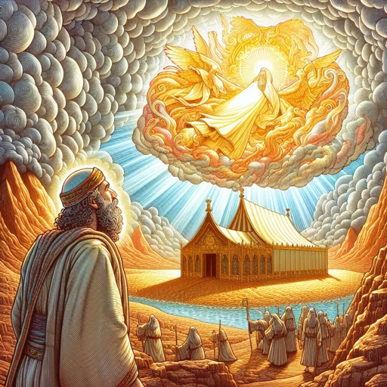
34 Then the cloud covered the Tabernacle, and the glory of the Lord filled the Tabernacle. 35 Moses could no longer enter the Tabernacle because the cloud had settled down over it, and the glory of the Lord filled the Tabernacle.

36 Now whenever the cloud lifted from the Tabernacle, the people of Israel would set out on their journey, following it. 37 But if the cloud did not rise, they remained where they were until it lifted. 38 The cloud of the Lord hovered over the Tabernacle during the day, and at night fire glowed inside the cloud so the whole family of Israel could see it. This continued throughout all their journeys.

After all the work on the Tabernacle and its furnishings and the garments for the priests was complete, Moses and a large group of helpers set up everything according to God’s instructions. You can read all the details in the first part of Chapter 40. But then something astounding happened. Just as Moses completed the setup and walked out of the Tabernacle courtyard, he could feel heat radiating against his back. The cloud of God’s glory covered the Tabernacle and His glory filled the Tabernacle, making it impossible for anyone to enter. Awe-struck and stunned, the Israelites prostrated themselves, overcome by a sense of their own shame in the light of God’s holiness.

For all the remaining years of the Israelites’ pilgrimage, God’s glory would lead them and guide them. When God wanted the Israelites to move, the cloud of His glory would lift so that the priests and their helpers could pack up the Tabernacle for transport. Then the cloud would begin to move with the Israelites following.

What must it have been like for those people having to trust God completely for direction? Imagine the conversations back in the tents. “Eh, Solomon, so how long are we going to be in this place? We’ve been in some grim places, but this one has them all beat. And is there even water in this place? Will the manna continue?”

“Miriam, why ask me? Am I God? Does God tell me His plans? Even if you ask Moses, he can’t tell you! Just make the best of this situation, will you?”

Nobody likes uncertainty! We want security, financial guarantees, a safe place to live, work that will furnish our families’ needs, good health, and enough income to live comfortably. While the Israelites were in Egypt, they were slaves; however, they knew what was expected of them and they had adjusted to a situation where someone else was making all the big decisions while they simply followed orders and hoped their bosses wouldn’t be cruel. But now the Israelites are in the Sinai desert and nothing is certain, apart from the cloud of God’s glory that hovers over the Tabernacle.

“What a kvetchy kid!” I was working in a hospital in Manhattan, and one of our nurses was describing a difficult patient. But what did that nurse mean? There’s a delightful term in Yiddish, kvetch.  According to Chabad.org, “Kvetch literally means “squeeze” in Yiddish, and commonly refers to whining, complaining, and grousing. A person who kvetches incessantly can also be referred to as a kvetch.” When that nurse described the pediatric patient as kvetchy, she was absolutely correct. While other children suffered valiantly in silence, this kid complained about EVERYTHING! Looking back, I realize those complaints likely came from intense fear; after all, this child was a cancer patient and who knows what his parents had told him?

Kvetching is as ancient as the human race. Already, Moses has had to counter bitter complaints about food and water, so as the cloud of God’s glory moves across the landscape, he can probably hear the Israelites indulging in their favorite pastime-kvetching.

Think about this situation. Once the Israelites have left Egypt, they must depend on God for guidance for the next forty years. Each morning when people awake, everyone looks toward the Tabernacle in the center of the camp. Where is the cloud? Is the cloud hovering over the Tabernacle, or is it withdrawing so the Tabernacle can be packed up and the Israelites can move somewhere new? No matter how much the Israelites might want to complain, they really have no choice, for they must follow God’s leading.

Whether or not we realize it, we are in the same position as those ancient Israelites. No matter how much we long for security and safety, we can only find these things while following God’s guidance. If we want to see God’s glory working in our lives, we must follow the cloud of His Presence.

Centuries after Moses and the Israelites, Martin Luther found himself leading a movement that challenged abuses that had developed within the Catholic Church. Branded as a criminal, Luther was hunted and persecuted; yet, he persevered and others followed, lighting spiritual fires that set ablaze hearts hungering for God’s glory.

Luther penned these words:

“A Mighty Fortress Is Our God”

A mighty fortress is our God, A bulwark never failing;
Our helper He amid the flood Of mortal ills prevailing:
For still our ancient foe Doth seek to work us woe;
His craft and power are great, And armed with cruel hate,
On earth is not his equal.

Did we in our own strength confide, Our striving would be losing,
Were not the right Man on our side, The Man of God’s own choosing:
Dost ask who that may be? Christ Jesus, it is He;
Lord Sabaoth, His name, From age to age the same,
And He must win the battle.

And though this world, with devils filled, Should threaten to undo us,
We will not fear, for God hath willed His truth to triumph through us:
The prince of darkness grim, We tremble not for him;
His rage we can endure, For lo, his doom is sure,
One little word shall fell him.

That word above all earthly powers, No thanks to them, abideth;
The Spirit and the gifts are ours Through Him who with us sideth:
Let goods and kindred go, This mortal life also;
The body they may kill: God’s truth abideth still,
His kingdom is forever.

PRAYER: Father God, thank You for loving us and caring for us. Lord, please help all who read these words to become so hungry for Your Presence that they will seek Your face. Please answer them when they cry out to You. In the mighty and precious Name of King Jesus. Amen.
\

SEPTEMBER 22, 2026 PEACE-HOW DO WE GET IT AND HOW CAN WE KEEP IT? #68 WANT GOD’S BLESSING? CARVE A FEW TENT PEGS!

September 22, 2026

Exodus 39:32-43 Moses Inspects the Work

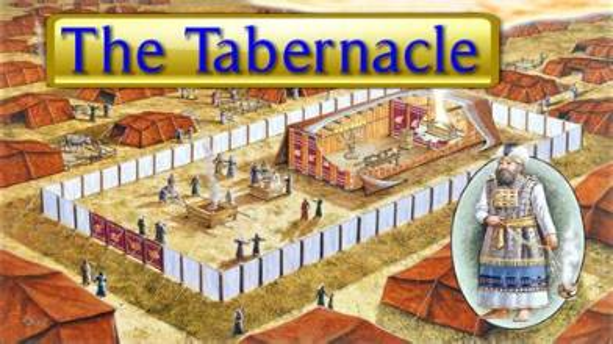
32 And so at last the Tabernacle was finished. The Israelites had done everything just as the Lord had commanded Moses. 33 And they brought the entire Tabernacle to Moses: the sacred tent with all its furnishings, clasps, frames, crossbars, posts, and bases; 34 the tent coverings of tanned ram skins and fine goatskin leather; the inner curtain to shield the Ark; 35 the Ark of the Covenant and its carrying poles; the Ark’s cover—the place of atonement; 36 the table and all its utensils; the Bread of the Presence; 37 the pure gold lampstand with its symmetrical lamp cups, all its accessories, and the olive oil for lighting; 38 the gold altar; the anointing oil and fragrant incense; the curtain for the entrance of the sacred tent; 39 the bronze altar; the bronze grating and its carrying poles and utensils; the washbasin with its stand; 40 the curtains for the walls of the courtyard; the posts and their bases; the curtain for the entrance to the courtyard; the ropes and tent pegs; all the furnishings to be used in worship at the Tabernacle; 41 the beautifully stitched garments for the priests to wear while ministering in the Holy Place—the sacred garments for Aaron the priest, and the garments for his sons to wear as they minister as priests. 42 So the people of Israel followed all of the Lord’s instructions to Moses. 43 Then Moses inspected all their work. When he found it had been done just as the Lord had commanded him, he blessed them.

“Oh no!” you exclaim. “Just another list; how boring can the Bible possibly get?” WRONG! WRONG! WRONG! If you read the lists of items presented to Moses and assume you’re merely being subjected to yet another example of ancient bean counting, you are missing something infinitely precious. When God designated Bezalel and Oholiab to oversee the artisans creating the Tabernacle, He also ordered them to create the most beautiful parts, involving silver and gold and bronze. But thousands of others wove material for the curtains, creating clasps for the material, making tent posts, braiding ropes, and carving tent pegs. Notice what happened when the work was completed. The artisans presented their work; Moses inspected it, and “When he found it had been done just as the Lord had commanded him, he blessed them.”

Notice what the Bible does NOT say. Nowhere does this account indicate that artisans weaving and sewing materials for the priestly garments or those creating the implements for the Most Holy Place received a greater blessing than those creating clasps or carving tent pegs or braiding rope. God gave the commands; the people responded; and Moses inspected and found everything had been done following God’s plans perfectly. In all the history of the Israelites, this might have been one of the few times when God’s people actually obeyed Him to the letter.

Why mention all the little people who made the Tabernacle a possibility? Simple. Most of us are little people who will never gain recognition outside a small circle of friends or colleagues. When the roll of insignificant individuals is called, our names will be there. Moses blessed everyone who had participated in creating the Tabernacle in any way, and that blessing rested on them and remained with them and with their families.

Proverbs 10:22 tells us, “The blessing of the Lord makes a person rich, and he adds no sorrow with it.” Moses was not merely giving his own blessing but he was acting as God’s representative, imparting God’s blessing to these people. Several years ago, Gary Smalley and John Trent co-authored a book entitled The Blessing. The book is a classic that has helped millions of people. Here is the brief introduction from Amazon:

“We all have a powerful need to know that someone in this world loves us and accepts us unconditionally. We especially crave our parents’ blessing, and without it, we may become angry and driven, or detached and empty. We may also feel this hurtful lack between brothers and sisters, husbands and wives, or even within our religious congregation.

Now family counselors Gary Smalley and John Trent, Ph.D., show us how we can transform our lives – even when it is no longer possible to receive our parents’ blessing. They reveal the five key elements of the blessing, describe the most common home situations where a blessing has been denied (one of them may be ours), and offer practical, effective methods to heal broken hearts and families. Most important, they explain how we can be a blessing, and pass on that life-changing gift to our love ones.”
Those five key elements are

  • Meaningful, encouraging touch
  • A confirming spoken message
  • Attaching high value
  • Picturing a special future
  • An active commitment

The Blessing is such an important book because many of us come from families where parental blessings have been lacking for generations. I come from a community with a number of second or third generation Swedish immigrants, many of whose ancestors came to America because things were so difficult in their homeland. Sadly, many of those immigrants never received blessings from their parents and accordingly had nothing they could pass on to their descendants. The result has been generations of hard-working, driven individuals longing for approval and blessings that have never materialized.

No matter how much we might have suffered in our families of origin, we all have a heavenly Father who wants to bless us. 1 JOHN 3:1 See how very much our Father loves us, for he calls us his children, and that is what we are! But the people who belong to this world don’t recognize that we are God’s children because they don’t know him.

GOD SEES YOU! GOD KNOWS YOU! GOD LOVES YOU! Today, please understand that God wants to bless you for all the times you have tried to do the right thing, even if you feel you have failed. God is not handing out blessings by consulting a score card; He blesses unconditionally. Now, go out there and carve a few tent pegs!

PRAYER: Father God, thank You for loving us and caring for us. Lord, please help all who read these words to feel Your warm embrace, to know that You love them, that You are with them, and that You will never leave them nor forsake them. In the mighty and precious Name of King Jesus. Amen.
SEPTEMBER 21, 2026 PEACE-HOW DO WE GET IT AND HOW CAN WE KEEP IT? #67 GENEROSITY BRINGS PEACE

September 21, 2026

Inventory of Materials

Exodus 38:24-31 The people brought special offerings of gold totaling 2,193 pounds, as measured by the weight of the sanctuary shekel. This gold was used throughout the Tabernacle.

25 The whole community of Israel gave 7,545 pounds of silver, as measured by the weight of the sanctuary shekel. 26 This silver came from the tax collected from each man registered in the census. (The tax is one beka, which is half a shekel, based on the sanctuary shekel.) The tax was collected from 603,550 men who had reached their twentieth birthday. 27 The hundred bases for the frames of the sanctuary walls and for the posts supporting the inner curtain required 7,500 pounds of silver, about 75 pounds for each base. [l] 28 The remaining 45 pounds of silver was used to make the hooks and rings and to overlay the tops of the posts.

29 The people also brought as special offerings 5,310 pounds of bronze, 30 which was used for casting the bases for the posts at the entrance to the Tabernacle, and for the bronze altar with its bronze grating and all the altar utensils. 31 Bronze was also used to make the bases for the posts that supported the curtains around the courtyard, the bases for the curtain at the entrance of the courtyard, and all the tent pegs for the Tabernacle and the courtyard.

39:1 The craftsmen made beautiful sacred garments of blue, purple, and scarlet cloth—clothing for Aaron to wear while ministering in the Holy Place, just as the Lord had commanded Moses.

Reading the accounts of the items the Israelites brought to construct the Tabernacle boggles our minds. Here are these people in the Sinai wilderness, bringing forth all these precious materials. The only rational explanation for their behavior is that the Holy Spirit was moving in their hearts, causing them to give fearlessly.

How much would all of this cost in today’s market? In an article entitled “How Much Would It Cost to Build the Tabernacle Today,” posted February 8, 2025, Uche Ekeshili has given these estimates:

Precious Metals Cost

According to Exodus 38:24–29, the Tabernacle included:

  • Gold: 29 talents + 730 shekels (~2,175 lbs + 365 oz)
  • Silver: 100 talents + 1,775 shekels (~7,500 lbs + 1,775 oz)
  • Bronze: 70 talents + 2,400 shekels (~5,250 lbs + 2,400 oz)

A recent breakdown estimates:

  • Gold (~35,165 oz) at current rates → $71M
  • Silver (~120,888 oz) → $3M
  • Bronze (~5,325 lbs at ~$2/lb) → $12K

Total metal value ≈ $123 million

 Adding Fabrics, Wood & Garments

  • The cost of tribal donations, luxurious linens, spices, and acacia wood would substantially raise the material value but is harder to quantify.
  • One estimate values the non-metal materials at about $10 million.

 3. Including Labor & Craftsmanship

  • Factoring in specialized artisan labor (designers like Bezalel & Oholiab, weavers, metalworkers), upkeep, and transport, total costs could reach $150–200 million
  • One blogger suggested a full cost estimate of at least $200 million, including all materials and labor

 4. Other Estimates

  • A lower-end estimate puts metal + non‑metal materials at $62 million, which may exclude silver or use older valuations.
  • So, estimates vary widely—from $60 M (metals only) up to $200 M+ with full scope.

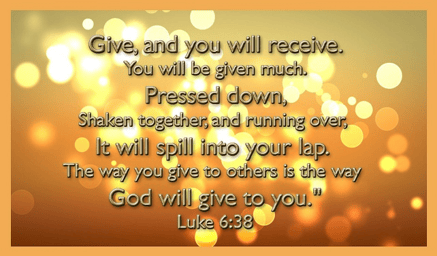
Centuries after Moses received all these offerings, Jesus taught his disciples the Kingdom principle recorded in Luke 6:38. The New Living Translations records it this way: “Give, and you will receive. Your gift will return to you in full—pressed down, shaken together to make room for more, running over, and poured into your lap. The amount you give will determine the amount you get back.”

Sometimes, people are fond of avowing that “You can’t out-give God.” While this statement is true, many of us still feel hurt, panicky, and frustrated. We can barely make ends meet as it is; how will we have anything left over for God? Here’s the amazing thing about God: when we freely give Him whatever we can, He can take that, multiply it, and use it in ways we might never have imagined.

Shortly after my husband Bob committed his life to Christ at the age of 37, he heard a message about tithing. At the time, Bob was facing a number of financial challenges and was wondering how his money could possibly stretch. But with the enthusiasm of a new believer, Bob began tithing, giving one tenth of his income before he began settling his bills. Bob was shocked when he realized that he was now meeting all his financial obligations fully and promptly without any hold-ups. Many others have had similar experiences.

We don’t always have to give money. In the Tabernacle story, several highly-skilled craftsmen gave their talents. Bezalel and Oholiab are mentioned particularly as supervising the work and creating the most complicated parts; however, there were also a number of other men and women who gladly gave their talents to create all the different parts of the Tabernacle. For decades, Habitat For Humanity has depended on the donations of time, talent, and materials from suppliers and craftsmen. Since 1976, Habitat has helped more than 65 million people build or improve the place they call home. (https://www.habitat.org/multimedia/annual-report-2025/)

When I was a child, one of our neighbors, Mrs. Gunnar Anderson, had a wonderful grape arbor. Each fall, we would visit the Andersons and help ourselves to bunches of delicious grapes. Mrs. Anderson told us an important story. One year, early on, Mrs. Anderson became worried she might not have enough grapes for her family, so she didn’t invite neighbors to come pick that year. That year and the next year, the yield from the grape arbor was quite small. It was only when Mrs. Anderson invited neighbors to come pick her grapes that the grape arbor yielded bountifully. For the rest of Mrs. Anderson’s life, she continued to share her grapes, and every year, she had enough for her family’s needs as well as all her neighbors’.

One of the many lessons of the Tabernacle is that generosity brings peace of heart. When we hold everything God gives us with open hands, God can continue to pour blessings through us to others and we will have peace. When we panic and begin clutching things, God cannot force our hands open. May God help us to trust Him and give openly!

PRAYER: Father God, thank You for loving us and caring for us. Lord, help us to trust You and give generously as You guide us. In the mighty and precious Name of King Jesus. Amen.
SEPTEMBER 20, 2026 PEACE-HOW DO WE GET IT AND HOW CAN WE KEEP IT? #66 WHAT GOOD IS A BURNT OFFERING?

September 20, 2026

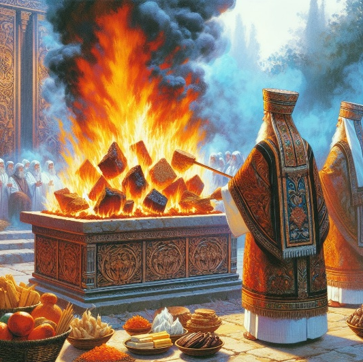
Reading through the Old Testament, we keep encountering orders regarding burnt offerings involving prime animals and birds, bread and incense. Even if you have only been to the dentist and have smelt the odor of a friction dental drill working, you know that smell, the smell of burning flesh.

“Eww!” you say. “Why would God command burnt offerings? What good is the idea of burnt offerings for today? Must I go out and offer a thick steak on my grill? What’s the point? This article from https://thebiblechristian.com/what-are-burnt-offerings/ offers one of the clearest explanations I have found.

What Are Burnt Offerings?

Burnt offerings, or “olah” in Hebrew, refer to sacrifices made to God where the entire animal was consumed by fire. These offerings signify total surrender and commitment to God. They were meant for atonement and thanking God, reinforcing the idea that true worship involves sacrifice.

The Purpose of Burnt Offerings

God established burnt offerings as a means for His people to approach Him. The purpose encompassed several important spiritual truths:

  • Atonement for sin: They served as a way to seek forgiveness.
  • Expression of worship: These offerings were acts of devotion and gratitude.
  • Restoration of relationship: They symbolized the yearning for restoration with God.

Scriptural Basis for Burnt Offerings

Several key passages provide insight into the significance of burnt offerings. Leviticus 1 outlines the process, detailing every aspect of the offering:

  • Selection of the offering: It had to be an unblemished male animal.
  • Presentation before the Lord: The individual would lay their hands on it, symbolizing the transfer of sin.
  • The act of burning: The complete consumption indicated total surrender to God.

These actions illustrate a profound truth: when we give our best to God, we enter into a deeper relationship with Him.

Burnt Offerings in the Old Testament Context

Understanding the historical and cultural context of burnt offerings enhances our grasp of their significance. The Israelites lived amidst a sacrificial system that required constant offerings, reflecting the seriousness of sin and the need for relational restoration with God.

Cultural Understanding of Sacrifice

In ancient Israel, sacrifices were common practices among surrounding nations. However, God’s instructions for burnt offerings differed significantly:

  • They required specific types of animals, emphasizing quality over quantity.
  • They were performed with a heart of worship, directing focus toward God.
  • They pointed toward future reconciliation through Jesus Christ.

In this context, burnt offerings stood out as distinctive acts of worship directed toward the one true God.

Burnt Offerings and Worship

Burnt offerings served as powerful symbols of worship. These acts compelled worshippers to involve their entire selves, demonstrating a holistic approach to relating to God:

  • Physical position: Kneeling or standing during the offering expressed humility.
  • Using one’s possessions: Offering something valuable spoke of the importance of sacrifice.

This principle continues today. Consider how your worship reflects your dedication and willingness to give God your all.

Theological Insights on Burnt Offerings

Exploring burnt offerings leads to a deeper understanding of theological themes in Scripture. They present profound insights on the nature of God and humanity’s relationship with Him.

Burnt offerings underscore God’s holiness. The fire consuming the offering represented His divine presence, illuminating the significant gap between a holy God and sinful humanity. Hebrews 12:29 states that “our God is a consuming fire.” This reminds us that approaching God requires reverence and understanding His righteousness.

The Cost of Sin

Burnt offerings graphically display the cost of sin. Each animal sacrifice embodied the seriousness of wrongdoing and the need for repentance. Romans 6:23 explains that “the wages of sin is death.” Each burnt offering reminded the Israelites of their need for atonement and God’s grace in setting things right.

Jesus: The Ultimate Burnt Offering

As believers, understanding burnt offerings can deepen our appreciation of Jesus Christ. He became the ultimate burnt offering, fulfilling the sacrificial system of the Old Testament.

Fulfillment of the Law

In Matthew 5:17, Jesus declared, “Do not think that I have come to abolish the Law or the Prophets; I have not come to abolish them but to fulfill them.” He embodied the sinless sacrifice, requiring no additional offerings.

  • His perfection matched the requirements of the law.
  • He presented Himself as the unblemished lamb, representing the ultimate expression of God’s love.

Through His sacrifice, believers become righteous in God’s eyes, free from guilt due to sin.

Connection to New Covenant

The burnt offering carries profound implications for the New Covenant established through Christ. Hebrews 10:14 reveals that “by one sacrifice he has made perfect forever those who are being made holy.” Jesus’ death established a new relationship with God based on grace, no longer relying on repetitive animal sacrifices.

Practical Implications of Burnt Offerings Today

Understanding burnt offerings offers real-world implications for contemporary believers. The spiritual principles inherent in this practice remain relevant and insightful.

The Call to Offer Ourselves

Romans 12:1 encourages believers to “offer your bodies as a living sacrifice, holy and pleasing to God.” Modern burnt offerings involve surrendering our lives and desires to God:

  • Consider areas in your life where God calls for surrender.
  • Reflect on what it means to live as a holy and pleasing sacrifice.

The Importance of Worship Beyond Sunday

Burnt offerings signify ongoing devotion, reminding believers that worship goes beyond Sunday mornings. Engage in daily practices that honor God:

  • Make time for prayer and scripture reading.
  • Serve others in love and humility.

This approach fosters a mindset of continual worship, modeling the disciplined lifestyle of the Israelites.

Living in Light of Our Burnt Offering

Believers should embrace a lifestyle that honors the significance of burnt offerings. This perspective encourages intentional living marked by gratitude and devotion to God.

Gratitude in Prayer and Action

Making burnt offerings a reality involves expressing gratitude through prayer and acts of service. Model your life after the teachings of Jesus:

  • Pray for guidance as you navigate your daily decisions.
  • Seek opportunities to bless others.

Gratitude should motivate every action. Ask yourself: How can your daily acts reflect the love of Christ?

Acknowledging Our Need for Atonement

Understand the significance of atonement as you reflect on the burnt offering’s purpose. Acknowledging personal sin brings humility and gratitude:

  • Reflect on how Christ’s sacrifice impacts your life.
  • Confess and seek God’s forgiveness regularly.

This practice nourishes your relationship with God, reminding you of the constant need for grace.

Conclusion

Burnt offerings reveal profound truths about God’s character, our need for atonement, and the call to total devotion. As believers, these ancient practices translate into modern expressions of faith, inviting a deeper relationship with God. Jesus Christ fulfills the ultimate burnt offering, allowing us to come boldly into His presence.

Consider areas where God invites you to offer your life as a living sacrifice. Align your daily practices with His desires, seeking continual surrender. In doing so, embrace the fullness of grace found in Christ.  

So, no, you don’t have to incinerate food at your next cookout. But God wants us to do something far more difficult: we are to live for Him every day of our lives, seeking to please Him in everything we do. Jesus has already shed his blood for our sins, making the ultimate blood sacrifice. Now we must continue to confess and seek God’s forgiveness regularly.

PRAYER: Father God, thank You for loving us and caring for us. Lord, we confess that we are sinners and that nothing we can do is enough to take away that sin. Thank You for sending Jesus to shed his blood. Please forgive our sins and help us to live lives pleasing to You. In the mighty and precious Name of King Jesus. Amen.
SEPTEMBER 19, 2026 PEACE-HOW DO WE GET IT AND HOW CAN WE KEEP IT? #65 DON’T LET TERMITES EAT YOUR ALTAR!

September 19, 2026

Exodus 37 Making the Altar of Incense

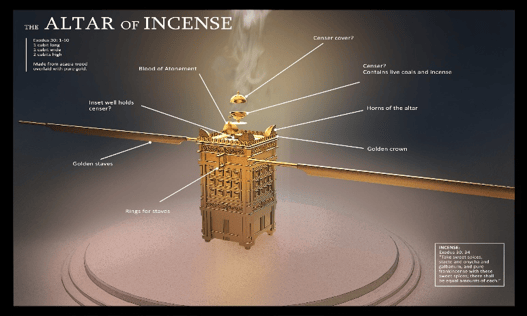
37:25 He made the incense altar of acacia wood. Its length was a cubit and its width a cubit—it was square—and two cubits was its height. Its horns were of one piece with it. 26 And he overlaid it with pure gold: its top, its sides all around, and its horns. He also made for it a molding of gold all around it. 27 He made two rings of gold for it under its molding, by its two corners on both sides, as holders for the poles with which to bear it. 28 And he made the poles of acacia wood, and overlaid them with gold.

If you’re like most of us, you might feel impelled to read the descriptions of creating the Tabernacle furnishings; however, you find it B*O*R*I*N*G*!!! You might even give God a guilty look as you quickly skip over all these descriptions. “Great,” you think as you yawn, “so this proves the ancient Israelites could keep records meticulously. So what?”

The first thing to notice is the quality of the materials that went into the altar. What’s so important about acacia wood? An AI search reveals the following:

Durability and Strength

  • Acacia wood, also known as shittim wood, is known for its density and strength, making it ideal for constructing enduring structures.
  • It was used in significant religious artifacts such as the Ark of the Covenant and the Tabernacle, emphasizing its importance in sacred contexts.

Symbolic Significance

  • Beyond its practical uses, acacia wood carried deep spiritual symbolism, representing purity, protection, and God’s provision.
  • Its thorny branches symbolized trials and resilience, reflecting God’s enduring strength, and the union of humanity and divinity.

Availability

  • Acacia trees were prevalent in the regions surrounding ancient Israel, making the wood readily accessible for construction.

Overall, acacia wood was not only a practical resource but also held significant spiritual and symbolic value in the Biblical narrative.

God ordered Moses to overlay the altar with pure gold. While the gold was partially to demonstrate how precious this altar was, that gold would also help protect the altar from termites.

When we first arrived in Ghana, we began learning about various kinds of wood. One of the cheapest and most readily available kinds of wood was called “wawa.” Wawa was a very soft wood, and while it was quite affordable, it was also very weak and incredibly attractive to termites. In those days, termite mounds were everywhere. Termites could appear in your home at any time, particularly if a builder had used low-quality wood. 

Termites will voraciously consume all kinds of material, particularly cotton sheets and clothing. Even if termites don’t chew up something, they will spread “termite mud” all over things, spoiling them. Years ago, termites came up through a tiny crack in a cement floor, entered the bottom drawer of a filing cabinet, and spread mud over several floppy discs, spoiling them completely. Yet another time, termites came up through an electrical outlet and consumed an entire paperback book, leaving only the cover.

You would think that God wouldn’t have to worry about termites consuming the various parts of the Tabernacle; however, you would be wrong. There are desert subterranean termites, specifically Amitermes desertorum, in the Sinai region, infesting various wood and fruit trees. Even today, the Holy Monastery of Saint Catherine has had to combat termite infestations. This is why throughout the descriptions of creating the various parts of the Tabernacle, acacia wood continues to be mentioned.

The altar of incense was designed to be used twice daily, combining prayer and worship. Throughout the Bible, incense is used to represent the prayers of believers. And this brings us to the point of this study.

We can tell you from much sad experience that termites work quietly and persistently. Few things are more difficult to eradicate than termites. One end of the house in which we live has suffered repeated termite infestations, and we fear the wooden beams of our roof are likely turning into lace, no thanks to those persistent insects. We once had a wooden chest that appeared quite strong, until we realized that we could practically put our fingers through the bottom boards. The termites had found our chest, leaving nothing but poor-grade fire wood.

While we might not build small altars for ourselves, we still need someplace to which we can retreat, where we can pray quietly. John Wesley, the founder of Methodism, was one of nineteen children, nine of whom survived beyond infancy. Susanna Wesley, John’s mother,  
used her apron as a signal for prayer. In her busy household, she found it challenging to find a quiet place to pray. To create a moment of solitude, she would pull her apron over her head, signaling to her children that she was in prayer and should not be disturbed. This practice became well-known in her family, allowing her to dedicate time to her spiritual life amidst daily distractions. Think about that! Here was a woman with every excuse for not praying; after all, the “termites of exigency” were all around her; yet, she prayed regularly and trained her children to give her time and space to do so.

All of us are assailed by termites of various kinds-jobs, tight schedules, housework, financial burdens, health challenges, etc. If we are not careful, these termites can consume our time for prayer and worship just as surely as those Ghanaian termites consumed wawa boards.

Your place of worship might be your car as you commute to and from work. Now, phone apps allow us to listen to Scripture, to prayers, and to praise music anytime and anywhere. You might have to worship in bits as you bathe or brush your teeth. From experience, we strongly encourage you to worship and pray before your day gets started, for once the “termites of time” appear, prayer and worship become very difficult. May God help you, so that you create an altar, even if it’s only your bathroom sink, and continue to pray and worship God. Your prayers are still just as valuable to God and to you as that costly incense was in the days of Moses.

PRAYER: Father God, thank You for loving us and caring for us. Lord, help us to follow hard after You all the days of our lives. Help us to carve out time to pray and worship, realizing that some time is far better than none. In the mighty and precious Name of King Jesus. Amen.

SEPTEMBER 18, 2026 PEACE-HOW DO WE GET IT AND HOW CAN WE KEEP IT? #64 GOD IS THE GOD OF “TOO MUCH!”

September 18, 2026

Exodus 36:2-7 The People Give More than Enough

2 Then Moses called Bezalel and Aholiab, and every gifted artisan in whose heart the Lord had put wisdom, everyone whose heart was stirred, to come and do the work. 3 And they received from Moses all the offering which the children of Israel had brought for the work of the service of making the sanctuary. So they continued bringing to him freewill offerings every morning. 4 Then all the craftsmen who were doing all the work of the sanctuary came, each from the work he was doing, 5 and they spoke to Moses, saying, “The people bring much more than enough for the service of the work which the Lord commanded us to do.”

6 So Moses gave a commandment, and they caused it to be proclaimed throughout the camp, saying, “Let neither man nor woman do any more work for the offering of the sanctuary.” And the people were restrained from bringing, 7 for the material they had was sufficient for all the work to be done—indeed too much.

If you have ever been involved in fund-raising for any cause, you know the problems. You present the needs, and everybody applauds. People respond enthusiastically and make extravagant promises…until it’s time to fulfill the promises. Suddenly, people develop very bad memories. Experienced fund raisers know that they must have several budgets, including a budget allowing for all donations as well as a budget that allows for varying degrees of revenue. Such planning is not a matter of faithlessness but of realistic thinking.

When Jesus was teaching his disciples, he warned them to count the cost of discipleship. Luke 14:25-33 Now great multitudes went with Him. And He turned and said to them, 26 “If anyone comes to Me and does not hate his father and mother, wife and children, brothers and sisters, yes, and his own life also, he cannot be My disciple. 27 And whoever does not bear his cross and come after Me cannot be My disciple. 28 For which of you, intending to build a tower, does not sit down first and count the cost, whether he has enough to finish it— 29 lest, after he has laid the foundation, and is not able to finish, all who see it begin to mock him, 30 saying, ‘This man began to build and was not able to finish’? 31 Or what king, going to make war against another king, does not sit down first and consider whether he is able with ten thousand to meet him who comes against him with twenty thousand? 32 Or else, while the other is still a great way off, he sends a delegation and asks conditions of peace. 33 So likewise, whoever of you does not forsake all that he has cannot be My disciple.

If we fail to count costs, we are setting ourselves up for disaster as well as profound embarrassment. Missionaries presenting needs to congregations find themselves struggling to ensure that they have represented needs responsibly so projects will be completed successfully, even when promised funding fails to materialize. Such disappointing experiences make the account recorded in Exodus 36:2-7 even more remarkable. The same Israelites who have previously proved faithless and unreliable are so stirred that they persist in bringing daily free will offerings. Nobody is sitting back in their tents, clutching that gorgeous Egyptian material and jewelry and resenting Moses for his requests. Nobody is competing so that others will applaud and praise them. Each morning, as Moses and the artisans report to the donation site, a long line stretches out through the camp comprised of people bearing the most precious things they have in their tents. Those who have already donated see what others are giving and return to bring even more. The Spirit of the Lord is moving, the same Spirit that sends rain on the just and the unjust, the same Spirit who has provided food and water for two million people in the wilderness. And under the influence of the Holy Spirit, the Israelites truly believe that no sacrifice is too much.

I like to think that later, when Moses is reflecting on everything that has happened during the journey through the wilderness, the days of these collections will remain as glorious memories. What happens to the Israelites that they become so generous? God, the God of abundance, is moving in the hearts of the people. But there’s also another principle at work.

God has ordered His people to give their first fruits as an act of obedience and faith. Now God is asking these same people to freely offer the treasures they have received from the Egyptians, trusting that God can give even more. Jesus tells us in Luke 6:38, “Give, and it will be given to you: good measure, pressed down, shaken together, and running over will be put into your bosom. For with the same measure that you use, it will be measured back to you.”

This teaching is one of the foundational teachings about the Kingdom of God, and yet, there’s more to learn. For when we give what we can, God gives us more than we have given in the first place. Exodus 39 tells us what happened once the Israelites had completed creating everything for the Tabernacle and the priestly garments. Exodus 39:42 According to all that the Lord had commanded Moses, so the children of Israel did all the work. 43 Then Moses looked over all the work, and indeed they had done it; as the Lord had commanded, just so they had done it. And Moses blessed them.

What happens when we enjoy the blessing of the Lord? An AI search reveals the following:
The blessing of the Lord signifies divine favor and well-being. It represents a central theme in the Bible, often associated with prosperity, protection, and spiritual enrichment bestowed upon individuals, families, and nations. This blessing is typically linked to obedience to God’s commandments and living a righteous life, reflecting a relationship of faithfulness with God.

Key Aspects

  • Divine Favor: The blessing indicates God’s goodwill and support in various aspects of life.
  • Prosperity and Well-Being: It encompasses not just material wealth but also spiritual and emotional health.
  • Obedience and Faithfulness: Receiving God’s blessings often requires adherence to His teachings and commandments.

Biblical Context

  • The Hebrew word for “bless” implies kneeling in worship, emphasizing reverence and acknowledgment of God’s greatness.
  • Blessings are seen as declarations of God’s inherent goodness and a wish for His favor.

By their generosity, the Israelites unlocked God’s favor and abundance. And no matter how much we give, God can give far more than we ever can. Truly, God is the God of “Too much.”

Are you struggling financially or in other areas today? Ask God what He wants you to give Him and then obey. You will find that God can do “exceedingly abundantly above all that we ask or think, according to the power that works in us,” as it says in Ephesians 3:20. May God help you to rest in His Love and trust that the God of Too Much will supply your needs as you give to Him and obey.

PRAYER: Father God, thank You for loving us and caring for us. Lord, help us to give when You ask, trusting that You will provide exceedingly abundantly above all that we ask or think.” In the mighty and precious Name of King Jesus. Amen.
SEPTEMBER 17, 2026 PEACE-HOW DO WE GET IT AND HOW CAN WE KEEP IT? #63 GOD KNOWS OUR NAMES AND HE LOVES US!

September 17, 2026

Exodus 36:1 “And Bezalel and Aholiab, and every gifted artisan in whom the Lord has put wisdom and understanding, to know how to do all manner of work for the service of the sanctuary, shall do according to all that the Lord has commanded.”

It is amazing to realize that God is identifying these two artisans to Moses by their names and commending them as skilled, having wisdom and understanding. God also knows the names of every “gifted artisan.” God knows our names and our abilities!!! With everything God has to do to keep the universe going, God knows our names and every part of us. Psalm 139:1-6 tells us,

“1 O Lord, You have searched me and known me.
2 You know my sitting down and my rising up;
You understand my thought afar off.
3 You comprehend my path and my lying down,
And are acquainted with all my ways.
4 For there is not a word on my tongue,
But behold, O Lord, You know it altogether.
5 You have hedged me behind and before,
And laid Your hand upon me.
6 Such knowledge is too wonderful for me;
It is high, I cannot attain it
.

When God is instructing Moses on the creation of the Tabernacle, He mentions Bezalel and Aholiab by name, designating them as the chief artisans for this holy work. But it’s a mistake if we assume that God does not know the names of all the other skilled craftsmen and women, for God is the One who has created them with these gifts.

In a recent video commenting on the beginning of school, one educator has adjured all school workers to watch the children attending their schools carefully. School workers should watch out for the kids who have changed in any way, the kids who were happy last year and now are sad, the kids who were doing good school work and now are falling behind, the kids who are hiding during lunch period. These children might be facing bullying or family problems or even abject poverty so bad that they can’t even afford soap or deodorant or clean socks. Many times, it’s not teachers who have identified and encouraged such kids but janitors and bus drivers or cafeteria workers or crossing guards-people with minor positions but who are very perceptive.

You might feel very disgruntled, assuming that you are so insignificant that nobody knows you and nothing you do is important. But God knows your name just as He did those artisans in Israel, and God views your work as vital to His kingdom. Consider Brother Lawrence of the Resurrection, a seventeenth century Catholic monk who served as a cook and sandal maker for the Discalced Carmelite Priory in Paris.

In the mid-17th century, a man named Nicolas Herman joined the Carmelite monastery in Paris, France. Wounded from fighting in the European Thirty Years’ war, and suffering a sustained leg injury, he took the monastic name “Brother Lawrence of the Resurrection.” He worked in the monastery kitchen and eventually became the head cook. Amid the chaos of food preparation and the clanging of pots and pans, Brother Lawrence began to practice a simple method of prayer that helped him return to an awareness of Divine presence. He called it the practice of the presence of God and described it as “the most sacred, the most robust, the easiest, and the most effective form of prayer.” [1] 

Brother Lawrence’s method of prayer is so simple that it might seem misleading. It is to cultivate and hand over one’s awareness to God in every moment, in whatever we are doing. Brother Lawrence recommends that newcomers to the prayer use a phrase to recollect their intention toward the Divine presence, such as “‘My God, I am all yours,’ or ‘God of love, I love you with all my heart,’ or ‘Love, create in me a new heart,’ or any other phrases love produces on the spot.” [2] Practice of the Divine presence sometimes simply means taking brief pauses “to love God deep in our heart” and “savor grace.” [3] It involves a surrendered and resting trust in God to which one returns at all times.    (https://cac.org/daily-meditations/brother-lawrence-of-the-resurrection/)

The entry in Wikipedia describes Lawrence this way:

Despite his lowly position in life and the priory, his character attracted many to him. He had a reputation for experiencing profound peace and visitors came to seek spiritual guidance from him.[10] The wisdom he passed on to them, in conversations and in letters, would later become the basis for the book The Practice of the Presence of God. The conversations had been conducted and recorded by a notable cleric, the Abbé Joseph de Beaufort, who compiled this work after Brother Lawrence died.[11] This little book was approved by Archbishop of Paris, Louis Antoine de Noailles. When the Archbishop of Paris approved the life of Brother Lawrence made by his Grand Vicar and in his own organisation, he approved that it is said that this brother “forgot himself and was willing to lose himself for God, That he no longer thought of virtue or his salvation … that he had always governed himself by love without interest.[12] The book consists of sixteen short Letters by himself, a short collection of Spiritual Maxims embodying his views, four Conversations, probably written down by M. Beaufort and a brief Life, apparently from the same hand. It became popular among Catholics and Protestants alike, with John Wesley,[13] Willard L Sperry,[14][15] A. W. Tozer[16] and Hannah Whitall Smith recommending it to others. Hannah Whitall Smith writes: “This little book seems to me one of the most helpful I know.”[17]

Father de Beaufort recalls that “Lawrence was open, eliciting confidence, letting you feel you could tell him anything … Once you got past the rough exterior you discovered unusual wisdom, a freedom beyond the reach of the ordinary lay brother”. God chooses those through whom He can work. Brother Lawrence continues to influence Christians today because he surrendered his work to God and allowed God to have full control.

When God sent the prophet Samuel to Jesse’s house in Bethlehem to anoint one of Jesse’s sons as the next king, Samuel looked at Jesse’s seven tall handsome sons and was certain one of them must be the one he was called to anoint. But God had other ideas. 1 Samuel 16:7 But the Lord said to Samuel, “Do not look at his appearance or at his physical stature, because I have refused him. For the Lord does not see as man sees; for man looks at the outward appearance, but the Lord looks at the heart.” God rejected every one of those impressive-looking men. It was when Jesse finally called David, the youngest and smallest, from the sheep pasture, that God moved Samuel to anoint a son of Jesse. While the other young men had remained at home with their father, David was out there on the mountainside, protecting sheep and goats from wild animals and writing praise songs to God.

This morning, take heart! God knows your name! God knows your problems! And God wants you to enjoy His peace. Let’s pray.

PRAYER: Father God, thank You for loving us and caring for us. Lord, please cause everyone who reads these words to realize that You love them individually and that You know everything about them. Help them to realize that no matter where they are, You have called them to be there and they can be Your ministers, no matter how humble their job titles are. In the mighty and precious Name of King Jesus. Amen.

REFLECTIONS ON CLEANING OUT A STORAGE SHED-SEPTEMBER 16, 2026

September 16, 2026

For years, we maintained a small storage shed; now it was time to clear it completely. When we began, we were certain that clearing that shed would be a piece of cake, in fact, German chocolate cake with thick icing. After all, two years ago, we had given away much of the clothing, so what could possibly be left? Boy! Were we wrong!

There was a TV show entitled Gilligan’s Island that aired between September 1964 and April 1967. The plot revolved around seven people who set sail on what is scheduled to be a three-hour sightseeing tour on the charter boat The Minnow, get caught in a storm and end up stranded on an uncharted tropical island together. The show itself contains a lot of gentle humor and works because of the dynamics among the various members of the cast. Week after week, the cast think they will escape, only for their hopes to be dashed. After passing into syndication, the show has become a cult classic.

For us, clearing our storage shed turned into an adventure reminiscent of Gilligan’s Island. We thought we were going to make it through in one or two days; after all, what could be so difficult about some containers of glassware, clothing, papers, and photographs? We really did assume we might clear the entire thing in three hours. But we rapidly found that our anticipated three hour-tour eventually stranded us in a relative’s garage piled full of containers. We were stuck on a desert island called Memorabilia with no means of escape apart from making agonizing decisions. And we didn’t even have a catchy theme song to encourage us.

We found photographs-bags, boxes, albums. We found correspondence from Emmaus Walks we had taken in 2008. We found old photos from 1967. We also found all my class notes from my Tropical Medicine course at Tulane thirty years ago. Why didn’t we handle these things better or more expeditiously? We kept thinking there would be more time, and there wasn’t.

Along the way, there were some great discoveries. We found my husband’s U.S. Navy uniform, along with two white hats. We found a small dresser we could ship to a cousin, whose father had refinished it in the first place. We were able to pass on a few pieces of furniture to another relative who was thrilled. And one local thrift store catering to a large Congolese population was happy to take all the African stuff we could bring them. Finally, we were left with boxes previously stored in my grandmother’s home, and that was when we found much of my mom’s crystal, something one niece had longed for.

Now we are left with papers and photos to scan. The cloud and peripheral hard drives are  definitely our friends, for without digital records, we have no space to store these things and we can’t carry them any further.

How would we advise others who find themselves in our position? Take care of things today! You will NEVER have more time to deal with those photos, that correspondence, those memories. Scan things, save them to the cloud, save them to peripheral hard drives, save them any way you can and then shred what you must shred and burn what you must burn. And as you deal with memorabilia, thank God for all those people, all those friends, all those relatives, all that travel, all the good times. There are people throughout the world who have lost everything in fires, floods, earthquakes, or other natural disasters. Those people would give anything if they just had a few items left. May God help you so that you will treasure what you have and preserve it in a fashion that does not become a burden!

SEPTEMBER 16, 2026 PEACE-HOW DO WE GET IT AND HOW CAN WE KEEP IT? #62 GOD IS ALWAYS PROVIDING AHEAD OF TIME, BUT DO WE REALIZE IT?

September 16, 2026

Exodus 35:4-9 And Moses spoke to all the congregation of the children of Israel, saying, “This is the thing which the Lord commanded, saying: 5 ‘Take from among you an offering to the Lord. Whoever is of a willing heart, let him bring it as an offering to the Lord: gold, silver, and bronze; 6 blue, purple, and scarlet thread, fine linen, and goats’ hair; 7 ram skins dyed red, badger skins, and acacia wood; 8 oil for the light, and spices for the anointing oil and for the sweet incense; 9 onyx stones, and stones to be set in the ephod and in the breastplate.

Wow! God isn’t asking very much, is He? The Israelites are out in the wilderness without access to any markets; yet, look at the shopping list God has given Moses. Where are the Israelites supposed to get all these costly materials? Actually, they have them already, and God knows exactly who has what. Remember when the Israelites were leaving Egypt, and God ordered them to ask their Egyptian neighbors for their most precious belongings? The Egyptians were so terrified that they were GLAD to load the Israelites with everything they could, just so the Israelites would leave Egypt as quickly as possible. God was moving the Egyptians to give whatever they could, already designating the purpose for each donation. Now, out here in the wilderness, the Israelites have everything they require to create the Tabernacle.

Exodus 35: 20 And all the congregation of the children of Israel departed from the presence of Moses. 21 Then everyone came whose heart was stirred, and everyone whose spirit was willing, and they brought the Lord’s offering for the work of the tabernacle of meeting, for all its service, and for the holy garments. 22 They came, both men and women, as many as had a willing heart, and brought earrings and nose rings, rings and necklaces, all jewelry of gold, that is, every man who made an offering of gold to the Lord. 23 And every man, with whom was found blue, purple, and scarlet thread, fine linen, and goats’ hair, red skins of rams, and badger skins, brought them. 24 Everyone who offered an offering of silver or bronze brought the Lord’s offering. And everyone with whom was found acacia wood for any work of the service, brought it. 25 All the women who were gifted artisans spun yarn with their hands, and brought what they had spun, of blue, purple, and scarlet, and fine linen. 26 And all the women whose hearts stirred with wisdom spun yarn of goats’ hair. 27 The rulers brought onyx stones, and the stones to be set in the ephod and in the breastplate, 28 and spices and oil for the light, for the anointing oil, and for the sweet incense. 29 The children of Israel brought a freewill offering to the Lord, all the men and women whose hearts were willing to bring material for all kinds of work which the Lord, by the hand of Moses, had commanded to be done.

It’s likely that until now, the Israelites have simply been reveling in possessing wonderful precious things that they could never have afforded on their own. God has already ordered the Israelites to stop wearing this jewelry, and now we realize part of the reason. That jewelry was never intended for the Israelites to wear all the way to the Promised Land but was earmarked for the creation of the Tabernacle. But look at the rest of the list: there’s every kind of cloth, animal skin, blue, purple, scarlet, and fine linen thread. There are precious stones and spices and premium quality olive oil. Best of all, the Israelites are rushing to give these things freely, without any need for Moses to lecture or threaten.

One of the chief ways in which we lose our peace is failure to trust in God’s provision. Although “God helps them who help themselves” does not appear anywhere in Scripture, many of us are haunted by that phrase and believe that we must continually act as our own Providences. While it’s true that God wants us to be diligent and diligence is commended throughout the Scriptures, it’s equally true that God is the Ultimate Owner of creation. Psalm 50:7-11 tells us, “Hear, O My people, and I will speak, O Israel, and I will testify against you; I am God, your God! I will not rebuke you for your sacrifices or your burnt offerings, which are continually before Me. I will not take a bull from your house, nor goats out of your folds. For every beast of the forest is Mine, And the cattle on a thousand hills. I know all the birds of the mountains, and the wild beasts of the field are Mine.”

No matter how much wealth we have amassed or the number of our resources, we still must trust God. Catastrophic financial disasters can wipe out retirement savings overnight. Natural disasters such as fires, floods, tornadoes, and hurricanes can devastate our homes, and sometimes, the insurance we have counted on fails to compensate us. Illnesses can ravage our bodies, adding medical costs to our woes. We all are aging; however, as we approach the latter stages of our lives, we become far more aware of the need to depend on God for everything.

How can we combat fear so that we can continue to live victoriously without succumbing to panic or despair? Rely on the God Who has created you and Who has kept you safe right up to today. Our prayer for today is found in Psalm 27. The next time fear threatens to overwhelm you, read this psalm over at least five times. Your situation might not change; however, God can give you peace in the middle of your problems. Find one or two of the verses that speak to you, write them out on post-it notes, and stick those notes everywhere you are likely to see them as reminders of God’s protection and provision.

PSALM 27

1 The Lord is my light and my salvation;
Whom shall I fear?
The Lord is the strength of my life;
Of whom shall I be afraid?
2 When the wicked came against me
To eat[a] up my flesh,
My enemies and foes,
They stumbled and fell.
3 Though an army may encamp against me,
My heart shall not fear;
Though war may rise against me,
In this I will be confident.

4 One thing I have desired of the Lord,
That will I seek:
That I may dwell in the house of the Lord
All the days of my life,
To behold the [b]beauty of the Lord,
And to inquire in His temple.
5 For in the time of trouble
He shall hide me in His pavilion;
In the secret place of His tabernacle
He shall hide me;
He shall set me high upon a rock.

6 And now my head shall be [c]lifted up above my enemies all around me;
Therefore I will offer sacrifices of [d]joy in His tabernacle;
I will sing, yes, I will sing praises to the Lord.

7 Hear, O Lord, when I cry with my voice!
Have mercy also upon me, and answer me.
8 When You said, “Seek My face,”
My heart said to You, “Your face, Lord, I will seek.”
9 Do not hide Your face from me;
Do not turn Your servant away in anger;
You have been my help;
Do not leave me nor forsake me,
O God of my salvation.
10 When my father and my mother forsake me,
Then the Lord will take care of me.

11 Teach me Your way, O Lord,
And lead me in a smooth path, because of my enemies.
12 Do not deliver me to the will of my adversaries;
For false witnesses have risen against me,
And such as breathe out violence.
13 I would have lost heart, unless I had believed
That I would see the goodness of the Lord
In the land of the living.

14 Wait on the Lord;
Be of good courage,
And He shall strengthen your heart;
Wait, I say, on the Lord!

Father God, thank You for loving us and caring for us. Lord, many of us are frightened and worried, fearing our resources will fail and we will be caught in disasters. But You, O Lord, are the Holy One who has kept us ever since birth. Please strengthen the hearts of all who read these words, so that they KNOW that You love them, that You care for them, and that You will never leave them nor forsake them. In the mighty and precious Name of King Jesus. Amen.