Exodus 20: 4 “You shall not make for yourself an image in the form of anything in heaven above or on the earth beneath or in the waters below. 5 You shall not bow down to them or worship them; for I, the Lord your God, am a jealous God, punishing the children for the sin of the parents to the third and fourth generation of those who hate me, 6 but showing love to a thousand generations of those who love me and keep my commandments.
Listening, the Israelites are likely shocked! “What’s wrong with idols?” they think. An internet search tells us: Ancient Egyptians worshipped a vast number of deities, with estimates ranging from several hundred to over 2,000 idols. This polytheistic belief system included gods and goddesses who represented various aspects of life, nature, and the cosmos. The exact number is difficult to determine due to the evolving nature of their religious practices and the many local variations in worship.
Not only are the Israelites used to the Egyptian pantheon of gods and goddesses, but they undoubtedly have all kinds of gold and silver shrines, amulets, idols, and jewelry their terrified Egyptian neighbors have given them as they have fled Egypt. Many Israelites are probably still worshiping some of the Egyptian gods, figuring “Why not? What’s wrong with a little extra protection?” Problem is, these folks don’t realize they are paying homage to demons, and demons never bring peace, only confusion and despair.
5 You shall not bow down to them or worship them; for I, the Lord your God, am a jealous God, punishing the children for the sin of the parents to the third and fourth generation of those who hate me, 6 but showing love to a thousand generations of those who love me and keep my commandments.
Of course, this statement is true, but why does God connect idol worship with ancestral curses going on for generations? Children copy their parents. When parents worship idols, they naturally dedicate their children to those same idols, with terrible consequences. Once so dedicated, those children will have to repeatedly struggle to gain their freedom. While there is more power in one drop of the Blood of Jesus than in all the forces of hell, such spiritual battles must be fought persistently. Those children will never know peace until they have been freed from the curses brought on by idol worship.
We knew a man in Ghana whose name meant “second.” While this man appeared to be a harmless charming businessman, he was actually a fetish worshiper involved in a very evil cult. We were forced to live on the ground floor of his house for several months. At around 2 AM, we would feel an evil presence descending through our ceiling from this man’s rooms. We would have to get up, pray, and play praise music about the blood of Jesus to drive away the evil. Eventually, we learned that this man’s mother had wanted a second son, so she had promised the fetish priest that if the fetish would grant her a son, she would dedicate that boy to the fetish from the womb. This man was our landlord, and the poor fellow had been dedicated to demons before his birth. Incidentally, the demons would only manifest themselves at certain times; fellow missionaries refused to believe our stories about this man, assuming that he was sweet and innocent.
We have another Ghanaian friend whose family name was that of a traditional fetish. This man was from a royal family, indicating that his ancestors were traditional chiefs. Chieftaincy requires those becoming chiefs to swear loyalty to a variety of fetishes. Despite this evil heritage, our friend is a vibrant Christian, a pastor, and the founder of a Christian school that has educated thousands of children for twenty-six years. This friend’s story demonstrates that freedom in Christ is possible. This man’s family and his students are blessed by his dedication to Jesus Christ.
God makes His truth clear: worship Him and bless your family for a thousand generations. Refuse to worship Him and bring curses on those same descendants.
Now those Israelites are standing in a crowd, listening to the Word of God that Moses has brought to them. Too bad, many of them are already modifying it or rejecting it mentally, assuming that what they learned back in Egypt is going to get them through.
PRAYER:Father God, thank You for loving us and caring for us. Lord, help us to worship You only, truly and whole-heartedly, having no other gods before You, for then we shall have peace. In the mighty and precious Name of King Jesus. Amen.
1 Exactly two months after the Israelites left Egypt, they arrived in the wilderness of Sinai. 2 After breaking camp at Rephidim, they came to the wilderness of Sinai and set up camp there at the base of Mount Sinai.
3 Then Moses climbed the mountain to appear before God. The Lord called to him from the mountain and said, “Give these instructions to the family of Jacob; announce it to the descendants of Israel: 4 ‘You have seen what I did to the Egyptians. You know how I carried you on eagles’ wings and brought you to myself. 5 Now if you will obey me and keep my covenant, you will be my own special treasure from among all the peoples on earth; for all the earth belongs to me. 6 And you will be my kingdom of priests, my holy nation.’ This is the message you must give to the people of Israel.”
7 So Moses returned from the mountain and called together the elders of the people and told them everything the Lord had commanded him. 8 And all the people responded together, “We will do everything the Lord has commanded.” So Moses brought the people’s answer back to the Lord.
9 Then the Lord said to Moses, “I will come to you in a thick cloud, Moses, so the people themselves can hear me when I speak with you. Then they will always trust you.”
Moses told the Lord what the people had said. 10 Then the Lord told Moses, “Go down and prepare the people for my arrival. Consecrate them today and tomorrow, and have them wash their clothing. 11 Be sure they are ready on the third day, for on that day the Lord will come down on Mount Sinai as all the people watch. 12 Mark off a boundary all around the mountain. Warn the people, ‘Be careful! Do not go up on the mountain or even touch its boundaries. Anyone who touches the mountain will certainly be put to death. 13 No hand may touch the person or animal that crosses the boundary; instead, stone them or shoot them with arrows. They must be put to death.’ However, when the ram’s horn sounds a long blast, then the people may go up on the mountain.”
14 So Moses went down to the people. He consecrated them for worship, and they washed their clothes. 15 He told them, “Get ready for the third day, and until then abstain from having sexual intercourse.”
16 On the morning of the third day, thunder roared and lightning flashed, and a dense cloud came down on the mountain. There was a long, loud blast from a ram’s horn, and all the people trembled. 17 Moses led them out from the camp to meet with God, and they stood at the foot of the mountain. 18 All of Mount Sinai was covered with smoke because the Lord had descended on it in the form of fire. The smoke billowed into the sky like smoke from a brick kiln, and the whole mountain shook violently. 19 As the blast of the ram’s horn grew louder and louder, Moses spoke, and God thundered his reply. 20 The Lord came down on the top of Mount Sinai and called Moses to the top of the mountain. So Moses climbed the mountain.
21 Then the Lord told Moses, “Go back down and warn the people not to break through the boundaries to see the Lord, or they will die. 22 Even the priests who regularly come near to the Lord must purify themselves so that the Lord does not break out and destroy them.”
23 “But Lord,” Moses protested, “the people cannot come up to Mount Sinai. You already warned us. You told me, ‘Mark off a boundary all around the mountain to set it apart as holy.’”
24 But the Lord said, “Go down and bring Aaron back up with you. In the meantime, do not let the priests or the people break through to approach the Lord, or he will break out and destroy them.”
25 So Moses went down to the people and told them what the Lord had said.
You might think that after all the miracles God has already done and the way in which He killed all the firstborn of Egypt, that the Israelites would instantly follow instructions as soon as God gives them…..and you’d be wrong! Mount Sinai stands at a height of 2,285 meters (7,497 feet), making it one of the prominent peaks in the southern part of the Sinai Peninsula in Egypt. Now the entire mountain range is shaking, a divine ram’s horn is blasting, smoke and fire cover the top of the mountain, and thunder and lightning are roaring. The Israelites should be shaking in their tents. Even so, God must advise Moses to warn the people or some of them will go beyond the barrier previously set in hopes of seeing the Lord.
The mere fact that God orders Moses to warn the people demonstrates that these people have a long way to go spiritually. Rather than listen to a divine edict, some of these people are so ignorant, so arrogant, and so thick-skulled that they believe they are perfectly suited to approach a holy God. What’s wrong with these people? They are still behaving like Egyptians; even now, they still have no idea how pure God is and how sinful they are, nor do they view sin as God does. An internet search reveals the following about ancient Egyptian concepts of sin:
The ancient Egyptians had a complex understanding of sin. They viewed sin primarily as a form of disorder rather than an inner moral failing. This perspective was deeply intertwined with their religious beliefs and practices, particularly the concept of Ma’at, which represented truth, balance, and order in the universe. When individuals committed acts that disrupted this order, they were seen as sinning.
Understanding of Sin
Disorder vs. Guilt: Unlike many cultures that emphasize guilt, the Egyptians focused on restoring balance through purification rituals and offerings to the gods.
Purification Practices: Rituals were essential for correcting sins and restoring one’s standing with the divine.
Communication with Deities: Egyptians believed they could convince the gods of their innocence or seek forgiveness through proper rituals.
Contextual Significance
Religious Framework: Sin was often linked to the afterlife, where one’s actions in life determined their fate in the Duat (underworld).
Cultural Impact: The concept of sin influenced various aspects of Egyptian life, including law, morality, and social order.
After 400 years in Egypt, it’s likely that the Israelites have bought into the Egyptian concepts of sin. God is concerned about holiness, while the Israelites have no idea about guilt but are concerned with balance. Coming from Egypt with a works-related religion that depends on propitiating various deities, the Israelites truly believe they are good people who simply need a little help and who might convince God of their innocence if they carefully observe certain rituals. But God is holy, almighty, all-knowing, all-powerful, and completely pure. There’s no convincing God of one’s innocence, for God already knows all a person’s thoughts and intentions, even before they do. For now, the Israelites will obey Moses; however, there are no guarantees about their behavior in the future.
Considering the concepts embodied in Egyptian religion, obedience to one all-powerful deity has no place in such thinking. So far, the Israelites have obeyed Moses to a degree; however, they still have no idea of the kind of obedience God demands from His followers. It’s likely that succeeding generations have failed to inculcate the experiences of Abraham, Isaac, Jacob, and Joseph-men who KNEW what it meant to obey God. Now God must train His people, rooting out their Egyptian beliefs and substituting His truth and righteousness.
Few of us become believers as young children. How many of us who have believed as adults are dragging outmoded beliefs into our current faith? When we begin to follow God, we are just like those Israelites who have spent generations copying their Egyptian neighbors. Look at the difference between the Egyptian theology and God’s.
The concept of sin.Romans 3:21-24 “21 But now apart from the law the righteousness of God has been made known, to which the Law and the Prophets testify. 22 This righteousness is given through faith in Jesus Christ to all who believe. There is no difference between Jew and Gentile, 23 for all have sinned and fall short of the glory of God, 24 and all are justified freely by his grace through the redemption that came by Christ Jesus.”
The concept of guilt. John 1:5-10 says, “5 This is the message we have heard from him and declare to you: God is light; in him there is no darkness at all. 6 If we claim to have fellowship with him and yet walk in the darkness, we lie and do not live out the truth. 7 But if we walk in the light, as he is in the light, we have fellowship with one another, and the blood of Jesus, his Son, purifies us from all sin. 8 If we claim to be without sin, we deceive ourselves and the truth is not in us. 9 If we confess our sins, he is faithful and just and will forgive us our sins and purify us from all unrighteousness. 10 If we claim we have not sinned, we make him out to be a liar and his word is not in us.” Many of us want to believe that we really aren’t fundamentally bad people.
The need for a Savior. Hebrews 9:22 “In fact, the law requires that nearly everything be cleansed with blood, and without the shedding of blood there is no forgiveness.” Many of us hope that if we simply do enough good things, we will earn our way into heaven, not realizing that we are sinful and everything we do is therefore tainted by sin.
May God help us so that we will search our hearts and confess the “stuff” we’ve dragged in from our previous lives!
PRAYER:Father God, thank You for loving us and caring for us. Lord, please reveal to us our fixed beliefs that have no basis in You or in Your Word. In the mighty and precious Name of King Jesus. Amen.
13 The next day, Moses took his seat to hear the people’s disputes against each other. They waited before him from morning till evening.
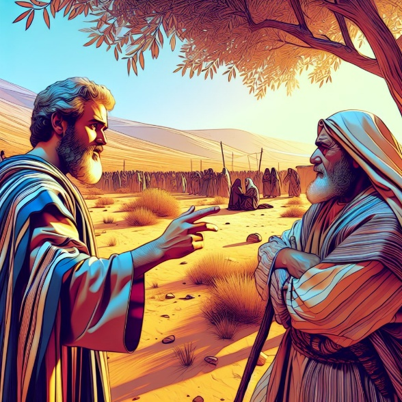
14 When Moses’ father-in-law saw all that Moses was doing for the people, he asked, “What are you really accomplishing here? Why are you trying to do all this alone while everyone stands around you from morning till evening?”
15 Moses replied, “Because the people come to me to get a ruling from God. 16 When a dispute arises, they come to me, and I am the one who settles the case between the quarreling parties. I inform the people of God’s decrees and give them his instructions.”
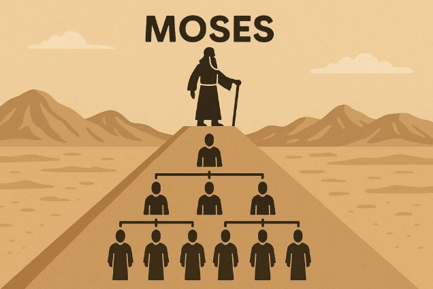
17 “This is not good!” Moses’ father-in-law exclaimed. 18 “You’re going to wear yourself out—and the people, too. This job is too heavy a burden for you to handle all by yourself. 19 Now listen to me, and let me give you a word of advice, and may God be with you. You should continue to be the people’s representative before God, bringing their disputes to him. 20 Teach them God’s decrees, and give them his instructions. Show them how to conduct their lives. 21 But select from all the people some capable, honest men who fear God and hate bribes. Appoint them as leaders over groups of one thousand, one hundred, fifty, and ten. 22 They should always be available to solve the people’s common disputes, but have them bring the major cases to you. Let the leaders decide the smaller matters themselves. They will help you carry the load, making the task easier for you. 23 If you follow this advice, and if God commands you to do so, then you will be able to endure the pressures, and all these people will go home in peace.”
24 Moses listened to his father-in-law’s advice and followed his suggestions. 25 He chose capable men from all over Israel and appointed them as leaders over the people. He put them in charge of groups of one thousand, one hundred, fifty, and ten. 26 These men were always available to solve the people’s common disputes. They brought the major cases to Moses, but they took care of the smaller matters themselves.
27 Soon after this, Moses said good-bye to his father-in-law, who returned to his own land.
You’ve got to hand it to Jethro; this guy is brilliant when it comes to executive strategy. While we know practically nothing about Jethro’s position in Midian, obviously, he understands the need to develop leaders and then delegate responsibility to them. One of the key points in ministry is to keep the main thing the main thing. If we allow ourselves to become sidetracked into lesser matters, we will wind up feeling exhausted and defeated and we’ll have no time or energy left to fulfill God’s purpose in our lives.
The temptation to become distracted isn’t a problem for lazy people; it’s a problem for those already excellent at problem-solving who want to make sure that everything is done JUST RIGHT! While Moses might be able to continue to solve all the problems of the Israelites himself, he will have neither time nor energy to listen to God.
Capable people sometimes fail to remember that they became capable because someone else delegated responsibility to them. While in Greek mythology, Pallas Athena springs forth fully formed from Zeus’s forehead, the rest of us take years to mature and become competent. There are no shortcuts to excellence.
Moses is a big enough person to appreciate Jethro’s advice and follow it. A lesser man might have listened to Jethro, complimented him on his wisdom, and then completely ignored it. Moses, however, fully realizes that he’s about to drop from exhaustion and that there must be some other way to handle things.
When Moses follows Jethro’s advice, he accomplishes several things at once. First, Moses removes much of the burden from himself. Frankly, the daily deluge of petty problems has left Moses feeling as if he’s being stoned to death with millet. It’s not the severity of the problems, but the sheer number of them that is overwhelming. Second, Moses is shifting responsibility onto the shoulders of men who undoubtedly know the individuals involved far better than he does. While Moses might not know anything about the family of Ben-Isaac, for example, the local leaders know them far too well and are fully aware that they are chronic complainers, always trying to stir up trouble with the neighbors. Third, by delegating responsibility, Moses is not only relieving himself of a burden but also giving these men the opportunity to develop leadership skills. Fourth, by giving these men the chance to make small decisions, Moses is ensuring that they will be less likely to criticize him, for now these men will better understand the burdens of leadership. After carrying out Jethro’s suggestions for problem-solving, Moses now has the peace necessary for him to spend long amounts of time with God.
This story should cause us to examine our own lives. Are we so caught up in the need to control people or events that we are refusing to delegate when we should? Delegating involves trusting God to guide those assuming authority so that they actually do develop leadership skills. We must be willing to live with the fact that these people will make mistakes when they first start; however, we too have made mistakes and the world has not fallen apart.
May God help us to delegate when He wants us to so that we will be able to spend time with Him and receive His peace.
PRAYER:Father God, thank You for loving us and caring for us. Lord, help us to trust You and to allow others to carry part of our burdens. In the mighty and precious Name of King Jesus. Amen.
When Moses arrived in Midian, he sat down beside a well. 16 Now the priest of Midian had seven daughters who came as usual to draw water and fill the water troughs for their father’s flocks. 17 But some other shepherds came and chased them away. So Moses jumped up and rescued the girls from the shepherds. Then he drew water for their flocks.
18 When the girls returned to Reuel, their father, he asked, “Why are you back so soon today?”
19 “An Egyptian rescued us from the shepherds,” they answered. “And then he drew water for us and watered our flocks.”
20 “Then where is he?” their father asked. “Why did you leave him there? Invite him to come and eat with us.”
21 Moses accepted the invitation, and he settled there with him. In time, Reuel gave Moses his daughter Zipporah to be his wife. 22 Later she gave birth to a son, and Moses named him Gershom, [a foreigner there] for he explained, “I have been a foreigner in a foreign land.”
It all began when Moses fled Egypt and wound up on the back side of Midian. That’s where Moses met Jethro, a Midianite priest and a worshiper of the One True Living God. Jethro welcomed Moses into his family after Moses assisted Jethro’s daughters in watering their flocks. Moses married Jethro’s daughter, Zipporah, who bore him two sons. If we skip over the meaning of those names, we miss special gifts from God. An internet search reveals: The name Zipporah means “bird” in Hebrew. This name is derived from the Hebrew word צִפּוֹר (tzippor), which signifies beauty, grace, and freedom. Zipporah is notably recognized as the wife of Moses in the Old Testament, and her name symbolizes vitality and a significant role in the liberation narrative. Additionally, the name carries spiritual connotations, representing divine care and unexpected purpose.
Zipporah’s father is Reul, or Jethro. The name “Jethro” means “excellence” or “abundance,” and Jethro lives up to his name. Everybody should have a father-in-law like Jethro! Here is a man worshiping the One True Living God in Midian, a country whose inhabitants generally worshiped Baal, Ashtoreth, and Dagon. Instead of slavishly following these hollow deities, Jethro worships God Almighty and functions as His priest. Jethro is one of those men whose entire body is a perpetual smile and who makes people feel good simply by being around him. Now Moses has been welcomed into the home of a believing family, a family full of love and grace, with whom he will live for forty years. How can Moses remain unchanged when his new family exhibits the winsome grace of true believers? Moses has experienced the hauteur of Pharaoh’s court and now experiences the love and peace of Jethro’s household.
Exodus 18Jethro’s Visit to Moses
1 Moses’ father-in-law, Jethro, the priest of Midian, heard about everything God had done for Moses and his people, the Israelites. He heard especially about how the Lord had rescued them from Egypt.
2 Earlier, Moses had sent his wife, Zipporah, and his two sons back to Jethro, who had taken them in. 3 (Moses’ first son was named Gershom, [a foreigner there] for Moses had said when the boy was born, “I have been a foreigner in a foreign land.” 4 His second son was named Eliezer, [God is my helper] for Moses had said, “The God of my ancestors was my helper; he rescued me from the sword of Pharaoh.”) 5 Jethro, Moses’ father-in-law, now came to visit Moses in the wilderness. He brought Moses’ wife and two sons with him, and they arrived while Moses and the people were camped near the mountain of God. 6 Jethro had sent a message to Moses, saying, “I, Jethro, your father-in-law, am coming to see you with your wife and your two sons.”
7 So Moses went out to meet his father-in-law. He bowed low and kissed him. They asked about each other’s welfare and then went into Moses’ tent. 8 Moses told his father-in-law everything the Lord had done to Pharaoh and Egypt on behalf of Israel. He also told about all the hardships they had experienced along the way and how the Lord had rescued his people from all their troubles. 9 Jethro was delighted when he heard about all the good things the Lord had done for Israel as he rescued them from the hand of the Egyptians.
10 “Praise the Lord,” Jethro said, “for he has rescued you from the Egyptians and from Pharaoh. Yes, he has rescued Israel from the powerful hand of Egypt! 11 I know now that the Lord is greater than all other gods, because he rescued his people from the oppression of the proud Egyptians.”
12 Then Jethro, Moses’ father-in-law, brought a burnt offering and sacrifices to God. Aaron and all the elders of Israel came out and joined him in a sacrificial meal in God’s presence.
Eventually, Jethro’s daughter, Zipporah, gave Moses two sons. Moses knew things were going to become difficult in Egypt, so he sent his wife and two sons to stay with his father-in-law. Now that the Israelites have left Egypt, Jethro hears about everything God has done and brings Moses’ family back so he can encourage Moses.
Proverbs 17:22 New Living Translation “A cheerful heart is good medicine, but a broken spirit saps a person’s strength.” Throughout Jethro’s life, he continues to fulfill the promises embodied in his name. Here is an elderly man willing to travel long miles from Midian along with his daughter and his grandsons to meet Moses in the wilderness.
Once Jethro meets Moses, he is delighted about all the good things the Lord has done for Israel. 10 “Praise the Lord,” Jethro said, “for he has rescued you from the Egyptians and from Pharaoh. Yes, he has rescued Israel from the powerful hand of Egypt! 11 I know now that the Lord is greater than all other gods, because he rescued his people from the oppression of the proud Egyptians.”
Is it possible that some of the Israelites try to complain to Jethro about Moses? Doubtful. Jethro is a stranger, and in many cultures, you never tell strangers bad news. But there’s also another reason. Jethro is one of those men who is one giant smile, continually praising God and rejoicing in His work. It’s tough to begin complaining when someone is smiling at you like you are his new best friend. Remember Jethro has spent his life herding sheep in the wilderness as well and is fully aware of all the problems Moses has faced and might face in the future. Jethro doesn’t waste time warning Moses but is thrilled about God’s salvation.
As a priest, Jethro proceeds to set a magnificent example, leading worship, involving Moses, Aaron, and all the elders of Israel. No matter what these elders have failed to do in the past, Jethro is showing them what it truly means to be a man of faith. True, Moses has been leading the Israelites, but now this stranger is worshiping the One True Living God. Many of these elders might be shocked or ashamed, for they are still compromising spiritually. Only God knows how many of these men have amulets or statues of Egyptian gods back in their tents or how many of them have been secretly imploring Egyptian deities for help. Perhaps part of the anger and frustration the Israelites have expressed stems from having sought help from their Egyptian idols without success. Not only does Jethro encourage Moses but he also leaves a lasting impression on the elders of Israel.
As we move through our days, what impression do we leave on those around us? Are we encouragers or are we perpetually looking as if we have lost our best friend? If we are truly serving the One True Living God, then we should be like Jethro, our faces beaming with reflected light from God’s countenance. Later, David will write in Psalm 27:1 “The Lord is my light and my salvation—so why should I be afraid? The Lord is my fortress, protecting me from danger, so why should I tremble?”
When we are serving God, we have no need of fear, for God will care for us, even in the most trying of circumstances. May God help us to copy Jethro, so that throughout our days, we are messengers of His light and love.
PRAYER:Father God, thank You for loving us and caring for us. Lord, help us to be like Jethro, full of Your abundant grace, blessing all those whom we meet. In the mighty and precious Name of King Jesus. Amen.
Exodus 17:8 While the people of Israel were still at Rephidim, the warriors of Amalek attacked them. 9 Moses commanded Joshua, “Choose some men to go out and fight the army of Amalek for us. Tomorrow, I will stand at the top of the hill, holding the staff of God in my hand.”
10 So Joshua did what Moses had commanded and fought the army of Amalek. Meanwhile, Moses, Aaron, and Hur climbed to the top of a nearby hill. 11 As long as Moses held up the staff in his hand, the Israelites had the advantage. But whenever he dropped his hand, the Amalekites gained the advantage. 12 Moses’ arms soon became so tired he could no longer hold them up. So Aaron and Hur found a stone for him to sit on. Then they stood on each side of Moses, holding up his hands. So his hands held steady until sunset. 13 As a result, Joshua overwhelmed the army of Amalek in battle.
After years of herding sheep in the wilderness, Moses is tough with strong arms. But as the battle continues hour after hour, Moses finds his arms beginning to tremble. As long as Moses has kept his hands raised with his staff in the air, Joshua has been winning. But now Moses’ arms and legs are getting tired because he’s been standing for hours. The staff is sagging, and the Amalekites begin winning. That’s when Aaron and Hur find a large stone for Moses to sit on and begin supporting his arms. Even though these two men are also getting tired, they hang on until sunset, and the Israelites win the day.
Notice something about this story: Moses did nothing wrong. Moses followed all God’s instructions to the letter; however, his arms and legs simply became tired. Moses didn’t call for anyone to help him, but Aaron and Hur realized what was happening and took it upon themselves to help Moses. Aaron and Hur realized that if the Amalekites won, they would annihilate the Israelites. All God’s miracles in Egypt and since the deliverance would be meaningless. Moses was still the main man involved in the miracle, but he needed help to fulfill God’s perfect will.
We have spent most of the last 38 years in Ghana, where we have done our best to fulfill roles behave similar to Aaron and Hur. Our calling is to come alongside those already doing a work, supporting and encouraging them so that God’s message of salvation can go forth. We work in mission hospitals because God’s will for His people is Shalom, wholeness, completeness, and well-being in all aspects of life. Aaron and Hur helped Moses but did not take credit for the work God called him to do. In the same way, we do our best to avoid vaunting our efforts.
One of the things we have learned is that when we help others, God sends helpers to us as well. When we first went to our small town in 1993, God had already moved in one of the finest theater (OR) nurses I have ever met. This man was so knowledgeable on a number of different aspects of running a bush clinic with minimal resources. Together we began the Theatre and established a laboratory and blood transfusion service. Through the years, there have been many others, too many to count, who have helped in various ways. God has moved these people to help at times when, like Moses, we have been ready to faint from exhaustion. The ministry of helps is one of the most important ministries there is because helpers don’t wait to be called but they simply show up. Helpers don’t worry about who gets the credit; they’re more worried about making sure people receive the assistance they need.
Has this ministry been easy? Are you kidding? We have come in for criticism, accusations, slander, and bunches of lies. But we know that God has called us, and that gives us peace. Throughout the world, it’s the helpers who carry out God’s will in the lives of those whom they help. But there are some warnings about helping.
It’s not help if you want credit! Charities are familiar with the pseudo-helpers, those people who are simply there for photo-ops, taking selfies of themselves helping. Such efforts are not help; such people are taking advantage to promote themselves.
You must give the kind of help needed, not the kind you think people need. True story: one church group was visiting our hospital and wanted to conduct vacation Bible school sessions for local children. But one of the handicrafts these kind people wanted to do was to create bracelets with beads and feathers. Unfortunately, in our culture, fetish-worshiping parents dress their children in such bracelets. Blessedly, we were able to redirect our visitors so that they substituted a different project. Yet another example is that of people donating canned goods to food banks without also donating can openers. (Donate cans that have flip lids to get around this problem.)
You must give help when it is needed, not when you feel like it. It’s necessary to discuss everything with organizers so that your efforts will have the best results.
You are there to help, not to take over direction. Aaron and Hur didn’t climb that hill and begin arguing with Moses; they simply gave him a stone to sit on and then supported his arms.
You need know when it’s time to stop helping. Sometimes your best-intentioned efforts can create unlooked-for problems. Support a medical outreach in one community, and other communities begin clamoring for similar outreaches. But what if your funds are limited? What if there are other groups who might be able to handle the needs of these communities better?
Is God moving you to help, or are you trying to force a situation? If you pray and God says “no,” stop. Once the battle was over, Aaron and Hur and Moses all climbed back down that hill.
We don’t hear much about Hur apart from this story, but he played a major part in helping save the Israelites from the Amalekites. When it was necessary, Hur climbed that hill, helped hold Moses’ arms, and then climbed back down into obscurity. May God help us so that we will help when it’s needed and necessary and retreat when it’s time to withdraw, having God’s peace in our hearts.
PRAYER:Father God, thank You for loving us and caring for us. Lord, give us Your guidance so that we will help when and how You want us to. In the mighty and precious Name of King Jesus. Amen.
1 At the Lord’s command, the whole community of Israel left the wilderness of Sin and moved from place to place. Eventually they camped at Rephidim, but there was no water there for the people to drink. 2 So once more the people complained against Moses. “Give us water to drink!” they demanded.
“Quiet!” Moses replied. “Why are you complaining against me? And why are you testing the Lord?”
3 But tormented by thirst, they continued to argue with Moses. “Why did you bring us out of Egypt? Are you trying to kill us, our children, and our livestock with thirst?”
It began that morning when all the water skins were empty. Throughout the Israelite camp, nobody had any water left. The next crisis was about to hit. When God began supplying quail and manna, Moses thought he would be free from the Israelites’ complaints. WRONG! As soon as water becomes an issue, the Israelites are right back at it, whining and accusing Moses. Not satisfied with mere whining, they repeat the same accusations over again, claiming that Moses has BROUGHT them out of Egypt, as if they didn’t leave Egypt freely and joyfully. And nobody is lifting a finger to defend Moses or deflect these accusations. Even though there are elders in the group who should exert leadership, they too are hanging back and crying out with the rest.
4 Then Moses cried out to the Lord, “What should I do with these people? They are ready to stone me!”
5 The Lord said to Moses, “Walk out in front of the people. Take your staff, the one you used when you struck the water of the Nile, and call some of the elders of Israel to join you. 6 I will stand before you on the rock at Mount Sinai. Strike the rock, and water will come gushing out. Then the people will be able to drink.” So Moses struck the rock as he was told, and water gushed out as the elders looked on.
7 Moses named the place Massah (which means “test”) and Meribah (which means “arguing”) because the people of Israel argued with Moses and tested the Lord by saying, “Is the Lord here with us or not?”
This time, God orders Moses to call some of the elders of Israel to accompany him when he strikes the rock, releasing a gushing spring of water. These elders are the same men who should have been quieting the people and comforting them before going to Moses, but they too have been hanging back, hoping that Moses would come up with a miracle and they might just quietly hide in the crowd. A test has come, and while Moses has performed well, these men have failed miserably. Had these men been truly acting as leaders, they could have calmed the people and then gone to Moses to inquire how God was going to address this most recent problem. There was no need for the situation to escalate to the point of people threatening to stone Moses.
Why does God order Moses to have the elders join him as he strikes the rock? God knows these guys are a pack of wimps. But God wants these men to witness His divine power because eventually, they are going to be deputizing for Moses and solving problems as they conduct local courts. God is beginning to develop these men as leaders, even though they don’t realize it.
The situation is solved when Moses strikes the rock and water begins gushing out; however, it’s doubtful that either the elders or their people learn very much apart from the idea that if they scream loudly enough, Moses will do something. Moses feels God’s power move through him to split the rock open and cause the water to gush, so he has peace. But the Israelites as a group have lost the chance to gain the peace that comes from trusting God to act. These people are enjoying a kind of peace; however, it’s not the type that will last. And as soon as the next crisis comes, the situation will repeat itself.
Most of us behave very similarly to the Israelites. We get into a jam, cry out for God’s help, and are relieved when He delivers us. But we fail to realize that if we begin by expressing our trust in God, we can have peace throughout the crisis, rather than only having it once the crisis is over. And what if God wants us to assume positions of spiritual leadership? As long as we are behaving like small children, God cannot elevate us to the level of leaders, for He can’t trust us to care for anyone, not even ourselves.
May God help us to trust Him so that we can lead others to trust Him as well.
PRAYER:Father God, thank You for loving us and caring for us. Lord, help us to trust You even when obstacles appear impossible. In the mighty and precious Name of King Jesus. Amen.
Exodus 16: 9 Then Moses said to Aaron, “Announce this to the entire community of Israel: ‘Present yourselves before the Lord, for he has heard your complaining.’” 10 And as Aaron spoke to the whole community of Israel, they looked out toward the wilderness. There they could see the awesome glory of the Lord in the cloud.
11 Then the Lord said to Moses, 12 “I have heard the Israelites’ complaints. Now tell them, ‘In the evening you will have meat to eat, and in the morning you will have all the bread you want. Then you will know that I am the Lord your God.’”
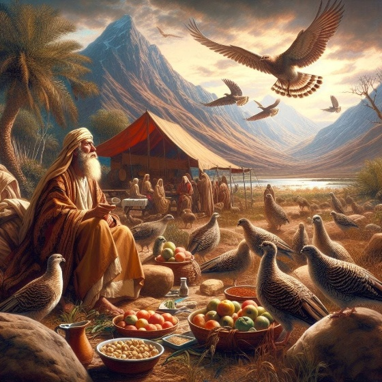
13 That evening vast numbers of quail flew in and covered the camp. And the next morning the area around the camp was wet with dew. 14 When the dew evaporated, a flaky substance as fine as frost blanketed the ground. 15 The Israelites were puzzled when they saw it. “What is it?” they asked each other. They had no idea what it was.
And Moses told them, “It is the food the Lord has given you to eat. 16 These are the Lord’s instructions: Each household should gather as much as it needs. Pick up two quarts for each person in your tent.”
17 So the people of Israel did as they were told. Some gathered a lot, some only a little. 18 But when they measured it out, everyone had just enough. Those who gathered a lot had nothing left over, and those who gathered only a little had enough. Each family had just what it needed.
19 Then Moses told them, “Do not keep any of it until morning.” 20 But some of them didn’t listen and kept some of it until morning. But by then it was full of maggots and had a terrible smell. Moses was very angry with them.
You’d think that when God miraculously sends quail and manna, the least the Israelites can do is to follow His instructions, but no. There’s always somebody sure he/she is smarter than God. In this case, it’s likely the housewives who are responsible for keeping the manna overnight. You can almost hear them, “Shmuel, I don’t care what you heard! I’m the cook, and I’ve been handling food for years. Surely, this stuff will keep overnight!” Imagine the embarrassment the following morning when the housewife opens the jar, only to find maggots crawling around and waving at her. The lesson is clear: Disobedience breeds maggots. Does God have a sense of humor, or what?
21 After this the people gathered the food morning by morning, each family according to its need. And as the sun became hot, the flakes they had not picked up melted and disappeared. 22 On the sixth day, they gathered twice as much as usual—four quarts for each person instead of two. Then all the leaders of the community came and asked Moses for an explanation. 23 He told them, “This is what the Lord commanded: Tomorrow will be a day of complete rest, a holy Sabbath day set apart for the Lord. So bake or boil as much as you want today, and set aside what is left for tomorrow.”
24 So they put some aside until morning, just as Moses had commanded. And in the morning the leftover food was wholesome and good, without maggots or odor. 25 Moses said, “Eat this food today, for today is a Sabbath day dedicated to the Lord. There will be no food on the ground today. 26 You may gather the food for six days, but the seventh day is the Sabbath. There will be no food on the ground that day.”
27 Some of the people went out anyway on the seventh day, but they found no food. 28 The Lord asked Moses, “How long will these people refuse to obey my commands and instructions? 29 They must realize that the Sabbath is the Lord’s gift to you. That is why he gives you a two-day supply on the sixth day, so there will be enough for two days. On the Sabbath day you must each stay in your place. Do not go out to pick up food on the seventh day.” 30 So the people did not gather any food on the seventh day.
Once more, some of the housewives are likely to blame. “Eh, last time we kept it overnight, it bred maggots. Just dump the leftovers and we’ll get more tomorrow.” This time disobedience might mean your family and you go hungry on the Sabbath. Notice something else; any excess manna melts away in the sun. This means that you must gather manna first thing in the morning, no lazing around. Of course, there’s also the fact that in a hot climate, you must accomplish as much as possible as early as possible before the day heats up.
31 The Israelites called the food manna. (“Manna” means “what is it?”) It was white like coriander seed, and it tasted like honey wafers.
32 Then Moses said, “This is what the Lord has commanded: Fill a two-quart container with manna to preserve it for your descendants. Then later generations will be able to see the food I gave you in the wilderness when I set you free from Egypt.”
33 Moses said to Aaron, “Get a jar and fill it with two quarts of manna. Then put it in a sacred place before the Lord to preserve it for all future generations.” 34 Aaron did just as the Lord had commanded Moses. He eventually placed it in the Ark of the Covenant—in front of the stone tablets inscribed with the terms of the covenant. 35 So the people of Israel ate manna for forty years until they arrived at the land where they would settle. They ate manna until they came to the border of the land of Canaan.
36 The container used to measure the manna was an omer, which was one-tenth of an ephah; it held about two quarts.
Some people are slow learners, but eventually everybody appears to be following instructions about the handling of the manna. Questions regarding the actual nature of manna have raged for centuries. Some sources believe the manna is an exudate from certain trees while others suggest a combination of insect secretions plus trees. But what is certain is that God supplies the Israelites with manna and quail for forty years. Assuming you begin with two million people and they reproduce; that’s a staggering amount to supply.
It seems amazing that anyone would try to ignore the rules that allow them to gather food for their families inv a place where there are no other resources; however, the fundamental problem is a lack of faith in God as the Supreme Being. Later when God gives Moses the Ten Commandments and the other rules by which He wants His people to live, the same kind of thinking will still prevail.
God is a God of peace, and He wants His people to have peace and healthy lives. We are the ones who keep trying to dodge God’s Word and His commands, substituting our own wills for His. Later, Saint Paul will write to the Galatians “22 But the Holy Spirit produces this kind of fruit in our lives: love, joy, peace, patience, kindness, goodness, faithfulness, 23 gentleness, and self-control. There is no law against these things!” (Galatians 5:22-23) How can we live lives that exemplify these qualities? Simply obey God and don’t try to twist His commandments.
PRAYER:Father God, thank You for loving us and caring for us. Lord, help us to trust You and obey You, no matter the circumstances. In the mighty and precious Name of King Jesus. Amen.
1 Then the whole community of Israel set out from Elim and journeyed into the wilderness of Sin, between Elim and Mount Sinai. They arrived there on the fifteenth day of the second month, one month after leaving the land of Egypt. 2 There, too, the whole community of Israel complained about Moses and Aaron.
3 “If only the Lord had killed us back in Egypt,” they moaned. “There we sat around pots filled with meat and ate all the bread we wanted. But now you have brought us into this wilderness to starve us all to death.”
Hoo boy! These people are only one month out from Egypt and already they’re making more complaints. Look at this latest round of whining-is this true or do these folks have lousy memories? An internet search blows these complaints right out of the water.
“Slaves in ancient Egypt had limited access to meat. While it is estimated that the laborers who built the pyramids consumed around 4,000 pounds of meat daily collectively, this was not representative of the diet of enslaved individuals. Most slaves rarely ate meat, as it was expensive and primarily reserved for the upper classes. They might occasionally receive scraps or leftovers from their owners, but meat was not a regular part of their diet.
The typical diet for enslaved individuals consisted mainly of bread, beer, and vegetables, with some fish and legumes. In contrast, the diet of pyramid builders included more meat, primarily from cattle, sheep, and goats, based on archaeological findings.”
So much for the “pots full of meat” remark! And while the slaves did have bread to eat, it’s highly unlikely that they had all the bread they wanted. Even if the men were working on the pyramids, the women and children would still be eating bread and vegetables. Nope! The Israelites are engaging in what’s known as magnification psychology, or castrophisizing. “Magnification psychology is the cognitive habit of blowing problems out of proportion or shrinking achievements into nothing, and it does far more damage than most people realize. This mental distortion hijacks your threat-detection system, floods your body with stress hormones over imagined disasters, and quietly erodes self-esteem, relationships, and decision-making. (https://neurolaunch.com/magnification-psychology/)
We read this account and immediately pride ourselves on the idea that we would NEVER do any such thing. But how many times do we catastrophisize? Rather than looking at problems and remembering how God has helped us and protected us in the past, we behave as if God has never done anything for us at all. The number of things we find to worry about is limited only by our imaginations, and most of us have very vivid imaginations.
4 Then the Lord said to Moses, “Look, I’m going to rain down food from heaven for you. Each day the people can go out and pick up as much food as they need for that day. I will test them in this to see whether or not they will follow my instructions. 5 On the sixth day they will gather food, and when they prepare it, there will be twice as much as usual.”
6 So Moses and Aaron said to all the people of Israel, “By evening you will realize it was the Lord who brought you out of the land of Egypt. 7 In the morning you will see the glory of the Lord, because he has heard your complaints, which are against him, not against us. What have we done that you should complain about us?” 8 Then Moses added, “The Lord will give you meat to eat in the evening and bread to satisfy you in the morning, for he has heard all your complaints against him. What have we done? Yes, your complaints are against the Lord, not against us.”
The complaints of the Israelites are not against Moses and Aaron but against the Lord, even though the Lord has helped them up to this point. Now God promises to supply food for everyone in the camp on a daily basis. Aaron and Moses must be rolling their eyes and wondering how this provision might ever come about, but they at least are trusting God.
Catastrophisizing and trusting are contrary acts. When we imagine catastrophes that might never happen, we are actually poisoning our bodies with our own hormones. The primary hormones released during fear are adrenaline and cortisol.
Adrenaline (Epinephrine): This hormone is rapidly secreted by the adrenal glands in response to a perceived threat. It increases heart rate, dilates airways, and boosts blood flow to muscles, preparing the body for a fight-or-flight response.
Cortisol: Known as the stress hormone, cortisol is also released during fear. It helps regulate metabolism and the immune response, and its levels increase when the body perceives a significant stressor.
Norepinephrine: This hormone works alongside adrenaline to enhance alertness and focus during fearful situations.
These hormones collectively prepare the body to confront or escape from danger, facilitating a quick response to threats. But when we continue to frighten ourselves, our bodies remain stressed.
If the Israelites were to trust God, their bodies would behave far differently. Oxytocin is the primary hormone released when people experience trust. Often referred to as the “trust hormone,” oxytocin plays a crucial role in fostering feelings of connection, empathy, and bonding between individuals. It is released during social interactions, particularly in situations that promote trust and emotional safety.
Other Hormones Involved
Dopamine: This neurotransmitter is associated with pleasure and reward, reinforcing positive feelings when trust is established.
Serotonin: Often linked to mood regulation, serotonin can enhance feelings of well-being and safety in trusting relationships.
These hormones work together to create a sense of security and promote social bonding, making trust a vital component of human relationships.
The Israelites are choosing to make themselves feel terrible by stressing themselves and one another, telling stories of horrors that might never appear. Failing to trust God, the Israelites have no means of achieving peace, for they are driving peace far away from themselves.
Trust God and have peace or imagine catastrophes and suffer the consequences. The Israelites made the wrong choice. May God help us to choose wisely!
PRAYER:Father God, thank You for loving us and caring for us. Lord, help us to trust You even when things frighten us. In the mighty and precious Name of King Jesus. Amen.
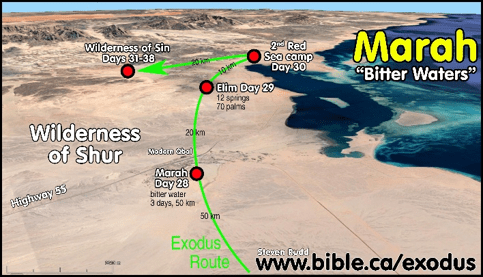
Exodus 15:22 So Moses brought Israel from the Red Sea; then they went out into the Wilderness of Shur. And they went three days in the wilderness and found no water. 23 Now when they came to Marah, they could not drink the waters of Marah, for they were bitter. Therefore, the name of it was called Marah. 24 And the people complained against Moses, saying, “What shall we drink?” 25 So he cried out to the Lord, and the Lord showed him a tree. When he cast it into the waters, the waters were made sweet….27 Then they came to Elim, where there were twelve wells of water and seventy palm trees; so they camped there by the waters.
Two million people-three days-no water! And then the water they find is so bitter they can’t drink it. To say the Israelites are frustrated is a gross understatement. And of course, they begin taking out their frustrations on Moses.
Notice that Moses has never promised these people that everything would be easy. All Moses has done is to confront Pharaoh, delivering God’s messages and then obey God when He has commanded Moses to instruct the Israelites on the initiation of the Passover. Moses could never have dreamt up the Red Sea deliverance on his own; that was all God. And while Moses might be acting as leader, he has no control over the pillar of cloud leading the Israelites that turns to fire in the night. Again, these manifestations are all God’s doing, even though the Israelites really want to blame Moses.
The problem is that God has far more in mind than simply transporting the Israelites from point A to point B, for He knows the hearts of these people. At present, the Israelites spiritually are a ragtag bunch, with some of them vaguely remembering the tales about Abraham, Isaac, and Jacob while others have become so imbued with Egyptian religion that they are carrying figurines of various Egyptian deities, amulets, and other charms in their baggage. The ten plagues God has sent on Egypt have only served to convince the Israelites that they are special, but they have no understanding of their own sad spiritual state. Most of these people have no appreciation for the lessons God needs to teach them; instead, they really feel that they are good people and they are fine, thank you very much.
So, this crowd of people winds up at Marah with its bitter water representing the first great disappointment the Israelites will experience. And predictably, the Israelites explode in anger. After all, God has already proven that they are His favorites, so why is He troubling them this way? Centuries later, Paul will write to the Hebrews, spelling out the need for God’s discipline for His children: “My son, do not despise the chastening of the Lord, nor be discouraged when you are rebuked by Him; 6 For whom the Lord loves He chastens, and scourges every son whom He receives.”
7 If you endure chastening, God deals with you as with sons; for what son is there whom a father does not chasten? 8 But if you are without chastening, of which all have become partakers, then you are illegitimate and not sons. 9 Furthermore, we have had human fathers who corrected us, and we paid them respect. Shall we not much more readily be in subjection to the Father of spirits and live? 10 For they indeed for a few days chastened us as seemed best to them, but He for our profit, that we may be partakers of His holiness. 11 Now no chastening seems to be joyful for the present, but painful; nevertheless, afterward it yields the peaceable fruit of righteousness to those who have been trained by it.” (Hebrews 12:5-6)
It’s amazing but true that we learn far more from suffering than we do from peaceful easy situations. Suffering, if endured correctly, causes us to examine ourselves in the light of God’s holiness, allowing Him to teach us and correct us. When we are not facing problems, we presume we are fine by our own efforts, not realizing that God is the One who can give us true peace of heart and mind.
When I was growing up, I had a foster sister who came to live with us when she was sixteen after living for five years in an orphanage. One day, we were shopping when my sister pulled some stupid stunt. As we walked down the sidewalk, my mother began swatting my sister on her bottom-not hard, but repeatedly. When we stopped to cross the street, my sister looked at my mother in amazement and said, “You really love me, don’t you?” My mother replied, “Well, of course I do. Why are you asking?” My sister replied, “Well, up until now, you have disciplined your own children, but this is the first time you have disciplined me.” I am certain that my mother had told my sister she loved her many times previously; however, it was only when my sister was disciplined that she truly believed she was loved because someone cared enough to correct her.
God loves each one of us so much that He refuses to allow us to wallow in our own messes without correction. Proverbs 13:24 tells us, “Those who spare the rod of discipline hate their children. Those who love their children care enough to discipline them.” Note what God does during the middle of the Marah incident: God has Moses throw some branches into the water that sweetens it and then tells the Israelites, “If you diligently heed the voice of the Lord your God and do what is right in His sight, give ear to His commandments and keep all His statutes, I will put none of the diseases on you which I have brought on the Egyptians. For I am the Lord who heals you.”
God wants to make sure the Israelites understand the necessity of strict obedience, not obedience when they feel like it. Notice God’s conditions:
If you diligently heed the voice of the Lord your God
do what is right in His sight
give ear to His commandments
keep all His statutes
God is not giving the Israelites a free pass to sin but a road map to salvation. And it all starts with obedience. If you count the Israelites complying with the commands regarding Passover, this is the second major lesson in obedience that they are facing. But God knows there will be countless other such lessons before His people are ready to enter Canaan.
Could the Egyptians have avoided the plagues? Yes. Had Pharaoh relented, had he obeyed God and allowed the Israelites to leave, Egypt would never have been devastated, nor would all the firstborn sons and animals have died. Had Pharaoh taken the effort to inquire from Moses about the God who was ordering them to go worship, he might have found his way spiritually to worship the One True Living God. But Pharaoh had been raised to believe that he himself was divine, and he was not about to acknowledge any God who might displace him.
What is the lesson of Elim? Once the Israelites have endured the divine teaching moment at Marah, God gives them grace by allowing them to camp at Elim with its fresh water and palm trees. God does not test us forever, but gives us periods of divine rest if we will only obey Him. May God help us to patiently endure lessons in obedience so that we can reach the Elims in our lives!
PRAYER:Father God, thank You for loving us and caring for us. Lord, we praise You for Your lessons in obedience, for these lessons prove that we are Your beloved children and You are correcting us for our own good. We also praise You for giving us Elims, times of rest and refreshing. In the mighty and precious Name of King Jesus. Amen.
22 So Moses brought Israel from the Red Sea; then they went out into the Wilderness of Shur. And they went three days in the wilderness and found no water. 23 Now when they came to Marah, they could not drink the waters of Marah, for they were bitter. Therefore the name of it was called Marah. 24 And the people complained against Moses, saying, “What shall we drink?” 25 So he cried out to the Lord, and the Lord showed him a tree. When he cast it into the waters, the waters were made sweet.
There He made a statute and an ordinance for them, and there He tested them, 26 and said, “If you diligently heed the voice of the Lord your God and do what is right in His sight, give ear to His commandments and keep all His statutes, I will put none of the diseases on you which I have brought on the Egyptians. For I am the Lord who heals you.”
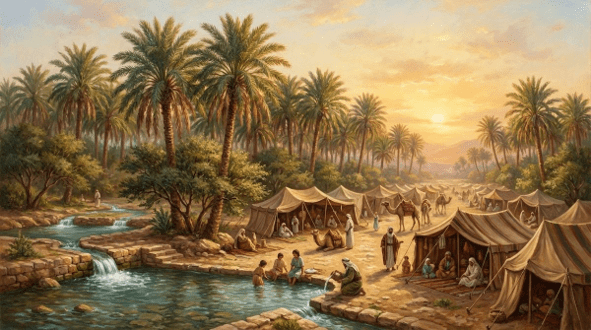
27 Then they came to Elim, where there were twelve wells of water and seventy palm trees; so they camped there by the waters.
The waters at Marah were bitter and undrinkable. Were they full of sulfur or contaminated in some fashion? We don’t know; however, God showed Moses some wood that he cast into the water, making it sweet. There is an interesting theory that the waters of Marah were bitter due to the spiritual state of the Israelites. According to the narrative in the Book of Exodus, the Israelites had been wandering in the desert for three days without water. When they arrived at Marah, they found water, but it was undrinkably bitter, leading to their complaints and dissatisfaction.
The bitterness of the water symbolized their spiritual emptiness and lack of faith. They were described as being spiritually void and thirsty, which reflected their inner turmoil and discontent. This event served as a test of faith and highlighted the importance of trust in divine provision during challenging times.
God used this bitter water as a teaching point, promising that if the Israelites would obey God, following His commandment and keeping all His statutes, He would protect them from all the diseases He had brought on the Egyptians. God emphasized that He was the Healer.
Reading this story, we realize that the Israelites failed to hold their peace or to practice it; in fact, their peace was quite fragile, depending on everything going smoothly. As soon as anything went wrong, BANG! The Israelites were complaining again. Now God was informing His people that peace was conditional: obey Him and have health and peace. Refuse to obey God, and that peace would evaporate.
Centuries later, Paul Rader would write a wonderful hymn referring to those bitter waters.
ONLY BELIEVE
1. Fear not, little flock, from the cross to the throne, From death into life He went for His own; All power in earth, all power above, Is given to Him for the flock of His love.
Refrain: Only believe, only believe; All things are possible, only believe; Only believe, only believe; All things are possible, only believe.
2. Fear not, little flock, He goeth ahead, Your Shepherd selecteth the path you must tread; The waters of Marah He’ll sweeten for thee, He drank all the bitter in Gethsemane.
3. Fear not, little flock, whatever your lot, He enters all rooms, “the doors being shut,” He never forsakes; He never is gone, So count on His presence in darkness and dawn.
PRAYER:Father God, thank You for loving and caring for us. Lord, help us to remain peaceful even when our situation is bitter. In the mighty and precious Name of King Jesus. Amen.