Archive for the ‘Uncategorized’ Category

AUGUST 3, 2026 PEACE-HOW DO WE GET IT AND HOW CAN WE KEEP IT? #18 HAVING PEACE WHEN THINGS DON’T APPEAR TO BE GOING OUR WAY

August 3, 2026

Exodus 8 A Plague of Gnats/Lice

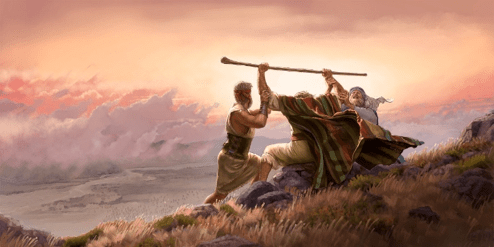
16 So the Lord said to Moses, “Tell Aaron, ‘Raise your staff and strike the ground. The dust will turn into swarms of gnats throughout the land of Egypt.’” 17 So Moses and Aaron did just as the Lord had commanded them. When Aaron raised his hand and struck the ground with his staff, gnats infested the entire land, covering the Egyptians and their animals. All the dust in the land of Egypt turned into gnats. 18 Pharaoh’s magicians tried to do the same thing with their secret arts, but this time they failed. And the gnats covered everyone, people and animals alike.

19 “This is the finger of God!” the magicians exclaimed to Pharaoh. But Pharaoh’s heart remained hard. He wouldn’t listen to them, just as the Lord had predicted.

This time, God doesn’t bother warning Pharaoh; Pharoah has had plenty of warnings and has ignored all of them, so there’s no point. Some versions translate this plague as being lice rather than gnats. Now these insects are covering everybody in Egypt, including the animals. David Guzak in his Enduring Word Commentary points out, “This plague struck at the heart of all Egyptian worship, especially at their priests. The Egyptian priesthood was extremely careful about hygiene and ritual cleansing; an infestation of lice made them unable to worship their gods. The plague of lice was also upon every beast. The gods of Egypt would not receive the sacrifice of lice-infested animals, so this stopped their sacrificial system.” The magicians are stumped and horrified; they immediately warn Pharaoh that they can’t duplicate this plague. Even if Pharaoh is unwilling to acknowledge the power of God, the magicians realize they are up against something far more powerful than any of the demons they have been following. And as the gnats or lice continue to drive the Egyptians and their animals crazy, things are about to get even worse.

A Plague of Flies

20 Then the Lord told Moses, “Get up early in the morning and stand in Pharaoh’s way as he goes down to the river. Say to him, ‘This is what the Lord says: Let my people go, so they can worship me. 21 If you refuse, then I will send swarms of flies on you, your officials, your people, and all the houses. The Egyptian homes will be filled with flies, and the ground will be covered with them. 22 But this time I will spare the region of Goshen, where my people live. No flies will be found there. Then you will know that I am the Lord and that I am present even in the heart of your land. 23 I will make a clear distinction between my people and your people. This miraculous sign will happen tomorrow.’”

24 And the Lord did just as he had said. A thick swarm of flies filled Pharaoh’s palace and the houses of his officials. The whole land of Egypt was thrown into chaos by the flies.

There’s no agreement on the kind of insects that are coming in swarms; however, it’s likely that at least some of these insects are biting ones, inflicting wounds on all the Egyptians and their animals. Once more, the Egyptians have no means of worshiping, for they cannot offer animals covered with biting flies and bleeding wounds from those flies.

This time, God spares the Israelites, sending the biting flies to bite only the Egyptians and their animals. Has God removed the gnats/lice from the Israelites? Possibly. Now God is drawing distinctions between His people and the Egyptians. The magicians evidently make no effort to copy this plague, indicating that they have reached the end of their powers.

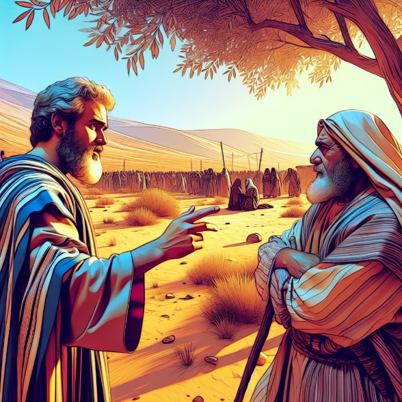
25 Pharaoh called for Moses and Aaron. “All right! Go ahead and offer sacrifices to your God,” he said. “But do it here in this land.”

26 But Moses replied, “That wouldn’t be right. The Egyptians detest the sacrifices that we offer to the Lord our God. Look, if we offer our sacrifices here where the Egyptians can see us, they will stone us. 27 We must take a three-day trip into the wilderness to offer sacrifices to the Lord our God, just as he has commanded us.”

28 “All right, go ahead,” Pharaoh replied. “I will let you go into the wilderness to offer sacrifices to the Lord your God. But don’t go too far away. Now hurry and pray for me.”

29 Moses answered, “As soon as I leave you, I will pray to the Lord, and tomorrow the swarms of flies will disappear from you and your officials and all your people. But I am warning you, Pharaoh, don’t lie to us again and refuse to let the people go to sacrifice to the Lord.”

30 So Moses left Pharaoh’s palace and pleaded with the Lord to remove all the flies. 31 And the Lord did as Moses asked and caused the swarms of flies to disappear from Pharaoh, his officials, and his people. Not a single fly remained. 32 But Pharaoh again became stubborn and refused to let the people go.

Does Pharaoh really intend to keep his promise, or is he simply saying whatever is necessary to get rid of the gnats and flies? Only God knows, but it’s obvious that Pharaoh is still clinging to the idea that he has some kind of power over the Israelites. Obviously, it’s going to take more suffering before Pharaoh finally lets the Israelites go.

What must Moses and Aaron and the Israelites be thinking by this point? “Surely,” the Israelites think, “now Pharaoh is going to relent and let us go.” But Moses has come out of a royal upbringing and he knows how stringently Pharaohs are instructed that they are divine and therefore all their decisions are correct and have no need for change. It’s likely that Moses and Aaron pray and ask God for advice, at which point, God tells them to hang on and keep going. At this point, Moses and Aaron can only cling to the peace through the assurance that God can give them.

Why is God dragging this whole process out rather than simply going straight to the final plague? God is concerned about the Egyptians as well as the Israelites; in fact, God is even concerned about Pharaoh. While we might read these stories and hope that Pharaoh will give his just reward in the end, God wants Pharaoh to repent and humble himself and continues to give him every opportunity to do so.

Where does the peace of God enter in these two plagues? The Israelites can take hope when God protects them from the biting flies, sending that plague only on the Egyptians. From now on, God will protect the Israelites from the remaining plagues, and the Israelites can rest in that protection. Each time God demonstrates more of His mighty power, the Israelites should be learning to trust God even more than they have before. That trust can give peace, even while the situation has yet to be resolved.

Face it, many of us are enduring unresolved situations. We might be struggling to find a new job or struggling with family problems. We hope for God’s intervention but we’re not sure what He will do. Like the Israelites, we can continue to trust God and enjoy the peace of that trust as we wait for God to bring ultimate solutions. What good will it do for us to allow ourselves to descend into fear?

Isaiah 40:28-31 tells us, “Have you never heard? Have you never understood? The Lord is the everlasting God, the Creator of all the earth. He never grows weak or weary. No one can measure the depths of his understanding. He gives power to the weak and strength to the powerless. Even youths will become weak and tired, and young men will fall in exhaustion. But those who trust in the Lord will find new strength. They will soar high on wings like eagles. They will run and not grow weary. They will walk and not faint.”

Take heart! God knows your struggles and He wants you to have peace in the midst of them.

PRAYER: Father God, thank You for loving us and caring for us. Lord, help us to trust You and rest in Your peace, even while we are still waiting for things to work out. In the mighty and precious Name of King Jesus. Amen.
AUGUST 2, 2026 PEACE-HOW DO WE GET IT AND HOW CAN WE KEEP IT? #17 RIBBET! RIBBET! SOMETIMES GOD HIDES HIS PEACE SO WE WILL FOLLOW HIS LEADING.

August 2, 2026

Exodus 7:25 Seven days passed from the time the Lord struck the Nile.

Exodus 8: 8 Then the Lord said to Moses, “Go back to Pharaoh and announce to him, ‘This is what the Lord says: Let my people go, so they can worship me. 2 If you refuse to let them go, I will send a plague of frogs across your entire land. 3 The Nile River will swarm with frogs. They will come up out of the river and into your palace, even into your bedroom and onto your bed! They will enter the houses of your officials and your people. They will even jump into your ovens and your kneading bowls. 4 Frogs will jump on you, your people, and all your officials.’”

5 Then the Lord said to Moses, “Tell Aaron, ‘Raise the staff in your hand over all the rivers, canals, and ponds of Egypt, and bring up frogs over all the land.’” 6 So Aaron raised his hand over the waters of Egypt, and frogs came up and covered the whole land! 7 But the magicians were able to do the same thing with their magic. They, too, caused frogs to come up on the land of Egypt.

8 Then Pharaoh summoned Moses and Aaron and begged, “Plead with the Lord to take the frogs away from me and my people. I will let your people go, so they can offer sacrifices to the Lord.”

9 “You set the time!” Moses replied. “Tell me when you want me to pray for you, your officials, and your people. Then you and your houses will be rid of the frogs. They will remain only in the Nile River.”

10 “Do it tomorrow,” Pharaoh said.

“All right,” Moses replied, “it will be as you have said. Then you will know that there is no one like the Lord our God. 11 The frogs will leave you and your houses, your officials, and your people. They will remain only in the Nile River.”

12 So Moses and Aaron left Pharaoh’s palace, and Moses cried out to the Lord about the frogs he had inflicted on Pharaoh. 13 And the Lord did just what Moses had predicted. The frogs in the houses, the courtyards, and the fields all died. 14 The Egyptians piled them into great heaps, and a terrible stench filled the land. 15 But when Pharaoh saw that relief had come, he became stubborn. He refused to listen to Moses and Aaron, just as the Lord had predicted.

God has already begun a concentrated attack on Egypt, systematically dismantling Egyptian objects of worship. First, God has attacked the River Nile, which the Egyptian believe is the source of all life and creation. Next, God floods Egypt with frogs, completing two attacks on the water of Egypt. Why frogs? Again, an internet summary yields the following information:

Divine Judgment
The plague is part of God’s judgment against Egypt, specifically targeting their idolatry. Frogs were considered sacred in Egyptian culture, worshipped as symbols of fertility and life. By sending a plague of frogs, God demonstrated His power over the Egyptian gods and highlighted the futility of their worship. David Guzak tells us “God threatened a plague of frogs for a specific reason. The Egyptian goddess Heqet (or, Heket) was always pictured with the head of a frog. Among the ancient Egyptians, frogs were considered sacred and could not be killed. Egyptians worshipped the frog as a female goddess because frogs were common around the Nile, because they reproduced rapidly, and because being amphibians they are part of two worlds, creatures of both land and water.”

Cultural Challenge
The invasion of frogs into every aspect of Egyptian life—homes, beds, and kitchens—served to disrupt daily routines and challenge the Egyptians’ sense of order. This was not merely a physical affliction but a direct affront to their religious beliefs.

Theological Message
Theologically, the plague underscores God’s sovereignty and His desire to free the Israelites from oppression. It marks a pivotal moment in the narrative of liberation, illustrating the lengths to which God will go to fulfill His covenant promises.

Progression of Plagues
The plague of frogs is the second in a series of ten plagues, each escalating in severity and purpose. It sets the stage for subsequent plagues, reinforcing the message of divine authority and the consequences of disobedience.

“The frogs could not be killed because of their sacredness, and yet such large numbers of them would be revolting in their loathsomeness, especially because cleanliness was a particular mark of the Egyptians.” (Thomas as quoted by David Guzak in Enduring Word Commentary) God has a sense of humor! How many Egyptians who formerly worshiped frogs may have changed their minds as they shoveled huge piles of dead frogs? After dealing with all those rotting frog bodies, how willing would the Egyptians be to continue worshiping them? And what would the Egyptians do with all those dead frogs? Should they bury them? Burn them? God must be sitting in heaven chuckling.

While the Egyptian magicians can make frogs appear, indicating evil occultic power, they have no power to make the frogs disappear. But Pharaoh neglects to notice this fact. On the other hand, Moses and Aaron are noting everything. Even though God first spoke to Moses through a burning bush that miraculously was not consumed, neither Moses nor Aaron had any notion of God’s real power. Now as the plagues continue to multiply, the two brothers marvel and revise their concepts of God’s power. As the plagues continue, God’s peace and certainty continue to settle deeper and deeper into Moses’ and Aaron’s spirits. And now God is about to attack Egyptian deities having to do with the earth.

Where is God’s peace in the middle of these plagues? Certainly, there’s no peace for the Egyptians, and very little peace for the Israelites because they are suffering along with the Egyptians. Why is God allowing the Israelites to suffer as well? God knows His people and He knows that if things are the least bit comfortable, they will do everything they can to stay in Egypt. So for now, God is not demonstrating His peace to His people, although those people of faith might continue to trust Him privately.

We are foolish when we demand that God must give us His peace in situations from which He wants to deliver us. Newton’s First Law of Motion, the Law of Inertia, states that an object at rest stays at rest, and an object in motion continues in motion with the same speed and in the same direction unless acted upon by a net external force. This law emphasizes the concept of inertia, which is the tendency of objects to resist changes in their state of motion.  At present, the Israelites are at rest and they would just as soon remain at rest, thank you very much! Or if someone is going to deliver the Israelites, they would like their personal lives to be torn up as little as possible.

God always has several more goals He is accomplishing than we understand. We view everything from our perspective, assuming God is most interested in us. But remember something: Centuries later, Jesus will die for the sins of the whole world. Even now, even in Egypt, God wants those Egyptians to know Him and to worship Him rather than worshiping a river or creatures of darkness and death. While we frequently read the stories of Moses and Aaron and the Israelites only from their perspective, surprise! The Egyptians are just as much God’s children as are the Israelites. God’s heart of love is reaching out to His Egyptians, longing for them to worship Him. How else can God reach the Egyptians if He does not demonstrate His almighty power over the most cherished Egyptian deities?

As we endure difficult times, may God help us to remember that His purposes are always greater than ours.

PRAYER: Father God, thank You for loving us and caring for us. Lord, help us to realize that Your purposes are the redemption of the whole world and that only when we join with You will we find true peace. In the mighty and precious Name of King Jesus. Amen.
AUGUST 1, 2026 PEACE-HOW DO WE GET IT AND HOW CAN WE KEEP IT? #16 CHANGING A HUGE RIVER INTO BLOOD? NO PROBLEM!

August 1, 2026

Exodus 7 A Plague of Blood

14 Then the Lord said to Moses, “Pharaoh’s heart is stubborn, and he still refuses to let the people go. 15 So go to Pharaoh in the morning as he goes down to the river. Stand on the bank of the Nile and meet him there. Be sure to take along the staff that turned into a snake. 16 Then announce to him, ‘The Lord, the God of the Hebrews, has sent me to tell you, “Let my people go, so they can worship me in the wilderness.” Until now, you have refused to listen to him. 17 So this is what the Lord says: “I will show you that I am the Lord.” Look! I will strike the water of the Nile with this staff in my hand, and the river will turn to blood. 18 The fish in it will die, and the river will stink. The Egyptians will not be able to drink any water from the Nile.’”

19 Then the Lord said to Moses: “Tell Aaron, ‘Take your staff and raise your hand over the waters of Egypt—all its rivers, canals, ponds, and all the reservoirs. Turn all the water to blood. Everywhere in Egypt the water will turn to blood, even the water stored in wooden bowls and stone pots.’”

20 So Moses and Aaron did just as the Lord commanded them. As Pharaoh and all of his officials watched, Aaron raised his staff and struck the water of the Nile. Suddenly, the whole river turned to blood! 21 The fish in the river died, and the water became so foul that the Egyptians couldn’t drink it. There was blood everywhere throughout the land of Egypt. 22 But again the magicians of Egypt used their magic, and they, too, turned water into blood. So Pharaoh’s heart remained hard. He refused to listen to Moses and Aaron, just as the Lord had predicted. 23 Pharaoh returned to his palace and put the whole thing out of his mind. 24 Then all the Egyptians dug along the riverbank to find drinking water, for they couldn’t drink the water from the Nile. 25 Seven days passed from the time the Lord struck the Nile.

First, God has humiliated the court magicians and the deities they worship. Now God turns His attention to the River Nile. God knows that the Nile is of utmost importance in the religion and culture of Egypt. Just as Pharaoh is about to take his morning bath in the Nile, Moses and Aaron show up, striking the water and causing the water to become blood. Although there are some people who choose to believe that the Nile becomes full of fine red dust, that belief insults the intelligence of the Egyptians. Certainly, these people know blood when they see it!  

An internet summary informs us: Ancient Egyptians held the Nile River in profound reverence, viewing it as a divine entity essential to their civilization.

Religious Significance

  • The Nile was considered a gift from the gods, symbolizing life and fertility.
  • It was integral to the concept of Ma’at, representing cosmic order and balance.

Cultural Impact

  • The river influenced agricultural practices, enabling the growth of crops essential for sustenance.
  • It was celebrated in rituals, art, and mythology, often depicted as a source of life.

Spiritual Beliefs

  • The waters of the Nile were seen as the breath of the gods, embodying creation and the cycle of life and death.
  • Myths surrounding the Nile connected humanity to the divine, reinforcing its sacred status.

The website https://egyptmythology.com/the-sacredness-of-the-nile-in-ancient-egyptian-religion/ gives the following information: In ancient Egyptian mythology, the Nile was not just a physical entity but was personified as a divine force. The river was considered a manifestation of the god Hapi, who represented fertility, abundance, and the annual flooding that brought life to the land.

Key deities associated with the Nile include:

  • Hapi: The god of the annual flooding, depicted as a well-fed man with a green or blue skin tone, symbolizing fertility and abundance.
  • Osiris: The god of the afterlife, associated with resurrection and fertility, whose myth often intertwined with the cycles of the Nile.
  • Khnum: The creator god, believed to mold human beings from the clay of the Nile.

IV. Rituals and Worship Related to the Nile

The ancient Egyptians held numerous festivals and rituals to honor the Nile and its deities, particularly during the inundation period. These events were marked by joy and gratitude for the life-giving waters.

Major religious festivals included:

  • The Wepet Renpet: The Festival of the Opening of the Year, celebrating the arrival of the floodwaters.
  • The Inundation Festival: A celebration of the Nile’s flooding, featuring processions, music, and offerings to Hapi.

Practices and offerings made to honor the Nile involved:

  • Offering food and flowers at riverbanks.
  • Creating small boat models to sail on the Nile as offerings.
  • Prayers and rituals performed by priests to invoke blessings for a bountiful harvest.

V. The Nile in Ancient Egyptian Cosmology

The Nile also played a significant role in ancient Egyptian cosmology and creation myths. It was often viewed as a source of life and continuity, essential for both physical sustenance and spiritual renewal.

In creation myths, the Nile represented:

  • The primordial waters from which all life emerged.
  • A connection between the heavens and the earth, symbolizing the cycle of life, death, and rebirth.

The Nile’s waters were seen as a bridge between the mortal realm and the divine, reinforcing its sacred status in the cultural psyche of ancient Egyptians.

While the magicians somehow manage to replicate changing fresh water into blood, they can’t change blood back into fresh water. Now the Egyptians are stuck with digging new wells to get water for drinking and bathing. Moses and Aaron are shocked and impressed, for they have obeyed but even they have been unsure what would happen when that staff would strike the water. While the Egyptians are panic-stricken, Moses and Aaron are encouraged; certainly, a God who can turn the entire Nile River into blood can do what He wants. The brothers enjoy the peace of realizing that God is far more powerful than they have thought.

Sometimes we don’t enjoy the encouragement we might because we fail to notice what God is doing in and around us. We beg God to do a work in us and yet when He does, we don’t realize what has happened. Not sure if God is really working in your situation? Just remember those two old guys standing there by the River Nile with their jaws dropping in shock while looking at that bloody water. The same God who turned the Nile to blood can still work in your life.

PRAYER: Father God, thank You for loving us and caring for us. Lord, help us to remember that You never change and that You are still demonstrating Your unlimited power. In the mighty and precious Name of King Jesus. Amen.  

AUGUST 1, 2026 PEACE-HOW DO WE GET IT AND HOW CAN WE KEEP IT? #16 CHANGING A HUGE RIVER INTO BLOOD? NO PROBLEM!

August 1, 2026

Exodus 7 A Plague of Blood

14 Then the Lord said to Moses, “Pharaoh’s heart is stubborn, and he still refuses to let the people go. 15 So go to Pharaoh in the morning as he goes down to the river. Stand on the bank of the Nile and meet him there. Be sure to take along the staff that turned into a snake. 16 Then announce to him, ‘The Lord, the God of the Hebrews, has sent me to tell you, “Let my people go, so they can worship me in the wilderness.” Until now, you have refused to listen to him. 17 So this is what the Lord says: “I will show you that I am the Lord.” Look! I will strike the water of the Nile with this staff in my hand, and the river will turn to blood. 18 The fish in it will die, and the river will stink. The Egyptians will not be able to drink any water from the Nile.’”

19 Then the Lord said to Moses: “Tell Aaron, ‘Take your staff and raise your hand over the waters of Egypt—all its rivers, canals, ponds, and all the reservoirs. Turn all the water to blood. Everywhere in Egypt the water will turn to blood, even the water stored in wooden bowls and stone pots.’”

20 So Moses and Aaron did just as the Lord commanded them. As Pharaoh and all of his officials watched, Aaron raised his staff and struck the water of the Nile. Suddenly, the whole river turned to blood! 21 The fish in the river died, and the water became so foul that the Egyptians couldn’t drink it. There was blood everywhere throughout the land of Egypt. 22 But again the magicians of Egypt used their magic, and they, too, turned water into blood. So Pharaoh’s heart remained hard. He refused to listen to Moses and Aaron, just as the Lord had predicted. 23 Pharaoh returned to his palace and put the whole thing out of his mind. 24 Then all the Egyptians dug along the riverbank to find drinking water, for they couldn’t drink the water from the Nile. 25 Seven days passed from the time the Lord struck the Nile.

First, God has humiliated the court magicians and the deities they worship. Now God turns His attention to the River Nile. God knows that the Nile is of utmost importance in the religion and culture of Egypt. Just as Pharaoh is about to take his morning bath in the Nile, Moses and Aaron show up, striking the water and causing the water to become blood. Although there are some people who choose to believe that the Nile becomes full of fine red dust, that belief insults the intelligence of the Egyptians. Certainly, these people know blood when they see it! 

An internet summary informs us: Ancient Egyptians held the Nile River in profound reverence, viewing it as a divine entity essential to their civilization.

Religious Significance

  • The Nile was considered a gift from the gods, symbolizing life and fertility.
  • It was integral to the concept of Ma’at, representing cosmic order and balance.

Cultural Impact

  • The river influenced agricultural practices, enabling the growth of crops essential for sustenance.
  • It was celebrated in rituals, art, and mythology, often depicted as a source of life.

Spiritual Beliefs

  • The waters of the Nile were seen as the breath of the gods, embodying creation and the cycle of life and death.
  • Myths surrounding the Nile connected humanity to the divine, reinforcing its sacred status.

The website https://egyptmythology.com/the-sacredness-of-the-nile-in-ancient-egyptian-religion/ gives the following information: In ancient Egyptian mythology, the Nile was not just a physical entity but was personified as a divine force. The river was considered a manifestation of the god Hapi, who represented fertility, abundance, and the annual flooding that brought life to the land.

Key deities associated with the Nile include:

  • Hapi: The god of the annual flooding, depicted as a well-fed man with a green or blue skin tone, symbolizing fertility and abundance.
  • Osiris: The god of the afterlife, associated with resurrection and fertility, whose myth often intertwined with the cycles of the Nile.
  • Khnum: The creator god, believed to mold human beings from the clay of the Nile.

IV. Rituals and Worship Related to the Nile

The ancient Egyptians held numerous festivals and rituals to honor the Nile and its deities, particularly during the inundation period. These events were marked by joy and gratitude for the life-giving waters.

Major religious festivals included:

  • The Wepet Renpet: The Festival of the Opening of the Year, celebrating the arrival of the floodwaters.
  • The Inundation Festival: A celebration of the Nile’s flooding, featuring processions, music, and offerings to Hapi.

Practices and offerings made to honor the Nile involved:

  • Offering food and flowers at riverbanks.
  • Creating small boat models to sail on the Nile as offerings.
  • Prayers and rituals performed by priests to invoke blessings for a bountiful harvest.

V. The Nile in Ancient Egyptian Cosmology

The Nile also played a significant role in ancient Egyptian cosmology and creation myths. It was often viewed as a source of life and continuity, essential for both physical sustenance and spiritual renewal.

In creation myths, the Nile represented:

  • The primordial waters from which all life emerged.
  • A connection between the heavens and the earth, symbolizing the cycle of life, death, and rebirth.

The Nile’s waters were seen as a bridge between the mortal realm and the divine, reinforcing its sacred status in the cultural psyche of ancient Egyptians.

While the magicians somehow manage to replicate changing fresh water into blood, they can’t change blood back into fresh water. Now the Egyptians are stuck with digging new wells to get water for drinking and bathing. Moses and Aaron are shocked and impressed, for they have obeyed but even they have been unsure what would happen when that staff would strike the water. While the Egyptians are panic-stricken, Moses and Aaron are encouraged; certainly, a God who can turn the entire Nile River into blood can do what He wants. The brothers enjoy the peace of realizing that God is far more powerful than they have thought.

Sometimes we don’t enjoy the encouragement we might because we fail to notice what God is doing in and around us. We beg God to do a work in us and yet when He does, we don’t realize what has happened. Not sure if God is really working in your situation? Just remember those two old guys standing there by the River Nile with their jaws dropping in shock while looking at that bloody water. The same God who turned the Nile to blood can still work in your life.

PRAYER: Father God, thank You for loving us and caring for us. Lord, help us to remember that You never change and that You are still demonstrating Your unlimited power. In the mighty and precious Name of King Jesus. Amen. 
JULY 31, 2026 PEACE-HOW DO WE GET IT AND HOW CAN WE KEEP IT? #15 WHEN ABRACADABRA QUITS WORKING!

July 31, 2026

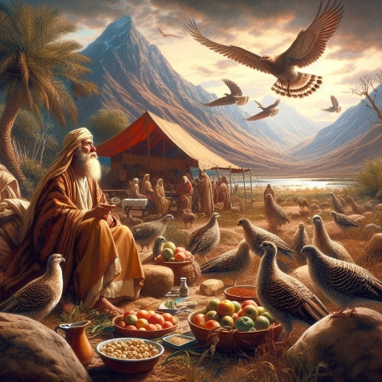
Exodus 7:7 Then the Lord said to Moses, “Pay close attention to this. I will make you seem like God to Pharaoh, and your brother, Aaron, will be your prophet. 2 Tell Aaron everything I command you, and Aaron must command Pharaoh to let the people of Israel leave his country. 3 But I will make Pharaoh’s heart stubborn so I can multiply my miraculous signs and wonders in the land of Egypt. 4 Even then Pharaoh will refuse to listen to you. So I will bring down my fist on Egypt. Then I will rescue my forces—my people, the Israelites—from the land of Egypt with great acts of judgment. 5 When I raise my powerful hand and bring out the Israelites, the Egyptians will know that I am the Lord.”

6 So Moses and Aaron did just as the Lord had commanded them. 7 Moses was eighty years old, and Aaron was eighty-three when they made their demands to Pharaoh.

Just in case you thought old age means you can kick back and take it easy, FORGET ABOUT IT!!! At an age when many people would want nothing more than to sit quietly under a shade tree, eighty-year-old Moses and eighty-three-year-old Aaron must confront Pharaoh and all his court, including evil magicians. If we want peace in our old age, we must continue to do God’s work, no excuses.

8 Then the Lord said to Moses and Aaron, 9 “Pharaoh will demand, ‘Show me a miracle.’ When he does this, say to Aaron, ‘Take your staff and throw it down in front of Pharaoh, and it will become a serpent.’”

10 So Moses and Aaron went to Pharaoh and did what the Lord had commanded them. Aaron threw down his staff before Pharaoh and his officials, and it became a serpent! 11 Then Pharaoh called in his own wise men and sorcerers, and these Egyptian magicians did the same thing with their magic. 12 They threw down their staffs, which also became serpents! But then Aaron’s staff swallowed up their staffs. 13 Pharaoh’s heart, however, remained hard. He still refused to listen, just as the Lord had predicted.

Well, Pharaoh might not be impressed, but when Aaron’s serpent/staff gobbles up the staffs of the magicians, the magicians are shocked! These guys have been pulling that trick for years and it’s never failed to impress. Now God has demonstrated that His power is much greater than that of these magicians or of any of the Egyptian deities on which they are relying.

Where were these magicians getting their power? An internet search reveals the following: Pharaoh’s magicians in ancient Egypt would have primarily worshiped Heka, the god of magic. Heka personified magic and was believed to empower both the gods and humans, playing a crucial role in maintaining the divine order (ma’at) and preventing chaos (isfet).

Other deities associated with magic and protection that magicians might have revered include:

  • Isis: Known for her magical skills and healing abilities.
  • Thoth: The god of wisdom and writing, often linked to magic and knowledge.
  • Bes: A protective deity often invoked for safeguarding against evil.

These gods were integral to the practice of magic, which was fundamental to Egyptian life and spirituality.

Ellicott’s Commentary for English Readers

(11) The magicians of Egypt.—These persons are called indifferently khàkâmim, “wise men,” më-kashshëphim, “mutterers of charms,” and khartum-mim, “scribes,” perhaps “writers of charms.” Magic was very widely practised in Egypt, and consisted mainly in the composition and employment of charms, which were believed to exert a powerful effect, both over man and over the brute creation. A large part of the “Ritual of the Dead” consists of charms, which were to be uttered by the soul in Hades, in order to enable it to pass the various monsters which it would encounter there. Charms were also regarded as potent in this life to produce or remove disease, and avert the attacks of noxious animals. Some Egyptian works are mere collections of magical receipts, and supply strange prescriptions which are to be used, and mystic words which are to be uttered. A Jewish tradition, accepted by the Apostle Paul (2Timothy 3:6), spoke of two magicians as the special opponents of Moses, and called them “Jannes and Jambres.” (See the Tar-gums of Jerusalem and of Jonathan, and comp. Numen, ap. Euseb. Prœp. eν. ix. 8.) The former of these, Jannes, obtained fame as a magician among the classical writers, and is mentioned by Pliny (H. N. xxx. 1) and Apuleius (Apolog. p. 108). It has been supposed by some that the magicians were really in possession of supernatural powers, obtained by a connection with evil spirits; but, on the whole, it is perhaps most probable that they were merely persons acquainted with many secrets of nature not generally known, and trained in tricks of sleight-of-hand and conjuring.

They also did in like manner.—The magicians had entered into the royal presence with, apparently, rods in their hands, such as almost all Egyptians carried. These they cast down upon the ground, when they were seen to be serpents. This was, perhaps, the mere exhibition of a trick, well known to Egyptian serpent-charmers in all ages (Description de l’Egypte, vol. i. p. 159), by which a charmed serpent is made to look like a stick for a time, and then disenchanted. Or it may have been effected by sleight-of-hand, which seems to be the true meaning of the word lĕhâtim, translated “enchantments.” (Rosenmüller, Scholia in Exodum, p. 110.)

Although this confrontation is not one of the ten plagues God will send on Egypt, God is serving notice that He is Lord over Egypt, just as He is over all the earth. The magicians probably go back to their quarters befuddled and anxious. The serpent trick has never failed to impress, and suddenly, their serpent/staffs are gone. If they have been using charmed serpents, now they’ll have to train some more serpents before they can use that trick again. While Aaron and Moses continue to confront Pharaoh, the magicians are feverishly casting lots, slaughtering white cocks, and engaging in any other rituals they use to gain guidance. Meanwhile, Moses and Aaron are shocked and thrilled; they certainly weren’t expecting what happened either. Now the brothers have peace and encouragement that God is truly with them.

Sometimes what we see and what others see is quite different. My husband accompanied a pastor friend to the Central Prison in Kumasi, Ghana. Our friend was preaching in Twi and my husband was simply praying; yet, a ten-year-old boy in the prison later said that he wanted to accept the Jesus the white man had preached about. What did that boy see and hear?

The story of Moses and Aaron and the magicians reminds us that God can give us peace and encouragement even when we are facing evil opposition. May we go forward, trusting that God will lead and guide us, even when staffs are turning into vipers.

PRAYER: Father God, thank You for loving us and caring for us. Lord, help us to remember that when we are caught in confrontations, You are still the Peace-giver. In the mighty and precious Name of King Jesus. Amen.
JULY 30, 2026 PEACE-HOW DO WE GET IT AND HOW CAN WE KEEP IT? #14 WHAT HAPPENS TO OUR PEACE WHEN THINGS GET WORSE?

July 30, 2026

Exodus 6:1 Then the Lord told Moses, “Now you will see what I will do to Pharaoh. When he feels the force of my strong hand, he will let the people go. In fact, he will force them to leave his land!”

At this point, Moses must be feeling conflicted. On the one hand, everyone knows that you can’t really see God and live; yet, God has been speaking to Moses. And now God claims that He will do something to Pharaoh that will convince him to force the Hebrews to leave Egypt? Moses doesn’t want to be rude, but God’s statement strains credulity. Egypt has the most powerful army in the Middle East and Pharaoh is one of the most powerful rulers in the Middle East. The Hebrews are slaves, although they continue to herd animals. Frankly, Moses has no idea how God intends to pull this one off.

2 And God said to Moses, “I am Yahweh—‘the Lord.’ 3 I appeared to Abraham, to Isaac, and to Jacob as El-Shaddai—‘God Almighty’—but I did not reveal my name, Yahweh, to them. 4 And I reaffirmed my covenant with them. Under its terms, I promised to give them the land of Canaan, where they were living as foreigners. 5 You can be sure that I have heard the groans of the people of Israel, who are now slaves to the Egyptians. And I am well aware of my covenant with them.

6 “Therefore, say to the people of Israel: ‘I am the Lord. I will free you from your oppression and will rescue you from your slavery in Egypt. I will redeem you with a powerful arm and great acts of judgment. 7 I will claim you as my own people, and I will be your God. Then you will know that I am the Lord your God who has freed you from your oppression in Egypt. 8 I will bring you into the land I swore to give to Abraham, Isaac, and Jacob. I will give it to you as your very own possession. I am the Lord!’”

9 So Moses told the people of Israel what the Lord had said, but they refused to listen anymore. They had become too discouraged by the brutality of their slavery.

What’s keeping Moses from quietly laughing are the legends about God cutting covenant with Abraham, giving Isaac to his parents in their old age and delivering Isaac from being sacrificed, and later wrestling with Jacob. Hebrew fathers have been repeating these stories to their children for 400 years; now the God of those stories is showing Himself. But nobody is listening except Moses and Aaron.

10 Then the Lord said to Moses, 11 “Go back to Pharaoh, the king of Egypt, and tell him to let the people of Israel leave his country.”

12 “But Lord!” Moses objected. “My own people won’t listen to me anymore. How can I expect Pharaoh to listen? I’m such a clumsy speaker!”

13 But the Lord spoke to Moses and Aaron and gave them orders for the Israelites and for Pharaoh, the king of Egypt. The Lord commanded Moses and Aaron to lead the people of Israel out of Egypt…

28 When the Lord spoke to Moses in the land of Egypt, 29 he said to him, “I am the Lord! Tell Pharaoh, the king of Egypt, everything I am telling you.” 30 But Moses argued with the Lord, saying, “I can’t do it! I’m such a clumsy speaker! Why should Pharaoh listen to me?”

(Exodus 6:14-27 gives the ancestry of Moses and Aaron, as well as listing their children.)

God knows human hearts, and God knows exactly how much pressure it will take before Pharaoh is ready to throw the Hebrews out of Egypt. But meanwhile, Moses and Aaron are stuck. God is ordering these two reluctant men to return to Pharaoh and COMMAND him to lete the Hebrews go. Moses figures Aaron and he are going to get thrown out of the palace and be laughed at by everybody, including their own people. Once more, Moses tries to worm out of the assignment by giving excuses.

There are many times when following God’s commands will not bring peace but conflict. Jesus himself warned his disciples that they would be persecuted.

Matthew 10:6 “Look, I am sending you out as sheep among wolves. So be as shrewd as snakes and harmless as doves. 17 But beware! For you will be handed over to the courts and will be flogged with whips in the synagogues. 18 You will stand trial before governors and kings because you are my followers. But this will be your opportunity to tell the rulers and other unbelievers about me. 19 When you are arrested, don’t worry about how to respond or what to say. God will give you the right words at the right time. 20 For it is not you who will be speaking—it will be the Spirit of your Father speaking through you.

21 “A brother will betray his brother to death, a father will betray his own child, and children will rebel against their parents and cause them to be killed. 22 And all nations will hate you because you are my followers. But everyone who endures to the end will be saved. 

At this point, Moses must be longing to be back in the wilderness with the sheep. Pharaoh is furious, the Israelites are complaining bitterly, and even Aaron is looking confused and perplexed. Where is God’s peace in the midst of this chaos?

We expect peace to come with a state of perfect calmness; however, many times, God’s messengers must confront, rebuke, and suffer the consequences. Jesus tells us in Matthew 11:28-30 Come to me, all of you who are weary and carry heavy burdens, and I will give you rest. Take my yoke upon you. Let me teach you, because I am humble and gentle at heart, and you will find rest for your souls. For my yoke is easy to bear, and the burden I give you is light.”

We read these words and immediately picture lying down on a feather bed while someone else takes care of our problems. Sorry! Jesus isn’t offering to take away all our burdens but rather to bear them with us. Oxen yoked together pull equally. We might find ourselves in a mess, but if God is with us, it’s a holy mess. We can face adversity, knowing that we are in the middle of God’s will for our lives. God needs Moses and Aaron to keep returning to Pharaoh and confronting him because that’s the only way God can advance the situation. But God wants Moses and Aaron to know that they are doing what He wants them to do. God uses our struggles to perfect us, just as a skilled diamond cutter studies a stone for months and then with a few strokes, creates perfect gems. What we don’t read in the Bible are the messages God gives to the two brothers to encourage them. Those messages are private and holy and not for general publication.

Are you caught between a rock and a hard place? If God has placed you there, God can keep you there and give you peace that you are in the center of His Will. Ask God to help you.

PRAYER: Father God, thank You for loving us and caring for us. Lord, please give us Your peace, even when we are in the middle of chaos. In the mighty and precious Name of King Jesus. Amen.
JULY 29, 2026 PEACE-HOW DO WE GET IT AND HOW CAN WE KEEP IT? #13 HOW DO WE MAINTAIN OUR PEACE WHEN GOD ISN’T WORKING AS FAST AS WE WANT HIM TO?

July 29, 2026

Exodus 5:1 After this presentation to Israel’s leaders, Moses and Aaron went and spoke to Pharaoh. They told him, “This is what the Lord, the God of Israel, says: Let my people go so they may hold a festival in my honor in the wilderness.”

2 “Is that so?” retorted Pharaoh. “And who is the Lord? Why should I listen to him and let Israel go? I don’t know the Lord, and I will not let Israel go.”

3 But Aaron and Moses persisted. “The God of the Hebrews has met with us,” they declared. “So let us take a three-day journey into the wilderness so we can offer sacrifices to the Lord our God. If we don’t, he will kill us with a plague or with the sword.”

4 Pharaoh replied, “Moses and Aaron, why are you distracting the people from their tasks? Get back to work! 5 Look, there are many of your people in the land, and you are stopping them from their work.”

Making Bricks without Straw

6 That same day Pharaoh sent this order to the Egyptian slave drivers and the Israelite foremen: 7 “Do not supply any more straw for making bricks. Make the people get it themselves! 8 But still require them to make the same number of bricks as before. Don’t reduce the quota. They are lazy. That’s why they are crying out, ‘Let us go and offer sacrifices to our God.’ 9 Load them down with more work. Make them sweat! That will teach them to listen to lies!”

10 So the slave drivers and foremen went out and told the people: “This is what Pharaoh says: I will not provide any more straw for you. 11 Go and get it yourselves. Find it wherever you can. But you must produce just as many bricks as before!” 12 So the people scattered throughout the land of Egypt in search of stubble to use as straw.

13 Meanwhile, the Egyptian slave drivers continued to push hard. “Meet your daily quota of bricks, just as you did when we provided you with straw!” they demanded. 14 Then they whipped the Israelite foremen they had put in charge of the work crews. “Why haven’t you met your quotas either yesterday or today?” they demanded.

15 So the Israelite foremen went to Pharaoh and pleaded with him. “Please don’t treat your servants like this,” they begged. 16 “We are given no straw, but the slave drivers still demand, ‘Make bricks!’ We are being beaten, but it isn’t our fault! Your own people are to blame!”

17 But Pharaoh shouted, “You’re just lazy! Lazy! That’s why you’re saying, ‘Let us go and offer sacrifices to the Lord.’ 18 Now get back to work! No straw will be given to you, but you must still produce the full quota of bricks.”

19 The Israelite foremen could see that they were in serious trouble when they were told, “You must not reduce the number of bricks you make each day.” 20 As they left Pharaoh’s court, they confronted Moses and Aaron, who were waiting outside for them. 21 The foremen said to them, “May the Lord judge and punish you for making us stink before Pharaoh and his officials. You have put a sword into their hands, an excuse to kill us!”

22 Then Moses went back to the Lord and protested, “Why have you brought all this trouble on your own people, Lord? Why did you send me? 23 Ever since I came to Pharaoh as your spokesman, he has been even more brutal to your people. And you have done nothing to rescue them!”

Well! This first approach to Pharaoh has really bombed! Moses and Aaron tell Pharaoh everything God has ordered them to say, only for Pharaoh to blow them off and increase demands on the Hebrew slaves. So far, things are not going well at all. The Egyptians are making new demands. The Hebrew slaves are furious at the two brothers. Moses looks at Aaron and Aaron at Moses, and the two of them tug their beards and shrug their shoulders. What is God doing? Why isn’t God acting?

There’s nothing wrong, and God knows what He’s doing. If one scintilla of the experience of slavery remains tolerable, once the Hebrews are out in the middle of the wilderness, they’re going to be complaining bitterly. And God knows that it’s going to take a lot of divine attacks before the Egyptians will release the Hebrews, loading them with the treasures of Egypt. But right now, things look black. Where is God’s peace in the middle of this situation?

Many times, obedience does not mean success or popularity. Only today I listened as a Christian friend living in an assisted living facility described the resistance of some of her neighbors to the good news of Jesus Christ. Even though these people are teetering on the brink of eternity, they are still clinging to the belief that they will make it to heaven on the basis of the virtuous lives they have lived. But our friend is both diplomatic and persistent, and she feels the peace of God as she witnesses lovingly to her neighbors.

Blessedly, Moses and Aaron don’t realize that it will take ten plagues, each one worse than the last, before the Egyptian resistance will crumble. God kindly hides upcoming problems from us, allowing us to see only what we need to at the time. But God also knows that as one plague succeeds another, the faith of Moses and Aaron and all the Hebrews will be strengthened so that when the time comes for them to leave Egypt, they will not hesitate.

Sometimes, we long for huge amounts of perfect peace, not realizing that God gives us what we need when we need it. God is always interested in processes and development, even though most of us would like to shoot straight to a final conclusion, skipping the trials and suffering. But God is the One who can give us peace on the way, and He will do so when we trust Him.

PRAYER: Father God, thank You for loving us and caring for us. Lord, help us to continue to trust You, even when our situations appear to be deteriorating. Thank You for Your peace that doesn’t need calm circumstances to operate. In the mighty and precious Name of King Jesuss. Amen.

JULY 28, 2026 PEACE-HOW DO WE GET IT AND HOW CAN WE KEEP IT? #12 GOD WILL GIVE US PEACE ON HIS TERMS, NOT OURS

July 28, 2026

Exodus 4:1 But Moses protested again, “What if they won’t believe me or listen to me? What if they say, ‘The Lord never appeared to you’?”

Moses is vainly trying to defend the peace he’s enjoyed for forty years, even though he realizes he’s about to lose it. We argue with God, even though we know it’s pointless.

2 Then the Lord asked him, “What is that in your hand?”

“A shepherd’s staff,” Moses replied.

3 “Throw it down on the ground,” the Lord told him. So Moses threw down the staff, and it turned into a snake! Moses jumped back.

4 Then the Lord told him, “Reach out and grab its tail.” So Moses reached out and grabbed it, and it turned back into a shepherd’s staff in his hand.

5 “Perform this sign,” the Lord told him. “Then they will believe that the Lord, the God of their ancestors—the God of Abraham, the God of Isaac, and the God of Jacob—really has appeared to you.”

6 Then the Lord said to Moses, “Now put your hand inside your cloak.” So Moses put his hand inside his cloak, and when he took it out again, his hand was white as snow with a severe skin disease.[Leprosy] 7 “Now put your hand back into your cloak,” the Lord said. So Moses put his hand back in, and when he took it out again, it was as healthy as the rest of his body.

8 The Lord said to Moses, “If they do not believe you and are not convinced by the first miraculous sign, they will be convinced by the second sign. 9 And if they don’t believe you or listen to you even after these two signs, then take some water from the Nile River and pour it out on the dry ground. When you do, the water from the Nile will turn to blood on the ground.”

God isn’t swayed by Moses’ arguments, for He knows ultimately Moses is going to agree. Now God gives Moses three signs by which Moses can prove that God has spoken to him: changing a staff into a snake and back into a staff, producing leprosy and healing it instantly, and changing the water of the Nile to blood. But Moses is still trying to wriggle out of the divine call.

10 But Moses pleaded with the Lord, “O Lord, I’m not very good with words. I never have been, and I’m not now, even though you have spoken to me. I get tongue-tied, and my words get tangled.”

11 Then the Lord asked Moses, “Who makes a person’s mouth? Who decides whether people speak or do not speak, hear or do not hear, see or do not see? Is it not I, the Lord? 12 Now go! I will be with you as you speak, and I will instruct you in what to say.”

13 But Moses again pleaded, “Lord, please! Send anyone else.”

Throughout the history of people of faith, this cry has continued. “God, I’m not capable; send someone else.” One book title that has intrigued me is Here Am I, Send Aaron!

14 Then the Lord became angry with Moses. “All right,” he said. “What about your brother, Aaron the Levite? I know he speaks well. And look! He is on his way to meet you now. He will be delighted to see you. 15 Talk to him, and put the words in his mouth. I will be with both of you as you speak, and I will instruct you both in what to do. 16 Aaron will be your spokesman to the people. He will be your mouthpiece, and you will stand in the place of God for him, telling him what to say. 17 And take your shepherd’s staff with you, and use it to perform the miraculous signs I have shown you.”

All Moses’ arguments have fallen apart, and God is moving him back to Egypt. But here’s the key: As Moses obeys, God gives him peace on the way. Obedience to God brings peace, even when we are in the midst of struggles and trials. If Moses were to try to remain in the desert with those sheep, he would find himself intensely uncomfortable and fully conscious that he is not where God wants him to be.

In the fall of 1986, we experienced this divine discomfort. Both of us had good jobs and were making a decent living. We were attending an excellent church. But while things seemed to be going fine, we were intensely conscious that God wanted us to be somewhere else. Finally, when we applied to a mission group, that discomfort relented and we had peace. That mission group rejected us on doctrinal grounds; however, we had now entered into the process of applying and continued until we were accepted and eventually sent to Ghana.

Moses Returns to Egypt

18 So Moses went back home to Jethro, his father-in-law. “Please let me return to my relatives in Egypt,” Moses said. “I don’t even know if they are still alive.”

“Go in peace,” Jethro replied.

19 Before Moses left Midian, the Lord said to him, “Return to Egypt, for all those who wanted to kill you have died.”

20 So Moses took his wife and sons, put them on a donkey, and headed back to the land of Egypt. In his hand he carried the staff of God.

21 And the Lord told Moses, “When you arrive back in Egypt, go to Pharaoh and perform all the miracles I have empowered you to do. But I will harden his heart so he will refuse to let the people go. 22 Then you will tell him, ‘This is what the Lord says: Israel is my firstborn son. 23 I commanded you, “Let my son go, so he can worship me.” But since you have refused, I will now kill your firstborn son!’”

27 Now the Lord had said to Aaron, “Go out into the wilderness to meet Moses.” So Aaron went and met Moses at the mountain of God, and he embraced him. 28 Moses then told Aaron everything the Lord had commanded him to say. And he told him about the miraculous signs the Lord had commanded him to perform.

What’s going on here? Moses encounters God near Mount Sinai/Horeb, out in the desert. Evidently, all the time Moses is arguing with God, God is instructing Aaron to meet Moses in the wilderness near Mount Sinai. When Moses continues to protest that he isn’t a polished speaker, God moves Aaron to look for Moses. Now Moses will hear from God, informing Aaron so Aaron can speak. What’s strange is that Moses learned the court dialect while growing up in Pharoah’s palace; yet, Aaron is the one who will be speaking. Perhaps Aaron is also good with languages and has acquired that court dialect also.

29 Then Moses and Aaron returned to Egypt and called all the elders of Israel together. 30 Aaron told them everything the Lord had told Moses, and Moses performed the miraculous signs as they watched. 31 Then the people of Israel were convinced that the Lord had sent Moses and Aaron. When they heard that the Lord was concerned about them and had seen their misery, they bowed down and worshiped.

Fond as Moses is of his quiet life as a shepherd, he now has to move into a totally different sphere. But when God moves us, God’s peace continues to abide with us. Now Moses begins to understand how God has worked in his life, preparing him for leadership. Is Moses worried? Certainly, who wouldn’t be? But Moses has the comfort of knowing that he is in the center of God’s will for his life.

Perhaps you are suffering divine discomfort. Ask God to show you if there’s anything He’s asked you to do that you have yet to act upon. As soon as God reveals something, do whatever He asks. You will find peace.

PRAYER:Father God, thank You for loving us and caring for us. Lord, help all those experiencing holy discomfort to discern Your Will for their lives and to follow You whole-heartedly. In the mighty and precious Name of King Jesus. Amen.
JULY 27, 2026 PEACE-HOW DO WE GET IT AND HOW CAN WE KEEP IT? #11 WHAT IF GOD DISTURBS YOUR PEACE?

July 27, 2026

Exodus 3 Moses and the Burning Bush

1 One day Moses was tending the flock of his father-in-law, Jethro, [Reul] the priest of Midian. He led the flock far into the wilderness and came to Sinai, [Horeb] the mountain of God. 2 There the angel of the Lord appeared to him in a blazing fire from the middle of a bush. Moses stared in amazement. Though the bush was engulfed in flames, it didn’t burn up. 3 “This is amazing,” Moses said to himself. “Why isn’t that bush burning up? I must go see it.”

4 When the Lord saw Moses coming to take a closer look, God called to him from the middle of the bush, “Moses! Moses!”

“Here I am!” Moses replied.

5 “Do not come any closer,” the Lord warned. “Take off your sandals, for you are standing on holy ground. 6 I am the God of your fathers—the God of Abraham, the God of Isaac, and the God of Jacob.” When Moses heard this, he covered his face because he was afraid to look at God.

The morning starts out so normally. Moses wakes up, eats breakfast, and calls the sheep he herded, leading them far away from Reul’s camp to find new grazing. There is nothing to indicate that Moses’ life is about to change irrevocably. The morning air is quiet and all that can be heard are the calls of the birds as they fed on insects. That’s when Moses sees something amazing, a bush full of flame that remains intact. As Moses approaches, he hears God calling to him from the middle of the bush.

7 Then the Lord told him, “I have certainly seen the oppression of my people in Egypt. I have heard their cries of distress because of their harsh slave drivers. Yes, I am aware of their suffering. 8 So I have come down to rescue them from the power of the Egyptians and lead them out of Egypt into their own fertile and spacious land. It is a land flowing with milk and honey—the land where the Canaanites, Hittites, Amorites, Perizzites, Hivites, and Jebusites now live. 9 Look! The cry of the people of Israel has reached me, and I have seen how harshly the Egyptians abuse them. 10 Now go, for I am sending you to Pharaoh. You must lead my people Israel out of Egypt.”

Why does God use a burning bush to get Moses’ attention? After granting Moses forty years of peace in the desert, God is about to disrupt that peace, transforming Moses forever from a simple shepherd into a prophet and one of the greatest leaders the world will ever know. Nothing short of a dramatic happening would be sufficient to divert Moses from his work or convince him that he must abandon the peace he has enjoyed for those decades away from Egypt. Moses has come to enjoy being a shepherd; leaving the wilderness for the turmoil of Pharaoh’s court holds no appeal for him whatsoever.

11 But Moses protested to God, “Who am I to appear before Pharaoh? Who am I to lead the people of Israel out of Egypt?”

12 God answered, “I will be with you. And this is your sign that I am the one who has sent you: When you have brought the people out of Egypt, you will worship God at this very mountain.”

Even though at one point, Moses believed he was destined to help save his people, that dream faded long ago. Now Moses simply wants to be left in peace, even if God is calling him to do a mighty work.

13 But Moses protested, “If I go to the people of Israel and tell them, ‘The God of your ancestors has sent me to you,’ they will ask me, ‘What is his name?’ Then what should I tell them?”

14 God replied to Moses, “I am who i am. [Or I will be what i will be.] Say this to the people of Israel: I am has sent me to you.” 15 God also said to Moses, “Say this to the people of Israel: Yahweh, the God of your ancestors—the God of Abraham, the God of Isaac, and the God of Jacob—has sent me to you. This is my eternal name, my name to remember for all generations.

16 “Now go and call together all the elders of Israel. Tell them, ‘Yahweh, the God of your ancestors—the God of Abraham, Isaac, and Jacob—has appeared to me. He told me, “I have been watching closely, and I see how the Egyptians are treating you. 17 I have promised to rescue you from your oppression in Egypt. I will lead you to a land flowing with milk and honey—the land where the Canaanites, Hittites, Amorites, Perizzites, Hivites, and Jebusites now live.”’

Moses can scarcely believe it. After 400 years, God’s promises to Abraham have become the stuff of legends, but nobody believes it will really happen anymore. Now God is calling Moses to speak to a group of slaves, renewing those promises.

18 “The elders of Israel will accept your message. Then you and the elders must go to the king of Egypt and tell him, ‘The Lord, the God of the Hebrews, has met with us. So please let us take a three-day journey into the wilderness to offer sacrifices to the Lord, our God.’

19 “But I know that the king of Egypt will not let you go unless a mighty hand forces him. 20 So I will raise my hand and strike the Egyptians, performing all kinds of miracles among them. Then at last he will let you go. 21 And I will cause the Egyptians to look favorably on you. They will give you gifts when you go so you will not leave empty-handed. 22 Every Israelite woman will ask for articles of silver and gold and fine clothing from her Egyptian neighbors and from the foreign women in their houses. You will dress your sons and daughters with these, stripping the Egyptians of their wealth.”

As God is speaking, Moses is both thrilled and terrified. True, the future God outlines sounds fantastic; however, by now at age eighty, Moses would really just like to be left in peace. Can’t God find someone else to handle this monumental task? Remembering the complexities of Pharaoh’s court and the difficulty of convincing the haughty Egyptians of anything, Moses feels himself stiffening as he considers this call.

God always has ways of stirring us up when we have become complacent. Moses has enjoyed forty years of peace while working as a shepherd and is comfortable with the place, the work, and the people who have adopted him as a son. Nothing short of a burning bush would convince Moses to even begin listening, even though God Almighty is the One speaking. But God has given Moses that time of peace to work in his heart. Now it’s time for Moses to act; however, Moses wants to cling to his current peace, uncertain if this new venture will bring any peace whatsoever. Now Moses must somehow find peace in the midst of this new work.

In 1866 Thomas John Barnardo was preparing to go to China as a medical missionary when he learned of the plight of thousands of homeless children in London. Barnardo abandoned his plans, starting homes and vocational schools for these children. It is estimated that Barnardo himself saved nearly 60,000 children by his efforts, and the charity he founded remains the largest charity caring for children in the U.K. Barnardo gave up his plans and every bit of money he had, plus his health to deliver those children from freezing or starving to death or being turned into child slaves. In the end, Barnardo died at age 60, his heart worn out by his efforts. But Barnardo had peace knowing that he was doing what God wanted him to do.

Perhaps God is tugging at your heart, trying to lead you into some new endeavor. You are resisting, longing to cling to the peace you now have. Never fear! The God who has given you peace in one set of circumstances is equally capable of giving you peace in this new work. Once you are certain of God’s call, press forward, knowing that God will surely lead you, guide you, and give you His peace.

PRAYER: Father God, thank You for loving us and caring for us. Lord, we praise You that You can give us peace in all circumstances, no matter how difficult things might be. In the mighty and precious Name of King Jesus. Amen.
JULY 26, 2026 PEACE-HOW DO WE GET IT AND HOW CAN WE KEEP IT? #10 ARE YOU A STRANGER IN A STRANGE LAND? GOD CAN GIVE YOU PEACE!

July 26, 2026

Exodus 2:11 Many years later, when Moses had grown up, he went out to visit his own people, the Hebrews, and he saw how hard they were forced to work. During his visit, he saw an Egyptian beating one of his fellow Hebrews. 12 After looking in all directions to make sure no one was watching, Moses killed the Egyptian and hid the body in the sand.

13 The next day, when Moses went out to visit his people again, he saw two Hebrew men fighting. “Why are you beating up your friend?” Moses said to the one who had started the fight.

14 The man replied, “Who appointed you to be our prince and judge? Are you going to kill me as you killed that Egyptian yesterday?”

Then Moses was afraid, thinking, “Everyone knows what I did.” 15 And sure enough, Pharaoh heard what had happened, and he tried to kill Moses. But Moses fled from Pharaoh and went to live in the land of Midian.

Somehow, Moses had a sense that he would ultimately deliver the Hebrews; however, his idea of timing and God’s were totally different. When Moses sees one Egyptian beating a Hebrew nearly to death, he kills the Egyptian overseer and hides the body. But everybody recognizes Moses and the word spreads throughout the Hebrew community. Pharoah hears of the incident, probably from someone hoping for a reward, and tries to kill Moses, forcing Moses to flee Egypt and run to the land of Midian. What’s wrong with Moses’ ideas? Moses is thinking about individuals; meanwhile, God intends to deliver an entire nation. God always thinks in bigger terms than we do.

When Moses arrived in Midian, he sat down beside a well. 16 Now the priest of Midian had seven daughters who came as usual to draw water and fill the water troughs for their father’s flocks. 17 But some other shepherds came and chased them away. So Moses jumped up and rescued the girls from the shepherds. Then he drew water for their flocks.

18 When the girls returned to Reuel, their father, he asked, “Why are you back so soon today?”

19 “An Egyptian rescued us from the shepherds,” they answered. “And then he drew water for us and watered our flocks.”

20 “Then where is he?” their father asked. “Why did you leave him there? Invite him to come and eat with us.”

21 Moses accepted the invitation, and he settled there with him. In time, Reuel gave Moses his daughter Zipporah to be his wife. 22 Later she gave birth to a son, and Moses named him Gershom, [Gershom sounds like a Hebrew term that means “a foreigner there.] for he explained, “I have been a foreigner in a foreign land.”

When Moses flees Egypt for Midian, all he hopes for is to save his own life. But once more, God has a much larger plan, one that includes taking Moses on a forty-year desert survival training program. Notice something: the shepherd girls Moses encounters are not from any old family but their father is the “priest of Midian.” This family is God-fearing, even if they might call God by a different name. Reul, the priest, takes Moses into his family, acting as a father. Up to this point, Moses has had tutors and has been treated as a son by Pharoah’s daughter; however, he has never experienced a true father-son relationship. Now God places Moses in a traditional close-knit family so that he can experience the love of a father, the affection of a wife and son, and also learn to revere that loving father. Moses experiences the peace possible in a loving family for the first time in his life.

Even the surroundings are peaceful. After the turmoil and intrigue surrounding Pharaoh’s court, Moses finds himself in the open spaces and quiet of the wilderness of Midian, where he might have to battle the weather but he doesn’t have to confront wicked people. That peace seeps into Moses’ soul, and he is content. Moses becomes quiet and thoughtful, weighing his words, refusing to violate the silence. At this point, Moses assumes that he will spend the rest of his life herding sheep in Midian and raising a family there.  

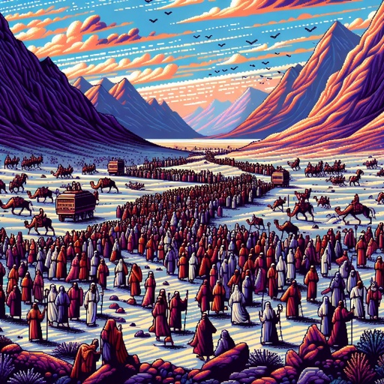
God gives Moses forty years of peace in Midian to heal the hurts Moses has suffered. Those forty years also give Moses a sense of perspective, allowing him to evaluate the Egyptian gods and see them for the false deities they actually are. Moses has time to consider his Egyptian experiences, retaining those things of value while discarding everything else. Moses needs to go through this process for eventually, he will lead two million people who have been plucked out of Egypt and dropped into a desert with scanty time to evaluate anything. Moses must be able to function from a position of peace if he is to resist those disruptive influences.

Many of us have been raised to perform and we measure our worth by our achievements. But as one veteran missionary told us, “God is more interested in you as a human BEING, not as a human DOING.” God’s peace is not dependent on our meeting higher and higher standards, and in fact, those very standards can keep us from receiving God’s peace because we can be so focused on our own performance.

Today, why not ask God to give you His peace, the peace that passes understanding? God will certainly give you peace when you seek Him with all your heart.

PRAYER: Father God, thank You for loving us and caring for us. Lord, help us to leave our anxieties to You and be bathed in Your peace. In the mighty and precious Name of King Jesus. Amen.