Posts Tagged ‘bible’

JANUARY 18, 2026 WE ALL NEED COMFORT, BUT HOW DO WE GET IT? #18 GOD CAN EVEN RECONCILE FIGHTING SIBLINGS

January 18, 2026

Genesis 25:1-10 Now Abraham married again. Keturah was his new wife, and she bore him several children: Zimran, Jokshan, Medan, Midian, Ishbak, Shuah. Jokshan’s two sons were Sheba and Dedan. Dedan’s sons were Asshurim, Letushim, and Leummim. Midian’s sons were Ephah, Epher, Hanoch, Abida, and Eldaah.

Abraham deeded everything he owned to Isaac; however, he gave gifts to the sons of his concubines and sent them off into the east, away from Isaac.

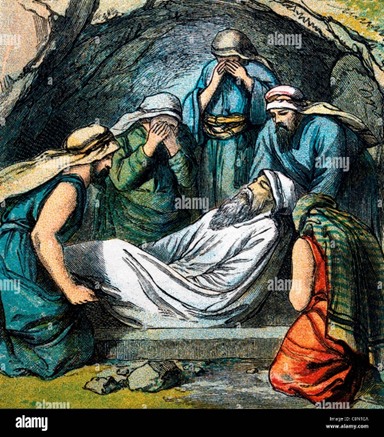
Then Abraham died, at the ripe old age of 175, and his sons Isaac and Ishmael buried him in the cave of Mach-pelah near Mamre, in the field Abraham had purchased from Ephron the son of Zohar, the Hethite, where Sarah, Abraham’s wife, was buried.

If you do the math, by the time Sarah dies, Abraham is already 137 years old; however, God blesses him so that he is able to marry again, a lady named Keturah, and father six more sons. After deeding everything to Isaac, Abraham makes generous gifts to these men and sends them eastward so they won’t be tempted to compete with Isaac.

When Abraham dies at age 175, Ishmael is at least 88 and Isaac is 75. Setting any old differences aside, the two men come together to bury Abraham in the cave of Mach-pelah where Sarah is buried. Isaac is the son of promise, inheriting Abraham’s spiritual legacy and much of his wealth. In the past, Abraham has prayed over Ishmael, and God has promised to make Ishmael great. (Genesis 17:20 “I shall cause him to multiply and become a great nation.” And God repeats this promise to Hagar in Genesis 21:18) God does grant Ishmael twelve sons, each of whom becomes the chief of his own tribe. But the most important thing about these few verses is that Abraham’s boys cooperate on his funeral. As carefully as the Bible scribes have been to record every small detail, if Ishmael and Isaac had fought over their father’s funeral, that fight would have been recorded down to the last syllable.

Think about it: Ishmael is the first-born, and under the customs of many tribes, Ishmael should inherit, no matter whether his mother is a concubine or a wife. But God has decreed that Isaac, the son of promise, must inherit from Abraham. In modern parlance, Isaac is the “chosen child.” And Ishmael is a difficult character, far more comfortable hunting in the wilderness than remaining in tents. God blesses Ishmael according to Ishmael’s nature, just as He blesses Isaac.

There are some families where siblings get along well, and then there are other families where sibling rivalries can be vicious. One set of twins spent decades distancing themselves from each other because each thought the other was their father’s favorite. In fact, their father was a good man; however, he had been raised by older siblings when his mother died, and he had never learned how to express affection. When one twin was doing something outstanding, the father would praise that twin to the other. “Look at your brother! Isn’t that great?” Blessedly, God brought timely reconciliation, but years of fellowship were lost because of that wrong belief. And there are parents who truly favor one child over all the others, frequently with disastrous results.

Some families have done well until a parent dies, and it’s time for the estate to be settled. Siblings fighting over stuff may refuse to speak to one another for years. But it’s hard to say “I’m sorry” to a grave. Promising to reconcile “tomorrow” is worthless, for that tomorrow may never come.  

How does God want us to relate to our siblings? How can He bring comfort? Ephesians 4 has a lot to say about getting along with difficult people. Ephesians 4:2-3 tells us, “Be humble and gentle. Be patient with each other, making allowance for each other’s faults because of your love. Try always to be led along together by the Holy Spirit and so be at peace with one another.” Most of us want to give ourselves a “free pass” to behave badly, stating all kinds of excuses; meanwhile, we rush to judge others severely. When I was a child, my parents used to warn me that when I pointed one finger at someone else, I had three fingers and a thumb pointing back at me, indicating that I was just as at fault as the person whom I was criticizing.

Ephesians 4:26-27 warns us, “If you are angry, don’t sin by nursing your grudge. Don’t let the sun go down with you still angry—get over it quickly; for when you are angry, you give a mighty foothold to the devil.”

It’s true that “unforgiveness is like drinking poison and expecting the other person to die.” Ephesians 4:31-32 advises, “Stop being mean, bad-tempered, and angry. Quarreling, harsh words, and dislike of others should have no place in your lives. Instead, be kind to each other, tenderhearted, forgiving one another, just as God has forgiven you because you belong to Christ.”

But what if someone has really hurt you badly, so badly you can scarcely even think about that person? The father of the famous Christian author and teacher, C.S. Lewis, was a selfish and difficult man, insensitive to the needs of both his sons. Once Lewis became a Christian, he had to continue to forgive his father as an act of will, until one day he realized that he had succeeded. Incidentally, this process of forgiveness took years.

Notice something else: Forgiving someone who has hurt you, even loving them, does not mean you have to trust them if they have proven themselves untrustworthy. Unless God specifically orders you to make yourself vulnerable, you are not obligated to expose yourself to further abuse. But there are exceptions. Saint Paul was stoned in Lystra; however, God preserved him, and he later returned to the city to teach new converts. God used Paul to demonstrate His mighty power to the unbelievers at Lystra.

As we consider the miracle of Ishmael and Isaac cooperating to perform their father’s funeral, we should examine ourselves. Have we been harboring grudges against anyone, particularly against any of our siblings? If God brings anyone to mind, ask God to help you and then forgive! Why carry a load of anger around so it can eat into your soul? And there is this about forgiveness: the more you forgive others, the easier it becomes. Remember that God forgives us when we confess our sins. If the Judge of the whole earth can forgive that readily, how can we lesser beings continue to hold grudges?

PRAYER: Father God, thank You for loving us and caring for us. Lord, many of us are walking wounded, hemorrhaging spiritually from hurts inflicted by family and acquaintances. We confess that we are sinners and that we cannot free ourselves from our own sins, let alone forgive others. Please, Lord, forgive us our sins and grant us the courage and the grace to forgive all those who have hurt us, whether intentionally or unintentionally. In the mighty and precious Name of King Jesus. Amen.

DECEMBER 27, 2025 WE ARE ALL FERAL CATS PART 2

December 27, 2025

This morning, I can hear our new kitten crying pitifully as he sits in his litter box in his cage. Gabriel, our kitten, has been drinking the water and eating the food we have given him, but he longs for his mother. We long to comfort Gabriel, to nestle him in our arms, but he still fears us. Were we to try to cuddle him right now, one of us might wind up in the Emergency Room with stitches!

One of the many names of Jesus is “Immanuel” or “Emmanuel,” meaning “God with us.” But why should God order that his Son be called by such a name? God wants all people to know that He is not sitting someplace far away but that He is as close as their heartbeats. But there’s a problem: Just as we struggle to communicate with little Gabriel the kitten, God keeps sending His Word by various means to communicate with people, many of whom aren’t listening or are deafened by the noise of the world around them.

All we want to do is to comfort Gabriel, to make him feel secure, and to demonstrate the depth of our love for him; yet, we struggle to reassure him. If one of us were able to speak “cat” or even to become a cat with the knowledge we have, it would be much easier to comfort Gabriel. We celebrate Christmas because at Christmas, God accomplished what we cannot: He sent Jesus to be born as a baby to a poor family from an obscure village so that He could demonstrate His love and concern through Jesus. Jesus was also born so that he could love, minister, and die as a blood sacrifice for the sins of the whole world, conquering death, hell, and the grave.

Each time little Gabriel mews pitifully, our hearts break, and we beg God again to help us find some way to comfort him. Now if God is a loving Father, with a great heart of love deeper than anything we can possibly imagine, won’t He have compassion on His suffering children just as we have compassion for our kitten? When we cry, God hears us, even though help doesn’t always come in the form we desire. Again, Isaiah 55:9 reminds us that God’s ways are higher than ours.

On the night before Jesus was crucified, he was struggling to impart everything he possibly could to his disciples while he was still with them. John recorded those conversations. In John 14:7-11, Jesus was trying to reassure his friends.

7 “If you had known Me, you would have known My Father also; and from now on you know Him and have seen Him.”

8 Philip said to Him, “Lord, show us the Father, and it is sufficient for us.”

9 Jesus said to him, “Have I been with you so long, and yet you have not known Me, Philip? He who has seen Me has seen the Father; so how can you say, ‘Show us the Father’? 10 Do you not believe that I am in the Father, and the Father in Me? The words that I speak to you I do not speak on My own authority; but the Father who dwells in Me does the works. 11 Believe Me that I am in the Father and the Father in Me, or else believe Me for the sake of the works themselves.”

If Jesus had been a cat speaking to other cats, he would have told them that he was sent by the Creator of all cats to demonstrate that Creator’s love.

Do we think we occupy the place of God with our kitten? Far from it! We are flawed human beings whose race mostly lost the ability to communicate with the animals when sin entered the world. Throughout the world, there are those individuals blessed in their abilities to communicate with animals. But we firmly believe that God can comfort our kitten and we are begging Him to do so. We are begging for Immanuel to comfort little Gabriel, to be “God with Gabriel.”

Please notice something: we should always worship the Creator, not the creature. Someone grieving the loss of their sixteen-year-old cat mentioned on Facebook that they intended to create an altar to the cat. As a shrine to remember the cat, that might be all right; however, to worship a dead cat would be quite wrong, no matter how precious the memories might be.

So once more, we find ourselves resembling feral cats. We want to trust God, but we have bitter memories, and we aren’t really sure if this “Immanuel” business, this “God with us” stuff is real or not. But the good thing about Jesus is that his followers recorded Jesus’ teachings in four different Gospels, each with its own approach, giving us the information we need about Jesus and his Heavenly Father.

If you are new to the Bible, begin by reading the Gospel of John in a format that speaks to you. Personally, I like the New King James version because it preserves the language of the King James without archaic terms. But other versions such as The Message or The Living Bible are equally good. The important thing is to learn about Jesus, Immanuel, God with us. Let’s pray.

PRAYER: Father God, thank You for loving us and caring for us. Lord, we confess that we are all feral cats. We have been hurt and we don’t trust anybody. Lord, please speak to the hearts of all those reading these words, make Yourself so real to them that they KNOW You are Immanuel, God with them. In the mighty and precious Name of King Jesus. Amen.  
BURYING BILLY GENE PROCTOR SEPTEMBER 29, 2025

September 29, 2025

They’re burying one of our closest friends today, and we can’t be there. This is the part of missionary life that few people speak about, but it’s one of the toughest. Financial limitations? No problem! Both my husband and I grew up in families where money was a bit scarce. Devoting time to caring for others? Giving up luxury vacations to pay for blood, medicine, and food for patients? Sure, those are challenges, but anybody in any kind of ministry faces similar problems. There are many things we have sacrificed gladly for the sake of God’s calling on our lives. But once in a while, special events come along and remind us that our friends and loved ones are back in America and we are not. Funerals of close friends serve as one of those reminders.

Today as our friends gather at Getwell Church in Southaven, MS, we will be fortunate if we are able to watch the proceedings as they are streamed. But watching something doesn’t make up for being there and hugging people, sharing stories of the loved one, and yes-crying a bit with the family. While those attending the funeral will be treated to a gallery of photos and a video depicting Billy’s long life of 84 years and those whom he blessed during that time, all we will have is memories.

Jesus’ disciple Simon Peter was one of those guys who was forever asking the tough questions. I guess having spent years hauling fish out of the Sea of Galilee and battling those sudden storms left Peter with no patience for temporizing. When Peter had a question, he simply spat it out. And this particular day, Peter was worried.

Matthew tells the story in Matthew 19:16-29A rich young ruler approaches Jesus, asking what he has to do to gain eternal life. Jesus tells him to follow the Ten Commandments. When the man claims that he’s already doing that, Jesus advises him, “If you want to give it all you’ve got,” Jesus replied, “go sell your possessions; give everything to the poor. All your wealth will then be in heaven. Then come follow me.” The young man gulps hard and leaves dejected because he is very rich and very attached to his belongings. (But wait-there are some traditions that claim this young ruler was Mark, who later wrote one of the Gospels and who traveled with Paul and Barnabas.)

Peter and the other disciples have left their homes and their jobs to follow Jesus. Peter, his brother Andrew, and his friends James and John have walked away from thriving and businesses at Capernaum. All four have left their boats and their relatives to follow Jesus and are faithfully continuing to do so.

Matthew 19:27 Then Peter chimed in, “We left everything and followed you. What do we get out of it?”

28-30 Jesus replied, “Yes, you have followed me. In the re-creation of the world, when the Son of Man will rule gloriously, you who have followed me will also rule, starting with the twelve tribes of Israel. And not only you, but anyone who sacrifices home, family, fields—whatever—because of me will get it all back a hundred times over, not to mention the considerable bonus of eternal life. This is the Great Reversal: many of the first ending up last, and the last first.”

Now Peter is asking Jesus what he and the others will get out of the deal. Has this sacrifice all been for nothing? Not only have the disciples given up being with their families but they have also sacrificed sharing special celebrations-birthdays, feast days, weddings, and funerals. Led by the Holy Spirit, Jesus has crisscrossed the land, leaving the disciples wondering where they will go next. Jesus assures Peter that his followers will receive houses and lands and families, both in this life and in the next. But in the meantime, the disciples find themselves isolated from their families by the call on their lives.

We met Billy Proctor shortly after arriving in Memphis, TN, in late June 1983. I was the new pediatric surgery resident at LeBonheur Children’s Hospital. Billy and his wife Carla were members at Faith United Methodist Church, a charismatic congregation just over the line in Southaven, MS. Eventually, we joined Faith and became fast friends with Billy and Carla. If you look at photos of Billy during that time, you see a middle-aged guy with a grin that just won’t quit, a grin that draws you in to whatever he has going on. Billy had that grin for his entire life, and I’m sure that the day Billy graduated into heaven, when Jesus reached out his hand to Billy to pull him out of a failing body, Billy grinned more widely than he ever had before.

It’s impossible for me to enumerate all the different ways Billy and Carla have helped us over the years. The Proctors have sheltered us, advised us, encouraged us, and handled our stateside mail for us. Billy has handled our finances, helping invest our Social Security and whatever other monies have come in that have not been used for ministry expenses. Billy has also shared travel tips with us, tips on local restaurants, and some of his other passions.

We have watched the Proctors’ children reach adulthood, marry, and become parents and develop careers of their own. We have rejoiced over births and grieved over untimely deaths. We have cheered for all kinds of successes and admired photos. Our lives and those of the Proctor family have become interwoven.

I am completing this about an hour before the funeral will begin. We can only pray that our internet connection will remain stable, allowing us to watch, even if it’s at a distance of several thousand miles.

The next time you ask a missionary based overseas for their challenges, remember there are many things about which we might be hesitant to share. We don’t want to come off as whiners. But we can only rejoice that some day we will all be in heaven together. As the old Gospel song says, “When we all get to heaven, what a day of rejoicing that will be! When we all see Jesus, we’ll sing and shout the victory!”

MAY 26, 2025 FOLLOWING JESUS IN A POST-ASCENSION WORLD #32 WHEN GOD SENDS YOU, DON’T CONFUSE THE MESSENGER WITH THE MESSAGE!

May 26, 2025

Acts 14:1-7 At Iconium

“Now it happened in Iconium that they went together to the synagogue of the Jews, and so spoke that a great multitude both of the Jews and of the Greeks believed. But the unbelieving Jews stirred up the Gentiles and poisoned their minds against the brethren. Therefore, they stayed there a long time, speaking boldly in the Lord, who was bearing witness to the word of His grace, granting signs and wonders to be done by their hands.

But the multitude of the city was divided: part sided with the Jews, and part with the apostles. And when a violent attempt was made by both the Gentiles and Jews, with their rulers, to abuse and stone them, they became aware of it and fled to Lystra and Derbe, cities of Lycaonia, and to the surrounding region. And they were preaching the gospel there.

When you are acting for the Kingdom of God, there will always be opposition. And the more effective your ministry, the stronger the opposition. Here, Paul and Barnabas have been preaching and teaching and many people, both Jews and Greeks, have been streaming into the Kingdom of God. But traditional leaders whose commitment to their own power is greater than their commitment to God’s truth are doing everything they can to fight these men. Finally, Paul and Barnabas find themselves on the road again, fleeing to Lystra and Derbe and the surrounding region, preaching the gospel as they go.

While Paul and Barnabas are probably thinking only of escaping opposition, God has far bigger plans. For as these preachers are fleeing from one place to another, they are teaching people about Jesus wherever they go, lighting fires of hope in people’s hearts. Psalm 37;23 tells us that “The steps of a good man are ordered by the Lord, and He delights in his way.” While Paul and Barnabas might feel they are wandering aimlessly across the countryside, meanwhile, God is moving them into strategically important connections with spiritually hungry people ready to hear the gospel and accept it.

Acts 14:8-18 Idolatry at Lystra

And in Lystra a certain man without strength in his feet was sitting, a cripple from his mother’s womb, who had never walked. This man heard Paul speaking. Paul, observing him intently and seeing that he had faith to be healed, said with a loud voice, “Stand up straight on your feet!” And he leaped and walked. Now when the people saw what Paul had done, they raised their voices, saying in the Lycaonian language, “The gods have come down to us in the likeness of men!” And Barnabas they called Zeus, and Paul, Hermes, because he was the chief speaker. Then the priest of Zeus, whose temple was in front of their city, brought oxen and garlands to the gates, intending to sacrifice with the multitudes.

But when the apostles Barnabas and Paul heard this, they tore their clothes and ran in among the multitude, crying out and saying, “Men, why are you doing these things? We also are men with the same nature as you, and preach to you that you should turn from these useless things to the living God, who made the heaven, the earth, the sea, and all things that are in them, who in bygone generations allowed all nations to walk in their own ways. Nevertheless, He did not leave Himself without witness, in that He did good, gave us rain from heaven and fruitful seasons, filling our hearts with food and gladness.” And with these sayings they could scarcely restrain the multitudes from sacrificing to them.”

The people of Lystra have been worshiping fake Grecian gods, even though the myths describe these beings as far from having any purity or holiness. When Paul and Barnabas speak to a man crippled from birth, he leaps up healed and whole. Local people are so thrilled that they can only conclude that their gods have descended and are favoring them. But now Paul and Barnabas have a new set of problems: the temptation to allow themselves to be worshiped as gods. Quite sensibly, Paul and Barnabas refuse, doing everything they can to convince these people that the God of heaven and earth has done this miracle and that they are only His agents.

The temptation to take glory reserved only for God continues to this day. Here in Ghana, it is quite common for those conducting crusades to spread posters portraying the evangelist and the dates of the crusade as widely as possible, advertising healing and deliverance. But without God, these people are nothing, powerless beings who can only mouth platitudes. The question is this: who is doing the healing and who should receive the glory? While God may work through men and women, He alone deserves the praise and the glory. People do get healed in these crusades; however, the healing comes through their faith in God and not because the evangelist has the power to heal. All power must come from the One True Living God. Paul and Barnabas know that God has healed this man in Lystra and they are doing everything they can to avoid being confused with traditional Greek gods. (Study Greek mythology, and you rapidly realize that the Greek gods are far from holy or pure!)

As God’s ambassadors, we must not take credit when all the glory belongs to God. There is a fictitious story about the donkey that carried Jesus on Palm Sunday feeling proud that all the adulation was for him; meanwhile, the donkey was only a means to an end. Like that donkey, we must allow God to use us but remember that He is the only One worthy of praise.

PRAYER: Father God, thank You for loving us and for caring for us. Lord, help us to continually point people to You, for You are the Source of light and life while we are only messengers. In the mighty and precious Name of King Jesus. Amen.
APRIL 27, 2025 FOLLOWING JESUS IN A POST-ASCENSION WORLD #4 RESPONDING TO THE HOLY SPIRIT

April 27, 2025

Acts 2:5-13 The Crowd’s Response

“And there were dwelling in Jerusalem Jews, devout men, from every nation under heaven. And when this sound occurred, the multitude came together, and were confused, because everyone heard them speak in his own language. Then they were all amazed and marveled, saying to one another, “Look, are not all these who speak Galileans? And how is it that we hear, each in our own language in which we were born? Parthians and Medes and Elamites, those dwelling in Mesopotamia, Judea and Cappadocia, Pontus and Asia, Phrygia and Pamphylia, Egypt and the parts of Libya adjoining Cyrene, visitors from Rome, both Jews and proselytes, Cretans and Arabs—we hear them speaking in our own tongues the wonderful works of God.” So they were all amazed and perplexed, saying to one another, “Whatever could this mean?”

Others mocking said, “They are full of new wine.”

All this time, the followers of Jesus have been praying together but otherwise trying to maintain a low profile. The last thing these folks want is to be arrested by either the religious authorities or the Romans. But God has other ideas. There are devout men from every nation under heaven living in Jerusalem, and now these men are rushing into the street as they hear those recently baptized with the Holy Spirit glorifying God in their heart languages. Nobody has ever heard anything like this.

But while these men are ecstatic over these manifestations, there are always nay-sayers ready to criticize. These guys are sure that these people must be drunk! Somebody needs to do something, and Peter steps up and preaches.

We’ll continue the story tomorrow, but look at Peter for a minute. Until now, Peter has always been a man of action, not a preacher or a teacher. There are other disciples with better educations and vocabularies, and Peter has a strong Galilean accent that marks him wherever he goes. Peter is not most people’s first choice for public speaking. And that is what is going to make Peter’s next move so remarkable, for Peter will be the one to preach.

One of the amazing things about the Holy Spirit is that the Holy Spirit empowers those willing to welcome Him. God does not play favorites, and He is interested in our availability, not in our ability. Remember that lesson as we continue to study the events of that thrilling day of Pentecost.

PRAYER: Father God, thank You for loving us and for caring for us. Lord, help us to be willing to be available and to trust that You will give us the strength and the courage to do Your perfect Will. In the mighty and precious Name of King Jesus. Amen. 

DEAR LORD AND FATHER OF MANKIND IMMANUEL LUTHERAN CHURCH, ALTONA, JUNE 1955

April 6, 2025

“Dear Lord and Father of mankind, forgive our foolish ways; re-clothe us in our rightful mind, in purer lives thy service find, in deeper reverence praise.”

It’s June 1955, and I am sitting with my family in our usual spot, 6 rows from the front on the north side of Immanuel Lutheran Church in Altona, Illinois. It has been a tough spring for me. After years of fighting horrible bouts of tonsillitis compounded by ear infections and vertigo, I finally weathered a tonsillectomy two months ago. Now my throat has finally healed enough for me to swallow rough food without wincing, and I feel healthy for the first time in years.

Outside, birds are singing in the maple trees that surround our lovely church. Inside, I gaze on the triptych above the altar, one figure of Jesus the good shepherd on the left, Jesus praying in the Garden of Gethsemane on the right, and Jesus ascending into heaven in the biggest picture of all in the middle. I have no idea how many times I will gaze on those pictures through the years or how much they will come to mean to me. Even now in the stillness of the night, I meditate on those pictures and marvel at the goodness of my Lord. As I sit with my parents, I can hear my mother’s clear soprano reinforced by my dad’s tenor as we enter the second verse.

“In simple trust like theirs who heard, beside the Syrian sea, the gracious calling of the Lord, let us, like them, without a word rise up and follow thee.”

As I listen to these words, I have no inkling that God will call me into the mission field at age eleven, that I will commit my life to Christ at the age of fifteen, that I will train as a general and pediatric surgeon, or that I will come to northern Ghana, where I will spend the rest of my life. Have I ever regretted saying “Yes” to Jesus? NO! NO! A MILLION TIMES NO! Even if I knew all the suffering I would endure, I would never refuse. Jesus has blessed me beyond measure, and nothing is too much to give up for my Lord.

“O Sabbath rest by Galilee! O calm of hills above, where Jesus knelt to share with thee the silence of eternity, interpreted by love!”

My brothers and I feel loved and protected. Today, we will finish church and Sunday School and return home to a scrumptious home-made dinner. We have our own animals butchered and grow most of our own vegetables. My grandparents may join us, in which case, Grandma will bring her delicious butterhorn rolls, fit for the angels. The early strawberries are ready, and we are having strawberry pie for dessert. In the afternoon, my parents will visit and rest while we kids play ball in our large yard. We do not do farm work on Sundays, apart from caring for our animals.  

“Drop thy still dews of quietness, till all our strivings cease; take from our souls the strain and stress, and let our ordered lives confess the beauty of thy peace.”

Our lives are ordered and quiet. Most of our trading is done in small towns no more than seven miles away; otherwise, we only go to town for church and school. We still have the same ancient phone system that was brought in fifty years ago, with the switchboard in Oscar Johnson’s house in Altona. I attend school in the same building from which my dad graduated from high school. Everybody in town knows everybody else, and while this might seem intrusive, we care about one another. A general line ring of four long rings will bring out help for any emergency. Social media is unknown and even movies are an infrequent treat. We spend much of our free time playing games or reading, and we keep a local library busy with our patronage.

“Breathe through the heats of our desire thy coolness and thy balm; let sense be dumb, let flesh retire;
speak through the earthquake, wind, and fire, O still small voice of calm.’”

As we are singing this last verse, my family has no idea that in three short weeks our world will be turned upside down. My father will be severely injured in a near-fatal head-on collision at the Walnut Creek bridge just west of town. Dad’s injuries will be so severe that he will actually have a near-death experience in which he will see his grandparents and great-grandparents in heaven before being called back into his body by my mother’s fervent prayers. Dad will be bed-bound for several weeks and then remain on crutches for several months thereafter. We will get our first TV so Dad has something with which to entertain himself while he’s stuck in bed. The disruption of our lives will eventually convince my parents that my mother should return to school and complete her Bachelor’s degree so that she can teach and help stabilize the family income. We will also abandon our milking operation, retaining only one or two cows to provide milk for my grandparents and us.

I am remembering that Sunday as I return from rounds on the Children’s Ward and the NICU at the Hospital in Saboba. It’s far hotter here than it ever gets in Illinois, even in the depths of August. Rounds have kept me too long for me to make one of the local church services, so I sit here remembering and contemplating those magnificent words penned by the Quaker writer, John Greenleaf Whittier, so long ago. And once more I hear voices of all those church members in Altona, those in the choir and those beloved Sunday School teachers who humbly gave their Sundays to teach wiggly little kids and blaze teen-agers.

Nothing done in love for a child is ever wasted. I’m sure many of my Sunday School teachers went home from church wondering if they had made any impact on the kids they were teaching. The same thing might be said for those teaching vacation Bible school. While I can’t speak for anyone else, I will gladly stand before God and testify that I am eternally grateful for the sacrifices made by these teachers. Whether or not they realized it, they did find purer lives in the services they rendered. Whether or not these people realized it, they were agents of peace and servants of God. And I stand to bless every one of them. Now in my 77th year, I continue to pray the prayers embodied in these verses, and I say with Mr. Whittier, “Breathe through the heats of our desire thy coolness and thy balm; let sense be dumb, let flesh retire; speak through the earthquake, wind, and fire, O still small voice of calm.’”

NOVEMBER 29 2024 HOW CAN WE POSSIBLY BE HOLY? #16 IT’S BLACK FRIDAY! I NEED PEACE AND I NEED IT NOW!

November 29, 2024

Galatians 5:22-23 “But the fruit of the Spirit is love, joy, peace, patience, kindness, goodness, faithfulness, gentleness, and self-control. Against such things there is no law.”

For many shoppers in America, this is the day when they camp out in front of department stores, waiting for the doors to open early so that they can rush in and grab bargains. It’s sort of like a roller derby without roller skates. The stated objective is to buy Christmas presents for friends and loved ones; however, as one comedian observed in her video, shoppers frequently wind up with things for themselves. How can you survive amid such chaos, let alone find peace?

Perhaps you’re not a shopper but someone who has worked on a project for a year, only to discover that the people for whom you have been struggling have chosen to abandon the project without informing you. How can you have peace?

Perhaps you are separated from those you love the most with no way to join them for Thanksgiving or Christmas. How can you have peace?

Perhaps you are facing health challenges that appear to multiply with each passing day. How can you have peace?

Perhaps you are not joining Christmas shoppers because you have lost your job or are facing other financial challenges that mean Christmas will be very modest this year. How can you have peace?

The good news is that true peace from God, “fruit of the Holy Spirit peace,” doesn’t depend on circumstances, health, finances, or anything else. Isaiah 26:3 tells us, “You will keep him in perfect peace, whose mind is stayed on You, because he trusts in You.” (New King James Version) The Message version says, “People with their minds set on you, you keep completely whole, Steady on their feet, because they keep at it and don’t quit. Depend on God and keep at it because in the Lord God you have a sure thing.”

Only God can give the peace of the Holy Spirit, and that’s great news because God isn’t worried about Christmas shopping or bills or health issues or any of the other things that worry us. The Creator of the Universe spoke the stars into existence, and He is all powerful, powerful enough to remove our fears and anxieties.

The prophet Jeremiah had the unenviable task of prophesying to the people of Jerusalem as the Babylonians were building siege mounds and preparing to take the city. False prophets were telling frightened idolaters what they wanted to hear-namely, that God would miraculously deliver them, even though they had abandoned Him. At this point, Jeremiah was in and out of prison and had critics watching him to see how they could destroy him. In the midst of this chaos, God moved one of Jeremiah’s relatives to sell him land as a sign that eventually land would again be bought and sold in Judah. When Jeremiah protested-after all, the Babylonians were literally at the gates-God spoke. “Then the word of the Lord came to Jeremiah, saying,“Behold, I am the Lord, the God of all flesh. Is there anything too hard for Me?” (Jeremiah 32:26-27)   

The prophet Isaiah whose words are quoted at the beginning of this devotional lived in difficult times and eventually was slaughtered by wicked King Manasseh; yet, through Isiah we have some of the most reassuring statements about God’s peace ever written.

We can have peace when we trust “the Lord, the God of all flesh” because that peace comes from God and not from our circumstances. But how do we achieve this peace? Isaiah 26 gives us the answer: “People with their minds set on you, you keep completely whole, Steady on their feet, because they keep at it and don’t quit. Depend on God and keep at it because in the Lord God you have a sure thing.”

Set your mind on God, on His power, His purposes, His goodness, and His holiness. When we keep our focus on God rather than on our problems, we WILL be “steady on our feet because we keep at it and don’t quit.” We can depend on God and keep at it because we KNOW that “in the Lord God we have a sure thing.”

As we end the Thanksgiving season and begin to prepare for Christmas, let us keep our minds focused on God and not on our problems. Find a Bible verse that speaks to you about peace, write it in your phone, put it on post it notes, doing anything you have to so that verse will be with you and ask God to reveal Himself to you through that verse. When you ask for such things, God the Good Father will be happy to teach you.

PRAYER: Father God, thank You for loving us and for caring for us. Lord, many of us are drowning in chaos. We desperately need Your Holy Spirit Peace. Please help us to seek You and Your Will and teach us about Your true Nature, for then we will definitely have lasting peace. In the mighty and precious Name of King Jesus. Amen.

NOVEMBER 23, 2024 HOW CAN WE POSSIBLY BE HOLY? #10 INSANITY IS REPEATING THE SAME BEHAVIOR OVER AND OVER AND EXPECTING DIFFERENT RESULTS!

November 23, 2024

Galatians 4: 8-20 “Formerly, when you did not know God, you were slaves to those who by nature are not gods. But now that you know God, or rather are known by God, how is it that you are turning back to those weak and worthless principles? Do you wish to be enslaved by them all over again? You are observing special days and months and seasons and years! I fear for you, that my efforts for you may have been in vain. I beg you, brothers, become like me, for I became like you. You have done me no wrong.

You know that it was because of an illness that I first preached the gospel to you. And although my illness was a trial to you, you did not despise or reject me. Instead, you welcomed me as if I were an angel of God, as if I were Christ Jesus Himself. What then has become of your blessing? For I can testify that, if it were possible, you would have torn out your eyes and given them to me. Have I now become your enemy by telling you the truth?

Those people are zealous for you, but not in a good way. Instead, they want to isolate you from us, so that you may be zealous for them. Nevertheless, it is good to be zealous if it serves a noble purpose—at any time, and not only when I am with you.

My children, for whom I am again in the pains of childbirth until Christ is formed in you, how I wish I could be with you now and change my tone, because I am perplexed about you.”

Paul continues to be frustrated. While traveling through Galatia, he developed some kind of problem, possibly a severe eye infection, that forced him to stop. Finding himself with people willing to listen and learn, Paul taught the Galatians about Jesus and they readily accepted Him. Previously, the Galatians had been following a host of various pagan religious, each of which demanded frequent sacrifices and all other kinds of rituals for “days, and months, and seasons, and years.” It was a positive relief when Paul was able to show the Galatians that they had been deceived and no longer needed to mess with such things.

But now idolatrous teachers have sneaked in, frustrated that their former disciples are no longer willing to slavishly follow their instructions. These people only want power and control over Paul’s converts and are willing to twist Paul’s statements as much as possible, if only they can regain their hold on the new believers. Paul is in so much pain spiritually that he feels as if he is a pregnant lady struggling with labor pains. Paul is several hundred miles away and can only beg God to deliver the Galatians from those who would victimize them.

There’s an old saying that “Insanity is repeating the same behavior over and over and expecting different results.” When Paul preached and taught in Galatia, the Galatians accepted the Gospel of Christ because it was so much superior to the religions they had previously observed. The Holy Spirit moved in the hearts of new believers, baptizing them and undoubtedly working miracles. Nothing like this had ever been seen before in Galatia! But now the Galatians are being tempted to return to rituals that never worked in the first place-truly insane.

If you study the interview in the Garden of Eden between Satan and Eve, you will notice that Satan begins questions by asking, “Did God REALLY…..” These false teachers who are attempting to sway the Galatians away from Christ and back to idols are undoubtedly using the same kind of argument. “Did Paul REALLY tell you_____? Are you REALLY sure of ____? Frankly, it’s a good thing that Paul is at a distance, for if he were physically present in Galatia, he might be tempted to get into a fist fight with these charlatans.

Paul knows that the Galatian converts are making great strides in their quest for holiness but that these false teachers can undo everything. What about us? Are we willing to trust God and His provision and His ways of working things into our lives, or are we tempted to indulge in just a few rituals in hopes of finding shortcuts to holiness?

The reality is that holiness is a lifelong process and that we continue to grow into holiness and holiness continues to grow in us the more we earnestly seek it. But there are no rituals we can follow that will instantly produce complete holiness in our lives. We must trust God and continue to grow in His grace. May we ask God daily to take over our lives, for He is the only One who can make anyone or anything holy.

PRAYER: Father God, thank You for loving us and for caring for us. Lord, sometimes we long for shortcuts so that we can instantly become holy. But You are the One who guides us and who guarantees that if we grow in grace, You will put Your holy nature in us. Thank You for doing this for us. In the mighty and precious Name of King Jesus. Amen.
NOVEMBER 21, 2024 HOW CAN WE POSSIBLY BE HOLY? #8 THE CHANGELESS PROMISE

November 21, 2024

Galatians 3:15-29 The Changeless Promise

“Brethren, I speak in the manner of men: Though it is only a man’s covenant, yet if it is confirmed, no one annuls or adds to it. Now to Abraham and his Seed were the promises made. He does not say, “And to seeds,” as of many, but as of one, “And to your Seed,” who is Christ. And this I say, that the law, which was four hundred and thirty years later, cannot annul the covenant that was confirmed before by God in Christ, that it should make the promise of no effect. For if the inheritance is of the law, it is no longer of promise; but God gave it to Abraham by promise.

Purpose of the Law

What purpose then does the law serve? It was added because of transgressions, till the Seed should come to whom the promise was made; and it was appointed through angels by the hand of a mediator. Now a mediator does not mediate for one only, but God is one.

Is the law then against the promises of God? Certainly not! For if there had been a law given which could have given life, truly righteousness would have been by the law. But the Scripture has confined all under sin, that the promise by faith in Jesus Christ might be given to those who believe. But before faith came, we were kept under guard by the law, kept for the faith which would afterward be revealed. Therefore the law was our tutor to bring us to Christ, that we might be justified by faith. But after faith has come, we are no longer under a tutor.

Sons and Heirs

For you are all sons of God through faith in Christ Jesus. For as many of you as were baptized into Christ have put on Christ. There is neither Jew nor Greek, there is neither slave nor free, there is neither male nor female; for you are all one in Christ Jesus. And if you are Christ’s, then you are Abraham’s seed, and heirs according to the promise.”

Wherever there are people, there are laws governing what they can and cannot do. Even in Paul’s day, there were religious laws and the Roman law that governed all the provinces, including Galatia. It’s a big mistake to assume that the Galatians were unsophisticated illiterates. Many of these people, particularly the upper classes, may have spoken and read  fluent Latin and Greek in addition to any local languages they learned as children. Living under Roman law would give any adult a great deal of information. But in addition to laws, there were also long-standing covenants that were recognized and honored by everyone involved.

Though it is only a man’s covenant, yet if it is confirmed, no one annuls or adds to it. Now to Abraham and his Seed were the promises made. He does not say, “And to seeds,” as of many, but as of one, “And to your Seed,” who is Christ. And this I say, that the law, which was four hundred and thirty years later, cannot annul the covenant that was confirmed before by God in Christ, that it should make the promise of no effect. For if the inheritance is of the law, it is no longer of promise; but God gave it to Abraham by promise.”

But before faith came, we were kept under guard by the law, kept for the faith which would afterward be revealed. Therefore the law was our tutor to bring us to Christ, that we might be justified by faith. But after faith has come, we are no longer under a tutor.”

Here Paul is contrasting laws versus covenants/promises. Before the Mosaic Law was ever given, God had already cut covenant with Abraham, making incredible promises. The Mosaic Law was given to teach people how God wanted them to live; however, the Law did not cancel the covenant agreement God had already made with Abraham.

“For you are all sons of God through faith in Christ Jesus. For as many of you as were baptized into Christ have put on Christ. There is neither Jew nor Greek, there is neither slave nor free, there is neither male nor female; for you are all one in Christ Jesus. And if you are Christ’s, then you are Abraham’s seed, and heirs according to the promise.”

Somebody in Galatia might say, “Yes, but Abraham was a Jew, and I’m not a Jew.” Paul has the answer: God was making the covenant, not only with Abraham, but Christ Jesus, for Christ Jesus was born of the Seed of Abraham. And by extension, all who believe in Christ Jesus become Abraham’s seed. What’s even more wonderful is that once someone believes and is baptized, he joins a new family, a family in which he/she is Abraham’s seed and an heir according to the promises God gave Abraham.

Unless we understand the culture in Paul’s day, we might not realize how revolutionary this pronouncement was. Many households had slaves or servants or foster children; however, if one was adopted, past histories didn’t matter. Once you were fully adopted into a family, you enjoyed all the rights and privileges any child born into that family would enjoy. Your inheritance would be equal to anyone else’s. If your adopted father was a Roman senator, you could even wear a distinctive purple band on your clothing, indicating that you belonged to a high-class family.

What does this have to do with holiness? Paul is advising the Galatians-and us-that as believers in Christ, we are candidates for holiness, not because we are so good but because God changes our nature to conform with His. This process of sanctification has two parts – God’s and ours. God stands more than willing to change us; we must agree to be changed. The more we agree with God, the more our lives will reflect God’s goodness and God’s glory.

PRAYER: Father God, thank You for loving us and for caring for us. Thank You for Your precious promises that assure us of eternal life if we will only believe and allow You to change us into Your image. Please change us and help us to continue to yield ourselves so that all of our natures will reflect You and only You. In the mighty and precious Name of King Jesus. Amen.

NOVEMBER 20, 2024 HOW CAN WE POSSIBLY BE HOLY? #7  THE CHANGELESS PROMISE

November 20, 2024

 Today’s lesson is borrowed from Oswald Chambers’ seminal book My Utmost for His Highest  and is the devotional reading for November 19th. In this reading, Chambers explains the idea of being convicted of sin far better than I can possibly do. Unless we become convicted of our sins, we will never repent and beg for God’s forgiveness and grace. And without that forgiveness and grace, we can never become holy or close to God.  

“When he comes, he will prove the world to be in the wrong about sin. —John 16:8

Very few of us know anything about the conviction of sin. We know what it feels like to be disturbed at having done something wrong, but we don’t know conviction. To be convicted of sin by the Holy Spirit is to have every earthly relationship blotted out and to stand alone with the heavenly Father, knowing fully whom we have wronged: “Against you, you only, have I sinned” (Psalm 51:4).

When we are convicted of sin in this way, we know with every power of our conscience that God dare not forgive us—not without a price being paid. If he did, it would mean that we have a stronger sense of justice than God. God’s forgiveness is the great miracle of his grace, but it cost him the breaking of his heart in the death of Christ. Only through this death is the divine nature able to forgive while remaining true to itself. It’s shallow nonsense to say that the reason God forgives us is that God is love. Once we’ve been convicted of sin, we’ll never say this again. The love of God means Calvary and nothing less. The love of God is written on the cross and nowhere else. Only on the cross is God’s conscience satisfied.

Forgiveness doesn’t mean only that I am saved from hell and made right for heaven. It means that I am forgiven into a new relationship; I am re-created and identified with God in Christ. The miracle of redemption is that God turns me, an unholy being, into the standard of himself, the Holy One. He does this by giving me a new disposition, the disposition of his Son, Jesus Christ.”

PRAYER: Father God, thank You for loving us and for caring for us. Lord, we bless You and praise Your Holy Name, that You will redeem anyone who comes to You and asks for Your forgiveness and grace. In the mighty and precious Name of King Jesus. Amen.