Exodus 16: nna and Quail from Heaven
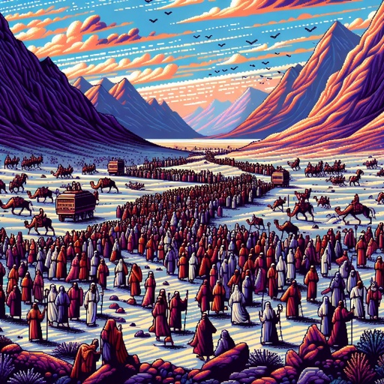
1 Then the whole community of Israel set out from Elim and journeyed into the wilderness of Sin, between Elim and Mount Sinai. They arrived there on the fifteenth day of the second month, one month after leaving the land of Egypt. 2 There, too, the whole community of Israel complained about Moses and Aaron.
3 “If only the Lord had killed us back in Egypt,” they moaned. “There we sat around pots filled with meat and ate all the bread we wanted. But now you have brought us into this wilderness to starve us all to death.”
Hoo boy! These people are only one month out from Egypt and already they’re making more complaints. Look at this latest round of whining-is this true or do these folks have lousy memories? An internet search blows these complaints right out of the water.
“Slaves in ancient Egypt had limited access to meat. While it is estimated that the laborers who built the pyramids consumed around 4,000 pounds of meat daily collectively, this was not representative of the diet of enslaved individuals. Most slaves rarely ate meat, as it was expensive and primarily reserved for the upper classes. They might occasionally receive scraps or leftovers from their owners, but meat was not a regular part of their diet.
The typical diet for enslaved individuals consisted mainly of bread, beer, and vegetables, with some fish and legumes. In contrast, the diet of pyramid builders included more meat, primarily from cattle, sheep, and goats, based on archaeological findings.”
So much for the “pots full of meat” remark! And while the slaves did have bread to eat, it’s highly unlikely that they had all the bread they wanted. Even if the men were working on the pyramids, the women and children would still be eating bread and vegetables. Nope! The Israelites are engaging in what’s known as magnification psychology, or castrophisizing. “Magnification psychology is the cognitive habit of blowing problems out of proportion or shrinking achievements into nothing, and it does far more damage than most people realize. This mental distortion hijacks your threat-detection system, floods your body with stress hormones over imagined disasters, and quietly erodes self-esteem, relationships, and decision-making. (https://neurolaunch.com/magnification-psychology/)
We read this account and immediately pride ourselves on the idea that we would NEVER do any such thing. But how many times do we catastrophisize? Rather than looking at problems and remembering how God has helped us and protected us in the past, we behave as if God has never done anything for us at all. The number of things we find to worry about is limited only by our imaginations, and most of us have very vivid imaginations.
4 Then the Lord said to Moses, “Look, I’m going to rain down food from heaven for you. Each day the people can go out and pick up as much food as they need for that day. I will test them in this to see whether or not they will follow my instructions. 5 On the sixth day they will gather food, and when they prepare it, there will be twice as much as usual.”
6 So Moses and Aaron said to all the people of Israel, “By evening you will realize it was the Lord who brought you out of the land of Egypt. 7 In the morning you will see the glory of the Lord, because he has heard your complaints, which are against him, not against us. What have we done that you should complain about us?” 8 Then Moses added, “The Lord will give you meat to eat in the evening and bread to satisfy you in the morning, for he has heard all your complaints against him. What have we done? Yes, your complaints are against the Lord, not against us.”
The complaints of the Israelites are not against Moses and Aaron but against the Lord, even though the Lord has helped them up to this point. Now God promises to supply food for everyone in the camp on a daily basis. Aaron and Moses must be rolling their eyes and wondering how this provision might ever come about, but they at least are trusting God.
Catastrophisizing and trusting are contrary acts. When we imagine catastrophes that might never happen, we are actually poisoning our bodies with our own hormones. The primary hormones released during fear are adrenaline and cortisol.
- Adrenaline (Epinephrine): This hormone is rapidly secreted by the adrenal glands in response to a perceived threat. It increases heart rate, dilates airways, and boosts blood flow to muscles, preparing the body for a fight-or-flight response.
- Cortisol: Known as the stress hormone, cortisol is also released during fear. It helps regulate metabolism and the immune response, and its levels increase when the body perceives a significant stressor.
- Norepinephrine: This hormone works alongside adrenaline to enhance alertness and focus during fearful situations.
These hormones collectively prepare the body to confront or escape from danger, facilitating a quick response to threats. But when we continue to frighten ourselves, our bodies remain stressed.
If the Israelites were to trust God, their bodies would behave far differently. Oxytocin is the primary hormone released when people experience trust. Often referred to as the “trust hormone,” oxytocin plays a crucial role in fostering feelings of connection, empathy, and bonding between individuals. It is released during social interactions, particularly in situations that promote trust and emotional safety.
Other Hormones Involved
- Dopamine: This neurotransmitter is associated with pleasure and reward, reinforcing positive feelings when trust is established.
- Serotonin: Often linked to mood regulation, serotonin can enhance feelings of well-being and safety in trusting relationships.
These hormones work together to create a sense of security and promote social bonding, making trust a vital component of human relationships.
The Israelites are choosing to make themselves feel terrible by stressing themselves and one another, telling stories of horrors that might never appear. Failing to trust God, the Israelites have no means of achieving peace, for they are driving peace far away from themselves.
Trust God and have peace or imagine catastrophes and suffer the consequences. The Israelites made the wrong choice. May God help us to choose wisely!
PRAYER: Father God, thank You for loving us and caring for us. Lord, help us to trust You even when things frighten us. In the mighty and precious Name of King Jesus. Amen.


Leave a Reply