Archive for the ‘Uncategorized’ Category

MARCH 7, 2022 BE STRONG! BE COURAGEOUS! JOSHUA 18:1 – 28 JOSHUA GETS TOTALLY FED UP!

March 7, 2022

Joshua 18:1 – 25 “The whole assembly of the Israelites gathered at Shiloh and set up the tent of meeting there. The country was brought under their control, but there were still seven Israelite tribes who had not yet received their inheritance.

So, Joshua said to the Israelites: “How long will you wait before you begin to take possession of the land that the Lord, the God of your ancestors, has given you? Appoint three men from each tribe. I will send them out to make a survey of the land and to write a description of it, according to the inheritance of each. Then they will return to me. You are to divide the land into seven parts. Judah is to remain in its territory on the south and the tribes of Joseph in their territory on the north. After you have written descriptions of the seven parts of the land, bring them here to me and I will cast lots for you in the presence of the Lord our God. The Levites, however, do not get a portion among you, because the priestly service of the Lord is their inheritance. And Gad, Reuben and the half-tribe of Manasseh have already received their inheritance on the east side of the Jordan. Moses the servant of the Lord gave it to them.”

As the men started on their way to map out the land, Joshua instructed them, “Go and make a survey of the land and write a description of it. Then return to me, and I will cast lots for you here at Shiloh in the presence of the Lord.” So the men left and went through the land. They wrote its description on a scroll, town by town, in seven parts, and returned to Joshua in the camp at Shiloh. Joshua then cast lots for them in Shiloh in the presence of the Lord, and there he distributed the land to the Israelites according to their tribal divisions.

 The first lot came up for the tribe of Benjamin according to its clans. Their allotted territory lay between the tribes of Judah and Joseph: On the north side their boundary began at the Jordan, passed the northern slope of Jericho and headed west into the hill country, coming out at the wilderness of Beth Aven.  From there it crossed to the south slope of Luz (that is, Bethel) and went down to Ataroth Addar on the hill south of Lower Beth Horon. From the hill facing Beth Horon on the south the boundary turned south along the western side and came out at Kiriath Baal (that is, Kiriath Jearim), a town of the people of Judah. This was the western side. The southern side began at the outskirts of Kiriath Jearim on the west, and the boundary came out at the spring of the waters of Nephtoah. The boundary went down to the foot of the hill facing the Valley of Ben Hinnom, north of the Valley of Rephaim. It continued down the Hinnom Valley along the southern slope of the Jebusite city and so to En Rogel. It then curved north, went to En Shemesh, continued to Geliloth, which faces the Pass of Adummim, and ran down to the Stone of Bohan son of Reuben. It continued to the northern slope of Beth Arabah and on down into the Arabah.  It then went to the northern slope of Beth Hoglah and came out at the northern bay of the Dead Sea, at the mouth of the Jordan in the south. This was the southern boundary. The Jordan formed the boundary on the eastern side. These were the boundaries that marked out the inheritance of the clans of Benjamin on all sides. The tribe of Benjamin, according to its clans, had the following towns: Jericho, Beth Hoglah, Emek Keziz, Beth Arabah, Zemaraim, Bethel, Avvim, Parah, Ophrah,  Kephar Ammoni, Ophni and Geba— twelve towns and their villages. Gibeon, Ramah, Beeroth, Mizpah, Kephirah, Mozah, Rekem, Irpeel, Taralah,  Zelah, Haeleph, the Jebusite city (that is, Jerusalem), Gibeah and Kiriath—fourteen towns and their villages. This was the inheritance of Benjamin for its clans.”

POOR JOSHUA! There must have been times when he felt as if he was running a day nursery! The tribes of Reuben, Gad, and half the tribe of Manasseh saw how good the land was on the east side of the Jordan and claimed that for their inheritance. The fighting men from those tribes then crossed with the rest of the Israelites and helped subdue part of Canaan. The Tribe of Judah, probably led by fearless Caleb, went out and claimed their inheritance. The Levites didn’t come in for one chunk of land because each of the other tribes was to designate a certain amount for the Levites in their midst. Ephraim and Manasseh had already received their allotment. But now there were seven tribes still sitting, waiting for someone to tell them what to do and probably hoping that someone else would go out and conquer territory for them.

It’s likely that Joshua went into the Tent of Meeting to get instructions from the Lord, and the Lord told him what to do. Each of the seven tribes was to select three men as part of a survey team. Why would there be three men? So that at any one time, there would be a majority opinion. These twenty – one men would then go out and assess the land, writing a description of it. When these men returned, Joshua would divide the land into seven parts and then cast lots to determine which tribe would get which piece of land. Joshua was trusting that God would guide the lots so that each tribe would get the land that He (God) wanted them to have.

Why would Joshua cast lots? Joshua was in the unenviable position of having to make decisions for people too cowardly to go out and take land on their own. At the same time, the method Joshua chose for land distribution was really the only means of ensuring that the distribution would be impartial. If Joshua had attempted to divide up the land by himself, he would have faced slanderous attacks that he was playing favorites, or that he had been bought off by someone. By casting lots, Joshua was leaving everything to God.

APPLICATION: Reading the descriptions of the various tribal lands can make your head swim! Unless you are an archaeologist or a very serious Bible scholar, these descriptions might be meaningless. But one thing to notice is the details. The boundaries are laid out with scrupulous care, even to the mentioning of particular landmarks and villages. A second thing to notice is that Joshua didn’t worry about which tribes were more numerous once he began casting lots. Joshua did the best job he could to divide things up equally; if someone wasn’t happy, they should have taken action sooner.

Become a leader at any level and you will immediately face the same challenges that Joshua faced. For years, I headed a mission hospital that grew from a handful of workers to a staff of more than 200. I observed that heading an institution felt very similar to being the head of a large family with lots of children, each one of whom thought that he or she should have been born an only child! Give person A the slightest advantage over person B, and person B will be in your office, demanding the same advantage. And whatever you do, don’t play favorites! Anyone feeling that they are highly favored will immediately begin to lord it over others and may become unmanageable, uncorrectable, and unteachable.

Ever notice something? While Moses had Joshua as his assistant, there is no record of Joshua having anyone as his assistant. Moses led a group of people through the desert; however, Joshua had to divide up land. Had anyone been acting as Joshua’s assistant, there would have been charges of favoritism, even if they weren’t true. There were probably days when Joshua wished heartily for someone else to share his problems, but that couldn’t happen.

Are you in the lonely position of leadership? Remember this: When no man could serve as Joshua’s assistant, God was still there to guide him and advise him and listen to his problems. The same God who helped Joshua is still available for you today. Why not pray and take your problems to Him?

PRAYER: Father God, thank You for loving us and for caring for us. Please let all those in leadership turn to You for comfort, for guidance, and for reassurance. In the mighty and precious Name of King Jesus. Amen.
MARCH 6, 2022 JOSHUA 17: 1 – 18 WOMAN POWER IN ANCIENT ISRAEL

March 6, 2022

Joshua 17:1 – 17 “Now this was the allotment for the tribe of Manasseh as Joseph’s firstborn son, namely for Machir the firstborn of Manasseh and father of the Gileadites, who had received Gilead and Bashan because Machir was a man of war. So this allotment was for the rest of the descendants of Manasseh—the clans of Abiezer, Helek, Asriel, Shechem, Hepher, and Shemida. These are the other male descendants of the clans of Manasseh son of Joseph.

But Zelophehad son of Hepher (the son of Gilead, the son of Machir, the son of Manasseh) had no sons but only daughters. These are the names of his daughters: Mahlah, Noah, Hoglah, Milcah, and Tirzah. They approached Eleazar the priest, Joshua son of Nun, and the leaders, and said, “The LORD commanded Moses to give us an inheritance among our brothers.”

So, Joshua gave them an inheritance among their father’s brothers, in keeping with the command of the LORD. Thus ten shares fell to Manasseh, in addition to the land of Gilead and Bashan beyond the Jordan, 6because the daughters of Manasseh received an inheritance among his sons. And the land of Gilead belonged to the rest of the sons of Manasseh.

Now the border of Manasseh went from Asher to Michmethath near Shechem, then southward to include the inhabitants of En-tappuah. The region of Tappuah belonged to Manasseh, but Tappuah itself, on the border of Manasseh, belonged to Ephraim. From there the border continued southward to the Brook of Kanah. There were cities belonging to Ephraim among the cities of Manasseh, but the border of Manasseh was on the north side of the brook and ended at the Sea. Ephraim’s territory was to the south, and Manasseh’s was to the north, having the Sea as its border and adjoining Asher on the north and Issachar on the east.

Within Issachar and Asher, Manasseh was assigned Beth-shean, Ibleam, Dor (that is, Naphath), Endor, Taanach, and Megiddo, each with their surrounding settlements.

But the descendants of Manasseh were unable to occupy these cities, because the Canaanites were determined to stay in this land. However, when the Israelites grew stronger, they put the Canaanites to forced labor; but they failed to drive them out completely.

Then the sons of Joseph said to Joshua, “Why have you given us only one portion as an inheritance? We have many people, because the LORD has blessed us abundantly.” Joshua answered them, “If you have so many people that the hill country of Ephraim is too small for you, go to the forest and clear for yourself an area in the land of the Perizzites and the Rephaim.”

“The hill country is not enough for us,” they replied, “and all the Canaanites who live in the valley have iron chariots, both in Beth-shean with its towns and in the valley of Jezreel. So Joshua said to the house of Joseph—to Ephraim and Manasseh—“You have many people and great strength. You shall not have just one allotment, because the hill country will be yours as well. It is a forest; clear it, and its farthest limits will be yours. Although the Canaanites have iron chariots, and although they are strong, you can drive them out.”

The daughters of Zelophehad are my kind of ladies! These five ladies had no brothers; however, they had already gone to Moses and demanded that they be given an inheritance along with their cousins so that their father’s name would not be wiped out in Israel. Joshua gave these ladies an inheritance among their father’s brothers. My hunch is that these ladies made sure to claim their inheritance and to keep it!

Contrast that with the tribe of Ephraim and the half – tribe of Manasseh. You remember the Ephraimites; they could have conquered Gezer, one of the most strategic locations in their inheritance. But the Ephraimites and the men of Manasseh were long on whining and short on courage. When these men encountered Canaanites with iron chariots, they retreated and whined about it to Joshua. By this point, Joshua must have been fed up! Certainly, Joshua’s answer is brief and to the point: Go up to the hills, clear out the forest, and go ahead and drive out the Canaanites, iron chariots and all!

APPLICATION: Many times, we want to settle for something easy rather than persist and win out over difficult situations. Physiotherapists know that someone with severe injuries who are willing to work may gain back more function than someone with a small injury who refuses to do the necessary exercise.

We have a friend B. who was already facing a number of health challenges when she became seriously ill several months ago. B. wound up in a nursing home where she suffered a great deal of neglect; blessedly, she developed enough health problems to require hospitalization. When hospital workers discovered the poor care our friend had suffered in the nursing home, they helped until she was admitted to a rehabilitation facility. But then a new problem developed; Medicare would only pay for a certain amount of supervised physiotherapy. Now our friend bravely goes to the Physiotherapy Department every morning and exercises by herself. Any time I am tempted to complain, I just think about our friend B. I am confident that one day B. is going to walk out of that rehab facility, even though she arrived on a stretcher.

God has far bigger plans and dreams for us than we do for ourselves. Read God’s original promises of land to the Israelites and you realize that they were supposed to occupy far more land than they eventually did. Sometimes we are tempted to behave like the tribes of Ephraim and Manasseh and hope someone will give us something without our having to work hard for it. Let’s remember the daughters of Zelophehad, who were gutsy enough to claim the inheritance God had promised their father. Is God calling you to do something scary? Pray and then go for it!

PRAYER: Father God, thank You for Your wonderful promises. Help us to trust that if You are calling us to do something amazing, You will also give us the strength and courage to accomplish it. In the mighty and precious Name of King Jesus. Amen.

MARCH 5, 2022 BE STRONG! BE COURAGEOUS! JOSHUA 16 THE EPHRAIMITES WIMP OUT AT GEZER!

March 5, 2022

Joshua 16: 1 – 10 “The allotment for the descendants of Joseph extended from the Jordan at Jericho to the waters of Jericho on the east, through the wilderness that goes up from Jericho into the hill country of Bethel. It went on from Bethel (that is, Luz)a and proceeded to the border of the Archites in Ataroth. Then it descended westward to the border of the Japhletites as far as the border of Lower Beth-horon, then to Gezer, and ended at the Sea.

So Ephraim and Manasseh, the sons of Joseph, received their inheritance. This was the territory of the descendants of Ephraim by their clans:

The border of their inheritance went from Ataroth-addar in the east to Upper Beth-horon and out toward the Sea. From Michmethath on the north it turned eastward toward Taanath-shiloh and passed by it to Janoah on the east. From Janoah it went down to Ataroth and Naarah, and then reached Jericho and came out at the Jordan. From Tappuah the border went westward to the Brook of Kanah and ended at the Sea.

This was the inheritance of the clans of the tribe of Ephraim, along with all the cities and villages set apart for the descendants of Ephraim within the inheritance of Manasseh. But they did not drive out the Canaanites who lived in Gezer. So, the Canaanites dwell among the Ephraimites to this day, but they are forced laborers.”

Gezer is located in Israel

One more time, a tribe is given a large amount of land, this time relatively fertile, only to fail to drive out some of the inhabitants. In Mrs. Charles Cowman’s devotional Springs in the Valley for March 3, 2022, she quotes Robert Louis Stevenson as having said, “No man is of any use until he has dared everything.” Well, the Ephraimites and the half tribe of Manasseh who were to claim land west of the Jordan chose to control their risk and allow the residents of Gezer to remain. According to Wikipedia, Gezer was a major Canaanite city.

 “ Its importance was due in part to the strategic position it held at the crossroads of the ancient coastal trade route linking Egypt with SyriaAnatolia and Mesopotamia, and the road to Jerusalem and Jericho, both important trade routes.” Controlling Gezer meant that the Ephraimites would control all the trade that moved along those various routes. But why didn’t the Ephraimites just go ahead and kill the people of Gezer? Allegedly, the Ephraimites feared the people of Gezer. “Israel did not fully control Gezer until the time of King Solomon. Pharaoh King of Egypt had attacked and captured Gezer. He had set it on fire. He killed its Canaanite inhabitants and then gave it as a wedding gift to his daughter, Solomon’s wife. Solomon rebuilt Gezer. (1 Kings 9:16) “(Ray Vander Laan, https://www.thattheworldmayknow.com/gezer-in-the-bible)

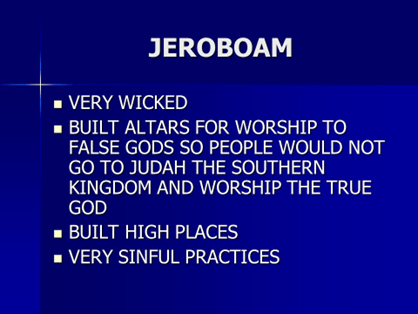
It seems ironic that it took the pagan king of Egypt to wipe out the inhabitants of Gezer. What happened? Perhaps the citizens of Gezer had a very powerful fetish of some kind and the Ephraimites feared that fetish more than they respected the One True Living God. Perhaps the Ephraimites entered into an unwise covenant with the inhabitants of Gezer before they realized who they really were. And perhaps the Ephraimite young people began to intermarry with the Gezerites, leaving their elders with the unenviable option of murdering their own children and grandchildren. All we know is that once more a group settled for less than God’s very best and ultimately paid for it. Ephraim became part of the Northern Kingdom that strayed away from God soon after the death of King Solomon. The sad story of the moral deterioration of Ephraim began when the tribes broke away from King Solomon’s son Rehoboam to follow King Jeroboam. In a bid to lure the Israelites away from Jerusalem, Jeroboam established a huge worship center in Dan in the northeast corner of Israel, about as far away from Jerusalem as possible, and then told the Israelites that it was “too much trouble” for them to travel all that way to Jerusalem to worship. Things continued to go downhill spiritually from there.

APPLICATION: I will restore to you the years that the swarming locust has eaten, the hopper, the destroyer, and the cutter, my great army, which I sent among you.” Joel 2:25 RESTORATION!!! There are many of us for whom this verse from the prophet Joel have brought much comfort. Perhaps we have made foolish choices or have compromised with evil as did the Ephraimites. Now years have gone by and we have had ample time to bitterly regret our mistakes. But God is a Restorer.

 One of the most thrilling testimonies I have ever heard came from a former member of the Hell’s Angels motorcycle gang. This man’s mother was a prayer warrior; for years, she continued to pray for her son while he descended further and further into violence, alcoholism and drug abuse. One night the Holy Spirit moved in this man’s heart and he fled the Hell’s Angels. He hid in a phone booth and called his mother, who called an Assemblies of God pastor in the area where this man was living. The pastor swooped in and took off with the man just as the Hell’s Angels were coming down the road. That man’s life totally changed that night. Later, when I moved to Charleston, S.C., I actually attended church with the man’s mother whose prayers had been answered so well. This wonderful lady confirmed all the details I had previously heard when her son spoke at another church.

What should the Ephraimites have done? Rather than compromising, they should have trusted God and conquered Gezer. Who knows how different the history of the Ephraimites might have been had they gone ahead instead of compromising? Even if the Ephraimites had not succeeded in the beginning, God could still have helped them to conquer eventually.

What can we do if we feel that we have made a mess of our lives? First, understand that God already knows what has happened; you can’t shock or surprise God. Second, pray and ask God to help you. God always listens and He will always help.

PRAYER: Father God, help us! We have made mistakes and now we don’t see any way out of our messes. But You are almighty and already know what we need. Help us to trust You and to expect You to guide us and to protect us. In the mighty Name of King Jesus. Amen.

MARCH 4, 2022 BE STRONG! BE COURAGEOUS! JOSHUA 15:20 – 63 WHAT GOOD IS GOD’S PROMISE IF YOU DON’T ACT ON IT?

March 4, 2022

Joshua 15:20 – 63 “This is the inheritance of the clans of the tribe of Judah. These were the southernmost cities of the tribe of Judah in the Negev toward the border of Edom: Kabzeel, Eder, Jagur, Kinah, Dimonah, Adadah, Kedesh, Hazor, Ithnan, Ziph, Telem, Bealoth, Hazor-hadattah, Kerioth-hezron (that is, Hazor), Amam, Shema, Moladah, Hazar-gaddah, Heshmon, Beth-pelet, Hazar-shual, Beersheba, Biziothiah, Baalah, Iim, Ezem, Eltolad, Chesil, Hormah, Ziklag, Madmannah, Sansannah, Lebaoth, Shilhim, Ain, and Rimmon—twenty-nine cities in all, along with their villages.

These were in the foothills: Eshtaol, Zorah, Ashnah, Zanoah, En-gannim, Tappuah, Enam, Jarmuth, Adullam, Socoh, Azekah, Shaaraim, Adithaim, and Gederah (or Gederothaim)—fourteen cities, along with their villages. Zenan, Hadashah, Migdal-gad, Dilan, Mizpeh, Joktheel, Lachish, Bozkath, Eglon, Cabbon, Lahmas, Chitlish, Gederoth, Beth-dagon, Naamah, and Makkedah—sixteen cities, along with their villages. Libnah, Ether, Ashan, Iphtah, Ashnah, Nezib, Keilah, Achzib, and Mareshah—nine cities, along with their villages.

Ekron, with its towns and villages; from Ekron to the sea, all the cities near Ashdod, along with their villages; Ashdod, with its towns and villages; Gaza, with its towns and villages, as far as the Brook of Egypt and the coastline of the Great Sea.

These were in the hill country: Shamir, Jattir, Socoh, Dannah, Kiriath-sannah (that is, Debir), Anab, Eshtemoh, Anim, Goshen, Holon, and Giloh—eleven cities, along with their villages. Arab, Dumah, Eshan, Janim, Beth-tappuah, Aphekah, Humtah, Kiriath-arba (that is, Hebron), and Zior—nine cities, along with their villages. Maon, Carmel, Ziph, Juttah, Jezreel, Jokdeam, Zanoah, Kain, Gibeah, and Timnah—ten cities, along with their villages. Halhul, Beth-zur, Gedor, Maarath, Beth-anoth, and Eltekon—six cities, along with their villages. Kiriath-baal (that is, Kiriath-jearim), and Rabbah—two cities, along with their villages.

These were in the wilderness: Beth-arabah, Middin, Secacah, Nibshan, the City of Salt, and En-gedi—six cities, along with their villages.

But the descendants of Judah could not drive out the Jebusites who lived in Jerusalem. So to this day the Jebusites live there among the descendants of Judah.”

108 cities with their villages! This was the potential inheritance for the Tribe of Judah. Without going into all the details, you can readily see that the Tribe of Judah received more land than any other tribe. But much of this land was wilderness, desert, or semi – desert. And much of it was already occupied by tribes that had no intention of being conquered. For example, the Philistines occupied the towns of Gaza, Ashkelon, Ekron, Ashdod, and Gath. Nobody ever really conquered the Philistines until the armies   One of the telling remarks was verse 63: “But the descendants of Judah could not drive out the Jebusites who lived in Jerusalem. So to this day the Jebusites live there among the descendants of Judah.”As a city built on a hill, Jerusalem was easily defended. It was not until King David came that a Judean conquered Jerusalem. The story is told in 2 Samuel 5:6 – 9 The king and his men marched to Jerusalem to attack the Jebusites, who lived there. The Jebusites said to David, “You will not get in here; even the blind and the lame can ward you off.” They thought, “David cannot get in here.” Nevertheless, David captured the fortress of Zion—which is the City of David.On that day David had said, “Anyone who conquers the Jebusites will have to use the water shaft to reach those ‘lame and blind’ who are David’s enemies.” That is why they say, “The ‘blind and lame’ will not enter the palace.” David then took up residence in the fortress and called it the City of David. He built up the area around it, from the terraces inward.” Once David had conquered Jerusalem, he went on to defeat the Philistines; however, the Philistines remained a distinct cultural group until they were conquered by the Babylonians in 604 B.C. (https://www.nationalgeographic.com/culture/article/ancient-dna-reveal-philistine-origins) T

Despite the fact that the Tribe of Judah had been allotted so much land, they failed to conquer much of it. The worst part was the spiritually disastrous influence these unconquered people had on the Israelites. God knew what He was doing when He ordered destruction. Once the Israelites began to compromise, it was much easier to continue than to stand firm. And once the Israelite children began to intermarry with these other people groups, new problems arose.

APPLICATION: Compromise! It seems so safe and so easy, and it’s actually so deadly! Around the world, there are numerous examples of government figures who have made compromises, only to find later that these decisions have led to disaster.

The Tribe of Judah had a mandate to go out and completely conquer that relatively enormous chunk of territory. But parts of the land allotted to Judah had very rugged terrain and difficult conditions. Part of the land was occupied by people with sophisticated weapons. In the end, the Tribe of Judah conquered some of the land, but not all of it.

When things are difficult, it is tempting to back off, to relax a little, and to hope that somehow things will turn out all right. But the Book of Proverbs warns us that such thinking is very dangerous! “A little sleep, a little slumber, a little folding of the hands to rest, and poverty will come upon you like a robber, and need like a bandit.” Proverbs 24:33 – 34

Many times, we realize that God is calling us to do something difficult, something great. Our biggest problem is that we look at ourselves and our own resources and strength, forgetting that if God is calling us to do something, it is His responsibility to give us the strength and resources. Gladys Aylward was a poorly educated housemaid in London who felt God calling her to become a missionary in China. The China Inland Mission rejected Gladys, feeling that she could never learn the Chinese language. But Gladys believed that Jehovah God had called her to work in China and she set off across Europe and Russia by train. Eventually, Gladys did make it to China, where she learned the Chinese language quite well and where she fitted in. The story of Gladys Aylward is told in the book The Little Woman. To the end of Gladys’ life, she always trusted Jehovah God to do great and mighty things, and He did.

IS GOD CALLING YOU TO DO SOMETHING WONDERFUL? DON’T LOOK AT YOURSELF! LOOK TO THE SAME GOD WHO GUIDED AND HELPED GLADYS AYLWARD!

PRAYER: Father God, thank You that You do not play favorites! You helped Gladys Aylward and You will help anyone who truly wants to do Your will. Help us to follow hard after You all the days of our lives. In the mighty Name of King Jesus. Amen.

MARCH 3, 2022 BE STRONG! BE COURAGEOUS! JOSHUA 15:13 – 19 WILL YOU ASK GOD FOR THE IMPOSSIBLE?

March 3, 2022

Joshua 15:13 – 19 “In accordance with the Lord’s command to him, Joshua gave to Caleb son of Jephunneh a portion in Judah—Kiriath Arba, that is, Hebron. (Arba was the forefather of Anak.) From Hebron Caleb drove out the three Anakites—Sheshai, Ahiman and Talmai, the sons of Anak. From there he marched against the people living in Debir (formerly called Kiriath Sepher). And Caleb said, “I will give my daughter Aksah in marriage to the man who attacks and captures Kiriath Sepher.” Othniel son of Kenaz, Caleb’s brother, took it; so, Caleb gave his daughter Aksah to him in marriage. One day when she came to Othniel, she urged him to ask her father for a field. When she got off her donkey, Caleb asked her, “What can I do for you?” She replied, “Do me a special favor. Since you have given me land in the Negev, give me also springs of water.” So, Caleb gave her the upper and lower springs.”

THE NEGEV

The Negev is a desert! While there is some grazing, the biggest challenge is water. Without water, neither people nor animals can survive. When Othniel, Caleb’s nephew, conquered Kiriath Sepher/Debir, Caleb gave Othniel his daughter Aksah as a wife. “Othniel” means “God’s strength,” or “God’s lion.” “Aksah” means “adorned.” While Caleb might have had other daughters, obviously he wanted Aksah to marry a man of courage and decision. Caleb evidently gave Aksah land in the Negev as a marriage portion, something commonly done in those days. But now Aksah needed water to make the land useful.

Nobody seems to know the location of the springs to which Aksah is referring. Perhaps the location has been lost, or perhaps during an earthquake, the flow of water shifted or stopped. The location of the springs is not as important as the fact that Aksah was bold enough to ask for them.

Aksah was in an arranged marriage, something quite common in those days. But Caleb had proposed a very strenuous test for any potential groom: the man who would win Aksah must first conquer Kiriath Sepher. When put to the test, Othniel didn’t hesitate but went ahead to take the town. Othniel’s actions demonstrated that he was bold and brave. By traveling on a donkey to Caleb and then requesting for the precious water supply, Aksah proved that she was equally bold and brave. The children of Othniel and Aksah must have really been something!

APPLICATION: Several years ago, a movie came out entitled “Brave.” This cartoon movie depicted a young Scottish girl who was a fearless rider, an excellent archer, and who would explore unknown places, even in the darkest forests. Aksah was probably a lot like the heroine of that movie.

How brave are we? Even though Caleb had given Aksah a good man as a husband and had given her land, Aksah still had to travel to Caleb to ask for the springs of water. There is nothing to indicate that Aksah took anybody else along with her on her journey – something that would be nearly unheard of. Perhaps Aksah was afraid that if she told Othniel where she was going, he might try to stop her out of concern for her safety. But Aksah knew her father and her father knew her as well. Brave Caleb recognized his daughter as being equally brave.

Sometimes as we get older, we become fearful and stop taking risks. We hope that by being careful, we can protect ourselves against any tragedy. But tragedies will occur whether or not we try to be prudent. In 2019 my husband and a friend were driving in a large city when it began raining heavily. While our friend was driving quite sensibly, a huge cargo lorry crossed the center line and ran into our vehicle, knocking it onto its side and destroying it in the process. Blessedly, my husband had only a few scratches and bruises while our friend had a small injury to one leg, but they both survived, thanks to the seatbelts they were wearing. During the recent COVID pandemic, many people became sick or died even though they had taken all kinds of precautions.

If we believe in an almighty God, we should be bold enough to ask for large answers in prayer. At present, believers around the world are interceding for the country of Ukraine. On the face of it, Ukraine has no chance; however, only God can determine the outcome. There is nothing wrong at all in asking the Prince of Peace to bring everlasting peace to the Ukraine situation, and indeed, to the whole world. Hebrews 4:6 tells us, “Let us therefore come boldly to the throne of grace, that we may obtain mercy and find grace to help in time of need.”

PRAYER: Father God, thank You for loving us and for caring for us. Lord, help us to realize that You are far more willing to answer our prayers than we are to pray them. Help us to continue to intercede for all those around us and for the international situation represented by the Ukrainian crisis. Let Your light and Your truth come into that situation and take absolute control. Send Your everlasting peace. In the mighty and precious Name of King Jesus. Amen.
MARCH 2, 2022 BE STRONG! BE COURAGEOUS! JOSHUA 15:1 – 12 GOD ASSIGNS JUDAH THE MOST LAND, BUT IT’S UP TO THEM TO TAKE IT!

March 2, 2022

Joshua 15:1 – 12 “Now the allotment for the clans of the tribe of Judah extended to the border of Edom, to the Wilderness of Zin at the extreme southern boundary:

Their southern border started at the bay on the southern tip of the Salt Sea, proceeded south of the Ascent of Akrabbim, continued on to Zin, went over to the south of Kadesh-barnea, ran past Hezron up to Addar, and curved toward Karka. It proceeded to Azmon, joined the Brook of Egypt, and ended at the Sea. This was their southern border.

The eastern border was the Salt Sea as far as the mouth of the Jordan.

The northern border started from the bay of the sea at the mouth of the Jordan, went up to Beth-hoglah, proceeded north of Beth-arabah, and went up to the Stone of Bohan son of Reuben. Then the border went up to Debir from the Valley of Achor, turning north to Gilgal, which faces the Ascent of Adummim south of the ravine. It continued along the waters of En-shemesh and came out at En-rogel. From there the border went up the Valley of Hinnom along the southern slope of the Jebusites (that is, Jerusalem) and ascended to the top of the hill that faces the Valley of Hinnom on the west, at the northern end of the Valley of the Rephaim. From the hilltop the border curved to the spring of the Waters of Nephtoah, proceeded to the cities of Mount Ephron, and then bent around toward Baalah (that is, Kiriath-jearim). The border curled westward from Baalah to Mount Seir, ran along the northern slope of Mount Jearim (that is, Chesalon), went down to Beth-shemesh, and crossed to Timnah. Then it went out to the northern slope of Ekron, curved toward Shikkeron, proceeded to Mount Baalah, went on to Jabneel, and ended at the Sea. And the western border was the coastline of the Great Sea. These are the boundaries around the clans of the descendants of Judah.

At first, reading this account of the land allotted to Judah could give you brain freeze! To understand what God was doing when He allotted land to Judah, you really do need a map. Although there is territory allotted to the Tribe of Simeon within Judah’s territory, Simeon as a separate group actually was absorbed into Judah. Later on, when the Northern Kingdom of Israel/Samaria split off from the Southern Kingdom of Judah, Judah and Benjamin still had quite a bit of territory. Remember that anything east of the Jordan had been allotted to the tribes of Reuben, Gad, and half of the tribe of Manasseh.

Part of Judah’s inheritance included the Philistine cities of Ashdod, Ekron, Gath, Gaza, and Ashkelon. Despite the fact  that God promised these cities to the Tribe of Judah, they still had to fight for them. Unfortunately, the Philistines were more persistent and continued to live in those cities for several hundred more years. The corrupt Philistine religion remained a constant temptation to the Israelites.

APPLICATION: “When the going gets tough, the tough get going;” however, when the going gets tough, some of us simply quit. There are very few valuable things in life that do not require a great deal of effort. Ask any married couple how much work it is to maintain a healthy relationship, and they will can tell all kinds of stories. Physiotherapists know that rehabilitation from injuries involves pain and persistence. There is no profession that does not require a great deal of study. Thomas Alva Edison, inventor of the light bulb and many other things is quoted as having said that “Genius is 1% inspiration and 99% perspiration.” “Opportunity is missed by most people because it is dressed in overalls and looks like work.” “Everything comes to him who hustles while he waits.”

As long as men such as Joshua and Caleb were leading the Israelites, they did very well in taking the Promised Land. But once some of the extremely determined leaders were gone, the next generation began making excuses.

Has God called you to do something great? Make a start and ask God for more strength and ability! And don’t quit.

PRAYER: Father God, help us to realize that You have far bigger plans for us than we do for ourselves. Help us never to quit or to give up when You are calling us to greatness. In the mighty and precious Name of King Jesus. Amen.

MARCH 1, 2022 BE STRONG! BE COURAGEOUS! JOSHUA 14:1 – 15 CALEB TAKES ON THE GIANTS AND WINS!

March 1, 2022

Joshua 14:1 – 15 “Now these are the portions that the Israelites inherited in the land of Canaan, as distributed by Eleazar the priest, Joshua son of Nun, and the heads of the families of the tribes of Israel. Their inheritance was assigned by lot for the nine and a half tribes, as the LORD had commanded through Moses. For Moses had given the inheritance east of the Jordan to the other two and a half tribes. But he granted no inheritance among them to the Levites.

The descendants of Joseph became two tribes, Manasseh and Ephraim. And no portion of the land was given to the Levites, except for cities in which to live, along with pasturelands for their flocks and herds. So, the Israelites did as the LORD had commanded Moses, and they divided the land.

Then the sons of Judah approached Joshua at Gilgal, and Caleb son of Jephunneh the Kenizzite said to him, “You know what the LORD said to Moses the man of God at Kadesh-barnea about you and me. I was forty years old when Moses the servant of the LORD sent me from Kadesh-barnea to spy out the land, and I brought back to him an honest report.

Although my brothers who went with me made the hearts of the people melt with fear, I remained loyal to the LORD my God. On that day Moses swore to me, saying, ‘Surely the land on which you have set foot will be an inheritance to you and your children forever, because you have wholly followed the LORD my God.

Now behold, as the LORD promised, He has kept me alive these forty-five years since He spoke this word to Moses, while Israel wandered in the wilderness. So here I am today, eighty-five years old, still as strong today as I was the day Moses sent me out. As my strength was then, so it is now for war, for going out, and for coming in. Now therefore give me this hill country that the LORD promised me on that day, for you yourself heard then that the Anakim were there, with great and fortified cities. Perhaps with the LORD’s help I will drive them out, as the LORD has spoken.”

Then Joshua blessed Caleb son of Jephunneh and gave him Hebron as his inheritance. Therefore, Hebron belongs to Caleb son of Jephunneh the Kenizzite as an inheritance to this day, because he wholly followed the LORD, the God of Israel. (Hebron used to be called Kiriath-arba, after Arba, the greatest man among the Anakim.) Then the land had rest from war.”

When I get to heaven, I want to meet Caleb! Of all the people in the Bible, Caleb is one of my favorites. As a young man, Moses chose Caleb to represent the Tribe of Judah when he sent spies from each tribe to investigate the Promised Land. Only Caleb and Joshua brought back good reports; the other ten spies dragged their feet. Despite the fact that the spies brought back a cluster of grapes so big that it took two men to carry it, all they could talk about were the GIANTS that they saw and how they were certain that they appeared as grasshoppers to these giants. (How did they know that God hadn’t made them look LOTS bigger???) The ten cowardly spies managed to terrify many of the Israelites, even while Joshua and Caleb were loudly trying to correct them. You find the story in Numbers 13:25 – 33 “After forty days the men returned from spying out the land, and they went back to Moses, Aaron, and the whole congregation of Israel in the Wilderness of Paran at Kadesh. They brought back a report for the whole congregation and showed them the fruit of the land. And they gave this account to Moses: “We went into the land to which you sent us, and indeed, it is flowing with milk and honey. Here is some of its fruit! Nevertheless, the people living in the land are strong, and the cities are large and fortified. We even saw the descendants of Anak there. The Amalekites live in the land of the Negev; the Hittites, Jebusites, and Amorites live in the hill country; and the Canaanites live by the sea and along the Jordan.”

Then Caleb quieted the people before Moses and said, “We must go up and take possession of the land, for we can certainly conquer it!” But the men who had gone up with him replied, “We cannot go up against the people, for they are stronger than we are!” So, they gave the Israelites a bad report about the land they had spied out: “The land we explored devours its inhabitants, and all the people we saw there are great in stature. We even saw the Nephilim there—the descendants of Anak that come from the Nephilim! We seemed like grasshoppers in our own sight, and we must have seemed the same to them!”

God promised that none of the generation that had refused to believe Him would enter the Promised Land; however, God singled out Caleb for approval. But because My servant Caleb has a different spirit and has followed Me wholeheartedly, I will bring him into the land he has entered, and his descendants will inherit it.” Numbers 14:24 Now Caleb is coming to claim his inheritance at the age of 85!

APPLICATION: AGING WITH ATTITUDE! That’s Caleb! Once God promised Caleb the city of Kiriath – arba and the land around it, Caleb spent the next 45 years looking forward to the day when he would return and take the city, killing any giants who were left. Sometimes at night, Caleb might have sat thanking God for His promises, remembering city lay – out, and asking God for advice on a plan of attack.  By the time Caleb approached Joshua, he already knew how he was going to conquer Kiriath – arba and change it into Hebron. There was no “quit” in Caleb!

Caleb waited 45 years for God to fulfill His promises, but during that time, Caleb continued to remind himself of God’s words. So many times, we ask God for something and when our requests aren’t granted instantly, we lose heart. We need to be a whole lot more like Caleb!

One of the sad things about aging is that sometimes people lose their vision or youthful enthusiasm. It’s easy to become disillusioned when you are waiting for God to fulfill His promises. Some of us are unwilling to wait more than a few months, let alone 45 years as Caleb did. Think about it! Caleb was already 40 when he spied out the Promised Land. At that point, Caleb was probably hoping for a quick entry into the Promised Land with lots of subsequent victories; after all, only a few weeks ago God had delivered the Israelites and had wiped out the Egyptian army while bringing two million people through an arm of the Red Sea on dry land. Caleb had no doubts that if God could do all that, God could certainly handle a few giants. And Caleb refused to believe the grasshopper theory. Why, if the giants viewed the Israelite spies as grasshoppers, didn’t they simply squash them like bugs? Caleb had enough faith to realize that if the giants left the Israelite spies alone, God might have made them appear to be even bigger giants. Perhaps God sent angels with flaming swords to silently accompany the spies so that anyone who saw them was terrified. No matter what God had done, the giants left the spies strictly alone So what might have happened?

Several years ago, when we were living in mid – town Memphis, we found ourselves having to rescue a young man who had run afoul of a gang that was tracking him. This fellow had taken refuge in a local convenience store but he could not venture out for fear of his life. We called a neighbor, who immediately came to our aid. Now our neighbor was tall but skinny and under normal circumstances would never have qualified as a macho man. But that night, when our neighbor entered the store, suddenly he looked like a huge hulk of a man, definitely not someone to attack! The gang members took one look at our neighbor and left the store and the area immediately!

What was Caleb doing during those 45 years? In addition to supporting Moses and then Joshua, Caleb was probably remembering what he had seen at Kiriath – arba and planning how he was going to take the town. As Caleb considered the possibilities, he was also thinking about the lay of the land, considering how best he would launch an attack. As a man of faith, Caleb was undoubtedly praying, asking God to reveal His strategies for taking that land. By the time Caleb stepped forward to claim his promised allotment, he already had plans for conquering that city and eliminating the giants. Caleb was more than ready!

Have you been asking God for something and the answer is still delaying? If God has assured you that He is going to act, then you need to follow Caleb’s example. Begin planning how you will tackle the giants once God gives you the go – ahead. Proverbs 16:3 tells us, “Commit your works to the Lord, and your plans will be achieved.” Don’t worry about the size of the giants; instead, begin planning what you will do once they are gone!

PRAYER: Father God, thank You that You are bigger than any giants we might face. Thank You that You always keep Your promises and if You call us to fight against huge odds, You will be with us in the battle. In the mighty and precious Name of King Jesus. Amen.

FEBRUARY 28, 2022 BE STRONG! BE COURAGEOUS! JOSHUA 13: 1 -14 WHAT WILL YOU DO TO EARN YOUR INHERITANCE???

February 28, 2022

Joshua 13:1 – 14 “Now Joshua was old and well along in years, and the LORD said to him, “You are old and well along in years, but very much of the land remains to be possessed. This is the land that remains: All the territory of the Philistines and the Geshurites, from the Shihor east of Egypt to the territory of Ekron on the north (considered to be Canaanite territory)—that of the five Philistine rulers of Gaza, Ashdod, Ashkelon, Gath, and Ekron, as well as the Avvites; to the south, all the land of the Canaanites, from Mearaha of the Sidonians to Aphek, as far as the border of the Amorites; the land of the Gebalites; and all Lebanon to the east, from Baal-gad below Mount Hermon to Lebo-hamath. All the inhabitants of the hill country from Lebanon to Misrephoth-maim—all the Sidonians—I Myself will drive out before the Israelites. Be sure to divide it by lot as an inheritance to Israel, as I have commanded you. Now therefore divide this land as an inheritance to the nine tribes and the half-tribe of Manasseh.” The other half of Manasseh, along with the Reubenites and Gadites, had received the inheritance Moses had given them beyond the Jordan to the east, just as Moses the servant of the LORD had assigned to them:

The area from Aroer on the rim of the Arnon Valley, along with the city in the middle of the valley, the whole plateau of Medeba as far as Dibon, and all the cities of Sihon king of the Amorites who reigned in Heshbon, as far as the border of the Ammonites; also Gilead and the territory of the Geshurites and Maacathites, all of Mount Hermon, and all Bashan as far as Salecah— the whole kingdom of Og in Bashan, who had reigned in Ashtaroth and Edrei and had remained as a remnant of the Rephaim.

Moses struck them down and dispossessed them, but the Israelites did not drive out the Geshurites or the Maacathites. So Geshur and Maacath dwell among the Israelites to this day. To the tribe of Levi, however, Moses had given no inheritance. The offerings made by fire to the LORD, the God of Israel, are their inheritance, just as He had promised them.

God wanted to give the Israelites a large amount of land; however, the Israelites had to go in and conquer the people who were already living there. As long as Joshua was strong enough to lead the Israelites, they continued to conquer, but now Joshua was elderly and could no longer fight as well as he once did. Unfortunately, the Israelites were adequate followers but without a strong physically vigorous leader, they were more than willing to sit in the cities they had already taken. One commentator notes that the Israelites would get all the land on which they would set their feet. Overall, the Israelites eventually wound up with only about one third of the land they could have had.

Now God is ordering Joshua to divide up the land. Once the land has been allotted, it will be up to the Israelites to conquer the land and to annihilate the occupants. Now there’s a problem. There’s still a large amount of territory to be conquered, but the Israelites don’t appear to be very worried about it. It’s almost as if the Israelites are hoping that God is just going to hand them land without any struggle on their part.

APPLICATION: “NO PAIN, NO GAIN!” Anyone who wants to get into shape knows that there’s no way you can exercise without having some aches and pains. But if you will continue to exercise properly, the aches and pains will eventually get better.

The problem for the Israelites throughout the Book of Joshua was that once Joshua was no longer able to lead effectively, the Israelites didn’t want to take any initiative. It’s as if the Israelites thought that God was just going to drop the Promised Land into their laps without any efforts on their part. Moses had already warned the Israelites that they would have to fight for the land, but they weren’t paying attention. While we might want to criticize the Israelites, the question is, what do we do when faced with a challenge? Those of us who work in other cultures continually find ourselves limited by our command of local languages. In our hospital, we can easily go through five or six different tribal languages in the course of a day in the consulting room. I find myself continually recording new phrases in my efforts to communicate better with my patients and their families. While I do have workers who can translate for me, patients and their families are much happier when I can communicate with them directly. (One of the most useful phrases to learn is “Don’t laugh at me; I’m doing the best that I can!”)

Spiritually, there are lots of temptations to relax once we have reached a certain point; however, our standard is not ourselves but Jesus Christ. Hebrews 12:2 tells us, “Let us fix our eyes on Jesus, the author and perfecter of our faith, who for the joy set before Him endured the cross, scorning its shame, and sat down at the right hand of the throne of God. Although conventional wisdom tells us to compare us with ourselves, Jesus is the perfect Example. May we never give up and may we continue to look to Jesus!

PRAYER: Father God, thank You for loving us and for caring for us. Help us to look to Jesus and not to ourselves or to our friends or colleagues as examples. In the mighty and precious Name of King Jesus. Amen.

FEBRUARY 27, 2022 BE STRONG! BE COURAGEOUS! JOSHUA 12:1 – 24 JOSHUA – THE MAN WHO DIDN’T QUIT!

February 27, 2022

Joshua 12:1 – 24 “Now these are the kings of the land whom the Israelites struck down and whose lands they took beyond the Jordan to the east, from the Arnon Valley to Mount Hermon, including all the Arabah eastward:

Sihon king of the Amorites, who lived in Heshbon. He ruled from Aroer on the rim of the Arnon Valley, along the middle of the valley, up to the Jabbok River (the border of the Ammonites), that is, half of Gilead as well as the Arabah east of the Sea of Chinnereth to the Sea of the Arabah (the Salt Sea), eastward through Beth-jeshimoth and southward below the slopes of Pisgah. Og king of Bashan, one of the remnant of the Rephaim, who lived in Ashtaroth and Edrei. He ruled over Mount Hermon, Salecah, all of Bashan up to the border of the Geshurites and Maacathites, and half of Gilead to the border of Sihon king of Heshbon.

Moses, the servant of the LORD, and the Israelites had struck them down and given their land as an inheritance to the Reubenites, the Gadites, and the half-tribe of Manasseh.

And these are the kings of the land that Joshua and the Israelites conquered beyond the Jordan to the west, from Baal-gad in the Valley of Lebanon to Mount Halak, which rises toward Seir (according to the allotments to the tribes of Israel, Joshua gave them as an inheritance the hill country, the foothills, the Arabah, the slopes, the wilderness, and the Negev—the lands of the Hittites, Amorites, Canaanites, Perizzites, Hivites, and Jebusites): the king of Jericho, one; the king of Ai, which is near Bethel, one; the king of Jerusalem, one; the king of Hebron, one; the king of Jarmuth, one; the king of Lachish, one; the king of Eglon, one; the king of Gezer, one; the king of Debi; the king of Libnah, one; the king of Adullam, one; the king of Makkedah, one; the king of Bethel, one; the king of Tappuah, one; the king of Hepher, one; the king of Aphek, one; the king of Lasharon, one; the king oMadon, one; the king of Hazor, one; the king of Shimron-meron, one; the king of Achshaph, one; the king of Taanach, one; the king of Megiddo, one; the king of Kedesh, one; the king of Jokneam in Carmel, one; the king of Dor in Naphath-dor, one; the king of Goiim in Gilgal, one; and the king of Tirzah, one. So, there were thirty-one kings in all.”

Reading this list is a bit tedious, but Joshua wanted to make sure that his people knew exactly how many kings he had conquered. We know for sure that Og King of Bashan and Sihon king of the Amorites definitely fell to the Israelites because it was their land that Moses gave to the tribes of Gad, Reuben, and the half – tribe of Manasseh.  But Joshua didn’t take over leadership until the Israelites were crossing the Jordan.

The big question is this: did Joshua actually defeat all those thirty – one kings? Certainly, Ai, Bethel, and Jericho fell before Joshua and his men. We really can’t be sure about some of these other kings because later the Israelites had to fight battles in several of those places, Hebron being a prime example. Did Joshua really conquer all these kings, or is this another example of a stylized conquest account?

Perhaps Joshua really did conquer these kings; however, if the people under these kings were not totally annihilated, they may have survived to plague the Israelites later. Perhaps Joshua conquered some leaders but left others. In addition, while some cities may have been conquered, others might later have come into prominence. The important thing is that Joshua never quit, even when he was quite elderly.

APPLICATION: One of the biggest temptations as one ages is to relax and stop working or learning new things. But is this God’s plan for our lives or ours? God allows us to live so that we will learn and gain experience and go on to use what we have learned to help others. Retirement is NOT in the Bible! Deuteronomy 34:7 describes Moses this way: Moses was a hundred and twenty years old when he died, yet his eyes were not weak nor his strength gone.” In the New Testament, the Apostle John was probably in his nineties when he was exiled to Patmos and recorded the visions captured in the Book of Revelation.

Even if Joshua was in his twenties when the Exodus took place, he was at least in his sixties by the time the Israelites crossed the Jordan. Add another twenty years to conquer these thirty – one kings, and Joshua is probably now in his eighties. What can we learn from Joshua?

  1. Joshua did everything he could to fulfill God’s purpose for his life, often against overwhelming odds.
  2. Joshua made every effort to get the Israelites to carry out God’s plans for the conquest of Canaan, even when the Israelites weren’t as enthusiastic.
  3. Joshua never quit.

As we age, we may need to re – invent ourselves; however, this does not mean that we must back off and quit. Some of the healthiest older patients I have cared for as a doctor were those who have been passionately involved in all kinds of activities. One of my favorite stories concerns my grandmother. When my grandmother was in her middle eighties, she was still living out on the farm, maintaining her flower garden, and caring for her chickens, selling free – range eggs to a long list of regular customers. Grandma regularly drove herself into town to the Senior Citizens meetings. Was she a member? Are you kidding! Grandma didn’t consider herself a senior citizen; she was going in to town to play the piano “to cheer up the old folks.” Some of the “old folks” to whom Grandma was referring were thirty years younger than she was! As we age, may we remember Moses and Joshua and may we continue to find ways to be helpful and useful.

PRAYER: Father God, help us to follow hard after You all the days of our lives. Help us to continue to look for new ways to be helpful and useful. In the mighty and precious Name of King Jesus. Amen.
FEBRUARY 26, 2022 BE STRONG! BE COURAGEOUS! JOSHUA 11:16 – 23 WHO DOESN’T WANT REST???

February 26, 2022

Joshua 11:16 – 23 “So Joshua took this entire region: the hill country, all the Negev, all the land of Goshen, the western foothills, the Arabah, and the mountains of Israel and their foothills, from Mount Halak, which rises toward Seir, as far as Baal-gad in the Valley of Lebanon at the foot of Mount Hermon. He captured all their kings and struck them down, putting them to death.

Joshua waged war against all these kings for a long period of time. No city made peace with the Israelites except the Hivites living in Gibeon; all others were taken in battle. For it was of the LORD to harden their hearts to engage Israel in battle, so that they would be set apart for destruction and would receive no mercy, being annihilated as the LORD had commanded Moses.

At that time Joshua proceeded to eliminate the Anakim from the hill country of Hebron, Debir, and Anab, and from all the hill country of Judah and of Israel. Joshua devoted them to destruction, along with their cities. No Anakim were left in the land of the Israelites; only in Gaza, Gath, and Ashdod did any survive.

So, Joshua took the entire land, in keeping with all that the LORD had spoken to Moses. And Joshua gave it as an inheritance to Israel according to the allotments to their tribes. Then the land had rest from war.”

“REST FROM WAR!” What a wonderful idea! Joshua is promising his people that one day they will complete the conquest of Canaan and there will be rest from war. But did Joshua really eliminate the Anakim, the giants? Actually, no. Joshua 13:1 tells us, “Now Joshua was old and well along in years, and the LORD said to him, “You are old and well along in years, but very much of the land remains to be possessed.” This passage from Joshua 11 would seem to indicate that Joshua had completely conquered Hebron with its giants, and yet in Joshua 14:10 – 12 Caleb says this: “Now behold, as the LORD promised, He has kept me alive these forty-five years since He spoke this word to Moses, while Israel wandered in the wilderness. So here I am today, eighty-five years old, 11still as strong today as I was the day Moses sent me out. As my strength was then, so it is now for war, for going out, and for coming in. Now therefore give me this hill country that the LORD promised me on that day, for you yourself heard then that the Anakim were there, with great and fortified cities. Perhaps with the LORD’s help I will drive them out, as the LORD has spoken.”

HUH??? What’s going on here? At the end of Joshua 11, Joshua claims to have ELIMINATED the Anakim “from the hill country of Hebron, Debir, and Anab, and from all the hill country of Judah and of Israel. Joshua devoted them to destruction, along with their cities. No Anakim were left in the land of the Israelites; only in Gaza, Gath, and Ashdod did any survive.” Now we see that there are still giants in Hebron and that it has yet to be conquered. Once again it would seem that Joshua is continuing to follow the conquest account formula. Perhaps Joshua was hoping that by publishing this account, the Israelites would actually go on to conquer all of the land. (Eventually they only conquered one third of the land God had promised them.) Even in the midst of this stylized account, there are still glimmers of truth. “Joshua waged war against all these kings for a long period of time.”  That is undoubtedly a true statement.

What is most important here is the final sentence. “Then the land had rest from war.” Who doesn’t want rest? It’s likely that Joshua concluded this account with that statement, both as an assurance and as a hope. In Joshua 13, Caleb mentions that he is 85 years old; Joshua is likely about that same age or even slightly older. Although Caleb affirms that he is still in good shape, Joshua makes no such statements. Joshua knows that he is aging and that there is still a lot left to do if the Promised Land is going to be thoroughly conquered. Joshua is doing everything he can to encourage those who come after him that if they will follow God’s plan, they will get God’s results, peace.

APPLICATION: Few things are more frustrating than to be a pioneer with high hopes, only to watch others coming after you who have failed to catch the same vision that has inspired you. One perfect example of this is the Walmart corporation. When Bill Walton began the company, he boasted that everything sold was made in America. At that time, Walmart workers enjoyed great benefits and even sponsorship for further education. Once Bill Walton died, everything changed. Go to a Walmart these days, and you will be lucky to find a few human clerks at the checkout counters! Most of the things sold are made outside America. Bill Walton’s dream has turned into a nightmare for thousands if not millions of small businesses who have closed because they cannot compete with the low prices at Walmart.

Joshua did the best he could with the people he had and the circumstances he faced. If the reality failed to match up to the ideals expressed in Joshua’s conquest account, it was not through any fault of Joshua’s.

There’s an old hymn that sums up the feelings of many of us.

There is rest for the weary,
There is rest for you.
On the other side of Jordan,
In the sweet fields of Eden,
Where the tree of life is blooming,
There is rest for you.”

As I am writing this, Russia is attacking Ukraine and Christians all over the world are praying intensely for Ukraine. There are religious conflicts in various parts of the world. Economies and families are in trouble as a result of COVID.

The Rolling Stones had a song entitled “Give Me Shelter!” At this point, many of us can identify with that sentiment!

Where can we find true shelter?

Matthew 11:28 – 30 gives us the answer. “Come to me, all you who are weary and burdened, and I will give you rest. Take my yoke upon you and learn from me, for I am gentle and humble in heart, and you will find rest for your souls. For my yoke is easy and my burden is light.” Jesus also told his disciples on the night before he was betrayed, I have told you these things, so that in me you may have peace. In this world you will have trouble. But take heart! I have overcome the world.” (John 16:33)

True peace is found in knowing Jesus Christ as Savior from our sins and Lord of our lives. When we try to run things ourselves, sooner or later, we will end up in a mess. When we confess our sins and ask Jesus to organize our lives for us, we will know true peace, even when things are falling apart. Those Ukrainian Christians who are praying for their country are in agony because they want peace for their country; however, they themselves do have peace because they know Jesus, who is the Prince of Peace.

PRAYER: Father God, thank You for Your promises of peace throughout Your Word. Lord, help all who read this to put their trust in You, so that they can find true and lasting peace. In the mighty Name of King Jesus. Amen.