Archive for the ‘Uncategorized’ Category

FEBRUARY 25, 2022 BE STRONG! BE COURAGEOUS! JOSHUA 11:1 – 15 JOSHUA’S NORTHERN CAMPAIGN BLITZKRIEG

February 25, 2022

FEBRUARY 25, 2022 BE STRONG! BE COURAGEOUS! JOSHUA 11:1 – 15 JOSHUA’S NORTHERN CAMPAIGN

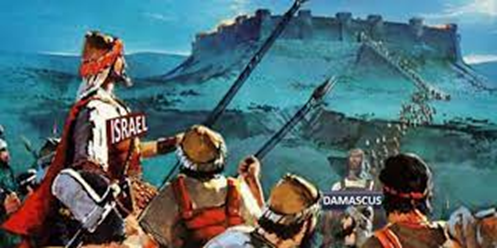
Joshua 11:1 – 15 “Now when Jabin king of Hazor heard about these things, he sent word to Jobab king of Madon, to the kings of Shimron and Achshaph, to the kings of the north in the mountains, in the Arabah south of Chinnereth, in the foothills, and on the slopes of Dor to the west, to the Canaanites in the east and west, to the Amorites, Hittites, Perizzites, and Jebusites in the hill country, and to the Hivites at the foot of Hermon in the land of Mizpah.

So, these kings came out with all their armies, a multitude as numerous as the sand on the seashore, along with a great number of horses and chariots. All these kings joined forces and encamped at the waters of Merom to fight against Israel.

Then the LORD said to Joshua, “Do not be afraid of them, for by this time tomorrow I will deliver all of them slain before Israel. You shall hamstring their horses and burn up their chariots.” So, by the waters of Merom, Joshua and his whole army came upon them suddenly and attacked them, 8and the LORD delivered them into the hand of Israel, who struck them down and pursued them all the way to Greater Sidon and Misrephoth-maim, and eastward as far as the Valley of Mizpeh. They struck them down, leaving no survivors. Joshua treated them as the LORD had told him; he hamstrung their horses and burned up their chariots.

At that time Joshua turned back and captured Hazor and struck down its king with the sword, because Hazor was formerly the head of all these kingdoms. The Israelites struck down everyone in Hazor with the sword, devoting them to destruction. Nothing that breathed remained, and Joshua burned down Hazor itself.

Joshua captured all these kings and their cities and struck them down with the sword. He devoted them to destruction, as Moses the LORD’s servant had commanded. Yet Israel did not burn any of the cities built on their mounds, except Hazor, which Joshua burned.

The Israelites took for themselves all the plunder and livestock of these cities, but they struck down all the people with the sword until they had completely destroyed them, not sparing anyone who breathed. As the LORD had commanded His servant Moses, so Moses commanded Joshua. That is what Joshua did, leaving nothing undone of all that the LORD had commanded Moses.”

Yesterday we discussed the possibility that Joshua 10 and 11 actually represent ancient conquest accounts and are not totally factual but idealized accounts that were intended to encourage the Israelites. Such accounts were common throughout the ancient world and included language of annihilation, repetitive and redundant language, hyperbole, common narrative structure, and focus on the leader. If you examine these verses from Joshua 11, you can see the same elements. The opposing forces are described as being “as numerous as the sand on the seashore.” These verses describe complete destruction of the enemy armies, as well as all of the people in their cities, “not sparing anyone who breathed.” Joshua and his men supposedly traveled extremely long distances over rugged terrain with multiple changes in altitude to complete the conquest. Joshua burned all the chariots and hamstrung all the horses.

Did Joshua actually fight the enemies described in these verses? Most certainly! Did God help Joshua? Yes! But when archaeologists have excavated in the tells representing many of these cities, they have not uncovered a uniform level of destruction for a given time period; instead, the cities evidently were destroyed over a period of up to 200 years.

These accounts give us an insight into the heart of Joshua. Most Talmudic scholars believe that Joshua did write most of the book, right up to the part describing his death. If Joshua wrote Chapters 10 and 11, this might explain the reasons behind the idealized descriptions of the campaigns. Joshua was a military leader, and military leaders commonly generated conquest accounts describing their victories in the most glowing terms. One of the things that sets Joshua’s accounts apart from those of the Egyptians and the Babylonians is that Joshua gives credit to God for guiding and strengthening the Israelites. Joshua also may have written these accounts in the hopes of encouraging those who would succeed him. Conquest accounts were also written to encourage the general public that the leader was bringing order and peace to a situation. Joshua wanted to make sure that the Israelites remembered that God was on their side.

APPLICATION: Joshua truly was a man of great faith and great accomplishments, a man whom God used mightily. Nobody else could have possibly taken over leadership from Moses. Joshua had served Moses and had been mentored by him for most of the forty years in the wilderness. There is no doubt that Joshua did win many great battles against enormous odds. There is also the possibility that new archeological discoveries may yet further substantiate Joshua’s accounts.

What lessons should we take from Joshua’s descriptions of his campaigns? Joshua emphasized the need for persistently combating evil. Many times, we only confront evil when it is convenient or we know we are unlikely to suffer; however, the real test of character comes when our stand for righteousness may cost us our jobs, our homes, or even our lives. God has allowed Joshua’s accounts of his campaigns to remain as part of His Word as an encouragement, not only to the ancient Israelites, but to everyone who stands for righteousness. In some parts of Africa, Asia, and India, Christians are being tortured or dying for their faith. Certainly, remembering Joshua’s descriptions of God’s watch care can strengthen one’s resolve.        

Before judging Joshua too harshly for exaggerating, let’s think about the times when we have said such things as “Wow! I was DYING out in that heat today!” “I thought this day would NEVER end!” “I have no idea how my boss thinks I can possibly get through all this work!” We weren’t really dying; we were uncomfortable. All days end sooner or later. And many times, our problems with our work load involve our refusal to tackle things promptly and thoroughly. Joshua’s story should encourage each of us to realize that when God has called us to do something, He will give us the strength and the guidance to make it.

PRAYER: Father God, thank You for loving us and for caring for us. Thank You for the example of Joshua, who pursued his enemies, carrying out Your plans and who never wavered. Help us to be faithful as we follow You. In the matchless Name of Jesus. Amen.

FEBRUARY 24, 2022 BE STRONG! BE COURAGEOUS! JOSHUA 10:28 – 43 DID JOSHUA REALLY MOP UP? THE CAMPAIGNS THAT NEVER REALLY HAPPENED!

February 24, 2022

Joshua 10:28 – 43 “On that day Joshua captured Makkedah and struck it down with the sword, along with its king. He devoted to destruction everyone in the city, leaving no survivors. So he did to the king of Makkedah as he had done to the king of Jericho.

Then Joshua and all Israel with him moved on from Makkedah to Libnah and fought against Libnah. And the LORD also delivered that city and its king into the hands of Israel, and Joshua struck down all the people with the sword, leaving no survivors. And he did to the king of Libnah as he had done to the king of Jericho.

And Joshua and all Israel with him moved on from Libnah to Lachish. They laid siege to it and fought against it. And the LORD delivered Lachish into the hands of Israel, and Joshua captured it on the second day. He struck down all the people with the sword, just as he had done to Libnah.

At that time Horam king of Gezer went to help Lachish, but Joshua struck him down along with his people, leaving no survivors.

So Joshua moved on from Lachish to Eglon, and all Israel with him. They laid siege to it and fought against it. That day they captured Eglon and struck it down with the sword, and Joshua devoted to destruction everyone in the city, just as he had done to Lachish.

Then Joshua and all Israel with him went up from Eglon to Hebron and fought against it. They captured it and struck down with the sword its king, all its villages, and all the people. Joshua left no survivors, just as he had done at Eglon; he devoted to destruction Hebron and everyone in it.

Finally Joshua and all Israel with him turned toward Debir and fought against it. And they captured Debir, its king, and all its villages. They struck them down with the sword and devoted to destruction everyone in the city, leaving no survivors. Joshua did to Debir and its king as he had done to Hebron and as he had done to Libnah and its king.

So Joshua conquered the whole region—the hill country, the Negev, the foothills, and the slopes, together with all their kings—leaving no survivors. He devoted to destruction everything that breathed, just as the LORD, the God of Israel, had commanded. Joshua conquered the area from Kadesh-barnea to Gaza, and the whole region of Goshen as far as Gibeon.

And because the LORD, the God of Israel, fought for Israel, Joshua captured all these kings and their land in one campaign. Then Joshua returned with all Israel to the camp at Gilgal.”

While a few fighting men from the five royal cities might have escaped the original battle, allegedly, nobody escaped Joshua’s subsequent campaigns. But did these campaigns really happen as described in these two chapters? Probably not.

In a series of fascinating analytical articles, the web site https://biblicalhistoricalcontext.com/ raises a number of questions and points out the fact that the descriptions of the Southern Campaign and the Northern Campaign in Joshua 10 and 11 are not actually historical descriptions of what happened, but instead are a perfect example of “Ancient Conquest Accounts.” Such accounts were common throughout the ancient world and included language of annihilation, repetitive and redundant language, hyperbole, common narrative structure, and focus on the leader. The ancient Egyptians, for example, recorded numerous such claims on various stone pillars called steles. These accounts were not intended to be factual but rather to indicate that a leader had restored order out of chaos. In one fascinating example, Ramses III claimed to have annihilated the “Peleset,” the Sea People, when he actually used them as mercenaries and then settled them in the cities of Gaza, Ashkelon, and Ashdod. (The Peleset became the Philistines.) (The series is too long to quote everything here; however, I highly recommend that you read the whole series of articles on https://biblicalhistoricalcontext.com/).

Archaeologists attempting to prove the veracity of the “blitzkrieg” campaigns of Joshua have been unable to do so. While many ancient cities were destroyed, they were not all destroyed in the same time period, but rather over the space of roughly 200 years. Later on, the Book of Judges points out that at Joshua’s death, there was still a great deal of land to be conquered; if the Canaanites had actually been wiped out completely, there shouldn’t have been anything left to conquer. There are also the physical challenges represented by the narrative. Again, biblicalhistoricalcontext.com makes the following points:

“This would be a journey of 44.5 miles/71.5 km. And the record tells us that it happened in one day. Bear in mind a few things: 1. They began the journey at Gilgal, which is around 400 m. below sea level, they went up to Gibeon, which is around 770 m. above sea level., and then down the Ascent of Beth – horon to Azekah, which is around 250 m. above sea level. So the Israelite army had altitude changes of almost 1.7 km, just over a mile. 2. They would have had to carry supplies of food and water. 3. Over the course of that one day the Israelites started with a forced early morning march from one of the lowest places on earth to one of the highest in Canaan. When they arrived, they fought a battle against a coalition of 5 armies. They chased those who’d retreated down a long and steep canyon and continued picking them off over a distance of many miles of Canaanite country to Azekah.” Anyone who has ever been to Israel knows that there are practically no flat spots and that the terrain is rugged, making it nearly impossible for these events to have occurred in this fashion.

When you look at the accounts in both Joshua 10 and 11, you realize that they appear to be following a formula and that they are emphasizing the importance of the leader. Why write this way? Ancient conquest accounts were propaganda intended to encourage people that their divinely appointed ruler had everything under control. Remember that the Israelites, including Joshua, came out of Egypt, where they had undoubtedly encountered such writing. The purposes of such writing was to “demonstrate the leader’s prowess in battle, to list off their achievements, and to claim divine favour.” Even the account of Joshua’s prayer to God to stop the sun follows the leader – focused formula.

If these two chapters are actually some kind of propaganda, why did God allow them to be included in the Book of Joshua? God always meets people where they are and as they are. The ancient Israelites were people of their time, and these two chapters represent one of the ways by which they encouraged themselves. These two chapters represent the hopes the Israelites had for a quick conquest and their attempts to remind themselves that they had a divinely – appointed leader. These two chapters are a snapshot into the minds and hearts of the Israelites. After these two chapters, the Book of Joshua returns to historical narrative.

APPLICATION: It’s tempting to sneer at the ancient Israelites and their conquest literature, but history is always written by the victors, not by the defeated. Watch any kind of sport and listen to the announcers and you can hear “conquest accounts” being developed right on the air! It is a human tendency to emphasize our successes and to put ignore our failures as much as possible. But what happens if you begin believing your own propaganda? At that point, you are in danger of becoming a legend in your own mind and your own little god.

When the ancient Romans held triumphal marches in Rome, there was one individual whose job it was to walk alongside the conqueror and continually whisper in his ear, “Remember, Caesar, you too are mortal!” Each of us needs to realize that we continue to exist only by the grace and mercy of Almighty God, who loves us even when we are fooling ourselves about our own importance.

PRAYER: Father God, thank You for loving us and for caring for us. Thank You for preserving accounts so that we can better understand the hopes and dreams of those who came before us. In the mighty and precious Name of King Jesus. Amen.
FEBRUARY 23, 2022 BE STRONG! BE COURAGEOUS! JOSHUA 10:16 – 27 EVIL THAT IS NOT COMPLETELY DEFEATED WILL ALWAYS RETURN!

February 23, 2022

Joshua 10:16 – 27 Now the five kings had fled and hidden in the cave at Makkedah. When Joshua was told that the five kings had been found hiding in the cave at Makkedah, he said, “Roll large rocks up to the mouth of the cave, and post some men there to guard it. But don’t stop; pursue your enemies! Attack them from the rear and don’t let them reach their cities, for the Lord your God has given them into your hand.”

So Joshua and the Israelites defeated them completely, but a few survivors managed to reach their fortified cities. The whole army then returned safely to Joshua in the camp at Makkedah, and no one uttered a word against the Israelites. Joshua said, “Open the mouth of the cave and bring those five kings out to me.” So they brought the five kings out of the cave—the kings of Jerusalem, Hebron, Jarmuth, Lachish and Eglon. When they had brought these kings to Joshua, he summoned all the men of Israel and said to the army commanders who had come with him, “Come here and put your feet on the necks of these kings.” So they came forward and placed their feet on their necks.

 Joshua said to them, “Do not be afraid; do not be discouraged. Be strong and courageous. This is what the Lord will do to all the enemies you are going to fight.” Then Joshua put the kings to death and exposed their bodies on five poles, and they were left hanging on the poles until evening. At sunset Joshua gave the order and they took them down from the poles and threw them into the cave where they had been hiding. At the mouth of the cave they placed large rocks, which are there to this day.

During that extra – long day, Joshua and the Israelites cleanly defeated the Amorites and captured the kings of all five major cities Jerusalem, Hebron, Jarmuth, Lachish and Eglon. Relatively speaking, Joshua and his men covered a lot of territory! Joshua commanded his men to make a complete end of the Amorite forces; nevertheless, “a few survivors managed to reach their fortified cities.” The people of those cities must have been terrified! All five cities were royal cities with large armies. Now only a handful of men were returning to describe the fighting and the monster hailstones that had rained down on them. Why were there any survivors?

It’s likely that once the five kings were captured, many of Joshua’s men wanted to sit down and rest. After all, with the commanders in that cave, what could the rest of these armies do? But Joshua knew that God wanted to make a complete end of the Amorites; that’s why he said, “Roll large rocks up to the mouth of the cave, and post some men there to guard it. But don’t stop; pursue your enemies! Attack them from the rear and don’t let them reach their cities, for the Lord your God has given them into your hand.” Back in Genesis 15, God told Abraham that “the iniquity of the Amorites was not yet complete.” At that point, there were still honorable men left among the Amorites; however, now was the day of destruction that God had assigned for them. It’s possible that had Joshua’s men not tried to rest, they might have completely wiped out the armies of all five cities.

The symbolism of putting one’s feet on the necks of the enemies is a powerful one. Joshua wanted the army commanders to carry out this act so that they would remember how victory felt the next time they engaged in battle. Given a taste of success, these men would be far more likely to move forward, even in the face of overwhelming opposition.

APPLICATION: Evil that is not dealt with COMPLETELY will always return! There is a line from the movie “Hook.” An aging Peter Pan, played by Robin Williams, has settled in London, where he has become a lawyer and has forgotten his dreams…. Until a night of horror in which his children are kidnapped and carried off to Never Never Land by his old arch – enemy Captain Hook. An over – weight, out of shape Peter Pan must return to Never Never Land to defeat Captain Hook once and for all. At one point, Hook threatens Peter, “Peter. I swear to you wherever you go, wherever you are, I vow there will always be daggers buried in notes signed James Hook. They will be flung into doors of your children’s children’s children, do you hear me?” Hook goes on to tell Peter that if he does not kill Hook now, Hook will come back for Peter’s grandchildren. Peter does kill Hook, thus saving his descendants from the particular evil that Hook represents.

Joshua’s armies did well; however, they did not completely wipe out the fighting men from the five cities. Eventually, they had to attack each of these cities separately and the conquest was difficult.

One of the temptations of aging is to retire from moral battles, giving the excuse that others who are younger should lead the fight. But many times, only age and experience can adequately prepare one for seeing the evil in apparently innocuous situations without descending into paranoia. Recently, our mission hospital had the chance to participate in a program funded from overseas donors. In the beginning, the program appeared excellent; however, as we explored the processes involved in applying for the second round of funding, we realized that the conditions for accepting these monies would compromise our stance as a mission institution. Once committed, we would not only be caught ourselves, but our further participation might be used as an example for others.

There is a saying, “As the twig is bent, so is the tree inclined.” Early influences are critically important. By encouraging the Israelites to totally annihilate their enemies, Joshua was trying to set the tone for the rest of the conquest of Canaan. Those army commanders would always remember the day they set their feet on the necks of the five enemy kings and then watched them be hanged.

PRAYER: Father God, help us to realize that with Your help, we can make a complete conquest of those situations that confront us. Help us also to remember that successful endings only come from proper beginnings. We must begin as we mean to go on. Help us always to look to You, for without Your guidance, we might easily be duped by the Evil One. In the matchless Name of King Jesus. Amen.

FEBRUARY 22, 2022 BE STRONG! BE COURAGEOUS! JOSHUA 10:1 – 15 GOD CAN EVEN MAKE THE SUN STAND STILL WHEN NECESSARY!

February 22, 2022

Joshua 10:1 – 15 “Now Adoni-Zedek king of Jerusalem heard that Joshua had taken Ai and totally destroyed it, doing to Ai and its king as he had done to Jericho and its king, and that the people of Gibeon had made a treaty of peace with Israel and had become their allies. He and his people were very much alarmed at this, because Gibeon was an important city, like one of the royal cities; it was larger than Ai, and all its men were good fighters. So Adoni-Zedek king of Jerusalem appealed to Hoham king of Hebron, Piram king of Jarmuth, Japhia king of Lachish and Debir king of Eglon.  “Come up and help me attack Gibeon,” he said, “because it has made peace with Joshua and the Israelites.”

Then the five kings of the Amorites—the kings of Jerusalem, Hebron, Jarmuth, Lachish and Eglon—joined forces. They moved up with all their troops and took up positions against Gibeon and attacked it. The Gibeonites then sent word to Joshua in the camp at Gilgal: “Do not abandon your servants. Come up to us quickly and save us! Help us, because all the Amorite kings from the hill country have joined forces against us.”

So Joshua marched up from Gilgal with his entire army, including all the best fighting men. The Lord said to Joshua, “Do not be afraid of them; I have given them into your hand. Not one of them will be able to withstand you.”

After an all-night march from Gilgal, Joshua took them by surprise.  The Lord threw them into confusion before Israel, so Joshua and the Israelites defeated them completely at Gibeon. Israel pursued them along the road going up to Beth Horon and cut them down all the way to Azekah and Makkedah.  As they fled before Israel on the road down from Beth Horon to Azekah, the Lord hurled large hailstones down on them, and more of them died from the hail than were killed by the swords of the Israelites.  On the day the Lord gave the Amorites over to Israel, Joshua said to the Lord in the presence of Israel:

“Sun, stand still over Gibeon, and you, moon, over the Valley of Aijalon.”  So the sun stood still, and the moon stopped, till the nation avenged itself on its enemies, as it is written in the Book of Jashar. The sun stopped in the middle of the sky and delayed going down about a full day. There has never been a day like it before or since, a day when the Lord listened to a human being. Surely the Lord was fighting for Israel!  Then Joshua returned with all Israel to the camp at Gilgal.”

The Gibeonites made peace with Israel; however, the other Amorite cities had already been calling for a coordinated attack on the Israelites. When the word went out that Gibeon had caved in and made a treaty, the other Amorite groups were incensed and terrified at the same time. Five Amorite kings banded together to deal with Gibeon, following which they intended to attack the Israelites. The Gibeonites now appealed to Joshua to honor his treaty and deliver them from this attack. While Joshua had been hasty in his treaty – making, God was using this as an opportunity to conclusively deal with the Amorites. It is possible that had the Amorites not mounted an attack, Joshua might have dithered about attacking them. But now Joshua had no choice, and God was about to do more miracles. Two major weather events happened nearly simultaneously: one of the earliest recorded solar eclipses and a fierce hailstorm.

Did the sun really stand still? The Times of Israel says this: “Cambridge researchers announced Monday that they have pinpointed the date of the biblical account of Joshua stopping the sun — which they claim is the day of the oldest eclipse ever recorded — to October 30, 1207 BCE, exactly 3,224 years ago. https://www.timesofisrael.com/3224-years-later-scientists-see-first-ever-recorded-eclipse-in-joshuas-battle/ But if this was a solar eclipse, it would have to have been an abnormally lengthy one, since most eclipses last only a few minutes. Joshua ordered the sun to stand over Gibeon to the east while the moon stood over the Valley of Aijalon, to the west. Personally, I feel God did miracles. This is the same God who parted the Red Sea and dammed up the Jordan River when it was in flood. What’s one or two more miracles after those events?

APPLICATION: God is our Redeemer, and many times He redeems our mistakes by arranging events. Even though Joshua had made a major mistake in making a treaty with the Gibeonites, God still used that treaty to impel Joshua to fight the Amorites. God did not reject Joshua for that mistake but honored him for fulfilling his commitment to the people of Gibeon. God also did miracles for Joshua and the Israelites.

Three of God’s most amazing qualities are His mercy, His grace, and His faithfulness in keeping promises. We don’t deserve any of the good things that God provides for us daily, but yet He gives us life and breath and blessings to enjoy. Joshua and the Israelites didn’t deserve God’s mercy and His grace; however, just as Joshua had promised to protect the Gibeonites, God also had promised Joshua that He would be with Joshua wherever Joshua went. God promised Joshua that as He had been with Moses, so He would be with Joshua. When Joshua needed more daylight and more assistance, God gave it.

Do you feel as if you are trapped in a corner with no way out? Perhaps a work situation has turned sour. Perhaps friends have failed you. Perhaps you were counting on someone to help you, only to find that they now have changed their minds. There is no doubt that sooner or later, people will fail you because they are only human. But God will never fail you. Ask God to show you what He wants you to do in your situation. Perhaps God has already designed a way out, and you have only to ask Him for Him to show you.

PRAYER: Father God, help! Many of us feel caught in situations that we never anticipated. We don’t know which way to turn. We may not have anybody we can trust. Lord, You know our needs. Come to our aid and help us to see Your Perfect Will for our lives. In the matchless Name of King Jesus. Amen.

FEBRUARY 21, 2022 BE STRONG! BE COURAGEOUS! JOSHUA 9:16 – 27 ACT IN HASTE, REPENT IN LEISURE – ONE WRONG DECISION CAN ECHO FOR CENTURIES

February 21, 2022

Joshua 9:16 – 27 “Three days after they had made the treaty with the Gibeonites, the Israelites learned that they were neighbors, living among them. So the Israelites set out and on the third day arrived at their cities—Gibeon, Chephirah, Beeroth, and Kiriath-jearim. But the Israelites did not attack them, because the leaders of the congregation had sworn an oath to them by the LORD, the God of Israel. And the whole congregation grumbled against the leaders. All the leaders answered, “We have sworn an oath to them by the LORD, the God of Israel, and now we cannot touch them. This is how we will treat them: We will let them live, so that no wrath will fall on us because of the oath we swore to them.” They continued, “Let them live, but let them be woodcutters and water carriers for the whole congregation.” So the leaders kept their promise.

THE GIBEONITES FOOL JOSHUA AND THE ELDERS

Then Joshua summoned the Gibeonites and said, “Why did you deceive us by telling us you live far away from us, when in fact you live among us? Now therefore you are under a curse and will perpetually serve as woodcutters and water carriers for the house of my God.”

The Gibeonites answered, “Your servants were told clearly that the LORD your God had commanded His servant Moses to give you all the land and wipe out all its inhabitants before you. So we greatly feared for our lives because of you, and that is why we have done this. Now we are in your hands. Do to us as it seems good and right to you.”

So Joshua did this and delivered them from the hands of the Israelites, and they did not kill the Gibeonites. On that day he made them woodcutters and water carriers, as they are to this day, for the congregation of the LORD and for the altar at the place He would choose.”

Joshua and the elders of Israel have created a terrible mess! When the Gibeonites showed up, fawning on the elders and describing the long journey they had taken and offering moldy bread as evidence of that journey, NONE of the elders or Joshua thought to ask the Lord if these people were telling the truth. Now it’s three days later, and the Israelites have just learned that the Gibeonites are near neighbors and should have been annihilated along with the other Amorite tribes.

This is not Joshua’s finest hour; his people are thoroughly disgusted. But a treaty has already been made, and Joshua and the elders must abide by that treaty. All they can do is to subjugate the Gibeonites and make them servants. The Gibeonites are vastly relieved; they have feared that Joshua would go back on his word and they would be wiped out. Centuries later, there are still Gibeonites living around Jerusalem as a result of this hastily – conceived treaty.

The story of Joshua’s hasty treaty with the Gibeonites is surprising, given the fact that Joshua generally did seek God’s will. But this story illustrates the fact that any one of us can make a major mistake, no matter how devout we are.

One of the amazing things is that the Gibeonite clearly had heard all about God’s commands to the Israelites. The word had evidently gone out throughout Canaan that God had marked the Canaanites for destruction. Once more, we realize that the pagans demonstrated more respect for God than did the Israelites. Throughout the forty years of wandering in the Wilderness, the Israelites came to take things for granted; meanwhile, the pagans watched as God delivered the Israelites from the Egyptian army and then miraculously supplied them with manna, water, and meat. The Gibeonites were wise enough to realize that they couldn’t possibly win against such a God, and the only way they could save themselves was by deception. Far better to be a servant to Israelites than to die.

Joshua was a man of his word. Having once made a treaty with the Gibeonites, Joshua and most of the subsequent leaders stuck to that treaty. The exception was King Saul, who attacked the Gibeonites in an attempt to protect Israel. The circumstances are only alluded to in 2 Samuel 21; however, Saul’s failure to honor this covenant eventually brought about a three – year drought that was only assuaged when King David delivered seven of Saul’s descendants to the Gibeonites for them to hang in an act of sacrificial revenge.

APPLICATION: There is an old saying, “Act in haste. Repent at leisure.” Many times, we choose to believe that we are only acting for ourselves, forgetting that our decisions today can have repercussions that echo down centuries. The biggest mistake Joshua made was not asking God about the Gibeonites; on the other hand, the Gibeonites were coming begging for peace and that was a powerful request.

Parents, group leaders, heads of institutions – we can all take decisions that seem so simple at the time but that can result in major complications. One of the challenges of working in poorly – resourced situations is sustainability. Aid groups may offer to pay supplements for workers in deprived areas for a certain number of years; however, the underlying assumption is that during that period of time, the institution will find alternate sources of funding. Unfortunately, this assumption is frequently erroneous! What happens if, at the end of the stated period, the institution has no more sources of funding than it did in the beginning? Now there is a new problem, because workers have gotten used to the extra money. When the grant ends and the money stops, the workers may strike, refuse to work properly, or even leave.

Parents who grant one child special privileges at an early age rapidly realize this is a mistake when their other children demand the same privileges, regardless of the circumstances. Owners of companies may enter into agreements, counting on the good will of their fellow establishment. But what happens if the paperwork is not handled properly and new owners take over the second company? At that point, those in charge of the first company may find themselves in danger of bankruptcy. Gentlemen’s agreements only work as long as both parties remain gentlemen!

How do we avoid the kind of mess that Joshua created for the Israelites and himself? God promises that if we ask Him, he will give us wisdom. Sometimes the very decisions we think are “no – brainers” are the ones for which we need the most divine guidance!

PRAYER: Father God, help us to ask You for Your guidance, even when we are sure that we know what we are about. Help us to listen and then to obey, rather than trusting only to our own judgement. In the mighty and precious Name of King Jesus. Amen.

FEBRUARY 20, 2022 BE STRONG! BE COURAGEOUS! JOSHUA 9:1 – 15 DON’T LET FLATTERY CLOUD YOUR JUDGMENT!

February 20, 2022

Joshua 9:1 – 15 “Now when news of this reached all the kings west of the Jordan—those in the hill country, the foothills, and all along the coast of the Great Sea toward Lebanon (the Hittites, Amorites, Canaanites, Perizzites, Hivites, and Jebusites)— they came together to wage war against Joshua and Israel.

But the people of Gibeon, having heard what Joshua had done to Jericho and Ai, acted deceptively and set out as envoys, carrying on their donkeys worn-out sacks and old wineskins, cracked and mended. They put worn, patched sandals on their feet and threadbare clothing on their bodies, and their whole supply of bread was dry and moldy. They went to Joshua in the camp at Gilgal and said to him and the men of Israel, “We have come from a distant land; please make a treaty with us.”

But the men of Israel said to the Hivites, “Perhaps you dwell near us. How can we make a treaty with you?”

“We are your servants,” they said to Joshua.

Then Joshua asked them, “Who are you and where have you come from?”

“Your servants have come from a very distant land,” they replied, “because of the fame of the LORD your God. For we have heard the reports of Him and all that He did in Egypt, as well as all that He did to the two kings of the Amorites beyond the Jordan—Sihon king of Heshbon and Og king of Bashan, who reigned in Ashtaroth. So the elders and inhabitants of our land told us, ‘Take provisions for your journey; go to meet them and say to them: We are your servants. Please make a treaty with us.’

This bread of ours was warm when we packed it at home on the day we left to come to you. But take a look, it is now dry and moldy. These wineskins were new when we filled them, but look, they are cracked. And these clothes and sandals are worn out from our very long journey.”

Then the men of Israel sampled their provisions, but did not seek the counsel of the LORD. And Joshua made a treaty of peace with them to let them live, and the leaders of the congregation swore an oath to them.

God had ordered the Israelites to wipe out all the inhabitants of Canaan, including all of the Amorite tribes. But after hearing what had happened to Jericho and to Ai, the men of Gibeon decided that war was useless and resorted to deception instead. The Gibeonites realized that if Joshua and his men knew how close the Gibeonites really lived, they would be killed, so they pretended to have come on a long journey. The Gibeonites spoke admiringly of the God of Israel, knowing that would flatter the Israelites. And the Gibeonites dressed in ragged clothes and worn – out sandals and took moldy provisions with them.

The Israelites were completely fooled! Listening to the flattering words about God, Joshua and his men failed to ask that same God whether or not these people were lying. The Israelites sampled some of the provision to verify that they were moldy and forgot to think about how easy it would be to fake something. Not even thinking twice, the Israelites made a treaty of peace with the Gibeonites, letting them live and swearing oaths to them.

APPLICATION: We read this story and wonder how anybody could have been so gullible. Had WE been in that situation, we certainly would not have been so foolish…. Or would we?

There’s a saying that if something seems too good to be true, generally, it is. When these men with their worn – out clothes and moldy provisions showed up, Joshua and his elders should have backed off and prayed about the situation. At the very least, the Israelites could have delayed a decision for a day or two; that would have given them enough time to thoroughly consider why these people were making this gesture when nobody else had done so.

Perhaps part of the reason the Israelites jumped to a wrong conclusion was the successes they had already had at Jericho and at Ai. By now the fighting men were strutting around showing off for the ladies and feeling very pleased with themselves. When the Gibeonites showed up, the Israelites acted out of pride and self – confidence, two very dangerous emotions when facing challenges in a new land.

The tendency to rely on our own judgement when we should be asking God is an all too human mistake. We feel that once God has taken us a certain distance, we should be able to continue on our own, failing to realize that we have only achieved a certain level of success by the grace of God. We are like small children learning to walk, who let go of our father’s hand just long enough to totter across a room and grab onto a chair for support.

One might think that Joshua would have learned his lesson by his initial defeat at Ai when he listened to his spies instead of to the Lord. Never forget that Joshua was a leader with hundreds of thousands of people demanding things and trying to tell him what he should do. Under such circumstances, making wise decisions can be quite difficult. When the Gibeonites showed up, Joshua might have thought that at least the decision concerning these people was a “no – brainer.” Well, it was a demonstration of no brains; however, the situation was far more complex than Joshua initially realized. And Joshua’s oaths were binding, not only on him, but for hundreds of years to come. Much later, King Saul had problems with the Gibeonites, all because Joshua took a quick decision rather than praying about it.

What do you do if you realize you have made a foolish decision? One veteran missionary who served in hospitals in India tells several stories about herself. Working in a cross – cultural environment with medical workers from many other countries gives one unlimited opportunities to make mistakes and offend people. This lady explains that when she realizes that she is in the wrong, she tries to apologize as quickly as possible but then also asks God to “do a Malchus’ ear repair” on the situation.

Who was Malchus? In John 18:10 – 11, Malchus was the servant of the High Priest. When Jesus was arrested at the Garden of Gethsemane, Simon Peter grabbed a sword and cut off Malchus’ ear. Jesus touched Malchus and healed his ear. “Malchus’ ear situations” generally represent times when we have done something wrong and have no idea how to heal the breach.

When Joshua made this ill – considered agreement with the Gibeonites, God didn’t save him from his mistake. And subsequently, the Israelites wound up having to protect the Gibeonites. God will not protect you from your wrong choices when you ignore Him; however, God can and will heal situations when you let Him. God can still heal “Malchus’ ear situations.”

PRAYER: Father God, thank You for loving us even when we ignore You and make foolish mistakes. Help us to ask for guidance instead of blundering on by ourselves. In the mighty and precious Name of King Jesus. Amen.
FEBRUARY 19, 2022 BE STRONG! BE COURAGEOUS! JOSHUA 8:30 – 34 NEVER FORGET!

February 19, 2022

Joshua 8:30 – 34 “At that time Joshua built an altar on Mount Ebal to the LORD, the God of Israel, just as Moses the servant of the LORD had commanded the Israelites. He built it according to what is written in the Book of the Law of Moses: “an altar of uncut stones on which no iron tool has been used. And on it they offered burnt offerings to the LORD, and they sacrificed peace offerings.

And there in the presence of the Israelites, Joshua inscribed on the stones a copy of the law of Moses, which he had written. All Israel, foreigners and citizens alike, with their elders, officers, and judges, stood on both sides of the ark of the covenant of the LORD facing the Levitical priests who carried it. Half of the people stood in front of Mount Gerizim and half of them in front of Mount Ebal, as Moses the servant of the LORD had commanded earlier to bless the people of Israel.

Afterward, Joshua read aloud all the words of the law—the blessings and the curses—according to all that is written in the Book of the Law. There was not a word of all that Moses had commanded that Joshua failed to read before the whole assembly of Israel, including the women, the little ones, and the foreigners who lived among them.”

Joshua has just celebrated the victories over Ai and Bethel. Now it’s time to carry out the rest of the instructions God gave through Moses. God has commanded Joshua and the Israelites to divide into two groups. Joshua is to build an altar of uncut stones on top of Mount Ebal and offer sacrifices and peace offerings. The stones are to remain rough because God doesn’t want the Israelites succumbing to the temptation to create elaborate altars such as those they saw in Egypt. God is not worried about buildings; God is more concerned about obedience and heart attitudes.

The Israelites are standing with the Levitical priests and the Ark of the Covenant. Half the Israelites are standing at the foot of Mount Ebal and half at the foot of Mount Gerizim. Joshua has inscribed the words of the Law on stones and now reads them out to all the Israelites and to everyone accompanying them. God wants His people to remember Whose they are, where they have come from, and His intentions for them. Later on, the Israelites will prove that they are extremely proficient at forgetting, but for now, they are being obedient.

APPLICATION: “Never Forget!” Around the world, this phrase means so many different things to so many people. There are Holocaust monuments and museums, memorials to unknown soldiers from various wars – the list is endless. Why is it important to remember and to commemorate important events?

George Santayana is quoted as having said, “Those who do not remember the past are condemned to repeat it.” Certainly, there are parts of the past that the Israelites don’t wish to repeat! Slavery in Egypt for 400 years? Wandering around in the Wilderness for 40 years? Suffering through worries about food and water and grazing? No thanks!

God doesn’t want the Israelites to have to repeat their past either. That is why God has instructed Joshua to read all of the Law to the Israelites. But what about us? Do we try to learn from our past mistakes or do we try to blank out those memories in hopes that they won’t come back to bite us?

Both my husband and I have been previously married and divorced. Divorce is horrible; it’s like a death with nobody to bury. The aftermath of divorce can echo through generations. We firmly believe that marriages should be lasting covenants; however, there are some times when things happen that are beyond one’s control. But when we met, as previously divorced people, we prayed long and hard that God would knit us together and that we would learn from our past mistakes. God has been faithful to do that and we can testify that through the years, God has redeemed our painful pasts and has created something bright and lasting.

What can we do with painful memories? God can be the Keeper of our yesterdays, our todays, and our tomorrows. If something is too painful, ask God to help you handle it. Ask God to redeem that memory so that you can gain everything possible out of it. And then let it go. Trust God to handle it.

PRAYER: Father God, many of us are carrying memories we wish we could forget! Help us to trust You with those memories and redeem them, so that Your perfect love and grace can heal the hurts in our lives. In the matchless Name of King Jesus. Amen.

FEBRUARY 18, 2022 BE STRONG! BE COURAGEOUS! JOSHUA 8:1 – 28  SOMETIMES GOD TAKES YOU TO PLAN B! ARE YOU PREPARED TO GO?

February 18, 2022

Joshua 8:1 – 28 “Then the LORD said to Joshua, “Do not be afraid or discouraged. Take the whole army with you, and go up and attack Ai. See, I have delivered into your hands the king of Ai, his people, his city, and his land. And you shall do to Ai and its king as you did to Jericho and its king, except that you may carry off their plunder and livestock for yourselves. Set an ambush behind the city.”

So Joshua and the whole army set out to attack Ai. Joshua chose 30,000 mighty men of valor and sent them out at night with these orders: “Pay attention. You are to lie in ambush behind the city, not too far from it. All of you must be ready. Then I and all the troops with me will advance on the city. When they come out against us as they did the first time, we will flee from them. They will pursue us until we have drawn them away from the city, for they will say, ‘The Israelites are running away from us as they did before.’ So as we flee from them, you are to rise from the ambush and seize the city, for the LORD your God will deliver it into your hands. After you have taken the city, set it on fire. Do as the LORD has commanded! See, I have given you orders.”

So Joshua sent them out, and they went to the place of ambush and lay in wait between Bethel and Ai, to the west of Ai. But Joshua spent that night among the people. Joshua got up early the next morning and mobilized his men, and he and the elders of Israel marched before them up to Ai. Then all the troops who were with him marched up and approached the city. They arrived in front of Ai and camped to the north of it, with the valley between them and the city.

Now Joshua had taken about five thousand men and set them in ambush between Bethel and Ai, to the west of the city. So the forces were stationed with the main camp to the north of the city and the rear guard to the west of the city. And that night Joshua went into the valley.

When the king of Ai saw the Israelites, he hurried out early in the morning with the men of the city to engage them in battle at an appointed place overlooking the Arabah. But he did not know that an ambush had been set against him behind the city. Joshua and all Israel let themselves be beaten back before them, and they fled toward the wilderness. Then all the men of Ai were summoned to pursue them, and they followed Joshua and were drawn away from the city. Not a man was left in Ai or Bethel who did not go out after Israel, leaving the city wide open while they pursued Israel.

Then the LORD said to Joshua, “Hold out your battle lance toward Ai, for into your hand I will deliver the city.” So Joshua held out his battle lance toward Ai, and as soon as he did so, the men in ambush rose quickly from their position. They rushed forward, entered the city, captured it, and immediately set it on fire.

When the men of Ai turned and looked back, the smoke of the city was rising into the sky. They could not escape in any direction, and the troops who had fled to the wilderness now became the pursuers. When Joshua and all Israel saw that the men in ambush had captured the city and that smoke was rising from it, they turned around and struck down the men of Ai. Meanwhile, those in the ambush came out of the city against them, and the men of Ai were trapped between the Israelite forces on both sides. So Israel struck them down until no survivor or fugitive remained. But they took the king of Ai alive and brought him to Joshua.

When Israel had finished killing all the men of Ai who had pursued them into the field and wilderness, and when every last one of them had fallen by the sword, all the Israelites returned to Ai and struck it down with the sword. A total of twelve thousand men and women fell that day—all the people of Ai. Joshua did not draw back the hand that held his battle lance until he had devoted to destruction all who lived in Ai. Israel took for themselves only the cattle and plunder of that city, as the LORD had commanded Joshua.

So Joshua burned Ai and made it a permanent heap of ruins, a desolation to this day. He hung the body of the king of Ai on a tree until evening, and at sunset Joshua commanded that they take down the body from the tree and throw it down at the entrance of the city gate. And over it they raised a large pile of rocks, which remains to this day.”

When the Israelites set out to attack Ai the first time, they only sent a small force; however, they failed to ask God for advice before they started. Arrogantly ignoring the fact that it was God who had given victory at Jericho, the Israelites also failed to realize that one of their number had stolen and hidden things that should either have been destroyed or turned over to the Lord, leaving the Israelites spiritually unprotected. Now the Israelites are about to attack Ai; however, this time Joshua has gotten marching orders from God. Joshua is to take the whole army with him, and this time the Israelites are allowed to carry off plunder and animals; however, they are still to destroy all the inhabitants. Acting on God’s advice, Joshua sets up ambushes and then confronts Ai with a relatively small number of fighting men. The king of Ai is certain he has the Israelites on the run, and all the soldiers in Ai pursue the Israelites. Suddenly Joshua turns around, holds up his spear, and those in ambush rush in and take the city, setting it on fire. The forces of Ai find themselves caught between two large groups of soldiers and are annihilated. The Israelites destroy the king of Ai and pile huge rocks over his body and the city gates.

APPLICATION: This passage is a bit long, but you need all the details to get the full picture. What can we learn from this story?

  1. YOU ALWAYS MAKE MISTAKES WHEN YOU TAKE ADVICE FROM MEN INSTEAD OF FROM GOD! God’s plan for Ai was always different from Joshua’s. It was not God who advised Joshua to only send 3,000 men to attack Ai; it was the report of the spies who advised Joshua. Joshua never asked God for advice about Ai.
  2. YOU SUCCEED WHEN YOU FOLLOW GOD’S DIRECTIONS CAREFULLY. For some reason, God did not want Ai to merely be conquered and taken over by the Israelites but to be destroyed so completely that even the city gates would only remain as a pile of rocks. Later on, the Israelites conquer cities and simply take them over and re – name them. Whatever was going on at Ai was evil enough that God didn’t want any trace to remain, apart from piles of boulders.
  3. GOD’S ORDERS ARE FOR EVERYONE, NOT FOR JUST A FEW. Had those 3,000 soldiers taken Ai in the first place, there is no telling what they might have done or how they might have behaved afterwards. By involving the entire army, God ensured that all the fighting men would share in the victory. In many churches, the pastor and a few others do most of the work while the rest of the congregation sits. God wants everyone involved in some fashion, depending on their gifts and talents.
  4. WHEN WE DO OUR WILL IN GOD’S NAME, WE MESS UP BIG – TIME! WHEN WE DO GOD’S WILL, WE GET GREAT RESULTS. Partial obedience is not obedience. Many times, we see what God wants in a situation, but we are unwilling to make the sacrifices necessary to do things God’s way. Having failed to get God’s advice in the first place or to follow it if we have gotten it, we then want to blame God for our failures. The problem lies with us and not with God.
  5. GOD ALWAYS HAS A PLAN; SOMETIMES IT IS PLAN B, RATHER THAN PLAN A. God is infinitely resourceful and is always doing new things in new ways. We, on the other hand, want to stick with whatever has worked in the past, whether or not that approach will be appropriate for the current situation.

As we strive to follow God, we must always be prepared for God to take us in new and different directions. Remember, God not only has Plan B, but also Plans C, D, E, etc.

PRAYER: Father God, help us to ask Your advice first and not wait until we have made a mess of our lives before asking. Thank You that You are long – suffering and forgiving and that You will give wisdom to anybody who asks. We bless and praise Your glorious Name. In the mighty and precious Name of King Jesus. Amen.

FEBRUARY 17, 2022 BE STRONG! BE COURAGEOUS! JOSHUA 7:16 – 26 HOW MUCH IS YOUR FAMILY WORTH?

February 17, 2022

Joshua 7:15 – 26 “So Joshua arose early the next morning and had Israel come forward tribe by tribe, and the tribe of Judah was selected. 17He had the clans of Judah come forward, and the clan of the Zerahites was selected. He had the Zerahite clan come forward by families, and Zabdi was selected. And he had Zabdi’s family come forward man by man, and Achan son of Carmi, the son of Zabdi, the son of Zerah, of the tribe of Judah, was selected.

So, Joshua said to Achan, “My son, give glory to the LORD, the God of Israel, and make a confession to Him. I urge you to tell me what you have done; do not hide it from me.”

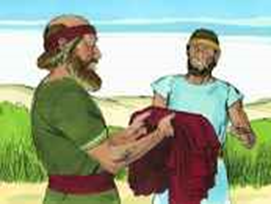
“It is true,” Achan replied, “I have sinned against the LORD, the God of Israel. This is what I did: When I saw among the spoils a beautiful cloak from Shinar, two hundred shekels of silver, and a bar of gold weighing fifty shekels, I coveted them and took them. They are hidden in the ground inside my tent, with the silver underneath.”

So, Joshua sent messengers who ran to the tent, and there it all was, hidden in his tent, with the silver underneath. They took the things from inside the tent, brought them to Joshua and all the Israelites, and spread them out before the LORD.

Then Joshua, together with all Israel, took Achan son of Zerah, the silver, the cloak, and the bar of gold, his sons and daughters, his oxen, donkeys, and sheep, his tent, and everything else he owned, and brought them to the Valley of Achor.

“Why have you brought this trouble upon us?” said Joshua. “Today the LORD will bring trouble upon you!” And all Israel stoned him to death. Then they stoned the others and burned their bodies. And they heaped over Achan a large pile of rocks that remains to this day. So, the LORD turned from His burning anger. Therefore, that place is called the Valley of Achor(“Troubler”) to this day.”

Why would anybody risk their life, the lives of their loved ones, and everything they owned? Look at what Achan stole and hid: a beautiful cloak from Shinar – this should have been burned; two hundred shekels (five pounds) of silver, and a bar of gold weighing fifty shekels (1.26 pounds.) The silver and gold should have been turned over to the temple. The total value of these things was far less than the value of a single human life; yet, Achan had grabbed these things and had hidden them. It’s likely that even Achan’s family had no idea what he had done.

Why did God want all the spoils from Jericho to be destroyed or turned over to Him? Jericho was to be the first fruits of conquest, and first fruits always belonged to the Lord. Achan was actually quite well to do, having oxen, donkeys, sheep, a tent, and a family. But in a moment of weakness, Achan doomed his family and himself to destruction.

Notice that once Achan’s sin was uncovered, even the things that he had stolen were included in the destruction. Every person and every animal was stoned to death and the bodies burned. A huge pile of stones was erected so that every time an Israelite passed that way, they would remember Achan and remind themselves to be obedient and not to be greedy. How horrible it must have been for Achan as he saw his wife and children being dragged into that valley, knowing that he was the one who had brought them to this awful fate! How many of the Israelites standing throwing stones were thanking God that they had managed to resist temptation!

AMERICAN DREAM

All work, no play may have made Jack a dull boy
But all work, no God has left Jack with a lost soul
But he’s moving on full steam
He’s chasing the American dream
He’s gonna give his family the finer things

Not this time son, I’ve no time to waste
Maybe tomorrow, we’ll have time to play
And then he slips into his new BMW
And drives farther and farther and farther away

‘Cause He works all day and tries to sleep at night
He says things will get better
Better in time

So he works and he builds with his own two hands
And he pours all he has in a castle made with sand
But the wind and the rain are comin’ crashing in
Time will tell just how long his kingdom stands
His kingdom stands

His American Dream is beginning to seem
More and more like a nightmare
With every passing day
“Daddy, can you come to my game?”
“Oh Baby, please don’t work late”
Another wasted weekend
And they are slipping away

‘Cause he works all day and lies awake at night
He tells them things will get better
It’ll just take a little more time

So he works and he builds with his own two hands
And he pours all he has in a castle made with sand
But the wind and the rain are comin’ crashing in
Time will tell just how long his kingdom stands
His kingdom stands

He used to say, “Whoever dies with the most toys wins”
But if he loses his soul, what has he gained in the end?
I’ll take a shack on a rock
Over a castle in the sand

Now he works all day and cries alone at night
It’s not getting any better
Looks like he’s running out of time

‘Cause he worked and he built with his own two hands
And he poured all he had in a castle made with sand
But the wind and the rain are coming crashing in
Time will tell just how long his kingdom stands
His kingdom stands

All they really wanted was you

PRAYER: Father God, thank You for loving us and for caring for us! Lord, help us to seek Your Will for our lives and not to chase after money or possessions! In the mighty and precious Name of King Jesus. Amen.
FEBRUARY 16, 2022 BE STRONG! BE COURAGEOUS! JOSHUA 7:1 – 15 HOARDERS BEWARE! BLESSINGS CAN TURN TO CURSES!

February 16, 2022

Joshua 7:1 – 15 “The Israelites, however, acted unfaithfully regarding the things devoted to destruction. Achan son of Carmi, the son of Zabdi the son of Zerah, of the tribe of Judah, took some of what was set apart. So, the LORD’s anger burned against the Israelites.

Meanwhile, Joshua sent men from Jericho to Ai, which is near Beth-aven to the east of Bethel, and told them, “Go up and spy out the land.” So, the men went up and spied out Ai.

On returning to Joshua, they reported, “There is no need to send all the people; two or three thousand men are enough to go up and attack Ai. Since the people of Ai are so few, you need not wear out all our people there.”

So about three thousand men went up, but they fled before the men of Ai. And the men of Ai struck down about thirty-six of them, chasing them from the gate as far as the quarries and striking them down on the slopes. So, the hearts of the people melted and became like water.

Then Joshua tore his clothes and fell facedown before the ark of the LORD until evening, as did the elders of Israel; and they all sprinkled dust on their heads.

“O, Lord GOD,” Joshua said, “why did You ever bring this people across the Jordan to deliver us into the hands of the Amorites to be destroyed? If only we had been content to stay on the other side of the Jordan! 8O Lord, what can I say, now that Israel has turned its back and run from its enemies? When the Canaanites and all who live in the land hear about this, they will surround us and wipe out our name from the earth. Then what will You do for Your great name?”

But the LORD said to Joshua, “Stand up! Why have you fallen on your face? Israel has sinned; they have transgressed My covenant that I commanded them, and they have taken some of what was devoted to destruction. Indeed, they have stolen and lied about it, and they have put these things with their own possessions. This is why the Israelites cannot stand against their enemies. They will turn their backs and run from their enemies, because they themselves have been set apart for destruction. I will no longer be with you unless you remove from among you whatever is devoted to destruction. Get up and consecrate the people, saying, ‘Consecrate yourselves for tomorrow, for this is what the LORD, the God of Israel, says: Among you, O Israel, there are things devoted to destruction. You cannot stand against your enemies until you remove them. In the morning you must present yourselves tribe by tribe. The tribe that the LORD selects shall come forward clan by clan, and the clan that the LORD selects shall come forward family by family, and the family that the LORD selects shall come forward man by man. The one who is caught with the things devoted to destruction must be burned, along with all that belongs to him, because he has transgressed the covenant of the LORD and committed an outrage in Israel.’”

SOMETHING IS TERRIBLY WRONG IN THE ISRAELITE CAMP! After the resounding defeat of Jericho, the Israelites are running on an adrenaline high. When they send out a small force to attack a small city, they suffer a shocking defeat and lose 36 men in the process. What’s gone wrong? Remember that in Joshua 6:18 – 19, God warns the people, saying, But keep away from the things devoted to destruction, lest you yourself be set apart for destruction. If you take any of these, you will set apart the camp of Israel for destruction and bring disaster upon it. For all the silver and gold and all the articles of bronze and iron are holy to the LORD; they must go into His treasury.”

Joshua and the elders go before the ark of the covenant and tear their clothes, pouring dust on their heads, and falling on their faces in prayer until the time of the evening sacrifice. Joshua asks God why He has ever brought the Israelites across the Jordan, only for them to run from their enemies. And Joshua subtly accuses God by asking Him how He, God, is going to defend His name if the Israelites are wiped off the face of the earth. In a way, Joshua is asking God what God has done wrong. But God isn’t about to be manipulated and commands Joshua to get up from the dirt and quit complaining. Then God reveals to Joshua that one of the Israelites has kept some of the forbidden things and must pay with his life and the lives of his family members as a result.

What made “things devoted to destruction” so bad? These items were dedicated to demons; as long as the item survived, it could serve as a channel for demonic activity, bringing evil to anyone who came near it. The demons might even entice the spiritually unwary into worshiping them as gods. If the Israelites were to do God’s work, they couldn’t be cherishing items dedicated to Satan at the same time.

APPLICATION: We were friends with a lady who had been a missionary nurse in northern Ghana. In one community in which our friend worked, there was a horrible cult called the “Kwansi” Cult. The Kwansi Cult kidnapped teen – aged boys and girls, whisking them off to remote huts where they brain washed them. The boys appeared to survive relatively well, but the girls likely suffered gang rape. Once a girl had “entered the hut” and had gone through those rituals, for the rest of her life she would hang her head down and would refuse to make eye contact with anyone or take initiative for anything. The body language was that of girls who had been repeatedly raped and tortured. Our brave friend, along with two police officers and some local pastors, had to confront cult members when they kidnapped some local pastors’ daughters.

Eventually, the cult was defeated; however, our friend mistakenly collected the cow horn they used as their symbol as a prize of war. Our friend took that horn back with her to America and proudly displayed it as a sign that Satan had been defeated, little realizing that she should have burned it at once back in Ghana. Years went by, and our friend suffered one health problem after another. Ghanaian pastor friends visited her and begged her to destroy that cult object; yet, she did not. When we visited her in December 1997, we convinced her to destroy it; however, there was no way of burning it that night and we left the following morning. We doubt that the object was ever destroyed.

THERE IS NOTHING SAFE ABOUT OBJECTS FROM CULTS! Sometimes tourists innocently bring carvings, paintings, woven work, and other objects home with them, having no idea who originally created the item. When we returned to America in 1990, we found a carving of a drummer among our belongings that neither of us remembered receiving. The carving was well done; however, we always felt that somehow it was looking at us. Finally, after moving the carving from room to room, my husband beat the carving to pieces and burned it. We suspect that when our things were at the port to be shipped, someone slipped that carving in as a means of gaining some kind of power over us. I do not tell these stories to discourage anyone from collecting beautiful hand made items, but one must be careful and discerning.

There is a second lesson to be learned from this story in Joshua, a lesson of obedience. God clearly warned the Israelites not to have anything to do with those items that should be turned over to the temple. Gold, silver, brass, and iron could all go through fire and thus be purified. The Israelites were not to become hoarders.

What makes a hoarder? During the Great Depression of the 1930’s, many families found themselves in tight financial circumstances; as a result, many in that generation saved string, glass jars, material, buttons, cardboard boxes, etc. These people recycled and upcycled long before it was trendy, simply out of fear of lack. There is nothing wrong with being thrifty and there is nothing wrong with recycling or re – purposing things. But the question is that of motivation. When people act out of fear, it becomes far more difficult to separate them from the items they have hoarded. As the reality TV show “Hoarders” has illustrated, hoarders can wind up prisoners in their own homes, surrounded by piles of rubble that they are carefully saving. These people don’t own things; the things own them.

God does not want us to become hoarders. We are given things to enjoy but also to pass on to others. We must receive with open hands, ready to give when God prompts us. And we must always be obedient to God. When God tells us to let something alone, we must listen and obey! God sent many people to our missionary friend to warn her, but she had become so attached to that cult object that she refused to listen.

PRAYER: Father God, thank You for loving us and for caring for us. Help us to receive Your good things with open hands, ready to pass them on as needed. But also help us to be wise and to leave cult objects and anything questionable alone. Help us also to remember that certain things belong to You alone and that we should never envy those things but leave them alone. In the mighty and precious Name of King Jesus. Amen.