MAY 21, 2026-WAITING FOR PENTECOST #42 DANCE FOR THE LORD WHILE YOU’RE WAITING, EVEN IF PEOPLE SNEER AT YOU!
2 Samuel 6:12 Then King David was told, “The Lord has blessed Obed-edom’s household and everything he has because of the Ark of God.” So David went there and brought the Ark of God from the house of Obed-edom to the City of David with a great celebration. 13 After the men who were carrying the Ark of the Lord had gone six steps, David sacrificed a bull and a fattened calf. 14 And David danced before the Lord with all his might, wearing a priestly garment. 15 So David and all the people of Israel brought up the Ark of the Lord with shouts of joy and the blowing of rams’ horns.
The Ark of the Covenant was captured by the Philistines years earlier; however, eventually, God made things so difficult for the Philistines that they sent the Ark back to Israel. (The description of God’s attack on the Philistines is one of the earliest descriptions of bubonic plague.) When the first attempt to collect the ark ended in disaster, the ark wound up in the house of Obed-edom. King David did his research and realized that they had been far too casual about the way they had handled the ark in the past. Now the ark was being card by priests as God had decreed through Moses, and David and others were dancing before the Lord in celebration. But not everybody was thrilled with David’s performance.
Michal’s Contempt for David
16 But as the Ark of the Lord entered the City of David, Michal, the daughter of Saul, looked down from her window. When she saw King David leaping and dancing before the Lord, she was filled with contempt for him.
17 They brought the Ark of the Lord and set it in its place inside the special tent David had prepared for it. And David sacrificed burnt offerings and peace offerings to the Lord. 18 When he had finished his sacrifices, David blessed the people in the name of the Lord of Heaven’s Armies. 19 Then he gave to every Israelite man and woman in the crowd a loaf of bread, a cake of dates, and a cake of raisins. Then all the people returned to their homes.
20 When David returned home to bless his own family, Michal, the daughter of Saul, came out to meet him. She said in disgust, “How distinguished the king of Israel looked today, shamelessly exposing himself to the servant girls like any vulgar person might do!”
21 David retorted to Michal, “I was dancing before the Lord, who chose me above your father and all his family! He appointed me as the leader of Israel, the people of the Lord, so I celebrate before the Lord. 22 Yes, and I am willing to look even more foolish than this, even to be humiliated in my own eyes! But those servant girls you mentioned will indeed think I am distinguished!” 23 So Michal, the daughter of Saul, remained childless throughout her entire life.
Poor Michal! Michal was David’s first wife, given to him by King Saul after David’s victories on Saul’s behalf. (David had to kill 200 Philistines and bring in their foreskins to King Saul.) But when David had to flee, Saul gave Michal to a different husband. Michal wound up being traded back and forth, and meanwhile David married several other wives. But David demanded Michal return to him when he became king. Perhaps Michal was hoping to become the Queen, with more power than David’s other wives. All we know is that when Michal saw David whirling and dancing in the street, she was mortified. It’s likely that David girded up his loins before dancing, not exposing himself, but certainly donning his priestly garment much as he would a robe in which he would go to battle. Whatever David did, Michal sneered, feeling that David had made himself look foolish. Blessedly, David wasn’t worried about that, for he was dancing out of love.
It was the beginning of a YWAM Crossroads Discipleship Training School in Kona, Hawaii, in January 1998. Worship was starting; however, nobody was moving, or clapping. The music was eminently danceable. My husband and I looked at each other, shrugged our shoulders, and got out of our seats, dancing our way to the front of the auditorium. Were we expert dancers? No. But we had spent a decade in Ghana, where people always danced in church, and we felt that if we danced, someone else who was a trained dancer would be encouraged to join us. Soon, one of the other attendees who was a trained dancer came to the front and began doing wonderful interpretive dance. We quietly danced our way back to our seats, having broken the ice.
Here in Ghana, people dance in church regularly. We have found dancing to be a great means of relating to those around us, for nobody expects expatriates to dance at all or to dance well. We dance at weddings. We dance at funerals. We dance at other celebrations. When we join others in a circle, we share community in a way that cannot be surpassed. There have also been other occasions. Years ago, I was attending a West African College of Surgeons Annual Conference when a traditional music group began drumming. Some of my friends and I were dancing in our College robes when a distinguished looking gentleman, also in a College gown, entered the foyer. I continued to dance Asante adowa, only realizing later that I had been dancing for President John Kufuor, the President of Ghana. No wonder my friends had suddenly disappeared!
David danced before the Lord with all his might. We don’t know how well David danced, only that he danced enthusiastically. We can dance for God, knowing that He is smiling at our efforts. We don’t have to be graceful or perfect or even keep good time. God isn’t worried about perfection, for He sees our hearts and He knows when we dance out of love. So dance! Dance in your room where nobody can see you if you are afraid, but don’t let scoffers keep you from rejoicing in the Lord. Dance like no one is watching!
PRAYER: Father God, thank You for loving us and caring for us. Lord, help us to rejoice in You and demonstrate our joy however You lead us. In the mighty and precious Name of King Jesus. Amen.
Exodus 15:1 Then Moses and the people of Israel sang this song to the Lord: “I will sing to the Lord, for he has triumphed gloriously; he has hurled both horse and rider into the sea. 2 The Lord is my strength and my song; he has given me victory. This is my God, and I will praise him—my father’s God, and I will exalt him! 3 The Lord is a warrior; Yahweh is his name! 4 Pharaoh’s chariots and army he has hurled into the sea. The finest of Pharaoh’s officers are drowned in the Red Sea. 5 The deep waters gushed over them; they sank to the bottom like a stone.
6 “Your right hand, O Lord, is glorious in power. Your right hand, O Lord, smashes the enemy. 7 In the greatness of your majesty, you overthrow those who rise against you. You unleash your blazing fury; it consumes them like straw. 8 At the blast of your breath, the waters piled up! The surging waters stood straight like a wall; in the heart of the sea the deep waters became hard.
9 “The enemy boasted, ‘I will chase them and catch up with them. I will plunder them and consume them. I will flash my sword; my powerful hand will destroy them.’ 10 But you blew with your breath, and the sea covered them. They sank like lead in the mighty waters.
11 “Who is like you among the gods, O Lord—glorious in holiness, awesome in splendor, performing great wonders? 12 You raised your right hand, and the earth swallowed our enemies.
13 “With your unfailing love you lead the people you have redeemed. In your might, you guide them to your sacred home. 14 The peoples hear and tremble; anguish grips those who live in Philistia. 15 The leaders of Edom are terrified; the nobles of Moab tremble. All who live in Canaan melt away; 16 terror and dread fall upon them. The power of your arm makes them lifeless as stone until your people pass by, O Lord, until the people you purchased pass by. 17 You will bring them in and plant them on your own mountain—the place, O Lord, reserved for your own dwelling, the sanctuary, O Lord, that your hands have established. 18 The Lord will reign forever and ever!”
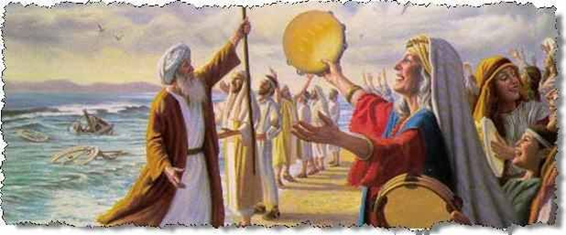
19 When Pharaoh’s horses, chariots, and charioteers rushed into the sea, the Lord brought the water crashing down on them. But the people of Israel had walked through the middle of the sea on dry ground! 20 Then Miriam the prophet, Aaron’s sister, took a tambourine and led all the women as they played their tambourines and danced. 21 And Miriam sang this song: “Sing to the Lord, for he has triumphed gloriously; he has hurled both horse and rider into the sea.”
Morning has broken, and the Israelites are still reeling from the night’s events. Last night, a tremendous east wind blew, creating a wide dry path through the Red Sea. Shaking in their sandals, the Israelites rushed through as quickly as possible, fearing that the sea might return to its place, swallowing them. Instead, this morning, as the last Israelites reached the distant shore, the Egyptian chariots began attempting the crossing. Just when it seemed that the Egyptians were going to make it safely, the watery walls suddenly collapsed with a roar, drowning 250,000 soldiers with chariots and their horses. The Israelites watched in horrified fascination as bodies of drowned Egyptians began washing up on shore. (For a fascinating discussion of the location of this crossing, along with compelling archaeological evidence, see https://www.holylandsite.com/exodus-redsea-sinai .)
Have the Israelites reached the Promised Land? Far from it! So far, the Israelites have traveled through wilderness and have miraculously crossed a branch of the Red Sea. But God has brought the Israelites safely through deep waters, wiping out the most powerful army of the time. Now celebrations break out, with Miriam, Moses’ sister, leading the women, playing tambourines and dancing. While these people realize they have a long way to go, they are thrilled at God’s deliverance. Such an event demands celebration.
Sometimes we become so focused on results and ultimate goals that we fail to celebrate victories along the way. When we do this, we deprive ourselves of joy. When I was growing up, my parents had opposing ideas about celebration. Mom celebrated-birthdays, holidays, triumphs at school-such events rated pie or cake and ice cream if at all possible. Dad, having ben raised by thrifty Swedish immigrants, was more restrained. It’s not that Dad minded celebrations; however, he simply didn’t know how to initiate them. It took decades of Mom persisting in celebrating before Dad finally got the idea.
As I am writing this, I realize that our missionary careers have been notable for scanty amounts of celebration. It’s not that we haven’t wanted to celebrate; however, as the only doctor for 100,000 people, I spent years feeling guilty if I took any time off at all. And even when my husband would make a special meal for a birthday or anniversary, I might have to drop my fork and rush back to the hospital for an emergency operation.
I love this story of the Israelites celebrating because it encourages me to stop and celebrate also. Look at the situation the Israelites are facing: they have just crossed the Red Sea and are now in the wilderness area near Mount Sinai. Vegetation is sparse and the heat and dust are unrelenting. The crowd of Israelites has been estimated at 2-3 million people, a huge number to lead through a desert region. All these people have to go on is God’s promises, and many of them have little if any knowledge or experience of God whatsoever. And yet…and yet, these people are celebrating. Women are playing tambourines. Someone has found a drum and is keeping time. People are singing and dancing and ululating. Later on, things might be difficult, but now is the time to throw oneself completely into celebration.
The Optimum Health Institute has outlined benefits of celebration: Celebrating is far more than just a momentary indulgence; it is a powerful practice with significant psychological, physiological, and social benefits.
In a world often dominated by stress, deadlines, and the relentless march of daily routines, the act of celebrating might seem like a mere frivolity. Yet, celebrating — whether it’s a personal achievement, a communal milestone, or even a simple moment of joy — plays a crucial role in our well-being. The act of celebrating isn’t just about reveling in success; it has profound psychological, physiological, and social benefits. Let’s delve into the science behind why celebrating is so powerful and how it impacts our lives.
The Psychological Impact of Celebrating
Celebrations are more than just festive activities; they are powerful psychological tools that contribute to positive mental health. One of the most significant psychological benefits of celebrating is its ability to reinforce positive behavior and achievements. According to behavioral psychology, acknowledging and celebrating achievements, no matter how small, strengthens the connection between positive behavior and reward. This process is known as positive reinforcement, which helps to create a cycle of motivation and satisfaction.
When we celebrate, our brain releases dopamine, a neurotransmitter associated with pleasure and reward. Dopamine helps to cement the experience of achievement in our memory, making it more likely that we will repeat the behavior in the future. This is why celebrating personal milestones, whether it’s completing a project or reaching a personal goal, can be so effective in encouraging continued effort and perseverance.
Additionally, celebrating can help to counteract negative emotions and stress. The act of celebrating creates a mental space for joy and relaxation, helping to shift focus away from worries and anxieties. This shift in focus is crucial, as it helps to reduce the effects of chronic stress on our mental health. Regular celebrations, even of minor achievements, can act as a buffer against burnout and depression, promoting a more positive outlook on life.
The Physiological Benefits of Celebrating
The physical effects of celebrating are just as significant as the psychological ones. When we engage in celebratory activities, our body responds with a range of physiological changes that contribute to overall well-being. One of the key physiological responses is the release of endorphins and serotonin, the body’s natural feel-good chemicals. Endorphins promote an overall sense of well-being and can even temporarily relieve pain, while serotonin is a neurotransmitter that will elevate your mood. Endorphins are often released during activities that bring us joy and laughter, such as dancing, laughing with friends, or participating in festive events.
Endorphins not only help to alleviate pain, they also promote a sense of euphoria which decreases the effect of stress hormones and that is particularly beneficial in counteracting the physical effects of stress. Chronic stress is known to contribute to a range of health issues, including cardiovascular problems and weakened immune function. The scientific benefits of stress reduction are well-documented, and include improved cognitive performance, better physical health, and reduced burnout. By celebrating and engaging in joyful activities, we can help mitigate the negative effects of stress, boost the immune system, and promote better overall health.
The Social Significance of Celebrating
Celebratory activities frequently involve social interactions. From family gatherings to public festivals, community celebrations provide opportunities for individuals to connect, share experiences, and build relationships. These social interactions are vital for emotional support and can help to create a sense of belonging and community.
Socializing with others can lead to the release of oxytocin, sometimes called the “love hormone.” Oxytocin is associated with feelings of boding and trust, and its release can enhance our sense of connection and emotional security. This social bonding is crucial for maintaining healthy relationships and fostering a supportive social network, which in turn contributes to overall well-being.
In communal settings, celebrations can serve as a unifying force, bringing together individuals from diverse backgrounds to share in a common experience. This sense of unity can promote social cohesion and contribute to a more harmonious and supportive society. Additionally, celebrating collectively can reinforce cultural traditions and values, helping to preserve and pass on cultural heritage.
The social benefits of celebrating extend to individual relationships as well. Sharing in celebrations with friends and family can strengthen personal bonds and create lasting memories. These shared experiences help to build trust and intimacy, which are essential for maintaining healthy and fulfilling relationships.
The Role of Celebrating in Personal Growth and Development
Celebrating is not just about enjoying the moment; it also plays a role in personal growth and development. Recognizing and celebrating achievements helps to build self-confidence and self-esteem. When we acknowledge our successes, it increases our resilience and reaffirms our capabilities and reinforces our belief in our ability to achieve future goals.
Celebrating milestones also encourages reflection and self-assessment. By taking time to celebrate our achievements, we can evaluate our progress, recognize areas for improvement, and set new goals. This reflective process is essential for personal growth and helps to ensure that we continue to strive for success and self-improvement.
Celebrations can also provide valuable opportunities for learning and development. For example, organizing and participating in celebratory events often involves planning, coordination, and problem-solving. These skills are transferable and can contribute to personal and professional growth. Additionally, the feedback and support received during celebrations can provide valuable insights and motivation for future endeavors. https://www.optimumhealth.org/blog/how-celebrations-enhance-our-lives
Are you feeling down, discouraged, exhausted? Find something small you can celebrate. Even if you feel you are having to manufacture enthusiasm, make a small start. Remember, it takes some of us years to learn to celebrate spontaneously. After all, those Israelites were looking at a daunting wilderness and singing anyway. If they did it, so can we.
PRAYER: Father God, thank You for loving us and caring for us. Lord, help us to celebrate even small events, knowing that You are smiling and celebrating with us. In the mighty and precious Name of King Jesus. Amen.
The matter begins as a disaster, God demanding His people do something totally crazy. But by the end, God has gotten glory He will get in no other way.
Exodus 14:1 Then the Lord gave these instructions to Moses: 2 “Order the Israelites to turn back and camp by Pi-hahiroth between Migdol and the sea. Camp there along the shore, across from Baal-zephon. 3 Then Pharaoh will think, ‘The Israelites are confused. They are trapped in the wilderness!’ 4 And once again I will harden Pharaoh’s heart, and he will chase after you. I have planned this in order to display my glory through Pharaoh and his whole army. After this the Egyptians will know that I am the Lord!” So the Israelites camped there as they were told.
For centuries, people have argued about the precise location of the Israelite camp just before they crossed the Red Sea. While that geographical location remains obscure, God’s instructions to Moses still smack of being meshuggah (Hebrew) or meshuggenah(Yiddish.) Any way you say it, those instructions are crazy! On the face of it, God is allowing the Israelites to become stranded in a dangerous location from which there will be no escape. On one side is a branch of the Red Sea and on the other is the desert, from which Pharaoh’s armies can easily attack, or so Pharaoh thinks. But God has a much larger agenda than merely saving the Israelites; He wants to display His power and glory to the Egyptians.
At this time, the Egyptian Empire commands vast territories, possessing one of the most powerful armies in the world. Exodus 14:5-9 tells us “5 When word reached the king of Egypt that the Israelites had fled, Pharaoh and his officials changed their minds. “What have we done, letting all those Israelite slaves get away?” they asked. 6 So Pharaoh harnessed his chariot and called up his troops. 7 He took with him 600 of Egypt’s best chariots, along with the rest of the chariots of Egypt, each with its commander. 8 The Lord hardened the heart of Pharaoh, the king of Egypt, so he chased after the people of Israel, who had left with fists raised in defiance. 9 The Egyptians chased after them with all the forces in Pharaoh’s army—all his horses and chariots, his charioteers, and his troops. The Egyptians caught up with the people of Israel as they were camped beside the shore near Pi-hahiroth, across from Baal-zephon.
After ten plagues, including the deaths of all first-born creatures in Egypt not protected by sacrificial blood, Pharaoh intends to smash these rebels. It’s estimated that Moses is leading a group numbering roughly two million people; however, Pharaoh is sending all his horses and chariots and his troops. Many of those troops are probably skilled archers, as well as being armed with sickle-shaped swords that can demolish enemies in seconds. Those chariots might also have sickle blades mounted on their wheels to wreak further havoc.
Exodus 14:10 As Pharaoh approached, the people of Israel looked up and panicked when they saw the Egyptians overtaking them. They cried out to the Lord, 11 and they said to Moses, “Why did you bring us out here to die in the wilderness? Weren’t there enough graves for us in Egypt? What have you done to us? Why did you make us leave Egypt? 12 Didn’t we tell you this would happen while we were still in Egypt? We said, ‘Leave us alone! Let us be slaves to the Egyptians. It’s better to be a slave in Egypt than a corpse in the wilderness!’”
13 But Moses told the people, “Don’t be afraid. Just stand still and watch the Lord rescue you today. The Egyptians you see today will never be seen again. 14 The Lord himself will fight for you. Just stay calm.”
The Israelites are panicking and complaining vociferously. The same people who have gleefully collected gold, jewels, clothing, and everything else they can from their Egyptian neighbors are suddenly realizing that actions have consequences. Poor Moses is standing there with his own people screaming threats at him. But God already has a plan.
15 Then the Lord said to Moses, “Why are you crying out to me? Tell the people to get moving! 16 Pick up your staff and raise your hand over the sea. Divide the water so the Israelites can walk through the middle of the sea on dry ground. 17 And I will harden the hearts of the Egyptians, and they will charge in after the Israelites. My great glory will be displayed through Pharaoh and his troops, his chariots, and his charioteers. 18 When my glory is displayed through them, all Egypt will see my glory and know that I am the Lord!”
19 Then the angel of God, who had been leading the people of Israel, moved to the rear of the camp. The pillar of cloud also moved from the front and stood behind them. 20 The cloud settled between the Egyptian and Israelite camps. As darkness fell, the cloud turned to fire, lighting up the night. But the Egyptians and Israelites did not approach each other all night.
21 Then Moses raised his hand over the sea, and the Lord opened up a path through the water with a strong east wind. The wind blew all that night, turning the seabed into dry land. 22 So the people of Israel walked through the middle of the sea on dry ground, with walls of water on each side!
God places an impenetrable barrier between the Israelites and the Egyptian army-a pillar of cloud that stands between them and that turns into a pillar of fire at night. Meanwhile, God sends strong east winds to clear a path through the sea. Given the earthquake-prone nature of the area, God may also have sent an earthquake to block the water. Then one of the biggest miracles of all happens; God helps Moses to convince the Israelites to walk through the middle of the sea on dry ground with walls of water on each side.
23 Then the Egyptians—all of Pharaoh’s horses, chariots, and charioteers—chased them into the middle of the sea. 24 But just before dawn the Lord looked down on the Egyptian army from the pillar of fire and cloud, and he threw their forces into total confusion. 25 He twisted[b] their chariot wheels, making their chariots difficult to drive. “Let’s get out of here—away from these Israelites!” the Egyptians shouted. “The Lord is fighting for them against Egypt!”
26 When all the Israelites had reached the other side, the Lord said to Moses, “Raise your hand over the sea again. Then the waters will rush back and cover the Egyptians and their chariots and charioteers.” 27 So as the sun began to rise, Moses raised his hand over the sea, and the water rushed back into its usual place. The Egyptians tried to escape, but the Lord swept them into the sea. 28 Then the waters returned and covered all the chariots and charioteers—the entire army of Pharaoh. Of all the Egyptians who had chased the Israelites into the sea, not a single one survived.
29 But the people of Israel had walked through the middle of the sea on dry ground, as the water stood up like a wall on both sides. 30 That is how the Lord rescued Israel from the hand of the Egyptians that day. And the Israelites saw the bodies of the Egyptians washed up on the seashore. 31 When the people of Israel saw the mighty power that the Lord had unleashed against the Egyptians, they were filled with awe before him. They put their faith in the Lord and in his servant Moses.
If you can’t identify with the Israelites, you haven’t lived very long! Serve the Lord long enough, and you will find yourself facing situations that resemble the plight of the Israelites as they camp by the Red Sea-no way forward, and enemies or circumstances pushing you from the rear. As I write these words, my husband and I are dealing with a host of challenges. We are funding a small construction project at our hospital. We are helping a number of people in the community. We have people who depend on us for monthly salaries. And we need to spend at least three months in America to take care of urgent business matters there. We are struggling to determine the shape of the trip, travel arrangements, a possible small medical procedure, and meeting supporting congregations. We are sure God has perfect solutions, but so far, things seem murky.
One of the lessons to gain from this story is that God doesn’t always do things in a logical fashion. While God might have sent angel armies to defeat the Egyptians, instead, God demonstrates His power over nature by sending an east wind and clearing a path through the sea. Then God prods the Israelites so that they willingly walk through the sea between towering walls of water. God entices the most powerful army in the Middle East to enter the sea, where soldiers and horses will immediately drown.
How can we follow a God who presents us with crazy circumstances? Keep praying and looking for opportunities. Each time we have visited America, the trip has been different. Please pray with us that we will not miss God, even if His solutions appear crazy!
PRAYER: Father God, thank You for loving us and caring for us. Lord, help us to trust You, even when You seem to be leading us in crazy directions. In the mighty and precious Name of King Jesus. Amen.
Judges 4:1 After Ehud’s death, the Israelites again did evil in the Lord’s sight. 2 So the Lord turned them over to King Jabin of Hazor, a Canaanite king. The commander of his army was Sisera, who lived in Harosheth-haggoyim. 3 Sisera, who had 900 iron chariots, ruthlessly oppressed the Israelites for twenty years. Then the people of Israel cried out to the Lord for help.
Judges 5:1 On that day Deborah and Barak son of Abinoam sang this song: 2 “Israel’s leaders took charge, and the people gladly followed. Praise the Lord! 3 “Listen, you kings! Pay attention, you mighty rulers! For I will sing to the Lord. I will make music to the Lord, the God of Israel.
4 “Lord, when you set out from Seir and marched across the fields of Edom, the earth trembled, and the cloudy skies poured down rain. 5 The mountains quaked in the presence of the Lord, the God of Mount Sinai—in the presence of the Lord, the God of Israel. 6 “In the days of Shamgar son of Anath, and in the days of Jael, people avoided the main roads, and travelers stayed on winding pathways. 7 There were few people left in the villages of Israel—until Deborah arose as a mother for Israel. 8 When Israel chose new gods, war erupted at the city gates. Yet not a shield or spear could be seen among forty thousand warriors in Israel!
Before Moses died, God spoke through him repeatedly, warning the Israelites that if they failed to follow Him and worship Him, their enemies would overtake them. Well, the Israelites didn’t listen, choosing new gods, so King Jabin of Hazor sent his commander Sisera to control them. The astounding thing is the amount of wealth lodged in these small chieftaincies, for Sisera had 900 iron chariots, probably with nearly 2,000 horses to pull those chariots. And Sisera dominated the Israelites for twenty years.
9 My heart is with the commanders of Israel, with those who volunteered for war. Praise the Lord! 10 “Consider this, you who ride on fine donkeys, you who sit on fancy saddle blankets, and you who walk along the road. 11 Listen to the village musicians gathered at the watering holes. They recount the righteous victories of the Lord and the victories of his villagers in Israel. Then the people of the Lord marched down to the city gates. 12 “Wake up, Deborah, wake up! Wake up, wake up, and sing a song! Arise, Barak! Lead your captives away, son of Abinoam!
Deborah was a judge and prophetess whom God used to call Barak to lead rebellion against Sisera. But Barak was afraid and demanded that Deborah should accompany him to the battle. Deborah agreed but stated that due to Barak’s temerity, credit for victory would go to a woman.
13 “Down from Tabor marched the few against the nobles. The people of the Lord marched down against mighty warriors. 14 They came down from Ephraim—a land that once belonged to the Amalekites; they followed you, Benjamin, with your troops. From Makir the commanders marched down; from Zebulun came those who carry a commander’s staff. 15 The princes of Issachar were with Deborah and Barak. They followed Barak, rushing into the valley.
But in the tribe of Reuben there was great indecision. 16 Why did you sit at home among the sheepfolds—to hear the shepherds whistle for their flocks? Yes, in the tribe of Reuben there was great indecision. 17 Gilead remained east of the Jordan. And why did Dan stay home? Asher sat unmoved at the seashore, remaining in his harbors. 18 But Zebulun risked his life, as did Naphtali, on the heights of the battlefield.
One thing about the Old Testament, God doesn’t hesitate to call out names of heroes and cowards! Even though Deborah and Barak sent out urgent messages throughout Israel, begging for help, some tribes responded while others shilly-shallied, making excuses. Soldiers came from the tribes of Zebulon, Naphtali, Ephraim, and Issachar. And these men RUSHED to the battle, despite the horrible odds against them. Today, if you are facing battles and yet rushing toward them, realize that God sees, God remembers, and God will honor you for your faithfulness and courage!
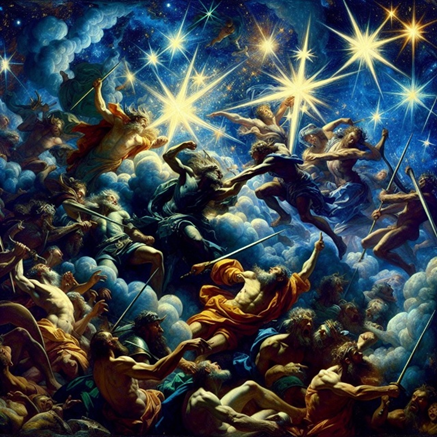
19 “The kings of Canaan came and fought, at Taanach near Megiddo’s springs, but they carried off no silver treasures. 20 The stars fought from heaven. The stars in their orbits fought against Sisera. 21 The Kishon River swept them away—that ancient torrent, the Kishon. March on with courage, my soul! 22 Then the horses’ hooves hammered the ground, the galloping, galloping of Sisera’s mighty steeds. 23 ‘Let the people of Meroz be cursed,’ said the angel of the Lord. ‘Let them be utterly cursed, because they did not come to help the Lord—to help the Lord against the mighty warriors.’
Not only did a relatively small Israelite army put the kings of Canaan to flight, but the stars fought from heaven, and the Kishon River swept them away. Perhaps atmospheric conditions were perfect for monsoon-type rains. Although the Kishon River drains the Valley of Jezreel and much of Mount Carmel, it is also possible that heavy rainfall in the Gilboa mountains at the river’s source might have triggered a perfectly-timed flash flood, catching the Canaanite armies as they tried to cross the river and washing them away. Such floods carry boulders, trees, and other debris along with the water, crushing and drowning those in the path of the flood.
The citizens of Meroz, a town near the Kishon River, could have helped the Israelites and likely had treaties with them; however, the town conveniently forgot any agreements when threatened by the Canaanite armies. There is no sign of Meroz today, and even its ancient location is uncertain.
24 “Most blessed among women is Jael, the wife of Heber the Kenite. May she be blessed above all women who live in tents. 25 Sisera asked for water, and she gave him milk. In a bowl fit for nobles, she brought him yogurt. 26 Then with her left hand she reached for a tent peg, and with her right hand for the workman’s hammer. She struck Sisera with the hammer, crushing his head. With a shattering blow, she pierced his temples. 27 He sank, he fell, he lay still at her feet. And where he sank, there he died…
31 “Lord, may all your enemies die like Sisera! But may those who love you rise like the sun in all its power!” Then there was peace in the land for forty years.
So far, God had raised up a small army, sending rain and flash floods to assist them. Now God used a quiet lady living in a tent to destroy Sisera the Canaanite commander. Sisera was fleeing in panic when he found the tents of Heber, Jael’s husband, and begged for help. Jael gave him yoghurt and water and a place to sleep; however, once Sisera was asleep, Jael drove a tent peg through his skull, nailing him to the floor and killing him instantly. Deborah’s prophecy was fulfilled: a woman had gained victory for the Israelites. Why did Jael violate custom to kill Sisera? I once speculated in another commentary that Sisera or his men might have raped Jael or some of her family. Certainly, swaggering army officers would view migrant women living in tents as fair game.
There’s no doubt that Deborah and Barak and their small army had to engage the Canaanites. But look at all the ways God used to help them gain victory. And when Jael drove that tent peg through Sisera’s skull, it was the final crowning blow. Not only was Sisera dead, but he had died at the hands of a lowly woman, and not even an Israelite at that, but someone far lower on the social scale because of her ten-dwelling status.
When we wait for God to deliver us, we must always remember that God can arrange situations to achieve His desired results. In this story, God controls the weather, the courage of a small army, and the emotions of a courageous lady to destroy Sisera and the Canaanite army. It’s likely that those 900 chariots of iron and the horses drawing them were swept away by flash flooding of the River Kishon. We don’t need to be choosy about how God delivers us; we simply need to praise Him and go forward.
Today, look at your situation. Are there elements built in on which you have not already acted? You might be waiting for some dramatic deliverance; meanwhile, God is handing someone you don’t even know a hammer and a tent peg. Waiting on the Lord is an active thing, not a passive one.
PRAYER: Father God, thank You for loving us and caring for us. Lord, help us to remember that You are a God of infinite possibility and You can use any person, any situation, to achieve Your purposes. In the mighty and precious Name of King Jesus. Amen.
Isaiah 43:5 “Do not be afraid, for I am with you. I will gather you and your children from east and west. 6 I will say to the north and south, ‘Bring my sons and daughters back to Israel from the distant corners of the earth. 7 Bring all who claim me as their God, for I have made them for my glory. It was I who created them.’”
8 Bring out the people who have eyes but are blind, who have ears but are deaf. 9 Gather the nations together! Assemble the peoples of the world! Which of their idols has ever foretold such things? Which can predict what will happen tomorrow? Where are the witnesses of such predictions? Who can verify that they spoke the truth?
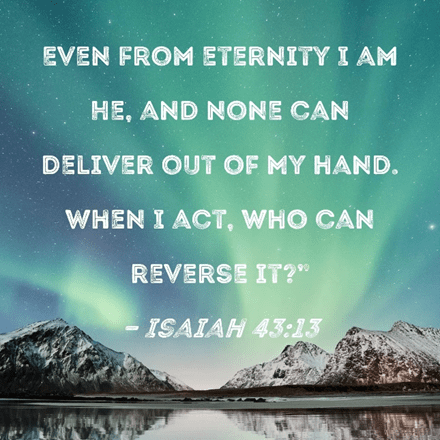
10 “But you are my witnesses, O Israel!” says the Lord. “You are my servant. You have been chosen to know me, believe in me, and understand that I alone am God. There is no other God—there never has been, and there never will be. 11 I, yes I, am the Lord, and there is no other Savior. 12 First I predicted your rescue, then I saved you and proclaimed it to the world. No foreign god has ever done this. You are witnesses that I am the only God,” says the Lord. 13 “From eternity to eternity I am God. No one can snatch anyone out of my hand. No one can undo what I have done.”
If you want to worry yourself to death, just pay too close attention to current events. Wars, conflicts, weather-related disasters, encroachment of fertile farm land by solar farms, wind farms and data centers, and the rising cost of living-If one of these problems doesn’t get your adrenaline flowing, several of them put together will certainly do so.
One of our problems is that we automatically assume that we have more problems than any generation before us. But consider the 1930’s in America when droughts, floods, insect infestations, and the Great Depression combined to make life nearly impossible for millions of people. Those of us with parents or grandparents who survived the Depression have watched those people save everything for fear that they might need those things one day. Those people had to become experts on recycling just to survive.
The Depression scarred many people; however, it also refined many others. What made the difference? Those people who survived without becoming bitter trusted God while others felt that God had abandoned them.
5 “Do not be afraid, for I am with you.” So many times, we forget this simple fact. We are convinced that we must depend only on ourselves, and if we are honest, we realize that our resources are inadequate.
7 “Bring all who claim me as their God, for I have made them for my glory. It was I who created them.’” God has made each one of us for His glory, whether or not we believe it. We are precious! We are loved!
10 “But you are my witnesses, O Israel!” says the Lord. “You are my servant. You have been chosen to know me, believe in me, and understand that I alone am God. There is no other God—there never has been, and there never will be. 11 I, yes I, am the Lord, and there is no other Savior. Although these verses mention Israel, we too are called to be God’s servants and we too have been chosen to know Him, believe in Him, and understand that He alone is God. God alone is our Savior; there is no other reliable source of help.
Why are these verses so important for us? Most of us need all the help we can get! We feel stuck in situations with no way out; yet, we must continue to continue. God tells us in verse 13“From eternity to eternity I am God. No one can snatch anyone out of my hand. No one can undo what I have done.” We are not merely victims of fate or karma or chance; we are beloved children and nothing and nobody can snatch us out of God’s hand. Does this mean things will be easy? Far from it! But with God helping us, things will be survivable, and we can continue to praise God in the midst of our messes.
Remember this truth when things are difficult: Nobody can snatch you out of God’s hand. Nobody can undo what God has done. Here in Ghana, there’s a gospel song that says, “Who has the final say? Jesus Christ has the final say! Jehovah turned my life around. He makes a way where there is no way. Jesus Christ has the final say.”
PRAYER: Father God, thank You for loving us and caring for us. Lord, help us to continue to trust You, even when things appear difficult, knowing that You do have the final say! In the mighty and precious Name of King Jesus. Amen.
Isaiah 43:1But now, O Jacob, listen to the Lord who created you. O Israel, the one who formed you says, “Do not be afraid, for I have ransomed you. I have called you by name; you are mine. 2 When you go through deep waters, I will be with you. When you go through rivers of difficulty, you will not drown. When you walk through the fire of oppression, you will not be burned up; the flames will not consume you.
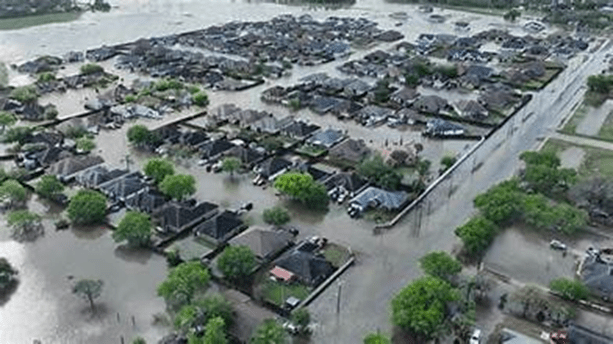
It was a sight few people will ever forget. Catastrophic storms had wracked the Gulf Coast, dumping unthinkable amounts of water on major cities such as Houston, Texas. The government did what it could; however, far more rescuers were needed. That’s when the good ole boys-and girls-from across the Southeast hitched up their boat trailers with all the gear they had and moved to the flood-stricken areas. Calling themselves “the United Cajun Navy,” these men and women volunteered, saving thousands of lives, rescuing people from trees and rooftops. As experienced hunters and fishermen, these people were used to high water, mud, snakes, alligators, and all the other kinds of dangers encountered in floods. (For those of you who are not Americans, the term “Cajun” refers to the hunters, trappers, and fisherfolk living in southern Louisiana. If you have ever watched the TV series “Swamp People,” those people are Cajuns, and some Americans consider them as “bush people.” My African friends will understand that term.) These people knew how to improvise to get jobs done, using the wrong equipment for the right purpose. During that first response, thousands of people were rescued by those running bass boats (small fishing boats.)
The founder and president of the United Cajun Navy is Todd Terrell, a local businessman who lost fishing boats and a prosperous restaurant to Hurricane Katrina. In the wake of his family’s tragic losses, Terrell realized that God was calling him to a different purpose. Terrell has told reporters, “When you lose everything, sometimes you get angry at God. But my faith was such that it was like, “You know, there’s got to be a better calling for me.’ And then next thing you know, it turned into this. God had a better plan for me.” These days, UNC responds to all sorts of disasters throughout America, involving anyone who will help, from motorcycle clubs to church groups to individual volunteers. Due to the varied nature of those involved, UNC has access to construction equipment, heavy machinery, large trucks, and all kinds of other resources. UNC also now responds to areas devastated by fires, tornadoes, earthquakes, and other disasters. UNC now encompasses weather watch, disaster relief, and search and rescue operations, all with volunteer help and public donations.
What about fire fighters? Eighty-two per cent of all fire departments in America are mostly volunteer. Sometimes heads of these departments receive a small salary from the local government and other times they receive nothing apart from public encouragement. These men and women train several times a month, maintaining personal fitness so that they can act effectively when flames are consuming a building. Volunteers run the same risks as paid fire fighters, and one friend became paraplegic when a chimney collapsed on him while he was fighting a fire in rural Illinois.
Why mention these groups when speaking about God’s deliverance? God uses people to do His work. But we must recognize God’s provision. There’s a horrible story told about a pastor in a town near a river that was flooding. The police warned everyone to get out of town; however, the pastor refused, stating that God would deliver him. The water kept rising, and finally the pastor wound up on the roof of the church. Two men came by in a boat, offering help, but the pastor refused. “God will deliver me,” the pastor stated. Then a helicopter swooped in, and again the pastor refused, stating, “God will deliver me.” Finally, the pastor drowned! When the pastor reached heaven, he questioned God, “Lord, why didn’t You deliver me?” God replied, “I sent the police, two guys in a boat, and a helicopter. What more did you want?”
3 For I am the Lord, your God, the Holy One of Israel, your Savior. I gave Egypt as a ransom for your freedom; I gave Ethiopia and Seba in your place. 4 Others were given in exchange for you. I traded their lives for yours because you are precious to me. You are honored, and I love you.
I always become teary-eyed when I read this part, for God is literally pleading with the Israelites to understand the depth of His love for them. In Isaiah’s day, Egypt, Ethiopia, and Seba were three of the richest and most powerful kingdoms there were. God is saying that nobody is more precious to Him than the Israelites.
Many of us may have come from dysfunctional families where we were perpetually ignored, taken for granted, or even abused and insulted. We might have struggled to achieve meaningful careers and a sense of self-worth. We might have found ourselves in marriages where the dynamics echoed the dysfunction of our nuclear families. And with all this, we might be ready to give up on everything and everybody. Why wait for God when everyone else has disappointed us?
But God is not like those who have wounded you in the past. God is a loving Father who knows you better than you know yourself. God does not abuse His children; in fact, God cares about every intimate detail of your life. When you wait on God, expecting Him to act in His time, wonderful things can happen. God can heal those hurts you have carried for so long. God can redeem every one of the terrible experiences you have endured. You might feel as if you have gone through fire and water, but God has brought you through, and He will lift you up.
PRAYER: Father God, thank You for loving us and caring for us. Lord, please heal all those reading these words. Speak to their hearts and reassure them that they ARE precious to you! In the mighty and precious Name of King Jesus. Amen.
Psalm 18:39 You have armed me with strength for the battle; you have subdued my enemies under my feet. 40 You placed my foot on their necks. I have destroyed all who hated me. 41 They called for help, but no one came to their rescue. They even cried to the Lord, but he refused to answer. 42 I ground them as fine as dust in the wind. I swept them into the gutter like dirt. 43 You gave me victory over my accusers. You appointed me ruler over nations; people I don’t even know now serve me. 44 As soon as they hear of me, they submit; foreign nations cringe before me. 45 They all lose their courage and come trembling from their strongholds.
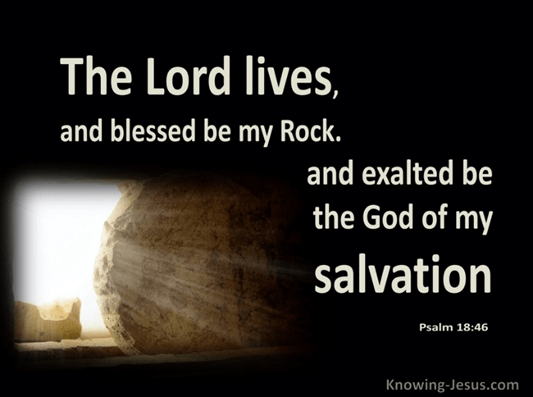
46 The Lord lives! Praise to my Rock! May the God of my salvation be exalted! 47 He is the God who pays back those who harm me; he subdues the nations under me 48 and rescues me from my enemies. You hold me safe beyond the reach of my enemies; you save me from violent opponents. 49 For this, O Lord, I will praise you among the nations; I will sing praises to your name. 50 You give great victories to your king; you show unfailing love to your anointed, to David and all his descendants forever.
If we only read the first verses in this selection, we might feel that David is simply boasting about himself, but he is not. David is actually boasting about the Lord. According to David, God has given him complete victory to the point that David can put his feet on the necks of his enemies, indicating complete victory. God has destroyed all these enemies, even when they have called out to God. Because of these previous victories, foreign nations cringe before David as they lose their courage and come trembling from their strongholds.
46 The Lord lives! Praise to my Rock! May the God of my salvation be exalted! For those of us familiar with traditional praise music, these phrases are quite familiar; however, look at them from David’s standpoint. David has grown up in a society largely given over to idol worship, dominated by false gods powerless to help in any fashion. “The Lord lives” is not simply a nice verse but a statement of fact.
What does the phrase “The Lord lives!” mean for us today. Such a short phrase-how can these three words help us? Never forget that God is always putting explosive ideas in small packages. When we pronounce “the Lord lives!” over our problems, we are acknowledging that God is the Think of seeds and flower, acorns and oak trees. One who can sort things out, who can solve them perfectly. When we try to solve problems, we only create messes, and many times, the harder we try, the messier things get.
As I am writing this, we are in the throes of a dilemma. We have just learned that both of us have significant high school reunions coming up in July. In the meantime, we are funding projects that must be completed promptly. We must leave money for people who depend on us. There are also other considerations we must handle in addition. One of my husband’s beloved relatives has entered hospice. Can we make it in time to see him before he dies? I might need to undergo a cataract operation on one eye. Can we arrange that? Which airline will we use and which airports? The more we think about these things, the more confusing everything appears. What we must do is to remember that the Lord lives, and therefore, the Lord can handle all these issues. Surely the One who has created the universe is capable of sorting out our small challenges.
Are you struggling today? Confused? Worried? Remember, THE LORD LIVES! PRAISE TO OUR ROCK! MAY THE GOD OF OUR SALVATION BE EXALTED!
PRAYER: Father God, thank You for loving us and caring for us. Lord, help us to always remember that You are the One whom we can trust to handle all our problems. In the mighty and precious Name of King Jesus. Amen.
He was a small man with a quick wit and a word of encouragement for everyone he met. He was a retired factory worker, a skilled craftsman, and a dedicated hunter and fisherman. He often wished that he had lived 150 years earlier so that he could have been a mountain man, and being outdoors was one of his passions. Cooking was another passion, and he always insisted on feeding guests, no matter when they appeared. He was a devoted father and grandfather and great-grandfather. Russ Dennis was a U.S. Navy veteran and remained proud of his service for his entire life. But above all else, Russell Dennis Young loved Jesus Christ and wanted everyone around him to learn about Jesus.
Although Russ Dennis was raised in the Catholic Church, he committed his life to Christ and received the baptism of the Holy Spirit sometime in the 1970’s. By the time I entered the Young family in 1982, Russ was a fervent Jesus believer who would witness to anyone, anytime, anywhere. One of his favorite means of witnessing was to take friends fishing in Lake Ontario. After all, as Russ once said, if his fishing companion didn’t want to hear about Jesus, what was he going to do? Swim two miles back to shore? (In addition to his commitment to Jesus, Russ also had a wicked sense of humor.)
Coming from a family with abundant musical talent, Russ played drums. He also learned to play the trumpet so that he could blow “Taps” at funerals for veterans. One of my husband’s and my fond memories is of Russ Dennis playing “Taps” for my husband’s brother Tink’s funeral in 2021. We can only hope and pray that someone will honor Russ in the same manner.
The last few years, Russ faced all kinds of health challenges, including multiple hospital admissions and kidney failure requiring dialysis. But whenever we would call Russ, he remained upbeat and enthusiastic, praying for us each time we called. We last spoke to Russ a few days before he died, learning that he had entered hospice care.
When we tried calling Russ’s family on May 13th and got no answer, we guessed that Russ might be in his final hours on earth. This morning we learned of Russ’s death through a Facebook post from his son Scotty.
When thinking about Russell Dennis Young and his life, the passage that most comes to mind is one from John Bunyan’s seminal work Pilgrim’s Progress. Bunyan is describing the death of Mr. Valiant-for-Truth. The Scottish author John Buchan quoted it in his book Mr. Standfast:
Then said he, “I am going to my Father’s; and though with great difficulty I am got hither, yet now I do not repent me of all the trouble I have been at to arrive where I am. My sword I give to him that shall succeed me in my pilgrimage, and my courage and skill to him that can get it. My marks and scars I carry with me, to be a witness for me that I have fought His battles who now will be my rewarder.“
So he passed over, and all the trumpets sounded for him on the other side.
On May 13, 2026, the trumpets sounded for Russell Dennis Young. For now, those of us left behind must remember, grieve, and treasure our memories as we are grieving. But we know that Jesus has told us that He is the Resurrection and the Life, the Way, the Truth, and the Life. Now Russell Dennis Young is forever with the Lord. And one day, we too will join him.
PRAYER: Father God, thank You for loving us and caring for us. Lord, we praise You for the life of Russell Dennis Young, who has joined You at the Throne. Help us to be as passionate for You and to demonstrate Your love and compassion as he has. In the mighty and precious Name of King Jesus. Amen.
1 When the trumpet of the Lord shall sound, and time shall be no more, and the morning breaks, eternal, bright and fair; When the saved of earth shall gather over on the other shore, and the roll is called up yonder, I’ll be there.
Refrain: When the roll is called up yonder, When the roll is called up yonder, When the roll is called up yonder, When the roll is called up yonder, I’ll be there.
2 On that bright and cloudless morning when the dead in Christ shall rise, and the glory of His resurrection share; When His chosen ones shall gather to their home beyond the skies, And the roll is called up yonder, I’ll be there. [Refrain]
3 Let us labor for the Master from the dawn till setting sun; let us talk of all His wondrous love and care. Then when all of life is over, and our work on earth is done, and the roll is called up yonder, I’ll be there. [Refrain]
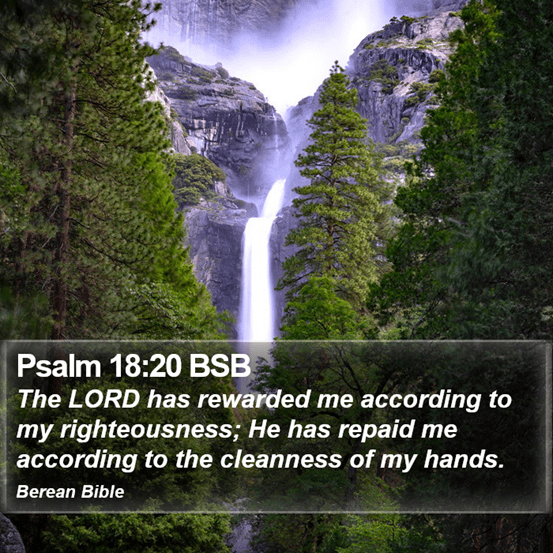
Psalm 18:20 The Lord rewarded me for doing right; he restored me because of my innocence. 21 For I have kept the ways of the Lord; I have not turned from my God to follow evil. 22 I have followed all his regulations; I have never abandoned his decrees. 23 I am blameless before God; I have kept myself from sin. 24 The Lord rewarded me for doing right. He has seen my innocence.
25 To the faithful you show yourself faithful; to those with integrity you show integrity. 26 To the pure you show yourself pure, but to the crooked you show yourself shrewd. 27 You rescue the humble, but you humiliate the proud. 28 You light a lamp for me. The Lord, my God, lights up my darkness. 29 In your strength I can crush an army; with my God I can scale any wall.
30 God’s way is perfect. All the Lord’s promises prove true. He is a shield for all who look to him for protection. 31 For who is God except the Lord? Who but our God is a solid rock? 32 God arms me with strength, and he makes my way perfect. 33 He makes me as surefooted as a deer, enabling me to stand on mountain heights. 34 He trains my hands for battle; he strengthens my arm to draw a bronze bow. 35 You have given me your shield of victory. Your right hand supports me; your help has made me great. 36 You have made a wide path for my feet to keep them from slipping. 37 I chased my enemies and caught them; I did not stop until they were conquered. 38 I struck them down so they could not get up; they fell beneath my feet. At first when we read these verses, we might think David is boasting about his integrity and his faithfulness. Certainly, David goes through a kind of checklist for all the virtuous things he has done, but actually, David is boasting about God. While David mentions his innocence and his commitment to righteousness, he fully realizes that these qualities only allow God to help him, but without God’s help, he has no strength whatsoever. While David speaks of himself in the first few verses, after that, he graphically describes all the ways God has helped him.
25 To the faithful you show yourself faithful; to those with integrity you show integrity. 26 To the pure you show yourself pure, but to the crooked you show yourself shrewd. 27 You rescue the humble, but you humiliate the proud. 28 You light a lamp for me. The Lord, my God, lights up my darkness. 29 In your strength I can crush an army; with my God I can scale any wall.
30 God’s way is perfect. All the Lord’s promises prove true. He is a shield for all who look to him for protection.
We might feel that David is boasting about his own virtue; however, consider the setting out of which David has come. There is nothing to suggest that David’s family worshiped God at all. David met God out in the sheep pastures, not at home. Under the circumstances, David is not vaunting his own strength or wisdom, but the wisdom and strength he has received from God. But have all these answers to prayer come instantly? Far from it! Read David’s story and you realize that David has survived any number of near-disasters. David has had to work very hard to avoid capture by King Saul, and yet, God is the One who has guided David and who has even moved outsiders to attack Israel, forcing Saul to suspend his pursuit of David.
What can we learn from these verses? When we wait patiently for God, He can strengthen and deliver us just as He has David. Repeatedly, David encounters challenges only to find that God is already there protecting him and preparing him for even greater things. God will do the same thing for us.
Trust God! God does not play favorites and He will do for us what He has done for David and for so many of the other saints. God will give us “the shield of victory” if we will only wait for Him.
PRAYER: Father God, thank You for loving us and caring for us. Lord, help us to trust You and to wait for You to strengthen us. In the mighty and precious Name of King Jesus. Amen.
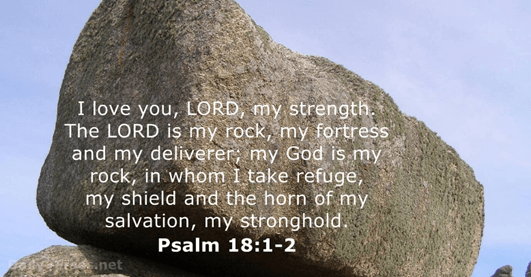
Psalm 18:1 I love you, Lord; you are my strength. 2 The Lord is my rock, my fortress, and my savior; my God is my rock, in whom I find protection. He is my shield, the power that saves me, and my place of safety. 3 I called on the Lord, who is worthy of praise, and he saved me from my enemies.
If anybody knew what it felt like to be attacked and need protection, David would be the one. As the youngest and smallest boy in a family of macho men, David was relegated to herding sheep while his brothers were preening themselves back in the family compound. But God was training David to kill lions and bears that threatened the sheep and preparing him to pick off Goliath with an accurately placed stone from a sling. How many millions of stones did David aim at targets while he was watching sheep?
Later, David would find himself pursued by King Saul throughout the wilderness parts of Israel. Repeatedly, David would find himself taking refuge in caves or hiding behind huge rocks while Saul’s men would pass harmlessly by on the other side. One time, when Saul was about to catch David, a messenger rushed in, telling him that Israel was under attack, forcing him to break off the pursuit to move the army to counter this attack.
But what does it mean that God is a rock, a shield, and a place of safety? We never know when we are going to be attacked. I once walked into a public meeting thinking I was supporting a fellow staff member, only to find myself the target of a planned campaign designed to humiliate me and destroy my reputation in the community. Four more similar meetings followed, each one worse than the last. God gave me the strength and the courage to maintain a relaxed body position and to smile at all those screaming false accusations. Did those accusations hurt? Absolutely! Nobody wants to be accused falsely. But God helped me so that I was able to survive those confrontations gracefully. Rather than simply being a physical rock, God is a spiritual Rock, offering shelter, protection, and encouragement.
4 The ropes of death entangled me; floods of destruction swept over me. 5 The grave wrapped its ropes around me; death laid a trap in my path. 6 But in my distress I cried out to the Lord; yes, I prayed to my God for help. He heard me from his sanctuary; my cry to him reached his ears.
7 Then the earth quaked and trembled. The foundations of the mountains shook; they quaked because of his anger. 8 Smoke poured from his nostrils; fierce flames leaped from his mouth. Glowing coals blazed forth from him. 9 He opened the heavens and came down; dark storm clouds were beneath his feet. 10 Mounted on a mighty angelic being, he flew, soaring on the wings of the wind. 11 He shrouded himself in darkness, veiling his approach with dark rain clouds. 12 Thick clouds shielded the brightness around him and rained down hail and burning coals. 13 The Lord thundered from heaven; the voice of the Most High resounded amid the hail and burning coals. 14 He shot his arrows and scattered his enemies; great bolts of lightning flashed, and they were confused. 15 Then at your command, O Lord, at the blast of your breath, the bottom of the sea could be seen, and the foundations of the earth were laid bare.
16 He reached down from heaven and rescued me; he drew me out of deep waters. 17 He rescued me from my powerful enemies, from those who hated me and were too strong for me. 18 They attacked me at a moment when I was in distress, but the Lord supported me. 19 He led me to a place of safety; he rescued me because he delights in me.
Did God appear in fire and smoke and lightning? No. But God did help me to endure and to continue to care for patients while all these meetings were going on. “18 They attacked me at a moment when I was in distress, but the Lord supported me.” Later that same year, I found myself working alone once more; one colleague went on leave, one left for school, and one transferred to a different facility. Rocks don’t move and they are stable. In that time of instability, God proved once more to be the Rock on which I could depend.
“19 He led me to a place of safety; he rescued me because he delights in me.” Do I deserve God’s delight in me? Frankly, no. God delights in me because I am His creation and because I love Him and try to serve Him, but not because I deserve anything from Him. God delights in me because that is His Nature.
God does not play favorites! The same God who protected David while he was herding sheep and then running from Saul’s armies, the same God who has preserved me and allowed me to work for all these years – that same God delights in you and longs for you to rely on Him as your Rock. Trust God! Confess your sins to Him, knowing that He is holy and righteous but also merciful and forgiving.
PRAYER: Father God, thank You for loving us and caring for us. Lord, many of us are tired, worried, and emotionally drained. We need You to be our Rock, unshakeable, immovable, eternal. Help all who read these words to trust in You. In the mighty and precious Name of King Jesus. Amen.