Archive for the ‘Uncategorized’ Category

SEPTEMBER 16, 2023 SONGS FOR GOD’S PEOPLE #5 PSALM 4 SLEEPLESS? TRY PSALM 4!

September 16, 2023

Answer Me When I Call!

For the choirmaster. With stringed instruments. A Psalm of David.

“Answer me when I call, O God of my righteousness! You have relieved my distress; show me grace and hear my prayer.

How long, O men, will my honor be maligned? How long will you love vanity and seek after lies?

Selah

Know that the LORD has set apart the godly for Himself; the LORD hears when I call to Him.  Be angry, yet do not sin; on your bed, search your heart and be still.

Selah

Offer the sacrifices of righteousness and trust in the LORD.

Many ask, “Who can show us the good?” Shine the light of Your face upon us, O LORD. You have filled my heart with more joy than when grain and new wine abound. I will lie down and sleep in peace, for You alone, O LORD, make me dwell in safety.”

“Answer me when I call, O God of my righteousness!” Once more, David speaks to our needs. We aren’t sure which crisis has prompted this prayer, but obviously, David is facing severe criticism and possible physical attack as well. Notice that David addresses God as “the God of my righteousness.” David knows that before he can make requests, his heart and his hands must be clean. Unconfessed sin of any kind raises barriers between God and people and makes it impossible for us to make requests. Notice that God already knows we are sinful; we are the ones who need to make confession.  

“You have relieved my distress; show me grace and hear my prayer.” Throughout David’s life, he has repeatedly gone to God for help and has never been refused. David is basing this request on a long experience with a God of grace who has answered in the past.

“How long, O men, will my honor be maligned? How long will you love vanity and seek after lies?” David is under attack by those who would slander him and spoil his name. These critics are attempting to inflate their reputations by destroying David’s. Many of us can readily identify with this!

 “Know that the LORD has set apart the godly for Himself; the LORD hears when I call to Him.”  God has helped David before and David is confident that God will come through for him again. There’s no point in calling someone if you don’t expect them to answer, but David is sure of God’s provision.

“Be angry, yet do not sin; on your bed, search your heart and be still.”  Getting angry is a normal part of human life; however, we sin when we persist in our anger. It’s important to recognize our anger and forgive those who have offended us. We need to search our hearts because we may also have offended others and we need to face our own shortcomings as well.

“Offer the sacrifices of righteousness and trust in the LORD.” While David might be referring to animal sacrifices, what sacrifices might we offer? Once we have searched our hearts, we need to confess our sins to God and ask His forgiveness. Once our hearts are clean, we can readily trust in the Lord.

“Many ask, “Who can show us the good?” Shine the light of Your face upon us, O LORD.”  If we are searching for good, which way are we looking? Are we actually searching for God to shine His light on us, or are we searching for good in all the wrong places?

“You have filled my heart with more joy than when grain and new wine abound.” Jewish feasts were generally centered around harvests when grain and new wine were readily available, allowing for wonderful celebrations. David feels God gives him even more joy than he might feel during any of these celebrations.

“I will lie down and sleep in peace, for You alone, O LORD, make me dwell in safety.”  No matter how many enemies surround David, he can sleep securely, knowing that God is in control.

APPLICATION: This psalm is one of my favorites for a number of reasons. During the Northern Ethnic Conflict of 1994, our village was under military occupation and we listened closely when we heard gunfire. Were those guns the military simply indicating their presence, was there a traditional funeral, or were people screaming, indicating that we were under attack? Was this the time we would need to grab the backpack with our passports and money and run for the River Oti to cross into Togo? Blessedly, we were never attacked, but we comforted ourselves with Psalm 4:8 on many occasions.

We have faced many personal medical problems. My husband jokes that he is a bionic man with artificial hips and a triple coronary artery bypass. Repeated bouts of typhoid have left me with fibromyalgia. We have lost many friends and relatives to various medical problems. At times, we have faced slanderous attacks by people hoping to gain money or influence. We can definitely identify with David as he asks, “How long, O men, will my honor be maligned? How long will you love vanity and seek after lies?”  Our testimony after all these years is that God remains faithful and that He will give us peace in the midst of any trial.

King David was not a perfect man by any means. Desiring someone else’s wife, David arranged for her husband to be killed in battle. But David repented and God forgave him. We too sin and make mistakes, but God will forgive us when we confess our faults. At the end of everything, we can still say with David, “I will lie down and sleep in peace, for You alone, O LORD, make me dwell in safety.”  

PRAYER: Father God, thank You for loving us and for caring for us. Lord, help all who read these words to put their trust in You and to rest in You, for You alone can give perfect peace. In the mighty and precious Name of King Jesus. Amen.
SEPTEMBER 15, 2023 SONGS FOR GOD’S PEOPLE #4 PSALM 3 WHEN YOU FEEL LOWER THAN A DITCH DIGGER’S BOOTS, WHO DO YOU CALL ON?  

September 15, 2023

Deliver Me, O LORD!

A Psalm of David, when he fled from his son Absalom

“O LORD, how my foes have increased! How many rise up against me! Many say of me, “God will not deliver him.” Selah (Pause and calmly think on that)

But You, O LORD, are a shield around me, my glory, and the One who lifts my head. To the LORD I cry aloud, and He answers me from His holy mountain. Selah

I lie down and sleep; I wake again, for the LORD sustains me. I will not fear the myriads set against me on every side.
Arise, O LORD! Save me, O my God!
Strike all my enemies on the jaw; break the teeth of the wicked. Salvation belongs to the LORD; may Your blessing be on Your people.” Selah

Although King David was wildly popular at the beginning of his reign, now a new problem has surfaced. David has an incredibly handsome and charismatic son named Absalom. Absalom realizes that if David dies, he will not be first in the line of succession because David has already promised to make Solomon king in his place.

The story is told in 2 Samuel 15-18. Absalom craftily plans a campaign to win the love of the people. “Some time later, Absalom provided for himself a chariot with horses and fifty men to run ahead of him. He would get up early and stand beside the road leading to the city gate. Whenever anyone had a grievance to bring before the king for a decision, Absalom would call out and ask, “What city are you from?” And if he replied, “Your servant is from one of the tribes of Israel,” Absalom would say, “Look, your claims are good and right, but the king has no deputy to hear you.” And he would add, “If only someone would appoint me judge in the land, then everyone with a grievance or dispute could come to me, and I would give him justice.” Also, when anyone approached to bow down to him, Absalom would reach out his hand, take hold of him, and kiss him. Absalom did this to all the Israelites who came to the king for justice. In this way he stole the hearts of the men of Israel.”

Absalom goes down to Hebron, ostensibly to offer sacrifices; however, he brings a number of people with him.   Once in Hebron, Absalom proclaims himself as king and recruits David’s most trusted counselor Ahithophel as his advisor. When David hears the news, he and his court flee Jerusalem. David is so distraught that he walks barefoot and weeping over the Mount of Olives. David’s life is falling apart. His beloved son whose name means “Father of peace” has turned out to be a scoundrel and a betrayer. For David, it appears that all is lost and that his life has been a complete failure. It is at this point in David’s life that he composes this psalm.

If the expression “lower than a ditch digger’s boots” had been in use during David’s day, he might have used it to describe his condition as he wrote this psalm. For David, it appears that all his friends and supporters have deserted him, although that is not really the case. A large group of people are accompanying David, and all of them are ascending the Mount of Olives barefoot and weeping. As David and his followers continue eastward and cross the Jordan, powerful people come to their aid, bringing food and drink and sheltering them.

David’s fears are realistic because Ahithophel counsels Absalom to immediately send soldiers after David’s group to seize David and kill him. David’s life is spared because David’s friend Hushai suggests that they defer Ahithophel’s plan until the following day. Hushai then messages David to cross the Jordan as quickly as possible to avoid attack. Even amid this disaster, God is still working to preserve David’s life. Ultimately, David returns to Jerusalem. Absalom is killed during a battle when the long hair of which he is so proud gets caught in tree branches as he is fleeing the battle on his mule. Joab, David’s general, kills Absalom as he is hanging in the tree.

APPLICATION: Reading Psalm 3, we can see why the Book of Psalms is the most widely-read and widely-quoted book of the Bible. No matter what is happening in your life, you can find a psalm that will speak to your condition.  

For many of us, David’s condition might be ours as well. Through the years, we have sponsored a number of young people to professional courses in nursing. Some of these same people have then turned around to bring false accusations in hopes of somehow gaining more money from the hospital or from us. In at least one such case, the individual has left nursing to become a pastor. We can only wonder what might happen if this man continues to pursue his rebellious and ungrateful behavior in his new profession, not to mention how he will feel if someone else treats him as he has mistreated us.

We can testify to the truth that God HAS been a shield around us, our glory and the One who lifts up our heads when we have felt defeated. Were these struggles easy? No! Would we willingly go through them again? Not if we have a choice. Will we face other trials in the future? Most likely! But God remains faithful, no matter what happens, and this is the ultimate message of this psalm. “Salvation belongs to the LORD…”  Interestingly enough, that is the very same thing Jonah says in his prayer while he is still in the belly of the big fish. (Jonah 2:9) Paul, writing to Timothy from prison in 2 Timothy 4:18 says, “And the Lord will rescue me from every evil action and bring me safely into His heavenly kingdom. To Him be the glory forever and ever. Amen.”   

PRAYER: Father God, thank You for loving us and for caring for us. Lord, let all those who are suffering or are persecuted trust You, knowing that You will be a shield around them, their glory, and the One who lifts up their heads. In the mighty and precious Name of King Jesus. Amen.

SEPTEMBER 14, 2023 SONGS FOR GOD’S PEOPLE #3 PSALM 2 YOUR ARM’S TOO SHORT TO BOX WITH GOD!

September 14, 2023

The Triumphant Messiah (Acts 4:23-31)

Why do the nations rage and the peoples plot in vain? The kings of the earth take their stand and the rulers gather together, against the LORD and against His Anointed One: “Let us break Their chains and cast away Their cords.”

The One enthroned in heaven laughs; the Lord taunts them. Then He rebukes them in His anger, and terrifies them in His fury: “I have installed My King on Zion, upon My holy mountain.”

I will proclaim the decree spoken to Me by the LORD: “You are My Son; today I have become Your Father. Ask Me, and I will make the nations Your inheritance, the ends of the earth Your possession.

You will break them with an iron scepter; You will shatter them like pottery.”

Therefore be wise, O kings; be admonished, O judges of the earth. Serve the LORD with fear, and rejoice with trembling. Kiss the Son, lest He be angry and you perish in your rebellion, when His wrath ignites in an instant. Blessed are all who take refuge in Him.”

For a short psalm, this poem works on many different levels. First, the psalm refers to the triumphant Messiah. “The kings of the earth take their stand and the rulers gather together, against the LORD and against His Anointed One.” Obviously, the Anointed One must be the Messiah. Second, the psalm describes the rebellion of earthly rulers against the God who has created them. “Let us break Their chains and cast away Their cords.”

Third, while these rulers are shaking their fists at God, God views them with supreme disdain and then proceeds to enforce His Will. “The One enthroned in heaven laughs; the Lord taunts them. Then He rebukes them in His anger, and terrifies them in His fury: “I have installed My King on Zion, upon My holy mountain.”  

Fourth, the Messiah speaks for himself. “I will proclaim the decree spoken to Me by the LORD: “You are My Son; today I have become Your Father. Ask Me, and I will make the nations Your inheritance, the ends of the earth Your possession. You will break them with an iron scepter; You will shatter them like pottery.”

Finally, God issues a final warning to earthly rulers: “Therefore be wise, O kings; be admonished, O judges of the earth. Serve the LORD with fear, and rejoice with trembling. Kiss the Son, lest He be angry and you perish in your rebellion, when His wrath ignites in an instant. Blessed are all who take refuge in Him.”

APPLICATION: The phrase “Your arm’s too short to box with God” was originally used by the famous African American author James Weldon Johnson in his book God’s Trombones: Seven Negro Sermons in Verse. Johnson in turn claimed to have borrowed the phrase from a pastor friend. The point of the phrase is simple: God is all-powerful and we are not. We can shake our fists at God, shout at Him, tell Him how we refuse to do His Will, and all this rebellion will still have no effect.

Currently, North Korea and Russia may be entering into an arms agreement that could result in disaster for Ukraine. There have been numerous coups in Africa, most recently in Gabon. Throughout the world, there are rulers drunk with power who want to believe that they are omnipotent. But God is not impressed with these rulers.

God has sent His Son, Jesus, the Messiah, and has given him the nations of the earth. We can trust God to handle evil rulers. We can also trust God to handle whatever problems we encounter. As I am writing this, three of our patients are struggling with draining fecal fistulas that are difficult to control. Our nurses and our nutrition team must continue to trust that God is capable of healing these patients completely. We wish God would heal these patients instantly, relieving all of us; however, we have to believe that God is working out His purposes. One result of these problems is that our Nutrition Unit is beginning to function as it never has before.

A Facebook friend has just written that her husband is going into hospice care on a dilaudid pump to control the pain from his cancer. I have no power to do anything in that situation; however, God can give this precious lady and her beloved husband the grace to endure this situation or He can heal him miraculously. (For believers, death also brings healing and release, but that’s a subject for another day.)

If our arms are too short to box with God and we have little control over our own situations, what can we do? The answer is in the final line. “Blessed are all who take refuge in Him.”  We can take refuge in Jesus Christ, the Messiah, the One who holds the nations of the earth in His hand.  

PRAYER: Father God, thank You for loving us and for caring for us. Lord, many of us are suffering and feel helpless and confused. We see no light in our situations. But You, Lord, have told us that You are the Light of the World and that those who know You will not walk in darkness but will have the light of life. Lord, enlighten those in the dark. Heal those who are suffering in any fashion, whether physically, mentally, emotionally, or spiritually. And help all who read these words to put their trust in You. In Your mighty and precious Name, Lord Jesus. Amen.

SEPTEMBER 13, 2023 SONGS FOR GOD’S PEOPLE #2 IF YOU DON’T KNOW WHERE YOU ARE GOING, YOU’LL WIND UP SOMEWHERE ELSE!  

September 13, 2023

 BOOK ONE  Psalms 1–41

The Way of the Righteous and the End of the Ungodly

“Blessed is the man who walks not in the counsel of the ungodly, nor stands in the path of sinners, nor sits in the seat of the scornful; but his delight is in the law of the Lord, and in His law he meditates day and night.
He shall be like a tree planted by the rivers of water, that brings forth its fruit in its season, whose leaf also shall not wither; and whatever he does shall prosper.

The ungodly are not so, but are like the chaff which the wind drives away. Therefore the ungodly shall not stand in the judgment, nor sinners in the congregation of the righteous. For the Lord knows the way of the righteous, but the way of the ungodly shall perish.”

God has allowed this Psalm to be the first, not because it is the longest but because it makes such an important point: bad company corrupts. “Walking in the counsel of the ungodly” means to follow advice from people who have no fear of God or His commandments. One of our friends used to have a poster that read, “If you don’t know where you’re going, you’ll wind up somewhere else.”

“nor stands in the path of sinners” Sometimes we are tempted to “walk on the wild side,” forgetting that there is always a price for such behavior. Sleep with enough people and you will wind up with HIV or Hepatitis B, C, D, E, or even some new strain that will devour your liver. Many young people have attempted to remain on the fringe of gangs because they think it is brave or glamorous, only to die from gunshot wounds. Several years ago, a gifted young basketball player had just matched with his dream program. A “friend” gave him cocaine to celebrate; that celebration resulted in the young man dying from an overdose, his dreams in tatters and his family’s hearts broken.

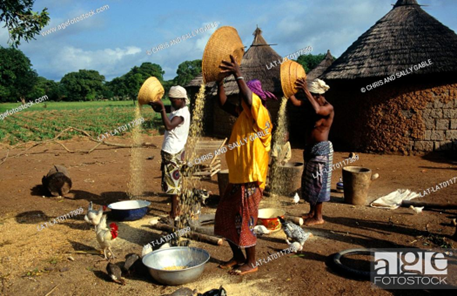
It’s a common sight in African, Asian, and Middle Eastern villages at certain times of the year. Women pour grain from one container into another, allowing the wind to carry away the chaff, leaving only the good grain. Nobody cares about the chaff, and it’s so useless that the goats might not even eat it.

How can we stay focused? “but his delight is in the law of the Lord, and in His law he meditates day and night.
He shall be like a tree planted by the rivers of water, that brings forth its fruit in its season, whose leaf also shall not wither; and whatever he does shall prosper.”
 The more we read God’s Word, the Bible, the more it will speak to us and the more sense it will make to us. God is really sneaky! Reading God’s Word changes us without our even being aware. God will never override our free will, but when we read His Word, our “want-to’s” change. Notice one thing: God’s idea of prosperity is not ours. Many times, we think only of financial prosperity, while God wants us to be spiritually prosperous.

APPLICATION: GIGO! This phrase stands for “garbage in, garbage out,” and it first became popular in the 1980’s when computer use was on the upswing. Computers are wonderful; however, you will only get out of a computer what you put into it. Here God is telling us that we are like computers. If we want our lives to be fruitful and positive, we must study God’s Word. Put garbage into our minds and we will get out garbage and failure. Binge on Netflix series or become addicted to games on your cell phone and you have wasted time better spent in something else. (I have a list of games I have had to remove from my phone because I became addicted.)

Nowadays, Bible apps for cell phones are everywhere, making it easy to study God’s Word. Last Sunday, we visited a friend’s church in a small village and half the people there were reading the Bible from their cell phones. I keep one English translation and versions in two different tribal languages on my phone as a means of studying those languages as well as studying the Bible. If you’re not fond of reading, there are audio versions to which you can listen while driving or doing other things.  

How much of the Bible should you read at a time? Years ago, Evelyn Christensen, a wonderful teacher on intercessory prayer, suggested that we should read until God stops us and then ask God what He wants to show us with the verse or verses. How do you know when to stop? Stop when it quits making sense to you. Go back to the last verse where it made sense and ask God for insight. You can trust God to enlighten you.

Jesus told his disciples in John 10:10 that “The thief does not come except to steal, and to kill, and to destroy. I have come that they may have life, and that they may have it more abundantly.”  God wants us to have wonderful lives, and to see His purposes fulfilled in them.

PRAYER: Father God, thank You for loving us and for caring for us. Lord, help us to take this Psalm to heart and to follow Your leading throughout our lives. In the mighty and precious Name of King Jesus. Amen.
SEPTEMBER 12, 2023 SONGS FOR GOD’S PEOPLE INTRODUCTION TO THE BOOK OF PSALMS

September 12, 2023

Today’s introduction to this very important book of the Bible comes from Reverend Chuck Swindoll’s Insight for Living website. I have treasured Rev. Swindoll’s writing for years and can highly recommend his books, his podcasts, and his website.

Who wrote the book?  

Psalms, a collection of lyrical poems, is one of only two Old Testament books to identify itself as a composite work containing multiple authors (Proverbs is the other). Some psalms name their author in the first line or title. For example, Moses wrote Psalm 90. David was responsible for many of them, composing seventy-three psalms. Asaph wrote twelve; the descendants of Korah penned ten. Solomon wrote one or two, and Ethan and Heman the Ezrahites were responsible for two others. The remainder of the psalms do not contain information about their authors.

The book was originally titled Tehillim, which means “praise songs” in Hebrew. The English title of “Psalms” originated from the Septuagint’s Greek title Psalmoi, also meaning “songs of praise.”1

Where are we?

Individual psalms were written as far back in history as Moses’s time, through the time of David, Asaph, and Solomon, to the time of the Ezrahites who most likely lived after the Babylonian captivity, meaning the writing of the book spans one thousand years. Some of the psalms attributed to David have additional notations connecting them with documented events in his life (for example, Psalm 59 is linked with 1 Samuel 19:11; Psalm 56 is connected with 1 Samuel 21:10–15; Psalm 34 is associated with 1 Samuel 21:10–22:2; and Psalm 52 is linked with 1 Samuel 22:9).

The psalms are organized into five books or collections. They were probably collected gradually, as corporate worship forms developed along with temple worship. It is likely that by the time of Ezra, the books of the Psalter were organized into their final form. Each section concludes with a doxology, with the entire Psalter capped by Psalm 150, a grand doxology.

Why is Psalms so important?

The psalms comprised the ancient hymnal of God’s people. The poetry was often set to music—but not always. The psalms express the emotion of the individual poet to God or about God. Different types of psalms were written to communicate different feelings and thoughts regarding a psalmist’s situation.

Psalms of lament express the author’s crying out to God in difficult circumstances. Psalms of praise, also called hymns, portray the author’s offering of direct admiration to God. Thanksgiving psalms usually reflect the author’s gratitude for a personal deliverance or provision from God. Pilgrim psalms include the title “a song of ascent” and were used on pilgrimages “going up” to Jerusalem for three annual festivals. Other types of psalms are referred to today as wisdom psalms, royal psalms (referring to Israel’s king or Israel’s Messiah), victory psalms, Law psalms, and songs of Zion.

The psalms include unique Hebrew terms. The word Selah, found seventy-one times, is most likely a musical notation added by worship leaders after the Israelites incorporated the psalm into public worship. Scholars do not know the meaning of maskil, found in thirteen psalms. Occasionally, a psalm appears with instructions for the song leader. For example, we see instructions such as “For the director of music” (occurring in fifty-five psalms [NIV]); “To the tune of ‘Lilies’” (similar references found in Psalms 45, 60, 69, 80 NIV); “To the tune of ‘The Doe of the Morning’ ” (Psalm 22 NIV); “To the tune of ‘Do Not Destroy’ ” (Psalms 57–59, 75 NIV). These and others can refer to melodies used with the given psalm or perhaps to suggestions for liturgical use.

What’s the big idea?

The book of Psalms expresses worship. Throughout its many pages, Psalms encourages its readers to praise God for who He is and what He has done. The Psalms illuminate the greatness of our God, affirm His faithfulness to us in times of trouble, and remind us of the absolute centrality of His Word. As the Psalms present a clear picture of God lovingly guiding His people, the responses of praise and worship to God are never far from the psalmists’ pens. The portrayal of worship in the Psalms offers us glimpse after glimpse of hearts devoted to God, individuals repentant before Him, and lives changed through encounters with Him. 

How do I apply this?

Read Psalm 1, then Psalm 150. Thank God for allowing you to express your deepest emotions to Him. If you are hurting, use Psalm 13 as a guide and write your own lament to God. If you are rejoicing, meditate on Psalm 30 and echo the praise found there. No matter your circumstance, the psalms contain a corresponding word that will help you share your heart with the Lord.

SEPTEMBER 11, 2023 BOOKKEEPING? AARGH! #39 NUMBERS 36:1-34 NO DETAIL IS TOO SMALL FOR GOD!

September 11, 2023

 Zelophehad’s Daughters Marry (Numbers 27:1-5)

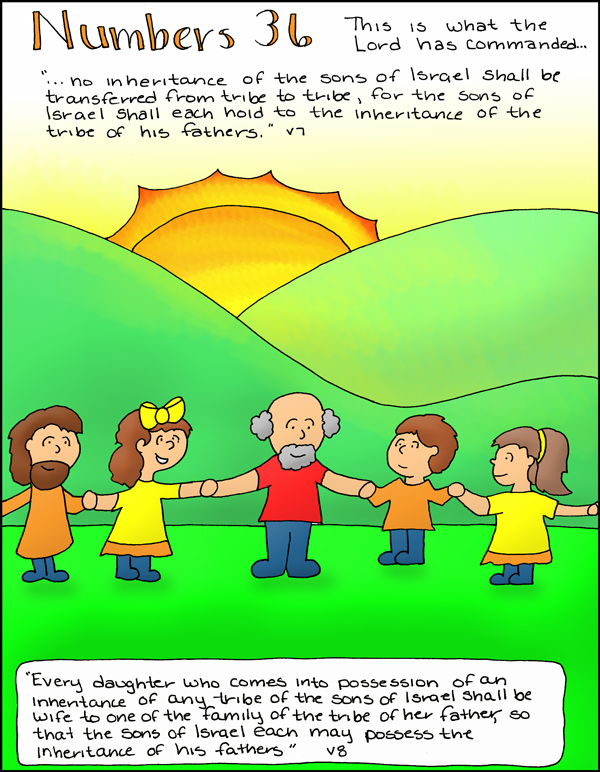
“Now the family heads of the clan of Gilead son of Machir son of Manasseh, one of the clans of Joseph, approached and addressed Moses and the leaders who were the heads of the Israelite families, saying, “When the LORD commanded my lord to give the land as an inheritance to the Israelites by lot, He also commanded him to give the inheritance of our brother Zelophehad to his daughters. But if they marry any of the men from the other tribes of Israel, their inheritance will be withdrawn from the portion of our fathers and added to the tribe into which they marry. So our allotted inheritance would be taken away. And when the Jubilee for the Israelites comes, their inheritance will be added to the tribe into which they marry and taken away from the tribe of our fathers.”

So at the word of the LORD, Moses commanded the Israelites: “The tribe of the sons of Joseph speaks correctly. This is what the LORD has commanded concerning the daughters of Zelophehad: They may marry anyone they please, provided they marry within a clan of the tribe of their father. No inheritance in Israel may be transferred from tribe to tribe, because each of the Israelites is to retain the inheritance of the tribe of his fathers. Every daughter who possesses an inheritance from any Israelite tribe must marry within a clan of the tribe of her father, so that every Israelite will possess the inheritance of his fathers. No inheritance may be transferred from one tribe to another, for each tribe of Israel must retain its inheritance.”

So the daughters of Zelophehad did as the LORD had commanded Moses. Mahlah, Tirzah, Hoglah, Milcah, and Noah, the daughters of Zelophehad, were married to cousins on their father’s side. They married within the clans of the descendants of Manasseh son of Joseph, and their inheritance remained within the tribe of their father’s clan.

These are the commandments and ordinances that the LORD gave to the Israelites through Moses on the plains of Moab by the Jordan across from Jericho.”

Although the Israelites have yet to enter the Promised Land, God is already laying down the regulations for dividing the land and inheriting it. Clans are to retain the land allotted to them, no matter what happens. Although generally men are to inherit land from their fathers, what happens if there are no male heirs? Here God is addressing that question. Zelophehad is a man from the tribe of Manasseh. Zelophehad dies, leaving only daughters. Naturally, clan members are concerned that if these girls marry, the land will pass to a different clan or even to a different tribe. God’s answer is to have the girls marry cousins within a clan of the tribe of their father.

This discussion also concludes the Book of Numbers. Next, Moses goes on to summarize all God’s commandments for the Israelites in the Book of Deuteronomy, a book we have already discussed. But in the midst of the bookkeeping and censuses, remember that the Book of Numbers has fascinating stories that give us insight into God’s ways with His people.

APPLICATION: God cares about the finest details of our lives, including inheritances and our choice of spouses. God is also a problem-solving God, who can help sort out the thorniest problems we may present Him. These women naturally want to marry; yet, they must not marry a very close relative. At the same time, if the women do not inherit from their father, it is as if their family is being blotted out of their clan. Such an event could set nasty precedents. God wants to ensure that land remains in tribes and clans and that His commands are followed precisely. The answer is for the women to marry distant cousins but to retain the land for their father’s clan.

Many times we find that our ways are dark. We have difficult decisions to make with no idea which direction to take. But we can trust the God Who has created us and Who loves us better than anybody else to steer us in the right direction.

Perhaps you find yourself struggling with a decision today. You have weighed pros and cons and are no nearer to a solution than you were before. Pray and ask God to help You. God is a good Father who will not play guessing games with His children. If you will take one step forward, God will be able to guide you. But also remember this: it’s impossible to guide a stationary object. If you make a start, God can do a course correction; however, if you sit demanding that God will show you everything before you even begin, nothing will happen. Let’s pray.

PRAYER: Father God, thank You for loving us and for caring for us. Lord, many of us are confused and wonder which way to turn. Pierce the darkness and give Your beloved ones light so that they can see the next step. In the mighty and precious Name of King Jesus. Amen.
SEPTEMBER 10, 2023 BOOKKEEPING? AARGH! #38 NUMBERS 35:1-34 GIMME SHELTER!

September 10, 2023

Cities for the Levites

“And the Lord spoke to Moses in the plains of Moab by the Jordan across from Jericho, saying: “Command the children of Israel that they give the Levites cities to dwell in from the inheritance of their possession, and you shall also give the Levites common-land around the cities. They shall have the cities to dwell in; and their common-land shall be for their cattle, for their herds, and for all their animals. The common-land of the cities which you will give the Levites shall extend from the wall of the city outward a thousand cubits all around. And you shall measure outside the city on the east side two thousand cubits, on the south side two thousand cubits, on the west side two thousand cubits, and on the north side two thousand cubits. The city shall be in the middle. This shall belong to them as common-land for the cities.

“Now among the cities which you will give to the Levites you shall appoint six cities of refuge, to which a manslayer may flee. And to these you shall add forty-two cities. So all the cities you will give to the Levites shall be forty-eight; these you shall give with their common-land. And the cities which you will give shall be from the possession of the children of Israel; from the larger tribe you shall give many, from the smaller you shall give few. Each shall give some of its cities to the Levites, in proportion to the inheritance that each receives.”

Cities of Refuge

Then the Lord spoke to Moses, saying, “Speak to the children of Israel, and say to them: ‘When you cross the Jordan into the land of Canaan, then you shall appoint cities to be cities of refuge for you, that the manslayer who kills any person accidentally may flee there. They shall be cities of refuge for you from the avenger, that the manslayer may not die until he stands before the congregation in judgment. And of the cities which you give, you shall have six cities of refuge. You shall appoint three cities on this side of the Jordan, and three cities you shall appoint in the land of Canaan, which will be cities of refuge. These six cities shall be for refuge for the children of Israel, for the stranger, and for the sojourner among them, that anyone who kills a person accidentally may flee there.

‘But if he strikes him with an iron implement, so that he dies, he is a murderer; the murderer shall surely be put to death. And if he strikes him with a stone in the hand, by which one could die, and he does die, he is a murderer; the murderer shall surely be put to death. Or if he strikes him with a wooden hand weapon, by which one could die, and he does die, he is a murderer; the murderer shall surely be put to death. The avenger of blood himself shall put the murderer to death; when he meets him, he shall put him to death. (The avenger of blood is a family member who is to avenge the victim.)

If he pushes him out of hatred or, while lying in wait, hurls something at him so that he dies, or in enmity he strikes him with his hand so that he dies, the one who struck him shall surely be put to death. He is a murderer. The avenger of blood shall put the murderer to death when he meets him.

‘However, if he pushes him suddenly without enmity, or throws anything at him without lying in wait, or uses a stone, by which a man could die, throwing it at him without seeing him, so that he dies, while he was not his enemy or seeking his harm, then the congregation shall judge between the manslayer and the avenger of blood according to these judgments. So the congregation shall deliver the manslayer from the hand of the avenger of blood, and the congregation shall return him to the city of refuge where he had fled, and he shall remain there until the death of the high priest who was anointed with the holy oil. But if the manslayer at any time goes outside the limits of the city of refuge where he fled, and the avenger of blood finds him outside the limits of his city of refuge, and the avenger of blood kills the manslayer, he shall not be guilty of blood (murder), because he should have remained in his city of refuge until the death of the high priest. But after the death of the high priest the manslayer may return to the land of his possession.

‘And these things shall be a statute of judgment to you throughout your generations in all your dwellings. Whoever kills a person, the murderer shall be put to death on the testimony of witnesses; but one witness is not sufficient testimony against a person for the death penalty. Moreover you shall take no ransom for the life of a murderer who is guilty of death, but he shall surely be put to death. And you shall take no ransom for him who has fled to his city of refuge, that he may return to dwell in the land before the death of the priest. So you shall not pollute the land where you are; for blood defiles the land, and no atonement can be made for the land, for the blood that is shed on it, except by the blood of him who shed it. Therefore do not defile the land which you inhabit, in the midst of which I dwell; for I the Lord dwell among the children of Israel.’ ”

God is still making advance provision for the fashion in which the Promised Land is to be divided. Now it is the turn of the Levites. God orders that the Levites have a total of forty-eight cities, each with two thousand cubits of common land around it as their inheritance. These cities are to be dotted throughout Israel. Six of these cities are also to serve as cities of refuge for anyone who has accidentally committed murder.

Why are cities of refuge necessary? In the prevailing culture at the time of Moses, once someone dies accidentally or is murdered, it is incumbent on the closest male relative to avenge that death. The shedding of innocent blood brings curses on a land, so this retribution is necessary. Murderers are to be put to death; however, what about those who have accidentally caused someone to die? Perhaps two men are cutting wood together and the axe head flies off the handle of one man’s axe, striking the other and killing him. What should happen to the innocent man? Or perhaps a man’s hand slips as he is throwing a stone at a bird and the stone strikes a passerby, killing him. What should happen to that man? In such cases, God is providing cities of refuge. Manslayers may run to these cities of refuge and remain there until they stand in judgement before the congregation. If the congregation agrees that this death was accidental, the manslayer will remain alive as long as he stays in the city of refuge until the death of the current high priest. But if the manslayer becomes impatient and tries to sneak out, his life is forfeit.

Why is it so important to ensure that true murderers be put to death while the innocent are protected? The shedding of innocent blood brings curses on a land and must be paid for by blood. Repeatedly, God warns “So you shall not pollute the land where you are; for blood defiles the land, and no atonement can be made for the land, for the blood that is shed on it, except by the blood of him who shed it. Therefore do not defile the land which you inhabit, in the midst of which I dwell; for I the Lord dwell among the children of Israel.’ ”

APPLICATION: We read these commands in the Old Testament and automatically dismiss them. After all, those were different times, times in which it was incumbent upon the relatives of someone who had been murdered to enact vengeance on the murderer. But what if we are wrong? What if the shedding of innocent blood still brings curses and defiles a land? The United States legalized abortion in 1973. Since then, hundreds of thousands of infants have been murdered through this heinous practice. While we are flailing around blaming climate change, the use of fossil fuels, etc., we are steadfastly refusing to acknowledge the fact that we have poisoned our own land.

We live and work in Ghana. In recent years, numerous non-governmental organizations have been pushing abortion, offering large amounts of money as an inducement. The Christian Health Association of Ghana, the umbrella organization for mission hospitals and clinics, has refused to countenance abortion in any of its facilities. With so many other forms of birth control readily available, it is ridiculous to insist upon legalizing abortion.

When reading the Old Testament, let’s remember that the God of the Old Testament is also the God of the New Testament and that He is changeless. Let us respect God’s commands and let us study them closely.

PRAYER: Father God, thank You for loving us and for caring for us. Lord, we confess that we have tolerated the murder of infants through abortion. We beg You for forgiveness and ask You to blot out this practice. Help us to follow hard after You all the days of our lives. In the mighty and precious Name of King Jesus. Amen.
SEPTEMBER 9, 2023 BOOKKEEPING? AARGH! #37 NUMBERS 34:1-29 “WHERE THERE’S A WILL, THERE’S AN ARGUMENT!

September 9, 2023

The Appointed Boundaries of Canaan

“Then the Lord spoke to Moses, saying, “Command the children of Israel, and say to them: ‘When you come into the land of Canaan, this is the land that shall fall to you as an inheritance—the land of Canaan to its boundaries. Your southern border shall be from the Wilderness of Zin along the border of Edom; then your southern border shall extend eastward to the end of the Salt Sea; your border shall turn from the southern side of the Ascent of Akrabbim, continue to Zin, and be on the south of Kadesh Barnea; then it shall go on to Hazar Addar, and continue to Azmon; the border shall turn from Azmon to the Brook of Egypt, and it shall end at the Sea.

‘As for the western border, you shall have the Great Sea for a border; this shall be your western border.

‘And this shall be your northern border: From the Great Sea you shall mark out your border line to Mount Hor; from Mount Hor you shall mark out your border to the entrance of Hamath; then the direction of the border shall be toward Zedad; the border shall proceed to Ziphron, and it shall end at Hazar Enan. This shall be your northern border.

‘You shall mark out your eastern border from Hazar Enan to Shepham; the border shall go down from Shepham to Riblah on the east side of Ain; the border shall go down and reach to the eastern side of the Sea of Chinnereth; the border shall go down along the Jordan, and it shall end at the Salt Sea. This shall be your land with its surrounding boundaries.’ ”

Then Moses commanded the children of Israel, saying: “This is the land which you shall inherit by lot, which the Lord has commanded to give to the nine tribes and to the half-tribe. For the tribe of the children of Reuben according to the house of their fathers, and the tribe of the children of Gad according to the house of their fathers, have received their inheritance; and the half-tribe of Manasseh has received its inheritance. The two tribes and the half-tribe have received their inheritance on this side of the Jordan, across from Jericho eastward, toward the sunrise.”

The Leaders Appointed to Divide the Land

And the Lord spoke to Moses, saying, “These are the names of the men who shall divide the land among you as an inheritance: Eleazar the priest and Joshua the son of Nun. And you shall take one leader of every tribe to divide the land for the inheritance. These are the names of the men: from the tribe of Judah, Caleb the son of Jephunneh; from the tribe of the children of Simeon, Shemuel the son of Ammihud; from the tribe of Benjamin, Elidad the son of Chislon; a leader from the tribe of the children of Dan, Bukki the son of Jogli; from the sons of Joseph: a leader from the tribe of the children of Manasseh, Hanniel the son of Ephod, and a leader from the tribe of the children of Ephraim, Kemuel the son of Shiphtan; a leader from the tribe of the children of Zebulun, Elizaphan the son of Parnach; a leader from the tribe of the children of Issachar, Paltiel the son of Azzan; a leader from the tribe of the children of Asher, Ahihud the son of Shelomi; and a leader from the tribe of the children of Naphtali, Pedahel the son of Ammihud.”

These are the ones the Lord commanded to divide the inheritance among the children of Israel in the land of Canaan.”

What would you do if you knew you were about to die, you had a large amount of work left to do, and you didn’t know the actual day of your death? Moses is trying to address all the problems before he dies so Joshua won’t face a mess. To that end, Moses is minutely describing the boundaries of the Promised Land and designating those who will be responsible for its division among the nine and a half tribes. The Reubenites, the Gadites, and the half tribe of Manasseh have already claimed land on the east side of the Jordan River, so they are no longer a factor. God also chooses leaders from each tribe who will represent the tribes during the casting of lots for the land to make these deliberations as fair as possible.

APPLICATION: Administration is a gift, and very few people actually possess it. Through the years, I have been forced into administrative roles in several different health facilities. The little knowledge I have gained has been earned in the school of hard knocks. I can only liken the process to attempting to cross a strange room in the dark and tripping over every piece of furniture! True administrators are passionate about solving problems thoroughly and ensuring that all the necessary resources will be available. Now consider Moses.

God has already informed Moses that as soon as Moses has helped defeat the Moabites, he will die. Moses is literally living on borrowed time, and he knows it. As Moses’ career winds down, he is most concerned about his successor, Joshua. Who is going to guide Joshua? Who is going to support him? The Israelites are infamous for criticizing, back biting, whining, and generally wimping out whenever things get tough. I am certain that Moses has begged God for clarity on these boundaries, and God has graciously answered. While this chapter might seem tedious to us, these descriptions undoubtedly helped prevent a number of boundary disputes once the Israelites crossed the Jordan and began dividing up the land.

One timeless lesson from this chapter is that God cares about all the minute details of our lives, where we live, what work we do, our means of transportation, etc. It is staggering to realize that when God was creating the Promised Land, He already knew those who would eventually live there.

In Deuteronomy 11:10-12, God tells the Israelites, “For the land which you go to possess is not like the land of Egypt from which you have come, where you sowed your seed and watered it by foot, as a vegetable garden; but the land which you cross over to possess is a land of hills and valleys, which drinks water from the rain of heaven, a land for which the Lord your God cares; the eyes of the Lord your God are always on it, from the beginning of the year to the very end of the year.”  God is omniscient, all-knowing. He cares for each of us just as much as He cared for the ancient Israelites. God’s eyes are on us from the beginning of the year to the very end of the year. Why not trust Him?

PRAYER: Father God, thank You for loving us and for caring for us. Lord, let everyone who reads these words put their trust in You, their Creator and Sustainer. In the mighty and precious Name of King Jesus. Amen.
SEPTEMBER 8, 2023 BOOKKEEPING? AARGH! #36 NUMBERS 33:1-56 YOU NEED TO KNOW WHERE YOU’VE BEEN TO KNOW WHERE YOU SHOULD BE GOING.

September 8, 2023

Israel’s Journey from Egypt Reviewed

“These are the journeys of the children of Israel, who went out of the land of Egypt by their armies under the hand of Moses and Aaron. Now Moses wrote down the starting points of their journeys at the command of the Lord. And these are their journeys according to their starting points:

They departed from Rameses in the first month, on the fifteenth day of the first month; on the day after the Passover the children of Israel went out with boldness in the sight of all the Egyptians. For the Egyptians were burying all their firstborn, whom the Lord had killed among them. Also on their gods the Lord had executed judgments.

Then the children of Israel moved from Rameses and camped at Succoth. They departed from Succoth and camped at Etham, which is on the edge of the wilderness. They moved from Etham and turned back to Pi Hahiroth, which is east of Baal Zephon; and they camped near Migdol. They departed [from before Hahiroth and passed through the midst of the sea into the wilderness, went three days’ journey in the Wilderness of Etham, and camped at Marah. They moved from Marah and came to Elim. At Elim were twelve springs of water and seventy palm trees; so they camped there.

They moved from Elim and camped by the Red Sea. They moved from the Red Sea and camped in the Wilderness of Sin. They journeyed from the Wilderness of Sin and camped at Dophkah. They departed from Dophkah and camped at Alush. They moved from Alush and camped at Rephidim, where there was no water for the people to drink. They departed from Rephidim and camped in the Wilderness of Sinai. They moved from the Wilderness of Sinai and camped at Kibroth Hattaavah (Graves of Craving).

They departed from Kibroth Hattaavah and camped at Hazeroth. They departed from Hazeroth and camped at Rithmah. They departed from Rithmah and camped at Rimmon Perez. They departed from Rimmon Perez and camped at Libnah. They moved from Libnah and camped at Rissah. They journeyed from Rissah and camped at Kehelathah. They went from Kehelathah and camped at Mount Shepher. They moved from Mount Shepher and camped at Haradah. They moved from Haradah and camped at Makheloth. They moved from Makheloth and camped at Tahath. They departed from Tahath and camped at Terah. They moved from Terah and camped at Mithkah. They went from Mithkah and camped at Hashmonah. They departed from Hashmonah and camped at Moseroth. They departed from Moseroth and camped at Bene Jaakan. They moved from Bene Jaakan and camped at Hor Hagidgad. They went from Hor Hagidgad and camped at Jotbathah. They moved from Jotbathah and camped at Abronah. They departed from Abronah and camped at Ezion Geber. They moved from Ezion Geber and camped in the Wilderness of Zin, which is Kadesh. They moved from Kadesh and camped at Mount Hor, on the boundary of the land of Edom.

Then Aaron the priest went up to Mount Hor at the command of the Lord, and died there in the fortieth year after the children of Israel had come out of the land of Egypt, on the first day of the fifth month. Aaron was one hundred and twenty-three years old when he died on Mount Hor.

Now the king of Arad, the Canaanite, who dwelt in the South in the land of Canaan, heard of the coming of the children of Israel.

So they departed from Mount Hor and camped at Zalmonah. They departed from Zalmonah and camped at Punon. They departed from Punon and camped at Oboth. They departed from Oboth and camped at Ije Abarim, at the border of Moab. They departed from Ijim and camped at Dibon Gad. They moved from Dibon Gad and camped at Almon Diblathaim. They moved from Almon Diblathaim and camped in the mountains of Abarim, before Nebo. They departed from the mountains of Abarim and camped in the plains of Moab by the Jordan, across from Jericho. They camped by the Jordan, from Beth Jesimoth as far as the Abel Acacia Grove in the plains of Moab.

Instructions for the Conquest of Canaan

Now the Lord spoke to Moses in the plains of Moab by the Jordan, across from Jericho, saying, “Speak to the children of Israel, and say to them: ‘When you have crossed the Jordan into the land of Canaan, then you shall drive out all the inhabitants of the land from before you, destroy all their engraved stones, destroy all their molded images, and demolish all their high places; you shall dispossess the inhabitants of the land and dwell in it, for I have given you the land to possess. And you shall divide the land by lot as an inheritance among your families; to the larger you shall give a larger inheritance, and to the smaller you shall give a smaller inheritance; there everyone’s inheritance shall be whatever falls to him by lot. You shall inherit according to the tribes of your fathers. But if you do not drive out the inhabitants of the land from before you, then it shall be that those whom you let remain shall be irritants in your eyes and thorns in your sides, and they shall harass you in the land where you dwell. Moreover it shall be that I will do to you as I thought to do to them.’ ”

Socrates is quoted as having said, “The unexamined life is not worth living.” After 40 years on the road, the Israelites have finally reached the borders of the Promised Land. But have they learned anything during those 40 years? The men and women who now inhabit the Israelite camp are the sons and daughters of those who left Egypt because their parents proved faithless and died in the wilderness. Although these people have heard the story of God’s deliverance on the shores of the Red Sea, they have not personally experienced such wonders. Here Moses is reviewing the entire journey in hopes of teaching this new generation the lessons their parents failed to learn. There may be some of these people who cherish notions of waltzing into the Promised Land and having everything and everybody simply fall flat before them. Moses KNOWS that the conquest is going to be difficult and can only hope that Joshua is up to the job.

Notice God’s warnings to the Israelites. “…you shall drive out all the inhabitants of the land from before you, destroy all their engraved stones, destroy all their molded images, and demolish all their high places; you shall dispossess the inhabitants of the land and dwell in it…” “But if you do not drive out the inhabitants of the land from before you, then it shall be that those whom you let remain shall be irritants in your eyes and thorns in your sides, and they shall harass you in the land where you dwell. Moreover it shall be that I will do to you as I thought to do to them.’ ” Racial superiority? Are you kidding? God’s message to the Israelites is simple and blunt: “Mess up, and you’ll be gone!”

APPLICATION: Back in the 1960’s the movie How The West Was Won and the music from the movie were very popular. But the final phrase from the theme song still applies today: “We will remember how the West was won.” In that movie, some settlers died when their raft encountered major rapids on the Ohio River. Some family members died or were badly injured during the Civil War. In one scene, a father is being pronounced dead as his son is being taken off to have a leg amputated. The movie had many messages, but the chief one was that nothing good comes without struggles, trials, and dangers. When we fail to remember the sacrifices of those who have gone before us, we are cheating ourselves.

Moses knows that he is nearing the end of his career as leader of the Israelites and is desperate to make sure that he has told them everything God wants him to impart. To that end, Moses is reviewing the tortuous journey that has led up to the present encampment. It’s quite likely that when Moses was speaking to the Israelites, he gave far more details than are listed here. This chapter is the Cliff’s Notes version.

If we fail to examine our lives, we set ourselves up for more problems. Small lapses can become troublesome habits that will hinder our progress spiritually and otherwise. If we do not allow God to shine His light into our lives, we are making a bad mistake. 1 John 1:8 tells us, “If we say we have no sin, we deceive ourselves and the truth is not in us.”

John 1:4-5 tells us, “In Him was life, and the life was the light of men. And the light shines in the darkness, and the darkness did not comprehend it/overcome it.” We cannot clean up ourselves, but if we will open our lives to God’s light, He will drive away the darkness and do the cleansing we cannot do. Many of us have parts of our pasts that we would rather forget and certainly not have other people know about. But God already knows about that stuff, and He is perfectly capable of dealing with it. Today, why not open your heart to God and allow Him to remove all the dirt and filth so that you can go forward into your future with a clean start?

PRAYER:  Father God, thank You for loving us and for caring for us. Lord, many of us are groaning under heavy emotional burdens-bad memories of wrong things we have done or of wrongs others have done to us. Lord, You are the great Healer. You can clean us completely. Help us to open our minds and hearts to You so that You can do a perfect work in us. In the mighty and precious Name of King Jesus. Amen.



SEPTEMBER 7, 2023 BOOKKEEPING? AARGH! #35 NUMBERS 32:1-42 HOW MUCH WOULD YOU RISK FOR YOUR DREAMS TO COME TRUE?

September 7, 2023

The Tribes East of the Jordan (Deuteronomy 3:12-22; Joshua 13:8-14)

“Now the Reubenites and Gadites, who had very large herds and flocks, surveyed the lands of Jazer and Gilead, and they saw that the region was suitable for livestock. So the Gadites and Reubenites came to Moses, Eleazar the priest, and the leaders of the congregation, and said, “Ataroth, Dibon, Jazer, Nimrah, Heshbon, Elealeh, Sebam, Nebo, and Beon, which the LORD conquered before the congregation of Israel, are suitable for livestock—and your servants have livestock.”

“If we have found favor in your sight,” they said, “let this land be given to your servants as a possession. Do not make us cross the Jordan.”

But Moses asked the Gadites and Reubenites, “Shall your brothers go to war while you sit here? Why are you discouraging the Israelites from crossing into the land that the LORD has given them? This is what your fathers did when I sent them from Kadesh-barnea to look over the land.

9For when your fathers went up to the valley of Eshcol and saw the land, they discouraged the Israelites from entering the land that the LORD had given them. So the LORD’s anger was kindled that day, and He swore an oath, saying, ‘Because they did not follow Me wholeheartedly, not one of the men twenty years of age or older who came out of Egypt will see the land that I swore to give Abraham, Isaac, and Jacob— not one except Caleb son of Jephunneh the Kenizzite and Joshua son of Nun—because they did follow the LORD wholeheartedly.’ The LORD’s anger burned against Israel, and He made them wander in the wilderness forty years, until the whole generation who had done evil in His sight was gone.

Now behold, you, a brood of sinners, have risen up in place of your fathers to further stoke the burning anger of the LORD against Israel. For if you turn away from following Him, He will once again leave this people in the wilderness, and you will be the cause of their destruction.”

Then the Gadites and Reubenites approached Moses and said, “We want to build sheepfolds here for our livestock and cities for our little ones. But we will arm ourselves and be ready to go ahead of the Israelites until we have brought them into their place. Meanwhile, our little ones will remain in the fortified cities for protection from the inhabitants of the land. We will not return to our homes until every Israelite has taken possession of his inheritance. Yet we will not have an inheritance with them across the Jordan and beyond, because our inheritance has come to us on the east side of the Jordan.”

Moses replied, “If you will do this—if you will arm yourselves before the LORD for battle, and if every one of your armed men crosses the Jordan before the LORD, until He has driven His enemies out before Him, then when the land is subdued before the LORD, you may return and be free of obligation to the LORD and to Israel. And this land will belong to you as a possession before the LORD. But if you do not do this, you will certainly sin against the LORD—and be assured that your sin will find you out. Build cities for your little ones and folds for your flocks, but do what you have promised.”

The Gadites and Reubenites said to Moses, “Your servants will do just as our lord commands. Our children, our wives, our livestock, and all our animals will remain here in the cities of Gilead. But your servants are equipped for war, and every man will cross over to the battle before the LORD, just as our lord says.”

So Moses gave orders about them to Eleazar the priest, to Joshua son of Nun, and to the family leaders of the tribes of Israel. And Moses said to them, “If the Gadites and Reubenites cross the Jordan with you, with every man armed for battle before the LORD, and the land is subdued before you, you are to give them the land of Gilead as a possession. But if they do not arm themselves and go across with you, they must accept their possession among you in the land of Canaan.”

The Gadites and Reubenites replied, “As the LORD has spoken to your servants, so we will do. We will cross over into the land of Canaan armed before the LORD, that we may have our inheritance on this side of the Jordan.”

So Moses gave to the Gadites, to the Reubenites, and to the half-tribe of Manasseh son of Joseph the kingdom of Sihon king of the Amorites and the kingdom of Og king of Bashan—the land including its cities and the territory surrounding them.

And the Gadites built up Dibon, Ataroth, Aroer, Atroth-shophan, Jazer, Jogbehah, Beth-nimrah, and Beth-haran as fortified cities, and they built folds for their flocks.

The Reubenites built up Heshbon, Elealeh, Kiriathaim, as well as Nebo and Baal-meon (whose names were changed), and Sibmah. And they renamed the cities they rebuilt.

The descendants of Machir son of Manasseh went to Gilead, captured it, and drove out the Amorites who were there. So Moses gave Gilead to the clan of Machir son of Manasseh, and they settled there. Jair, a descendant of Manasseh, went and captured their villages and called them Havvoth-jair (Havvoth-jair means the villages of Jair.) And Nobah went and captured Kenath and its villages and called it Nobah, after his own name.”

Joshua and his men have conquered a large amount of territory east of the Jordan. Surveying the land, the Reubenites, the Gadites, and the men of Manasseh realize that this is prime grazing land, a place where their animals would flourish. These tribes band together and approach Moses, requesting that they be allowed to settle on the east side of the Jordan, rather than receiving an inheritance on the west side with the other tribes. Is this idea a good one? On the one hand, the land is fertile with fine grass. On the other, this decision will put these three groups at additional risk of attack from marauders, since they will not have the Jordan River to protect them. These groups will also be separated from the other Israelites, making it more difficult for the other Israelites to help protect them during such attacks.

Moses is worried that God will interpret these requests as further rebellion against His perfect Will. What if God orders the Israelites to wander off into the wilderness for another forty years? Moses is TIRED and ready to hand over to Joshua; the last thing he wants is another assignment like this one.

The Reubenites, Gadites, and men of Manasseh are so enthusiastic about this land that they pledge to build cities for their families and livestock and then to pass over the Jordan with the rest of the Israelites to help conquer Canaan. Nobody has recorded what the wives and children are thinking about this matter! Those women must be incredibly brave to agree to this plan. In case of emergency, the only means of communication would be messengers who would have to escape attacking forces, ford the Jordan, and make it to the rest of the Israelites. There is also the strong possibility that future groups of Israelites on the west side of Jordan might tell those on the east side, “You made your choice; now deal with it!” On the other hand, two and a half tribes claiming land on the east side of the Jordan means more land for everyone else on the west side. Moses agrees to this plan after those involved promise solemnly to send their fighting men to help conquer Canaan.

APPLICATION: Look at that map and you realize that the Reubenites, Gadites, and Manasseh-ites are risking attack from the Ammonites, the Edomites, the Moabites, and the Arameans. The Moabites have supposedly been wiped out; however, what if some have escaped to Egypt? And what about tribes further to the East that might decide to attack? This decision is a risky one, committing these tribes to continual vigilance for the unseen future.

The men of these tribes are risking everything for the sake of the land they feel can sustain their families and them. The children of these families must grow up always prepared for attack from any quarter. But is this preparedness a bad thing? There is a horrible but true meme on social media showing a huge demon walking hand in hand with a small child. The gist of the meme is that we worry about some influences on our children, yet allow them to be exposed to others that are far worse. When we fail to protect our children, when we fail to establish good communications with them early, we pave the way for all kinds of evil. Sexual predators cruise all kinds of social media looking for beautiful children who may be lured away from their families. Appearing as “angels of light,” these despicable creatures seek out the unhappy and isolated.

Children must be protected, and adults are the only protectors available. When adults choose to behave childishly, shirking their responsibilities, they might as well ask their children to stand in the middle of a super highway, hoping that they won’t get mowed down by the traffic. God has designed families so that they can protect, nurture, encourage, and uphold. When one member of a couple is missing, it is very difficult for the remaining parent to do it all. (Notice, I said “difficult,” not impossible. There are many situations in which one parent has to carry the entire load, and may God bless and honor them for doing so.)

The men of these tribes put their families at risk in hopes of a bright future for those same families. As we make choices today, may God guide us so that the rewards will be worth the risks!

PRAYER: Father God, thank You for loving us and for caring for us. Lord, help us to see when the risks we are taking put others in jeopardy. Help us to follow Your guidance and not our own ambitions. In the mighty and precious Name of King Jesus. Amen.