Archive for the ‘Uncategorized’ Category

MAY 9, 2022 DAVID, A MAN AFTER GOD’S OWN HEART #8 2 SAMUEL 6:1 – 11 ENTHUSIASM CAN’T MAKE UP FOR DOING THINGS CORRECTLY

May 9, 2022

2 Samuel 6:1 – 11 “David again assembled the choice men of Israel, thirty thousand in all. And he and all his troops set out for Baale of Judah to bring up from there the ark of God, which is called by the Name— the name of the LORD of Hosts, who is enthroned between the cherubim that are on it.

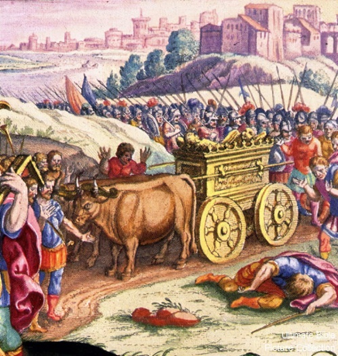
They set the ark of God on a new cart and brought it from the house of Abinadab, which was on the hill. Uzzah and Ahio, the sons of Abinadab, were guiding the new cart, bringing with it the ark of God. And Ahio was walking in front of the ark.

David and all the house of Israel were celebrating before the LORD with all kinds of wood instruments, harps, stringed instruments, tambourines, sistrums, and cymbals. When they came to the threshing floor of Nacon, Uzzah reached out and took hold of the ark of God, because the oxen had stumbled. And the anger of the LORD burned against Uzzah, and God struck him down on the spot for his irreverence, and he died there beside the ark of God.

Then David became angry because the LORD had burst forth against Uzzah; so he named that place Perez-uzzah, as it is called to this day.

That day David feared the LORD and asked, “How can the ark of the LORD ever come to me?” So he was unwilling to move the ark of the LORD to the City of David; instead, he took it aside to the house of Obed-edom the Gittite. Thus, the ark of the LORD remained in the house of Obed-edom the Gittite for three months, and the LORD blessed him and all his household.”

Now that David was king in Jerusalem, he wanted to bring the Ark of the Covenant back to Jerusalem where it belonged. The Ark was the chief symbol of the Israelite religion, and as such, it was vitally important for it to be located in the center of religious worship and political power. David realized that anybody who possessed the Ark might pose a political threat.

God gave Moses complete instructions as to the handling of the ark and how it should be carried. God further instructed that any king of Israel should personally write out his own copy of the Law, so that the king would know the Law well and would follow it wisely. But that was a few hundred years ago, and meanwhile, Israel had descended into a kind of Dark Ages, a time when many judges appeared long enough to deliver Israel from their enemies but when men did whatever they wanted to do. The last verse of the Book of Judges tells us that “In those days, there was no king in Israel; every man did what was right in his own eyes.” (Judges 21:25) Other versions say “there was no constant vision.” At any rate, God’s instructions had been forgotten.
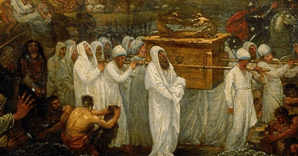
By the time King David ascended to the throne, probably only a handful of priests remembered God’s instructions regarding the handling of the Ark of the Covenant. The Ark was designed to be carried with poles borne on the shoulders of the priests. Even the priests had to be very careful about how they handled the Ark. All those details were captured in the Laws of Moses, but nobody was paying attention. David and the priests loaded the Ark onto a new cart and began the procession to Jerusalem. But at one point, one of the oxen pulling the cart stumbled, and a man named Uzzah reached out to steady the Ark on the cart. God struck Uzzah dead on the spot! David named that spot “Perez Uzzah,” which means “outbreak against Uzzah.” But is that what really happened? If the cart was a stable one, it shouldn’t have mattered whether an ox stumbled or not. It’s far more likely that Uzzah was using this incident as an excuse to peek into the Ark, and that’s why God struck him dead. If merely touching the Ark meant death, how could anybody have loaded the Ark onto that cart in the first place? No, Uzzah was guilty of transgressing against God; he was not as innocent as we might suppose.

At this point, David really didn’t know what to do, so he ordered that the Ark be left in the closest household, that of Obed – edom, the Gittite. Who were the Gittites? According to the International Standard Bible Encyclopedia, the Gittites originally came from Gath; however, numbers of them emigrated to Judah, probably under the influence of David. 600 Gittites served as a body guard for David, with Ittai as their head. The Gittites were remarkable for their great stature. Did Obed – edom simply leave the Ark on the cart? We don’t know; however, Obed – edom and his family must have handled the Ark reverently, because God blessed him and all his household.

APPLICATION: David had good intentions and his heart was right before the Lord; even so, he needed to learn that he couldn’t just do God’s work in his own way. One American evangelist noted for his humor described how he began his ministry by trying to copy every other evangelist then ministering. Nothing was working. Finally, this man asked the Lord, “What’s wrong? I’m doing what You called me to do!” The Lord said, “No, you’re doing your will in My Name. I didn’t call you to imitate anybody else. I called you to be just what you are.” “What’s the difference?” asked the frustrated evangelist. “Results!” answered the Lord.

David thought he knew how to handle the Ark; after all, he was doing just what the Philistines had done when they returned the Ark to Israel. But the difference was that the Philistines were unaware of God’s orders concerning the treatment of the Ark while the Israelites should have known better. It was bad enough that Phineas and Hophni had hauled the Ark off to the battlefield as if it were a fetish. But this cavalier treatment of the Ark by the Israelites had to stop. When Uzzah seized the opportunity to touch the Ark inappropriately, God demonstrated His power.

What did David do wrong? There is no mention of David praying and asking God for counsel before loading the Ark onto that cart. Even though David worshiped God, David didn’t realize just how holy the Ark really was. David had not studied the Law of Moses enough to understand the fashion in which the Ark was to be handled. Sometimes we do good things on our own, assuming that we can copy what someone else has done in a similar situation. But action without prayer can bring disaster. Just look at Uzzah!

Most of us have little or no idea just how holy God is. We throw God’s name around, even abbreviating it in text messages. We use God’s name as a swear word or as an exclamation. If not for God’s mercies, we would all be cinders. But God IS merciful, and He does forgive us when we repent because of the Blood of Jesus. We should go through our days prayerfully, mindful that God’s ways are higher and better than ours.

PRAYER: Father God, thank You for loving us and for caring for us. Lord, help us not to take You for granted, but to look to You for guidance. In the mighty and precious Name of King Jesus. Amen.

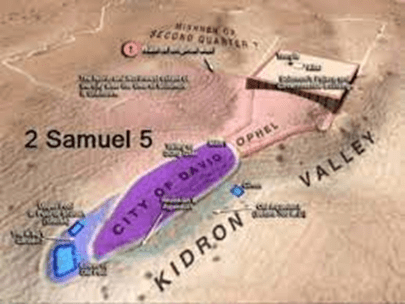
MAY 8, 2022 DAVID, A MAN AFTER GOD’S OWN HEART #7 2 SAMUEL 5:17 – 25 GOD NEVER DOES THINGS THE SAME WAY TWICE!

May 8, 2022

2 Samuel 5:17 – 25 “When the Philistines heard that David had been anointed king over Israel, they all went in search of him; but David learned of this and went down to the stronghold.

Now the Philistines had come and spread out in the Valley of Rephaim. So David inquired of the LORD, “Should I go up against the Philistines? Will You deliver them into my hand?”

“Go,” replied the LORD, “for I will surely deliver the Philistines into your hand.”

So David went to Baal-perazim, where he defeated the Philistines and said, “Like a bursting flood, the LORD has burst out against my enemies before me.” So he called that place Baal-perazim. (The Lord bursts out.) There the Philistines abandoned their idols, and David and his men carried them away.

Once again, the Philistines came up and spread out in the Valley of Rephaim. So David inquired of the LORD, who answered, “Do not march straight up, but circle around behind them and attack them in front of the balsam trees. As soon as you hear the sound of marching in the tops of the balsam trees, move quickly, because this will mean that the LORD has marched out before you to strike the camp of the Philistines.”

So David did as the LORD had commanded him, and he struck down the Philistines all the way from Gibeon to Gezer.”

Now that David is king, he has become the new target for the Philistines. The Philistines still remember Goliath and all the other times that David has defeated them. Now seems the perfect time to get revenge… except for God.

The Philistines spread out all over a valley, and God advises David that He has already delivered the Philistines into David’s hand. The Philistines are so badly defeated that they even leave their idols behind, and David and his men carry those idols away. (Question: do they destroy these idols or do these idols become a snare for some of David’s men?)

The Philistines lick their wounds a little and then return to the same battle ground. Perhaps they think that their earlier defeat was a fluke and that David is really not that great a commander. David asks the Lord for advice, and this time the Lord tells him to sneak around behind the Philistines and attack them in front of a grove of balsam trees. God promises that He will go before David’s army, and the sign for David to move out is the sound of marching in the tops of the balsam trees.

While David and his men are circling around behind the Philistines, the Philistines are probably watching for them in the same direction from which they attacked earlier. “Where are these ridiculous Israelites?” the Philistines might be wondering. “Have they turned into complete cowards?” Just then, David hears the noise of marching in the tops of the trees, and he and his men pounce on the Philistines. Terrified by the fear that God has put into their hearts, the Philistines flee, only to be struck down by the Israelites as they are running.

APPLICATION: Many times, we make mention of the “fear of the Lord,” as if it were some inconsequential thing. The Philistines would beg to differ. We have no idea what happened once the Lord’s army began advancing ahead of David’s; however, one thing is certain. The Philistines weren’t staying around to see how strong David’s people were. When the Lord’s army overtook the Philistines, the Philistine soldiers suddenly went into a panic. Who knows what the Philistines heard? If David heard the sound of marching feet in the tops of the trees, the Philistines may have heard the sounds of a huge army with chariots. Those big tough Philistine soldiers may have begun having palpitations and difficulty breathing, feeling as if their hearts would beat right through their breastplates. For the Philistines, this was no time to stay and fight. This was the time to run, and run they did. It’s quite likely that the fleeing Philistine soldiers may even have abandoned their armor and weapons in the process, leaving them for the Israelites to collect.

This story is a great inspiration for anybody who has ever tackled a difficult task. God is a God of infinite variety, and He never does anything quite the same way twice. But one key aspect here is the way in which David continues to ask for God’s advice. David knows he needs guidance every step of the way, and he is humble enough to ask God for the battle plan for both battles and not merely for the first one. Many of us would get divine guidance for the first battle and then try to use the same approach for the next one.

Remember the name David gives to the first location in which he defeats the Philistines, Baal – perazim? Don’t be confused by the use of the term “Baal.” While that term could refer to a particular deity, it could also be used as a general term for “Lord,” indicating the One True Living God. This story actually describes two times in which God bursts out against the Philistines. God has been waiting for these moments and for a man who would truly serve Him so that He can demonstrate His mighty power against the demonic gods of the Philistines.

Do you want God to give you divine break – throughs? Remember David. David was careful to ask for God’s advice each time he went to battle, and not merely to use whatever had worked previously. Don’t take God for granted. David also was willing to make a battle plan that seemed a bit crazy, just because God told him to do it that way. Sometimes we think we know more about what we should do than God does. Don’t second – guess God.

Yesterday we spoke about qualifying for divine favor and mentioned that obedience was key. If you want divine break – throughs, obedience is key there also. Truly, if you are to make any progress spiritually, obedience always remains the key.

PRAYER: Father God, thank You for loving us and for caring for us. Lord, help us to listen and to obey and not to argue. In the mighty and precious Name of King Jesus. Amen.
MAY 7, 2022 DAVID, A MAN AFTER GOD’S OWN HEART #6 2 SAMUEL 5:1 – 16 WANT GOD’S FAVOR? TRY OBEYING!

May 7, 2022

2 Samuel 5:1 – 16 “All the tribes of Israel came to David at Hebron and said, “We are your own flesh and blood. In the past, while Saul was king over us, you were the one who led Israel on their military campaigns. And the Lord said to you, ‘You will shepherd my people Israel, and you will become their ruler.’”

When all the elders of Israel had come to King David at Hebron, the king made a covenant with them at Hebron before the Lord, and they anointed David king over Israel. David was thirty years old when he became king, and he reigned forty years. In Hebron he reigned over Judah seven years and six months, and in Jerusalem he reigned over all Israel and Judah thirty-three years.

 The king and his men marched to Jerusalem to attack the Jebusites, who lived there. The Jebusites said to David, “You will not get in here; even the blind and the lame can ward you off.” They thought, “David cannot get in here.” Nevertheless, David captured the fortress of Zion—which is the City of David. On that day David had said, “Anyone who conquers the Jebusites will have to use the water shaft to reach those ‘lame and blind’ who are David’s enemies.” That is why they say, “The ‘blind and lame’ will not enter the palace.”

David then took up residence in the fortress and called it the City of David. He built up the area around it, from the terraces inward. And he became more and more powerful, because the Lord God Almighty was with him.

 Now Hiram king of Tyre sent envoys to David, along with cedar logs and carpenters and stonemasons, and they built a palace for David. Then David knew that the Lord had established him as king over Israel and had exalted his kingdom for the sake of his people Israel. After he left Hebron, David took more concubines and wives in Jerusalem, and more sons and daughters were born to him. These are the names of the children born to him there: Shammua, Shobab, Nathan, Solomon, Ibhar, Elishua, Nepheg, Japhia, Elishama, Eliada and Eliphelet.“

Finally, after all those struggles, David has become king. It’s fascinating that the same elders of Israel who were previously willing to back Abner and Ish – bosheth have suddenly remembered that God has anointed David as King and has promised David the kingdom. Selective memory is a wonderful thing, especially when it is in the service of political expedience!

David is savvy enough to take support wherever he can get it; he makes a covenant with all the elders of Israel in a meeting at Hebron. David’s next move is to conquer Jerusalem because God has designated Jerusalem as the capital for Israel. Remember that Jerusalem contains Mount Moriah, the site of Abraham’s near – sacrifice of Isaac, and a very holy place. By now, the Israelites should have already conquered the Jebusites who occupy Jerusalem, but they have not. Seated on a tall hill, the fortress of Jerusalem appears impregnable; however, the Jebusites have a water tunnel or shaft that proves their undoing. Discovered by Sir. Charles Warren in 1867, this shaft was protected by a high tower that actually allowed the Jebusites to access water from the Gihon spring without exposing themselves to an enemy. But somehow, David’s men gained access to that shaft and with it, entry into Jerusalem.

The Jebusites are so certain that their stronghold can withstand anything David does that they taunt David, claiming that “even the lame and the blind” can keep David from entering Jerusalem. Oooh! Bad move! Obviously, these people have not been paying attention to David’s battle tactics. When David and his men move up the water shaft and into Jerusalem, it must be quite a shock.

Once David has established himself in Jerusalem, Hiram, King of Tyre, spontaneously sends envoys to David, along with carpenters, stone masons, and cedar logs. Hiram is a good man and also an astute businessman. Tyre is a major trading city and a seaport. Built on a peninsula jutting out into the Mediterranean Sea, Tyre is one of the business centers for that part of the ancient world. Has Hiram met David before? Perhaps when David was sheltering in Ziklag, Hiram and he might have met. At any rate, Hiram is doing everything he can to cement good relationships with David. Several major trading routes pass through Israel, and Hiram wants to make certain that the new regime will not cut off the flow of goods. And there may be another reason. As a good man, Hiram may also be a God worshiper, and God may have given David favor with Hiram. At any rate, Hiram builds David a palace and David further establishes himself and ensures his dynasty by taking more wives and fathering additional children.

APPLICATION: For years, people doubted the story of the Jebusite water tunnel, assuming that the Jebusites were poorly developed and did not have sufficient resources to create such a thing. The only tunnel known at the time was the one built during Hezekiah’s reign. But more recent archaeological investigations have proven that in fact, Jerusalem under the Jebusites was highly developed. Once the Jebusite water shaft was discovered in 1867, further digging was carried out in that area, and scholars had to change their entire view of the Jebusites. Later studies have shown that the water shaft may date back to 18th century B.C.E. As a contrast, Joshua’s conquest of Jericho is frequently dated around 1500 B.C.E.

David did not conquer Jerusalem by a frontal assault, but by using the water shaft. David wasn’t concerned about showing off; he was concerned about gaining victory with the loss of as few lives as possible. Sometimes, we tackle problems head – on in an attempt to prove to ourselves and others that we are capable. But if our objective is to get good results, we will not hesitate to use whatever approach will work most effectively, no matter who gets the credit. We don’t know the names of those who entered Jerusalem by the water shaft; however, David, as a good leader, would make certain that those men got due appreciation for their success.   

The story of King Hiram of Tyre is amazing. The cedar logs Hiram sent to David were undoubtedly some of the famous cedars of Lebanon, and one of the most highly prized types of wood available. Hiram had other kinds of wood that he could have sent; however, Hiram sent royal wood as a sign that he recognized David’s kingship.

The final verses might give us pause. If David was a man after God’s own heart, why was he taking all these wives and concubines to father more children? David was a man of his time, and this is what kings did at that time. David was human enough to demonstrate his manhood in this fashion. Also, God had promised David that He would help David found a dynasty. In a day and age when children might die before the age of five, David was trying to make sure that there were enough sons that one of them would survive to become king.

David was a man with human failings, but he was willing to allow others to get credit for their achievements. Because David followed God closely, God gave him favor with men such as King Hiram of Tyre. Today many Bible teachers emphasize the concept of divine favor without recognizing that favor goes along with obedience. First, David obeyed and only then did he receive the results of divine favor. If we are unwilling to seek God’s will for our lives, we should not attempt to go our own directions and then demand God’s favor anyway. Obedience is not a matter of saying a few sentences over and over; obedience is a matter of the heart. When God sent Samuel to anoint David, He told Samuel that He regarded hearts and not outward appearances. Do you want divine favor? First, check your heart!

PRAYER: Father God, thank You for loving us and for caring for us. Lord, help each one of us to search our hearts and see if there is anything You have asked us to do that we are not doing. Help us to remember that our obedience must come before we can expect Your favor. Help us to follow hard after You all the days of our lives. In the matchless Name of King Jesus. Amen.

MAY 6, 2022 DAVID, A MAN AFTER GOD’S OWN HEART #5 2 SAMUEL 4:1 – 12 YOU CAN’T BUY THE FAVOR OF THE RIGHTEOUS BY SLAUGHTERING THE INNOCENT!

May 6, 2022

2 Samuel 4:1 – 12 “Now when Ish-bosheth son of Saul heard that Abner had died in Hebron, he lost courage, and all Israel was dismayed. Saul’s son had two men who were leaders of raiding parties: One was named Baanah and the other Rechab; they were the sons of Rimmon the Beerothite of the tribe of Benjamin (Beeroth is also considered part of Benjamin, because the Beerothites fled to Gittaim and live there as foreigners to this very day).

And Jonathan son of Saul had a son who was lame in his feet. He was five years old when the report about Saul and Jonathan came from Jezreel. His nurse picked him up and fled, but as she was hurrying to escape, he fell and became lame. His name was Mephibosheth.

Now Rechab and Baanah, the sons of Rimmon the Beerothite, set out and arrived at the house of Ish-bosheth in the heat of the day, while the king was taking his midday nap. They entered the interior of the house as if to get some wheat, and they stabbed him in the stomach. Then Rechab and his brother Baanah slipped away.

They had entered the house while Ish-bosheth was lying on his bed, and having stabbed and killed him, they beheaded him, took his head, and traveled all night by way of the Arabah. They brought the head of Ish-bosheth to David at Hebron and said to the king, “Here is the head of Ish-bosheth son of Saul, your enemy who sought your life. Today the LORD has granted vengeance to my lord the king against Saul and his offspring.”

But David answered Rechab and his brother Baanah, the sons of Rimmon the Beerothite, “As surely as the LORD lives, who has redeemed my life from all distress, when someone told me, ‘Look, Saul is dead,’ and thought he was a bearer of good news, I seized him and put him to death at Ziklag. That was his reward for his news! How much more, when wicked men kill a righteous man in his own house and on his own bed, shall I not now require his blood from your hands and remove you from the earth!”
So David commanded his young men, and they killed Rechab and Baanah. They cut off their hands and feet and hung their bodies by the pool in Hebron, but they took the head of Ish-bosheth and buried it in Abner’s tomb in Hebron.”


In the days of wooden sailing ships, it was said that if a ship was sinking, any rats on that ship would immediately jump into the water and swim away to save themselves. Saul and his three warrior sons have died in battle. Abner, the army commander who put Saul’s son Ish – bosheth on the throne is also dead. All the tribes who have sided with Abner and Ish – bosheth have no idea what to do next. Meanwhile, two leaders of raiding parties who have remained loyal up to this time decide that Ish – bosheth’s royal ship is sinking and that it’s time to jump ship. “Why not murder Ish – bosheth and bring his head to David as proof?” these men think to themselves. “Surely, David will be thrilled and will reward us richly. Perhaps we will be able to continue our raiding under David as we have been doing under Ish – bosheth. Besides, Ish – bosheth is such a weakling that nobody will really miss him!”


Poor Ish – bosheth! He never has a chance. Perhaps Ish – bosheth has never wanted to become king in the first place and simply wants to be left alone. Ish – bosheth is no soldier and Rechab and Baanah are seasoned veterans, accustomed to killing whenever necessary. The two raiders sneak into the house in the hot part of the day when Ish – bosheth is napping and murder him in his sleep. Then these two villains cut off Ish – bosheth’s head and travel all night to reach David at Hebron, but David gives them a rude awakening. Rechab and Baanah stride into David’s presence, holding up a severed head. David immediately recognizes the head as that of Ish – bosheth and demands to know what’s going on. The two answer “Here is the head of Ish-bosheth son of Saul, your enemy who sought your life. Today the LORD has granted vengeance to my lord the king against Saul and his offspring.”


Hmm! Seems someone hasn’t been paying attention to David’s actions at all. David has spared Saul’s life on many occasions and has killed the young man who has brought Saul’s crown and arm band to him as proof of Saul’s death. David has steadfastly refused to take vengeance upon Saul, any member of Saul’s family, or even upon Abner, who commanded Saul’s army. As far as David is concerned, Ish – bosheth is no threat whatsoever, and David is planning to leave him alone. Now these two clowns have created a new problem for David. If David fails to deal with this situation swiftly and appropriately, he will be implicated in Ish – bosheth’s murder. In addition, David is horrified. These men are supposed to be loyal to Ish – bosheth; instead, they have slaughtered him. Loyalty counts for a great deal with David, and these men are traitors. David orders the two to be executed, for their hands and feet to be cut off as signs that they will never do anything or go anywhere anymore, and for their bodies to be hung by the pool at Hebron where everyone fetching water will see them. David then takes the head of Ish – bosheth and buries it in Abner’s tomb, the best way he can honor Ish – bosheth under the circumstances.
APPLICATION: Even though God has anointed David to become King over all of Israel, the path to the throne is a rocky one. Between army commanders bent on their private vendettas and self – serving raiders who murder in hopes of gaining favor, David has a tough road to follow.


What can we learn from this part of David’s life? Guided by God, David has already analyzed the situation with Ish – bosheth and is not worried at all. It’s quite likely that David has already planned to invite Ish – bosheth to have some small role at the palace to make sure that Ish – bosheth is taken care of. The lesson here is simple: don’t consider someone a threat when they are not.


Now Ish – bosheth lies murdered, his body mutilated. All that David can do is to honor the one part of Ish – bosheth’s body available by burying the head in Abner’s tomb as publicly as possible. David also quickly dispatches the traitors who have murdered Ish – bosheth and treats their bodies with all the scorn he has at his disposal, mutilating the bodies and hanging them where everyone will see them. David is taking these actions both for damage control and also to reassure those in Israel that he has had no part in this heinous crime. When you face a situation in which someone has done something wrong allegedly on your behalf, make it known that you have had no part in such a disaster and that you do not approve of it


Long ago, David took a decision that he would not seek vengeance from Saul or from any member of his family. Now David is continuing to honor that decision. By holding fast to that decision, David is taking the moral high road and is continuing to demonstrate why God has chosen him. David refuses to yield to the desire for revenge, and so should you. There is a horrible saying that vengeance is a dish best served cold. Truly, vengeance is a dish that is best not served, period!


Recognize when someone is a threat and when they are not. If another person commits a crime and attempts to curry favor with you because of that crime, make it as clear as possible that you have had no hand in this matter. Once you have sought guidance from God and He has given it, don’t second guess yourself. Continue to follow God closely. These principles helped David find a way through messes created by others and they can also help you. May God bless you as you lead!
PRAYER: Father God, thank You for loving us and for caring for us. Lord, there are many of us in positions of leadership who find those around us are attempting to mislead and to manipulate us, sometimes in ways that are highly embarrassing. Lord, guide us and lead us through the challenges just as you led David. We ask this in the mighty and precious Name of King Jesus. Amen.

MAY 5, 2022 DAVID, A MAN AFTER GOD’S OWN HEART #4 2 SAMUEL 3:22 – 39 WHAT DO YOU DO WHEN A SUBORDINATE EMBARRASSES YOU?

May 5, 2022

2 Samuel 3:22 – 39 “Just then David’s soldiers and Joab returned from a raid, bringing with them a great plunder. But Abner was not with David in Hebron because David had sent him on his way in peace. When Joab and all his troops arrived, he was informed, “Abner son of Ner came to see the king, who sent him on his way in peace.”

So Joab went to the king and said, “What have you done? Look, Abner came to you. Why did you dismiss him? Now he is getting away! Surely you realize that Abner son of Ner came to deceive you and to track your movements and all that you are doing.”

As soon as Joab had left David, he sent messengers after Abner, who brought him back from the well of Sirah; but David was unaware of it.

When Abner returned to Hebron, Joab pulled him aside into the gateway, as if to speak to him privately, and there Joab stabbed him in the stomach. So Abner died on account of the blood of Joab’s brother Asahel.

Afterward, David heard about this and said, “I and my kingdom are forever guiltless before the LORD concerning the blood of Abner son of Ner. May it whirl over the heads of Joab and the entire house of his father, and may the house of Joab never be without one having a discharge or skin disease or who leans on a staff or falls by the sword or starves.”

(Joab and his brother Abishai murdered Abner because he had killed their brother Asahel in the battle at Gibeon.)

Then David ordered Joab and all the people with him, “Tear your clothes, put on sackcloth, and mourn before Abner.” And King David himself walked behind the funeral bier.

When they buried Abner in Hebron, the king wept aloud at Abner’s tomb, and all the people wept. And the king sang this lament for Abner:

“Should Abner die the death of a fool?

Your hands were not bound, your feet were not fettered.

As a man falls before the wicked, so also you fell.”

And all the people wept over him even more.

Then all the people came and urged David to eat something while it was still day, but David took an oath, saying, “May God punish me, and ever so severely, if I taste bread or anything else before the sun sets!” All the people took note and were pleased. In fact, everything the king did pleased them. So on that day all the troops and all Israel were convinced that the king had no part in the murder of Abner son of Ner.

Then the king said to his servants, “Do you not realize that a great prince has fallen today in Israel? And I am weak this day, though anointed as king, and these men, the sons of Zeruiah, are too fierce for me. May the LORD repay the evildoer according to his evil!”

As a pragmatic leader, David has received Abner and has offered him hospitality, sending him away in peace. David knows that Abner is now on his side and is confident that Abner will deliver on his promises of support. Now Joab returns. Joab hates Abner for killing his brother Asahel, even though it was Asahel who foolishly pursued Abner and refused to heed Abner’s warnings not to attack him. But Joab is only bent on revenge, without any consideration for the ripple effect that might result if he kills Abner. “An eye for an eye and a tooth for a tooth” is all Joab can think about.

Joab sends messengers after Abner, who returns, assuming that David wants to meet him again. As soon as Abner returns, Joab slays him in the corner of the gateway. What a mess! Joab has made David appear to be a traitor, allowing the murder of a man he has already sent away in peace. Such an act is a major violation of traditional hospitality and an outrage. If David doesn’t do some kind of damage control swiftly, he will lose all the good will that Abner has built up for him. How can David recover publicly from Joab’s stupidity?

 The first thing David does is to openly distance himself from Joab and his family. “Afterward, David heard about this and said, “I and my kingdom are forever guiltless before the LORD concerning the blood of Abner son of Ner. May it whirl over the heads of Joab and the entire house of his father, and may the house of Joab never be without one having a discharge or skin disease or who leans on a staff or falls by the sword or starves.” Whoof! That’s a pretty comprehensive curse, and one that reaches through all generations at that! The next thing David does is to order Joab and all the people with him to tear their clothes, put on sackcloth, and mourn for Abner. David himself walks behind the funeral bier. When they bury Abner in Hebron, the king weeps aloud at Abner’s tomb, and all the people weep with him. David even composes a special poem in honor of Abner. Finally, David fasts until sundown as a sign of grief and shame. Combined together, David’s acts assure all the people that David has never wanted Abner to and that he has had no part in Abner’s death. People are both pleased and relieved; they are ready for some peace and stability. David’s actions reassure all of Israel that he has respected Abner and that he has had no hand in Abner’s death.

APPLICATION: Unlike Saul, David is humble enough to realize that he cannot depend on himself, but only on God. “And I am weak this day, though anointed as king, and these men, the sons of Zeruiah, are too fierce for me. May the LORD repay the evildoer according to his evil!”

David was willing to receive Abner and trust him to deliver on his promises of support because David had already tested Abner in battle. Having lived in Saul’s household, David was well away of Ish – bosheth’s weak personality. David knew that Ish – bosheth was not king material, and that it was Abner who was really wielding power. When Abner changed sides, David realized that God was working in Abner’s heart to turn public opinion toward David. But now David has a huge problem.

Ever since Abner killed Asahel, all Joab can think of is revenging his brother by murdering Abner, even though this death took place in the midst of a battle. Joab is no statesman, and his family loyalties outweigh his loyalty to David.  Joab kills Abner with no thought for the embarrassment this might bring to David or the damage it might do to David’s bid to become king.

If you have ever run an organization or a business, you can probably identify with David! No matter how careful you might be with your public relations, one of your subordinates may still say something or do something that will undermine everything for which you have worked! But David recovered from this situation, and you can recover also.

  1. Distance yourself from the person who has embarrassed you. If possible, explain publicly that you had no part in the unfortunate action. If you have witnesses who can speak on your behalf, let them speak boldly and let them speak now!
  2. Graphically demonstrate your grief over the unfortunate action. David mourned as if Abner had been his brother, and everyone saw how David humbled himself. This is no time for your ego to get in the way! If your subordinate has offended someone, you must go to that individual and abjectly apologize. Don’t waste time making excuses; an excuse is not an apology. You may have to settle for saying, “I’m dreadfully sorry that this happened and that you were hurt. How can I make it up to you?”
  3. Pray! Pray! Pray! Jesus told his disciples, “Blessed are the peacemakers.” Your job in this situation is to make peace as thoroughly as possible. Pray before you do anything. Pray before you meet the aggrieved party. Pray internally during your meeting. And pray after your meeting, that your meeting will have had God’s effect and nothing else.
  4. Trust that God can redeem situations that appear hopeless. Continue to pray for everyone, particularly for the person who brought about the problem in the first place.

PRAYER: Father God, thank You for loving us and for caring for us. Lord, someone who is reading this needs these words. Help all who find themselves in difficult positions to turn to You, to trust You, and to rest in You, knowing that You can solve problems far better than we can. In the mighty and precious Name of King Jesus. Amen.
MAY 4, 2022 DAVID, A MAN AFTER GOD’S OWN HEART #3 2 SAMUEL 3:1 – 21 ABNER CHANGES PARTIES!

May 4, 2022

2 Samuel 3:1 – 21 “Now the war between the house of Saul and the house of David was protracted. And David grew stronger and stronger, while the house of Saul grew weaker and weaker.

And sons were born to David in Hebron: His firstborn was Amnon, by Ahinoam of Jezreel; his second was Chileab, by Abigail, the widow of Nabal of Carmel; his third was Absalom, the son of Maacah daughter of King Talmai of Geshur; his fourth was Adonijah, the son of Haggith; his fifth was Shephatiah, the son of Abital; and his sixth was Ithream, by David’s wife Eglah. These sons were born to David in Hebron.

During the war between the house of Saul and the house of David, Abner had continued to strengthen his position in the house of Saul. Meanwhile, Saul had a concubine named Rizpah, the daughter of Aiah. So Ish-bosheth questioned Abner, “Why did you sleep with my father’s concubine?”

Abner was furious over Ish-bosheth’s accusation. “Am I the head of a dog that belongs to Judah?” he asked. “All this time I have been loyal to the house of your father Saul, to his brothers, and to his friends. I have not delivered you into the hand of David, but now you accuse me of wrongdoing with this woman! May God punish Abner, and ever so severely, if I do not do for David as the LORD has sworn to him, to transfer the kingdom from the house of Saul and to establish the throne of David over Israel and Judah, from Dan to Beersheba.”

And for fear of Abner, Ish-bosheth did not dare to say another word to him.

Then Abner sent messengers in his place to say to David, “To whom does the land belong? Make your covenant with me, and surely my hand will be on your side to turn all Israel to you.”

“Good,” replied David, “I will make a covenant with you. But there is one thing I require of you: Do not appear before me unless you bring Saul’s daughter Michal when you come to see me.”

Then David sent messengers to say to Ish-bosheth son of Saul, “Give me back my wife, Michal, whom I betrothed to myself for a hundred Philistine foreskins.”

So Ish-bosheth sent and took Michal from her husband Paltiel son of Laish. Her husband followed her, weeping all the way to Bahurim. Then Abner said to him, “Go back.” So he returned home.

Now Abner conferred with the elders of Israel and said, “In the past you sought David as your king. Now take action, because the LORD has said to David, ‘Through My servant David I will save My people Israel from the hand of the Philistines and from the hand of all their enemies.’”

Abner also spoke to the Benjamites and went to Hebron to tell David all that seemed good to Israel and the whole house of Benjamin. When Abner and twenty of his men came to David at Hebron, David held a feast for them.

Then Abner said to David, “Let me go at once, and I will gather all Israel to my lord the king, that they may make a covenant with you, and that you may rule over all that your heart desires.”

So David dismissed Abner, and he went in peace.”

David is persistently consolidating his position and continuing to build his family. David now has three wives and six sons. Meanwhile, it has become obvious that Abner is actually controlling Ish – bosheth and Israel. When Abner sleeps with one of Saul’s concubines, Ish – bosheth complains, only for Abner to explode in anger. “May God punish Abner, and ever so severely, if I do not do for David as the LORD has sworn to him, to transfer the kingdom from the house of Saul and to establish the throne of David over Israel and Judah, from Dan to Beersheba.” Hmm. All this time, Abner has been well aware that the Lord has sworn to David to establish the throne of David. Evidently, Abner has been hoping that David’s ascent to power will take place sometime in the future; however, it is becoming obvious that David’s power is growing daily. Although Abner is Saul’s cousin and has tried to remain loyal to Saul’s family, Ish – bosheth’s idea of how to wield power is to fuss at Abner for a minor sexual peccadillo. As a highly successful military commander, Abner feels that he should certainly have access to a concubine of minimal social standing.

Abner is no fool; it’s clear that Ish – bosheth’s remaining days as a king are numbered.  Abner likes power; there’s no point in backing a losing cause, even if it’s your cousin. Without delay, Abner begins his campaign. First, Abner sends messengers to David, “To whom does the land belong? Make your covenant with me, and surely my hand will be on your side to turn all Israel to you.”
“Great!” says David. “You can come see me, but bring my wife Michal with you.” Poor Michal! In the beginning, Michal really did love David, who killed 200 Philistines to win her hand; however, Saul took her away from David and gave her to a man named Paltiel. Paltiel evidently has loved Michal dearly and is broken – hearted when Abner collects her and sends her to David. David makes this demand because of the suffering he endured to win Michal; he feels this is politically necessary. (Personally, I wish he had left Michal to remain with Paltiel; David’s relationship with Michal is terrible from this point forward.)

Next, Abner confers with the elders of Israel and the Benjamites, securing their support for David as well. Abner and twenty of his men then come to David, who receives Abner gladly, gives him a feast, and then sends him away in peace. David is a pragmatist. If Abner can help garner support for David, why not let him do everything he can? After all, when things were really desperate, David even went to live with the Philistines for a while. At least Abner is an Israelite.

APPLICATION: Politics has existed as long as the human race has been around, and very few things have changed. Clever politicians continually assess potential leaders, determining whom they should support. Disillusioned with Ish – bosheth, Abner swiftly changes his allegiance to David. What’s amazing is that all this time, Abner has been fully aware that God has selected David to succeed Saul. Why has Abner been supporting Ish – bosheth? Perhaps Abner has been getting rich from the Israelite court; certainly, Ish – bosheth is in no position to criticize or correct Abner. But Abner figures it’s time to move on.

Does David totally trust Abner? Highly doubtful! David is a bright guy and Abner’s motives are obvious. But David is not interested in fighting any more battles with the Israelites than necessary. If Abner can make good on his promises and deliver Benjamin and Israel, so much the better.

“But,” you ask, “I thought David was a man after God’s own heart! What’s David doing making alliances with a self – serving military leader?” Good question. The point here is that God can use all kinds of people to fulfill His perfect plans. While Abner is acting purely out of self – interest, he is still helping rally the rest of Israel behind David. Our minds may be limited, but God’s knowledge is infinite. Even when we can’t imagine what God’s up to, He is still working out His purposes.

Early in 1999, we were house – sitting in Kumasi, Ghana and wondering what God wanted us to do. A short commitment at one clinic had ended and we had no idea where we were to go next. That’s when God had us call the Regional Director of Health Services for the Northern Region. As soon as the Regional Director heard that we were available, he demanded that we appear in his office ASAP. I joined the Ghana Health Service and we were posted to a mission hospital where we served for five years before coming to our current post. God had to bring us to the point of near – despair before we were willing to be open to His next move for us. Don’t put God in a box!

PRAYER: Father God, thank You that no matter what happens, Your plans will continue to go forward. Thank You for working things out for us. In the mighty and precious Name of King Jesus. Amen.    

MAY 3, 2022 DAVID, A MAN AFTER GOD’S OWN HEART #2 2 SAMUEL 2:1-32 ARE YOU TRYING TO BE YOUR OWN GUIDE?

May 3, 2022

2 Samuel 2:1 – 32 “Sometime later, David inquired of the LORD, “Should I go up to one of the towns of Judah?”

“Go up,” the LORD answered.

Then David asked, “Where should I go?”

“To Hebron,” replied the LORD.

So David went there with his two wives, Ahinoam of Jezreel and Abigail, the widow of Nabal of Carmel. David also took the men who were with him, each with his household, and they settled in the towns near Hebron.

Then the men of Judah came to Hebron, and there they anointed David king over the house of Judah. And they told David, “It was the men of Jabesh-gilead who buried Saul.”

So David sent messengers to the men of Jabesh-gilead to tell them, “The LORD bless you, because you have shown this kindness to Saul your lord when you buried him. Now may the LORD show you loving devotion and faithfulness, and I will also show you the same favor because you have done this. Now then, be strong and courageous, for though Saul your lord is dead, the house of Judah has anointed me as their king.” (“Loving devotion” is represented by the Hebrew term “chesed,” which can be variously translated as goodness, kindness, faithfulness, and mercy, as well as loyalty to a covenant.” David is asking God to show all these things to the men of Jabesh – gilead and also promising that he will do the same as well.)

Meanwhile, Abner son of Ner, the commander of Saul’s army, took Saul’s son Ish-bosheth, moved him to Mahanaim, and made him king over Gilead, Asher, Jezreel, Ephraim, Benjamin—over all Israel. Saul’s son Ish-bosheth was forty years old when he began to reign over Israel, and he reigned for two years. The house of Judah, however, followed David. And the length of time that David was king in Hebron over the house of Judah was seven years and six months.

One day Abner son of Ner and the servants of Ish-bosheth son of Saul marched out from Mahanaim to Gibeon. So Joab son of Zeruiah, along with the servants of David, marched out and met them by the pool of Gibeon. And the two camps took up positions on opposite sides of the pool.

Then Abner said to Joab, “Let us have the young men get up and compete before us.”

“Let them get up,” Joab replied.

So they got up and were counted off—twelve for Benjamin and Ish-bosheth son of Saul, and twelve for David. Then each man grabbed his opponent by the head and thrust his sword into his opponent’s side, and they all fell together. So this place, which is in Gibeon, is called Helkath-hazzurim (the Field of Swords.)

The battle that day was intense, and Abner and the men of Israel were defeated by the servants of David. The three sons of Zeruiah were there: Joab, Abishai, and Asahel. Now Asahel was fleet of foot like a wild gazelle, and he chased Abner, not turning to the right or to the left in his pursuit. And Abner glanced back and said, “Is that you, Asahel?”

“It is,” Asahel replied.

So Abner told him, “Turn to your right or to your left, seize one of the young men, and take his equipment for yourself.”

But Asahel would not stop chasing him.

Once again, Abner warned Asahel, “Stop chasing me. Why should I strike you to the ground? How could I show my face to your brother Joab?”

But Asahel refused to turn away; so Abner thrust the butt of his spear into his stomach, and it came out his back, and he fell dead on the spot. And every man paused when he came to the place where Asahel had fallen and died. But Joab and Abishai pursued Abner. By sunset, they had gone as far as the hill of Ammah opposite Giah on the way to the wilderness of Gibeon.

The Benjamites rallied to Abner, formed a single unit, and took their stand atop a hill. Then Abner called out to Joab: “Must the sword devour forever? Do you not realize that this will only end in bitterness? How long before you tell the troops to stop pursuing their brothers?”

“As surely as God lives,” Joab replied, “if you had not spoken up, the troops would have continued pursuing their brothers until morning.”

So Joab blew the ram’s horn, and all the troops stopped; they no longer pursued Israel or continued to fight. And all that night Abner and his men marched through the Arabah. They crossed the Jordan, marched all morning, and arrived at Mahanaim. When Joab returned from pursuing Abner, he gathered all the troops.

In addition to Asahel, nineteen of David’s servants were missing, but they had struck down 360 men of Benjamin and Abner. Later, they took Asahel and buried him in his father’s tomb in Bethlehem. Then Joab and his men marched all night and reached Hebron at daybreak.”

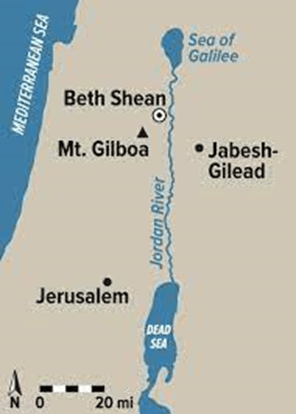
This story has a basis in tribalism. David is of the tribe of Judah. Saul and his family, including Abner, are Benjamites. While Saul and his sons die in the battle against the Philistines at Mount Gilboa, Abner and most of Saul’s army evidently beat a hasty retreat. Perhaps Abner has no choice; perhaps the Philistines swoop in and cut Abner and his men off, making it impossible for them to defend Saul and his sons. At any rate, Abner and most of Saul’s army are very much alive, and Abner is now the power behind the throne in Israel. Abner crowns Ish – bosheth, Saul’s son, as king over Israel, an area that includes Gilead, Asher, Jezreel, Ephraim, and Benjamin – the area indicated in green on the map. (Incidentally, the name Ish – bosheth means “man of shame.”)

Under divine guidance, David moves his men with their families into Hebron and its surrounding villages, assuming the mantle of kingship for the tribe of Judah. David also sends a message of gratitude to the men of Jabesh – gilead for their care of the bodies of Saul and his sons. Now there are two kingdoms, Judah and Israel. Joab commands David’s army while Abner commands the army of Israel.

A battle takes place, starting with pairs of armed warriors from each side facing off and killing each other simultaneously. Perhaps if a set of warriors from one side were to defeat the warriors from the other side, that might end things, but the score remains even. After that first skirmish, Joab and his two brothers Asahel and Abishai take the forces of Judah and pursue Abner and the army of Israel. Asahel runs so swiftly that he outruns the soldiers of Judah and catches up with Abner. (What does Asahel think he’s going to do by himself?) Abner tries to warn Asahel to collect some armor or to protect himself in some other fashion, but when Asahel keeps coming, Abner kills him. Finally, Abner is able to confront Joab and convince him to stop chasing Abner and his men, their Israelite brothers. Abner and his men march 30 or more miles, crossing the Jordan to arrive at Mahanaim the next morning. Joab and his men travel 25 – 30 miles back to Hebron that night.

APPLICATION: Tribalism can be a terrible curse for any country! In this story, it’s the tribe of Judah against everybody else in Israel. But there’s one small thing: God has already anointed David as king. Surely, Abner is aware of this anointing; however, Abner is Saul’s cousin and controls Ish – bosheth in hopes of keeping the tribe of Benjamin in power. (How much influence did Abner have when Saul was alive? Was Abner one of the people inciting Saul to pursue David into the wilderness? Notice that Abner only reminds the Judeans that the Benjamites are their brothers when it appears that his side might lose.)

This chapter demonstrates the difference between allowing God to lead you and trying to do it yourself. David has moved to Hebron as an answer to prayer. Remember that Hebron is the city Caleb took from the giants. Hebron is a special place bathed in prayer. Abner is floundering around, struggling for power, even moving Ish – bosheth to Mahanaim on the east side of the Jordan without any advice from God. Why does Abner kill Asahel? Evidently, Asahel has no armor and no weapons. Abner could easily take Asahel prisoner; instead, he runs this unarmed man through with the butt of his spear. Perhaps Abner fears that Asahel might become a competitor for heading an army.

How do we make decisions? Are we making Godly decisions based on God’s Word and prayer, or are we driven by a lust for power as was Abner? Are we blinded by familial or tribal connections, or do we ask God to give us His mind about people? Knee jerk reactions and jumping to conclusion can only lead to disaster.

PRAYER: Father God, thank You for loving us and for caring for us. Lord, help us to see those around us as You do, and not to be swayed by prejudices, by tribal or familial concerns, or by any other influences that are not of You. Help us to follow hard after You all the days of our lives. In the mighty and precious Name of King Jesus. Amen.  

MAY 2, 2022 DAVID, A MAN AFTER GOD’S OWN HEART #1 2 SAMUEL 1:1 – 26 “HOW THE MIGHTY HAVE FALLEN!”

May 2, 2022

2 Samuel 1:1 – 26 After the death of Saul, David returned from the slaughter of the Amalekites and stayed in Ziklag two days. On the third day a man with torn clothes and dust on his head arrived from Saul’s camp. When he came to David, he fell to the ground to pay him homage.

“Where have you come from?” David asked.

“I have escaped from the Israelite camp,” he replied.

“What was the outcome?” David asked. “Please tell me.”

“The troops fled from the battle,” he replied. “Many of them fell and died. And Saul and his son Jonathan are also dead.”

David asked the young man who had brought him the report, “How do you know Saul and his son Jonathan are dead?”

“I happened to be on Mount Gilboa,” he replied, “and there was Saul, leaning on his spear, with the chariots and the cavalry closing in on him. When he turned around and saw me, he called out and I answered, ‘Here I am!’

‘Who are you?’ he asked. So, I told him, ‘I am an Amalekite.’

Then he begged me, ‘Stand over me and kill me, for agony has seized me but my life still lingers.’ So, I stood over him and killed him, because I knew that after he had fallen, he could not survive. And I took the crown that was on his head and the band that was on his arm, and I have brought them here to my lord.”

Then David took hold of his own clothes and tore them, and all the men who were with him did the same. They mourned and wept and fasted until evening for Saul and his son Jonathan, and for the people of the LORD and the house of Israel, because they had fallen by the sword.

And David inquired of the young man who had brought him the report, “Where are you from?”

“I am the son of a foreigner,” he answered. “I am an Amalekite.”

So, David asked him, “Why were you not afraid to lift your hand to destroy the LORD’s anointed?” Then David summoned one of the young men and said, “Go, execute him!” So, he struck him down, and he died. For David had said to the Amalekite, “Your blood be on your own head because your own mouth testified against you, saying, ‘I killed the LORD’s anointed.’”

 Then David took up this lament for Saul and his son Jonathan, and he ordered that the sons of Judah be taught the Song of the Bow. It is written in the Book of Jashar:

“Your glory, O Israel, lies slain on your heights.

How the mighty have fallen!

Tell it not in Gath; proclaim it not in the streets of Ashkelon,

lest the daughters of the Philistines rejoice,

and the daughters of the uncircumcised exult.

O mountains of Gilboa, may you have no dew or rain,

no fields yielding offerings of grain.

For there the shield of the mighty was defiled, the shield of Saul, no longer anointed with oil.

From the blood of the slain, from the fat of the mighty, the bow of Jonathan did not retreat, and the sword of Saul did not return empty.

Saul and Jonathan, beloved and delightful in life, were not divided in death.

They were swifter than eagles, they were stronger than lions.

O daughters of Israel, weep for Saul, who clothed you in scarlet and luxury, who decked your garments with ornaments of gold.

How the mighty have fallen in the thick of battle! Jonathan lies slain on your heights.

I grieve for you, Jonathan, my brother. You were delightful to me;

your love to me was extraordinary, surpassing the love of women.

How the mighty have fallen and the weapons of war have perished!”

When David and his men were sent back to Ziklag, they found the Amalekites had raided the city, destroying much of it and carrying off everything. Now David and his men have defeated the Amalekites, delivering their own families, and have returned to what’s left of Ziklag to recover. Since much of Ziklag has been built of stone, there is still shelter. At this point, David doesn’t know that Saul and Jonathan have died; for all he knows, Saul might be preparing to attack him again.

A young man comes to inform David of Saul’s death, bearing Saul’s crown and armband as proof. Is this young Amalekite simply an opportunist? This young man states that he “happened” to be on Mount Gilboa. HUH??? How does one “happen” to be in the midst of a hot battle? Has this young man actually struck a killing blow on Saul? Given the fact that Saul was supposed to wipe out the Amalekites and he refused to do so, it would be an ironic twist of fate if Saul received his final wound at the hand of an Amalekite. It’s more likely that this man is lying, and that he was scavenging the battle ground after the fight and removed the crown and the arm band from Saul’s dead body. If this young Amalekite thinks he will gain favor with David by presenting proof of Saul’s death, he is sadly mistaken! David has this young man killed for claiming that he has struck the death blow to Saul.

To cope with this tragedy, David and his men tear their clothes and then mourn and fast until evening. In deep grief, David composes a song he calls “The Song of the Bow.” Such songs of mourning for those dying in battle have been created since antiquity. The words of David’s song have glistened down through the ages as he describes the battle and gives homage to Saul and Jonathan. David and Jonathan have forged a warrior bond in which each of them trusts the other with his life. Such bonds are not dissolved by death.

APPLICATION: There are so many lessons to be gleaned from this chapter. The young Amalekite carrying the news to David probably assumed that David would be thrilled and would reward him richly. Had this young man been truthful, he might not have died. He could have come in sympathy, giving David Saul’s crown and armband as tokens of grief. But all accounts state that Saul fell on his own sword and was not killed by someone else. Those lies cost this man his life.

Certainly, David’s grief for Jonathan was very real, but what about his grief over Saul? Wouldn’t David have felt a sense of relief that Saul couldn’t chase him anymore? Saul tried to kill David on several occasions and pursued him until David fled to Gath; yet, David grieved for Saul as well as Jonathan. Perhaps part of David’s grief for Saul came from realizing how Saul had fallen short of God’s best for his life. Saul was a tragic figure. And then there is David’s grief over Jonathan.

Anyone who has ever served in the military, fire service, EMS, or in any other dangerous situation knows that they must be able to trust those around them to keep them safe. There are bonds of loyalty and friendship forged in dangerous situations that never are dissolved. When we got married, our best man was J. J., my husband’s partner on the rescue truck in the fire department in which they both worked. Those two men had put their lives on the line for each other repeatedly; it was only fitting that we should honor J.J. in this fashion. Veterans in the U.S. greet each other by saying “Welcome home!” because many of them never heard that during their years of service. There are many veterans for whom David’s Song of the Bow is the expression of their grief over fallen comrades.

One of the tragedies of Saul’s life was that he failed to realize how much David loved and admired him. Saul’s relationship with Jonathan and his other sons appears to have been a distant one. Because Saul was so caught up in going his own way, he was blind to those around him. Only after Saul’s death could David safely express his admiration for Saul. Don’t be like Saul! Look around you and see those whom you can encourage and those whom you love.

David hoped for more time to be with Jonathan; however, that opportunity never happened. If you are blessed to have a loyal friend, make sure that friend knows the depth of your admiration for them. My mother used to say, “Don’t wait to give me flowers at my funeral. Give me the flowers while I can smell them.” Treasure your comrades in arms. Find ways to let them know how much you care. When David tore his clothes in grief, he was symbolizing the manner in which Jonathan had been torn out of his life. Death tears us apart. Give someone those flowers while they can still smell them!

PRAYER: Lord Jesus, thank You for loving us so much that You came as a man and sacrificed Yourself for our sins. Lord, help us to follow hard after You all the days of our lives. Help us to love and encourage those around us, realizing that they might die at any moment. Amen.

MAY 1, 2022 SO YOU WANT TO BE A PROPHET #47 1 SAMUEL 31:1 – 13 SAUL’S TIME RUNS OUT!

May 1, 2022

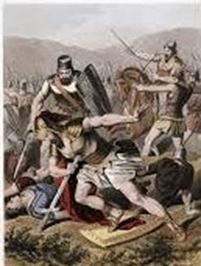
1 Samuel 31:1 – 13 “Now the Philistines fought against Israel, and the men of Israel fled before them, and many fell slain on Mount Gilboa. The Philistines followed hard after Saul and his sons, and they killed Saul’s sons Jonathan, Abinadab, and Malchishua. When the battle intensified against Saul, the archers overtook him and wounded him critically.

Then Saul said to his armor-bearer, “Draw your sword and run it through me, or these uncircumcised men will come and run me through and torture me!” But his armor-bearer was terrified and refused to do it. So, Saul took his own sword and fell on it. When his armor-bearer saw that Saul was dead, he too fell on his own sword and died with him. So, Saul, his three sons, his armor-bearer, and all his men died together that same day.

When the Israelites along the valley and those on the other side of the Jordan saw that the army of Israel had fled and that Saul and his sons had died, they abandoned their cities and ran away. So, the Philistines came and occupied their cities. The next day, when the Philistines came to strip the dead, they found Saul and his three sons fallen on Mount Gilboa. They cut off Saul’s head, stripped off his armor, and sent messengers throughout the land of the Philistines to proclaim the news in the temples of their idols and among their people. They put his armor in the temple of the Ashtoreths and hung his body on the wall of Beth-shan.

When the people of Jabesh-gilead heard what the Philistines had done to Saul, all their men of valor set out, journeyed all night, and retrieved the bodies of Saul and his sons from the wall of Beth-shan.

When they arrived at Jabesh, they burned the bodies there. Then they took their bones and buried them under the tamarisk tree in Jabesh, and they fasted seven days.”

On the night when Saul visited the medium at Endor, Samuel told him that Saul and his sons would soon join him in death. At that point, Saul could still have repented and begged God for mercy, but he did not. Now Saul’s time has run out. Seventy – two-year-old Saul and his three sons fight valiantly; however, all three of Saul’s sons die. Now only Saul and his armor bearer are left. Saul has never lacked courage; when he realizes he may die from his arrow wounds, he begs his armor bearer to kill him so that the Philistines will not capture him and torture him. Paralyzed with fear, the poor armor bearer can’t stand to kill Saul, so Saul falls on his sword and dies. Following Saul’s example, the armor bearer also commits suicide.

When the Israelites see that Saul and his sons have died, they take to their heels. Not only do the Israelite soldiers run away, but the inhabitants of the cities on both sides of the Jordan flee also. The Philistines immediately come in and occupy those cities, a major loss for Israel. But Israel still has a few heroes left.

When the Philistines find the bodies of Saul and his sons, they cut off Saul’s head and hang his body and the bodies of his sons on the walls of Beth – shan. Saul’s armor winds up in the temple of the Ashtoreths. The Philistines are doing everything they can to shame Saul and the Israelites. But the men of Jabesh – gilead are made of stronger stuff. These brave men travel all night, a matter of 26 miles or 42 kilometers round trip, to retrieve the bodies of Saul and his sons, and take them back to Jabesh, where they burn the bodies, bury the bones, and fast seven days. The fast is both to honor Saul and his sons and to cleanse themselves from handling the dead bodies.   

Saul’s life story is one of triumph followed by tragedy. Throughout Saul’s life, he has had so many opportunities to truly worship the Lord and to obey Him; yet, Saul has consistently gone his own way at every opportunity. Not only has Saul failed, but he has also taken his three sons down with him. We know practically nothing about Abinadab and Malchishua, but Jonathan has stood out as brave, loyal, kind, and resourceful. Jonathan has already told David that he would be proud to serve as David’s second in command. Now Jonathan too lies dead, a sacrifice to his father’s pride and chronic disobedience. (“Jonathan” means “God has given.” “Abinadab” means “father of a vow” or “willingness.” “Malchishua” means “the King of salvation” or “the King of help.” As the first born, Jonathan had an appropriate name, but what was Saul trying to accomplish by giving his other sons these names?)

APPLICATION: Saul’s boys really never had much of a chance! While Saul was big and strong and tough physically, spiritually and emotionally, he was a hot mess! Saul had barely become king when he managed to lose the chance to found a dynasty by failing to completely carry out God’s orders. There is never any mention of Saul having his own faith in God or worshiping God because he wanted to. Any time Saul was referring to God, he either referred to Him as “Your God,” for Samuel, or as “the Lord,” impartially. Saul never once referred to God as “my God.” Compare that with David, who repeatedly referred to God as “my God.” Saul tried to save King Agag, despite the fact that he should have killed Agag along with the rest of the Amalekites. One wonders if Saul was hoping for more treasure by holding Agag for ransom or if Agag and he were actually worshiping some of the same deities. Did Agag beg Saul for mercy in the name of Baal? Eventually, it was Samuel who killed Agag, not Saul.

As Saul aged, his mental and emotional state continued to deteriorate, possibly because of his involvement with pagan deities. Saul became insanely jealous of David, trying to spear him several times and later chasing David all over the countryside, wasting resources and leaving the cities of Israel unprotected. When Jonathan tried to help David, Saul threatened to kill Jonathan, his first – born son. Now Saul and his three sons lay dead on Mount Gilboa. Ironically, Saul’s armor wound up in the temple of Ashtoreth, while Saul’s body and those of his sons hung from the walls of Beth – shan. This was a tragic ending for someone who began his reign as king under God’s anointing!

These days, fatherhood is taking a beating. For years, cartoons have portrayed fathers as ignorant boobs who can scarcely do anything right. There are many fractured families in which boys struggle with their identity as men for lack of positive role models. Male bashing has become the order of the day for some desiring to appear politically correct. But God has instituted fatherhood for perfectly good reasons. Men’s brains are wired differently than women’s. Generally, women are wired to nurture and handle the plethora of details that arise from caring for families. Men, on the other hand, tend to see the big picture, but may get bogged down in smaller details.

Broad generalizations are pointless. Many of us have had to learn to function in roles not traditionally assigned to our gender. I have spent most of my life working as a surgeon. When I entered surgery, I was one of a handful of female trainees. I have headed mission hospitals in patriarchal societies in rural Africa, negotiating slippery social and cultural slopes in the process. But Africa has also taught me the value of fatherhood when it is done correctly. In the culture in which I work, fatherhood is so highly prized that a younger man will refer to an older one as “my father” out of respect, even if they have no actual blood bond.

We have a Ghanaian friend who is probably one of the finest examples of fatherhood we have seen anywhere. Our friend is kind, loving, patient, and caring; but he is also a strong Christian, a man of character, who has guided his children successfully and who continues to serve as a major influence in their lives. If King Saul had been like our friend, his story would have been quite different.

Jabesh – gilead was on the east side of the Jordan in the area from which some Israelites were fleeing, deserting their cities. But when the men of Jabesh – gilead heard what had happened, all of their fighting men marched by night to collect the bodies of Saul and his sons and to then return to Jabesh – gilead. Remember that the terrain these men were negotiating was quite rugged and that they had to ford the Jordan River in addition. But the men of Jabesh – gilead succeeded. Those Israelites who were at the battle could have collected the bodies of Saul and his sons as they retreated, but they did not. The defeated Israelites left Saul and his sons to fend for themselves, caring nothing for them, leaving their bodies for the vultures and the Philistines. God obviously applauded the bravery of these men, allowing this story to be preserved in the Bible.   

Today, many of us who are called to be parents feel woefully inadequate. Raising kids is a daunting task, and parenthood actually extends for the entire life of the parent. Saul’s mistake was simple: he insisted on relying on himself instead of God. None of us have enough knowledge or resources to be able to handle every situation. Sometimes even when we think we know what we are doing, we mess up. May all of us turn to God for His help and guidance!

PRAYER: Father God, thank You for loving us and for caring for us. Lord, many of us are parenting children of various ages and we find ourselves exhausted. We fear we are failing at parenthood. Lord, help all who read these words to look to You, the ultimate Father, for guidance, for wisdom, for strength, and for courage. In the matchless Name of King Jesus. Amen.

APRIL 30, 2022 SO YOU WANT BE A PROPHET #46 1 SAMUEL 30:1 – 31  WHAT DO YOU DO WHEN DISASTER STRIKES?

April 30, 2022

1 Samuel 30:1 – 31 “On the third day David and his men arrived in Ziklag, and the Amalekites had raided the Negev, attacked Ziklag, and burned it down. They had taken captive the women and all who were there, both young and old. They had not killed anyone, but had carried them off as they went on their way.

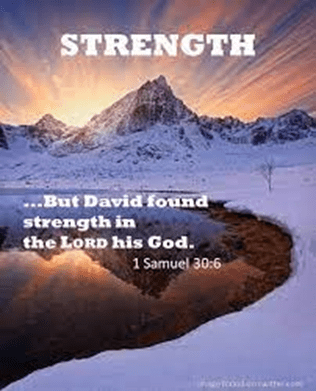
When David and his men came to the city, they found it burned down and their wives and sons and daughters taken captive. So, David and the troops with him lifted up their voices and wept until they had no strength left to weep. David’s two wives, Ahinoam of Jezreel and Abigail the widow of Nabal of Carmel, had been taken captive. And David was greatly distressed because the people spoke of stoning him, because the soul of every man grieved for his sons and daughters. But David found strength in the LORD his God.

Then David said to Abiathar the priest, the son of Ahimelech, “Bring me the ephod.”

So Abiathar brought it to him, and David inquired of the LORD: “Should I pursue these raiders? Will I overtake them?”

“Pursue them,” the LORD replied, “for you will surely overtake them and rescue the captives.”

So, David and his six hundred men went to the Brook of Besor, where some stayed behind because two hundred men were too exhausted to cross the brook. But David and four hundred men continued in pursuit.

Now his men found an Egyptian in the field and brought him to David. They gave the man water to drink and food to eat— a piece of a fig cake and two clusters of raisins. So, he ate and was revived, for he had not had any food or water for three days and three nights.

Then David asked him, “To whom do you belong, and where are you from?”

“I am an Egyptian,” he replied, “the slave of an Amalekite. My master abandoned me three days ago when I fell ill. We raided the Negev of the Cherethites, the territory of Judah, and the Negev of Caleb, and we burned down Ziklag.”

“Will you lead me to these raiders?” David asked.

And the man replied, “Swear to me by God that you will not kill me or deliver me into the hand of my master, and I will lead you to them.” So, he led David down, and there were the Amalekites spread out over all the land, eating, drinking, and celebrating the great amount of plunder they had taken from the land of the Philistines and the land of Judah. And David struck them down from twilight until the evening of the next day. Not a man escaped, except four hundred young men who fled, riding off on camels.

So, David recovered everything the Amalekites had taken, including his two wives. Nothing was missing, young or old, son or daughter, or any of the plunder the Amalekites had taken. David brought everything back. And he recovered all the flocks and herds, which his men drove ahead of the other livestock, calling out, “This is David’s plunder!”

When David came to the two hundred men who had been too exhausted to follow him from the Brook of Besor, they came out to meet him and the troops with him. As David approached the men, he greeted them, but all the wicked and worthless men among those who had gone with David said, “Because they did not go with us, we will not share with them the plunder we recovered, except for each man’s wife and children. They may take them and go.” But David said, “My brothers, you must not do this with what the LORD has given us. He has protected us and delivered into our hands the raiders who came against us. Who will listen to your proposal? The share of the one who went to battle will match the share of the one who stayed with the supplies. They will share alike.”

And so it has been from that day forward. David established this statute as an ordinance for Israel to this very day.

When David arrived in Ziklag, he sent some of the plunder to his friends, the elders of Judah, saying, “Here is a gift for you from the plunder of the LORD’s enemies.” He sent gifts to those in Bethel, Ramoth Negev, and Jattir; to those in Aroer, Siphmoth, and Eshtemoa; to those in Racal and in the cities of the Jerahmeelites and Kenites; to those in Hormah, Bor-ashan, and Athach; and to those in Hebron and in all the places where David and his men had roamed.”

Poor David and his men! David and his forces followed the Philistines to the battle with the Israelites, only to be sent back to Ziklag. But while Ziklag was left undefended, Amalekite raiders had pounced on the city, destroying it and carrying off all its inhabitants. Imagine what David and his men must have felt when they came over that last hill, only to see only smoking ruins. No wonder that these big tough soldiers wept until they had no tears left! But once the weeping stopped, the soldiers began screaming out their anger, threatening to stone David. If David hadn’t made those ridiculous promises to King Achish, they would have stayed in Ziklag and the Amalekites would never have had a chance. “The soul of every man grieved for his sons and daughters.”

This must have been one of the low points of David’s life. The Amalekites had carried off both David’s wives and all his children, so David was grieving just as much as his men. “But David strengthened himself in the Lord.” Rather than giving way to despair, David turned to God, and God strengthened him. Under divine guidance, David pursued the raiders, catching up with them and killing all of them, except for four hundred young men who escaped on camels. Weeping turned to joy as men embraced their wives and children. And not only did David and his men recover everything that the Amalekites had stolen, but they also gained a great deal of plunder in addition. There was so much plunder that when David returned to Ziklag, he shared some of the loot with the elders of some of the main cities in Judah, especially those places that had helped David.

But a problem arose. As David and his men were pursuing the Amalekites, 200 men became exhausted and remained behind while 400 men continued with David and attacked the Amalekites. Once the battle was over, the 400 men who had fought wanted to deny the 200 men who had stayed behind any share of the plunder. But David insisted that the men who had remained behind should have an equal share.  “But David said, “My brothers, you must not do this with what the LORD has given us. He has protected us and delivered into our hands the raiders who came against us. Who will listen to your proposal? The share of the one who went to battle will match the share of the one who stayed with the supplies. They will share alike.”

APPLICATION: The Bible calls David a man after God’s own heart. This story graphically illustrates why men were willing to risk their lives to follow David. When faced with disaster, David sought guidance from God and then acted on it. David had compassion on all of his men, not only those who fought but also those who stayed behind. David was also generous in victory, sending gifts to the elders of the cities that had helped him.

The measure of a leader is not merely how successful he or she is, but also how well that leader cares for all of those working them at all levels. Good leaders care for the “little people” who make daily efforts possible, refusing to ignore them or to lord it over them. Another test of an effective leader is a willingness to help those immediately below them to fully develop. Great leaders encourage and applaud when those they have mentored succeed in outdoing their mentors. May God grant us the ability to encourage and mentor those around us!

PRAYER: Father God, thank You for loving us and for caring for us. Lord, many of us are facing low points in our lives. Help us to look to you for strength and guidance. And help us to be willing to encourage all those around us so that they can fulfill Your perfect will for their lives. In the mighty and precious Name of King Jesus. Amen.