Archive for the ‘Uncategorized’ Category

JANUARY 8, 2026 WE ALL NEED COMFORT, BUT HOW DO WE GET IT? #8 GOD CAN COMFORT YOU EVEN WHEN YOU ARE THE VICTIM OF SOMEONE ELSE’S MANIPULATIONS

January 8, 2026

1-4 But Sarai and Abram had no children. So Sarai took her maid, an Egyptian girl named Hagar, and gave her to Abram to be his second wife.

“Since the Lord has given me no children,” Sarai said, “you may sleep with my servant girl, and her children shall be mine.”

And Abram agreed. (This took place ten years after Abram had first arrived in the land of Canaan.) 

4-6 So he slept with Hagar, and she conceived; and when she realized she was pregnant, she became very proud and arrogant toward her mistress Sarai.

Then Sarai said to Abram, “It’s all your fault. For now this servant girl of mine despises me, though I myself gave her the privilege of being your wife. May the Lord judge you for doing this to me!”

“You have my permission to punish the girl as you see fit,” Abram replied. So Sarai beat her and she ran away.

Poor Hagar! Hagar is only an Egyptian servant girl with no rights and no social standing, totally dependent on any orders from Abram or Sarai. Perhaps Hagar has joined Abram and Sarai’s household during their sojourn in Egypt. Now Sarai, who is barren, insists on Abram sleeping with Hagar, so that Sarai might claim Hagar’s children as hers. Abram is eighty-six years old while Hagar is likely 50 or 60 years younger. Not only is Hagar being forced to have sex with an old man with a withered body, but her mistress intends to claim any children Hagar bears. What a horrible situation! And to make matters worse, when Hagar becomes pregnant, she is foolish enough to be proud and arrogant to the one person who has absolute power over her. Given Hagar’s precarious situation as a young household servant separated from her country, this attitude is the height of stupidity.

Immediately, Sarai blames Abram, even though she is the one who has proposed the union between Abram and Hagar. Furious at Hagar’s taunts, Sarai bears her severely, and she runs out into the wilderness. What will this young pregnant woman do without food or water? Who will protect her?

Genesis 16:7 The Angel of the Lord found her beside a desert spring along the road to Shur.

8 The Angel: “Hagar, Sarai’s maid, where have you come from, and where are you going?”

Hagar: “I am running away from my mistress.”

9-12 The Angel: “Return to your mistress and act as you should, for I will make you into a great nation. Yes, you are pregnant and your baby will be a son, and you are to name him Ishmael (‘God hears’), because God has heard your woes. This son of yours will be a wild one—free and untamed as a wild ass! He will be against everyone, and everyone will feel the same toward him. But he will live near the rest of his kin.”

13 Thereafter Hagar spoke of Jehovah—for it was he who appeared to her—as “the God who looked upon me,” for she thought, “I saw God and lived to tell it.”

14-16 Later that well was named “The Well of the Living One Who Sees Me.” It lies between Kadesh and Bered.

So Hagar gave Abram a son, and Abram named him Ishmael. (Abram was eighty-six years old at this time.)

When the angel of God finds Hagar beside a desert spring, he mildly reproves her (“act as you should”) and then gives her comforting advice. This frightened Egyptian girl realizes that she has encountered her master’s God Jehovah, “the God who looked upon me.” Later, that well is named “The Well of the Living One Who Sees Me.”

This is a short story, but an important one. Hagar is not related to Abram or Sarai at all, but is an Egyptian. As a servant, Hagar must obey every order, even distasteful ones. And Hagar is a victim of Sarai’s failure to trust God. While Abram has been meeting with God, Sarai has to depend on Abram’s accounts for her knowledge of God and His will. Second-hand faith is very weak. Since Sarai is barren, she seeks a solution common to many well-off barren women of that time:

“In the ancient Near East, it was common for a barren wife to offer her maidservant to her husband in order to produce an heir. Legal documents from Mesopotamia, such as the Code of Hammurabi (c. 1754 B.C.E.), confirm that this practice was widespread. However, the fact that a practice was legally or culturally accepted does not necessarily mean it was divinely approved. The biblical record indicates that Jehovah’s original design for marriage was monogamous—one man and one woman joined in a lifelong union. Genesis 2:24 states, “That is why a man will leave his father and his mother and he will stick to his wife, and they will become one flesh.” https://uasvbible.org/2025/03/29/was-it-appropriate-for-sarai-to-offer-her-maidservant-hagar-as-a-secondary-wife-to-abram/

Lacking faith in God’s promises, Sarai is bound to get results any way possible. Abram seems to be neutral but compliant, and after all, when Hagar becomes pregnant, the pregnancy validates Abram’s sexual prowess.

There are all kinds of ways to approach these verses; however, look at the way God handles Hagar, comforting her. God meets Hagar directly, something that has happened rarely throughout history. Then God refuses to blame Hagar for Sarai’s machinations; after all, Hagar is powerless in this situation. Sadly, Sarai cares nothing for Hagar apart from Hagar’s fertility. If Hagar fails to get pregnant, Sarai might try the same thing with another maid servant. And God promises that Hagar will safely deliver a son who will become a leader, although free and untamed.

Hagar’s story should encourage us. Many times, we may find ourselves caught in untenable situations, at the mercy of powerful people who care little for us as individuals. But God is still there, the God who looks upon us, the Living God who sees us. And God will not forget us, no matter who misuses us nor how precarious our position might be.

Psalm 62:7-9 tells us, “My protection and success come from God alone. He is my refuge, a Rock where no enemy can reach me. O my people, trust him all the time. Pour out your longings before him, for he can help! The greatest of men or the lowest—both alike are nothing in his sight. They weigh less than air on scales.” As we enter this new year, let us remember the God who comforted a poor servant girl lost in the wilderness. That same God will still comfort us.

PRAYER Father God, thank You for loving us and caring for us. Lord, help us to trust You and to wait for Your perfect Will to be worked in our lives. Thank You for being the God of all comfort. In the mighty and precious Name of King Jesus. Amen.

JANUARY 7, 2026 WE ALL NEED COMFORT, BUT HOW DO WE GET IT? #7 DON’T LOOK AT THE ROCKS-LOOK AT THE RIVER!

January 7, 2026

Genesis 15:1 Afterwards Jehovah spoke to Abram in a vision, and this is what he told him: “Don’t be fearful, Abram, for I will defend you. And I will give you great blessings.”

2-3 But Abram replied, “O Lord Jehovah, what good are all your blessings when I have no son? For without a son, some other member of my household will inherit all my wealth.”

4 Then Jehovah told him, “No, no one else will be your heir, for you will have a son to inherit everything you own.”

5-7 Then God brought Abram outside beneath the nighttime sky and told him, “Look up into the heavens and count the stars if you can. Your descendants will be like that—too many to count!” And Abram believed God; then God considered him righteous on account of his faith.

And he told him, “I am Jehovah who brought you out of the city of Ur of the Chaldeans, to give you this land.”

8 But Abram replied, “O Lord Jehovah, how can I be sure that you will give it to me?” 

Pretend you are Abram. You moved from Haran when you were seventy-five, and now you are getting older. Your wife is also getting older; in fact, she hasn’t menstruated in years. You have no children and are beginning to resign yourself to taking one of your chief servants as your heir. But God keeps promising you that He will bless you abundantly. And now God says that your descendants will be as numerous as the stars and that He is going to give you all the land you have seen. At this point, nobody will criticize you for wondering how God proposes to fulfill His promises. “But Abram replied, “O Lord Jehovah, how can I be sure that you will give it to me?” What the Bible doesn’t record, but what Abram actually asks is, “Lord, are You kidding???”

God knows Abram’s heart, and God knows there’s one way He can graphically demonstrate that He’s serious about these promises. In Abram’s time, men entering serious contracts “cut covenant,” slaughtering animals and then walking around and between the carcasses while chanting promises that this same fate will overtake them and their animals if they fail to keep their part of the bargain. Now God cuts covenant with Abram.

9-11 Then Jehovah told him to take a three-year-old heifer, a three-year-old female goat, a three-year-old ram, a turtledove, and a young pigeon, and to slay them and to cut them apart down the middle, and to separate the halves, but not to divide the birds. And when the vultures came down upon the carcasses, Abram shooed them away.

12 That evening as the sun was going down, a deep sleep fell upon Abram, and a vision of terrible foreboding, darkness, and horror.

13-16 Then Jehovah told Abram, “Your descendants will be oppressed as slaves in a foreign land for 400 years. But I will punish the nation that enslaves them, and at the end they will come away with great wealth. (But you will die in peace, at a ripe old age.) After four generations they will return here to this land; for the wickedness of the Amorite nations living here now will not be ready for punishment until then.”

17-21 As the sun went down and it was dark, Abram saw a smoking firepot and a flaming torch that passed between the halves of the carcasses. So that day Jehovah made this covenant with Abram: “I have given this land to your descendants from the Wadi-el-Arish to the Euphrates River. And I give to them these nations: Kenites, Kenizzites, Kadmonites, Hittites, Perizzites, Rephaim, Amorites, Canaanites, Girgashites, Jebusites.”

Well, after such a graphic demonstration of God’s intent, Abram and his wife Sara should be completely reassured and willing to wait for God’s perfect provision. WRONG! Even though God manifests His power by a smoking firepot and a flaming torch, this couple still doubts. As we learn in Genesis 16, Sara particularly feels God knows some help and takes matters into her own hands.

Why doesn’t Abram believe God and take comfort in His promises? And why doesn’t Abram share his experiences with his wife so that she will be comforted as well? Consider this: Abram wants to believe but he keeps looking at his circumstances. Perhaps Abram does try to tell Sara, but Sara refuses to believe him.

How many times has God tried to comfort us, only for us to refuse to believe Him? Take, for example, God’s admonitions for us not to be afraid. The Bible contains at least 300 commands saying “don’t be afraid.” (The exact number is in dispute, even though popularly some preachers teach that there is one of these commands for each day of the year.) God keeps telling us not to be afraid and we keep clutching our fears.

I love white water canoeing and kayaking. One of the first lessons kayakers must learn is to look at the river and not at the rocks. The second a kayaker begins looking at the rocks, the kayak will wind up on the rocks. We go where we focus. If we are to receive God’s comfort, we must focus on His comfort and His Word, not on the things that terrify us. As we begin this new year, let’s remember God’s promises and the way He has kept us through the previous year. Let’s accept God’s comfort and trust His Word.

PRAYER: Father God, thank You for loving us and caring for us. Lord, help us to trust You and Your promises and Your provision. In the mighty and precious Name of King Jesus. Amen.

JANUARY 6, 2026 WE ALL NEED COMFORT, BUT HOW DO WE GET IT? #6 WHAT DOES “HALT” HAVE TO DO WITH YOUR SOURCES OF COMFORT?

January 6, 2026

Genesis 14:14-16 When Abram learned that Lot had been captured, he called together the men born into his household, 318 of them in all, and chased after the retiring army as far as Dan. He divided his men and attacked during the night from several directions, and pursued the fleeing army to Hobah, north of Damascus, and recovered everything—the loot that had been taken, his relative Lot, and all of Lot’s possessions, including the women and other captives.

17-18 As Abram returned from his strike against Chedorlaomer and the other kings at the valley of Shaveh (later called King’s Valley), the king of Sodom came out to meet him, and Melchizedek, the king of Salem (Jerusalem), who was a priest of the God of Highest Heaven, brought him bread and wine. 

19-20 Then Melchizedek blessed Abram with this blessing: “The blessing of the supreme God, Creator of heaven and earth, be upon you, Abram; and blessed be God, who has delivered your enemies over to you.” Then Abram gave Melchizedek a tenth of all the loot.

21-24 The king of Sodom told him, “Just give me back my people who were captured; keep for yourself the booty stolen from my city.”

But Abram replied, “I have solemnly promised Jehovah, the supreme God, Creator of heaven and earth, that I will not take so much as a single thread from you, lest you say, ‘Abram is rich because of what I gave him!’ All I’ll accept is what these young men of mine have eaten; but give a share of the loot to Aner, Eshcol, and Mamre, my allies.”

Abraham has really been through it! No thanks to Lot insisting on living close to Sodom, Lot and his family have become hostages of war when the king of Sodom and several other kings rebel against Chedorlaomer and his allies. Here, Abram demonstrates his innate ability as a military commander by sending 318 men out against several much larger armies, attacking them at night, and recovering all the people and the loot.

As Abram returns, he is met by two different kings, Melchizedek, the priest of the God of Highest Heaven, and the king of Sodom. Melchizedek meets Abram with bread and wine as signs of welcome and worship. Melchizedek utters a holy blessings of God over Abram, and Abram responds by giving Melchizedek a tenth of all the loot as an offering. Abram is basking in the comfort of this blessing.

Now, the king of Sodom shows up. But unlike Melchizedek, the king of Sodom is worshiping different gods. While it’s likely the citizens of Sodom worship fertility goddesses such as Ashtar, they worship other gods that encourage flagrant sexual misconduct and even mistreatment of strangers, something that is a gross violation of tradition throughout most parts of the world. We know these facts because later, in Genesis 19, when two angels visit Sodom, the men of Sodom demand that Lot allow them to gang rape his visitors.

The king of Sodom is offering comfort; however, his comfort is undoubtedly an attempt to manipulate Abram. If the king of Sodom can just entice Abram into collecting all the loot, Abram will be indebted to the king, a debt on which the king can collect at any moment. Abram fully realizes the king’s motives and wants no part of them. Perhaps Abram already knows the nature of the people of Sodom and has even tried to warn Lot as Lot moves ever closer to Sodom. Abram refuses to collect any of the loot from Sodom, apart from the portions for the three Amorite leaders who have accompanied him.

Abram makes a wise and holy choice, seeking virtuous comfort, and God blesses him for it. But where do we find comfort? When we are stressed/tired/unhappy/depressed/discouraged /lonely, what comforts us?

Recovery workers are familiar with the HALT acronym. “The HALT acronym stands for Hungry, Angry, Lonely, and Tired. It’s a simple but effective tool used in recovery to remind a person to pause and assess their emotional and physical before making important decisions or reacting to situations. By addressing these four states, they can avoid impulsive actions that result in self-harming behaviors and take better care of themselves.

Hungry

When someone is in the “Hungry” state within the HALT acronym, they may be experiencing feelings of low energy, irritability, and difficulty concentrating due to insufficient nourishment. Hunger can lead to emotional imbalances, affecting one’s mood and decision-making. Proper nutrition is often underrated in mental health. It is vital for maintaining stable emotions and mental clarity. Ignoring hunger can exacerbate stress and anxiety, making it essential to prioritize regular, balanced meals and snacks to support overall well-being and emotional equilibrium.

Angry

The “Angry” state in the HALT acronym refers to the emotion of anger and its associated impacts. When someone is feeling angry, they may experience heightened frustration, resentment, and hostility. This emotional state can cloud judgment and lead to impulsive, regrettable actions. Uncontrolled anger can strain relationships and escalate conflicts.

Recognizing anger as a risk state allows individuals to take a step back, practice deep breathing, and employ healthy coping mechanisms to manage and diffuse this intense emotion effectively. Addressing the root causes of anger and seeking constructive ways to express it can lead to better emotional regulation and improved overall well-being.

Lonely

The “Lonely” state within the HALT acronym encompasses feelings of isolation and disconnection from others. It can lead to emotional distress, sadness, and a sense of emptiness. Prolonged loneliness can have adverse effects on mental health, contributing to depression and anxiety.

Recognizing loneliness as a risk state allows individuals to seek social connections, reach out to friends or family, and engage in activities that foster a sense of belonging. Prioritizing social support and meaningful relationships can help combat loneliness and promote emotional well-being. Additionally, practicing self-compassion and self-care can be beneficial in addressing feelings of loneliness and cultivating a positive relationship with oneself.

Tired

The “Tired” state in the HALT acronym refers to physical and mental exhaustion. When someone is feeling tired, they may experience reduced focus, increased irritability, and diminished cognitive abilities. Fatigue can impair decision-making and lead to mistakes or accidents. Chronic tiredness can also impact emotional stability and overall mood, making individuals more vulnerable to stress and negative emotions.

Recognizing tiredness as a risk state allows individuals to prioritize rest and sleep, engage in relaxation techniques, and manage their energy levels effectively. Adequate rest and self-care are essential in replenishing energy reserves and supporting emotional well-being.

What Can HALT Be Used For?

The HALT skill, originally developed in the context of addiction recovery, is a powerful tool used to enhance self-awareness and emotional well-being. By recognizing the four states of HALT, individuals can respond to challenging situations in healthier ways. Over time, the HALT skill has evolved beyond addiction recovery and is now widely utilized in various contexts, such as eating disorder recovery and obsessive-compulsive disorder (OCD).1

” https://www.choosingtherapy.com/halt-acronym/

Why should believers be aware of HALT? Nobody wakes up one morning and says, “I’m choosing to be stressed or depressed.” Situations always develop gradually and sneak up on us. Before we realize it, we might be searching for quick comfort in wrong places. Blessedly, God has answers for all of our problems, if we will only look for His answers. We must continue to seek God’s will and God’s comfort. God’s answers work; other answers will never satisfy.

 PRAYER: Father God, thank You for loving us and caring for us. Lord, help us to always look for the comfort only You can give. In the mighty and precious Name of King Jesus. Amen.

JANUARY 5, 2026 WE ALL NEED COMFORT, BUT HOW DO WE GET IT? #5 GOD CAN COMFORT US EVEN WHEN OTHERS TAKE ADVANTAGE OF US

January 5, 2026

13 1-2 So they left Egypt and traveled north into the Negeb—Abram with his wife, and Lot, and all that they owned, for Abram was very rich in livestock, silver, and gold. 3-4 Then they continued northward toward Bethel where he had camped before, between Bethel and Ai—to the place where he had built the altar. And there he again worshiped the Lord.

5 Lot too was very wealthy, with sheep and cattle and many servants. 6 But the land could not support both Abram and Lot with all their flocks and herds. There were too many animals for the available pasture. 7 So fights broke out between the herdsmen of Abram and Lot, despite the danger they all faced from the tribes of Canaanites and Perizzites present in the land. 

8 Then Abram talked it over with Lot. “This fighting between our men has got to stop,” he said. “We can’t afford to let a rift develop between our clans. Close relatives such as we are must present a united front! 9 I’ll tell you what we’ll do. Take your choice of any section of the land you want, and we will separate. If you want that part over there to the east, then I’ll stay here in the western section. Or, if you want the west, then I’ll go over there to the east.”

10 Lot took a long look at the fertile plains of the Jordan River, well watered everywhere (this was before Jehovah destroyed Sodom and Gomorrah); the whole section was like the Garden of Eden, or like the beautiful countryside around Zoar in Egypt. 11 So that is what Lot chose—the Jordan Valley to the east of them. He went there with his flocks and servants, and thus he and Abram parted company. 12 For Abram stayed in the land of Canaan, while Lot lived among the cities of the plain, settling at a place near the city of Sodom. 13 The men of this area were unusually wicked, and sinned greatly against Jehovah.

14 After Lot was gone, the Lord said to Abram, “Look as far as you can see in every direction, 15 for I am going to give it all to you and your descendants. 16 And I am going to give you so many descendants that, like dust, they can’t be counted! 17 Hike in all directions and explore the new possessions I am giving you.” 18 Then Abram moved his tent to the oaks of Mamre, near Hebron, and built an altar to Jehovah there.

In a land where water is scarce and grazing can be difficult, two groups of herdsmen are struggling. When Abram discusses the matter with his nephew Lot, he suggests they split up and go in different directions. The remarkable thing about this discussion is that Abram gives Lot first choice. As the senior person in the relationship, Abram should naturally have first choice; however, he is doing everything he can to avoid conflict.

Notice that Lot never hesitates or asks what Abram might like to do, even though Abram is his uncle and has been very kind to him. It’s likely that Lot owes much of his wealth to Abram’s help and generosity. As soon as Lot is given the opportunity, he immediately chooses the Jordan Valley for its rich grazing and the continuous supply of water. The Jordan River is formed by several streams that flow down from the slopes of Mount Hermon, supplying fresh water year-round. The grass is lush, and livestock will prosper there.

Lot’s selfish choice leaves Abram struggling with uncertain water sources and the threat of attacks from Canaanite tribesmen. But as soon as Lot takes off for the Jordan Valley, God speaks to Abram, “Look as far as you can see in every direction, for I am going to give it all to you and your descendants. And I am going to give you so many descendants that, like dust, they can’t be counted! Hike in all directions and explore the new possessions I am giving you.”  (Genesis 13:14-17)

Abram refuses to exert his authority as the patriarch of the family, even though custom demands it. And Lot immediately takes advantage of his soft-hearted uncle to seize what looks like the best land. What’s interesting is where Lot settles. The Jordan Valley extends 223 miles or 360 kilometers. Lot has lots of places where he can settle aprat from the area of Sodom; however, the Sodom area is close and Lot doesn’t want to struggle. Sure, the citizens of Sodom have an evil reputation, but Lot isn’t going to live in Sodom, so what?

We know that Lot’s choice will prove disastrous and ultimately, he will lose everything. Meanwhile, God blesses Abram and comforts him for being unselfish. Leo Durocher, a famous American baseball manager, is quoted as having said, “Nice guys finish last.” But the kingdom of God operates differently. One of the rules of the Kingdom of God is that the measure you give out is the measure you receive. Here Abram has been generous, and now God comforts him by reiterating His promises about Abram’s future and the futures of his descendants.

Perhaps you have found yourself in the same position as Abram. Given the opportunity to help yourself, you have allowed others to benefit instead. Perhaps you are beginning to think that Mr. Durocher was right and that nice guys really do finish last. Perhaps last year was filled with diasters and you fear this year will bring more of the same. But God keeps the books and God will be no man’s debtor. God has seen your struggles and your desire to please Him. When you follow God’s will for your life, God will comfort you and God will take care of you. Remember what eventually happens to Abram and Lot: Abram prospers and Lot loses everything because of his selfishness.

PRAYER: Father God, thank You for loving us and caring for us. Lord, many of us have struggled to reach this new year and we fear for what might happen. Please comfort all those mourning lost opportunities, that they might see that You are the One who consoles and rewards. In the mighty and precious Name of King Jesus. Amen.

JANUARY 4, 2026 WE ALL NEED COMFORT, BUT HOW DO WE GET IT? #4 WHEN GOD PROMISES COMFORT, TRUST HIM! DON’T TRY TO FIX YOUR OWN LIFE!

January 4, 2026

Genesis 12:7-9 Then the Lord appeared to Abram and said, “To your descendants I will give this land.” And there he built an altar to the Lord, who had appeared to him. And he moved from there to the mountain east of Bethel, and he pitched his tent with Bethel on the west and Ai on the east; there he built an altar to the Lord and called on the name of the Lord. So Abram journeyed, going on still toward the South.

Well, Abram has trusted God, making it to Canaan and has done well by worshiping God as soon as he arrives. But all is not rosy in Canaan, and Abram’s faith is about to be tested.

Genesis 12:10 Now there was a famine in the land, and Abram went down to Egypt to dwell there, for the famine was severe in the land. 11 And it came to pass, when he was close to entering Egypt, that he said to Sarai his wife, “Indeed I know that you are a woman of beautiful countenance. 12 Therefore it will happen, when the Egyptians see you, that they will say, ‘This is his wife’; and they will kill me, but they will let you live. 13 Please say you are my sister, that it may be well with me for your sake, and that I may live because of you.”

While we choose to believe that climate change is a new phenomenon, in fact, it has always affected human history. Here, Abram and Sarai move to Egypt to escape famine in Canaan. The Nile River provides a constant source of water for irrigation, so Egypt has food while Canaan does not. Abram is already seventy-five, so Sarai must be nearly sixty; however, Sarai is still so strikingly beautiful that Abram fears the Egyptians will kill him so they can take Sarai to join Pharaoh’s harem.   

Why does the Bible include this story about Abram with his fear driving him to lie? Why doesn’t Abram trust God’s direction and His promises? Here, Abram is tormenting himself, turning away from God’s comfort to become his own amateur providence. As soon as a potential threat looms, Abram forgets everything God has told him and God’s magnificent plans for his future. Abram also forgets that God has promised, “I will bless those who bless you, and I will curse him who curses you; and in you all the families of the earth shall be blessed.”

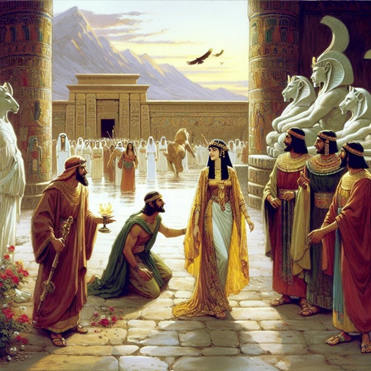
14 So it was, when Abram came into Egypt, that the Egyptians saw the woman, that she was very beautiful. 15 The princes of Pharaoh also saw her and commended her to Pharaoh. And the woman was taken to Pharaoh’s house. 16 He treated Abram well for her sake. He had sheep, oxen, male donkeys, male and female servants, female donkeys, and camels.

17 But the Lord plagued Pharaoh and his house with great plagues because of Sarai, Abram’s wife. 18 And Pharaoh called Abram and said, “What is this you have done to me? Why did you not tell me that she was your wife? 19 Why did you say, ‘She is my sister’? I might have taken her as my wife. Now therefore, here is your wife; take her and go your way.” 20 So Pharaoh commanded his men concerning him; and they sent him away, with his wife and all that he had.

Eventually, God delivers Abram and Sarai from the mess Abram’s lies have created. What might have happened had Abram had the courage to trust God and tell the truth in the beginning? Pharaoh might have respected Abram more for having a gorgeous wife at the age of seventy-five. Perhaps God wanted Abram to develop a close relationship with Pharaoh for some reason, but now Pharaoh is so revolted that he simply expels Abram and Sarai from Egypt.

We read this story and begin mentally criticizing Abram for his lack of faith. But how many of us would have done any better? God gives us promises, and we chant Bible verses and sing songs…..up until our faith is really tested. That’s when we begin struggling to find ways to fix the situation, never mind God’s promises or His assurances of comfort. We turn away from the very One who can help us and comfort us, struggling to find solutions in impossible places. We go in for Netflix, on-line games, food, alcohol, drugs, or even sex, all to fill the God-sized hole in our hearts.

Centuries after Abram has become Abraham, father of nations, and a pillar of faith, the Israelites have again forsaken God and His promises. Jeremiah 2:13 tells us, “For My people have committed two evils: They have forsaken Me, the fountain of living waters, and hewn themselves cisterns—broken cisterns that can hold no water.”

As we enter this new year, we need to examine our hearts and lives. Are we truly depending on the One True Living God, the Fountain of living waters, the only Source of comfort, or are we digging broken cisterns that will leak, leaving us comfortless? It was Blaise Pascal, a seventeenth century French mathematician and philosopher, who taught us, “There is a God-shaped vacuum in the heart of every person, and it can never be filled by any created thing. It can only be filled by God, made known through Jesus Christ.”

God wanted to give Abram comfort and assurance in Egypt, but Abram tried to find his own solutions and failed miserably. Today, why not allow God’s Holy Spirit to fill that God-sized hole in your heart?

PRAYER: Father God, thank You for loving us and caring for us. Lord, we confess that we have been trying to fill our hearts with stuff that can never comfort us. We confess these attempts as sin and beg You to forgive us. Please send Your Holy Spirit to fill us with Your love, joy, peace, patience, kindness, goodness, faithfulness, gentleness, and self-control. In the mighty and precious Name of King Jesus. Amen.
JANUARY 3, 2026 WE ALL NEED COMFORT, BUT HOW DO WE GET IT? #3 IS GOD BLESSING YOU WITH HOLY DISCOMFORT?

January 3, 2026

Genesis 12:1 Now the Lord had said to Abram:

“Get out of your country,
From your family
And from your father’s house,
To a land that I will show you.
2 I will make you a great nation;
I will bless you
And make your name great;
And you shall be a blessing.
3 I will bless those who bless you,
And I will curse him who curses you;
And in you all the families of the earth shall be blessed.”

Abraham’s father, Terah, has already moved his family from Ur of the Chaldees to Haran, on the Balikh River. This area is quite fertile and Haran is also a major trading center, with the Euphrates River being 100 km eastward. Although Terah might originally be heading for Canaan, when he reaches Haran, he chooses to remain there. Perhaps Terah begins trading and doing well. At any rate, Abraham is seventy-five years old before God shakes up his world.

Abram is quite comfortable in Haran. Perhaps Abram has even given up the notion of traveling to Canaan; after all, what’s the point of breaking off friendships in Haran to endure the struggles of the road? What can Canaan possibly offer that Haran doesn’t already have? Besides, Abram is already seventy-five and has no sons to whom he can pass things on. No, far better to stay in Haran where it’s safe and comfortable. But something happens. God speaks to Abram. And what God orders shocks Abram, for God directs Abram to tear up roots, leave Haran, and head for Canaan.

How does Abram know that God is speaking to him? Does Abram hear an audible voice? Does God speak to Abram in a dream? Does some diviner come to Abram? We don’t know. All we do know is that Abram becomes firmly convinced that God wants him to leave for Canaan and that God promises to bless him, to curse his enemies, and to bless all the families of the earth through him.

“But,” you ask, perplexed, “the title of these studies is all about comfort. This story sounds anything but comforting!” True. One of the confusing paradoxes about God is that He frequently subjects us to difficulties before he rewards us. You see, God knows far more about our circumstances than we do. We want quick fixes, even if they’re temporary while God is interested in permanent solutions. Terah reaches Haran and stops. For Abram, Haran is his entire world, but God knows Abram has the faith to become the father of nations. So God begins nudging Abram. Suddenly living in Haran has lost its appeal. Familiar scenes hold no enchantment. Conversations with friends and neighbors seem meaningless. Abram is restless and can’t understand why. That’s when God speaks to him, ordering him to pull up stakes and get on the road.

You might read these verses and wonder if this kind of thing really happens. We can testify that it does. Even though God called me into missions when I was eleven, I went through college, medical school, and nine years of surgery training while He remained silent. By the fall of 1985, I had completed my training and had taken a temporary job in a chain of minor emergency clinics. I was earning a good living and we were comfortable….except that we were totally uncomfortable. No matter how pleasant things were, we were restless. Finally, our pastor preached a sermon about Jonah, in which he said that Jonah remained uncomfortable because he was not following God’s leading. The pastor concluded that each of us should look inside ourselves to see if God was trying to guide us and if we had overlooked any opportunities.

That very week, Bob had met a doctor friend who worked at a mission hospital in northern Nigeria. This man had supplied us with application forms for his mission. With nothing else to act on, we decided to complete those applications. As soon as we completed the forms, we felt relieved. Later when we interviewed with representatives of that mission, it became evident that our theological views did not match those of that particular mission. But the process was started, and within a year, we were to meet the mission that eventually sent us to Ghana for our first mission term.

Since that time, we have had other experiences of “holy discomfort.” We have learned that when these convictions have come, we simply need to ask God for guidance and He will direct us. What’s happening in your lives? Are you feeling what might be “holy discomfort?” Ask God to enlighten you. Trust Him, for He is a good Father who does not play guessing games.

PRAYER: Father God, thank You for loving us and caring for us. Lord, as we begin this new year, please help us to listen for Your still small voice. Open the eyes of our hearts, that we may see You and understand Your will for our lives. In the mighty and precious Name of King Jesus. Amen.

JANUARY 2, 2026 WE ALL NEED COMFORT, BUT HOW DO WE GET IT? #2 FINDING COMFORT IN GOD’S CREATION

January 2, 2026

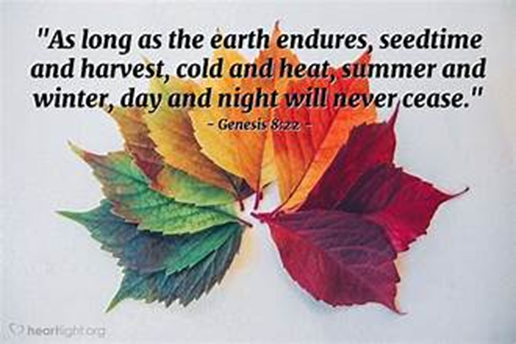
Genesis 8:20-21 Noah built an altar to God. He selected clean animals and birds from every species and offered them as burnt offerings on the altar. God smelled the sweet fragrance and thought to himself, “I’ll never again curse the ground because of people. I know they have this bent toward evil from an early age, but I’ll never again kill off everything living as I’ve just done.

22 For as long as Earth lasts, planting and harvest, cold and heat, summer and winter, day and night will never stop.”

Noah and the family have just survived a catastrophic flood while caring for hundreds of animals and birds. Now everyone has come out of the ark, and Noah has made an offering on an altar. Now God is responding to Noah by promising never to kill off everything living again for as long as earth lasts. God is promising to preserve His creation.

What many of us fail to realize is that God has given us creation for comfort. In an earlier age and today in locations where people are not tied to screens and the internet, many people spent-and spend-much of their time outdoors. Now, large numbers of people are choosing to remain inside, but is that the wisest choice for mental health? No. When we divorce ourselves from nature, we are cutting off one of God’s biggest gifts for our comfort.

No less august a source than the Mayo Clinic newsletter touts the benefits of being outside.

“There are many studies that demonstrate how spending time in nature can improve mood, lower anxiety, and improve cognition and memory,” says Mayo Clinic nurse practitioner Jodie M. Smith, APRN., C.N.P., D.N.P., M.S.N. “Making time for nature is important in order for us to maintain resiliency and promote self-care in a world that demands a lot from us.”

How does nature benefit mental health?

First and foremost, Smith says that nature can be an effective tool to manage stress.

“Stress stimulates our sympathetic nervous system, which is responsible for increasing our blood pressure, heart rate and blood sugar in order to react to a stimulus that is causing us stress,” says Smith.

And while not all stress is bad — for example, stress can motivate you to meet a work deadline or keep an eye on your kids at the pool — prolonged or chronic exposure to stress can chip away at your emotional and mental well-being.

But nature may be able to combat stress and its effects. For example, one study showed that exposure to nature can regulate the sympathetic nervous system in as little as five minutes.

“This means that we can get an almost immediate benefit from stepping outside,” says Smith. And doing so on a recurrent basis may prevent cumulative effects from stress, which could mean a lower risk for chronic disease, illness and mortality.”

In addition to alleviating stress, Smith says research indicates that exposure to nature can be an effective coping strategy for those with chronic mental health conditions, including depression, anxiety, post-traumatic stress disorder (PTSD) and attention-deficit/hyperactivity disorder (ADHD).

Prolonged immersion in nature and nature-based therapy programs have shown promise as a way of managing PTSD.

Even for those without serious mental health conditions, nature may help you manage emotions like loneliness, irritability and possibly even road rage.

Finally, there is evidence that nature exposure is associated with better cognitive function — like memory, attention, creativity and sleep quality.

But perhaps the best part is that nature makes it easy to soak in these benefits.

“Being present in nature doesn’t ask or require anything of us, so it frees up our mind to think more deeply and clearly about things,” says Smith.

Smith goes on to encourage those who are stuck inside all day to create small green spaces, to listen to recorded bird songs and to become involved in community gardens and other projects that help them get outside. https://mcpress.mayoclinic.org/mental-health/the-mental-health-benefits-of-nature-spending-time-outdoors-to-refresh-your-mind/

Some cultures are so serious about time spent outdoors that infants may even be brought outside to sleep. When I saw the photo online, I could scarcely believe it. Caring mothers in Sweden, Denmark, Norway, and Finland bundle their babies warmly, placing them in padded baby carriages, and LEAVING THEM OUT IN THE COLD AND SNOW TO NAP!!! Moreover, this has been going on for centuries. Even today, as evidenced by the photo, people go to coffee shops, leaving their babies to sleep outside in the cold.

  • It turns out that there are a number of major health benefits to gain from this practice: Improved Sleep Quality: Despite the cold temperatures, babies who nap outside actually sleep for longer and enjoy deeper sleep, according to studies. This can be helpful for their overall development, and since this is commonly a daily practice in the winter, it can help keep their sleep schedule regular, too!
  • Boosted Immune System: Because of the baby’s exposure to the outside world and colder temperatures, they also have improved immunity. This is something that all Danish people believe fervently—that fresh air, specifically cold, fresh air—is wonderful for their children’s health. When they nap outside, they are also exposed to less indoor germs, which means that they stay healthier.  
  • Enhanced Physical Health: As you can imagine, the combination of improved sleep quality and boosted immunity leads to improved physical health. Additionally, because of the temperatures, babies enjoy improved blood circulation and get more sunlight exposure, all of which help their health and circadian rhythm stay regular.  
  • Better Mental Well-Being: When babies nap outside, they are also exposed to environments that can improve their mental well-being. The natural environment can calm them down while also reducing parental stress, as this is a communal activity that all parents take part in. It’s a highly beneficial practice for mom and baby! 

Here in Ghana, snow and ice are unknown; however, mothers routinely “back” their babies, carrying them everywhere-to market, to farm, to church. It’s quite common to see mothers riding motorcycles with babies on their backs, and the children generally do quite well. Women carry babies in similar fashion throughout Africa, Latin America, and Asia. While being carried, these babies are also enjoying the comfort of being close to their mothers and in the outdoors as well.

When I was a child, one of our favorite Sunday School hymns was “This is My Father’s World” by Maltbie Davenport Babcock. Of all the hymns I know, this one describes the comfort God has given us through His creation. Here are the words:

1 This is my Father’s world,
And to my listening ears
All nature sings, and round me rings
The music of the spheres.
This is my Father’s world:
I rest me in the thought
Of rocks and trees, of skies and seas–
His hand the wonders wrought.

2 This is my Father’s world:
The birds their carols raise,
The morning light, the lily white,
Declare their Maker’s praise.
This is my Father’s world:
He shines in all that’s fair;
In the rustling grass I hear Him pass,
He speaks to me everywhere.

3 This is my Father’s world:
O let me ne’er forget
That though the wrong seems oft so strong,
God is the Ruler yet.
This is my Father’s world:
Why should my heart be sad?
The Lord is King: let the heavens ring!
God reigns; let earth be glad!

PRAYER: Father God, thank You for loving us and caring for us. Lord, we praise You and bless You for the comfort You give us through Your glorious creation. Help us to rejoice in that creation and to absorb the comfort You provide. In the mighty and precious Name of King Jesus. Amen.

JANUARY 1, 2026 WE ALL NEED COMFORT, BUT HOW DO WE GET IT? #1 INTRODUCTION

January 1, 2026

Welcome to a new month and a new Bible study. Throughout history, there have always been wars and rumors of wars. There have always been natural disasters-earthquakes, fires, floods, lightning strikes, and other calamities.

If you keep up with the news, you know that new threats and new fears raise their ugly heads daily. Sometimes, there’s a temptation to simply hide in hopes that things will be better by the time we come out of hiding!

In the midst of this chaos, where can we find comfort? For the next few weeks, we will be focusing on God’s words about comfort, for the Bible is packed with reassurance.

2 Corinthians 1:3-4 tells us, “Blessed be the God and Father of our Lord Jesus Christ, the Father of mercies and God of all comfort, who comforts us in all our tribulation, that we may be able to comfort those who are in any trouble, with the comfort with which we ourselves are comforted by God.”

When Saint Paul wrote these words, he was traveling through Macedonia, hiking long distances over bad roads, exposed to storms, bandits, poor food, and uncertain lodging, not to mention persecution from unbelievers. Paul had already been on trial, had already been stoned and left for dead, and had had suffered the loss of his status as a Pharisee, a teacher of the law, and any financial security he once enjoyed. By now, his eye problems might have been getting worse, making writing more difficult. These words were written by someone depending on God for everything.

On Christmas morning, we received a wonderful gift-a two-month-old grey male kitten, whom we immediately named Gabriel. But there’s one problem: Gabriel is semi-feral. For the first few days, we have confined Gabriel to a large cage with a litter box, food, water, and another small box with a towel so he has a den of his own. Poor little Gabriel misses his mother and mews pitifully; but when we try to touch Gabriel, he lays back his ears, retreating and hissing at us. We long to comfort Gabriel but so far, he refuses to allow us to touch him. We are walking around this situation with prayer, for we long to cuddle him, to pet him, and to reassure him. For now, we are speaking to him, reading the Bible near him, and speaking in soft low tones.

A few days ago, I was writing about our frustrations with Gabriel: One of the many names of Jesus is “Immanuel” or “Emmanuel,” meaning “God with us.” But why should God order that his Son be called by such a name? God wants all people to know that He is not sitting someplace far away but that He is as close as their heartbeats. But there’s a problem: Just as we struggle to communicate with little Gabriel the kitten, God keeps sending His Word by various means to communicate with people, many of whom aren’t listening or are deafened by the noise of the world around them.

All we want to do is to comfort Gabriel, to make him feel secure, and to demonstrate the depth of our love for him; yet, we struggle to reassure him. If one of us were able to speak “cat” or even to become a cat with the knowledge we have, it would be much easier to ease Gabriel’s fears. We celebrate Christmas because at Christmas, God accomplished what we cannot: He sent Jesus to be born as a baby to a poor family from an obscure village so that He could demonstrate His love and concern through Jesus. Jesus was also born so that he could love, minister, and die as a blood sacrifice for the sins of the whole world, conquering death, hell, and the grave.

Each time little Gabriel mews pitifully, our hearts break, and we beg God again to help us find some way to comfort him. Now if God is a loving Father, with a great heart of love deeper than anything we can possibly imagine, won’t He have compassion on His suffering children just as we have compassion for our kitten? When we cry, God hears us, even though help doesn’t always come in the form we desire. Again, Isaiah 55:9 reminds us that God’s ways are higher than ours.

One of the first things God did to comfort us was to create men and women so they would be able to help each other. Genesis 2:18 tells us, “And the Lord God said, “It is not good that man should be alone; I will make him a helper comparable to him.” 

God also gives us friends to comfort us. Ecclesiastes 4:9-12 says, “Two are better than one, because they have a good reward for their labor. For if they fall, one will lift up his companion. But woe to him who is alone when he falls, for he has no one to help him up. Again, if two lie down together, they will keep warm; but how can one be warm alone? Though one may be overpowered by another, two can withstand him. And a threefold cord is not quickly broken.“

Sometimes God himself comforts us. Genesis 5:24 tells us about a man named Enoch, who was a close friend. One evening, as Enoch was spending time with God, God said, “Enoch, why don’t you come home with me tonight?”
“Sure,” Enoch answered. That night, Enoch disappeared. He didn’t die, for his body was never found. The Bible tells us, “
Enoch walked steadily with God. And then one day he was simply gone: God took him.”

God includes Enoch’s story in the Bible to help us understand that He can do all kinds of things for those who love Him. But ever since Enoch, there have been other people who have received God’s comfort in the midst of suffering, just like Saint Paul.

Ou

How should we treat Bible verses about comfort? Sometimes, the number of verses on a given subject seems overwhelming. Rather than give up, simply scroll through the verses until you find one or two that speak to you. Print up those verses, put them on your cell phone, post them where you will see them as daily reminders, and memorize them. Bible study is good, but cherishing verses that comfort you is also important.

In closing, let me share one verse that always brings me joy: Isaiah 26:3 says, “You will keep him in perfect peace, whose mind is stayed on You, because he trusts in You.” While you might worry that you can’t trust God, you can always ask Him to help you. Let’s pray.

PRAYER: Father God, thank You for loving us and caring for us. Lord, many of us are afraid to trust You because we fear You will fail us. Please comfort those fearful people and help them to trust where they cannot see. In the mighty and precious Name of King Jesus. Amen.

DECEMBER 31, 2025 WHAT’S SO IMPORTANT ABOUT BLOOD? #42 THE SACRIFICES OF JESUS’ EARTHLY PARENTS!  

December 31, 2025

Luke 2:39-40 When they finished everything required by God in the Law, they returned to Galilee and their own town, Nazareth. There the child grew strong in body and wise in spirit. And the grace of God was on him.

41-45 Every year Jesus’ parents traveled to Jerusalem for the Feast of Passover. When he was twelve years old, they went up as they always did for the Feast. When it was over and they left for home, the child Jesus stayed behind in Jerusalem, but his parents didn’t know it. Thinking he was somewhere in the company of pilgrims, they journeyed for a whole day and then began looking for him among relatives and neighbors. When they didn’t find him, they went back to Jerusalem looking for him.

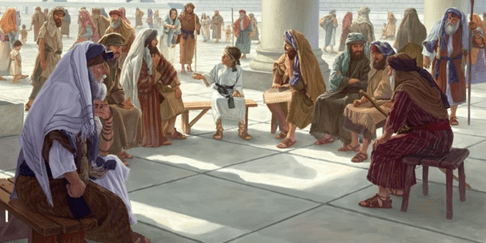
46-48 The next day they found him in the Temple seated among the teachers, listening to them and asking questions. The teachers were all quite taken with him, impressed with the sharpness of his answers. But his parents were not impressed; they were upset and hurt.

His mother said, “Young man, why have you done this to us? Your father and I have been half out of our minds looking for you.”

49-50 He said, “Why were you looking for me? Didn’t you know that I had to be here, dealing with the things of my Father?” But they had no idea what he was talking about.

51-52 So he went back to Nazareth with them, and lived obediently with them. His mother held these things dearly, deep within herself. And Jesus matured, growing up in both body and spirit, blessed by both God and people.

It all started out so well. Joseph, Mary, and Jesus went up to Jerusalem for Passover. While Luke doesn’t mention it, by this point, Jesus probably had several younger siblings who went along as well. If Joseph and Mary were struggling to control a bunch of little kids in the midst of a chaotic crowd, that would explain why they lost sight of Jesus. After all, Jesus was now twelve and about to go through his bar mitzvah, at which point he would be considered as a man who could help make up a minyan, a group of ten men for prayers. Jesus was close to several of the other families from Nazareth; he probably had attached himself to one of those. But once free from Jerusalem and its craziness, Joseph and Mary realized that they hadn’t seen Jesus in more than twenty-four hours and that he wasn’t with the other travelers from Nazareth.

Fearing the worst, Joseph and Mary returned to Jerusalem. After checking the place where the family had lodged, Jesus’ parents went to the temple. As they entered the temple, they could see a large group of scholars clustered together around a much smaller figure. Quietly approaching the group, they realized Jesus was at its center, and the scholars were taking turns asking him questions. What shocked Joseph and Mary was the attitude of the scholars, for they were listening to Jesus seriously, treating him as if he were one of them.

“Jesus!” Mary gasped. “What are you doing?”

“Oh hi, Mother,” Jesus replied.

 Perplexed and angry, Mary continued, “Young man, why have you done this to us? Your father and I have been half out of our minds looking for you.”

“But Father, Mother,” Jesus replied,” why were you looking for me? Didn’t you know that I had to be here, dealing with the things of my Father?”

Mary and Joseph were confused and upset. What did Jesus mean by this statement? What other Father was Jesus referring to, if not to Joseph? Joseph looked at Mary, and Mary looked back at Joseph, shrugging her shoulders.

Finally, Joseph asserted himself, “Well, son, while we are glad that you have such hunger for the things of God, we must return to Nazareth.”

“Certainly, Abba,” Jesus replied. Jesus went around the circle, courteously taking leave of each of them individually.

“Young man, when your parents give permission, you really must return. You show unusual promise,” the eldest scholar stated.

“Oh, thank you, sir. You are too kind. I will certainly return,” replied Jesus, smiling to himself. Little did those scholars realize that Jesus was already thinking years ahead, anticipating that return. By then, many of those men would already have died. Jesus hoped they had heard enough that they would truly know God in His glory and power.

Bowing to all the august group once more, Jesus followed his parents out of the temple and down the steps to the road that led back to Nazareth. Rejoining the group, Jesus returned to Nazareth, to his father’s shop, and to village life. But Mary remembered Simeon’s prophecies and Hannah’s songs. In the stillness of night, Mary wondered what Jesus would eventually do.
“Had they done the right thing by retrieving Jesus from the temple, or should they have allowed him to find his own way home? Were Joseph and she interfering with Jesus’ ministry? How would they know when it was time for Jesus to begin that ministry? It certainly wasn’t easy knowing that Jesus was divine and that at some point, he would leave Nazareth for the larger world.”

If we ignore these few verses, we fail to learn from an important portion of Jesus’ life. After exhibiting his mental and spiritual brilliance, Jesus returned to Nazareth, where we hear virtually nothing about him until he presents himself to John the Baptist at the River Jordan at age 30. For eighteen years, Jesus lived quietly and obediently with his parents, working with his father as a carpenter and perhaps as a stone mason and a part-time farmer. What kind of pressure did Jesus encounter to become married? Ancient rabbis advised age eighteen as the ideal age for young men to marry, although girls might marry as soon as they began menstruating. But there were also some people who remained celibate, with John the Baptist being a prime example.

What kind of pressure did Mary and Joseph suffer because Jesus did not marry? Remember, this family is living in a small village where everybody knows everyone else’s business-or at least thinks they do! Each time Mary fetched water from the village well, she could expect a barrage of questions from the local gossips. “So, Mary, this son of yours, Jesus? Is he actually going to remain single? He’s making a good living, so why doesn’t he pick one of our girls to marry? I can suggest at least three different young ladies, any one of whom would be thrilled to marry him.”

Meanwhile, Joseph would be enduring similar queries. “Joseph, what’s wrong with your eldest son? He seems normal, so why hasn’t he married already? Or has he taken some kind of religious vow? Why don’t you simply meet with one of the local families and select a wife for him?”

Gotquestions.org has this to say about Jesus and celibacy:

Since Jesus was the ideal and model man, it is easy to wonder why He did not marry and father children during His earthly life. As a hard-working and skilled carpenter, a man with a magnetically good character and winsome personality, and with His years of fame and miracle-working, it is likely that more than one woman gave Him opportunity to marry.

No Scripture directly answers the question of why Jesus never married. Several possibilities have been suggested to explain Jesus’ singleness:

1. Jesus did not marry because He had limited time on earth. His strenuous travel and demanding work load would have prevented Him from rightly fulfilling the roles of husband and father. And a wife would have been a distraction to Jesus’ primary mission. A married Jesus would have had to place His wife’s needs above those of the world He came to rescue (see 1 Corinthians 7:32–35).

2. For three years, Jesus lived as a homeless healer-teacher (Luke 9:58). He would not have asked any woman to share such a life. While He now waits for His marriage to His betrothed Bride, the Church, He is preparing for her a heavenly home (John 14:2–3), readying for her a perfect and eternal place of protection.

3. Jesus knew that He had come to die (Isaiah 52:13–53:12; 1 Peter 1:19–20; Luke 18:31–33). If He married, He certainly would leave a widow, probably with small children to rear alone. He was incapable of deliberately causing such unnecessary pain.

4. If Jesus had married, His widow most likely would have been glamorized, idolized, deified, and likely physically endangered because of her relationship with Jesus.

5. Another reason that Jesus didn’t marry is likely that He did not wish to produce a blood successor or generate debate over who that successor would be or whether or not His successor should also be considered the “Son of God.” Jesus’ purpose was not to establish an earthly kingdom or a dynasty (see John 18:36).

6. Jesus did not marry because of His uniqueness. In his History of the Christian Church, Philip Schaff writes, “Jesus’ poverty and celibacy have nothing to do with asceticism, but represent, on the one hand the condescension of His redeeming love, and on the other His ideal uniqueness and His absolutely peculiar relation to the whole church, which alone is fit or worthy to be His bride. No single daughter of Eve could have been an equal partner of the Savior of mankind, or the representative head of the new creation” (Vol. III, p. 68). Schaff goes on to explain, “While Jesus was fully human, and therefore fully capable of perfectly fulfilling all aspects of marriage, He also was fully divine. Therefore, no one with only a human nature could be a suitable mate for Him.”

7. Jesus did not marry because He was not on earth to choose one woman above all others. He came to rescue and restore all who would receive Him. For Jesus to form a marital relationship with one woman would inevitably have confused generations to come about the meaning of His relationship with His spiritual Bride, the Church, to whom He was already betrothed (Ephesians 5:25–27; Revelation 19:7–10; 21:9; 22:17; 2 Corinthians 11:2). Jesus reserved Himself for His true, eternal Bride. If He had picked one woman to elevate above all others, He would have contradicted and undermined His ministry to all.

8. In human marriage, husband and wife become “one flesh” (Genesis 2:24). If the divine Jesus, who knew no sin, married a sinful woman (“for all have sinned,” Romans 3:23), His relationship to His wife would have raised some confusing uncertainties. If Jesus had become “one flesh” with a sinner, would that connection have tainted Him with sin? If they had had children, what kind of nature would these children have had? As physical children of the Son of God, what kind of relationships would they have had to God the Father?

These ideas reinforce the New Testament’s descriptions of Jesus as the ideal Man, the only purely righteous and good One who clearly and consistently pointed to eternity. Jesus did not marry because human marriage was not necessary to His mission of saving the world. Although marriage is a picture of Christ’s relationship with the church (Ephesians 5:31–32), it is only a temporary state in light of eternity. Those who by God’s grace through faith are included in that Bride of Christ have every reason to anticipate with eagerness Jesus’ coming to receive them into greater glory and joy than they ever have known on earth
.

For eighteen years, Jesus absorbed everything there was to learn about village life, using those illustrations in later sermons. Jesus also remained obedient and prayerful. But never ignore the sacrifices made by Joseph and Mary. Instead of celebrating Jesus’ marriage and baby namings, Jesus’ earthly parents had to remain patient, tolerating vicious criticism and embarrassing questions from their friends and neighbors. Blood sacrifices are over swiftly, but this sacrifice lasted nearly two decades. Jesus was called to be the Savior of the world. Mary and Joseph were called to raise, protect, and defend Jesus until he left for ministry, leaving an example for all of us. May God help us to remain faithful, even when we must wait decades for God to act!

PRAYER: Father God, thank You for loving us and caring for us. Lord, help us to remain faithful, even when the fulfillment of Your will takes a long time. In the mighty and precious Name of King Jesus. Amen.
DECEMBER 30, 2025 WHAT’S SO IMPORTANT ABOUT BLOOD? #41 BLESSED BE NOTHING!

December 30, 2025

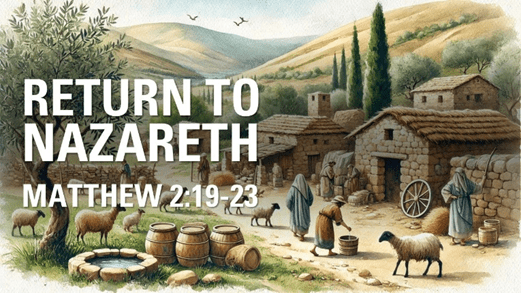
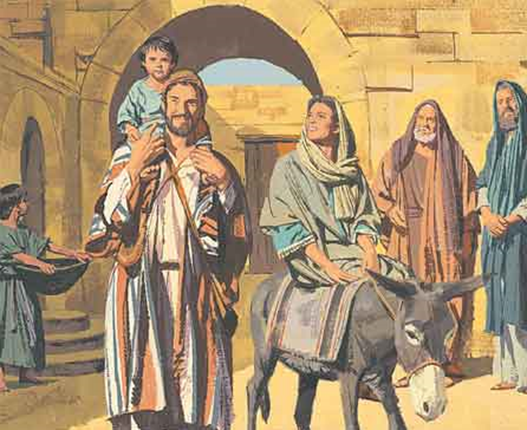
Matthew 2:19-20 Later, when Herod died, God’s angel appeared in a dream to Joseph in Egypt: “Up, take the child and his mother and return to Israel. All those out to murder the child are dead.”

21-23 Joseph obeyed. He got up, took the child and his mother, and reentered Israel. When he heard, though, that Archelaus had succeeded his father, Herod, as king in Judea, he was afraid to go there. But then Joseph was directed in a dream to go to the hills of Galilee. On arrival, he settled in the village of Nazareth. This move was a fulfillment of the prophetic words, “He shall be called a Nazarene.”

Twice God has spoken to Joseph in dreams, and now God speaks one final time. An angel appears in a dream ordering Joseph to return to Israel because “all those out to murder the child are dead.” Wicked King Herod dies, but there’s still danger. King Herod the Great has been succeeded by his son Archelaus, a weak, vicious man who has no problems slaughtering those who oppose him. Archelaus rules half the territory his father ruled, so God warns Joseph once more to settle in Nazareth in the Galilee. Joseph is a carpenter; however, he may also be a stone mason, skills that would be very welcome in a village.

Nazareth proves to be an excellent location for the Holy Family. Not only can Joseph provide necessary services for Nazareth, but the Romans are also building Sepphoris, a model village about 4 miles from Nazareth. The ruins of Sepphoris are open to tourists today, and the magnificent mosaics are well worth viewing. It’s possible that Joseph might have worked on some of the construction projects at Sepphoris.

One pastor’s wife used to tell us, “Blessed be nothing!” Why does God want His Son to grow up in a small village? Even though Jesus is the Son of God, he needs to fully experience what it means to be the “son of man,” and village life can teach that better than any other location.

  1. Jesus needs to understand poverty. Throughout the world, the poor are far more numerous than the rich. Jesus needs to know down to the marrow of his bones the work it takes to provide for a family. Evidence suggests that Joseph likely farmed in addition to doing carpentry or stone masonry. How else will Jesus understand farmers scattering seed, or a village lady desperately searching for the one silver coin she has lost or a shepherd seeking out the one foolish sheep stranded in the mountains? And how else will Jesus be able to crack jokes about a man so unobservant that he runs his face into a beam of wood carried by a carpenter because he’s searching out specks of dust in his neighbor’s eyes?
  2. The relative poverty of Nazareth prepares Jesus for the poverty he will face during his ministry. Once Jesus leaves the family home in Nazareth, he will never be able to claim anyplace as home again until he reaches heaven. Jesus will walk everywhere he goes and will depend on others to feed him. When Jesus calls out a Pharisee for failing to order his servants to wash Jesus’ feet, it’s because those feet have walked long distances over dirty rocky paths that day. There is no evidence to suggest that Jesus owns more than one set of clothing, automatically giving him sympathy with the poorest of the poor. Even more telling, when Jesus and Peter need to pay the temple tax, Jesus tells Peter to go fishing and to reach into a fish’s mouth for the coin that will cover both of them.
  3. Jesus must fully understand the temptations common to the poor. Proverbs 30:7-9 tells us, “Two things I ask of You—do not refuse me before I die: Keep falsehood and deceitful words far from me. Give me neither poverty nor riches; feed me with the bread that is my portion. Otherwise, I may have too much and deny You, saying, ‘Who is the LORD?’ Or I may become poor and steal, profaning the name of my God.…” Even though Jesus is the Son of God and has passed through severe temptations, he continues to be tempted for the remainder of his life. It can get bitterly cold in Israel. Think of Jesus and the disciples, passing through a village on a chill evening as others are withdrawing into small cozy homes perfumed with the fragrant odor of spicey soup. As the little group proceed up the street, local citizens enter their courtyards, baring them against night dangers. Will someone invite Jesus and the disciples in or must they struggle to find food and shelter? Without exception, Jesus must resist the temptation to become his own providence, to miraculously provide for his followers and himself. The moment Jesus fails to rely on his Heavenly Father, Satan has already gained a victory.
  4. Jesus must fully understand what it means to be a social outcast.Face it, nobody is going to beg a poor person to come to their home without an ulterior motive. Even the relatives of poor people are likely to view them in terms of the work they might get from them while handing out a meager reward. Jesus must live this reality so that he can teach about it. In addition, Nazareth is in the Galilee, a region noted for a mixture of Greco-Roman culture plus an overlay of Jewish piety. Jews in other places sneer at the Galileans, feeling they are semi-heretics, poorly educated, and certainly second-class Jews.
  5. Jesus needs poverty for credibility. Poor people won’t accept Jesus’ messages if he finishes teaching and runs back to a gated compound where he can enjoy a luxurious lifestyle being catered to by lots of servants.

Matthew 20:28 “For the Son of Man came not to be served, but to serve, and to give His life a ransom for many.” Jesus doesn’t need wealth, for ultimately he will own the riches of heaven. But Jesus does need poverty, for the poverty of Nazareth, its socially unfavorable location, and the struggles that ensue will combine to shape Jesus and to fit him for ministry. As our friend was fond of saying, “Blessed be nothing!”

PRAYER: Father God, thank You for loving us and caring for us. Lord, we bless You and praise You for sending Jesus to Nazareth, where he would learn the lessons and gain the experience necessary for his ministry. Thank You that no experience, no suffering, is ever wasted in Your Economy. In the mighty and precious Name of King Jesus. Amen.