Archive for the ‘Uncategorized’ Category

JUNE 26, 2026 REMAINING FAITHFUL AFTER A MOUNTAINTOP EXPERIENCE? #33 TAKING ON PHILOSOPHERS AND SPEAKING TO THEIR HEARTS

June 26, 2026

Acts 17:16-34 Paul Preaches in Athens

16 While Paul was waiting for them in Athens, he was deeply troubled by all the idols he saw everywhere in the city. 17 He went to the synagogue to reason with the Jews and the God-fearing Gentiles, and he spoke daily in the public square to all who happened to be there.

18 He also had a debate with some of the Epicurean and Stoic philosophers. When he told them about Jesus and his resurrection, they said, “What’s this babbler trying to say with these strange ideas he’s picked up?” Others said, “He seems to be preaching about some foreign gods.”

19 Then they took him to the high council of the city. “Come and tell us about this new teaching,” they said. 20 “You are saying some rather strange things, and we want to know what it’s all about.” 21 (It should be explained that all the Athenians as well as the foreigners in Athens seemed to spend all their time discussing the latest ideas.)

If you’ve ever studied ancient Greek mythology, you might wonder how any bunch of people as intelligent as the Greeks could possibly have fallen for such a line of codswallop. Encyclopedia Britannica summarizes the ancient Greek religion in this fashion:

Though the worship of the sky god Zeus began as early as the 2nd millennium by, Greek religion in the established sense began c. 750 by and lasted for over a thousand years, extending its influence throughout the Mediterranean world and beyond. The Greeks had numerous gods who controlled various natural or social forces (e.g., Poseidon the sea, Demeter the harvest, Hera marriage). Different deities were worshiped in different localities, but Homer’s epics helped create a unified religion, in which the major gods were believed to live on Mount Olympus under the rule of Zeus.

The Greeks also worshiped various gods of the countryside: Pan, nymphs, naiads, dryads, Nereids, and satyrs (see satyr and silenus), along with the Furies and the Fates. Heroes from the past, such as Heracles and Asclepius, were also venerated. Animal sacrifices were of great importance, usually made at a temple on the altar of the god. Other cultic activities included prayers, libations, processions, athletic contests, and divination, particularly through oracles and birds.

Great religious festivals included the City Dionysia at Athens and the festival of Zeus in the western Peloponnese that included the Olympic Games. Death was seen as a hateful state; the dead lived in the realm of Hades, and only heroes enjoyed Elysium. Great wrongdoers suffered in Tartarus. Mystery religions emerged to satisfy the desire for personal guidance, salvation, and immortality. Greek religion faded with the rise of Christianity and lost its last great advocate with the death of Julian in ad 363. 

In an African context, we would have called these people fetish worshipers. Yes, these people were spiritually hungry and in their hunger were worshiping real spirits; however, these spirits were some of the demons who accompanied Lucifer when he fell from heaven. One third of the angels fell along with Lucifer, allowing for plenty of demons to populate the earth. Even though some of the ideals were lofty, at the end, believers would wind up in Hades, no matter how many sacrifices, prayers, libations, athletic contests, or other acts of worship they had carried out.

Athens was not a major trading center; in fact, Athens was much more an academic community. An AI summary tells us: Athens during Paul’s time was not a wealthy economic hub. Instead, it was more akin to an academic center, similar to modern university towns like Oxford or Harvard. While it had a rich history in philosophy, arts, and politics, the city was not experiencing economic growth like other cities such as Corinth or Ephesus. The focus in Athens was primarily on intellectual pursuits rather than commercial prosperity, which influenced its cultural and social dynamics.

So Paul, one of the brightest minds ever to grace the Christian church in any age, now found himself in Athens, a place where philosophers abounded, education was prized, and many men gathered in hopes of learning something that would make sense of their lives and give them hope. How could Paul possibly reach these people effectively?

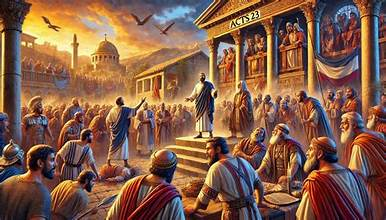
22 So Paul, standing before the council, addressed them as follows: “Men of Athens, I notice that you are very religious in every way, 23 for as I was walking along I saw your many shrines. And one of your altars had this inscription on it: ‘To an Unknown God.’ This God, whom you worship without knowing, is the one I’m telling you about.

Immediately, Paul grabbed the attention of his listeners, complimenting them on their search for truth and referring to an altar that might have stood close to where he was speaking. Paul was establishing common ground, identifying with his audience. But why would anybody erect an altar to a god whom they didn’t know? AI tells us: According to the legend recorded by Diogenes Laërtius, during a plague, the Athenians released sacrificial sheep on the Areopagus. Wherever the sheep lay down, they built altars to the appropriate unknown god, believing this would appease the deity and end the plague.

 
While no intact altar with the exact inscription has been found, archaeological findings support the existence of altars dedicated to unnamed deities in ancient Athens, affirming the city’s religious practices. This altar exemplifies the Athenians’ desire to connect with the divine, even in uncertainty, and highlights the cultural and historical layers of their worship.

Paul was speaking to men who instinctively felt that their ancient Greek religion was lacking and who found it unsatisfying. Now Paul continued.

Acts 17:24 “He is the God who made the world and everything in it. Since he is Lord of heaven and earth, he doesn’t live in man-made temples, 25 and human hands can’t serve his needs—for he has no needs. He himself gives life and breath to everything, and he satisfies every need. 26 From one man he created all the nations throughout the whole earth. He decided beforehand when they should rise and fall, and he determined their boundaries.

27 “His purpose was for the nations to seek after God and perhaps feel their way toward him and find him—though he is not far from any one of us. 28 For in him we live and move and exist. As some of your own poets have said, ‘We are his offspring.’ 29 And since this is true, we shouldn’t think of God as an idol designed by craftsmen from gold or silver or stone.

Now Paul had the rapt attention of his audience, for he was proving that he was highly educated and conversant with traditional Greek literature. This was a direct quotation of Greek sources-likely Epimenides for the first phrase and Aratus (or possibly Cleanthes) for the second. Therefore, Paul’s usage reflects both his scholarly exposure to secular writings and his willingness to connect with his audience on common ground.

30 “God overlooked people’s ignorance about these things in earlier times, but now he commands everyone everywhere to repent of their sins and turn to him. 31 For he has set a day for judging the world with justice by the man he has appointed, and he proved to everyone who this is by raising him from the dead.”

32 When they heard Paul speak about the resurrection of the dead, some laughed in contempt, but others said, “We want to hear more about this later.” 33 That ended Paul’s discussion with them, 34 but some joined him and became believers. Among them were Dionysius, a member of the council, a woman named Damaris, and others with them.

Resurrection? What a novel idea! Remember that the Greeks believed that once dead, always dead, and that they would all wind up in Hades unless they did something incredibly heroic. Most of the audience were realistic enough to know that they were simply ordinary people. Now Paul was offering those ordinary people the opportunity for something remarkable, eternal life with a loving Father God who had sent His own son to die for their sins. No more animal sacrifices. No more speculations about one’s eventual fate after death. Even though many in the audience clung to their ancient beliefs, some began glimpsing a new future full of hope.

Notice what Paul did not do during this meeting. Paul did not condemn the Greeks or criticize their traditional religion. Paul simply created an intellectual bond and then described a better way.

“Bob, if you don’t accept Jesus, you’re going to burn in hell!” It was 1979 at a factory in a small town in western New York. My husband found himself confronted by a coworker he later described as a “pushy Baptist.” Several times a day, this man would get in my husband’s face, confronting him with his need for Jesus. Somehow, it worked. Bob’s story is much longer than that, for he first heard the Gospel in a Sunday School at age five and later encountered Bible-believing Christians several times. But it was the “in your face” style of witness that helped turn Bob’s life around. One morning, he found himself turning back to that man and asking, “___, how do I get the Lord in my life?” That morning was the turning point. Bob received Jesus as Savior and Lord, began attending a church where he was mentored, and eventually embarked on a journey that wound up in a small village in northeastern Ghana.

Why tell this story? Believers are as individual as their DNA or their finger prints. God tailors each salvation story to the individual experiencing it. The believers in Athens required a totally different approach from the one that turned Bob around. But God knows people’s hearts and God knows what will work in each situation. May God help each of us so that when we are called upon to witness, we will do so, looking to Him for guidance.

PRAYER: Father God, thank You for loving us and caring for us. Lord, help us to remember that we are surrounded by spiritually hungry people and that You are the One who can best direct our testimonies. In the mighty and precious Name of King Jesus. Amen.
JUNE 26, 2026 REMAINING FAITHFUL AFTER A MOUNTAINTOP EXPERIENCE? #33 TAKING ON PHILOSOPHERS AND SPEAKING TO THEIR HEARTS

June 26, 2026

Acts 17:16-34 Paul Preaches in Athens

16 While Paul was waiting for them in Athens, he was deeply troubled by all the idols he saw everywhere in the city. 17 He went to the synagogue to reason with the Jews and the God-fearing Gentiles, and he spoke daily in the public square to all who happened to be there.

18 He also had a debate with some of the Epicurean and Stoic philosophers. When he told them about Jesus and his resurrection, they said, “What’s this babbler trying to say with these strange ideas he’s picked up?” Others said, “He seems to be preaching about some foreign gods.”

19 Then they took him to the high council of the city. “Come and tell us about this new teaching,” they said. 20 “You are saying some rather strange things, and we want to know what it’s all about.” 21 (It should be explained that all the Athenians as well as the foreigners in Athens seemed to spend all their time discussing the latest ideas.)

If you’ve ever studied ancient Greek mythology, you might wonder how any bunch of people as intelligent as the Greeks could possibly have fallen for such a line of codswallop. Encyclopedia Britannica summarizes the ancient Greek religion in this fashion:

Though the worship of the sky god Zeus began as early as the 2nd millennium by, Greek religion in the established sense began c. 750 by and lasted for over a thousand years, extending its influence throughout the Mediterranean world and beyond. The Greeks had numerous gods who controlled various natural or social forces (e.g., Poseidon the sea, Demeter the harvest, Hera marriage). Different deities were worshiped in different localities, but Homer’s epics helped create a unified religion, in which the major gods were believed to live on Mount Olympus under the rule of Zeus.

The Greeks also worshiped various gods of the countryside: Pan, nymphs, naiads, dryads, Nereids, and satyrs (see satyr and silenus), along with the Furies and the Fates. Heroes from the past, such as Heracles and Asclepius, were also venerated. Animal sacrifices were of great importance, usually made at a temple on the altar of the god. Other cultic activities included prayers, libations, processions, athletic contests, and divination, particularly through oracles and birds.

Great religious festivals included the City Dionysia at Athens and the festival of Zeus in the western Peloponnese that included the Olympic Games. Death was seen as a hateful state; the dead lived in the realm of Hades, and only heroes enjoyed Elysium. Great wrongdoers suffered in Tartarus. Mystery religions emerged to satisfy the desire for personal guidance, salvation, and immortality. Greek religion faded with the rise of Christianity and lost its last great advocate with the death of Julian in ad 363. 

In an African context, we would have called these people fetish worshipers. Yes, these people were spiritually hungry and in their hunger were worshiping real spirits; however, these spirits were some of the demons who accompanied Lucifer when he fell from heaven. One third of the angels fell along with Lucifer, allowing for plenty of demons to populate the earth. Even though some of the ideals were lofty, at the end, believers would wind up in Hades, no matter how many sacrifices, prayers, libations, athletic contests, or other acts of worship they had carried out.

Athens was not a major trading center; in fact, Athens was much more an academic community. An AI summary tells us: Athens during Paul’s time was not a wealthy economic hub. Instead, it was more akin to an academic center, similar to modern university towns like Oxford or Harvard. While it had a rich history in philosophy, arts, and politics, the city was not experiencing economic growth like other cities such as Corinth or Ephesus. The focus in Athens was primarily on intellectual pursuits rather than commercial prosperity, which influenced its cultural and social dynamics.

So Paul, one of the brightest minds ever to grace the Christian church in any age, now found himself in Athens, a place where philosophers abounded, education was prized, and many men gathered in hopes of learning something that would make sense of their lives and give them hope. How could Paul possibly reach these people effectively?

22 So Paul, standing before the council, addressed them as follows: “Men of Athens, I notice that you are very religious in every way, 23 for as I was walking along I saw your many shrines. And one of your altars had this inscription on it: ‘To an Unknown God.’ This God, whom you worship without knowing, is the one I’m telling you about.

Immediately, Paul grabbed the attention of his listeners, complimenting them on their search for truth and referring to an altar that might have stood close to where he was speaking. Paul was establishing common ground, identifying with his audience. But why would anybody erect an altar to a god whom they didn’t know? AI tells us: According to the legend recorded by Diogenes Laërtius, during a plague, the Athenians released sacrificial sheep on the Areopagus. Wherever the sheep lay down, they built altars to the appropriate unknown god, believing this would appease the deity and end the plague.

 
While no intact altar with the exact inscription has been found, archaeological findings support the existence of altars dedicated to unnamed deities in ancient Athens, affirming the city’s religious practices. This altar exemplifies the Athenians’ desire to connect with the divine, even in uncertainty, and highlights the cultural and historical layers of their worship.

Paul was speaking to men who instinctively felt that their ancient Greek religion was lacking and who found it unsatisfying. Now Paul continued.

Acts 17:24 “He is the God who made the world and everything in it. Since he is Lord of heaven and earth, he doesn’t live in man-made temples, 25 and human hands can’t serve his needs—for he has no needs. He himself gives life and breath to everything, and he satisfies every need. 26 From one man he created all the nations throughout the whole earth. He decided beforehand when they should rise and fall, and he determined their boundaries.

27 “His purpose was for the nations to seek after God and perhaps feel their way toward him and find him—though he is not far from any one of us. 28 For in him we live and move and exist. As some of your own poets have said, ‘We are his offspring.’ 29 And since this is true, we shouldn’t think of God as an idol designed by craftsmen from gold or silver or stone.

Now Paul had the rapt attention of his audience, for he was proving that he was highly educated and conversant with traditional Greek literature. This was a direct quotation of Greek sources-likely Epimenides for the first phrase and Aratus (or possibly Cleanthes) for the second. Therefore, Paul’s usage reflects both his scholarly exposure to secular writings and his willingness to connect with his audience on common ground.

30 “God overlooked people’s ignorance about these things in earlier times, but now he commands everyone everywhere to repent of their sins and turn to him. 31 For he has set a day for judging the world with justice by the man he has appointed, and he proved to everyone who this is by raising him from the dead.”

32 When they heard Paul speak about the resurrection of the dead, some laughed in contempt, but others said, “We want to hear more about this later.” 33 That ended Paul’s discussion with them, 34 but some joined him and became believers. Among them were Dionysius, a member of the council, a woman named Damaris, and others with them.

Resurrection? What a novel idea! Remember that the Greeks believed that once dead, always dead, and that they would all wind up in Hades unless they did something incredibly heroic. Most of the audience were realistic enough to know that they were simply ordinary people. Now Paul was offering those ordinary people the opportunity for something remarkable, eternal life with a loving Father God who had sent His own son to die for their sins. No more animal sacrifices. No more speculations about one’s eventual fate after death. Even though many in the audience clung to their ancient beliefs, some began glimpsing a new future full of hope.

Notice what Paul did not do during this meeting. Paul did not condemn the Greeks or criticize their traditional religion. Paul simply created an intellectual bond and then described a better way.

“Bob, if you don’t accept Jesus, you’re going to burn in hell!” It was 1979 at a factory in a small town in western New York. My husband found himself confronted by a coworker he later described as a “pushy Baptist.” Several times a day, this man would get in my husband’s face, confronting him with his need for Jesus. Somehow, it worked. Bob’s story is much longer than that, for he first heard the Gospel in a Sunday School at age five and later encountered Bible-believing Christians several times. But it was the “in your face” style of witness that helped turn Bob’s life around. One morning, he found himself turning back to that man and asking, “___, how do I get the Lord in my life?” That morning was the turning point. Bob received Jesus as Savior and Lord, began attending a church where he was mentored, and eventually embarked on a journey that wound up in a small village in northeastern Ghana.

Why tell this story? Believers are as individual as their DNA or their finger prints. God tailors each salvation story to the individual experiencing it. The believers in Athens required a totally different approach from the one that turned Bob around. But God knows people’s hearts and God knows what will work in each situation. May God help each of us so that when we are called upon to witness, we will do so, looking to Him for guidance.

PRAYER: Father God, thank You for loving us and caring for us. Lord, help us to remember that we are surrounded by spiritually hungry people and that You are the One who can best direct our testimonies. In the mighty and precious Name of King Jesus. Amen.
JUNE 25, 2026 REMAINING FAITHFUL AFTER A MOUNTAINTOP EXPERIENCE? #32 THE SCANDAL OF THE GOSPEL

June 25, 2026

Acts 17:1 Paul and Silas then traveled through the towns of Amphipolis and Apollonia and came to Thessalonica, where there was a Jewish synagogue. 2 As was Paul’s custom, he went to the synagogue service, and for three Sabbaths in a row he used the Scriptures to reason with the people. 3 He explained the prophecies and proved that the Messiah must suffer and rise from the dead. He said, “This Jesus I’m telling you about is the Messiah.” 4 Some of the Jews who listened were persuaded and joined Paul and Silas, along with many God-fearing Greek men and quite a few prominent women.

5 But some of the Jews were jealous, so they gathered some troublemakers from the marketplace to form a mob and start a riot. They attacked the home of Jason, searching for Paul and Silas so they could drag them out to the crowd. 6 Not finding them there, they dragged out Jason and some of the other believers instead and took them before the city council. “Paul and Silas have caused trouble all over the world,” they shouted, “and now they are here disturbing our city, too. 7 And Jason has welcomed them into his home. They are all guilty of treason against Caesar, for they profess allegiance to another king, named Jesus.”

8 The people of the city, as well as the city council, were thrown into turmoil by these reports. 9 So the officials forced Jason and the other believers to post bond, and then they released them.

Well, Paul, the troublemaker is at it again. Paul and Silas have arrived in Thessalonica, and for three Sabbaths, Paul preaches in the synagogue. Many of the Jews are thrilled at the good news of eternal life in Jesus Christ; however, there are others who view Paul’s teachings as nothing but a threat. Now these ultra-religious men cheapen themselves, going to the marketplace and collecting rabble who like nothing better than staging a riot. Perhaps money also changes hands; however, there are always idle young men willing to run around shouting, beating the ground with sticks, and generally creating as much noise as possible. These men even go so far as to attack the home of Jason, a local leader, in hopes of finding Paul and Silas.

Frustrated at missing Paul and Silas, Jewish religious leaders then charge the two with treason against Caesar in absentia and also accuse Jason and other believers of treason as well. The charges of treason stem from the proclamation of Jesus as a heavenly king and therefore no competition for Caesar. But the Jews always exist in an uneasy relationship with the Romans, for the Romans demand their Caesars should be venerated as gods while the Jews claim to worship the One True Living God and not Caesar. By bringing these accusations, the Jews hope to solidify their position in the community as upright citizens supporting the Roman rulers. Jason and other believers have no choice but to send Paul and Silas elsewhere.

Paul and Silas in Berea

10 That very night the believers sent Paul and Silas to Berea. When they arrived there, they went to the Jewish synagogue. 11 And the people of Berea were more open-minded than those in Thessalonica, and they listened eagerly to Paul’s message. They searched the Scriptures day after day to see if Paul and Silas were teaching the truth. 12 As a result, many Jews believed, as did many of the prominent Greek women and men.

13 But when some Jews in Thessalonica learned that Paul was preaching the word of God in Berea, they went there and stirred up trouble. 14 The believers acted at once, sending Paul on to the coast, while Silas and Timothy remained behind. 15 Those escorting Paul went with him all the way to Athens; then they returned to Berea with instructions for Silas and Timothy to hurry and join him.

Things are going well in Berea. Paul preaches in the synagogue, and people listen eagerly, searching the Scriptures and realizing that Paul is speaking God’s truth. But Jewish religious leaders from Thessalonica hear about Paul’s success in Berea and rush there to try to incite riots just as they have in their own town. Believers escort Paul all the way to Athens while Silas and Timothy quietly remain, teaching the new believers and encouraging the fledgling church.

Although we would like to think otherwise, the preaching of the Gospel remains scandalous to many people, and they will do everything possible to silence or even kill the preachers. Why should these people feel threatened? What is wrong with the Gospel?

The essence of the Gospel is that God has sent His only Son, Jesus Christ, to live as a man and die as a perfect blood sacrifice for our sins. Anyone believing in what Jesus has done and trusting in that sacrifice for salvation will receive the gift of eternal life. Paul is preaching to idolators, many of whom are thrilled to learn that they don’t have to keep slaughtering animals in propitiation for their sins. But some Jewish religious leaders are scandalized. For centuries, the Jews have claimed to be waiting for the Messiah. If Paul’s preaching is true, Messiah has come and his own people have rejected him. In addition, if Messiah has come, then some of the most cherished Jewish practices are no longer necessary. Broad-minded men with gladsome spirits such as Gamaliel welcome this news while others, less broad-minded, can only think of this radical message as a threat to the very foundations of their lives and standing in the community. Anytime someone mistakes the form of religion for substance, such conflicts are inevitable. Ironically, these men who claim to be so law-abiding and righteous think nothing of employing troublemakers from the marketplace when necessary. Centuries later, Machiavelli will contend that the end justifies the means. These men are indulging in similar thinking.

Today throughout the world in Nigeria, India, China, Sudan, and even in U.K. and New York City, the Gospel remains scandalous. When men love darkness rather than light, they can ignore spiritual truth, preferring to eliminate the messengers by any means possible. But the life-changing message of God’s love for sinful men and women remains. The question for us is this: What will we do with the Gospel? Will we share it, even at the peril of our lives? Or will we soft-pedal, hoping that somehow if we are simply good people, that will be sufficient? May God help us to remain steadfast, sharing His Good News compassionately but truthfully.

PRAYER: Father God, thank You for loving us and caring for us. Lord, help us to share the Gospel wherever and whenever we can. In the mighty and precious Name of King Jesus. Amen.

JUNE 24, 2026 REMAINING FAITHFUL AFTER A MOUNTAINTOP EXPERIENCE? #31 FROM ELATION TO DESPAIR AND BACK AGAIN! GOD IS ALWAYS IN THE DETAILS.

June 24, 2026

Acts 16 Lydia of Philippi Believes in Jesus

Acts 16:11 We boarded a boat at Troas and sailed straight across to the island of Samothrace, and the next day we landed at Neapolis. 12 From there we reached Philippi, a major city of that district of Macedonia and a Roman colony. And we stayed there several days.

13 On the Sabbath we went a little way outside the city to a riverbank, where we thought people would be meeting for prayer, and we sat down to speak with some women who had gathered there. 14 One of them was Lydia from Thyatira, a merchant of expensive purple cloth, who worshiped God. As she listened to us, the Lord opened her heart, and she accepted what Paul was saying. 15 She and her household were baptized, and she asked us to be her guests. “If you agree that I am a true believer in the Lord,” she said, “come and stay at my home.” And she urged us until we agreed.

The wonderful thing about Paul and Silas is that they take every opportunity to share the magnificent news about salvation in Jesus Christ. It’s the Sabbath, and Paul and Silas walk out to a place on a riverbank where people meet for prayer. Lydia from Thyatira is a wealthy merchant, respected by everyone who knows her. Now God speaks to Lydia’s heart, and she begs for baptism. After baptism, Lydia invites Paul and Silas to her home, thrilled by the moving of the Holy Spirit. Sounds wonderful, right? But things are about to get nasty.

Paul and Silas in Prison

16 One day as we were going down to the place of prayer, we met a slave girl who had a spirit that enabled her to tell the future. She earned a lot of money for her masters by telling fortunes. 17 She followed Paul and the rest of us, shouting, “These men are servants of the Most High God, and they have come to tell you how to be saved.”

18 This went on day after day until Paul got so exasperated that he turned and said to the demon within her, “I command you in the name of Jesus Christ to come out of her.” And instantly it left her.

19 Her masters’ hopes of wealth were now shattered, so they grabbed Paul and Silas and dragged them before the authorities at the marketplace. 20 “The whole city is in an uproar because of these Jews!” they shouted to the city officials. 21 “They are teaching customs that are illegal for us Romans to practice.”

In Paul’s day, possessed people were victimized. The criminals controlling this poor demonized enslaved teen-ager had no interest in her well-being or her eventual fate; all they wanted was for the demon to speak so people would pay them handsomely. But when Paul and Silas cast out the demon, the girl becomes simply one more poor young woman and worthless financially. Now the girl’s masters are furious. If they can’t make money, at least they can take revenge. Down in the market place, there are plenty of idle young men who are always willing to form a mob, especially if they might get paid. City officials who have benefited from the girl’s arcane talents are more than ready to issue an edict and throw these two trouble makers in jail.

22 A mob quickly formed against Paul and Silas, and the city officials ordered them stripped and beaten with wooden rods. 23 They were severely beaten, and then they were thrown into prison. The jailer was ordered to make sure they didn’t escape. 24 So the jailer put them into the inner dungeon and clamped their feet in the stocks.

25 Around midnight Paul and Silas were praying and singing hymns to God, and the other prisoners were listening. 26 Suddenly, there was a massive earthquake, and the prison was shaken to its foundations. All the doors immediately flew open, and the chains of every prisoner fell off! 27 The jailer woke up to see the prison doors wide open. He assumed the prisoners had escaped, so he drew his sword to kill himself. 28 But Paul shouted to him, “Stop! Don’t kill yourself! We are all here!”

29 The jailer called for lights and ran to the dungeon and fell down trembling before Paul and Silas. 30 Then he brought them out and asked, “Sirs, what must I do to be saved?”

31 They replied, “Believe in the Lord Jesus and you will be saved, along with everyone in your household.” 32 And they shared the word of the Lord with him and with all who lived in his household. 33 Even at that hour of the night, the jailer cared for them and washed their wounds. Then he and everyone in his household were immediately baptized. 34 He brought them into his house and set a meal before them, and he and his entire household rejoiced because they all believed in God.

At midnight, Paul and Silas are worshiping God while other prisoners listen. Suddenly, there is a massive earthquake, freeing all the prisoners. The jailer is ready to kill himself, for the punishment he will receive will include severe beating and torture before he is put to death for dereliction of duty. But Paul assures the jailer that not a single prisoner has escaped. Now the jailer comes under the conviction of the Holy Spirit, and he and his entire household accept Jesus Christ and are baptized. One of the worst nights of Paul’s life has turned into one of the best. But what about the city officials? Those fellows are about to receive a severe shock.

35 The next morning the city officials sent the police to tell the jailer, “Let those men go!” 36 So the jailer told Paul, “The city officials have said you and Silas are free to leave. Go in peace.”

37 But Paul replied, “They have publicly beaten us without a trial and put us in prison—and we are Roman citizens. So now they want us to leave secretly? Certainly not! Let them come themselves to release us!”

Now the local officials are sweating bullets! Turns out that these two troublemakers are Roman citizens whose rights have been violated. Roman citizens had ten rights, including the right to vote, the right to hold public office, legal protection that allowed citizens to appeal to a higher authority if they felt that their legal rights had been violated, the right to a fair trial, the right to own and transfer property and engage in commercial transactions, the right to marry, tax exemptions, the right to serve in the military, immunity from certain punishments, and inheritance rights. (https://roman-empire.net/society/roman-citizenship)

By seizing Paul and Silas, beating them, and throwing them in jail without a trial, city officials have violated the terms of their Roman citizenship. Roman citizenship provided certain immunities and protections from certain types of punishment. For example, citizens could not be subjected to certain types of corporal punishment or torture. All of this was designed to ensure that citizens were treated fairly and justly under the law.

38 When the police reported this, the city officials were alarmed to learn that Paul and Silas were Roman citizens. 39 So they came to the jail and apologized to them. Then they brought them out and begged them to leave the city. 40 When Paul and Silas left the prison, they returned to the home of Lydia. There they met with the believers and encouraged them once more. Then they left town.

There are several important points about this story, apart from the obvious miracle of an earthquake that would open prison doors and sever chains. The prisoners don’t immediately take off when they find themselves free. Perhaps these men have been so impressed by Paul and Silas that they want to know more. Paul succeeds in keeping the jailer from killing himself, and the jailer and his entire family become Christians. One of the most significant facts is that of Roman citizenship. Long before Paul and Silas ever found themselves being thrown into that prison, they had already been born as Roman citizens. God arranged the circumstances of the births of two men so that eventually, that citizenship would protect them.

It is a sad mistake when we assume that we are merely pawns of fate or karma and that our lives are meaningless. God, the Lord God Almighty of the Universe, Melech Ha-Olam, arranges details. We have free will and we can mess up anything; however, in the beginning, God has great plans for us. Even though this story focuses on Paul and Silas, consider all the others involved. Lydia and her household accept Jesus as Savior, and Lydia undoubtedly returns to share her good news with all her business associates. The jailer and his family, plus the prisoners, all learn about Jesus. Who knows how many people will later come into the Kingdom because of the testimonies of these people? We hope that God delivers the demonized slave girl from her cruel masters, allowing her to live a fulfilling and godly life. And who knows what happens in the hearts of the city officials? These men also may come to a saving knowledge of God’s grace. God is always reaching out to as many people as possible; we are the ones who limit Him.

May God help us, so that we take advantage of every opportunity to demonstrate the love of God in Christ Jesus to all those around us!

PRAYER: Father God, thank You for loving us and caring for us. Lord, help us to realize that You want to reach all those around us and that we are to be channels of Your love and grace. In the mighty and precious Name of King Jesus. Amen.

JUNE 23, 2026 REMAINING FAITHFUL AFTER A MOUNTAINTOP EXPERIENCE? #30 WHAT IS MEANT BY A “MACEDONIAN CALL?”

June 23, 2026

Acts 16:1-10 Paul’s Second Missionary Journey

16 Paul went first to Derbe and then to Lystra, where there was a young disciple named Timothy. His mother was a Jewish believer, but his father was a Greek. 2 Timothy was well thought of by the believers in Lystra and Iconium, 3 so Paul wanted him to join them on their journey. In deference to the Jews of the area, he arranged for Timothy to be circumcised before they left, for everyone knew that his father was a Greek. 4 Then they went from town to town, instructing the believers to follow the decisions made by the apostles and elders in Jerusalem. 5 So the churches were strengthened in their faith and grew larger every day.

Remember the city of Lystra, where Jewish religious leaders stirred up the rabble so that they stoned Paul and dragged him out of the city, leaving him for dead? Remember how Paul refused to shake the dust of Lystra off his shoes and later returned to strengthen and encourage local believers? Now Paul is returning to Lystra, where God has a new disciple waiting for Paul, one who will become as close as a son. Timothy’s mother is a Jewish believer while his father is Greek. We know nothing about Timothy’s father; perhaps he has already died before his wife has become a Christian. All we know is that Timothy is a fervent follower of Jesus Christ. Paul has Timothy circumcised so that Timothy and he won’t have to fight Jewish prejudices in the future. As soon as Timothy heals from the circumcision, Paul and Silas and Timothy begin traveling throughout the area, strengthening and encouraging the churches.

We read the fact that Timothy is from Lystra and it doesn’t mean much to us. But think about the disaster had Paul completely turned his back on that city. What if Paul had refused to return to Lystra after he had been stoned? What if Paul had refused to return to Lystra later? Paul and Timothy might never have met, and the church as a whole would have lost a vibrant young leader. In the Jewish scholastic tradition, rabbis would take young students as pupils and would then train them, not only academically but also socially, so that these young men would copy the lifestyle of the rabbis training them.  Such training is precisely what Paul is doing with Timothy. If the church is to grow, older believers must encourage and develop new leadership. Now Paul is mentoring Timothy. For the moment, Timothy remains in the Lystra area while Paul and Silas move on to other places.

A Call from Macedonia

6 Next Paul and Silas traveled through the area of Phrygia and Galatia, because the Holy Spirit had prevented them from preaching the word in the province of Asia at that time. 7 Then coming to the borders of Mysia, they headed north for the province of Bithynia, but again the Spirit of Jesus did not allow them to go there. 8 So instead, they went on through Mysia to the seaport of Troas.

Psalm 37:23 tells us that “The steps of a good man are ordered by the Lord, and He delights in his way.” Someone else has observed that not only are the STEPS of a good man ordered by the Lord but also the STOPS. It is as important that we not blunder off uselessly as it is that we follow God’s leading. Why does the Holy Spirit prevent Paul and Silas from entering Asia or Bythinia? We don’t know; however, God knows the situation in the two territories at that time. Perhaps there are local conflicts exploding, or drought and famine. Perhaps local politicians would force Paul and Silas to leave before they could even begin preaching. Perhaps weather conditions or armed bandits threaten their safety. All we know is that Paul and Silas are willing to go wherever God leads them and God is refusing to lead them to the Provinces of Asia or Bithynia. When Paul prays for guidance, none is forthcoming. It seems that Paul and Silas are stuck with no clear direction as to where to head next. But God always has a perfect plan, and He is about to reveal His will to Paul.

The Macedonian Call

9 That night Paul had a vision: A man from Macedonia in northern Greece was standing there, pleading with him, “Come over to Macedonia and help us!” 10 So we decided to leave for Macedonia at once, having concluded that God was calling us to preach the Good News there.

Paul has a dream in which a man from Macedonia cries for help. Evidently, Paul knows this man is from Macedonia by his dress or his manner of speech or simply by the power of the Holy Spirit. At any rate, Paul is relieved, for obviously God is sending the ministry team to Macedonia. Notice something else as well: Paul doesn’t question the Lord or delay for further guidance. God has ordered Paul and Silas to go to Macedonia, so they are going, firm in the belief that more guidance will be given as they require it.

It’s a funny thing about divine guidance. The longer we move by the Holy Spirit, the less information we receive. As we mature in our walk with God, we trust Him more and more, realizing that if we were to know the entire plan from the beginning, we might try to fix it. This morning, I saw a mention of the Burnhams, a missionary family who thought they were simply going on a vacation in the Philippines. Unfortunately, the family was captured by Islamic militants. Gracia Burnham and her children were rescued; however, their husband and father was killed. Since then, Gracia has written about their ordeal, her testimony serving as an encouragement to many others suffering in various ways. Had this family known what was going to happen ahead of time, they would have remained in their area of ministry. But God did not warn them ahead of time; instead, He gave them the strength and courage and faith to endure.

God does not write Hallmark movie sagas. Sometimes very bad things happen to good people. Nigerian Christians are being slaughtered in their churches. Even a Christian evangelist in New York is now in hospital recovering from wounds received at the hands of angry attackers. So Paul and Silas get on a boat headed for Macedonia, unsure of what will happen, but secure in the belief that God is sending them there for His purposes.

May we all trust God, so that when He suddenly changes our directions, we will obey instantly without questioning or complaining.

PRAYER: Father God, thank You for loving us and caring for us. Lord, help us to trust and obey, especially when we don’t understand what You are doing. In the mighty and precious Name of King Jesus. Amen.
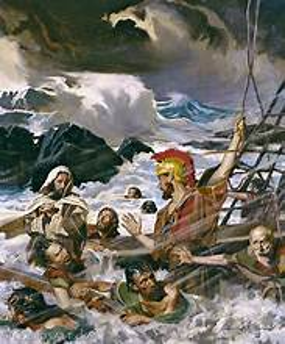
JUNE 22, 2026 REMAINING FAITHFUL AFTER A MOUNTAINTOP EXPERIENCE? #29 IS CHANGING MINISTRY PARTNERS ALWAYS BAD?

June 22, 2026

Acts 15 Paul and Barnabas Separate

36 After some time Paul said to Barnabas, “Let’s go back and visit each city where we previously preached the word of the Lord, to see how the new believers are doing.” 37 Barnabas agreed and wanted to take along John Mark. 38 But Paul disagreed strongly, since John Mark had deserted them in Pamphylia and had not continued with them in their work. 39 Their disagreement was so sharp that they separated. Barnabas took John Mark with him and sailed for Cyprus. 40 Paul chose Silas, and as he left, the believers entrusted him to the Lord’s gracious care. 41 Then he traveled throughout Syria and Cilicia, strengthening the churches there.

If you study Barnabas’ character, you realize that he’s the kind of guy who was always restoring broken things and broken people. When Barnabas was a kid, he was probably the one who would pick up fledglings that had fallen from the nest and return them to their mothers. Barnabas is the one who went off to find Saul/Paul, bringing him to the church leaders in Jerusalem when everybody else was afraid to have anything to do with Paul. Paul owed Barnabas an immense amount, and this split must have been very painful. But Paul was raised as a Pharisee, and he still possessed a great deal of that unbending Pharisaic nature. When Paul and Barnabas came to Jerusalem, it’s possible that Barnabas sought out Mark and counseled with him. Perhaps upon reflection, Mark realized that he had made a dreadful mistake but was unable to find a way to resolve the problem. Now Barnabas came, bearing forgiveness and the possibility of restoration and new ministry. Mark would have been a fool to refuse such an invitation, particularly with Barnabas standing there smiling at him lovingly. When Barnabas brought Mark to Paul, he was quite hopeful that all would be well, relationships would be restored, and Paul and he could continue their travels with Mark accompanying them.

Until now, some of you familiar with Scripture might have been scratching your heads. “Paul and Barnabas?” you ask, “what about Paul and Silas? Where does Silas come in?” Remember when Paul and Barnabas were in Pamphylia and Mark left them to return to Jerusalem? Although Luke, writing the Book of Acts, says little about this split, evidently, Paul became disgusted with John Mark, feeling that he was a quitter, an untrustworthy weakling who would take off at the first time of trouble. Now Paul wants to return to the churches to see how they are faring; meanwhile, Barnabas insists Mark should come with them. Paul is furious! “Mark? John Mark? That ridiculous young man who deserted us at the first sign of trouble? Barnabas, what are you thinking? How can you even consider such a thing?”

We don’t know what Barnabas said in reply; however, the dispute became hot enough that Barnabas took John Mark and left for Cyprus, Barnabas’ home area. Knowing that he needed someone, Paul recruited Silas, one of the elders from Jerusalem, and the two left for Syria and Cilicia.

Was this split between two spiritual giants God’s perfect will? Yes. We must remember that God knows our imperfections far better than we do and that He makes use of our mistakes as much as of the deeds we do properly. God knew from the foundations of the world that eventually Paul and Barnabas would split; however, now instead of one effective ministry team, there were two. And Mark, having once disappointed others, would be anxious to prove that he really was diligent and reliable and that he deserved to be considered faithful. Where previously, Mark was hesitating or remaining in the background, content to coast along while Paul and Barnabas did the heavy work of ministry, now Mark realized that he must prove himself. With Barnabas encouraging and nobody to criticize, Mark now had opportunities he had not previously considered. It was time for Mark to grow up, both as a believer and also as a minister.

Eventually, Mark matured to the point that he became a treasured companion of both Paul and Peter. Mark interviewed Peter before writing the Gospel that bears his name. The site learnreligions.com tells us, “Forgiveness is possible. So are second chances. Paul forgave Mark and gave him a chance to prove his worth. Peter was so taken with Mark, he considered him like a son. When we make a mistake in life, with God’s help we can recover and go on to achieve great things. https://www.learnreligions.com/john-mark-author-of-the-gospel-of-mark-701085

Let’s be honest, folks! None of us get things right all the time. We say wrong things or needlessly offend people. We jump to conclusions. We fail to do what we should and rush in heedlessly when we should be more circumspect. The work of the Kingdom of God goes on despite most of us rather than because of most of us. The amazing thing is that God refuses to give up on us and continues to allow us the blessing of being used. We use the wrong tools for the right purpose. If not for the grace of God, none of us would accomplish anything. But God in His infinite mercy does use us, forgiving us for our failures and pointing us forward. May we remember the lessons of Barnabas-look for the broken people and heal them, for you never know what they might accomplish in the future. And remember the lessons of Paul-don’t hold someone’s past failures against them, for people can change and grow in ways that only God knows. May we forgive ourselves, and others, for past failures and move forward into the bright future God has for all of us.

PRAYER: Father God, thank You for loving us and caring for us. Lord, help us to follow hard after You, realizing that You forgive and allow people second chances while we judge mercilessly. In the mighty and precious Name of King Jesus. Amen.
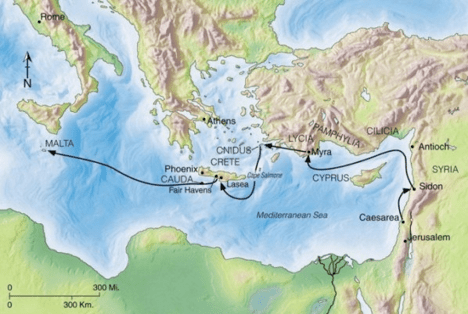
JUNE 21, 2026 REMAINING FAITHFUL AFTER A MOUNTAINTOP EXPERIENCE? #28 LEGALISM CAN KILL ANY MOVEMENT SWIFTLY! DO YOU WANT YOUR WAY, OR GOD’S?

June 21, 2026

Acts 15:1-35 The Council at Jerusalem

15 While Paul and Barnabas were at Antioch of Syria, some men from Judea arrived and began to teach the believers: “Unless you are circumcised as required by the law of Moses, you cannot be saved.” 2 Paul and Barnabas disagreed with them, arguing vehemently. Finally, the church decided to send Paul and Barnabas to Jerusalem, accompanied by some local believers, to talk to the apostles and elders about this question. 3 The church sent the delegates to Jerusalem, and they stopped along the way in Phoenicia and Samaria to visit the believers. They told them—much to everyone’s joy—that the Gentiles, too, were being converted.

4 When they arrived in Jerusalem, Barnabas and Paul were welcomed by the whole church, including the apostles and elders. They reported everything God had done through them. 5 But then some of the believers who belonged to the sect of the Pharisees stood up and insisted, “The Gentile converts must be circumcised and required to follow the law of Moses.”

Few things are deadlier than feelings of racial superiority, and many of the Jews have firmly believed they are superior to all other races for centuries. After all, hasn’t God chosen the Israelites, plucking them out of Egypt and repeatedly rescuing them from far more powerful nations? Hasn’t God moved a pagan king, Cyrus, to order the restoration of the temple after it lay in ruins for 70 years? Surely, the Jews must be inherently holier than all other ethnic groups and therefore in line to control the new Jesus believers. And control is definitely a major issue here. While these members of the sect of the Pharisees haven’t been reaching out to preach the Gospel, they are more than willing to come along behind Paul and Barnabas, trying to impose restrictions so that they can maintain some level of power over new believers.

Just as all is going well and Gentiles are flocking into the kingdom through the preaching of Paul and Barnabas, small-minded men rush to demand that these male believers must be circumcised according to the Jewish religion, a religion that Paul and Barnabas have NOT been preaching. Never mind that God has graphically demonstrated to Peter that He has approved Gentiles such as Cornelius and his household by sovereignly baptizing them in the Holy Spirit without forcing them to be circumcised. The lust for power is a deadly failing, and these would-be leaders are determined to exert some form of control. These men have grasped just enough of Jesus’ teachings and his example to know that Jesus is the way to salvation; however, they know little or nothing about most of Jesus’ teachings, for Jesus never ever mentioned circumcision and was noted for eating with sinners who did not follow Jewish dietary rules.

6 So the apostles and elders met together to resolve this issue. 7 At the meeting, after a long discussion, Peter stood and addressed them as follows: “Brothers, you all know that God chose me from among you some time ago to preach to the Gentiles so that they could hear the Good News and believe. 8 God knows people’s hearts, and he confirmed that he accepts Gentiles by giving them the Holy Spirit, just as he did to us. 9 He made no distinction between us and them, for he cleansed their hearts through faith. 10 So why are you now challenging God by burdening the Gentile believers[b] with a yoke that neither we nor our ancestors were able to bear? 11 We believe that we are all saved the same way, by the undeserved grace of the Lord Jesus.”

12 Everyone listened quietly as Barnabas and Paul told about the miraculous signs and wonders God had done through them among the Gentiles.

13 When they had finished, James stood and said, “Brothers, listen to me. 14 Peter has told you about the time God first visited the Gentiles to take from them a people for himself. 15 And this conversion of Gentiles is exactly what the prophets predicted. As it is written: 16 ‘Afterward I will return and restore the fallen house of David. I will rebuild its ruins and restore it, 17 so that the rest of humanity might seek the Lord, including the Gentiles—all those I have called to be mine. The Lord has spoken—18 he who made these things known so long ago.’

19 “And so my judgment is that we should not make it difficult for the Gentiles who are turning to God. 20 Instead, we should write and tell them to abstain from eating food offered to idols, from sexual immorality, from eating the meat of strangled animals, and from consuming blood. 21 For these laws of Moses have been preached in Jewish synagogues in every city on every Sabbath for many generations.”

Ah, the voice of sweet reason in the midst of this maelstrom of legalistic verbiage. Notice that James uses Scripture to undergird his arguments, rather than criticizing these small-mended, would-be Judaizers. By quoting Scripture, James neatly avoids arguments that might descend into personal attacks, even though these men have likely been causing problems already. By referring to the laws of Moses that remain to be followed, James is subtly implying that the sect of the Pharisees is not totally wrong but that their position needs some minor adjustments. The most reasonable among the Pharisaic group begin nodding their heads sagely while others reluctantly agree, cheated of their opportunity to seize control. And now the council writes a letter that will be circulated throughout all the churches.

The Letter for Gentile Believers

22 Then the apostles and elders together with the whole church in Jerusalem chose delegates, and they sent them to Antioch of Syria with Paul and Barnabas to report on this decision. The men chosen were two of the church leaders—Judas (also called Barsabbas) and Silas. 23 This is the letter they took with them:

“This letter is from the apostles and elders, your brothers in Jerusalem. It is written to the Gentile believers in Antioch, Syria, and Cilicia. Greetings!

24 “We understand that some men from here have troubled you and upset you with their teaching, but we did not send them! 25 So we decided, having come to complete agreement, to send you official representatives, along with our beloved Barnabas and Paul, 26 who have risked their lives for the name of our Lord Jesus Christ. 27 We are sending Judas and Silas to confirm what we have decided concerning your question.

28 “For it seemed good to the Holy Spirit and to us to lay no greater burden on you than these few requirements: 29 You must abstain from eating food offered to idols, from consuming blood or the meat of strangled animals, and from sexual immorality. If you do this, you will do well. Farewell.”

30 The messengers went at once to Antioch, where they called a general meeting of the believers and delivered the letter. 31 And there was great joy throughout the church that day as they read this encouraging message.

32 Then Judas and Silas, both being prophets, spoke at length to the believers, encouraging and strengthening their faith. 33 They stayed for a while, and then the believers sent them back to the church in Jerusalem with a blessing of peace. 35 Paul and Barnabas stayed in Antioch. They and many others taught and preached the word of the Lord there.

Someone has once sadly remarked that where two or more believers are gathered, they may instigate a church split. This story is remarkable in several respects, most notably for the respect and concern demonstrated by the church leaders in Jerusalem. No doubt, Peter and the other leaders have repeatedly encountered those belonging to the sect of the Pharisees as they have attempted to force the church to remain as some outpost of Judaism with a few tweaks. But Jesus himself taught that the new wine of the Gospel must not be put into the old dry wineskin of Judaism, for the new wine will ferment, expand, and burst the bounds of Judaism. That process is now taking place, as traditional Jews come to grips with the reality of the Gospel in all its implications for daily life. What is significant here is that the church does not split, but becomes more unified as leaders seek the will of God for their situation. God takes a situation that could have destroyed the fledgling church and uses it to make the church stronger and more unified. And strength and unification are critical, for very soon Christians will become a persecuted minority.

PRAYER: Father God, thank You for loving us and caring for us. Lord, help us to be loving, patient, and kind in dealing with those with whom we disagree, remembering that they might be right and we might be wrong. In the mighty and precious Name of King Jesus. Amen.  

JUNE 20, 2026 REMAINING FAITHFUL AFTER A MOUNTAINTOP EXPERIENCE? #27 BARNABAS AND THE MINISTRY OF HELPS

June 20, 2026

Acts 14:21-28 Paul and Barnabas Return to Antioch of Syria

21 After preaching the Good News in Derbe and making many disciples, Paul and Barnabas returned to Lystra, Iconium, and Antioch of Pisidia, 22 where they strengthened the believers. They encouraged them to continue in the faith, reminding them that we must suffer many hardships to enter the Kingdom of God. 23 Paul and Barnabas also appointed elders in every church. With prayer and fasting, they turned the elders over to the care of the Lord, in whom they had put their trust. 24 Then they traveled back through Pisidia to Pamphylia. 25 They preached the word in Perga, then went down to Attalia.

26 Finally, they returned by ship to Antioch of Syria, where their journey had begun. The believers there had entrusted them to the grace of God to do the work they had now completed. 27 Upon arriving in Antioch, they called the church together and reported everything God had done through them and how he had opened the door of faith to the Gentiles, too. 28 And they stayed there with the believers for a long time.

Studying Paul’s missionary journeys can be confusing, so let’s look at an AI-generated summary of this first one. To understand the distance Paul covered during his first missionary journey, consider the following points:

  • The journey spanned approximately 1,400 miles (2,250 kilometers).
  • It began in Antioch of Syria and included regions in Cyprus, Asia Minor, and parts of modern-day Turkey.
  • Key cities visited included Salamis, Paphos, Perga, Antioch in Pisidia, Iconium, Lystra, and Derbe.
  • The journey involved both land and sea travel, contributing to the total distance.
  • Paul and his companions faced various challenges, including persecution and difficult terrain.
  • The journey lasted about 1-2 years, showcasing extensive travel for the time.

Paul and Barnabas racked up a lot of mileage, especially considering the constraints on travel at that time. While Paul gets featured in the accounts, let’s look at Barnabas for a moment. If you have traveled very extensively, you know that a great travel companion can make all the difference. Few things are worse than being stuck with a complainer, someone who finds a cloud for every silver lining. And there are plenty of reasons for complaints as the two walk long distances, sail over rough seas, and travel into new places, never certain where they will spend the night or who will feed them. As a Levite, Barnabas fully understands the challenges of preserving the good parts of the Jewish heritage while proclaiming the Gospel to those without any Jewish background. Paul and Barnabas are breaking new ground, looking heavenward as they try to communicate the good news of new life in Jesus Christ to those from varied backgrounds.

While Paul is the “front man,” the main speaker, Barnabas is an integral part of the team, for he can come along behind Paul, discerning places where people are hung up on erroneous beliefs or false conclusions. Barnabas is one of those fellows who looks so happy that others become happy simply by looking at him. While Paul can preach fiery sermons, rebuking hypocritical Jewish religious leaders and pagan magicians, Barnabas comes in gently, learning the hurts and needs of hearers, explaining and clarifying. At no point does Barnabas ever appear to be jealous of Paul and his many academic accomplishments. Barnabas is obviously well educated; however, he is magnanimous, willing to allow Paul to take the lead while he quietly ministers to those in the back of the crowd who might be afraid to ask questions of Paul. Modern church workers would describe Barnabas as having a ministry of helps.

Look at the list of cities to which the ministry team returns: Lystra, Iconium, and Antioch of Pisidia, Pisidia, Pamphylia. 25 They preached the word in Perga, then went down to Attalia.

26 Finally, they returned by ship to Antioch of Syria, where their journey had begun. Realizing that this trip might be the only opportunity to found churches, the two take additional steps. They encouraged them to continue in the faith, reminding them that we must suffer many hardships to enter the Kingdom of God. 23 Paul and Barnabas also appointed elders in every church. With prayer and fasting, they turned the elders over to the care of the Lord, in whom they had put their trust.

What must the believers in Lystra have thought when Paul returned to them? If anybody had suffered for the Gospel, it was Paul, stoned and dragged out of the city while being left for dead. The images of that day would have burned their way into the minds of the believers in Lystra and all the surrounding towns. No sugar-coated promises would come from Paul, and this was vitally important because these people would later face intense persecution.

Finally, Paul and Barnabas return to Antioch of Syria, the church that had first commissioned them to go to the Gentiles. Here they were able to report and then rest and remain for “a long time.” Ministry must flow both ways, and Paul and Barnabas are now being encouraged and strengthened by the very people to whom they first preached the Gospel.

One of the perpetual challenges in ministry is resting and regeneration. Sometimes believers feel that pastors or missionaries have some special source of energy and do not require times of renewal; yet, this is quite wrong. As I am writing these words, we have just arrived from Ghana and are struggling to finalize speaking schedules while catching up on sleep, getting haircuts, securing new phones/phone numbers, and shopping for items that are difficult to find in our small town in Ghana. We find ourselves falling asleep whenever something isn’t screaming for attention, and we can only pray that we will get sufficient rest to be able to go back and take up the work God has called us to do there. We were thrilled to be able to attend a prayer breakfast, something we normally don’t get to do where we live and work.

May God help each of us to rest and renewal in His timing.

PRAYER: Father God, thank You for loving us and caring for us. Lord, help us to know when to work and when to rest. Give each of us friends and co-workers who will encourage us when we are tired and our enthusiasm is failing. In the mighty and precious Name of King Jesus. Amen.
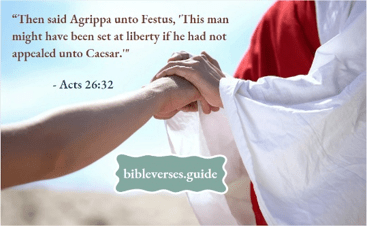
JUNE 19 2026 REMAINING FAITHFUL AFTER A MOUNTAINTOP EXPERIENCE? #26 RETURNING TO THE PEOPLE WHO HAVE PERSECUTED YOU, PART 2 WHAT THE FACEBOOK STORIES WON’T TELL YOU!

June 19, 2026

Acts 14:19 Then some Jews arrived from Antioch and Iconium and won over the crowds. They stoned Paul and dragged him outside the city, presuming he was dead. 20 But after the disciples had gathered around him, he got up and went back into the city. And the next day he left with Barnabas for Derbe.

I have a confession. I have become addicted to short stories on Facebook, particularly those involving the military. There’s something completely satisfying about the neglected sniper/operator/pilot being the one who saves the day. Many of these stories have the ring of truth and it’s gratifying when heroes or heroines are recognized.

But there are other stories as well. Many of these stories depict grossly dysfunctional families where the eldest child, generally a daughter, is forced to finance her own education and develop her own career while other siblings are indulged. In some stories, the parents rapaciously pillage the virtuous child’s resources, selling her vehicle or her house, and forcing her to take legal action and to cut herself off from her family. At the end, the child who has been abused must build her own family while her blood relatives suffer the consequences of their criminal behavior. Sadly, there are situations similar to this. But the question I have is this: What is the virtuous child supposed to do with his/her anger? How can such people forgive those who have used and abused them?

Jesus isn’t much comfort in this situation, for in Matthew 5:11-12 he tells us, “God blesses you when people mock you and persecute you and lie about you and say all sorts of evil things against you because you are my followers. 12 Be happy about it! Be very glad! For a great reward awaits you in heaven. And remember, the ancient prophets were persecuted in the same way.”

Later on in Matthew 5, continuing the Sermon on the Mount, Jesus advises us, “43 You have heard the law that says, ‘Love your neighbor’ and hate your enemy. 44 But I say, love your enemies! Pray for those who persecute you! 45 In that way, you will be acting as true children of your Father in heaven. For he gives his sunlight to both the evil and the good, and he sends rain on the just and the unjust alike. 46 If you love only those who love you, what reward is there for that? Even corrupt tax collectors do that much. 47 If you are kind only to your friends, how are you different from anyone else? Even pagans do that. 48 But you are to be perfect, even as your Father in heaven is perfect.”

And then there’s the apostle Paul. All Paul wants to do is to tell people about Jesus and help them gain eternal life as believers. But a motley group of business people and Jewish religious leaders stir up so many problems for Paul that the “crowds,” those people who are always hanging around, waiting for some trouble to get into, gleefully stone Paul, dragging him out of the city and leaving him for dead. Pretty bad, huh? If ever this was a group of people who deserved to have the dust of their city shaken off as a curse against them, the citizens of Lystra would certainly qualify….and yet…and yet, Paul picks himself up, shakes himself off, AND GOES BACK INTO THE CITY! Most of us would feel that Paul is a special kind of stupid, but no, he returns to the very city whose rabble have just tried to kill him. True, the next day, he leaves for another place but that’s only after he has made that trip back into Lystra.

What motivates Paul to return to those who have tried to murder him? We must conclude that some people in Lystra did become believers, and Paul wanted to encourage these people before leaving for Derbe. There is no record of Paul appealing to local authorities or invoking the privileges of his Roman citizenship. Paul simply forgives these people and goes on. What’s going on here?

Later, John, the disciple closest to Jesus, will write to believers advising them, “1 John 1:8-9 If we should say that we have no sin, we deceive ourselves and the truth is not in us. If we should confess our sins, He is faithful and righteous, that He may forgive us our sins and may cleanse us from all unrighteousness.”

No matter how virtuous we are, we all sin. Even reading the Facebook stories, it’s clear that the protagonists would have fared better had they refused to allow themselves to be taken for granted. But many of us have been conditioned to believe that love is something that must be earned and that we must continue to perform. Only when abuses become enormous do we stop to realize the pit into which we have fallen. Refusing to acknowledge truth in the hopes of maintaining peace is itself a sin against ourselves, if against nobody else.

What does Jesus want us to do with abusers? We are to forgive them. But that does not mean we must remain in abusive situations unless Jesus specifically orders us to do so. Remember that Jesus advised his disciples to leave places where they were not received. In this story, Paul returns briefly to Lystra, but then moves on to Derbe the next day. Remember the famous quote from Jeremy Taylor: “If thou has a bundle of thorns in thy lot, there is no need to sit down on it.”

So, once more, Paul teaches us by example. Paul forgives the people who have tried to kill him, even returning briefly to their city. But Paul also moves on to places more receptive to the Gospel. May we forgive those who despitefully use us, remembering that forgiveness does not always demand that we must remain within their range to continue to hurt us. Those who run shelters for battered women are well aware that the biggest mistake many women make is waiting too late to run for shelter.

PRAYER: Father God, thank You for loving us and caring for us. Lord, help us to forgive, knowing that we too need forgiveness. But give us holy wisdom so that we will be able to move out of reach of abusers when necessary. In the mighty and precious Name of King Jesus. Amen.

JUNE 18 2026 REMAINING FAITHFUL AFTER A MOUNTAINTOP EXPERIENCE? #25 RETURNING TO THE PEOPLE WHO HAVE PERSECUTED YOU

June 18, 2026

Acts 14: Paul and Barnabas at Iconium

1 At Iconium, Paul and Barnabas went as usual into the Jewish synagogue, where they spoke so well that a great number of Jews and Greeks believed. 2 But the unbelieving Jews stirred up the Gentiles and poisoned their minds against the brothers. 3 So Paul and Barnabas spent considerable time there, speaking boldly for the Lord, who affirmed the message of His grace by enabling them to perform signs and wonders.

4 The people of the city were divided. Some sided with the Jews, and others with the apostles. 5 But when the Gentiles and Jews, together with their rulers, set out to mistreat and stone them, 6 they found out about it and fled to the Lycaonian cities of Lystra and Derbe and to the surrounding region, 7 where they continued to preach the gospel.

God is using Paul and Barnabas to spread the Gospel; however, Satan is moving in the hearts of those opposing them. There are unbelieving Jews, some zealous for their faith and others zealous for their businesses. There are unbelieving Gentiles intransigent in their beliefs in lesser gods and also fearing for their businesses. Why must these two trouble makers show up anyway? Why can’t they take their strange speeches of a resurrected Jewish religious leader somewhere else? Local rulers are worried because there are always informants, ready to rush to higher authorities with reports of any potential threats to the Roman Empire. Throughout the ages, politicians remain the same. When Paul and Barnabas learn of a threat to stone them, they flee to Lystra and Derbe and other smaller villages in the area, preaching the Gospel as they go. Persecution is only motivating Paul and Barnabas to spread the Gospel more effectively, proving that God has a sharp sense of humor. And meanwhile, there’s a man in Lystra who is about to get the shock of his life.

The Visit to Lystra and Derbe

8 In Lystra there sat a man crippled in his feet, who was lame from birth and had never walked. 9 This man was listening to the words of Paul, who looked intently at him and saw that he had faith to be healed. 10 In a loud voice Paul called out, “Stand up on your feet!” And the man jumped up and began to walk.

11 When the crowds saw what Paul had done, they lifted up their voices in the Lycaonian language: “The gods have come down to us in human form!” 12 Barnabas they called Zeus, and Paul they called Hermes, because he was the chief speaker. 13 The priest of Zeus, whose temple was just outside the city, brought bulls and wreaths to the city gates, hoping to offer a sacrifice along with the crowds.

14 But when the apostles Barnabas and Paul found out about this, they tore their clothes and rushed into the crowd, shouting, 15 “Men, why are you doing this? We too are only men, human like you. We are bringing you good news that you should turn from these worthless things to the living God, who made heaven and earth and sea and everything in them. 16 In past generations, He let all nations go their own way. 17 Yet He has not left Himself without testimony to His goodness: He gives you rain from heaven and fruitful seasons, filling your hearts with food and gladness.”

18 Even with these words, Paul and Barnabas could hardly stop the crowds from sacrificing to them.

19 Then some Jews arrived from Antioch and Iconium and won over the crowds. They stoned Paul and dragged him outside the city, presuming he was dead. 20 But after the disciples had gathered around him, he got up and went back into the city. And the next day he left with Barnabas for Derbe.

Well, once more, the crowds prove fickle. When Paul speaks to a man crippled from birth and the man stands on his feet, local citizens are ready to honor Paul and Barnabas as personifications of the Greek gods Zeus and Hermes. The priest of Zeus is thrilled because these men are reinforcing the idea that Zeus really exists, so he brings animals and wreaths to sacrifice at the city gates. Too bad this man is wrong. Paul and Barnabas are aghast, for the last thing they intend is to be venerated. But veneration rapidly becomes agitation and then persecution when Jews from Antioch and Iconium persuade the crowds that they should attack Paul and Barnabas. Paul collapses as they are stoning him, and the angry mob drags him outside the city; however, once the disciples gather around him, he gets up and returns to the city. Does Paul really die, only for the disciples to lay hands on him, serving as channels of the Holy Spirit’s power so that he is resurrected? Paul never says much about the experience, only mentioning that he has been stoned and has returned to the very people who have stoned him.

How do we react when people persecute us? In the course of my career as a bush doctor in a remote mission hospital, I have endured staff strikes and humiliating meetings where those who have taken bribes have screamed insults at me. But at the end of the day, we know that God has called us to be where we are and God has not changed our marching orders. I have endured at least thirteen years as the only doctor in such hospitals and months since where I have continued to serve while colleagues have gone on leave or transferred, causing me to resume my position as the only doctor.

During these periods of distress, God has sustained us with His love, His grace, His mercy, and His assurance that we are in the center of His will for our lives. And the patients with their needs have always been there. I can only focus on a limited number of things at a time; pregnant women with obstructed labor, pale children in desperate need of blood, and men with strangulated hernias or typhoid perforations are far more important than insults delivered by small people.

2 Corinthians 5:13 If we are out of our mind, it is for God; if we are of sound mind, it is for you. 14 For Christ’s love compels us, because we are convinced that One died for all, therefore all died. 15 And He died for all, that those who live should no longer live for themselves, but for Him who died for them and was raised again.…

I love white water canoeing and kayaking. One of the first lessons I had to learn was to look at the river and not at the rocks. If I focused on the rocks, I would wind up on the rocks. I had to focus on the channels of water, finding the best path. The same thing is true in life. Paul and Barnabas sensibly left places where people were threatening to stone them. Even when Paul was stoned, he returned to the city, likely to greet believers there, and then moved on. Paul and Barnabas never lost their focus. May God help us, so that we will maintain our reliance on Him, no matter what kind of opposition we might face.

PRAYER: Father God, thank You for loving us and caring for us. Lord, help us to continue to look to You and not to events around us. In the mighty and precious Name of King Jesus. Amen