Archive for the ‘Uncategorized’ Category

JUNE 17 2026 REMAINING FAITHFUL AFTER A MOUNTAINTOP EXPERIENCE? #24 WHAT DOES IT MEAN TO SHAKE THE DUST OF A PLACE OFF YOUR FEET?

June 17, 2026

Acts 13: In Pisidian Antioch

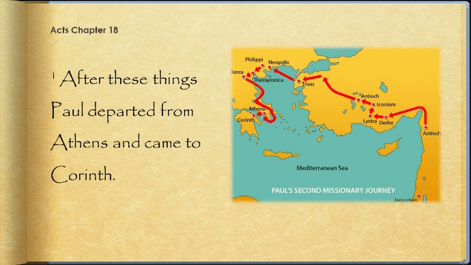
13 After setting sail from Paphos, Paul and his companions came to Perga in Pamphylia, where John left them to return to Jerusalem. 14 And from Perga, they traveled inland to Pisidian Antioch, where they entered the synagogue on the Sabbath and sat down. 15 After the reading from the Law and the Prophets, the synagogue leaders sent word to them: “Brothers, if you have a word of encouragement for the people, please speak.”

16 Paul stood up, motioned with his hand, and began to speak: “Men of Israel and you Gentiles who fear God, listen to me! 17 The God of the people of Israel chose our fathers. He made them into a great people during their stay in Egypt, and with an uplifted arm He led them out of that land. 18 He endured their conduct for about forty years in the wilderness. 19 And having vanquished seven nations in Canaan, He gave their land to His people as an inheritance. 20 All this took about 450 years.

After this, God gave them judges until the time of Samuel the prophet. 21 Then the people asked for a king, and God gave them forty years under Saul son of Kish, from the tribe of Benjamin. 22 After removing Saul, He raised up David as their king and testified about him: ‘I have found David son of Jesse a man after My own heart; he will carry out My will in its entirety.’

23 From the descendants of this man, God has brought to Israel the Savior Jesus, as He promised. 24 Before the arrival of Jesus, John preached a baptism of repentance to all the people of Israel. 25 As John was completing his course, he said, ‘Who do you suppose I am? I am not that One. But He is coming after me whose sandals I am not worthy to untie.’

26 Brothers, children of Abraham, and you Gentiles who fear God, it is to us that this message of salvation has been sent. 27 The people of Jerusalem and their rulers did not recognize Jesus, yet in condemning Him they fulfilled the words of the prophets that are read every Sabbath. 28 And though they found no ground for a death sentence, they asked Pilate to have Him executed.

29 When they had carried out all that was written about Him, they took Him down from the tree and laid Him in a tomb. 30 But God raised Him from the dead, 31 and for many days He was seen by those who had accompanied Him from Galilee to Jerusalem. They are now His witnesses to our people.

32 And now we proclaim to you the good news: What God promised our fathers 33 He has fulfilled for us, their children, by raising up Jesus. As it is written in the second Psalm:

‘You are My Son; today I have become Your Father.’

34 In fact, God raised Him from the dead, never to see decay. As He has said:

‘I will give you the holy and sure blessings promised to David.’

35 So also, He says in another Psalm: ‘You will not let Your Holy One see decay.’

36 For when David had served God’s purpose in his own generation, he fell asleep. His body was buried with his fathers and saw decay. 37 But the One whom God raised from the dead did not see decay.

38 Therefore let it be known to you, brothers, that through Jesus the forgiveness of sins is proclaimed to you. 39 Through Him everyone who believes is justified from everything you could not be justified from by the law of Moses. 40 Watch out, then, that what was spoken by the prophets does not happen to you:

41 ‘Look, you scoffers, wonder and perish! For I am doing a work in your days that you would never believe, even if someone told you.’”

WOOF! Well, never let it be said that Paul plays to an audience. Starting with Moses, Paul uses Scripture to graphically demonstrates that Jesus is really the Messiah. Paul even rebukes his hearers; yet, people are so enthralled that they beg him to continue the message on the next Sabbath.

A Light for the Gentiles (Isaiah 49:1–6)

42 As Paul and Barnabas were leaving the synagogue, the people urged them to continue this message on the next Sabbath. 43 After the synagogue was dismissed, many of the Jews and devout converts to Judaism followed Paul and Barnabas, who spoke to them and urged them to continue in the grace of God.

44 On the following Sabbath, nearly the whole city gathered to hear the word of the Lord. 45 But when the Jews saw the crowds, they were filled with jealousy, and they blasphemously contradicted what Paul was saying.

46 Then Paul and Barnabas answered them boldly: “It was necessary to speak the word of God to you first. But since you reject it and do not consider yourselves worthy of eternal life, we now turn to the Gentiles. 47 For this is what the Lord has commanded us:

‘I have made you a light for the Gentiles, to bring salvation to the ends of the earth.’”

48 When the Gentiles heard this, they rejoiced and glorified the word of the Lord, and all who were appointed for eternal life believed. 49 And the word of the Lord spread throughout that region.

50 The Jews, however, incited the religious women of prominence and the leading men of the city. They stirred up persecution against Paul and Barnabas and drove them out of their district. 51 So they shook the dust off their feet in protest against them and went to Iconium. 52 And the disciples were filled with joy and with the Holy Spirit.

Some of the Jews have listened to Paul and have chosen to follow Jesus; however, the religious leaders incite the religious women of prominence-after all, these women would lose their social standing if everybody follows Jesus. And the leading men of the city will also lose status and possibly business. Meanwhile, Gentiles who have spent centuries suffering as second class citizens, are thrilled. God loves them! Jesus has died for them! This news is the greatest thing they have ever heard.

The prominent citizens drive Paul and Barnabas out of the district. As the two men are leaving, they do something symbolic; they shake the dust off their feet in protest against those who have persecuted them. Those forcing Paul and Barnabas to leave likely don’t even notice this act, but it’s very significant. When Jesus was sending the disciples out to minister, he ordered them to shake the dust off their feet if any town refused to receive them. Jesus even warned that it would be even worse for that town than it had been for Sodom and Gomorrah.

Matthew 10:11-15 11 Whatever town or village you enter, find out who is worthy there and stay at his house until you move on. 12 As you enter the home, greet its occupants. 13 If the home is worthy, let your peace rest on it; but if it is not, let your peace return to you. 14 And if anyone will not welcome you or heed your words, shake the dust off your feet when you leave that home or town. 15 Truly I tell you, it will be more bearable for Sodom and Gomorrah on the day of judgment than for that town.

Does this poor reception hurt Paul and Barnabas? No. Paul and Barnabas are full of joy and the Holy Spirit. But what happens to Pisidian Antioch? Today, Pisidian Antioch is an open-air archaeological site in central Turkey in the Turkish Lakes region. Interestingly enough, the site includes St. Paul’s Church, one of the earliest recorded church buildings, plus the remnants of a Byzantine basilica. Evidently, at some point a sufficient number of citizens became Christians and erected these buildings.

Do we as believers ever have the right to shake the dust of a place off our shoes? This is a tough question without any easy answer. We are prone to rush to judgement while God is far more merciful that we are. In this story, Paul and Barnabas do everything they can to speak the truth but also to minister in love. Only when the local residents drive them completely out of the district do they take a final dramatic step. We must be careful to avoid becoming angry or bitter and running away from a difficult situation. Only God knows human hearts and only God can tell when such a drastic step is necessary. May we remain close to God, allowing Him to be the One who says whether we stay or go.

PRAYER: Father God, thank You for loving us and caring for us. Lord, help us to trust Your guidance as we speak Your Word to those around us. Give us holy boldness but also help us to speak the truth in love. In the mighty and precious Name of King Jesus. Amen.

JUNE 16, 2026 REMAINING FAITHFUL AFTER A MOUNTAINTOP EXPERIENCE? #23 ARE YOU PRAYING FOR GOVERNMENT OFFICIALS OR SIMPLY COMPLAINING ABOUT THEM?

June 16, 2026

Acts 13: Paul’s First Missionary Journey Begins (Acts 15:36–41; Acts 18:23–28)

1 Now in the church at Antioch there were prophets and teachers: Barnabas, Simeon called Niger, Lucius of Cyrene, Manaen (who had been brought up with Herod the tetrarch), and Saul. 2 While they were worshiping the Lord and fasting, the Holy Spirit said, “Set apart for Me Barnabas and Saul for the work to which I have called them.” 3 And after they had fasted and prayed, they laid their hands on them and sent them off.

Paul/Saul and Barnabas have ministering and teaching in Antioch of Syria, and things are going beautifully. The congregation is growing, and people are receptive. By every criterion, their ministry is booming. And that’s when God chooses to shake things up. While the congregation is praying and fasting, God directs them to set Barnabas and Saul apart for a special work. The congregation obeys instantly, praying and fasting further and then commissioning Saul and Barnabas, sending them off.

If things are going so well in Antioch, why does God pluck the two most outstanding leaders to send them somewhere else? The answer is simple: Barnabas and Saul have taught so effectively that they have worked themselves out of a job at Antioch. The church is growing, and new leaders are developing who can continue the work. Now God needs Barnabas and Saul elsewhere.

When we first entered missions, we were told repeatedly that one of the main jobs of a missionary is to work himself/herself out of a job, developing local Christians so that they can take over the work. We remain in Ghana because we work in a deprived area to which it is difficult to recruit qualified medical personnel. My husband was instrumental in establishing the Local Council of Churches group, but at this point, others are taking the lead. Does this mean our efforts are unnecessary? On the contrary, our population is growing and the needs for evangelism will always be there. In the case of Saul and Barnabas, their missionary careers are just getting started. It’s going to be a wild ride!

On Cyprus

4 So Barnabas and Saul, sent forth by the Holy Spirit, went down to Seleucia and sailed from there to Cyprus. 5 When they arrived at Salamis, they proclaimed the word of God in the Jewish synagogues. And John was with them as their helper.

6 They traveled through the whole island as far as Paphos, where they found a Jewish sorcerer and false prophet named Bar-Jesus, 7 an attendant of the proconsul, Sergius Paulus. The proconsul, a man of intelligence, summoned Barnabas and Saul because he wanted to hear the word of God. 8 But Elymas the sorcerer (for that is what his name means) opposed them and tried to turn the proconsul from the faith.

9 Then Saul, who was also called Paul, filled with the Holy Spirit, looked directly at Elymas 10 and said, “O child of the devil and enemy of all righteousness, you are full of all kinds of deceit and trickery! Will you never stop perverting the straight ways of the Lord? 11 Now look, the hand of the Lord is against you, and for a time you will be blind and unable to see the light of the sun.” Immediately mist and darkness came over him, and he groped about, seeking someone to lead him by the hand.

12 When the proconsul saw what had happened, he believed, for he was astonished at the teaching about the Lord.

It’s a good thing that Christians in Antioch are still praying for Saul and Barnabas, for on Cyprus they find themselves confronting an agent of the devil. Elymas, a local sorcerer, has nicknamed himself “Bar-Jesus,” or “Son of Jesus.” This name is blasphemous as well as deceitful. Were Elymas to name himself correctly, he should call himself “Bar-Satan,” for his entire focus is on gaining and maintain spiritual and political power. The local Roman proconsul is highly intelligent and spiritually desperate. When Barnabas and Saul preach the word of God, the proconsul is thrilled; however, Elymas does everything in his power to undermine them, realizing that his grip on the proconsul is slipping. That’s when Saul confronts Elymas.

“O child of the devil and enemy of all righteousness, you are full of all kinds of deceit and trickery! Will you never stop perverting the straight ways of the Lord? 11 Now look, the hand of the Lord is against you, and for a time you will be blind and unable to see the light of the sun.” Immediately mist and darkness came over him, and he groped about, seeking someone to lead him by the hand.

As Saul is speaking, Elymas is immediately struck blind, being forced to depend on others to guide him. This event unmasks the treachery Elymas has been promoting. The proconsul realizes that the spiritual power behind Saul and Barnabas is far greater than anything Elymas has. In addition, the Holy Spirit has been speaking to the heart of the proconsul, and he realizes that Saul and Barnabas are holy men who are teaching God’s truth. Recognizing the gulf between the spiritual darkness of Elymas and the light of Christ, the proconsul becomes a believer.

We do ourselves a disfavor if we ignore this small story, for it carries much weight. Roman officials are sent throughout the Empire to govern in obscure places. But the Roman pantheon of gods offers nothing in the way of holiness or righteousness, and many Roman officials find themselves hungry for spiritual truth. Although neither Saul nor Barnabas know this proconsul, God has known his name from the foundations of the world and God loves him and longs for him to be reconciled to God. God sovereignly selects Barnabas and Saul because Barnabas is a man of good will and Saul is a brilliant intellectual. The two men complement each other in their giftings, and this combination is something the proconsul has never experienced before. As a politician, the proconsul is used to those seeking favors with gifts or flattery; however, these two men offer neither. But there is no faking the presence of the Holy Spirit, and the Holy Spirit draws the proconsul to Himself.

Later, writing to Timothy, a young church leader, Saul/Paul will advise, “I urge, then, first of all, that petitions, prayers, intercession and thanksgiving be made for all people— for kings and all those in authority, that we may live peaceful and quiet lives in all godliness and holiness.” – 1 Timothy 2:1-2

Pray for all government officials! Pray for those with whom you agree and those with whom you disagree. Pray that God will enlighten them, that they will work in righteousness, justice, mercy and peace. And pray for the peace of all countries, for God is a God of peace.

PRAYER: Father God, thank You for loving us and caring for us. Lord, help us to pray regularly and consistently for all those in leadership positions of any kind. Help us to pray especially hard for international leadership. May revival spread throughout the world. In the mighty and precious Name of King Jesus. Amen.
JUNE 15, 2026 REMAINING FAITHFUL AFTER A MOUNTAINTOP EXPERIENCE? #22 THERE’S ONLY ONE GOD AND YOU’RE NOT IT!

June 15, 2026

Acts 12: The Death of Herod

20 Now Herod was in a furious dispute d with the people of Tyre and Sidon, and they convened before him. Having secured the support of Blastus, the king’s chamberlain, they asked for peace, because their region depended on the king’s country for food. 21 On the appointed day, Herod donned his royal robes, sat on his throne, and addressed the people. 22 And they began to shout, “This is the voice of a god, not a man!”

23 Immediately, because Herod did not give glory to God, an angel of the Lord struck him down, and he was eaten by worms and died.

Herod Agrippa I, the grandson of Herod the Great, has been cutting quite a political swath, persecuting Christians and having James slaughtered. After Peter disappears from prison, Herod is so incensed that he huffs off to Caesarea, that magnificent artificial port city on the coast built by his grandfather. But there’s a problem.

Somehow, the people of Tyre and Sidon have gotten crosswise of Herod Agrippa. While Tyre and Sidon are major trading ports, they need the grain produced by Herod’s country, so they can’t afford to be at odds with him. Fearing economic disaster and impending starvation, the citizens of these two cities engage Blastus, the king’s chamberlain, to speak for them. Impressed by his own grandeur, Herod dresses in magnificent robes and haughtily receives the emissaries. When Herod begins his oration, the people cry out, “the voice of a god and not of a man!” As Herod is preening himself, feeling that this is the pinnacle of his royal career, he is suddenly convulsed by severe abdominal pains. Blastus, recognizing the emergency, summons other aids who help support Herod as he tries to make a triumphal exit. But back at the palace, Herod is in deep trouble.

The Jewish/Roman historian Josephus describes Herod’s last days. “He put on a garment made wholly of silver, and of a contexture truly wonderful, and came into the theatre early in the morning; at which time the silver of his garment, being illuminated by the fresh reflection of the sun’s rays upon it, shone out after a surprising manner, and was so resplendent as to spread a horror over those that looked intently upon him; and presently his flatterers cried out, one from one place, and another from another (though not for his good), that he was a god…A severe pain also arose in his belly, and began in a most violent manner… when he had been quite worn out by the pain in his belly for five days, he departed this life.” (Antiquities, XIX.8.2)

As a physician, I have long found this description fascinating. Did Herod suffer an attack of Crohn’s disease or ulcerative colitis, with intestinal spasm and bowel perforations resulting in fistulas carving their ways through the abdominal wall? Did he suffer a typhoid perforation or appendicitis? The possibilities are endless, but the result is that after only five days, Herod dies. The citizens of Tyre and Sidon are probably quite relieved, for surely Herod’s successor won’t be as horrible as Herod. The next Herod is Herod Agrippa II, the King Herod whom Paul tried to convert.

Herod Agrippa I was a horrible man; however, he didn’t have to suffer such an ignominious death. Herod’s problem was that he believed his own publicity. Surrounded by sycophants, bootlickers whose flattery knew no bounds, Herod Agrippa I worshiped only himself. It has been said that “A man wrapped up in himself makes a very small bundle.” Herod was totally and completely self-enamored, and paid for it with his life.

Acts 12:24 But the word of God continued to spread and multiply.

25 When Barnabas and Saul had fulfilled their mission to Jerusalem, they returned, bringing with them John, also called Mark.

Herod dies, and it’s likely that all those around him breathe a sigh of relief. Few things are more difficult than dealing with a ruler whose ego is boundless. Notice something: Herod has James slaughtered. The church goes on. Herod dies, and the word of God continues to spread and multiply. Many times, we are so caught up in current disasters that we forget that the Kingdom of God continues to grow and flourish. Who knows how many people might have witnessed Herod’s demise and taken a warning?

The temptation to found personality cults exists everywhere, and perhaps is nowhere more evident than in the church. Here in Ghana, it’s common for church signs to bear glamorous photos of the pastor and his wife, the unstated implication being that if you attend that church, you too will be wealthy and wear gorgeous clothing. Many church members lavish adulation on pastors that should only go to God. The temptation is also very evident in medicine. There is an apocryphal story that God is in a hospital cafeteria when he begins cutting ahead of everyone else in line. A bystander observes, “Oh, he thinks he’s a doctor.” Sadly, the malpractice crisis in medicine began when too many doctors thought of themselves as God. May God help all of us so that we remember that we are only in advertising and God is in management, and that God will not tolerate any competitors.

PRAYER: Father God, thank You for loving us and caring for us. Lord, help us to worship You and serve You, knowing that You are the One True Living God and that nobody can take Your place. In the mighty and precious Name of King Jesus. Amen.

JUNE 14, 2026 REMAINING FAITHFUL AFTER A MOUNTAINTOP EXPERIENCE? #21 IS GOD FAIR?

June 14, 2026

Acts 12: James Killed, Peter Imprisoned

1 About that time, King Herod reached out to harm some who belonged to the church. 2 He had James, the brother of John, put to death with the sword.

When the news came, at first, nobody could believe it. James, son of Zebedee and brother of John, steadfast James, who accompanied Jesus at the Garden of Gethsemane, stalwart, courageous James was dead. In an effort to curry favor with Jewish religious leaders, King Herod Agrippa had James seized and stabbed while his friends looked on in horror. That night, believers gathered, praying and begging God for answers. And as if that weren’t enough, Herod proceeded to arrest Peter during Passover, throwing him in prison. Herod was so worried that he had four squads of soldiers, four men to a squad, guarding Peter.

3 And seeing that this pleased the Jews, Herod proceeded to seize Peter during the Feast of Unleavened Bread. 4 He arrested him and put him in prison, handing him over to be guarded by four squads of four soldiers each. Herod intended to bring him out to the people after the Passover.

“Well,” thought Peter as he sat in prison that night, “I wonder what’s going to happen next. Is Herod planning to keep me in jail until Passover is through, only to slaughter me as he has James?” Time passed, and Peter became increasingly worried. Now it was the night before he was to face trial, and he knew what kind of trial that would be.

“Jesus,” Peter prayed, “ I might be with you very soon.” In the meantime, Peter remained in prison, bound with two chains between two soldiers with two other sentries guarding the prison entrance. Things appeared hopeless.

The Rescue of Peter

5 So Peter was kept in prison, but the church was fervently praying to God for him.

6 On the night before Herod was to bring him to trial, Peter was sleeping between two soldiers, bound with two chains, with sentries standing guard at the entrance to the prison. 7 Suddenly an angel of the Lord appeared and a light shone in the cell. He tapped Peter on the side and woke him up, saying, “Get up quickly.” And the chains fell off his wrists. 8 “Get dressed and put on your sandals,” said the angel. Peter did so, and the angel told him, “Wrap your cloak around you and follow me.”

9 So Peter followed him out, but he was unaware that what the angel was doing was real. He thought he was only seeing a vision. 10 They passed the first and second guards and came to the iron gate leading to the city, which opened for them by itself. When they had gone outside and walked the length of one block, the angel suddenly left him.

11 Then Peter came to himself and said, “Now I know for sure that the Lord has sent His angel and rescued me from Herod’s grasp and from everything the Jewish people were anticipating.”

Peter really thought it was a vision. Surely, he was still in that prison chained to those two soldiers. But an angel appeared, ordering him to get dressed and follow him. Not until the iron gate to the city swung open by itself did Peter realize that he was out of prison. The angel led Peter for a short distance and then left him.

12 And when he had realized this, he went to the house of Mary the mother of John, also called Mark, where many people had gathered together and were praying. 13 He knocked at the outer gate, and a servant girl named Rhoda came to answer it. 14 When she recognized Peter’s voice, she was so overjoyed that she forgot to open the gate, but ran inside and announced, “Peter is standing at the gate!”

15 “You are out of your mind,” they told her. But when she kept insisting it was so, they said, “It must be his angel.”

16 But Peter kept on knocking, and when they opened the door and saw him, they were astounded. 17 Peter motioned with his hand for silence, and he described how the Lord had brought him out of the prison. “Send word to James and to the brothers,” he said, and he left for another place.

18 At daybreak there was no small commotion among the soldiers as to what had become of Peter. 19 After Herod had searched for him unsuccessfully, he examined the guards and ordered that they be executed. Then he went down from Judea to Caesarea and spent some time there.

Although the church had been praying, they really didn’t expect very much. Morning would soon come, the night breeze was freshening, birds were beginning to sing, and hope had gone. Would Herod have soldiers cut Peter down as he had James, or would he crucify Peter? Then Peter knocked at the gate of Mary’s house, where those praying had gathered. When the servant girl tried to report that Peter was free and at the gate, nobody believed her. When Rhoda insisted, finally someone trudged reluctantly to the gate, only to be astounded when Peter greeted them. But Peter was no fool. After greeting the believers and charging them to send messages, he left for an undisclosed location.

Sadly, the sentries who had been guarding Peter paid with their lives for his escape. And Herod, incensed at being thwarted, left for Caesarea on the coast where he could enjoy the sea air.

Two different disciples, each equally faithful. But James paid with his life as the first recorded martyr while Peter was miraculously delivered. Was God fair? Is He fair? Why did the two men suffer such different fates?

A late pastor friend was fond of saying that we are only in advertising while God is in management. Isaiah 55:8-9 tells us, “My thoughts are nothing like your thoughts,” says the Lord. And my ways are far beyond anything you could imagine. For just as the heavens are higher than the earth, so my ways are higher than your ways and my thoughts higher than your thoughts.” As I am writing these words, I am thinking about all the Christians in northern Nigeria who have been slaughtered in their churches, all the school children kidnapped by Islamic militants. There is a great deal of evil in the world.

I have no ready answers for any of these questions. I only know that God loved James right through the gates of heaven, just as He has every martyr in the history of the world. Eventually, Peter would also be martyred, enduring crucifixion in a head-down position because he felt unworthy to suffer in the same fashion as Jesus.

Years ago, Edith Schaeffer wrote a book entitled Affliction in which she contended that the grace of God was sufficient for all circumstances. So there are those who are healed or delivered from prison as Peter was, demonstrating that the power of God can easily accomplish that. On the other hand, there are those who are not healed or who are martyred, demonstrating that the grace of God is sufficient for those circumstances as well. Edith’s own husband, Francis Schaeffer, a famous theologian and Christian apologist, was dying with cancer at the time she wrote the book. The testimony of the Schaeffer family serves as a timeless witness that yes, the grace of God is sufficient for those suffering with cancer.

God is not fair as we count fairness, for we feel everyone should be treated exactly the same way. But God is merciful and just, knowing us better than we know ourselves. May we always trust in God, secure in the knowledge that He will never leave us or forsake us and that He will gladly bring believers to His heavenly home.

PRAYER: Father God, thank You for loving us and caring for us. Lord, help us to trust Your goodness and mercy, even when things are difficult. In the mighty and precious Name of King Jesus. Amen.
JUNE 13, 2026 REMAINING FAITHFUL AFTER A MOUNTAINTOP EXPERIENCE? #20 BE AN ENCOURAGER!

June 13, 2026

The Church in Antioch of Syria

Acts 11:19 Meanwhile, the believers who had been scattered during the persecution after Stephen’s death traveled as far as Phoenicia, Cyprus, and Antioch of Syria. They preached the word of God, but only to Jews. 20 However, some of the believers who went to Antioch from Cyprus and Cyrene began preaching to the Gentiles about the Lord Jesus. 21 The power of the Lord was with them, and a large number of these Gentiles believed and turned to the Lord.

Peter’s testimony about the events at Cornelius’ house electrified the church! So God sovereignly chose to baptize Gentiles in the Holy Spirit and wasn’t’ even demanding that they keep any of the multitude of Jewish laws. What were things coming to? And now believers were preaching the Gospel in Antioch and Gentiles were flocking to the Lord. We generally fail to give credit to these early believers, for in preaching to Gentiles, they are exposing themselves to uncleanness, making it difficult if not impossible to worship in the temple without undergoing ritual purification. Remember that many of these early believers are thorough-going Jews, schooled in the minutiae of the Jewish religion. But God is working in the hearts of these people just as much as He is in thehearts of their converts.

22 When the church at Jerusalem heard what had happened, they sent Barnabas to Antioch. 23 When he arrived and saw this evidence of God’s blessing, he was filled with joy, and he encouraged the believers to stay true to the Lord. 24 Barnabas was a good man, full of the Holy Spirit and strong in faith. And many people were brought to the Lord.

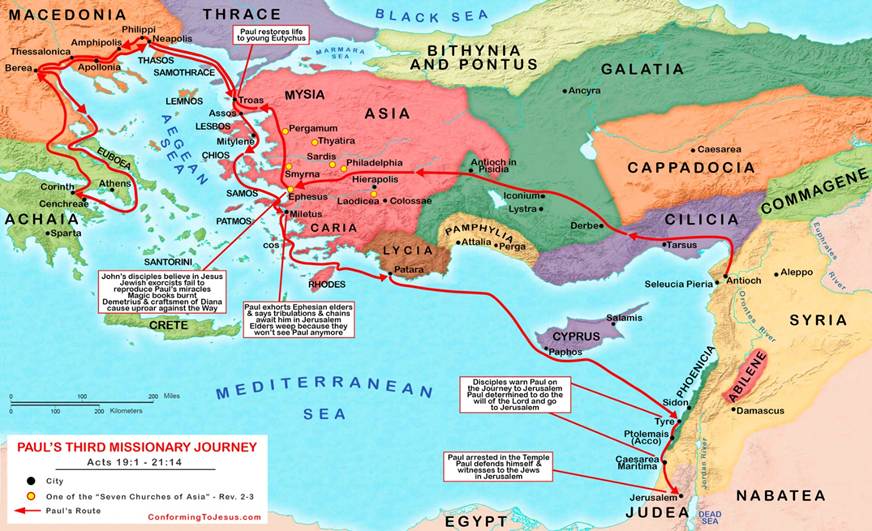
Although we know this man by the name Barnabas, “Son of Encouragement,” his true name was Joseph and he was a Levite from Cyprus. Barnabas must have been a joy to be around. Whenever people met Barnabas, they were always encouraged and uplifted. Joy is contagious, and Barnabas was a joyful man. Barnabas was also brilliant and humble. Barnabas could see that these new converts needed more teaching than he could give them, and he knew exactly where to find a great teacher. Paul had been cooling his heels in his home town of Tarsus ever since he caused so many problems in Jerusalem that the church leaders had to pack him off to Caesarea and put him on a ship back to Tarsus.  But Paul’s time of waiting is over, and now he joins Barnabas in one of the greatest partnerships of all time.

25 Then Barnabas went on to Tarsus to look for Saul. 26 When he found him, he brought him back to Antioch. Both of them stayed there with the church for a full year, teaching large crowds of people. (It was at Antioch that the believers were first called Christians.)

27 During this time some prophets traveled from Jerusalem to Antioch. 28 One of them named Agabus stood up in one of the meetings and predicted by the Spirit that a great famine was coming upon the entire Roman world. (This was fulfilled during the reign of Claudius.) 29 So the believers in Antioch decided to send relief to the brothers and sisters in Judea, everyone giving as much as they could. 30 This they did, entrusting their gifts to Barnabas and Saul to take to the elders of the church in Jerusalem.

When revival breaks out, people become generous, sharing whatever they have. Now these new believers in Antioch band together to send relief gifts to Jerusalem with Paul and Barnabas. Such phenomena continue to the present day. One outstanding example of charity during ongoing revival is the deeds that accompanied the Methodist movement under John Wesley. Humble villagers shared their resources. Wealthy individuals coming under the influence of the Holy Spirit became equally generous. It has been said that the only thing that prevented Great Britain from suffering a bloody revolution similar to that of France was the Methodist revival.

Jewish believers might not realize it, but their church will continue to move further and further away from traditional Judaism the longer things go on and the more believers are persecuted. Now people on the streets of Antioch of Syria are calling these believers Christians, a title that will echo down through the ages.

It’s likely that those believers from Cyprus and Cyrene who were preaching in Antioch were merchants going about their normal pursuits. But wherever these people went, their customers and colleagues could tell there was something different about them. These people were joyful, fair, and loving-qualities not common among many groups of merchants. Once people began asking why these people were different, the way was open to speak about Jesus.

In mission circles, it’s popular to speak about people groups, small groups with particular interests or particular trades. I once spoke with a young man in Long Island who owned a sail boat. “If I accept Jesus, will I have to give up my boat?” he asked.

“No,” I replied. “You can reach people in the sailing community who would never listen to me for an instant.”

When Moses had his interview with God at the burning bush, God asked Moses, “What is that in your hand?” All Moses had in his hand was his shepherd’s staff, but that staff was sufficient for God to use it in all kinds of ways. When we yield our lives to God, God will send us to people with whom we can identify. My husband has a prayer ministry to uniformed service members because he is a U.S. Navy veteran. Only when we reach heaven will we know how many lives my husband has touched. God can use our professions, our hobbies, and our recreation to reach people if we will only yield our lives to Him. So today, what is that in your hand? There are people waiting whom you can reach for God if you will open your life and your heart to Him.

PRAYER: Father God, thank You for loving us and caring for us. Lord, help us to tell others about You and to demonstrate Your love and encouragement wherever we go. In the matchless Name of King Jesus. Amen.

JUNE 12, 2026 REMAINING FAITHFUL AFTER A MOUNTAINTOP EXPERIENCE? #19 GOD ISN’T INTERESTED IN OUR PREJUDICES #3

June 12, 2026

Acts 11 Peter Explains His Actions

11:1 Soon the news reached the apostles and other believers in Judea that the Gentiles had received the word of God. 2 But when Peter arrived back in Jerusalem, the Jewish believers criticized him. 3 “You entered the home of Gentiles and even ate with them!” they said.

Well, it was going to happen sooner or later. Jesus had no problem eating with tax collectors and allowing a prostitute to bathe his feet with her tears and wipe them with her hair; however, the Jewish believers are pickier than Jesus. Forgetting that Jesus has adjured them to go throughout the world making disciples of every nation, the Jews are horrified that Peter has entered a Gentile home and has even eaten with them. There appears to be a major disconnect between the idea of telling people about Jesus and sharing fellowship with them. But these Jewish believers are in for a shock.

4 Then Peter told them exactly what had happened. 5 “I was in the town of Joppa,” he said, “and while I was praying, I went into a trance and saw a vision. Something like a large sheet was let down by its four corners from the sky. And it came right down to me. 6 When I looked inside the sheet, I saw all sorts of tame and wild animals, reptiles, and birds. 7 And I heard a voice say, ‘Get up, Peter; kill and eat them.’

8 “‘No, Lord,’ I replied. ‘I have never eaten anything that our Jewish laws have declared impure or unclean.’

At this point, Peter’s listeners are nodding sagely, agreeing with Peter’s orthodox position. Surely God agrees with them…or does He?

9 “But the voice from heaven spoke again: ‘Do not call something unclean if God has made it clean.’ 10 This happened three times before the sheet and all it contained was pulled back up to heaven.

11 “Just then three men who had been sent from Caesarea arrived at the house where we were staying. 12 The Holy Spirit told me to go with them and not to worry that they were Gentiles. These six brothers here accompanied me, and we soon entered the home of the man who had sent for us. 13 He told us how an angel had appeared to him in his home and had told him, ‘Send messengers to Joppa, and summon a man named Simon Peter. 14 He will tell you how you and everyone in your household can be saved!’

15 “As I began to speak,” Peter continued, “the Holy Spirit fell on them, just as he fell on us at the beginning. 16 Then I thought of the Lord’s words when he said, ‘John baptized with water, but you will be baptized with the Holy Spirit.’ 17 And since God gave these Gentiles the same gift he gave us when we believed in the Lord Jesus Christ, who was I to stand in God’s way?”

18 When the others heard this, they stopped objecting and began praising God. They said, “We can see that God has also given the Gentiles the privilege of repenting of their sins and receiving eternal life.”

Orthodox or not, these men are bright enough to remember Jesus’ teachings that you can’t put new wine into old wineskins or the old wineskins will burst as the new wine ferments and expands. And as Peter is speaking, the Holy Spirit is also moving in the hearts of his listeners. These men are neither cruel nor vindictive, but simply stuck in one mode of thinking. As Peter speaks, these men are forced to re-evaluate every assumption they have made as to the nature of being a Jesus follower. In the beginning, these men have assumed that Jesus followers will naturally be observant Jews, but God seems to be turning that idea on its head. How else has this Roman learned about Simon Peter and how else has the Holy Spirit descended on everyone in Cornelius’ household without any formal laying on of hands? Truly, God is making His Will known, and it’s not lining up with anybody’s previous assumptions.

When I was in med school, I worked in a lab with a research scientist who had a poster on the wall that read “we have always done it that way!” The obvious implication was that in scientific inquiry, such thinking would be deadly. But the phrase is just as deadly in spiritual matters. God is forever doing new things. Isaiah 43:19 tells us, “For I am about to do something new. See, I have already begun! Do you not see it? I will make a pathway through the wilderness. I will create rivers in the dry wasteland.” Lamentations 3:22-23 says, “The faithful love of the Lord never ends! His mercies never cease. Great is his faithfulness; his mercies begin afresh each morning.”

Jesus told his disciples that he had not come to set the Law of Moses aside but to fulfill it. But once Jesus shed his blood on the cross at Calvary, mankind was no longer locked into a system of animal sacrifices to make propitiation for sin. That Calvary sacrifice completely blew away the idea of earning one’s way into heaven. Jesus’ death was the “newest thing” that God had ever done.

Why did God choose Peter to witness to Cornelius? Peter had his faults; he was impetuous and given to bulling his way through situations. But Peter was also intensely practical and open to the leading of the Holy Spirit. And Peter had enough gumption that when other Jewish believers attempted to cow him into agreeing with them, he stood up and forthrightly described the amazing vision God had given him.

Peter is one of my favorite disciples because I can identify with him. I too have made grandiose statements of faith, only to fail. Sometimes I too attempt to force situations. But Peter’s example gives me hope. Later on, Peter will falter a bit, only for Paul to correct him. But the morning that Peter defends the leading of the Holy Spirit and His descent on a group of Gentiles is a glorious moment in Peter’s life. May all of us have holy boldness so that when God does a new thing in our lives, we are willing to stand and testify, rather than trying to downgrade it.

PRAYER: Father God, thank You for loving us and caring for us. Lord, help us to discern Your perfect Will and then to do it. Help us to be willing to stand against criticism and opposition, even when it comes from our friends and colleagues. In the mighty and precious Name of King Jesus. Amen.

JUNE 11, 2026 REMAINING FAITHFUL AFTER A MOUNTAINTOP EXPERIENCE? #18 GOD ISN’T INTERESTED IN OUR PREJUDICES PART 2

June 11, 2026

Acts 10: 24 They arrived in Caesarea the following day, and Cornelius was waiting for him and had called together his relatives and close friends to meet Peter. 25 As Peter entered his home, Cornelius fell to the floor before him in worship.

26 But Peter said, “Stand up! I’m not a god!”

27 So he got up, and they talked together for a while and then went in where the others were assembled.

28 Peter told them, “You know it is against the Jewish laws for me to come into a Gentile home like this. But God has shown me in a vision that I should never think of anyone as inferior. 29 So I came as soon as I was sent for. Now tell me what you want.”

When Peter enters the house, Cornelius looks at him and immediately falls to his knees. Unless we realize the Roman mindset of racial superiority over all conquered people, we fail to realize the incredible significance of this act. Romans don’t bow to others; others bow to Romans, particularly to Roman commanders. Even the Jewish religious leaders demonstrate respect, although they draw the line at bowing. Even Cornelius’ family members and friends are aghast at this act of humility, for they too are Romans to the core. But the Holy Spirit is with Peter, and Cornelius senses the presence of the Holy Spirit.

So many times, as believers we fail to remember that we are not representing ourselves, but representing the One True Living God. We fail to realize that others are seeing something we are not. When we act by the inspiration of the Holy Spirit, others feel the Spirit’s influence. Conversely, when we act without the Holy Spirit’s influence, people will feel the influence of whatever spirit is moving us. Sobering thought, right?

Notice that Peter is still vainly trying to cling to his prejudices as he explains that God has sent him to a gentile home. Despite the heavenly vision, despite God repeating the vision three times, Peter is still moved by the teaching he has received since childhood. But Peter also has obeyed, coming promptly. Change is never easy, and Peter is changing, but it’s painful.

30 Cornelius replied, “Four days ago I was praying as usual at this time of the afternoon, when suddenly a man was standing before me clothed in a radiant robe! 31 He told me, ‘Cornelius, your prayers are heard and your charities have been noticed by God! 32 Now send some men to Joppa and summon Simon Peter, who is staying in the home of Simon, a tanner, down by the shore.’ 33 So I sent for you at once, and you have done well to come so soon. Now here we are, waiting before the Lord, anxious to hear what he has told you to tell us!”

Wow! At this point, Peter is shocked. First, it’s obvious that God has graphically revealed Himself to this Roman authority. Now Peter realizes that God is the One who has directed Cornelius where and how to send for him. And now this man is anxious, ANXIOUS to hear what God has told Peter to tell him and his family and friends. What an opportunity!

34 Then Peter replied, “I see very clearly that the Jews are not God’s only favorites! 35 In every nation he has those who worship him and do good deeds and are acceptable to him. 36-37 I’m sure you have heard about the Good News for the people of Israel—that there is peace with God through Jesus, the Messiah, who is Lord of all creation. This message has spread all through Judea, beginning with John the Baptist in Galilee. 38 And you no doubt know that Jesus of Nazareth was anointed by God with the Holy Spirit and with power, and he went around doing good and healing all who were possessed by demons, for God was with him.

39 “And we apostles are witnesses of all he did throughout Israel and in Jerusalem, where he was murdered on a cross. 40-41 But God brought him back to life again three days later and showed him to certain witnesses God had selected beforehand—not to the general public, but to us who ate and drank with him after he rose from the dead. 42 And he sent us to preach the Good News everywhere and to testify that Jesus is ordained of God to be the Judge of all—living and dead. 43 And all the prophets have written about him, saying that everyone who believes in him will have their sins forgiven through his name.”

Peter begins to tell the company about Jesus, assuming that he will give a message, that they will ask questions, and that things will progress gradually. Not once does Peter anticipate what God is about to do.

44 Even as Peter was saying these things, the Holy Spirit fell upon all those listening! 45 The Jews who came with Peter were amazed that the gift of the Holy Spirit would be given to Gentiles too! 46-47 But there could be no doubt about it, for they heard them speaking in tongues and praising God.

How do Peter and his friends recognize that the Holy Spirit has descended on all those in Cornelius’ house? They hear the assembled company speaking in tongues and praising God. Those receiving the Holy Spirit must have spoken in recognizable tongues; otherwise, the Jews would have termed it as gibberish. Perhaps some of the Jews were from various places with regional languages or dialects. God could certainly ensure that those speaking in tongues would say something intelligible.

Peter asked, “Can anyone object to my baptizing them, now that they have received the Holy Spirit just as we did?” 48 So he did, baptizing them in the name of Jesus, the Messiah. Afterwards Cornelius begged him to stay with them for several days.

We’ll never know what Peter thought he was coming to do at Cornelius’ house. Perhaps Peter planned to tell the company about Jesus, to gradually take them along, and eventually baptize them. But God has taken over, baptizing everyone in the household in the Holy Spirit. What can Peter do? All that is left is to conduct believer’s baptism in water.

Why is this story so important? There are many lessons to be drawn from this story; however, one of the most important points is that God remains sovereign. When we are doing God’s work, God might take over at any point, bypassing our carefully constructed plans and acting powerfully in ways we cannot anticipate. Generally, our plans are far too small! While Peter might have had good intentions, he might never have laid hands on Cornelius and his group to receive the Holy Spirit. That’s when God stepped in. Later, Peter will use this act of God as evidence that God wants the gentiles as well as the Jews to come to a saving faith.

Years ago, J.B. Phillips wrote a book entitled Your God is Too Small. In that book. Phillips conclusively demonstrated that most of us have no conception of the power of God or any idea of God’s greatness. The book is a small classic and well worth reading. When given a divine vision and marching orders, Peter obeyed; however, until Peter entered Cornelius’ house, his ideas about God were far too small. For the rest of Peter’s life, God would continue to expand Peter’s views of His greatness and majesty.

a

How big is the God you claim to serve? Are you serving the Lord God, Creator and Master of the Universe, or have you squeezed God into some kind of a little box? When Peter thought he knew what God would do, God proceeded to send the Holy Spirit on an unlikely group of people. Never be afraid to trust that the God who has created you can sustain you and lead you into new avenues of ministry.

PRAYER: Father God, thank You for loving us and caring for us. Lord, help us to follow hard after You, even when You are ignoring our prejudices and preferences. In the mighty and precious Name of King Jesus. Amen.

JUNE 10, 2026 REMAINING FAITHFUL AFTER A MOUNTAINTOP EXPERIENCE? #17 GOD ISN’T INTERESTED IN OUR PREJUDICES PART 1

June 10, 2026

Acts 10:1 In Caesarea there lived a Roman army officer, Cornelius, a captain of an Italian regiment. 2 He was a godly man, deeply reverent, as was his entire household. He gave generously to charity and was a man of prayer. 3 While wide awake one afternoon he had a vision—it was about three o’clock—and in this vision he saw an angel of God coming toward him.

“Cornelius!” the angel said.

4 Cornelius stared at him in terror. “What do you want, sir?” he asked the angel.

And the angel replied, “Your prayers and charities have not gone unnoticed by God! 5-6 Now send some men to Joppa to find a man named Simon Peter, who is staying with Simon, the tanner, down by the shore, and ask him to come and visit you.”

7 As soon as the angel was gone, Cornelius called two of his household servants and a godly soldier, one of his personal bodyguard, 8 and told them what had happened and sent them off to Joppa.

If Cornelius had not been sent to this tiny country with its intransigent population that clung to the Mosaic Laws, he might have remained a worshiper of Mithras. But despite all the oaths, all the blood sacrifices, all the rituals, Cornelius could find no peace. Only when Cornelius came to Israel, to Herod’s port city of Caesarea, did he begin to catch traces of holiness.  And once that hunger for holiness had been kindled, Cornelius found himself increasingly drawn into the Jewish religion. But one problem remained: the problem of sin. How could animal sacrifices possibly pay for the sins of a man? And what about the lives of many of the Jewish religious leaders? Surely, there has to be something more, some additional way to experience God. Charitable acts help, but they’re not satisfying. Cornelius wants a God big enough to truly worship.

9-10 The next day as they were nearing the city, Peter went up on the flat roof of his house to pray. It was noon and he was hungry, but while lunch was being prepared, he fell into a trance. 11 He saw the sky open and a great canvas sheet, suspended by its four corners, settle to the ground. 12 In the sheet were all sorts of animals, snakes, and birds forbidden to the Jews for food.

13 Then a voice said to him, “Go kill and eat any of them you wish.”

14 “Never, Lord,” Peter declared, “I have never in all my life eaten such creatures, for they are forbidden by our Jewish laws.”

15 The voice spoke again, “Don’t contradict God! If he says something is kosher, then it is.”

16 The same vision was repeated three times. Then the sheet was pulled up again to heaven.

17 Peter was very perplexed. What could the vision mean? What was he supposed to do?

Just then the men sent by Cornelius had found the house and were standing outside at the gate, 18 inquiring whether this was the place where Simon Peter lived!

19 Meanwhile, as Peter was puzzling over the vision, the Holy Spirit said to him, “Three men have come to see you. 20 Go down and meet them and go with them. All is well, I have sent them.”

Peter is perplexed. True, he has been a fisherman for years; however, he has always observed the Jewish dietary laws and has tried to follow the commands of Moses. But now God Himself is sending a vision indicating that nothing is unclean as far as God is concerned. And the vision is repeated three times, three being a sign of divinity and infinity. When God wants to assure believers that a message is from Him, he confirms it by repeating it three times.

Just as Peter is scratching his head in confusion, the messengers from Cornelius appear at the door, seeking Simon Peter by name. Here’s another conundrum; how have these Romans learned Peter’s name? Peter has tended to avoid Romans as much as possible. But the Holy Spirit informs Peter that these men have come to see him and that He, the Holy Spirit has sent them.

21 So Peter went down. “I’m the man you’re looking for,” he said. “Now what is it you want?”

22 Then they told him about Cornelius the Roman officer, a good and godly man, well thought of by the Jews, and how an angel had instructed him to send for Peter to come and tell him what God wanted him to do.

23 So Peter invited them in and lodged them overnight. The next day he went with them, accompanied by some other believers from Joppa.

It’s a funny thing about God; He delights in turning our cherished prejudices upside down and inside out. We are SURE we know the people who are acceptable to God; meanwhile, God is busy delivering people whom we deem beyond salvation.

Years ago, I heard a testimony from a man who had been a fervent member of the Hell’s Angels somewhere in the northwest. As a highly intelligent man with strong administrative talents, this guy had been one of the chief organizers of the various crimes his group was involved in-drug dealing, prostitution, and a host of other unsavory activities. Meanwhile, this man’s mother continued to pray for him faithfully. Years passed, and this man resisted everything his mother could say; however, he could not resist the Holy Spirit. Eventually, this guy came under the conviction of the Holy Spirit and wanted to leave the Hell’s Angels; however, he knew too much. The motorcycle gang members were hunting this man to eliminate him before he could report their activities to law authorities.

Things became critical and the guy wound up in a phone booth with gang members closing in on him. He called his mother, who ordered him to look up local churches in the phone book and call the first pastor God brought to mind. There were several miracles-first, the gang members didn’t drag him out of the phone booth; second, there was a phone book, and third, when he called a local pastor, the man who turned up was a former Marine who looked bigger and tougher than any of the gang members! The fourth miracle happened when the gang members allowed the pastor to lead the man from the phone booth to his pickup truck. The pastor took this man home with him and led him to the Lord. A few months after witnessing this man’s testimony, I moved to Charleston, SC, where I met the man’s mother when I joined a local church there. This precious lady verified everything that her son had said, and added that he had become an evangelist with a particular ministry to motorcycle gang members.

Nobody is beyond salvation. Nobody is beyond the reach of the Holy Trinity, Father, Son and Holy Spirit. May we copy Peter’s willingness to listen to the Holy Spirit and be channels of God’s love to all those around us, no matter how they appear.

PRAYER: Father God, thank You for loving us and caring for us. Lord, help us to be channels of Your love to all those around us, irrespective of appearances. In the mighty and precious Name of King Jesus. Amen.  

JUNE 9, 2026 REMAINING FAITHFUL AFTER A MOUNTAINTOP EXPERIENCE? #16 AND SOMETIMES GOD USES YOU TO DO MIRACLES DESPITE YOURSELF

June 9, 2026

Acts 9:32 Peter traveled from place to place to visit them, and in his travels came to the believers in the town of Lydda. 33 There he met a man named Aeneas, paralyzed and bedridden for eight years.

34 Peter said to him, “Aeneas! Jesus Christ has healed you! Get up and make your bed.” And he was healed instantly. 35 Then the whole population of Lydda and Sharon turned to the Lord when they saw Aeneas walking around.

Peter has witnessed miracles before. Right after the descent of the Holy Spirit on the Day of Pentecost, God allowed Peter to be a channel of His healing. As Peter walked through the streets of Jerusalem, anyone on whom his shadow fell was healed instantly. At first, Peter was likely unaware of what was happening. There’s no evidence that these miracles of healing continue throughout his ministry. Why do the miracle healings cease? Only God knows. But God is still working through Peter.

Why does Peter speak to Aeneas, proclaiming healing? The Holy Spirit is directing Peter, and as Peter looks at Aeneas, the Holy Spirit tells Peter to lay hands on him. The instant healing of Aeneas sparks a revival in which two entire towns turn to the Lord.

36 In the city of Joppa there was a woman named Dorcas (“Gazelle”), a believer who was always doing kind things for others, especially for the poor. 37 About this time she became ill and died. Her friends prepared her for burial and laid her in an upstairs room. 38 But when they learned that Peter was nearby at Lydda, they sent two men to beg him to return with them to Joppa. 39 This he did; as soon as he arrived, they took him upstairs where Dorcas lay. The room was filled with weeping widows who were showing one another the coats and other garments Dorcas had made for them. 40 But Peter asked them all to leave the room; then he knelt and prayed. Turning to the body he said, “Get up, Dorcas,” and she opened her eyes! And when she saw Peter, she sat up! 41 He gave her his hand and helped her up and called in the believers and widows, presenting her to them.

42 The news raced through the town, and many believed in the Lord. 43 And Peter stayed a long time in Joppa, living with Simon, the tanner.

Peter is still in Lydda, where Aeneas has been healed. Now Peter moves to the port city of Joppa when a wonderful believing lady named Dorcas dies and her friends beg Peter to come. The death of Dorcas is a community tragedy, for Dorcas has been making garments for widows. In a time when widows without caring children can go naked or hungry, Dorcas has been an enormous blessing. Dorcas’ friends are devastated, and they decide to beg God for a miracle. Peter agrees, lays hands on Dorcas, only for God to raise Dorcas from the dead. This miracle sets Joppa on fire spiritually, causing many people to trust in Jesus. Peter remains in Joppa, staying with Simon the tanner, another believer. Little does Peter realize that God has moved him to Joppa for an amazing revelation.

The most impressive aspects of these verses are the healing of Aeneas and the resurrection of Dorcas. But if we only focus on the dramatic, we miss the way God is quietly moving Peter like a chess piece on a game board. Peter is moving around to minister to believers, simply going from place to place as the Holy Spirit guides him. Now God is moving Peter to Joppa because it is on the coast and close to Caesarea, where there’s a Roman official hungry for truth about God.

In God’s economy, there are no mistakes and no wasted motions. While we think we are experiencing random events, God is managing everything. Years ago, we were traveling down I-55 from Illinois to Memphis. We briefly pulled off the interstate to use toilet facilities and then proceeded. Somewhere near Sikeston, Missouri, we came upon a fresh traffic accident. A sedan car headed north with 5 passengers had crossed the median, striking a motor home headed south. A man and his wife were traveling to their new retirement home, and the husband was driving a motor home towing a car behind it. The wife was driving a large pickup truck towing a bass boat. As an EMT, my husband immediately moved to the car; unfortunately, everyone in that vehicle was dead. Meanwhile, I examined the husband, realizing that he had suffered an intestinal injury from his seat belt. When the ambulance arrived, the husband and wife rode to the hospital together while my husband drove our vehicle and I drove the large pickup truck towing the bass boat. At the hospital, the husband went immediately to operation, where the surgeon learned that my diagnosis was correct. We comforted the wife, remaining with her until her husband was out of surgery. At that point, we proceeded on to Memphis. God had our schedule precisely arranged so that we would arrive precisely in time.

One of our friends is fond of describing “God-incidences” rather than coincidences. May we all trust that God is arranging our steps and our stops.

PRAYER: Father God, thank You for loving us and caring for us. Lord, help us to remember that You are the One who arranges our lives. Help us to trust You. In the mighty and precious Name of King Jesus. Amen.
JUNE 8, 2026 REMAINING FAITHFUL AFTER A MOUNTAINTOP EXPERIENCE? #15 DON’T EXPECT OTHERS TO BE IMPRESSED WITH YOUR EXPERIENCE

June 8, 2026

He (Paul) stayed with the believers in Damascus for a few days 20 and went at once to the synagogue to tell everyone there the Good News about Jesus—that he is indeed the Son of God!

21 All who heard him were amazed. “Isn’t this the same man who persecuted Jesus’ followers so bitterly in Jerusalem?” they asked. “And we understand that he came here to arrest them all and take them in chains to the chief priests.”

22 Paul became more and more fervent in his preaching, and the Damascus Jews couldn’t withstand his proofs that Jesus was indeed the Christ.

23 After a while the Jewish leaders determined to kill him. 24 But Paul was told about their plans, that they were watching the gates of the city day and night prepared to murder him. 25 So during the night some of his converts let him down in a basket through an opening in the city wall!

Never let it be said that Paul is a shrinking violet! No sooner has Paul regained his vision than he immediately goes to the synagogues in Damascus, testifying about Jesus and presenting irrefutable arguments that Jesus is the Messiah and that he has already lived, died, and has been resurrected. This is NOT the message the Jews in Damascus have been anticipating. What’s worse, many Jews are now believing in Jesus because of Paul’s compelling testimonies. Jewish religious leaders are incensed; if this guy isn’t going to help them, then he needs to be eliminated. Getting wind of these threats, some of Paul’s new converts load him into a large basket and let him down from a window on the city wall at night. Paul was anticipating a triumphal entry into Damascus, but now he’s blindly entered the city with others leading him and leaving ignominiously as a fugitive. Paul’s entry into new life as a Christian has become a trial by fire.

26 Upon arrival in Jerusalem he tried to meet with the believers, but they were all afraid of him. They thought he was faking! 27 Then Barnabas brought him to the apostles and told them how Paul had seen the Lord on the way to Damascus, what the Lord had said to him, and all about his powerful preaching in the name of Jesus. 28 Then they accepted him, and after that he was constantly with the believers 29 and preached boldly in the name of the Lord. But then some Greek-speaking Jews with whom he had argued plotted to murder him. 30 However, when the other believers heard about his danger, they took him to Caesarea and then sent him to his home in Tarsus.

Once Paul reaches Jerusalem, the apostles have no idea what to do with this new colleague. There’s no doubt that Paul is brilliant, able to dissect the most challenging points of Scripture. In later generations, discussions similar to Paul’s will be referred to as apologetics. But Paul’s confrontational tactics infuriate Jewish intellectuals, particularly some Greeks who find Paul quoting Greek philosophers to support the position of Jesus as Messiah. Are these Greeks the same group that caused problems for Stephen? Possible. Remember, as Greek believers, these people must struggle for recognition by the Hebrews. Reporting Paul to the Sanhedrin might gain these people more recognition within Judaism. Concerned about Paul’s safety as well as their own, the fledgling church in Jerusalem sends Paul to Herod’s magnificent port of Caesarea, where he takes a ship back to his home city of Tarsus.

31 Meanwhile, the church had peace throughout Judea, Galilee and Samaria, and grew in strength and numbers. The believers learned how to walk in the fear of the Lord and in the comfort of the Holy Spirit.

Once more, we read simple verses that bear in-depth consideration. Frankly, the early church is not yet prepared to defend itself from all the problems a fiery evangelist like Paul can cause. The church needs peace and time to grow in strength and numbers and to learn how to walk in the fear of the Lord and the comfort of the Holy Spirit. Church leaders must work out requirements for spiritual leadership, communication, and emergency preparedness. Paul also needs time to develop his life of faith.

During the Last Supper, Jesus warns his disciples that they will be persecuted. John 15:19 The world would love you if you belonged to it; but you don’t—for I chose you to come out of the world, and so it hates you. 20 Do you remember what I told you? ‘A slave isn’t greater than his master!’ So since they persecuted me, naturally they will persecute you. And if they had listened to me, they would listen to you! 21 The people of the world will persecute you because you belong to me, for they don’t know God who sent me.

Jesus knows that he will endure suffering and eventual death. But for Jesus’ followers, they need time to develop prayer lives, to learn how to relate to the Holy Spirit, and to walk in the fear of the Lord. These people require time to develop lives of faith so that when persecution come, they would be able to endure and triumph. But what about Paul? How did his faith develop?

https://www.gotquestions.org/Paul-in-Arabia.html

Paul was in Arabia (including Damascus and the surrounding desert) for at least three years immediately after his conversion. Some speculate that Paul spent this time in relative seclusion, perhaps living as a desert hermit and sorting out the implications of his new faith. However, the biblical record emphasizes that he immediately began preaching in the synagogues. Acts 9:22 does not present the picture of a man who is just “figuring it out”: “Saul grew more and more powerful and baffled the Jews living in Damascus by proving that Jesus is the Messiah.” When he left Damascus, with its significant Jewish population, it is reasonable to assume that he did the very thing that Jesus had called him to do—preach the gospel to the Gentiles. This does not eliminate the possibility that he spent solitary time in study of the Scriptures, prayer, and contemplation as he probably did throughout his life. Even in prison near the end of his death, he asks Timothy to bring “my scrolls, especially the parchments” (2 Timothy 4:13). However, the point in Galatians 1 is that Paul already had a vigorous apostolic ministry before meeting with the apostles in Jerusalem, and from Acts 9 this ministry started immediately. For three years he spread the gospel in Damascus and in the surrounding countryside (see the helpful discussion in The Epistle to the Galatians: The New International Greek Text Commentary by F. F. Bruce, Eerdmans, 1982, p. 97).

Although Acts seems to imply that Paul went straight from Damascus to Jerusalem, it’s more likely that he spent three years in what is now Syria, praying and learning about Jesus. Only after this period, did Paul go to Jerusalem.

What can we learn from Paul’s three years in “Arabia” and the experiences of the early Christians? Developing a vibrant faith takes time; spiritual maturity is not something achieved in an instant. How can we develop our faith? I return to the prayer of our late friend, who always prayed, “Lord, help me to love You more each day than I did the day before.” When we trust God to lead us into His Truth and we study His Word, we can trust that God will do exactly that.

PRAYER: Father God, thank You for loving us and caring for us. Lord, help us to learn how to walk in the fear of the Lord and in the comfort of the Holy Spirit. Help us to love You more each day than we did the day before. In the mighty and precious Name of King Jesus. Amen.