Archive for August, 2026

AUGUST 22, 2026 PEACE-HOW DO WE GET IT AND HOW CAN WE KEEP IT? #37 WANT PEACE? CULTIVATE A CHEERFUL HEART!

August 22, 2026

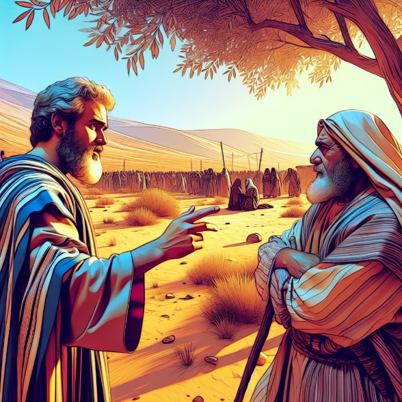
Exodus 2:15-22 Moses meets Reul (Jethro)

When Moses arrived in Midian, he sat down beside a well. 16 Now the priest of Midian had seven daughters who came as usual to draw water and fill the water troughs for their father’s flocks. 17 But some other shepherds came and chased them away. So Moses jumped up and rescued the girls from the shepherds. Then he drew water for their flocks.

18 When the girls returned to Reuel, their father, he asked, “Why are you back so soon today?”

19 “An Egyptian rescued us from the shepherds,” they answered. “And then he drew water for us and watered our flocks.”

20 “Then where is he?” their father asked. “Why did you leave him there? Invite him to come and eat with us.”

21 Moses accepted the invitation, and he settled there with him. In time, Reuel gave Moses his daughter Zipporah to be his wife. 22 Later she gave birth to a son, and Moses named him Gershom, [a foreigner there] for he explained, “I have been a foreigner in a foreign land.”

It all began when Moses fled Egypt and wound up on the back side of Midian. That’s where Moses met Jethro, a Midianite priest and a worshiper of the One True Living God. Jethro welcomed Moses into his family after Moses assisted Jethro’s daughters in watering their flocks. Moses married Jethro’s daughter, Zipporah, who bore him two sons. If we skip over the meaning of those names, we miss special gifts from God. An internet search reveals: The name Zipporah means “bird” in Hebrew. This name is derived from the Hebrew word צִפּוֹר (tzippor), which signifies beauty, grace, and freedom. Zipporah is notably recognized as the wife of Moses in the Old Testament, and her name symbolizes vitality and a significant role in the liberation narrative. Additionally, the name carries spiritual connotations, representing divine care and unexpected purpose.

Zipporah’s father is Reul, or Jethro. The name “Jethro” means “excellence” or “abundance,” and Jethro lives up to his name. Everybody should have a father-in-law like Jethro! Here is a man worshiping the One True Living God in Midian, a country whose inhabitants generally worshiped Baal, Ashtoreth, and Dagon. Instead of slavishly following these hollow deities, Jethro worships God Almighty and functions as His priest. Jethro is one of those men whose entire body is a perpetual smile and who makes people feel good simply by being around him. Now Moses has been welcomed into the home of a believing family, a family full of love and grace, with whom he will live for forty years. How can Moses remain unchanged when his new family exhibits the winsome grace of true believers? Moses has experienced the hauteur of Pharaoh’s court and now experiences the love and peace of Jethro’s household.

Exodus 18 Jethro’s Visit to Moses

1 Moses’ father-in-law, Jethro, the priest of Midian, heard about everything God had done for Moses and his people, the Israelites. He heard especially about how the Lord had rescued them from Egypt.

2 Earlier, Moses had sent his wife, Zipporah, and his two sons back to Jethro, who had taken them in. 3 (Moses’ first son was named Gershom, [a foreigner there] for Moses had said when the boy was born, “I have been a foreigner in a foreign land.” 4 His second son was named Eliezer, [God is my helper] for Moses had said, “The God of my ancestors was my helper; he rescued me from the sword of Pharaoh.”) 5 Jethro, Moses’ father-in-law, now came to visit Moses in the wilderness. He brought Moses’ wife and two sons with him, and they arrived while Moses and the people were camped near the mountain of God. 6 Jethro had sent a message to Moses, saying, “I, Jethro, your father-in-law, am coming to see you with your wife and your two sons.”

7 So Moses went out to meet his father-in-law. He bowed low and kissed him. They asked about each other’s welfare and then went into Moses’ tent. 8 Moses told his father-in-law everything the Lord had done to Pharaoh and Egypt on behalf of Israel. He also told about all the hardships they had experienced along the way and how the Lord had rescued his people from all their troubles. 9 Jethro was delighted when he heard about all the good things the Lord had done for Israel as he rescued them from the hand of the Egyptians.

10 “Praise the Lord,” Jethro said, “for he has rescued you from the Egyptians and from Pharaoh. Yes, he has rescued Israel from the powerful hand of Egypt! 11 I know now that the Lord is greater than all other gods, because he rescued his people from the oppression of the proud Egyptians.”

12 Then Jethro, Moses’ father-in-law, brought a burnt offering and sacrifices to God. Aaron and all the elders of Israel came out and joined him in a sacrificial meal in God’s presence.

Eventually, Jethro’s daughter, Zipporah, gave Moses two sons. Moses knew things were going to become difficult in Egypt, so he sent his wife and two sons to stay with his father-in-law. Now that the Israelites have left Egypt, Jethro hears about everything God has done and brings Moses’ family back so he can encourage Moses.

Proverbs 17:22 New Living Translation “A cheerful heart is good medicine, but a broken spirit saps a person’s strength.” Throughout Jethro’s life, he continues to fulfill the promises embodied in his name. Here is an elderly man willing to travel long miles from Midian along with his daughter and his grandsons to meet Moses in the wilderness.

Once Jethro meets Moses, he is delighted about all the good things the Lord has done for Israel. 10 “Praise the Lord,” Jethro said, “for he has rescued you from the Egyptians and from Pharaoh. Yes, he has rescued Israel from the powerful hand of Egypt! 11 I know now that the Lord is greater than all other gods, because he rescued his people from the oppression of the proud Egyptians.”

Is it possible that some of the Israelites try to complain to Jethro about Moses? Doubtful. Jethro is a stranger, and in many cultures, you never tell strangers bad news. But there’s also another reason. Jethro is one of those men who is one giant smile, continually praising God and rejoicing in His work. It’s tough to begin complaining when someone is smiling at you like you are his new best friend. Remember Jethro has spent his life herding sheep in the wilderness as well and is fully aware of all the problems Moses has faced and might face in the future. Jethro doesn’t waste time warning Moses but is thrilled about God’s salvation.

As a priest, Jethro proceeds to set a magnificent example, leading worship, involving Moses, Aaron, and all the elders of Israel. No matter what these elders have failed to do in the past, Jethro is showing them what it truly means to be a man of faith. True, Moses has been leading the Israelites, but now this stranger is worshiping the One True Living God. Many of these elders might be shocked or ashamed, for they are still compromising spiritually. Only God knows how many of these men have amulets or statues of Egyptian gods back in their tents or how many of them have been secretly imploring Egyptian deities for help. Perhaps part of the anger and frustration the Israelites have expressed stems from having sought help from their Egyptian idols without success. Not only does Jethro encourage Moses but he also leaves a lasting impression on the elders of Israel.

As we move through our days, what impression do we leave on those around us? Are we encouragers or are we perpetually looking as if we have lost our best friend? If we are truly serving the One True Living God, then we should be like Jethro, our faces beaming with reflected light from God’s countenance. Later, David will write in Psalm 27:1 “The Lord is my light and my salvation—so why should I be afraid? The Lord is my fortress, protecting me from danger, so why should I tremble?”

When we are serving God, we have no need of fear, for God will care for us, even in the most trying of circumstances. May God help us to copy Jethro, so that throughout our days, we are messengers of His light and love.

PRAYER: Father God, thank You for loving us and caring for us. Lord, help us to be like Jethro, full of Your abundant grace, blessing all those whom we meet. In the mighty and precious Name of King Jesus. Amen.


AUGUST 21, 2026 PEACE-HOW DO WE GET IT AND HOW CAN WE KEEP IT? #36 WANT PEACE? BECOME A HELPER!

August 21, 2026

Israel Defeats the Amalekites

Exodus 17:8 While the people of Israel were still at Rephidim, the warriors of Amalek attacked them. 9 Moses commanded Joshua, “Choose some men to go out and fight the army of Amalek for us. Tomorrow, I will stand at the top of the hill, holding the staff of God in my hand.”

10 So Joshua did what Moses had commanded and fought the army of Amalek. Meanwhile, Moses, Aaron, and Hur climbed to the top of a nearby hill. 11 As long as Moses held up the staff in his hand, the Israelites had the advantage. But whenever he dropped his hand, the Amalekites gained the advantage. 12 Moses’ arms soon became so tired he could no longer hold them up. So Aaron and Hur found a stone for him to sit on. Then they stood on each side of Moses, holding up his hands. So his hands held steady until sunset. 13 As a result, Joshua overwhelmed the army of Amalek in battle.

After years of herding sheep in the wilderness, Moses is tough with strong arms. But as the battle continues hour after hour, Moses finds his arms beginning to tremble. As long as Moses has kept his hands raised with his staff in the air, Joshua has been winning. But now Moses’ arms and legs are getting tired because he’s been standing for hours. The staff is sagging, and the Amalekites begin winning. That’s when Aaron and Hur find a large stone for Moses to sit on and begin supporting his arms. Even though these two men are also getting tired, they hang on until sunset, and the Israelites win the day.

Notice something about this story: Moses did nothing wrong. Moses followed all God’s instructions to the letter; however, his arms and legs simply became tired. Moses didn’t call for anyone to help him, but Aaron and Hur realized what was happening and took it upon themselves to help Moses. Aaron and Hur realized that if the Amalekites won, they would annihilate the Israelites. All God’s miracles in Egypt and since the deliverance would be meaningless. Moses was still the main man involved in the miracle, but he needed help to fulfill God’s perfect will.

We have spent most of the last 38 years in Ghana, where we have done our best to fulfill roles behave similar to Aaron and Hur. Our calling is to come alongside those already doing a work, supporting and encouraging them so that God’s message of salvation can go forth. We work in mission hospitals because God’s will for His people is Shalom, wholeness, completeness, and well-being in all aspects of life. Aaron and Hur helped Moses but did not take credit for the work God called him to do. In the same way, we do our best to avoid vaunting our efforts.

One of the things we have learned is that when we help others, God sends helpers to us as well. When we first went to our small town in 1993, God had already moved in one of the finest theater (OR) nurses I have ever met. This man was so knowledgeable on a number of different aspects of running a bush clinic with minimal resources. Together we began the Theatre and established a laboratory and blood transfusion service. Through the years, there have been many others, too many to count, who have helped in various ways. God has moved these people to help at times when, like Moses, we have been ready to faint from exhaustion. The ministry of helps is one of the most important ministries there is because helpers don’t wait to be called but they simply show up. Helpers don’t worry about who gets the credit; they’re more worried about making sure people receive the assistance they need.

Has this ministry been easy? Are you kidding? We have come in for criticism, accusations, slander, and bunches of lies. But we know that God has called us, and that gives us peace. Throughout the world, it’s the helpers who carry out God’s will in the lives of those whom they help. But there are some warnings about helping.

  1. It’s not help if you want credit! Charities are familiar with the pseudo-helpers, those people who are simply there for photo-ops, taking selfies of themselves helping. Such efforts are not help; such people are taking advantage to promote themselves.
  2. You must give the kind of help needed, not the kind you think people need. True story: one church group was visiting our hospital and wanted to conduct vacation Bible school sessions for local children. But one of the handicrafts these kind people wanted to do was to create bracelets with beads and feathers. Unfortunately, in our culture, fetish-worshiping parents dress their children in such bracelets. Blessedly, we were able to redirect our visitors so that they substituted a different project. Yet another example is that of people donating canned goods to food banks without also donating can openers. (Donate cans that have flip lids to get around this problem.)
  3. You must give help when it is needed, not when you feel like it. It’s necessary to discuss everything with organizers so that your efforts will have the best results.
  4. You are there to help, not to take over direction. Aaron and Hur didn’t climb that hill and begin arguing with Moses; they simply gave him a stone to sit on and then supported his arms.
  5. You need know when it’s time to stop helping. Sometimes your best-intentioned efforts can create unlooked-for problems. Support a medical outreach in one community, and other communities begin clamoring for similar outreaches. But what if your funds are limited? What if there are other groups who might be able to handle the needs of these communities better?
  6. Is God moving you to help, or are you trying to force a situation? If you pray and God says “no,” stop. Once the battle was over, Aaron and Hur and Moses all climbed back down that hill.

We don’t hear much about Hur apart from this story, but he played a major part in helping save the Israelites from the Amalekites. When it was necessary, Hur climbed that hill, helped hold Moses’ arms, and then climbed back down into obscurity. May God help us so that we will help when it’s needed and necessary and retreat when it’s time to withdraw, having God’s peace in our hearts.

PRAYER: Father God, thank You for loving us and caring for us. Lord, give us Your guidance so that we will help when and how You want us to. In the mighty and precious Name of King Jesus. Amen.
AUGUST 20, 2026 PEACE-HOW DO WE GET IT AND HOW CAN WE KEEP IT? #35 YOU CAN’T HAVE PEACE AS A LEADER WHEN YOU HIDE IN THE CROWD

August 20, 2026

Exodus 17 Water from the Rock

1 At the Lord’s command, the whole community of Israel left the wilderness of Sin and moved from place to place. Eventually they camped at Rephidim, but there was no water there for the people to drink. 2 So once more the people complained against Moses. “Give us water to drink!” they demanded.

“Quiet!” Moses replied. “Why are you complaining against me? And why are you testing the Lord?”

3 But tormented by thirst, they continued to argue with Moses. “Why did you bring us out of Egypt? Are you trying to kill us, our children, and our livestock with thirst?”

It began that morning when all the water skins were empty. Throughout the Israelite camp, nobody had any water left. The next crisis was about to hit. When God began supplying quail and manna, Moses thought he would be free from the Israelites’ complaints. WRONG! As soon as water becomes an issue, the Israelites are right back at it, whining and accusing Moses. Not satisfied with mere whining, they repeat the same accusations over again, claiming that Moses has BROUGHT them out of Egypt, as if they didn’t leave Egypt freely and joyfully. And nobody is lifting a finger to defend Moses or deflect these accusations. Even though there are elders in the group who should exert leadership, they too are hanging back and crying out with the rest.

4 Then Moses cried out to the Lord, “What should I do with these people? They are ready to stone me!”

5 The Lord said to Moses, “Walk out in front of the people. Take your staff, the one you used when you struck the water of the Nile, and call some of the elders of Israel to join you. 6 I will stand before you on the rock at Mount Sinai. Strike the rock, and water will come gushing out. Then the people will be able to drink.” So Moses struck the rock as he was told, and water gushed out as the elders looked on.

7 Moses named the place Massah (which means “test”) and Meribah (which means “arguing”) because the people of Israel argued with Moses and tested the Lord by saying, “Is the Lord here with us or not?”

This time, God orders Moses to call some of the elders of Israel to accompany him when he strikes the rock, releasing a gushing spring of water. These elders are the same men who should have been quieting the people and comforting them before going to Moses, but they too have been hanging back, hoping that Moses would come up with a miracle and they might just quietly hide in the crowd. A test has come, and while Moses has performed well, these men have failed miserably. Had these men been truly acting as leaders, they could have calmed the people and then gone to Moses to inquire how God was going to address this most recent problem. There was no need for the situation to escalate to the point of people threatening to stone Moses.

Why does God order Moses to have the elders join him as he strikes the rock? God knows these guys are a pack of wimps. But God wants these men to witness His divine power because eventually, they are going to be deputizing for Moses and solving problems as they conduct local courts. God is beginning to develop these men as leaders, even though they don’t realize it.

The situation is solved when Moses strikes the rock and water begins gushing out; however, it’s doubtful that either the elders or their people learn very much apart from the idea that if they scream loudly enough, Moses will do something. Moses feels God’s power move through him to split the rock open and cause the water to gush, so he has peace. But the Israelites as a group have lost the chance to gain the peace that comes from trusting God to act. These people are enjoying a kind of peace; however, it’s not the type that will last. And as soon as the next crisis comes, the situation will repeat itself.

Most of us behave very similarly to the Israelites. We get into a jam, cry out for God’s help, and are relieved when He delivers us. But we fail to realize that if we begin by expressing our trust in God, we can have peace throughout the crisis, rather than only having it once the crisis is over. And what if God wants us to assume positions of spiritual leadership? As long as we are behaving like small children, God cannot elevate us to the level of leaders, for He can’t trust us to care for anyone, not even ourselves.

May God help us to trust Him so that we can lead others to trust Him as well.

PRAYER: Father God, thank You for loving us and caring for us. Lord, help us to trust You even when obstacles appear impossible. In the mighty and precious Name of King Jesus. Amen.

AUGUST 19, 2026 PEACE-HOW DO WE GET IT AND HOW CAN WE KEEP IT? #34 WHEN GOD GIVES INSTRUCTIONS, DO WE LISTEN?

August 19, 2026

Exodus 16: 9 Then Moses said to Aaron, “Announce this to the entire community of Israel: ‘Present yourselves before the Lord, for he has heard your complaining.’” 10 And as Aaron spoke to the whole community of Israel, they looked out toward the wilderness. There they could see the awesome glory of the Lord in the cloud.

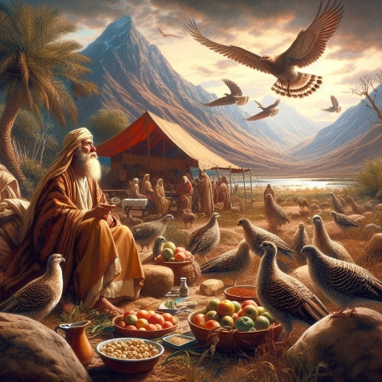
11 Then the Lord said to Moses, 12 “I have heard the Israelites’ complaints. Now tell them, ‘In the evening you will have meat to eat, and in the morning you will have all the bread you want. Then you will know that I am the Lord your God.’”

13 That evening vast numbers of quail flew in and covered the camp. And the next morning the area around the camp was wet with dew. 14 When the dew evaporated, a flaky substance as fine as frost blanketed the ground. 15 The Israelites were puzzled when they saw it. “What is it?” they asked each other. They had no idea what it was.

And Moses told them, “It is the food the Lord has given you to eat. 16 These are the Lord’s instructions: Each household should gather as much as it needs. Pick up two quarts for each person in your tent.”

17 So the people of Israel did as they were told. Some gathered a lot, some only a little. 18 But when they measured it out, everyone had just enough. Those who gathered a lot had nothing left over, and those who gathered only a little had enough. Each family had just what it needed.

19 Then Moses told them, “Do not keep any of it until morning.” 20 But some of them didn’t listen and kept some of it until morning. But by then it was full of maggots and had a terrible smell. Moses was very angry with them.

You’d think that when God miraculously sends quail and manna, the least the Israelites can do is to follow His instructions, but no. There’s always somebody sure he/she is smarter than God. In this case, it’s likely the housewives who are responsible for keeping the manna overnight. You can almost hear them, “Shmuel, I don’t care what you heard! I’m the cook, and I’ve been handling food for years. Surely, this stuff will keep overnight!” Imagine the embarrassment the following morning when the housewife opens the jar, only to find maggots crawling around and waving at her. The lesson is clear: Disobedience breeds maggots. Does God have a sense of humor, or what?

21 After this the people gathered the food morning by morning, each family according to its need. And as the sun became hot, the flakes they had not picked up melted and disappeared. 22 On the sixth day, they gathered twice as much as usual—four quarts for each person instead of two. Then all the leaders of the community came and asked Moses for an explanation. 23 He told them, “This is what the Lord commanded: Tomorrow will be a day of complete rest, a holy Sabbath day set apart for the Lord. So bake or boil as much as you want today, and set aside what is left for tomorrow.”

24 So they put some aside until morning, just as Moses had commanded. And in the morning the leftover food was wholesome and good, without maggots or odor. 25 Moses said, “Eat this food today, for today is a Sabbath day dedicated to the Lord. There will be no food on the ground today. 26 You may gather the food for six days, but the seventh day is the Sabbath. There will be no food on the ground that day.”

27 Some of the people went out anyway on the seventh day, but they found no food. 28 The Lord asked Moses, “How long will these people refuse to obey my commands and instructions? 29 They must realize that the Sabbath is the Lord’s gift to you. That is why he gives you a two-day supply on the sixth day, so there will be enough for two days. On the Sabbath day you must each stay in your place. Do not go out to pick up food on the seventh day.” 30 So the people did not gather any food on the seventh day.

Once more, some of the housewives are likely to blame. “Eh, last time we kept it overnight, it bred maggots. Just dump the leftovers and we’ll get more tomorrow.” This time disobedience might mean your family and you go hungry on the Sabbath. Notice something else; any excess manna melts away in the sun. This means that you must gather manna first thing in the morning, no lazing around. Of course, there’s also the fact that in a hot climate, you must accomplish as much as possible as early as possible before the day heats up.

31 The Israelites called the food manna. (“Manna” means “what is it?”) It was white like coriander seed, and it tasted like honey wafers.

32 Then Moses said, “This is what the Lord has commanded: Fill a two-quart container with manna to preserve it for your descendants. Then later generations will be able to see the food I gave you in the wilderness when I set you free from Egypt.”

33 Moses said to Aaron, “Get a jar and fill it with two quarts of manna. Then put it in a sacred place before the Lord to preserve it for all future generations.” 34 Aaron did just as the Lord had commanded Moses. He eventually placed it in the Ark of the Covenant—in front of the stone tablets inscribed with the terms of the covenant. 35 So the people of Israel ate manna for forty years until they arrived at the land where they would settle. They ate manna until they came to the border of the land of Canaan.

36 The container used to measure the manna was an omer, which was one-tenth of an ephah; it held about two quarts.

Some people are slow learners, but eventually everybody appears to be following instructions about the handling of the manna. Questions regarding the actual nature of manna have raged for centuries. Some sources believe the manna is an exudate from certain trees while others suggest a combination of insect secretions plus trees. But what is certain is that God supplies the Israelites with manna and quail for forty years. Assuming you begin with two million people and they reproduce; that’s a staggering amount to supply.  

It seems amazing that anyone would try to ignore the rules that allow them to gather food for their families inv a place where there are no other resources; however, the fundamental problem is a lack of faith in God as the Supreme Being. Later when God gives Moses the Ten Commandments and the other rules by which He wants His people to live, the same kind of thinking will still prevail.

God is a God of peace, and He wants His people to have peace and healthy lives. We are the ones who keep trying to dodge God’s Word and His commands, substituting our own wills for His. Later, Saint Paul will write to the Galatians “22 But the Holy Spirit produces this kind of fruit in our lives: love, joy, peace, patience, kindness, goodness, faithfulness, 23 gentleness, and self-control. There is no law against these things!” (Galatians 5:22-23) How can we live lives that exemplify these qualities? Simply obey God and don’t try to twist His commandments.

PRAYER: Father God, thank You for loving us and caring for us. Lord, help us to trust You and obey You, no matter the circumstances. In the mighty and precious Name of King Jesus. Amen.
AUGUST 18, 2026 PEACE-HOW DO WE GET IT AND HOW CAN WE KEEP IT? #33 FORGET CASATROPHISIZING IF YOU WANT PEACE!

August 18, 2026

Exodus 16: nna and Quail from Heaven

1 Then the whole community of Israel set out from Elim and journeyed into the wilderness of Sin, between Elim and Mount Sinai. They arrived there on the fifteenth day of the second month, one month after leaving the land of Egypt. 2 There, too, the whole community of Israel complained about Moses and Aaron.

3 “If only the Lord had killed us back in Egypt,” they moaned. “There we sat around pots filled with meat and ate all the bread we wanted. But now you have brought us into this wilderness to starve us all to death.”

Hoo boy! These people are only one month out from Egypt and already they’re making more complaints. Look at this latest round of whining-is this true or do these folks have lousy memories? An internet search blows these complaints right out of the water.

“Slaves in ancient Egypt had limited access to meat. While it is estimated that the laborers who built the pyramids consumed around 4,000 pounds of meat daily collectively, this was not representative of the diet of enslaved individuals. Most slaves rarely ate meat, as it was expensive and primarily reserved for the upper classes. They might occasionally receive scraps or leftovers from their owners, but meat was not a regular part of their diet.

The typical diet for enslaved individuals consisted mainly of bread, beer, and vegetables, with some fish and legumes. In contrast, the diet of pyramid builders included more meat, primarily from cattle, sheep, and goats, based on archaeological findings.”

So much for the “pots full of meat” remark! And while the slaves did have bread to eat, it’s highly unlikely that they had all the bread they wanted. Even if the men were working on the pyramids, the women and children would still be eating bread and vegetables. Nope! The Israelites are engaging in what’s known as magnification psychology, or castrophisizing.  “Magnification psychology is the cognitive habit of blowing problems out of proportion or shrinking achievements into nothing, and it does far more damage than most people realize. This mental distortion hijacks your threat-detection system, floods your body with stress hormones over imagined disasters, and quietly erodes self-esteem, relationships, and decision-making.  (https://neurolaunch.com/magnification-psychology/)  

We read this account and immediately pride ourselves on the idea that we would NEVER do any such thing. But how many times do we catastrophisize? Rather than looking at problems and remembering how God has helped us and protected us in the past, we behave as if God has never done anything for us at all. The number of things we find to worry about is limited only by our imaginations, and most of us have very vivid imaginations.

4 Then the Lord said to Moses, “Look, I’m going to rain down food from heaven for you. Each day the people can go out and pick up as much food as they need for that day. I will test them in this to see whether or not they will follow my instructions. 5 On the sixth day they will gather food, and when they prepare it, there will be twice as much as usual.”

6 So Moses and Aaron said to all the people of Israel, “By evening you will realize it was the Lord who brought you out of the land of Egypt. 7 In the morning you will see the glory of the Lord, because he has heard your complaints, which are against him, not against us. What have we done that you should complain about us?” 8 Then Moses added, “The Lord will give you meat to eat in the evening and bread to satisfy you in the morning, for he has heard all your complaints against him. What have we done? Yes, your complaints are against the Lord, not against us.”

  The complaints of the Israelites are not against Moses and Aaron but against the Lord, even though the Lord has helped them up to this point. Now God promises to supply food for everyone in the camp on a daily basis. Aaron and Moses must be rolling their eyes and wondering how this provision might ever come about, but they at least are trusting God.

Catastrophisizing and trusting are contrary acts. When we imagine catastrophes that might never happen, we are actually poisoning our bodies with our own hormones. The primary hormones released during fear are adrenaline and cortisol.

  • Adrenaline (Epinephrine): This hormone is rapidly secreted by the adrenal glands in response to a perceived threat. It increases heart rate, dilates airways, and boosts blood flow to muscles, preparing the body for a fight-or-flight response.
  • Cortisol: Known as the stress hormone, cortisol is also released during fear. It helps regulate metabolism and the immune response, and its levels increase when the body perceives a significant stressor.
  • Norepinephrine: This hormone works alongside adrenaline to enhance alertness and focus during fearful situations.

These hormones collectively prepare the body to confront or escape from danger, facilitating a quick response to threats. But when we continue to frighten ourselves, our bodies remain stressed.

If the Israelites were to trust God, their bodies would behave far differently. Oxytocin is the primary hormone released when people experience trust. Often referred to as the “trust hormone,” oxytocin plays a crucial role in fostering feelings of connection, empathy, and bonding between individuals. It is released during social interactions, particularly in situations that promote trust and emotional safety.

Other Hormones Involved

  • Dopamine: This neurotransmitter is associated with pleasure and reward, reinforcing positive feelings when trust is established.
  • Serotonin: Often linked to mood regulation, serotonin can enhance feelings of well-being and safety in trusting relationships.

These hormones work together to create a sense of security and promote social bonding, making trust a vital component of human relationships.

The Israelites are choosing to make themselves feel terrible by stressing themselves and one another, telling stories of horrors that might never appear. Failing to trust God, the Israelites have no means of achieving peace, for they are driving peace far away from themselves.

Trust God and have peace or imagine catastrophes and suffer the consequences. The Israelites made the wrong choice. May God help us to choose wisely!

PRAYER: Father God, thank You for loving us and caring for us. Lord, help us to trust You even when things frighten us. In the mighty and precious Name of King Jesus. Amen.
AUGUST 17, 2026 PEACE-HOW DO WE GET IT AND HOW CAN WE KEEP IT? #32 WHERE IS YOUR ELIM?

August 17, 2026

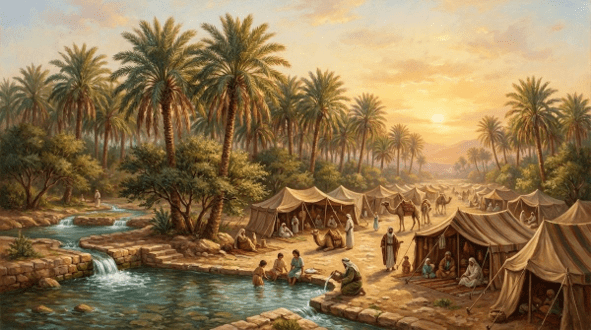
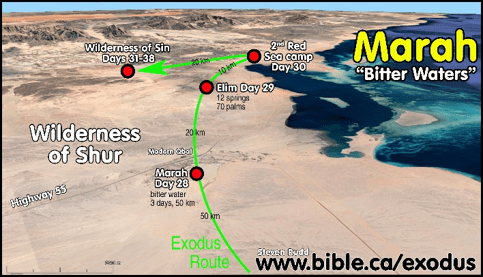
Exodus 15: 22 So Moses brought Israel from the Red Sea; then they went out into the Wilderness of Shur. And they went three days in the wilderness and found no water. 23 Now when they came to Marah, they could not drink the waters of Marah, for they were bitter. Therefore, the name of it was called Marah. 24 And the people complained against Moses, saying, “What shall we drink?” 25 So he cried out to the Lord, and the Lord showed him a tree. When he cast it into the waters, the waters were made sweet….27 Then they came to Elim, where there were twelve wells of water and seventy palm trees; so they camped there by the waters.

Two million people-three days-no water! And then the water they find is so bitter they can’t drink it. To say the Israelites are frustrated is a gross understatement. And of course, they begin taking out their frustrations on Moses.

Notice that Moses has never promised these people that everything would be easy. All Moses has done is to confront Pharaoh, delivering God’s messages and then obey God when He has commanded Moses to instruct the Israelites on the initiation of the Passover. Moses could never have dreamt up the Red Sea deliverance on his own; that was all God. And while Moses might be acting as leader, he has no control over the pillar of cloud leading the Israelites that turns to fire in the night. Again, these manifestations are all God’s doing, even though the Israelites really want to blame Moses.

The problem is that God has far more in mind than simply transporting the Israelites from point A to point B, for He knows the hearts of these people. At present, the Israelites spiritually are a ragtag bunch, with some of them vaguely remembering the tales about Abraham, Isaac, and Jacob while others have become so imbued with Egyptian religion that they are carrying figurines of various Egyptian deities, amulets, and other charms in their baggage. The ten plagues God has sent on Egypt have only served to convince the Israelites that they are special, but they have no understanding of their own sad spiritual state. Most of these people have no appreciation for the lessons God needs to teach them; instead, they really feel that they are good people and they are fine, thank you very much.

So, this crowd of people winds up at Marah with its bitter water representing the first great disappointment the Israelites will experience. And predictably, the Israelites explode in anger. After all, God has already proven that they are His favorites, so why is He troubling them this way? Centuries later, Paul will write to the Hebrews, spelling out the need for God’s discipline for His children: “My son, do not despise the chastening of the Lord, nor be discouraged when you are rebuked by Him; 6 For whom the Lord loves He chastens, and scourges every son whom He receives.”

7 If you endure chastening, God deals with you as with sons; for what son is there whom a father does not chasten? 8 But if you are without chastening, of which all have become partakers, then you are illegitimate and not sons. 9 Furthermore, we have had human fathers who corrected us, and we paid them respect. Shall we not much more readily be in subjection to the Father of spirits and live? 10 For they indeed for a few days chastened us as seemed best to them, but He for our profit, that we may be partakers of His holiness. 11 Now no chastening seems to be joyful for the present, but painful; nevertheless, afterward it yields the peaceable fruit of righteousness to those who have been trained by it.” (Hebrews 12:5-6)

It’s amazing but true that we learn far more from suffering than we do from peaceful easy situations. Suffering, if endured correctly, causes us to examine ourselves in the light of God’s holiness, allowing Him to teach us and correct us. When we are not facing problems, we presume we are fine by our own efforts, not realizing that God is the One who can give us true peace of heart and mind.

When I was growing up, I had a foster sister who came to live with us when she was sixteen after living for five years in an orphanage. One day, we were shopping when my sister pulled some stupid stunt. As we walked down the sidewalk, my mother began swatting my sister on her bottom-not hard, but repeatedly. When we stopped to cross the street, my sister looked at my mother in amazement and said, “You really love me, don’t you?” My mother replied, “Well, of course I do. Why are you asking?” My sister replied, “Well, up until now, you have disciplined your own children, but this is the first time you have disciplined me.” I am certain that my mother had told my sister she loved her many times previously; however, it was only when my sister was disciplined that she truly believed she was loved because someone cared enough to correct her.

God loves each one of us so much that He refuses to allow us to wallow in our own messes without correction. Proverbs 13:24 tells us, “Those who spare the rod of discipline hate their children. Those who love their children care enough to discipline them.” Note what God does during the middle of the Marah incident: God has Moses throw some branches into the water that sweetens it and then tells the Israelites, “If you diligently heed the voice of the Lord your God and do what is right in His sight, give ear to His commandments and keep all His statutes, I will put none of the diseases on you which I have brought on the Egyptians. For I am the Lord who heals you.”

God wants to make sure the Israelites understand the necessity of strict obedience, not obedience when they feel like it. Notice God’s conditions:

  1. If you diligently heed the voice of the Lord your God
  2. do what is right in His sight
  3. give ear to His commandments
  4. keep all His statutes

God is not giving the Israelites a free pass to sin but a road map to salvation. And it all starts with obedience. If you count the Israelites complying with the commands regarding Passover, this is the second major lesson in obedience that they are facing. But God knows there will be countless other such lessons before His people are ready to enter Canaan.

Could the Egyptians have avoided the plagues? Yes. Had Pharaoh relented, had he obeyed God and allowed the Israelites to leave, Egypt would never have been devastated, nor would all the firstborn sons and animals have died. Had Pharaoh taken the effort to inquire from Moses about the God who was ordering them to go worship, he might have found his way spiritually to worship the One True Living God. But Pharaoh had been raised to believe that he himself was divine, and he was not about to acknowledge any God who might displace him.

What is the lesson of Elim? Once the Israelites have endured the divine teaching moment at Marah, God gives them grace by allowing them to camp at Elim with its fresh water and palm trees. God does not test us forever, but gives us periods of divine rest if we will only obey Him. May God help us to patiently endure lessons in obedience so that we can reach the Elims in our lives!

PRAYER: Father God, thank You for loving us and caring for us. Lord, we praise You for Your lessons in obedience, for these lessons prove that we are Your beloved children and You are correcting us for our own good. We also praise You for giving us Elims, times of rest and refreshing. In the mighty and precious Name of King Jesus. Amen.
AUGUST 16, 2026 PEACE-HOW DO WE GET IT AND HOW CAN WE KEEP IT? #31 HOW DO YOU REMAIN PEACEFUL WHEN THINGS GO WRONG?

August 16, 2026

Exodus 15 Bitter Waters Made Sweet

22 So Moses brought Israel from the Red Sea; then they went out into the Wilderness of Shur. And they went three days in the wilderness and found no water. 23 Now when they came to Marah, they could not drink the waters of Marah, for they were bitter. Therefore the name of it was called Marah. 24 And the people complained against Moses, saying, “What shall we drink?” 25 So he cried out to the Lord, and the Lord showed him a tree. When he cast it into the waters, the waters were made sweet.

There He made a statute and an ordinance for them, and there He tested them, 26 and said, “If you diligently heed the voice of the Lord your God and do what is right in His sight, give ear to His commandments and keep all His statutes, I will put none of the diseases on you which I have brought on the Egyptians. For I am the Lord who heals you.”

27 Then they came to Elim, where there were twelve wells of water and seventy palm trees; so they camped there by the waters.

The waters at Marah were bitter and undrinkable. Were they full of sulfur or contaminated in some fashion? We don’t know; however, God showed Moses some wood that he cast into the water, making it sweet. There is an interesting theory that the waters of Marah were bitter due to the spiritual state of the Israelites. According to the narrative in the Book of Exodus, the Israelites had been wandering in the desert for three days without water. When they arrived at Marah, they found water, but it was undrinkably bitter, leading to their complaints and dissatisfaction.

The bitterness of the water symbolized their spiritual emptiness and lack of faith. They were described as being spiritually void and thirsty, which reflected their inner turmoil and discontent. This event served as a test of faith and highlighted the importance of trust in divine provision during challenging times.

God used this bitter water as a teaching point, promising that if the Israelites would obey God, following His commandment and keeping all His statutes, He would protect them from all the diseases He had brought on the Egyptians. God emphasized that He was the Healer.

Reading this story, we realize that the Israelites failed to hold their peace or to practice it; in fact, their peace was quite fragile, depending on everything going smoothly. As soon as anything went wrong, BANG! The Israelites were complaining again. Now God was informing His people that peace was conditional: obey Him and have health and peace. Refuse to obey God, and that peace would evaporate.

 Centuries later, Paul Rader would write a wonderful hymn referring to those bitter waters.

ONLY BELIEVE

1. Fear not, little flock, from the cross to the throne,
From death into life He went for His own;
All power in earth, all power above,
Is given to Him for the flock of His love.

Refrain:
Only believe, only believe;
All things are possible, only believe;
Only believe, only believe;
All things are possible, only believe.

2. Fear not, little flock, He goeth ahead,
Your Shepherd selecteth the path you must tread;
The waters of Marah He’ll sweeten for thee,
He drank all the bitter in Gethsemane.

3. Fear not, little flock, whatever your lot,
He enters all rooms, “the doors being shut,”
He never forsakes; He never is gone,
So count on His presence in darkness and dawn.

PRAYER: Father God, thank You for loving and caring for us. Lord, help us to remain peaceful even when our situation is bitter. In the mighty and precious Name of King Jesus. Amen.

AUGUST 15, 2026 PEACE-HOW DO WE GET IT AND HOW CAN WE KEEP IT? #30 WHEN GOD DELIVERS YOU AND GIVES YOU PEACE, CELEBRATE!

August 15, 2026

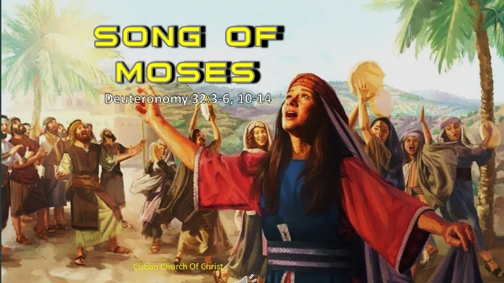
Exodus 15 The Song of Moses

1 Then Moses and the children of Israel sang this song to the Lord, and spoke, saying: “I will sing to the Lord,
For He has triumphed gloriously! The horse and its rider He has thrown into the sea!
2 The Lord is my strength and song, And He has become my salvation; He is my God, and I will praise Him; My father’s God, and I will exalt Him.
3 The Lord is a man of war; The Lord is His name.
4 Pharaoh’s chariots and his army He has cast into the sea; His chosen captains also are drowned in the Red Sea.
5 The depths have covered them; They sank to the bottom like a stone.

6 “Your right hand, O Lord, has become glorious in power; Your right hand, O Lord, has dashed the enemy in pieces.
7 And in the greatness of Your excellence You have overthrown those who rose against You;
You sent forth Your wrath; It consumed them like stubble.
8 And with the blast of Your nostrils The waters were gathered together; The floods stood upright like a heap; The depths congealed in the heart of the sea.
9 The enemy said, ‘I will pursue, I will overtake, I will divide the spoil; My desire shall be satisfied on them. I will draw my sword, My hand shall destroy them.’
10 You blew with Your wind, The sea covered them; They sank like lead in the mighty waters.

11 “Who is like You, O Lord, among the gods? Who is like You, glorious in holiness, Fearful in praises, doing wonders?
12 You stretched out Your right hand; The earth swallowed them.
13 You in Your mercy have led forth The people whom You have redeemed; You have guided them in Your strength To Your holy habitation.

14 “The people will hear and be afraid; Sorrow will take hold of the inhabitants of Philistia.
15 Then the chiefs of Edom will be dismayed; The mighty men of Moab, Trembling will take hold of them; All the inhabitants of Canaan will melt away.
16 Fear and dread will fall on them; By the greatness of Your arm They will be as still as a stone, Till Your people pass over, O Lord, Till the people pass over Whom You have purchased.
17 You will bring them in and plant them In the mountain of Your inheritance, In the place, O Lord, which You have made For Your own dwelling, The sanctuary, O Lord, which Your hands have established. 18 “The Lord shall reign forever and ever.”

19 For the horses of Pharaoh went with his chariots and his horsemen into the sea, and the Lord brought back the waters of the sea upon them. But the children of Israel went on dry land in the midst of the sea

The Song of Moses is one of the oldest hymns in the Bible. Celebrating the annihilation of Pharaoh’s army in the Red Sea, the verses praise God, encouraging the Israelites to trust Him as they move forward. What’s interesting is the mention of tribes the Israelites have yet to encounter-the Philistines, Edom, Moab, and all the inhabitants of Canaan. Because Egypt is a major trading center, the Israelites have certainly heard of these tribes and might even have met members of them in Egypt. At the same time, this song is also prophetic, looking forward to the time when the Israelites will enter Canaan and eventually defeat these tribes. In addition, the song makes a veiled reference to Jerusalem, speaking of it as “In the mountain of Your inheritance, in the place, O Lord, which You have made for Your own dwelling, The sanctuary, O Lord, which Your hands have established.”

The Song of Miriam

20 Then Miriam the prophetess, the sister of Aaron, took the timbrel in her hand; and all the women went out after her with timbrels and with dances. 21 And Miriam answered them:

“Sing to the Lord, For He has triumphed gloriously! The horse and its rider He has thrown into the sea!”

How grateful are we when God does something wonderful for us? Do we really thank God, or do we take His gifts for granted? Do we assume that we are God’s favorites and therefore He is obligated to take care of us? Centuries after Moses, the Apostle Paul will write to the Romans, telling them “…for all have sinned and fall short of the glory of God, being justified freely by His grace through the redemption that is in Christ Jesus.” Romans 3:23-24.

God did not deliver the Israelites because they were so virtuous; in fact, later, God had to rebuke them for persisting in worship of Egyptian gods. But God had made a promise to Abraham, Isaac, and Jacob, and He was and is and always will be the ultimate Promise-Keeper.

The greatest gift God has ever given the human race is salvation through the sacrifice of His son Christ Jesus on the cross at Calvary. Without that blood sacrifice, none of us would ever be allowed into heaven, but because of Jesus, when we believe in him, we have eternal life.

Today, think of all the times God has helped you and preserved you. Then thank Him and praise Him for His goodness and mercy.

PRAYER: Father God, thank You for loving us and caring for us. Lord, we thank You and praise You for all Your watchcare and Your goodness toward us. Thank You most of all for sending Jesus to die for our sins. Help us to continue to be grateful and praise You throughout our lives. In the mighty and precious Name of King Jesus. Amen.
AUGUST 14, 2026 PEACE-HOW DO WE GET IT AND HOW CAN WE KEEP IT? #29 GET MOVING!!!

August 14, 2026

 Exodus 14:15-31 Escape through the Red Sea

15 Then the Lord said to Moses, “Why are you crying out to me? Tell the people to get moving! 16 Pick up your staff and raise your hand over the sea. Divide the water so the Israelites can walk through the middle of the sea on dry ground. 17 And I will harden the hearts of the Egyptians, and they will charge in after the Israelites. My great glory will be displayed through Pharaoh and his troops, his chariots, and his charioteers. 18 When my glory is displayed through them, all Egypt will see my glory and know that I am the Lord!”

19 Then the angel of God, who had been leading the people of Israel, moved to the rear of the camp. The pillar of cloud also moved from the front and stood behind them. 20 The cloud settled between the Egyptian and Israelite camps. As darkness fell, the cloud turned to fire, lighting up the night. But the Egyptians and Israelites did not approach each other all night.

15 “Then the Lord said to Moses, “Why are you crying out to me? Tell the people to get moving!”  I love this verse, for God has used it so many times in my life. I am sitting in the midst of a great pity party; meanwhile, God wants me to get out of my comfortable hole and GET MOVING! “God, we don’t have enough money to do that project!” GET MOVING AND I WILL SEND THE MONEY!” “God, we don’t have enough equipment!” “USE WHAT YOU HAVE!” “
“God, one of our biggest donors just died!” “I OWN THE CATTLE ON A THOUSAND HILLS AND I WILL SUPPLY YOUR NEEDS! GET MOVING!” Forget your pity party; God isn’t about to participate or sympathize.

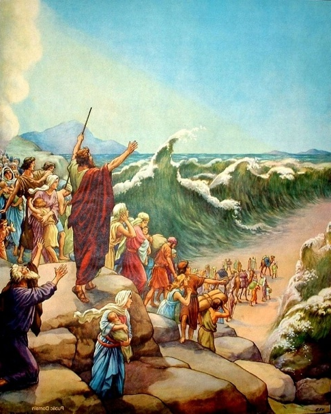
21 Then Moses raised his hand over the sea, and the Lord opened up a path through the water with a strong east wind. The wind blew all that night, turning the seabed into dry land. 22 So the people of Israel walked through the middle of the sea on dry ground, with walls of water on each side!

23 Then the Egyptians—all of Pharaoh’s horses, chariots, and charioteers—chased them into the middle of the sea. 24 But just before dawn the Lord looked down on the Egyptian army from the pillar of fire and cloud, and he threw their forces into total confusion. 25 He twisted their chariot wheels, making their chariots difficult to drive. “Let’s get out of here—away from these Israelites!” the Egyptians shouted. “The Lord is fighting for them against Egypt!”

26 When all the Israelites had reached the other side, the Lord said to Moses, “Raise your hand over the sea again. Then the waters will rush back and cover the Egyptians and their chariots and charioteers.” 27 So as the sun began to rise, Moses raised his hand over the sea, and the water rushed back into its usual place. The Egyptians tried to escape, but the Lord swept them into the sea. 28 Then the waters returned and covered all the chariots and charioteers—the entire army of Pharaoh. Of all the Egyptians who had chased the Israelites into the sea, not a single one survived.

29 But the people of Israel had walked through the middle of the sea on dry ground, as the water stood up like a wall on both sides. 30 That is how the Lord rescued Israel from the hand of the Egyptians that day. And the Israelites saw the bodies of the Egyptians washed up on the seashore. 31 When the people of Israel saw the mighty power that the Lord had unleashed against the Egyptians, they were filled with awe before him. They put their faith in the Lord and in his servant Moses.

Is there evidence for the destruction of Pharaoh’s army in the Red Sea? Archaeological evidence suggests a connection to the biblical account of the destruction of the Egyptian army at the Red Sea. Recent excavations at sites like Tell el-Maskhuta and Tell el-Dab’a have revealed abrupt abandonment layers that align with the timeline of the Exodus narrative, indicating a significant event occurred around that time. Additionally, findings of numerous bodies at a site believed to be linked to the Red Sea Crossing imply that a large army perished there, which supports the biblical story of the Egyptian forces being overwhelmed by returning waters.

Although there are no Egyptian records pointing precisely to the Exodus, this is understandable. Most societies, ancient or otherwise, are great at recording their victories but not their defeats, and many paintings and inscriptions vaunt the achievements of rulers, even if those achievements were actually quite meager. Misleading propaganda has flourished for millenia. The last thing any Pharaoh would want would be a record of the destruction of most of his chariots and soldiers.

There are many times when we can identify with the Israelites; we feel we are caught with no means of escape. One of the most comforting poems about this situation was penned by Annie Johnson Flint.

The Red Sea Place

by Annie Johnson Flint (1866-1932)


Annie Flint suffered from crippling arthritis most of her life. However, confined to a sickbed, she experienced the presence of the Lord in a way that brought forth sweet insights which she put down in poetry. One of her most uplifting poems is “The Red Sea Place”:

Have you come to the Red Sea place in your life,
Where, in spite of all you can do,
There is no way out, there is no way back,
There is no other way but through?

Then wait on the Lord with a trust serene
Till the night of your fear is gone;
He will send the wind, He will heap the floods,
When He says to your soul, “Go on”.

And His hand will lead you through – clear through –
Ere the watery walls roll down,
No foe can reach you, no wave can touch,
No mightiest sea can drown.

The tossing billows may rear their crests,
Their foam at your feet may break,
But over their bed you shall walk dry shod
In the path that your Lord will make.

In the morning watch, ‘neath the lifted cloud,
You shall see but the Lord alone,
When He leads you on from the place of the sea
To a land that you have not known.

And your fears shall pass as your foes have passed,
You shall be no more afraid;
You shall sing His praise in a better place,
A place that His hand has made.

PRAYER: Father God, thank You for loving us and caring for us. Lord, help us to continue to trust You even when we feel we have no means of escape. In the mighty and precious Name of King Jesus. Amen.

AUGUST 13, 2026 PEACE-HOW DO WE GET IT AND HOW CAN WE KEEP IT? #28 WHAT DOES IT MEAN TO “HOLD YOUR PEACE?”

August 13, 2026

Exodus 14 Then the Lord gave these instructions to Moses: 2 “Order the Israelites to turn back and camp by Pi-hahiroth between Migdol and the sea. Camp there along the shore, across from Baal-zephon. 3 Then Pharaoh will think, ‘The Israelites are confused. They are trapped in the wilderness!’ 4 And once again I will harden Pharaoh’s heart, and he will chase after you. I have planned this in order to display my glory through Pharaoh and his whole army. After this the Egyptians will know that I am the Lord!” So, the Israelites camped there as they were told.

Throughout Egypt, the firstborn sons and animals have died at midnight. Terrified, the Egyptians have loaded their Hebrew neighbors with all their precious possessions, demanding they leave as soon as possible. God has led the Israelites out into the wilderness; however, God is not yet through dealing with Pharaoh. God knows that Pharaoh will still change his mind and try to annihilate the Israelites. In addition, God still wants to display His glory through Pharaoh and his army, so that all of Egypt will have no doubts that they are dealing with the One True Living God. The Israelites have no idea what is about to happen, for they are about to witness a miracle that will dwarf anything God has already done.

The Egyptians Pursue Israel

5 When word reached the king of Egypt that the Israelites had fled, Pharaoh and his officials changed their minds. “What have we done, letting all those Israelite slaves get away?” they asked. 6 So Pharaoh harnessed his chariot and called up his troops. 7 He took with him 600 of Egypt’s best chariots, along with the rest of the chariots of Egypt, each with its commander. 8 The Lord hardened the heart of Pharaoh, the king of Egypt, so he chased after the people of Israel, who had left with fists raised in defiance. 9 The Egyptians chased after them with all the forces in Pharaoh’s army—all his horses and chariots, his charioteers, and his troops. The Egyptians caught up with the people of Israel as they were camped beside the shore near Pi-hahiroth, across from Baal-zephon.

10 As Pharaoh approached, the people of Israel looked up and panicked when they saw the Egyptians overtaking them. They cried out to the Lord, 11 and they said to Moses, “Why did you bring us out here to die in the wilderness? Weren’t there enough graves for us in Egypt? What have you done to us? Why did you make us leave Egypt? 12 Didn’t we tell you this would happen while we were still in Egypt? We said, ‘Leave us alone! Let us be slaves to the Egyptians. It’s better to be a slave in Egypt than a corpse in the wilderness!’”

Things look black for the Israelites as they see Pharaoh’s chariots approaching. Predictably, these people who were so willing to throw off slavery a few hours ago are now equally prepared to return to slavery if they can only save their lives. And of course, they begin blaming Moses as if they had not willingly participated in Passover and had not packed all their belongings and virtually danced out of Egypt.

When we consider this story, we might overlook how quickly Moses begins catching blame from the very people whom he is helping. Sometime between 1596 and 1599, William Shakespeare wrote his play “Henry IV, Part 2.” This line is spoken by King Henry IV in Act III, Scene I, reflecting the burdens and anxieties of leadership. Anybody who has ever led a group of people can readily identify with that statement! All that’s necessary for a group of people to begin complaining is a few soreheads with big mouths; before you know it, half the group might be weeping and wailing.

13 But Moses told the people, “Don’t be afraid. Just stand still and watch the Lord rescue you today. The Egyptians you see today will never be seen again. 14 The Lord himself will fight for you. Just stay calm.” The New King James Translation says, “13 And Moses said to the people, “Do not be afraid. Stand still, and see the salvation of the Lord, which He will accomplish for you today. For the Egyptians whom you see today, you shall see again no more forever. 14 The Lord will fight for you, and you shall hold your peace.”

While some translations read “stay calm,” I feel that’s too weak. I prefer the version that reads, “For the Egyptians whom you see today, you shall see again no more forever. 14 The Lord will fight for you, and you shall hold your peace.” So many times, in the course of ministry, we have faced seemingly insurmountable odds. People and organizations have failed us, funds have not arrived, staff whom we have sponsored have deserted at critical moments, we have faced health challenges or have lost loved ones and supporters in ministry, and it’s tempting to believe that all is completely lost. That’s when these two verses have assumed the greatest importance, for God has used these scriptures to both encourage us that He remains our Helper and rebuke us for our failing to trust Him fully.

Jeremiah 32:17 tells us, “Ah, Sovereign LORD, you have made the heavens and the earth by your great power and outstretched arm. Nothing is too hard for you.”  Deuteronomy 33:26-27 says, “There is no one like the God of Jeshurun, Who rides the heavens to help you, and in His excellency on the clouds. 27 The eternal God is your refuge, and underneath are the everlasting arms; He will thrust out the enemy from before you, and will say, ‘Destroy!’”

What does it mean “to hold your peace?” The phrase may have originated in 16th century England, where it referred to marriage ceremonies or court cases. In such matters, witnesses were enjoined to speak up if they had any new evidence or reason that a marriage should not take place or that the evidence in court was not correct. Here Moses is ordering the Israelites to stand still, stop complaining, and watch God work.

In this age of flourishing social media, holding one’s peace appears to be a lost art. Those complaining or publishing half-truths or complete lies sound off at will while those who actually know more remain silent rather than engage in useless arguments. Putting one’s mouth in gear before engaging the brain is an age-old problem. Proverbs 10:19: “In the multitude of words there wanteth not sin: but he that refraineth his lips is wise.” Proverbs 17:28: “Even a fool is considered wise if he keeps silent, and discerning when he holds his tongue.”

Do you feel caught in an unsolvable dilemma? Ask God for help and then hold your peace. Let God work, for His solutions always work while our attempts can fail miserably.

PRAYER: Father God, thank You for loving us and caring for us. Lord, please help us to trust You and hold our peace, realizing that You work in ways beyond our imaginings. In the mighty and precious Name of King Jesus. Amen.