Archive for August, 2026

AUGUST 12, 2026 PEACE-HOW DO WE GET IT AND HOW CAN WE KEEP IT? #27 IF GOD SENDS YOU ON A DETOUR, DON’T FORCE IT!

August 12, 2026

Exodus 13 Israel’s Wilderness Detour

17 When Pharaoh finally let the people go, God did not lead them along the main road that runs through Philistine territory, even though that was the shortest route to the Promised Land. God said, “If the people are faced with a battle, they might change their minds and return to Egypt.” 18 So God led them in a roundabout way through the wilderness toward the Red Sea.[Sea of Reeds] Thus the Israelites left Egypt like an army ready for battle.

In this day of the internet, rapid air travel, and interstate highways (motorways for those of you non-Americans), we are used to quick movements and quick answers. We fume if faced with delays of any kind. Even in ancient times, people wanted swift action. Undoubtedly, there were Israelites who felt that having been delivered from Egypt, they should take the quickest route to the Promised Land. But God knew better. God knew that He was dealing with people who were still used to being slaves and taking orders from overseers. Even if the Israelites hated their overseers for their cruelty, there was comfort in knowing that somebody else was making the major decisions. And although the Israelites were slaves, life was relatively comfortable and they knew what to expect.

How much were the Israelites suffering as slaves in Egypt? This website gives us the following information. https://www.historydefined.net/what-was-it-like-to-be-a-slave-in-ancient-egypt/

In ancient Egyptian society, slaves were often treated like other workers. While these workers didn’t have the freedoms that the upper class did, they were often highly-skilled workers with in-demand skills. 

What was fascinating about ancient Egyptian society was that the slaves could assimilate into society quite easily. Their social status wasn’t stigmatized in the way it was in other cultures and civilizations.

An excellent example of their privilege is the idea that they weren’t seen as a separate social group despite the distinction. Often slaves voluntarily gave up their freedoms due to debt, their criminal history, or were prisoners of war. 

Although their legal status wasn’t clear, they were still treated like ordinary citizens and even had access to owning private property. Dr. Cwiek also says that there were even cases of slaves marrying Egyptian women, which were said to have equal rights to men in ancient Egyptian society.

Archaeological evidence supports the idea that slaves were treated like average workers. For instance, the craftsman that built the pyramids often had to source stone blocks for building materials. 

Slaves were sent to these teams of stone workers to assist in the process, but it doesn’t appear that they were ill-treated or forced into inhumane conditions. They also worked closely with the craftsman as private servants in their homes in Deir el-Medina, a village of workers that built the tombs in the Valley of Kings near Luxor.

It makes sense that the working-class craftsman and the slaves were treated the same because neither could move freely around the country. Usually, both individuals had strict social roles and were expected to perform their duties; if anything, this comprised the social structure of ancient Egyptian civilization.

Were the Hebrews mistreated under the Egyptians? As Moses and Aaron kept requesting Pharaoh to allow the Israelites to leave to make sacrifices, Pharoah retaliated by increasing the harshness of the conditions under which the Israelites were working. God allowed those harsh conditions because He knew that as long as the Israelites were comfortable, they would never leave. It’s quite likely that some of the Israelite men had married Egyptian women and were actively practicing Egyptian religions. While the Israelites were shocked and horrified by the sudden deaths of the firstborn men and animals in Egypt, that shock might move them out of Egypt but it would never be enough to get them all the way to the Promised Land.

19 Moses took the bones of Joseph with him, for Joseph had made the sons of Israel swear to do this. He said, “God will certainly come to help you. When he does, you must take my bones with you from this place.”

Moses kept the promise Joseph had exacted from his descendants, that his bones should be carried back to the land of his birth. There might even have been people criticizing Moses for having gone to this trouble, but Moses did it anyway.

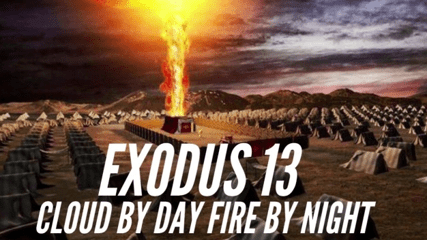
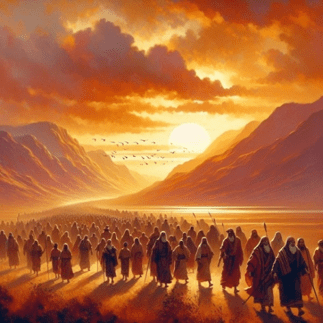
20 The Israelites left Succoth and camped at Etham on the edge of the wilderness. 21 The Lord went ahead of them. He guided them during the day with a pillar of cloud, and he provided light at night with a pillar of fire. This allowed them to travel by day or by night. 22 And the Lord did not remove the pillar of cloud or pillar of fire from its place in front of the people.
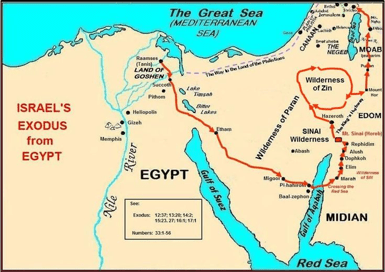
Now the people are on the edge of the wilderness. Enthusiasm is still running high as the Israelites remember all the treasures their Egyptian neighbors have forced on them, demanding for them to leave immediately. So far, things are going all right; however, God knows that Pharaoh is going to have a change of heart very soon. God is guiding His people so that they can travel both by night and day thanks to the pillar of cloud and fire. But God is sending them on a round about route. Why?

God knows that if He sends these people straight up the coast into Canaan, they will crumple as soon as the Philistine armies attack them. While these men might be strong from their slave labor, they still have a slave mentality and are likely to turn and run if attacked. God is protecting the Israelites and also gradually preparing them for life in the wilderness.

Delays are not denials. Centuries later, the prophet Habakkuk complains to God because he wants God to ACT NOW!!! God comforts Habakkuk by saying, “This vision is for a future time. It describes the end, and it will be fulfilled. If it seems slow in coming, wait patiently, for it will surely take place. It will not be delayed.”

Most of us are quite impatient. We want what we want when we want it, and we want peace now, not later! But part of the life of faith is learning to trust in God’s delays and to practice peace when the longed-for results seem to be hanging somewhere. God wants us to have peace even when things don’t seem to be working the way we desire, for practicing that peace demonstrates our faith that He can bring perfect solutions even when things appear disastrous.

PRAYER: Father God, thank You for loving us and caring for us. Lord, help us to trust when we cannot see and to accept Your peace even when You seem to be sending us on detours. In the mighty and precious Name of King Jesus. Amen.
AUGUST 11, 2026 PEACE-HOW DO WE GET IT AND HOW CAN WE KEEP IT? #26 SOMETIMES PEACE REQUIRES WORK AND SACRIFICE

August 11, 2026

Exodus 13 Dedication of the Firstborn

1 Then the Lord said to Moses, 2 “Dedicate to me every firstborn among the Israelites. The first offspring to be born, of both humans and animals, belongs to me.”

3 So Moses said to the people, “This is a day to remember forever—the day you left Egypt, the place of your slavery. Today the Lord has brought you out by the power of his mighty hand. (Remember, eat no food containing yeast.) 4 On this day in early spring, in the month of Abib, you have been set free. 5 You must celebrate this event in this month each year after the Lord brings you into the land of the Canaanites, Hittites, Amorites, Hivites, and Jebusites. (He swore to your ancestors that he would give you this land—a land flowing with milk and honey.) 6 For seven days the bread you eat must be made without yeast. Then on the seventh day, celebrate a feast to the Lord. 7 Eat bread without yeast during those seven days. In fact, there must be no yeast bread or any yeast at all found within the borders of your land during this time.

Even as God is delivering the Israelites, He is also ordering them on how they are to celebrate this deliverance annually for the rest of time. Why the proscription against yeast? Yeast has been used to brew beer as well as making bread and has come to symbolize the influence of Egypt. God wants His people to make a complete break with all things Egyptian, for only then will they have true spiritual peace.

8 “On the seventh day you must explain to your children, ‘I am celebrating what the Lord did for me when I left Egypt.’ 9 This annual festival will be a visible sign to you, like a mark branded on your hand or your forehead. Let it remind you always to recite this teaching of the Lord: ‘With a strong hand, the Lord rescued you from Egypt.’ [Let it remind you always to keep the instructions of the Lord on the tip of your tongue, because with a strong hand, the Lord rescued you from Egypt.] 10 So observe the decree of this festival at the appointed time each year.

God is not merely instituting a pleasant holiday but insisting that the Israelites should inculcate the reason for this celebration to their children so that those children will also pass it on to succeeding generations. And God also commands the Israelites to redeem firstborn sons and firstborn male animals with sacrifices. If an Israelite refuses to redeem a firstborn donkey, he cannot simply keep the donkey but must kill it by breaking its neck. There’s no allowance for half measures if they want God’s blessing and favor!

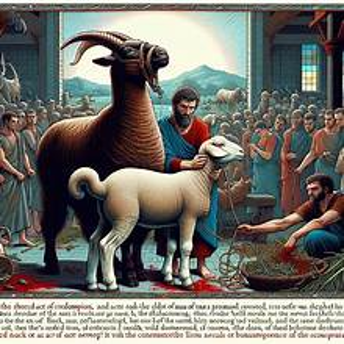
11 “This is what you must do when the Lord fulfills the promise he swore to you and to your ancestors. When he gives you the land where the Canaanites now live, 12 you must present all firstborn sons and firstborn male animals to the Lord, for they belong to him. 13 A firstborn donkey may be bought back from the Lord by presenting a lamb or young goat in its place. But if you do not buy it back, you must break its neck. However, you must buy back every firstborn son.

14 “And in the future, your children will ask you, ‘What does all this mean?’ Then you will tell them, ‘With the power of his mighty hand, the Lord brought us out of Egypt, the place of our slavery. 15 Pharaoh stubbornly refused to let us go, so the Lord killed all the firstborn males throughout the land of Egypt, both people and animals. That is why I now sacrifice all the firstborn males to the Lord—except that the firstborn sons are always bought back.’ 16 This ceremony will be like a mark branded on your hand or your forehead. It is a reminder that the power of the Lord’s mighty hand brought us out of Egypt.”

In a culture that values brands and special marks, God wants sacrifices for firstborn males to become a spiritual and mental mark. God knows that anything less than a definite act will result in gradual abandonment of the Passover ceremony with the Israelites forgetting its reason and purpose. God knows that people are lazy and forgetful. Left to their own devices, the Israelites will make a few half-hearted attempts and then allow Passover to become a pleasant memory while refusing to waste sacrificial animals to redeem their firstborn sons. God is instituting practices so dramatic that forever more, Israelite children will ask their parents the meaning of these acts. Only in this way will these people continue to commemorate God’s deliverance.

Most times when someone mentions God’s peace, we assume that it’s some kind of a divine blanket, floating down from heaven and wrapping itself around us. But look at the practices God is commanding the Israelites to follow. There must be no yeast in the household for seven days; that means no beer, no bread using yeast or any other product that involves yeast. Housewives must clean their households thoroughly. The family must eat unleavened bread for the entire seven days of the celebration, whether they like it or not. Firstborn sons and donkeys are to be redeemed by sacrificing prize lambs or young goats, an additional expense. And although God isn’t mentioning this now, later He will add that this week-long celebration is a time when people should only do necessary work such as caring for animals, cooking, etc.

God wants Passover to be a holy time, a time when people reflect on His goodness and His deliverance. The celebrations are not to be treated as an after thought but to be the primary purpose of families during this season. The Passover celebration is to mark the beginning of the year so that families will begin the new year by celebrating God and turning their hearts to Him. At the same time, God wants His people to have “sweat equity” in Passover, exerting themselves to practice the rituals rather than casually enjoying a meal, burping, wiping their mouths, and returning to life as usual.

As we read God’s instructions, we should search our own hearts. How ready are we to set aside time for God and to meditate on His goodness and His mercy? The movie Chariots of Fire tells the story of Eric Liddell, a passionate Christian athlete, who refused to run the 100-meter Olympic race for which he was most suited because the event would take place on a Sunday, choosing rather to run two other events later in the week. Liddell won a gold medal in the 400-meter race and a bronze in the 200-meter race in the 1924 Olympics in Paris, setting a record in the 400-meter race. At one point in the movie when Liddell is struggling with his decision, an American athlete quotes 1 Samuel 2:30 which says, “But I will honor those who honor me, and I will despise those who think lightly of me.”  Liddell accepts this advice as coming from God. Liddell went on to become a Christian missionary in China, dying with a brain tumor in a Chinese prison camp in 1945. But eye witness accounts of Liddell’s performance at that prison camp tell of his organizing classes and games for the children and his sterling example to people of all ages.

Remember 1 Samuel 2:30. Are we honoring God or expecting Him to honor us? Are we willing to invest the necessary effort into celebrating God’s goodness so that His peace might come, or do we feel entitled as if God should send His peace on demand? Eric Liddell made his choice and chose wisely. May God help us to choose wisely as well.

PRAYER: Father God, thank You for loving us and caring for us. Lord, help us to do those things that will allow You to bless us with Your Peace. In the mighty and precious Name of King Jesus. Amen.
AUGUST 10, 2026 PEACE-HOW DO WE GET IT AND HOW CAN WE KEEP IT? #25 WHEN GOD MOVES, WE ARE OBLIGATED TO THANK HIM!

August 10, 2026

Exodus 12:28 So the people of Israel did just as the Lord had commanded through Moses and Aaron. 29 And that night at midnight, the Lord struck down all the firstborn sons in the land of Egypt, from the firstborn son of Pharaoh, who sat on his throne, to the firstborn son of the prisoner in the dungeon. Even the firstborn of their livestock were killed. 30 Pharaoh and all his officials and all the people of Egypt woke up during the night, and loud wailing was heard throughout the land of Egypt. There was not a single house where someone had not died.

Moses had warned the Israelites, and they had applied the blood of their sacrifices to their doorposts, protecting themselves in the process. But throughout Egypt, first-born people and animals died. Nobody was spared, including the son Pharaoh thought would succeed him. God did just what He had promised.

Israel’s Exodus from Egypt

31 Pharaoh sent for Moses and Aaron during the night. “Get out!” he ordered. “Leave my people—and take the rest of the Israelites with you! Go and worship the Lord as you have requested. 32 Take your flocks and herds, as you said, and be gone. Go, but bless me as you leave.” 33 All the Egyptians urged the people of Israel to get out of the land as quickly as possible, for they thought, “We will all die!”

34 The Israelites took their bread dough before yeast was added. They wrapped their kneading boards in their cloaks and carried them on their shoulders. 35 And the people of Israel did as Moses had instructed; they asked the Egyptians for clothing and articles of silver and gold. 36 The Lord caused the Egyptians to look favorably on the Israelites, and they gave the Israelites whatever they asked for. So they stripped the Egyptians of their wealth!

37 That night the people of Israel left Rameses and started for Succoth. There were about 600,000 men, plus all the women and children. 38 A rabble of non-Israelites went with them, along with great flocks and herds of livestock. 39 For bread they baked flat cakes from the dough without yeast they had brought from Egypt. It was made without yeast because the people were driven out of Egypt in such a hurry that they had no time to prepare the bread or other food.

40 The people of Israel had lived in Egypt for 430 years. 41 In fact, it was on the last day of the 430th year that all the Lord’s forces left the land. 42 On this night the Lord kept his promise to bring his people out of the land of Egypt. So this night belongs to him, and it must be commemorated every year by all the Israelites, from generation to generation.

God sovereignly moved, and nobody could stop Him. Even Pharaoh demanded that the Israelites leave with all their possessions and animals. Egyptians who feared the God of the Israelites also accompanied them, along with the flocks and herds. One minute nothing was happening and the next, everybody was moving. Egyptians loaded their Israelite neighbors with riches, in hopes that they would leave even more swiftly.

Instructions for the Passover

43 Then the Lord said to Moses and Aaron, “These are the instructions for the festival of Passover. No outsiders are allowed to eat the Passover meal. 44 But any slave who has been purchased may eat it if he has been circumcised. 45 Temporary residents and hired servants may not eat it. 46 Each Passover lamb must be eaten in one house. Do not carry any of its meat outside, and do not break any of its bones. 47 The whole community of Israel must celebrate this Passover festival.

48 “If there are foreigners living among you who want to celebrate the Lord’s Passover, let all their males be circumcised. Only then may they celebrate the Passover with you like any native-born Israelite. But no uncircumcised male may ever eat the Passover meal. 49 This instruction applies to everyone, whether a native-born Israelite or a foreigner living among you.”

50 So all the people of Israel followed all the Lord’s commands to Moses and Aaron. 51 On that very day the Lord brought the people of Israel out of the land of Egypt like an army.

If Moses truly led 600,000 men out of Egypt, the total number of people fleeing might have been as many as two million. Remember that the Hebrews were multiplying so rapidly that the Egyptians were afraid of them; that’s part of the reason the Egyptians enslaved them. Attempts to determine the precise number fail, but the main thing is simple: God delivered a mass of people from slavery in an instant, and God commanded that the Israelites should celebrate this deliverance forever. Now these people would face new challenges, but they were freed from slavery.

Many times, we feel that peace is a passive thing; we RECEIVE peace but we don’t have to do anything in return. But if someone gives you a precious gift, aren’t you obligated to thank them for it? And what can possibly be more precious than peace of mind and heart? It is precisely that celebration that God indicated when He was giving the commands regarding the celebration of Passover.

During a traditional Passover celebration, four questions are asked and then answered. The questions are:

What makes this night different from all other nights? Answer: We were slaves to Pharaoh in Egypt, and the L-rd, our G‑d, took us out from there with a strong hand and with an outstretched arm….
1) On all nights we need not dip even once, on this night we do so twice? Slavery: The salt water into which we dip the 
karpas (potato, onion, or other vegetable) represents the tears we cried while in Egypt. Similarly, the charoset (fruit-nut paste) into which the bitter herbs are dipped reminds us of the cement we used to create the bricks in Egypt.

Freedom: Dipping food is considered a luxury; a sign of freedom — as opposed to the poor (and enslaved) who eat “dry” and un-dipped foods.


2) On all nights we eat 
chametz or matzah, and on this night only matzah? Slavery: Matzah was the bread of slaves and poor, it was cheap to produce and easy to make.

Freedom: Matzah also commemorates the fact that the bread did not have enough time to rise when the Jews hastily left Egypt.


3) On all nights we eat any kind of vegetables, and on this night 
maror? Slavery: The maror (bitter herbs) reminds us of the bitterness of slavery in Egypt.
4) On all nights we eat sitting upright or reclining, and on this night we all 
recline? Freedom: We commemorate our freedom by reclining on cushions like royalty.

  • Seder PlateWhat is the significance of the Seder plate items?
    The Seder plate is central to the Passover Seder, featuring symbolic foods that represent key themes of the Jewish experience. Each item on the plate carries deep historical and cultural significance, reflecting themes of freedom, suffering, and redemption.
  • Key Items on the Seder Plate:
  • Maror (Bitter Herb): Typically, horseradish, it symbolizes the bitterness of slavery endured by the Israelites in Egypt.
  • Charoset (Fruit Paste): A mixture of fruits, nuts, and wine, it represents the mortar used by the Israelite slaves to build structures for Pharaoh.
  • Karpas (Vegetable): Usually parsley, it signifies the initial flourishing of the Israelites in Egypt before their enslavement.
  • Z’roa (Shank Bone): A roasted lamb bone, symbolizing the Passover sacrifice made before the Exodus.
  • Beitzah (Egg): Represents the festival sacrifice and the cycle of life.
  • Chazeret (Second Bitter Herb): Often romaine lettuce, it serves as a reminder of the bitterness of slavery and is sometimes omitted.

The practices surrounding the Seder meal were intended to remind the Jews of God’s deliverance from slavery and of the freedom they enjoyed. God commanded the Jews to celebrate Passover annually so that succeeding generations would continue to remember God’s mighty acts and thank Him for His provision.

Even as the Jews were rushing out of Egypt, they had peace that God was working in their lives. In the midst of chaos, these people could celebrate peace.

Today you might be facing struggles and trials; yet, God has moved magnificently in your life. As you continue to praise God, His peace will fill your heart.

PRAYER: Father God, thank You for loving us and caring for us. Lord, help us to be grateful for Your provision even in the midst of chaos. For when we praise You, we will have peace. In the mighty and precious Name of King Jesus. Amen.
AUGUST 9, 2026 PEACE-HOW DO WE GET IT AND HOW CAN WE KEEP IT? #24 GOD CAN USE GREAT CATASTROPHES TO BRING PEACE

August 9, 2026

Exodus 12 The First Passover

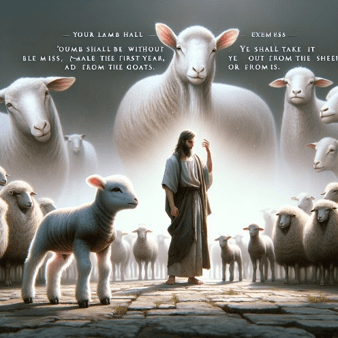
1 While the Israelites were still in the land of Egypt, the Lord gave the following instructions to Moses and Aaron: 2 “From now on, this month will be the first month of the year for you. 3 Announce to the whole community of Israel that on the tenth day of this month each family must choose a lamb or a young goat for a sacrifice, one animal for each household. 4 If a family is too small to eat a whole animal, let them share with another family in the neighborhood. Divide the animal according to the size of each family and how much they can eat. 5 The animal you select must be a one-year-old male, either a sheep or a goat, with no defects.

6 “Take special care of this chosen animal until the evening of the fourteenth day of this first month. Then the whole assembly of the community of Israel must slaughter their lamb or young goat at twilight. 7 They are to take some of the blood and smear it on the sides and top of the doorframes of the houses where they eat the animal. 8 That same night they must roast the meat over a fire and eat it along with bitter salad greens and bread made without yeast. 9 Do not eat any of the meat raw or boiled in water. The whole animal—including the head, legs, and internal organs—must be roasted over a fire. 10 Do not leave any of it until the next morning. Burn whatever is not eaten before morning.

All this time, the Israelites have been watching as God has sent increasingly severe plagues on Egypt; yet, Pharoah has continued to harden his heart. But now God is giving some of the most important instructions He will ever give His people, instructions that will be repeated and quoted down for centuries, even down to the present day.

2 “From now on, this month will be the first month of the year for you.” What is about to happen is so very important that God wants the Israelites to change their entire calendar so that it begins with Passover. Previously, the Israelites have used some form of lunar calendar beginning in the spring; however, now God is directing them that forever more, their year will begin by celebrating His deliverance and provision. God gives very specific instructions for the last meal these people will ever eat in Egypt, and these instructions are very unusual. The Israelites are to sacrifice a lamb or a young goat, smear its blood on the doorposts of their houses, and eat the roasted meat along with bitter salad greens and bread made without yeast, burning any left-overs. The animals are sacrificed and their blood is applied to cover the sins of the people and to indicate that those inside the home worship the One True Living God.

By following these instructions, the Israelites are assured that God will be with them.

11 “These are your instructions for eating this meal: Be fully dressed, wear your sandals, and carry your walking stick in your hand. Eat the meal with urgency, for this is the Lord’s Passover. 12 On that night I will pass through the land of Egypt and strike down every firstborn son and firstborn male animal in the land of Egypt. I will execute judgment against all the gods of Egypt, for I am the Lord! 13 But the blood on your doorposts will serve as a sign, marking the houses where you are staying. When I see the blood, I will pass over you. This plague of death will not touch you when I strike the land of Egypt.

14 “This is a day to remember. Each year, from generation to generation, you must celebrate it as a special festival to the Lord. This is a law for all time. 15 For seven days the bread you eat must be made without yeast. On the first day of the festival, remove every trace of yeast from your homes. Anyone who eats bread made with yeast during the seven days of the festival will be cut off from the community of Israel. 16 On the first day of the festival and again on the seventh day, all the people must observe an official day for holy assembly. No work of any kind may be done on these days except in the preparation of food.

17 “Celebrate this Festival of Unleavened Bread, for it will remind you that I brought your forces out of the land of Egypt on this very day. This festival will be a permanent law for you; celebrate this day from generation to generation. 18 The bread you eat must be made without yeast from the evening of the fourteenth day of the first month until the evening of the twenty-first day of that month. 19 During those seven days, there must be no trace of yeast in your homes. Anyone who eats anything made with yeast during this week will be cut off from the community of Israel. These regulations apply both to the foreigners living among you and to the native-born Israelites. 20 During those days you must not eat anything made with yeast. Wherever you live, eat only bread made without yeast.”

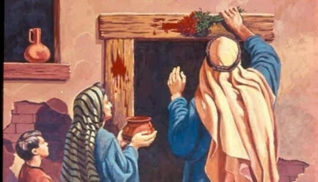
21 Then Moses called all the elders of Israel together and said to them, “Go, pick out a lamb or young goat for each of your families, and slaughter the Passover animal. 22 Drain the blood into a basin. Then take a bundle of hyssop branches and dip it into the blood. Brush the hyssop across the top and sides of the doorframes of your houses. And no one may go out through the door until morning. 23 For the Lord will pass through the land to strike down the Egyptians. But when he sees the blood on the top and sides of the doorframe, the Lord will pass over your home. He will not permit his death angel to enter your house and strike you down.

24 “Remember, these instructions are a permanent law that you and your descendants must observe forever. 25 When you enter the land the Lord has promised to give you, you will continue to observe this ceremony. 26 Then your children will ask, ‘What does this ceremony mean?’ 27 And you will reply, ‘It is the Passover sacrifice to the Lord, for he passed over the houses of the Israelites in Egypt. And though he struck the Egyptians, he spared our families.’” When Moses had finished speaking, all the people bowed down to the ground and worshiped.

For weeks or even months, the Israelites have watched as God has sent increasingly severe plagues on the land of Egypt and the Egyptians. At a point, God has drawn a line between the Israelites and the Egyptians, leaving the Israelites untouched as the Egyptians have suffered the complete destruction of their land and their agriculture. Now God is ready to deal the final blow to Pharaoh’s pride by killing all the first-born humans and animals in Egypt while delivering the Israelites. God knows that the Egyptians will be so terrorized that they will load the Israelites up with treasure, begging them to leave as quickly as possible. Even though Pharaoh might sit fuming in his palace, his people are completely fed up.

C. H. Spurgeon once preached a sermon in which he said that when God was prepared to bring the Israelites out of Egypt, nobody could possibly delay that deliverance for a single instant. Moses is literally giving the Israelites their marching orders, even as he instructs them on the way to protect their families. God is about to do something the Israelites have believed impossible, and all they have to do is to cooperate.

There are many times in our lives when God has shown Himself mighty and has solved seemingly impossible problems. We are currently on home leave in the U. S. Two nights ago, the left rear tire on our rental car burst. When we contacted the rental company for assistance, we rapidly realized involving them might make things worse rather than better. This is the third vehicle we have had from this company since late June. The first vehicle stopped working in the midst of a trip. The second vehicle was fine; however, its registration was about to expire, and we had to exchange it for our current vehicle. Now we were facing this tire problem. Blessedly, a friend suggested a large tire service that turned out to furnish roadside assistance, even though our vehicle was 35 miles from their office. Within a few hours, a team went to the rural area where we had left the car, replaced the ruined tire with a new one, and also inspected the brakes on that side to ensure there was no problem. We were able to return to the tire garage, get the tire balanced, and settle a very reasonable bill, all with far less hassle than we would have endured otherwise. Now we have peace of mind that we can continue to drive this vehicle.

It’s a funny thing about peace; we generally fail to appreciate peace until we’re in the midst of trouble. Only when our problems are solved do we realize the wonderful stillness of peace by comparing it with the turmoil we have just suffered.

On the night he was betrayed, Jesus told his disciples “I have told you these things, so that in me you may have peace. In this world you will have trouble. But take heart! I have overcome the world.” (John 16:33) When we know Jesus, we can have peace, even when things are difficult.

PRAYER: Father God, thank You for loving us and caring for us. Lord, help us to trust You even when things are dangerous or difficult, for You are the Peace-giver. In the mighty and precious Name of King Jesus. Amen.
AUGUST 8, 2026 PEACE-HOW DO WE GET IT AND HOW CAN WE KEEP IT? #23 IS THERE PEACE IN THE MIDDLE OF TRAGEDY?

August 8, 2026

Exodus 11: Death for Egypt’s Firstborn

11 Then the Lord said to Moses, “I will strike Pharaoh and the land of Egypt with one more blow. After that, Pharaoh will let you leave this country. In fact, he will be so eager to get rid of you that he will force you all to leave. 2 Tell all the Israelite men and women to ask their Egyptian neighbors for articles of silver and gold.” 3 (Now the Lord had caused the Egyptians to look favorably on the people of Israel. And Moses was considered a very great man in the land of Egypt, respected by Pharaoh’s officials and the Egyptian people alike.)

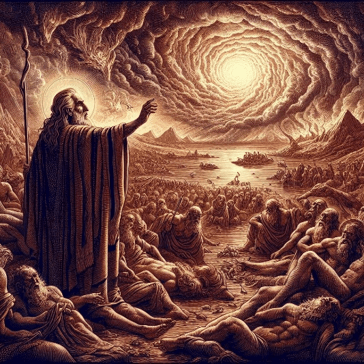
4 Moses had announced to Pharaoh, “This is what the Lord says: At midnight tonight, I will pass through the heart of Egypt. 5 All the firstborn sons will die in every family in Egypt, from the oldest son of Pharaoh, who sits on his throne, to the oldest son of his lowliest servant girl who grinds the flour. Even the firstborn of all the livestock will die. 6 Then a loud wail will rise throughout the land of Egypt, a wail like no one has heard before or will ever hear again. 7 But among the Israelites it will be so peaceful that not even a dog will bark. Then you will know that the Lord makes a distinction between the Egyptians and the Israelites. 8 All the officials of Egypt will run to me and fall to the ground before me. ‘Please leave!’ they will beg. ‘Hurry! And take all your followers with you.’ Only then will I go!” Then, burning with anger, Moses left Pharaoh.

9 Now the Lord had told Moses earlier, “Pharaoh will not listen to you, but then I will do even more mighty miracles in the land of Egypt.” 10 Moses and Aaron performed these miracles in Pharaoh’s presence, but the Lord hardened Pharaoh’s heart, and he wouldn’t let the Israelites leave the country.

Moses knew this day was coming, but now he is grieving! Moses was born in Egypt, raised as an Egyptian noble, and given one of the finest educations available. In some respects, for Moses, returning to Egypt was a homecoming, even if a bitter one. But as God’s punishments for Pharaoh’s pride and Egyptian fetish worship have continued to escalate, Moses has realized how this situation must end. Moses has watched as the country of his birth has been destroyed, leaving nothing except the people, many of whose families Moses has known for decades. Now Moses is forced to issue a final warning to Pharaoh: at midnight tonight the Angel of Death will pass through Egypt, killing every Egyptian first-born, whether human or animal, including the crown prince in the palace. But God will protect the Hebrews and “it will be so peaceful that not even a dog will bark.”

At first, the mention of dogs refusing to bark might seem strange; however, animals are far more spiritually sensitive than people. God knows that when the Death Angel passes over Egypt, every single dog in Egypt that does not die will be howling as loudly and insistently as possible.

By now the Egyptians have no peace whatsoever, and now word of this last threat is spreading throughout Egyptian society. As Israelites visit their neighbors, requesting anything they can give, those neighbors quickly go through their dwellings, gathering jewelry, clothing, and anything else precious in hopes that in so doing, they will avoid the death plague.

As I am writing these words, news of the tragic fires around Spokane, Washington, and Boise, Idaho are coming. The destruction is unimaginable, with hundreds of homes gone and thousands of people left destitute. What peace can one find in the midst of such horrors? Look at the Israelites.

First, the ancient Israelites could thank God that He spared them the worst of the plagues and that their families and livestock remained alive. Second, these people were beginning to realize that God really was all-powerful and that He would do exactly as He had promised. Although still enslaved, these people had the hope that God would work on their behalf and that they would escape their slavery.

“Great!” you say. “But what about all those people in Washington and Idaho? Where is God’s peace in the midst of these fires?”

First, these people are alive. Centuries ago, Solomon wrote in Ecclesiastes 9:4 “But all who are among the living have hope, because a living dog is better than a dead lion.” Even though these poor people have lost all their possessions, they are alive and have hope that God will move others throughout the country to help them. Second, thousands, if not millions of people, are now praying for their well-being and their safety. “So what?” you sneer. “Big deal!” All this focused prayer is a much bigger deal than you realize. We never know how much God can do, even when situations appear hopeless. Once we begin to pray blessings over those who have lost everything, God can work to heal individuals and families and restore righteousness to the land. When we pray, God can also heal the land.

Deuteronomy 11:10-12 tells us “The land you’re about to enter and take possession of isn’t like the land you left in Egypt. There you used to plant your seed, and you had to water it like a vegetable garden. The land you’re about to enter is a land with hills and valleys, watered by rain from the sky. It is a land the Lord your God cares about. He watches over it all year long.”

We make a terrible mistake if we assume that God does not care for the lands we occupy!!! God cares far more than we do, and God passionately wants to restore the land. As God restores the land, He can also restore peace to those living there.

How can we pray for those suffering from these tragedies? Pray for God’s blessings and His anointing to flow over the land, penetrating it down to the center of the earth and up to the highest heaven! Pray for God’s blessings and His anointing to saturate everyone hit by these tragedies, that God will correct, guide, and restore in all the ways He can. And above all else, pray that God’s Kingdom will truly come and His Will will be completely done in the lives of all involved.

PRAYER: Father God, thank You for loving us and caring for us. Lord, words fail us when we consider the tragedies striking people throughout the world. Please heal, restore, guide, and bring to full repentance and salvation all involved. Send revival!!! In the mighty and precious Name of King Jesus. Amen.
AUGUST 7, 2026 PEACE-HOW DO WE GET IT AND HOW CAN WE KEEP IT? #22 WHERE IS GOD IN THE DARKNESS?

August 7, 2026

Exodus 10 A Plague of Darkness

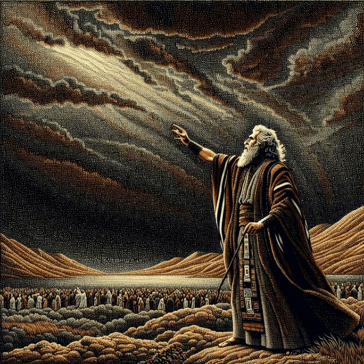
21 Then the Lord said to Moses, “Lift your hand toward heaven, and the land of Egypt will be covered with a darkness so thick you can feel it.” 22 So Moses lifted his hand to the sky, and a deep darkness covered the entire land of Egypt for three days. 23 During all that time the people could not see each other, and no one moved. But there was light as usual where the people of Israel lived.

This time, Moses doesn’t give any warning; he reaches out toward heaven and darkness descends. But this isn’t the ordinary darkness of night, for this is deep darkness, a total absence of starlight, moonlight, or even hope. When the Egyptians try to light lamps, the lamps refuse to function. The Egyptians feel as if they have ten tons of weight on their chests, with the presence of evil oppressing them spiritually. I John 1:5 tells us, “God is light and in Him is no darkness at all.” But when God withdraws His presence, the darkness is total. Guzik points out “This was a dramatic show of greatness over the prominent Egyptian god Ra, thought to be the sun god.”

Those Israelites who live close enough to the borders of Goshen can look at the utter darkness and feel the cold of evil, but they aren’t suffering. While the Egyptians are groping in the dark, the Israelites are rejoicing in the light of God.

24 Finally, Pharaoh called for Moses. “Go and worship the Lord,” he said. “But leave your flocks and herds here. You may even take your little ones with you.”

25 “No,” Moses said, “you must provide us with animals for sacrifices and burnt offerings to the Lord our God. 26 All our livestock must go with us, too; not a hoof can be left behind. We must choose our sacrifices for the Lord our God from among these animals. And we won’t know how we are to worship the Lord until we get there.”

27 But the Lord hardened Pharaoh’s heart once more, and he would not let them go. 28 “Get out of here!” Pharaoh shouted at Moses. “I’m warning you. Never come back to see me again! The day you see my face, you will die!”

29 “Very well,” Moses replied. “I will never see your face again.”

 You have to hand it to Pharaoh; he’s nothing if not persistent, even if he’s persisting in stupidity. Once more, Pharaoh tries to compromise, bargaining with God, and once more Moses refuses. Pharoah gets so angry, he warns Moses never to return on pain of death. While this sounds like a curse, Moses responds, agreeing that Pharoah will never see him again. Eventually a time will come when Pharaoh might wish for Moses to return, but as he rejects Moses, he is also rejecting Moses’ God.

At this point, Pharaoh really is a special kind of stupid. Egypt is in ruins, its people destitute, its agriculture completely devastated. The Egyptians are living in torment while the Israelites are enjoying God’s favor, His light, and His protection. But Pharaoh is willing to allow Egypt to be reduced to an ash heap as long as he still rules the ash heap. The Egyptians have no peace while the Israelites are experiencing the deep abiding peace of God.

There are times when God grants us peace in the middle of storms. Several years ago, we endured a tribal war. While there were many frightening incidences, God gave us the peace necessary to keep working and expand the services our facility was offering. It’s no exaggeration to say that God built a hospital in the middle of that conflict. We learned that when we are in the center of God’s will for our lives, He gives His peace, no matter what might be happening around us.

PRAYER: Father God, thank You for loving us and caring for us. Lord, help us to continue to follow Your leading, knowing that You can give deep and abiding peace, no matter our outward circumstances. In the mighty and precious Name of King Jesus. Amen.  
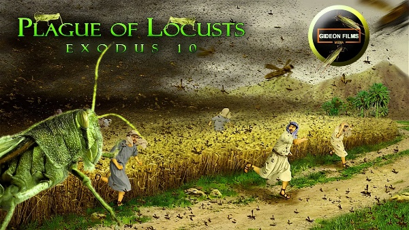
AUGUST 6, 2026 PEACE-HOW DO WE GET IT AND HOW CAN WE KEEP IT? #21 WHAT DOES “A PLAGUE OF LOCUSTS” REALLY MEAN?

August 6, 2026

Exodus 10 A Plague of Locusts

1Then the Lord said to Moses, “Return to Pharaoh and make your demands again. I have made him and his officials stubborn so I can display my miraculous signs among them. 2 I’ve also done it so you can tell your children and grandchildren about how I made a mockery of the Egyptians and about the signs I displayed among them—and so you will know that I am the Lord.”

All along, God has been demonstrating His mighty power. Many of the Israelites and Egyptians have come to believe in that power; however, some Egyptians and Israelites have continued to doubt whether or not He can really do whatever He chooses. God wants to demonstrate His power so dramatically that the Israelites-and Egyptians-will continue to tell the story for generations to come. Remember that God’s intention is never merely to deliver the Hebrews but also to bring the Egyptians to a saving knowledge of Him. Much of Egyptian agriculture lies in ruins, and now God is about to deal a death blow to that sector.

3 So Moses and Aaron went to Pharaoh and said, “This is what the Lord, the God of the Hebrews, says: How long will you refuse to submit to me? Let my people go, so they can worship me. 4 If you refuse, watch out! For tomorrow I will bring a swarm of locusts on your country. 5 They will cover the land so that you won’t be able to see the ground. They will devour what little is left of your crops after the hailstorm, including all the trees growing in the fields. 6 They will overrun your palaces and the homes of your officials and all the houses in Egypt. Never in the history of Egypt have your ancestors seen a plague like this one!” And with that, Moses turned and left Pharaoh.

7 Pharaoh’s officials now came to Pharaoh and appealed to him. “How long will you let this man hold us hostage? Let the men go to worship the Lord their God! Don’t you realize that Egypt lies in ruins?”

Well, by this time, Pharaoh’s officials are looking around at the wreckage of what was once the most prosperous and powerful country in the Middle East. No matter what Pharaoh thinks, these men realize that the God of the Hebrews is well able to complete the destruction of Egypt. These men are probably on their knees, prostrating themselves in supplication.

8 So Moses and Aaron were brought back to Pharaoh. “All right,” he told them, “Go and worship the Lord your God. But who exactly will be going with you?”

9 Moses replied, “We will all go—young and old, our sons and daughters, and our flocks and herds. We must all join together in celebrating a festival to the Lord.”

10 Pharaoh retorted, “The Lord will certainly need to be with you if I let you take your little ones! I can see through your evil plan. 11 Never! Only the men may go and worship the Lord, since that is what you requested.” And Pharaoh threw them out of the palace.

12 Then the Lord said to Moses, “Raise your hand over the land of Egypt to bring on the locusts. Let them cover the land and devour every plant that survived the hailstorm.”

13 So Moses raised his staff over Egypt, and the Lord caused an east wind to blow over the land all that day and through the night. When morning arrived, the east wind had brought the locusts. 14 And the locusts swarmed over the whole land of Egypt, settling in dense swarms from one end of the country to the other. It was the worst locust plague in Egyptian history, and there has never been another one like it. 15 For the locusts covered the whole country and darkened the land. They devoured every plant in the fields and all the fruit on the trees that had survived the hailstorm. Not a single leaf was left on the trees and plants throughout the land of Egypt.

16 Pharaoh quickly summoned Moses and Aaron. “I have sinned against the Lord your God and against you,” he confessed. 17 “Forgive my sin, just this once, and plead with the Lord your God to take away this death from me.”

18 So Moses left Pharaoh’s court and pleaded with the Lord. 19 The Lord responded by shifting the wind, and the strong west wind blew the locusts into the Red Sea. Not a single locust remained in all the land of Egypt. 20 But the Lord hardened Pharaoh’s heart again, so he refused to let the people go.

The locusts consume every leaf and every bit of fruit left after the horrible hail storm. The poor Egyptians look around their country and realize that they have nothing left. Finally, Pharaoh relents; however, notice that when Pharaoh is confessing, he makes no promises of releasing the Israelites whatsoever. Pharaoh is still convinced that somehow, he’s going to prove more powerful than the God that is steadily dismantling his country. Pharaoh has been programed to believe in his own divinity, and he’s not about to let go of that fundamental belief. The demons are still whispering lies to Pharaoh.

The Enduring Word Bible Commentary makes these points:

When Moses first came to Pharaoh, Pharaoh said: Who is the LORD, that I should obey His voice to let Israel go? (Exodus 5:2). The fact that Pharaoh still would not submit to the LORD showed that he didn’t know who the LORD was yet. This was despite the fact that the LORD God had made it clear that He was:

· Greater than the god Khnum (the guardian of the Nile).

· Greater than the god Hapi (the spirit of the Nile).

· Greater than the god Osiris (who had the Nile as his bloodstream).

· Greater than the goddess Heqt (the frog-goddess of fertility).

· Greater than the goddess Hathor (a cow-like mother goddess).

· Greater than the god Imhotep (the god of medicine).

· Greater than Nut (the sky goddess).

· Able to stop the whole worship of the Egyptian gods with loathsome lice and swarms of insects.

Despite all this, Pharaoh showed he still did not know the LORD God. Therefore, God would show him more.

Now the locusts ate every herb of the land and all the fruit of the trees which the hail had left: Yahweh showed Himself greater than the Egyptian god Osiris, thought to be the protector of crops.

Enduring Word continues to point out that “God did for Pharaoh what He will do in our lives – expose and topple every false god. When we trust in these gods it hurts to see them fall, but it is always best to have them exposed.”

Where’s the peace in this situation? Of course, the Egyptians have no peace, for their country is in a shambles. But for the Israelites sitting in the Land of Goshen, each time another plague hits only the Egyptians, sparing them, they stand amazed at God’s protection. For 400 years, the Israelites have heard the stories about Abraham, Isaac, Jacob, and Joseph, and frankly, they have assumed these tales were exaggerations. Now they begin to realize that the events in those stories really happened, and the God of their forefathers is the same God who is helping them now.

God is very economical; He’s always using one action to accomplish the maximum number of results. Look at these plagues: God wants the Egyptians to learn about Him, trusting Him rather than powerless deities. God is also using the plagues to convince the Egyptians to release the Israelites; in fact, eventually, the Egyptians will load the Israelites with all their treasures just to get them out of Egypt. God also is humbling Pharaoh and impacting the economy of Egypt as well as its military power. Who knows what wars of conquest the Egyptians might have embarked on had their economy not been severely damaged? And God wants His people to trust Him and to find their peace in Him, rather than in comfortable surroundings, for God knows the harsh conditions the Israelites will face once they leave Egypt.

As I am writing these meditations, people in America, Canada, and Europe are enduring unimaginable losses due to wildfires. Many have had to flee for their lives, losing everything dear to them apart from their lives. These people might justifiably demand to know where God’s peace is in the midst of these disasters. Yet, God is there and God remains faithful.

Hear God’s promises: Isaiah 43: But now, O Jacob, listen to the Lord who created you. O Israel, the one who formed you says, “Do not be afraid, for I have ransomed you. I have called you by name; you are mine. 2 When you go through deep waters, I will be with you. When you go through rivers of difficulty, you will not drown. When you walk through the fire of oppression, you will not be burned up; the flames will not consume you. 3 For I am the Lord, your God, the Holy One of Israel, your Savior. I gave Egypt as a ransom for your freedom; I gave Ethiopia and Seba in your place. 4 Others were given in exchange for you. I traded their lives for yours because you are precious to me. You are honored, and I love you.

Even when things are going wrong, God remains constant, faithful, and all-powerful. May God help us trust Him.

PRAYER: Father God, thank You for loving us and caring for us. Lord, help us to trust You, even when things are falling apart around us. In the mighty and precious Name of King Jesus. Amen.
AUGUST 5, 2026 PEACE-HOW DO WE GET IT AND HOW CAN WE KEEP IT? #20 THE MORE WE SEE OF GOD’S POWER, THE MORE WE CAN REST IN HIS PEACE

August 5, 2026

Exodus 9 A Plague of Hail

13 Then the Lord said to Moses, “Get up early in the morning and stand before Pharaoh. Tell him, ‘This is what the Lord, the God of the Hebrews, says: Let my people go, so they can worship me. 14 If you don’t, I will send more plagues on you and your officials and your people. Then you will know that there is no one like me in all the earth. 15 By now I could have lifted my hand and struck you and your people with a plague to wipe you off the face of the earth. 16 But I have spared you for a purpose—to show you my power and to spread my fame throughout the earth. 17 But you still lord it over my people and refuse to let them go. 18 So tomorrow at this time I will send a hailstorm more devastating than any in all the history of Egypt. 19 Quick! Order your livestock and servants to come in from the fields to find shelter. Any person or animal left outside will die when the hail falls.’”

God is issuing a stern warning to Pharaoh, informing him that God could already have destroyed him. God knows that some Egyptian officials now fear Him, so God gives these people the chance to save their livestock and their servants.

20 Some of Pharaoh’s officials were afraid because of what the Lord had said. They quickly brought their servants and livestock in from the fields. 21 But those who paid no attention to the word of the Lord left theirs out in the open.

22 Then the Lord said to Moses, “Lift your hand toward the sky so hail may fall on the people, the livestock, and all the plants throughout the land of Egypt.”

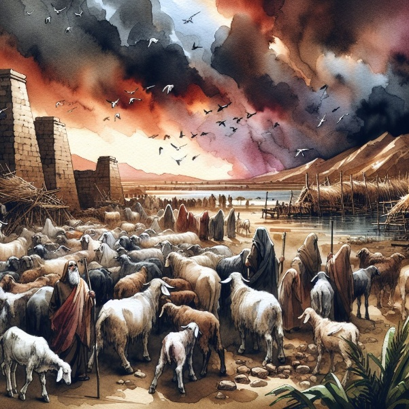
23 So Moses lifted his staff toward the sky, and the Lord sent thunder and hail, and lightning flashed toward the earth. The Lord sent a tremendous hailstorm against all the land of Egypt. 24 Never in all the history of Egypt had there been a storm like that, with such devastating hail and continuous lightning. 25 It left all of Egypt in ruins. The hail struck down everything in the open field—people, animals, and plants alike. Even the trees were destroyed. 26 The only place without hail was the region of Goshen, where the people of Israel lived.

27 Then Pharaoh quickly summoned Moses and Aaron. “This time I have sinned,” he confessed. “The Lord is the righteous one, and my people and I are wrong. 28 Please beg the Lord to end this terrifying thunder and hail. We’ve had enough. I will let you go; you don’t need to stay any longer.”

Wow! Pharoah sounds repentant. At this point, Moses might be hopeful that this whole ordeal is going to end peacefully.

29 “All right,” Moses replied. “As soon as I leave the city, I will lift my hands and pray to the Lord. Then the thunder and hail will stop, and you will know that the earth belongs to the Lord. 30 But I know that you and your officials still do not fear the Lord God.”

31 (All the flax and barley were ruined by the hail, because the barley had formed heads and the flax was budding. 32 But the wheat and the emmer wheat [spelt] were spared, because they had not yet sprouted from the ground.)

33 So Moses left Pharaoh’s court and went out of the city. When he lifted his hands to the Lord, the thunder and hail stopped, and the downpour ceased. 34 But when Pharaoh saw that the rain, hail, and thunder had stopped, he and his officials sinned again, and Pharaoh again became stubborn. 35 Because his heart was hard, Pharaoh refused to let the people leave, just as the Lord had predicted through Moses.

How unusual was this storm? Guzak tells us, “Rainfall comes so occasionally in Upper Egypt that the prediction of a severe hailstorm accompanied by a violent electrical storm must have been greeted with much skepticism.” (Kaiser)

a. There was hail, and fire mingled with the hail, so very heavy that there was none like it: This was perhaps the most frightening plague thus far. The Egyptians must have believed that the wrath of God was poured down from heaven in all severity.

i. So there was hail, and fire mingled with the hail: “A strange mixture; a miracle within a miracle, saith Rabbi Solomon. Fire and water made a peace betwixt themselves, that they might obey the will of their Creator.” (Trapp)

b. The hail struck throughout the whole land of Egypt: This plague was directed against several Egyptian gods. Notable among them was Nut, the sky goddess.

Whether or not Pharaoh respects God at this point, Moses, Aaron, the Israelites, and many of the Egyptians KNOW that this God is far mightier than any of the Egyptian deities. For the Israelites, each time God demonstrates his power over another part of His creation, that respect and awe continue to grow, along with a peace that this God can do anything He desires. The Egyptians, on the other hand, are undoubtedly distraught, for their cherished deities have proven powerless in the face of direct attacks against their attributes. So the Israelites continue to enjoy more peace while the Egyptians become increasingly fearful.

Studying God and His mighty power helps build our trust and leads to a deep abiding peace, the peace that passes understanding. But we need to meditate on God’s Word and His work, for a casual glance between text messages is totally insufficient. May God help us so that we will spend time contemplating God’s handiwork.

PRAYER: Father God, thank You for loving us and caring for us. Lord, help us to study Your work and meditate on Your Word, for then we will have peace. In the mighty and precious Name of King Jesus. Amen.
AUGUST 4, 2026 PEACE-HOW DO WE GET IT AND HOW CAN WE KEEP IT? #19 WE LOSE EVERY CHANCE FOR PEACE IF WE HARDEN OUR HEARTS

August 4, 2026

Exodus 9 A Plague against Livestock

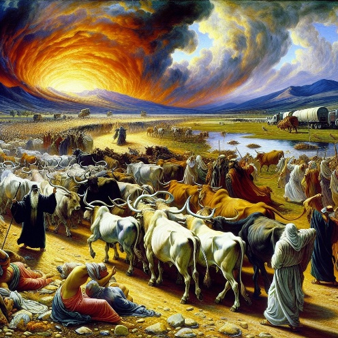
9 “Go back to Pharaoh,” the Lord commanded Moses. “Tell him, ‘This is what the Lord, the God of the Hebrews, says: Let my people go, so they can worship me. 2 If you continue to hold them and refuse to let them go, 3 the hand of the Lord will strike all your livestock—your horses, donkeys, camels, cattle, sheep, and goats—with a deadly plague. 4 But the Lord will again make a distinction between the livestock of the Israelites and that of the Egyptians. Not a single one of Israel’s animals will die! 5 The Lord has already set the time for the plague to begin. He has declared that he will strike the land tomorrow.’”

6 And the Lord did just as he had said. The next morning all the livestock of the Egyptians died, but the Israelites didn’t lose a single animal. 7 Pharaoh sent his officials to investigate, and they discovered that the Israelites had not lost a single animal! But even so, Pharaoh’s heart remained stubborn, and he still refused to let the people go.

This time, God warns Pharaoh and all the Egyptians of the next plague, describing it and giving them the time line. God is drawing a line, allowing Pharaoh time to repent and to release the Israelites. If Pharaoh will acknowledge the sovereignty of God over the Israelites and release them, all will be fine. But disaster will overtake Egypt if Pharaoh refuses again. Unfortunately, Pharoah believes that he is divine and refuses to acknowledge that God is much bigger and more powerful than he is. 

Tragically, Pharaoh continues to harden his heart. Why? Pharaohs were raised to believe they were divine. This belief was rooted in ancient Egyptian religion, where pharaohs were seen as intermediaries between the gods and the people. They were thought to embody divine authority on Earth, with their rule legitimized by their connection to gods like Ra and Osiris. After death, pharaohs were believed to become divine themselves, continuing their role in the afterlife. This divine status was crucial for maintaining societal order and reinforcing their power. (AI Summary from internet)

David Guzak tells us: This plague was directed against the Egyptian god Hathor who was thought to be a mother goddess in the form of a cow. In addition, Egyptian religion considered cattle sacred and the cow was often a symbol of fertility. God shows Pharaoh and all of Egypt that He was mightier than this imagined pagan god.

Cole cites an ancient record of a battle the Egyptians lost because their enemies put a herd of cattle in front of their advancing troops. It worked because the Egyptian soldiers would not shoot at the opposing army for fear of accidentally killing what they considered to be the sacred cattle.

The poor Egyptians watch all their beloved animals die before their eyes while the Israelite animals remain healthy. The country of Egypt, once one of the most prosperous and powerful in the Middle East, is falling apart, but Pharaoh remains obdurate, unwilling to see how his people are suffering. And now the Egyptians themselves are about to suffer untold agonies.

A Plague of Festering Boils

8 Then the Lord said to Moses and Aaron, “Take handfuls of soot from a brick kiln, and have Moses toss it into the air while Pharaoh watches. 9 The ashes will spread like fine dust over the whole land of Egypt, causing festering boils to break out on people and animals throughout the land.”

10 So they took soot from a brick kiln and went and stood before Pharaoh. As Pharaoh watched, Moses threw the soot into the air, and boils broke out on people and animals alike. 11 Even the magicians were unable to stand before Moses, because the boils had broken out on them and all the Egyptians. 12 But the Lord hardened Pharaoh’s heart, and just as the Lord had predicted to Moses, Pharaoh refused to listen.

Once more, God orders Moses to bring on a plague without any warning. Moses is to throw soot from a brick kiln into the air while Pharoah watches, and boils will break out on people and any animals left after the previous plague.

How bad is this plague? Guzak tells us: a. The magicians could not stand before Moses because of the boils: This plague was probably directed against the Egyptian god Imhotep, who was said to be the god of medicine. Even those who were thought to be closest to the Egyptian gods (the court magicians) were stricken with this plague.

b. The LORD hardened the heart of Pharaoh: Here, for the first time, it is said that the LORD hardened the heart of Pharaoh. Previously, God announced that he would harden Pharaoh’s heart (Exodus 4:217:3), and this was the fulfillment of it. Yet it is said at least six times before this that Pharaoh hardened his own heart (Exodus 7:137:228:158:198:329:7). We see that God’s hardening of Pharaoh’s heart was the strengthening of what he already had set himself towards.

i. “This is the first occasion on which this form of words is used after an actual plague. Previously, the position has always been put from the other side: pharaoh has hardened his own heart. The moral would be that God hardens those who harden themselves.” (Cole)

ii. “‘Harden’ is the expression, not of the divine purpose but of the result of disobedience to the divine appeals. As a matter of fact, all the plagues were intended and calculated to soften, if Pharaoh had been willing to yield.” (Thomas)

By this point, Moses and Aaron are beginning to realize that God is bringing all of Egypt to its knees. God continues to systematically unmask the Egyptian deities as powerless, giving Moses and Aaron assurance and peace. The biggest difference in this plague is that God hardens Pharaoh’s heart, adding his influence to the choices Pharaoh has persisted in making.  God is abandoning Pharoah to the results of his disastrous choices.

Pharoah is a tragic figure because at any point up to this time, he might have acknowledged God as sovereign, humbling himself, releasing the Israelites, and delivering his country from total destruction. But a combination of training, cultural imperatives, and personal arrogance are leading Pharaoh to a path that will result in catastrophe.

We read this account and preen ourselves that we would never make the fatal choices Pharaoh is making. But are we hardening our hearts and then making excuses? The path to peace of heart is humbling ourselves before God Almighty, allowing Him to change us into His likeness. When we insist on our individuality, placing more importance on that than on the perfect will of God for our lives, we are hardening our hearts. While God may give us a number of chances for repentance, at some point, God will allow our hearts to remain hard. Not only will we never know peace, but eventually we will be completely cut off from God and wind up in hell.

There’s a cliché that says “Know God, know peace. No God, no peace.” Pharaoh hardened his heart and the results were disastrous. Let’s pray.

PRAYER: Father God, thank You for loving us and caring for us. Lord, please let all who read these words humble themselves to You allowing You to change them into Your Likeness. In the mighty and precious Name of King Jesus. Amen.
AUGUST 3, 2026 PEACE-HOW DO WE GET IT AND HOW CAN WE KEEP IT? #18 HAVING PEACE WHEN THINGS DON’T APPEAR TO BE GOING OUR WAY

August 3, 2026

Exodus 8 A Plague of Gnats/Lice

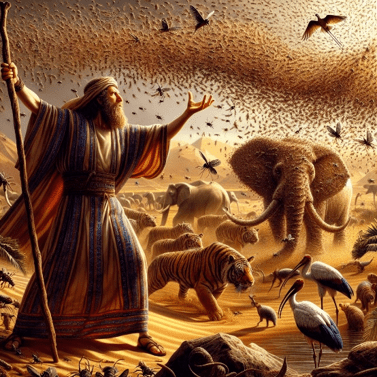
16 So the Lord said to Moses, “Tell Aaron, ‘Raise your staff and strike the ground. The dust will turn into swarms of gnats throughout the land of Egypt.’” 17 So Moses and Aaron did just as the Lord had commanded them. When Aaron raised his hand and struck the ground with his staff, gnats infested the entire land, covering the Egyptians and their animals. All the dust in the land of Egypt turned into gnats. 18 Pharaoh’s magicians tried to do the same thing with their secret arts, but this time they failed. And the gnats covered everyone, people and animals alike.

19 “This is the finger of God!” the magicians exclaimed to Pharaoh. But Pharaoh’s heart remained hard. He wouldn’t listen to them, just as the Lord had predicted.

This time, God doesn’t bother warning Pharaoh; Pharoah has had plenty of warnings and has ignored all of them, so there’s no point. Some versions translate this plague as being lice rather than gnats. Now these insects are covering everybody in Egypt, including the animals. David Guzak in his Enduring Word Commentary points out, “This plague struck at the heart of all Egyptian worship, especially at their priests. The Egyptian priesthood was extremely careful about hygiene and ritual cleansing; an infestation of lice made them unable to worship their gods. The plague of lice was also upon every beast. The gods of Egypt would not receive the sacrifice of lice-infested animals, so this stopped their sacrificial system.” The magicians are stumped and horrified; they immediately warn Pharaoh that they can’t duplicate this plague. Even if Pharaoh is unwilling to acknowledge the power of God, the magicians realize they are up against something far more powerful than any of the demons they have been following. And as the gnats or lice continue to drive the Egyptians and their animals crazy, things are about to get even worse.

A Plague of Flies

20 Then the Lord told Moses, “Get up early in the morning and stand in Pharaoh’s way as he goes down to the river. Say to him, ‘This is what the Lord says: Let my people go, so they can worship me. 21 If you refuse, then I will send swarms of flies on you, your officials, your people, and all the houses. The Egyptian homes will be filled with flies, and the ground will be covered with them. 22 But this time I will spare the region of Goshen, where my people live. No flies will be found there. Then you will know that I am the Lord and that I am present even in the heart of your land. 23 I will make a clear distinction between my people and your people. This miraculous sign will happen tomorrow.’”

24 And the Lord did just as he had said. A thick swarm of flies filled Pharaoh’s palace and the houses of his officials. The whole land of Egypt was thrown into chaos by the flies.

There’s no agreement on the kind of insects that are coming in swarms; however, it’s likely that at least some of these insects are biting ones, inflicting wounds on all the Egyptians and their animals. Once more, the Egyptians have no means of worshiping, for they cannot offer animals covered with biting flies and bleeding wounds from those flies.

This time, God spares the Israelites, sending the biting flies to bite only the Egyptians and their animals. Has God removed the gnats/lice from the Israelites? Possibly. Now God is drawing distinctions between His people and the Egyptians. The magicians evidently make no effort to copy this plague, indicating that they have reached the end of their powers.

25 Pharaoh called for Moses and Aaron. “All right! Go ahead and offer sacrifices to your God,” he said. “But do it here in this land.”

26 But Moses replied, “That wouldn’t be right. The Egyptians detest the sacrifices that we offer to the Lord our God. Look, if we offer our sacrifices here where the Egyptians can see us, they will stone us. 27 We must take a three-day trip into the wilderness to offer sacrifices to the Lord our God, just as he has commanded us.”

28 “All right, go ahead,” Pharaoh replied. “I will let you go into the wilderness to offer sacrifices to the Lord your God. But don’t go too far away. Now hurry and pray for me.”

29 Moses answered, “As soon as I leave you, I will pray to the Lord, and tomorrow the swarms of flies will disappear from you and your officials and all your people. But I am warning you, Pharaoh, don’t lie to us again and refuse to let the people go to sacrifice to the Lord.”

30 So Moses left Pharaoh’s palace and pleaded with the Lord to remove all the flies. 31 And the Lord did as Moses asked and caused the swarms of flies to disappear from Pharaoh, his officials, and his people. Not a single fly remained. 32 But Pharaoh again became stubborn and refused to let the people go.

Does Pharaoh really intend to keep his promise, or is he simply saying whatever is necessary to get rid of the gnats and flies? Only God knows, but it’s obvious that Pharaoh is still clinging to the idea that he has some kind of power over the Israelites. Obviously, it’s going to take more suffering before Pharaoh finally lets the Israelites go.

What must Moses and Aaron and the Israelites be thinking by this point? “Surely,” the Israelites think, “now Pharaoh is going to relent and let us go.” But Moses has come out of a royal upbringing and he knows how stringently Pharaohs are instructed that they are divine and therefore all their decisions are correct and have no need for change. It’s likely that Moses and Aaron pray and ask God for advice, at which point, God tells them to hang on and keep going. At this point, Moses and Aaron can only cling to the peace through the assurance that God can give them.

Why is God dragging this whole process out rather than simply going straight to the final plague? God is concerned about the Egyptians as well as the Israelites; in fact, God is even concerned about Pharaoh. While we might read these stories and hope that Pharaoh will give his just reward in the end, God wants Pharaoh to repent and humble himself and continues to give him every opportunity to do so.

Where does the peace of God enter in these two plagues? The Israelites can take hope when God protects them from the biting flies, sending that plague only on the Egyptians. From now on, God will protect the Israelites from the remaining plagues, and the Israelites can rest in that protection. Each time God demonstrates more of His mighty power, the Israelites should be learning to trust God even more than they have before. That trust can give peace, even while the situation has yet to be resolved.

Face it, many of us are enduring unresolved situations. We might be struggling to find a new job or struggling with family problems. We hope for God’s intervention but we’re not sure what He will do. Like the Israelites, we can continue to trust God and enjoy the peace of that trust as we wait for God to bring ultimate solutions. What good will it do for us to allow ourselves to descend into fear?

Isaiah 40:28-31 tells us, “Have you never heard? Have you never understood? The Lord is the everlasting God, the Creator of all the earth. He never grows weak or weary. No one can measure the depths of his understanding. He gives power to the weak and strength to the powerless. Even youths will become weak and tired, and young men will fall in exhaustion. But those who trust in the Lord will find new strength. They will soar high on wings like eagles. They will run and not grow weary. They will walk and not faint.”

Take heart! God knows your struggles and He wants you to have peace in the midst of them.

PRAYER: Father God, thank You for loving us and caring for us. Lord, help us to trust You and rest in Your peace, even while we are still waiting for things to work out. In the mighty and precious Name of King Jesus. Amen.